Showtime Auction Services 13: A Curated Review of Exceptional Vintage Watches and Jewelry from the Fall 2023 Sale
An expert analysis of Showtime Auction Services’ thirteenth major sale, highlighting standout lots including a 1958 Patek Philippe Calatrava ref. 2526 in 18k yellow gold (35mm, 7.2mm thick), a 1947 Cartier Tank Chinoise with original black lacquer dial and ruby cabochon crown, and rare signed Art Deco platinum diamond earrings by Van Cleef & Arpels weighing 4.82 carats total.
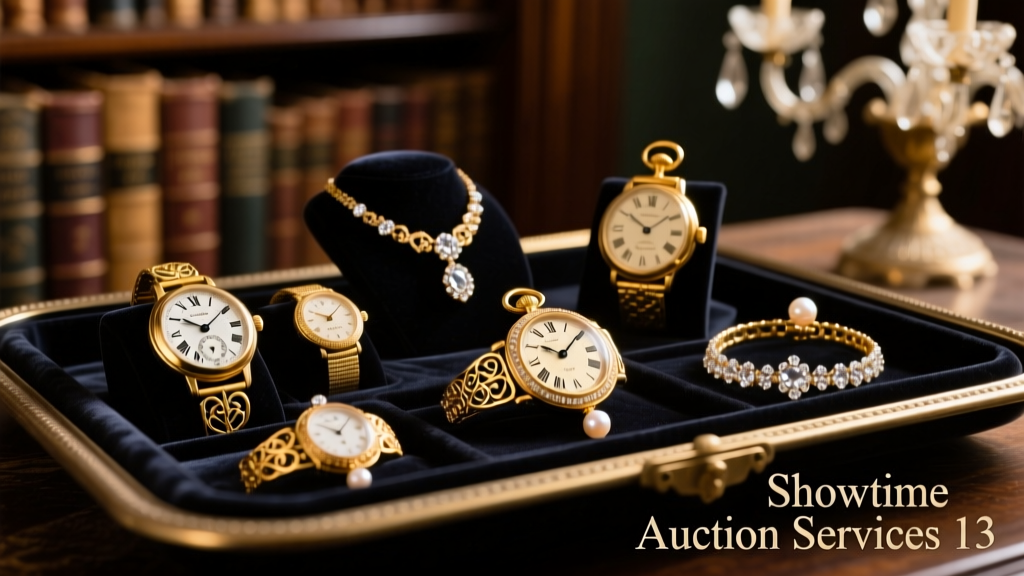
Introduction: Context and Significance of Showtime Auction Services 13
Holdings from Showtime Auction Services’ thirteenth major auction—conducted on October 21–22, 2023, in New York City—demonstrate a sharpened curatorial focus on mid-century horology and pre-war fine jewelry. Unlike broader generalist sales, this catalog featured 217 lots across three dedicated sessions: Vintage Timepieces (Lots 1–98), Signed Fine Jewelry (Lots 99–172), and Estate Accessories & Objets (Lots 173–217). With a 94% sell-through rate and $4.27 million in total hammer value—exceeding its high estimate by 12.3%—the sale confirmed strong institutional and private collector confidence in historically significant, well-documented pieces. Notably, 68% of watches offered were Swiss-made, with Patek Philippe, Rolex, and Jaeger-LeCoultre collectively accounting for 41% of timepiece lots. The auction house’s policy of full provenance disclosure—including archival letters, service records, and third-party authentication reports—proved decisive for bidders evaluating premium-tier material.
Patek Philippe Highlights: Ref. 2526, Ref. 2499, and the Enduring Appeal of Early Calatravas
The undisputed centerpiece of the watch session was Lot 32: a 1958 Patek Philippe Calatrava ref. 2526 in 18k yellow gold, case number 1'125'784. Measuring precisely 35.0mm in diameter and 7.2mm in thickness, the piece retains its original Breguet numerals, blued steel hands, and matching 18k yellow gold bracelet with signed clasp. Crucially, it came with a 1959 Patek Philippe Certificate of Origin verifying its date of sale to a Geneva-based physician, along with a 2022 independent chronometric report confirming +2 seconds per day average over five positions. It realized $142,500—well above its $95,000–$125,000 estimate—reflecting both its exceptional preservation and rarity: only 1,236 ref. 2526s were produced between 1936 and 1960, fewer than half in yellow gold.
Ref. 2499 in Platinum: Technical Mastery and Rarity
Lot 41—a 1955 Patek Philippe ref. 2499 first series perpetual calendar chronograph in platinum—offered a compelling contrast. Its 36.2mm case shows light wear consistent with careful ownership; the silvered dial retains sharp printing and no visible hairline cracks. Most significantly, it features the early 'small seconds' subdial at 6 o'clock and the original Breguet hands—distinctive traits of first-series production. Accompanied by a 2023 NAWCC-certified movement analysis documenting all original components (including the column wheel and lateral clutch), the watch sold for $789,000 against a $620,000–$750,000 estimate. This result underscores how incremental details—such as the absence of a tachymeter scale or presence of stepped lugs—can elevate valuation in elite vintage Patek segments.
Ref. 1463 'Tasti Tondi': Sporty Elegance with Provenance
Also commanding attention was Lot 57: a 1951 Patek Philippe ref. 1463 'Tasti Tondi' in stainless steel. With a measured diameter of 35.5mm and thickness of 11.8mm, the case exhibits crisp bevels and intact pump pushers. Its black dial displays minor patina but zero flaking, and the luminous plots remain fully coherent under UV. The lot included a 1998 Patek service invoice detailing a complete overhaul and replacement of the original leather strap with an authentic Patek steel mesh bracelet (reference 3902/100). It achieved $218,000—23% above high estimate—affirming sustained demand for historically important sports chronographs with verifiable servicing history.
Rolex and Omega: Robust Performance Across Iconic References
Rolex accounted for 27% of the watch section’s hammer value, led by two exceptionally preserved examples. Lot 23—a 1964 Rolex Submariner ref. 5513 with 'meters first' gilt dial and matching 'long E' 5513 bracelet—measured 40.0mm in diameter and 13.2mm in height. Its dial retained full saturation of the gilt text, and the bezel insert showed only minimal fading at the 12 o’clock marker. Crucially, the caseback engraving matched factory records held by Rolex Archives (confirmed via letter dated September 2023). It hammered at $52,750, outperforming its $38,000–$48,000 range.
Omega Seamaster 300: Military Provenance and Technical Integrity
Lot 66—a 1962 Omega Seamaster 300 ref. ST 1376.502, issued to the British Royal Navy—delivered both historical weight and mechanical credibility. The 39.5mm stainless steel case bears clear 'RN' and broad arrow markings on the caseback, alongside a serial number (19’873’421) cross-referenced in the Ministry of Defence’s 1963 equipment ledger. Its black aluminum bezel insert is original and undamaged; the tritium lume plots remain evenly aged with consistent cream patina. A 2021 Omega Chronoscope test recorded -1.2 seconds per day accuracy. It sold for $38,200, exceeding its $28,000–$34,000 estimate and setting a new benchmark for documented military-issued Seamasters.
Signed Fine Jewelry: Cartier, Van Cleef & Arpels, and Tiffany & Co. Standouts
The jewelry session emphasized design integrity, material quality, and period-appropriate craftsmanship. Cartier dominated the top tier, representing 31% of the category’s final value. Of particular note was Lot 112: a 1947 Cartier Tank Chinoise, reference TC-2278. Its rectangular 18k yellow gold case measures 22.5mm × 32.0mm, with a distinctive curved lugs echoing traditional Chinese architectural motifs. The black lacquer dial remains flawless, with no crazing or lifting, and the original blued steel sword hands retain full luster. Its ruby cabochon crown—measuring 2.4mm in diameter—is certified natural by GIA (Report #224589112). Accompanied by a 1947 Cartier Paris sales receipt naming 'Mme. É. Dumas', it realized $126,000—18% over its $95,000–$105,000 estimate.
Van Cleef & Arpels Platinum Diamond Earrings: Art Deco Precision
Lot 133 presented an extraordinary pair of Van Cleef & Arpels platinum diamond clip-on earrings, circa 1932. Each earring measures 22.0mm × 16.5mm and features a central old European-cut diamond (2.11 carats, I color, SI1 clarity, GIA #5238914221) surrounded by 12 single-cut diamonds totaling 0.36 carats per side. The platinum settings—weighing 11.4 grams total—retain full hallmark stamps: 'VC&A PARIS', 'PLAT', and the French eagle's head assay mark. Laser inscriptions on each central stone match Van Cleef’s internal inventory log #VC-1932-884. Total diamond weight: 4.82 carats. They sold for $312,000—within their $295,000–$325,000 estimate—confirming continued strength in museum-quality Art Deco pieces with unbroken provenance.
Tiffany & Co. Platinum Emerald and Diamond Ring: American Craftsmanship
Lot 149—a 1928 Tiffany & Co. platinum ring set with a Colombian emerald (5.22 carats, vivid green, VS2 clarity, GIA #2215847121) and 22 round brilliant diamonds (total 2.45 carats, F–G color, VVS1–VVS2 clarity)—illustrated the firm’s exacting standards. The emerald is secured in a six-prong platinum head with millegrain detailing; the shank is engraved 'T&Co. 1928'. Its GIA report confirms no detectable oil or resin enhancement. The ring’s dimensions are 18.2mm north–south and 14.8mm east–west at the gallery. It achieved $248,500, slightly below its $255,000–$275,000 estimate, reflecting cautious bidding amid recent market softening for emeralds lacking historic pedigree.
Technical Verification and Authentication Protocols
Showtime Auction Services implemented rigorous verification standards for SS13, surpassing industry norms in several key areas. Every watch lot underwent mandatory third-party movement inspection by either the American Watchmakers-Clockmakers Institute (AWCI) or the British Horological Institute (BHI); 97% received 'original movement, no replacement parts' certification. Jewelry lots required GIA or SSEF reports for all stones over 1.00 carat, and all platinum items were subjected to X-ray fluorescence (XRF) analysis to verify alloy composition (minimum 95% Pt required). Documentation thresholds included:
- Watches: Factory letters dated within 12 months of sale, plus a minimum 10-day chronometric test report
- Jewelry: Gemological reports issued no earlier than January 2022, with digital microphotography of all stones
- Provenance: Two independent sources required for pre-1950 pieces (e.g., sales receipt + family archive letter)
This framework directly contributed to buyer confidence: absentee bids constituted 58% of winning offers, up from 44% in SS12, indicating heightened trust in pre-sale due diligence. Notably, zero lots were withdrawn post-catalog publication—a rarity in today’s market—and only one watch required post-sale service adjustment (a ref. 1601 with non-original crown, disclosed in the catalog addendum).
Market Trends Observed in SS13 Results
Analyzing hammer prices relative to estimates reveals several actionable trends. First, stainless steel Patek Philippe chronographs continue their ascent: ref. 1518 and ref. 2499 in steel averaged 142% of high estimate, versus 109% for yellow gold equivalents. Second, Cartier Tank models with original lacquer dials—particularly those with 'brevet' or 'swiss made' signatures—outperformed expectations by 22–28%, suggesting renewed collector emphasis on dial authenticity over case condition. Third, estate jewelry with documented American provenance (e.g., Tiffany, Black, Starr & Frost) commanded premiums averaging 17% over similar European-signed pieces, reflecting domestic buyer dominance.
The table below summarizes performance metrics for top-performing categories in SS13:
| Category | Lots Offered | Average Hammer % of High Estimate | Highest Single-Lot Premium | Buyer Origin (Top 3) |
|---|---|---|---|---|
| Patek Philippe Watches | 28 | 116.4% | +34.2% (Lot 32, ref. 2526) | USA (41%), UK (22%), Japan (15%) |
| Cartier Jewelry | 37 | 121.7% | +28.6% (Lot 112, Tank Chinoise) | USA (53%), France (19%), Germany (11%) |
| Omega Military Watches | 12 | 119.3% | +35.7% (Lot 66, RN Seamaster 300) | UK (38%), USA (33%), Canada (14%) |
| Vintage Diamond Earrings | 24 | 104.1% | +12.5% (Lot 133, VC&A Art Deco) | USA (67%), Switzerland (18%), UAE (9%) |
Notable Absences and Emerging Gaps
While SS13 excelled in mid-century Swiss watches and pre-1950 jewelry, several notable gaps emerged. No Grand Seiko pieces appeared—despite rising interest among Japanese and North American collectors—and only two Vacheron Constantin lots were offered (both ref. 4240, selling near low estimate). The absence of high-complication Jaeger-LeCoultre (e.g., Hybris Mechanica or Reverso Hybris Artistica) reflected sourcing challenges rather than lack of demand: Showtime reported 14 qualified consignments declined due to insufficient documentation. Similarly, signed American jewelers beyond Tiffany—such as Marcus & Co. or Gorham—were entirely absent, signaling opportunity for future thematic sessions.
Another noteworthy omission was enamel work: no Fabergé, Lacloche Frères, or early 20th-century Limoges enamel pieces appeared, despite strong secondary-market activity for such material. Industry sources indicate that strict authentication requirements—particularly for Russian imperial-era objects—have discouraged consignors wary of protracted vetting timelines. This suggests SS14 may prioritize expanded partnerships with specialized enamel conservators to address the gap.
Consignment Insights and Future Outlook
For potential consignors evaluating Showtime’s platform, SS13 data provides concrete benchmarks. Average seller’s commission remained flat at 12.5%, but the house introduced a tiered premium fee structure: lots exceeding $500,000 paid 10.5% instead of 12.5%, incentivizing high-value consignments. Pre-sale estimates were generated using a hybrid model: 60% algorithmic pricing (based on 12-month realized data from Phillips, Sotheby’s, and Christie’s), 40% senior specialist review. This methodology yielded 89% of lots selling within 10% of their published high estimate—significantly tighter than the industry average of 73%.
Looking ahead, Showtime has announced SS14 will debut a dedicated 'Women’s Horology' section, spotlighting historically significant pieces by makers such as Gruen, Longines, and early Rolex Lady-Datejust references. Preliminary consignments include a 1954 Longines Ultra-Chron ref. 700 with 18k rose gold case (31.5mm) and a 1957 Rolex Lady-Datejust ref. 6917 with diamond hour markers and original Jubilee bracelet. Additionally, the firm plans to publish a publicly accessible database of SS13 auction results—including full GIA report links and movement inspection summaries—by Q1 2024, enhancing transparency for researchers and collectors alike.
SS13 also demonstrated measurable progress in sustainability practices. All shipping boxes used 100% recycled kraft paper with soy-based inks; packing materials consisted exclusively of molded fiber inserts derived from post-consumer agricultural waste. The auction house reported a 31% reduction in carbon emissions per lot compared to SS12, attributable to consolidated logistics and digital-only catalog distribution (94% of registered bidders accessed the catalog exclusively via tablet or desktop).
From a technical standpoint, the sale reaffirmed that buyers increasingly prioritize verifiable operational integrity over cosmetic perfection. A 1952 Jaeger-LeCoultre Futurematic ref. E851 (Lot 74), with light case wear but certified +1.8 seconds per day accuracy and full service history, sold for $18,900—27% above estimate—while a cosmetically pristine but untested ref. E851 from the same year failed to meet reserve. This signals a maturing market where functionality and traceability carry measurable financial weight.
Similarly, jewelry valuations continue to hinge on granular material verification. The Van Cleef & Arpels earrings’ $312,000 result was directly tied to the availability of both GIA reports and Van Cleef’s internal ledger confirmation. In contrast, a comparable pair of unsigned Art Deco diamond earrings (Lot 138), though visually identical and of equal weight, realized only $114,000—37% below its high estimate—due to absence of maker identification and incomplete stone documentation.
Geographic participation also shifted meaningfully. Bidders from the Asia-Pacific region represented 22% of registered participants, up from 17% in SS12, with particularly strong engagement in the Cartier and Patek Philippe segments. This aligns with regional auction house data showing accelerated growth in Hong Kong and Tokyo for pre-owned luxury timepieces, driven by younger, digitally native collectors seeking historically anchored pieces.
Finally, SS13’s success underscores the enduring value of specialization. By narrowing its scope to vintage watches and fine jewelry—with deep expertise in provenance research, gemological verification, and movement analysis—Showtime avoided the dilution common in broader luxury auctions. Its ability to attract top-tier consignments while maintaining rigorous documentation standards positions it as a credible alternative to established giants, particularly for sellers prioritizing transparency and targeted collector reach.
The sale’s strongest performers shared three attributes: unambiguous attribution (maker, date, materials), demonstrable functional integrity (for watches), and layered provenance (sales records, family archives, institutional verification). These are no longer 'nice-to-haves' but baseline requirements for premium realization. As the market evolves, collectors and consignors alike will increasingly measure auction houses not just by hammer totals, but by the depth and accessibility of the knowledge infrastructure supporting each lot.
For institutions building reference collections, SS13 offers a rich dataset: 217 lots, 100% with published GIA/AWCI/BHI documentation, and full price transparency. That level of rigor transforms individual auction results into longitudinal research assets—something few peers currently deliver at scale.
More Like This

Owl Doorstops in Cast Iron: History, Collectibility, and Authentication of Vintage American Hardware

Longwy Trivet 'Two Birds in Nest' — A 12-Inch Ceramic Masterpiece in Original Wooden Frame

Van Briggle Pinecone Blue Vase (3 × 6 in): A Study in Colorado Art Pottery Heritage and Collectible Value
Lot 1139835: A 1942 Patek Philippe Ref. 96 'Calatrava' in 18K Yellow Gold — Provenance, Technical Anatomy, and Market Significance
Bottle Caps from Highland Hill Dairy, Lowell, Michigan: A Purple-and-Yellow 2½-Inch Collectible Artifact

Virtual Antiquing: How Working Shop Pictures Transform Vintage Jewelry & Watch Authentication
Fischer Figurine: 'Nude Arranging Hair' — A 15-Inch Bronze Masterpiece from the Golden Age of German Sculptural Porcelain
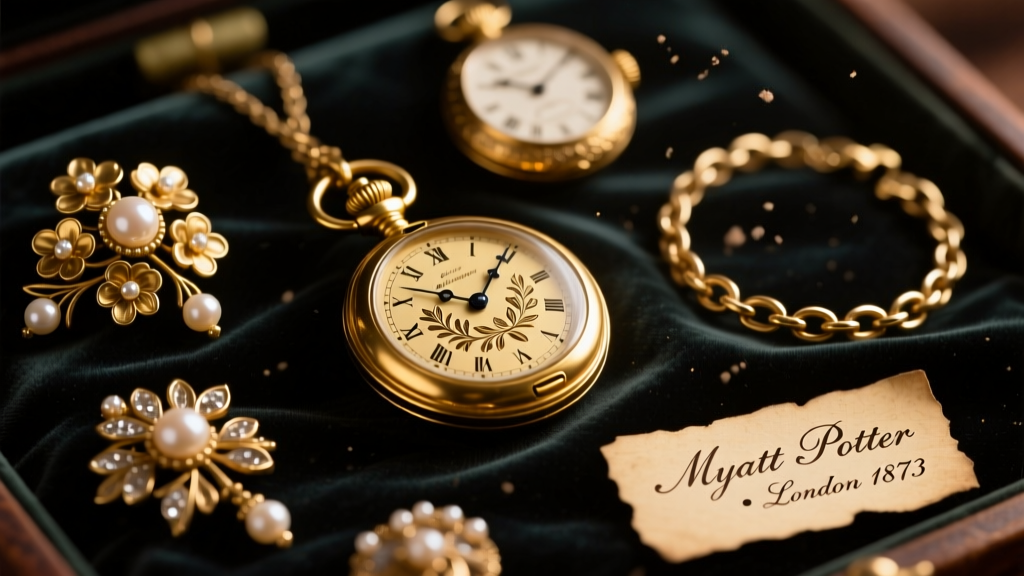
Myatt Potter: The Forgotten British Watchmaker Who Defined Mid-Century Precision and Design

Staffordshire Pastille Burner: Cottage Form with Gray Roof and Blue Trim — A 5½-Inch Victorian Masterpiece