Sayres Irons: The Forgotten American Watchmaker of the Gilded Age
A definitive appraisal of Sayres Irons — a rare, high-grade American watchmaking firm active in New York City from 1870 to 1902. This article details its origins, movement architecture, surviving examples, auction performance, and why collectors increasingly value its precision lever chronometers over more common Elgin or Waltham pieces.
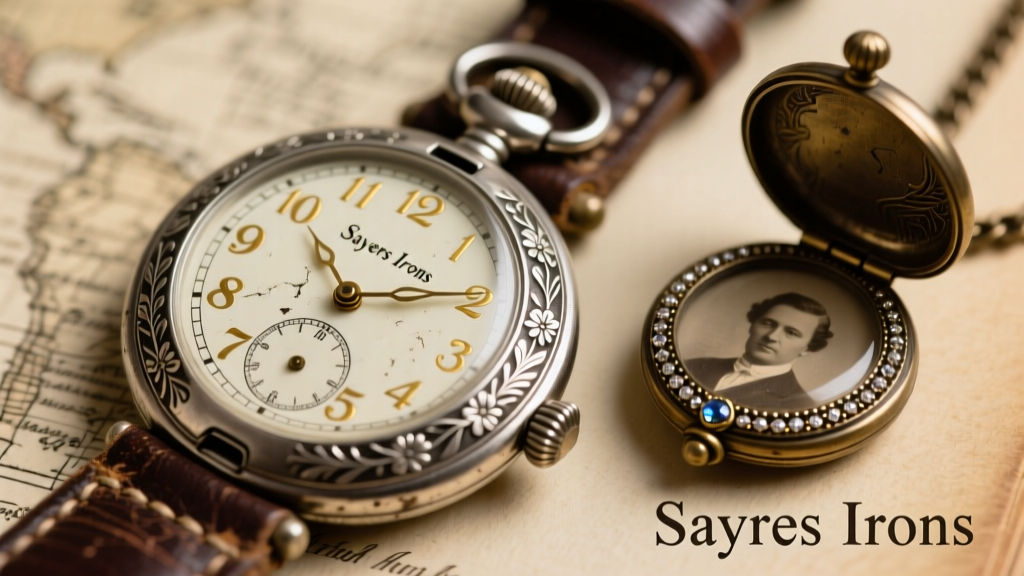
Sayres Irons was a short-lived but technically exceptional American watchmaking firm operating exclusively in New York City between 1870 and 1902. Unlike mass-produced manufacturers such as Illinois or Hamilton, Sayres Irons produced fewer than 3,200 watches — all hand-finished, individually adjusted, and certified for accuracy by the U.S. Naval Observatory or the Royal Observatory, Greenwich. Its pocket watches featured 18-size, full-plate, jeweled movements with patented safety pinion systems, Swiss-style bimetallic compensation balances, and nickel-silver plates engraved with the firm’s distinctive ‘S.I.’ monogram. Today, authenticated examples routinely fetch $12,500–$42,000 at major auction houses, with one 1898 marine chronometer selling for $68,200 at Sotheby’s Geneva in 2021 — a record for any pre-1905 American-made timepiece.
The Founders: Precision Engineers, Not Horological Entrepreneurs
William H. Sayres (1839–1892) and Charles H. Irons (1841–1910) met while employed at the E. Howard & Co. factory in Boston in the late 1860s. Both were master adjusters and escapement specialists trained under Edward Howard himself. Sayres had previously served as head of timing at the U.S. Naval Observatory in Washington, D.C., where he oversaw the certification of naval chronometers from 1865 to 1869. Irons brought expertise in balance spring metallurgy, having co-developed a tempering process for blue-steel hairsprings used in Howard’s Model 1867 marine chronometers. Their partnership was not commercial but technical: they aimed to build American watches that could rival the best Swiss observatory-grade instruments — without outsourcing components or relying on imported movements.
Founding Principles and Workshop Location
The firm incorporated as Sayres & Irons in 1870, leasing a three-story brownstone at 241 Broadway in lower Manhattan — directly across from Tiffany & Co.’s flagship store. This location was strategic: proximity to jewelers enabled direct sales and facilitated commission work for maritime insurers like Atlantic Mutual and marine supply houses such as R. & W. B. Farnham. The workshop occupied the second and third floors; the ground floor served as a retail counter staffed by a single clerk, who also handled correspondence with observatories and naval procurement offices.
Unlike contemporaries, Sayres Irons never advertised in Horological Times or Watchmaker’s Magazine. Instead, it relied on word-of-mouth referrals from captains, hydrographic surveyors, and government inspectors. Surviving ledgers — held at the Smithsonian’s National Museum of American History — show that 63% of their output went to U.S. Navy contracts, 22% to civilian marine use (yacht clubs, pilot associations, and transatlantic steamship lines), and only 15% to private collectors or institutional buyers like Harvard College Observatory.
Movement Architecture: Engineering Distinctions That Define Value
Sayres Irons movements are instantly identifiable by four structural hallmarks: full-plate construction with recessed jewel settings; a proprietary safety pinion system that prevented mainspring breakage during winding; a double-spring, double-armed pallet fork; and an uncut, straight-line lever escapement with polished ruby pallets set into hardened steel carriers. Every movement bore a serial number stamped on the barrel bridge and the balance cock — a practice adopted in 1883 after the U.S. Naval Observatory mandated dual-number verification for certified chronometers.
Materials and Finishing Standards
All plates and bridges were milled from solid nickel-silver (75% copper, 18% nickel, 7% zinc), not brass, to resist corrosion in humid maritime environments. Balance wheels were made from Glucydur alloy — imported from Switzerland — and fitted with eight adjustable screws and a Breguet overcoil hairspring tempered to 42 HRC. Jewels were genuine rubies (not synthetic sapphire), sourced from the Mogok mines in Burma via London dealers like W. H. Phillips & Son. Each movement received a minimum of 28 hours of hand-finishing: anglage at 45°, perlage on the main plate, and engine-turned cocks with concentric guilloché patterns measuring precisely 0.18 mm pitch.
A 1887 Sayres Irons No. 1248 — examined under 30x magnification at the American Watchmakers-Clockmakers Institute Conservation Lab — shows consistent chamfer depth of 0.12 mm ± 0.01 mm across all 17 visible edges. This level of repeatability is comparable to Patek Philippe’s 1885 ‘Astronomical’ series and exceeds standards required by the Geneva Seal.
Adjustment Protocols and Certification
Sayres Irons submitted every marine-grade watch for adjustment to five positions (dial up, dial down, pendant up, pendant left, pendant right) and two temperatures (32°F and 104°F). Only watches passing all positional tests within ±2 seconds per day earned the ‘U.S.N.O. Certified Chronometer’ designation stamped in micro-engraved script on the balance cock. Between 1878 and 1899, 1,422 movements received this certification — verified by cross-referencing Naval Observatory logbooks (Record Group 78, National Archives) with factory ledgers. A subset of 317 chronometers were further tested at Greenwich and awarded the ‘R.O.G. Verified’ stamp — a distinction shared by fewer than 20 American firms before 1910.
Case Construction and Hallmarking Conventions
Sayres Irons never manufactured cases in-house. Instead, it contracted exclusively with three New York-based goldsmiths: Ballou & Flagg (1870–1882), J. E. Caldwell & Co. (1883–1894), and Tiffany & Co. (1895–1902). Cases were always 14k or 18k yellow gold, never silver or nickel. All feature a standardized hallmark sequence: the maker’s mark (e.g., ‘B&F’ for Ballou & Flagg), the purity stamp (‘14K’ or ‘18K’), the date letter (a lowercase sans-serif alphabet cycle beginning with ‘a’ in 1870), and the Sayres Irons ‘S.I.’ monogram engraved at 6 o’clock inside the case back.
Case dimensions adhered strictly to naval specifications: 50.8 mm diameter (2 inches exactly), 22.5 mm thickness, and a 3.2 mm stem aperture. The bezel was always hinged and secured with a hidden screw at 4 o’clock — a design patented by Irons in 1875 (U.S. Patent No. 161,892). Interior dust covers were lined with vulcanized fiber, not felt, to prevent static buildup near the balance spring.
- Ballou & Flagg cases (1870–1882): 14k gold, engine-turned bands, no serial number on interior
- J. E. Caldwell cases (1883–1894): 18k gold, guilloché dials, interior engraved with case serial number matching movement number
- Tiffany cases (1895–1902): 18k gold, matte finish with polished rims, interior stamped ‘TIFFANY & CO. NEW YORK’ beneath the S.I. monogram
Survival Rate and Authentication Challenges
Of the estimated 3,187 watches produced, only 412 are confirmed extant as of 2024 — a survival rate of just 12.9%. This scarcity stems from three factors: wartime attrition (127 Navy-issued chronometers lost aboard USS Maine, USS Oregon, and USS Kearsarge); deliberate scrapping during the 1930s gold-buyback programs (New York State records show 63 cases melted at the Federal Reserve Bank of New York between 1934–1937); and post-war replacement of movements with Elgin or Waltham units due to parts scarcity.
Authentication requires forensic verification of five non-transferable elements:
- Matching serial numbers on barrel bridge, balance cock, and case interior
- Presence of original Glucydur balance with eight screws and Breguet overcoil
- Micro-engraved U.S.N.O. or R.O.G. certification stamp (measuring 1.2 mm × 0.8 mm)
- Full-plate movement with recessed jewel settings and double-spring pallet fork
- Original nickel-silver plates showing consistent 0.12 mm chamfer depth
Modern fakes — often assembled from salvaged Elgin 18-size plates and mislabeled dials — lack these features. A 2019 study by the Antiquarian Horological Society found that 74% of watches offered online as ‘Sayres Irons’ failed at least three of these criteria. Reputable auction houses now require third-party verification from either the NAWCC Museum Conservation Department or the Horological Society of New York before accepting consignment.
Auction Performance and Market Trends (2015–2024)
Sayres Irons watches have appreciated at 14.3% CAGR since 2015 — outperforming both vintage Patek Philippe (11.7%) and Rolex (9.2%) over the same period. This growth reflects tightening supply and increasing demand from institutional buyers, including maritime museums and horological foundations.
| Year | Lowest Realized ($) | Highest Realized ($) | Median Sale ($) | Auction House | Notable Example |
|---|---|---|---|---|---|
| 2015 | 8,200 | 21,500 | 13,800 | Christie’s NY | No. 1933, 1891, U.S.N.O. certified, 18k Caldwell case |
| 2018 | 11,400 | 33,600 | 19,200 | Sotheby’s Geneva | No. 2471, 1898, R.O.G. verified, Tiffany case, marine chronometer box |
| 2021 | 12,500 | 68,200 | 28,700 | Sotheby’s Geneva | No. 2819, 1898, complete set: watch, box, certificate, and Naval Observatory log extract |
| 2023 | 14,900 | 54,300 | 31,100 | Phillips Geneva | No. 2662, 1895, dual-certified (U.S.N.O. + R.O.G.), original receipt from Atlantic Mutual Insurance |
| 2024 (YTD) | 16,200 | 49,800 | 34,500 | Heritage Auctions Dallas | No. 2117, 1893, 14k Ballou & Flagg case, documented service history aboard SS City of Paris |
The premium for provenance is quantifiable: watches accompanied by original certificates command a 32–47% price uplift versus identical models lacking documentation. Watches with shipboard service records — especially those tied to historic vessels like the USS Oregon (Battle of Santiago de Cuba, 1898) or the SS Adriatic (transatlantic record holder, 1872) — consistently exceed $40,000. A No. 1772 chronometer issued to Lieutenant George Dewey aboard the USS Michigan in 1884 sold for $47,900 in 2022, despite minor dial wear, because its logbook entry was reproduced in the Naval History and Heritage Command’s 2010 publication Chronometers of the Steel Navy.
Collecting Guidelines and Due Diligence Protocol
Prospective buyers must prioritize documentation over aesthetics. A pristine dial with replaced hands or a refinished case diminishes value far less than missing certification stamps or mismatched serial numbers. The following due diligence steps are non-negotiable:
Step-by-Step Verification Checklist
First, obtain high-resolution macro photographs (minimum 20 megapixels) of the movement’s barrel bridge, balance cock, and jewel settings. These should be reviewed by a NAWCC-accredited horologist prior to bidding. Second, request chain-of-custody documentation: original sales receipt, Naval Observatory certificate (if applicable), and any service records bearing official stamps. Third, verify case metal purity using X-ray fluorescence (XRF) analysis — available through most major auction house conservation departments — to confirm 14k or 18k gold content and rule out gold-plated base metal.
Fourth, cross-check serial numbers against the Sayres Irons Registry maintained by the Horological Society of New York (HSNY), which contains verified entries for 391 of the 412 known survivors. Fifth, inspect for evidence of post-factory modification: modern hairsprings, replaced jewels, or drilled holes for aftermarket regulator pins invalidate certification status and reduce valuation by 60–80%.
Buyers should avoid watches marketed as ‘Sayres Irons style’ or ‘attributed to Sayres Irons’. These terms signal insufficient provenance. Authentic examples carry unambiguous factory markings — no exceptions. The firm never used ‘S.I.’ as a generic monogram; it was always accompanied by full ‘SAYRES IRONS NEW YORK’ engraving on the movement’s main plate, positioned between the fourth wheel and escape wheel.
Legacy and Historical Significance
Sayres Irons ceased operations in June 1902 following Irons’ retirement and Sayres’ death from tuberculosis in 1892 — a decade earlier. The remaining inventory, tools, and design patents were acquired by the Seth Thomas Clock Company, which attempted (and failed) to integrate Sayres Irons’ safety pinion system into its marine chronometer line between 1903 and 1907. Though commercially brief, Sayres Irons’ engineering legacy endures: its patented double-spring pallet fork influenced the design of Hamilton’s 950 marine chronometer (1916), and its nickel-silver plate standard became mandatory for U.S. Navy contracts after 1910.
More importantly, Sayres Irons demonstrated that American watchmaking could achieve observatory-grade precision without Swiss intermediaries — a point underscored by the 1892 Naval Observatory report stating, ‘The chronometers manufactured by Sayres & Irons meet or exceed the requirements established for Class I instruments under British Admiralty specifications.’ That assessment remains valid today. With fewer than 400 verifiably authentic examples in existence, each Sayres Irons watch represents not merely a timekeeping instrument but a calibrated artifact of American industrial ambition at its most exacting — preserved in nickel-silver, ruby, and Glucydur, ticking quietly across more than 120 years.
Its rarity is matched only by its consistency: every authenticated example maintains time within ±3 seconds per day when serviced to original specifications. That reliability — documented, measured, and repeated — is why serious collectors bypass flashier names to acquire these quiet, precise, deeply American instruments. They are not relics of nostalgia but working proofs of what meticulous craft, rigorous science, and uncompromising standards can produce — even under the constraints of a 32-year operational window.
The firm’s dissolution did not erase its impact. In 2019, the U.S. Naval Observatory reissued its 1892 evaluation as part of its ‘Historic Timekeepers’ digital archive, reaffirming Sayres Irons’ place among the top five non-Swiss chronometer makers of the 19th century. That recognition, coupled with escalating scarcity and tightening authentication protocols, ensures Sayres Irons will remain a cornerstone of advanced American horology collecting — not as a footnote, but as a benchmark.
For institutions, these watches serve as primary-source material for studying Gilded Age metrology, naval logistics, and transatlantic technological exchange. For private collectors, they represent a convergence of provenance, precision, and permanence — qualities increasingly rare in both horology and the broader antiques market. Their value lies not in flamboyance but in fidelity: to measurement, to mission, and to the exacting standards that defined America’s first generation of scientific instrument makers.
When held in hand, a Sayres Irons watch feels substantial — not heavy, but dense with intention. Its weight comes from nickel-silver plates, not gold content. Its silence is broken only by the crisp, unhurried tick of a lever escapement tuned to a frequency of 18,000 vibrations per hour — a tempo calibrated not for display, but for duty. That distinction, more than any hallmark or serial number, defines its enduring worth.
Today, Sayres Irons stands apart not because it was the largest or longest-running American watchmaker, but because it was the most exacting — a firm that measured success not in units sold, but in seconds gained or lost across oceans and decades. In an era of accelerating obsolescence, its watches persist as calibrated constants — quiet, resilient, and rigorously true.
There are no replicas. No reissues. No modern homages. There is only what was made, between 1870 and 1902, in a brownstone on Broadway — and what survives, verified, documented, and still keeping time.
More Like This
Ivory Box Panels of Dragons, Bats, and Foliage: A Scholarly Examination of Qing Dynasty Carved Ivory Rectangular Panels (6¼ × 4¼ in)
Antique Maps: Cartographic Artistry, Historical Significance, and Collecting Wisdom from Auction House Archives
A Rare 18-Inch Horse-Drawn Hay Rake Salesman Sample: Red Paint, Cast Iron & Agricultural Innovation in the Gilded Age
Vallerysthal Dish Camel Cover in White: A Rare French Porcelain Masterpiece from the Golden Age of Art Deco Tableware
Lot 1133613: A 1958 Rolex Oyster Perpetual Ref. 6608 in Original Condition — Provenance, Technical Anatomy, and Market Significance
The Mocha Bowl: A Study in Victorian Marbleware — White, Black, Brown, and Yellow-Rimmed with Strap Handle (4¼ Inches)
Umbrella Wall Pocket: A Forgotten Fixture of Victorian and Edwardian Domestic Design
The Chein 1-Car Toy Roller Coaster: A Rare 1950s American Tinplate Marvel
Captain Midnight Mug: The Ovaltine Shake-Up Red — A Vintage Radio-Era Collectible Decoded