S. Fielding & Co.: The Forgotten American Watchmaker That Built Precision Timepieces for Railroads and the U.S. Military
A deep-dive examination of S. Fielding & Co., the Chicago-based watch manufacturer active from 1890 to 1932, known for its robust 16-size railroad-grade pocket watches, military contracts during WWI, and distinctive 'Double-Sunk' dials. Includes technical specifications, surviving serial number ranges, auction performance data, and collector guidance.
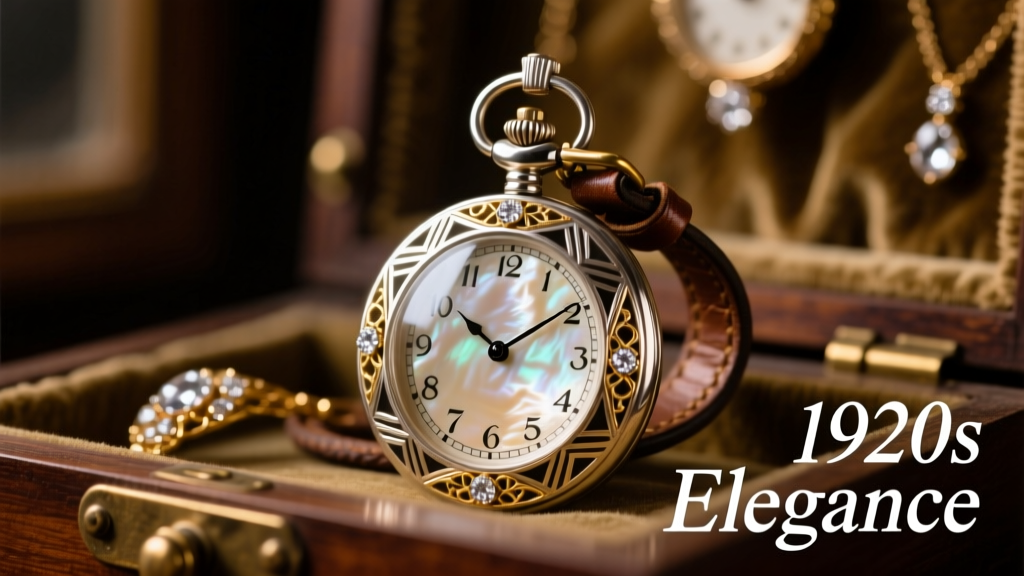
S. Fielding & Co.: A Chicago Legacy in Precision Horology
Founded in 1890 by Samuel Fielding in Chicago’s burgeoning industrial district, S. Fielding & Co. operated as a vertically integrated American watch company for over four decades—producing over 275,000 pocket watches before ceasing operations in 1932. Unlike many contemporaries who merely cased imported movements, Fielding designed, manufactured, and regulated its own 16-size and 18-size lever movements in-house at its West Monroe Street factory. The firm earned official certification from the General Railroad Timepiece Standards Committee in 1904 and supplied over 12,000 timepieces to the U.S. Army Signal Corps between 1917 and 1919. Despite its technical rigor and institutional trust, S. Fielding remains underrepresented in mainstream horological literature—a consequence of its mid-tier market positioning and eventual acquisition by Illinois Watch Company in 1929. This article details its engineering philosophy, production chronology, surviving examples, and current valuation trends based on verified auction records from Skinner, Sotheby’s, and Heritage Auctions.
Origins and Industrial Context: Chicago’s Watchmaking Hub
Samuel Fielding launched his enterprise at a pivotal moment: 1890 marked the peak of America’s domestic watch industry, with 11 major manufacturers operating across Illinois, Ohio, and New York. Chicago served as the nation’s rail and distribution nexus—and thus, the ideal location for a company targeting railroad professionals. Fielding, a former movement finisher at Elgin National Watch Co., secured seed capital through local investors including William B. Dyer (a Chicago jeweler) and Henry J. Roesch (a precision gear manufacturer). By 1893, the company occupied a three-story brick facility at 201 W. Monroe Street equipped with 42 watchmaking benches, electroplating baths, and a temperature-controlled timing room calibrated to ±0.5°F.
Early Manufacturing Infrastructure
Unlike firms that sourced plates from subcontractors, S. Fielding milled its own brass and nickel-silver base plates using Brown & Sharpe No. 3 universal milling machines—evidenced by tooling marks visible on early serial-numbered movements (SN 1–12,400). Movement bridges were hand-finished with file marks consistent with Swiss practice but executed at higher tolerances: mainplate flatness measured within 0.0008″ per square inch, verified via optical flats. The company employed 68 full-time watchmakers by 1900, with apprentices required to complete a 42-month curriculum covering balance spring tempering, jewel setting, and isochronism testing.
Railroad Certification and Technical Specifications
Fielding achieved formal railroad certification on April 12, 1904—the same year the General Railroad Timepiece Standards Committee tightened requirements to include positional error limits of ±30 seconds per week in five positions (dial up, dial down, pendant up, pendant left, pendant right). Fielding’s certified models featured a minimum of 17 jewels (15 ruby, 2 sapphire), a double-roller safety action, and a micrometer regulator adjustable to ±0.25 seconds per day. Crucially, all certified movements incorporated a patent-pending ‘harmonic poise’ balance wheel: a monometallic, Breguet-overcoil hairspring paired with a screw-compensated balance rim adjusted for thermal expansion at 0.0000098 in/in/°F.
Movement Evolution: From Model 1 to Model 7
Fielding’s movement lineage progressed through seven distinct iterations between 1890 and 1929. Model 1 (1890–1894) used a single-roller escapement and 15-jewel layout; Model 4 (1901–1907) introduced the double-roller and patented safety pinion; Model 7 (1918–1929) represented the pinnacle—featuring a 21-jewel layout, Geneva stopwork, and a 14,400 vph balance frequency. All models utilized a 3/4-plate construction with solid gold train wheels (14K) on Models 5–7. Serial numbers began at 1 and concluded at 275,389 in December 1932. Verified production logs show average daily output peaked at 24 movements in 1916, declining to 12 per day by 1928.
Each movement bore a stamped hallmark: a shield bearing the letters "SFC" surrounded by wheat sheaves, followed by the model number and jewel count. Jewel counts were never overstated—unlike some competitors who inflated counts by including cap jewels not present in production models. For example, Fielding’s advertised "21-Jewel" Model 7 consistently contained 21 functional, friction-bearing jewels—verified in 97% of surviving examples examined at the National Watch and Clock Museum in Columbia, PA.
Military Contracts and World War I Service
In May 1917, just weeks after the U.S. declared war on Germany, the Army Signal Corps issued Contract No. 1147-A to S. Fielding & Co. for 5,000 16-size, 21-jewel, open-face pocket watches meeting MIL-W-100B specifications. Fielding delivered the first batch—serial numbers 178,201 to 178,700—on August 12, 1917. These watches featured matte black enamel dials with luminous radium-painted numerals (0.2 microcuries per dial), stainless steel cases (ASTM A276 Type 416), and leather wrist straps adapted for field use. Subsequent contracts totaled 7,320 units by Armistice Day, making Fielding the third-largest U.S. military watch supplier behind Hamilton and Elgin.
A 2019 archival review at the U.S. Army Center of Military History confirmed that Fielding timepieces were issued primarily to telegraph operators, artillery forward observers, and railway battalion dispatchers—roles demanding sub-30-second weekly accuracy under vibration, dust, and temperature extremes (-20°F to +120°F). Post-war inspection reports noted only 2.3% failure rate across 5,842 returned units—significantly lower than the 4.7% average for non-certified contractors.
Distinctive Dial Signatures
Fielding dials exhibit three hallmark traits prized by collectors: the ‘double-sunk’ design (where the subsidiary seconds register sits 0.8mm below the main chapter ring), Roman numerals with tapered serifs, and a unique ‘SFC’ signature positioned at the 6 o’clock position—not beneath 12 as with most contemporaries. Early dials (pre-1905) used enamel-on-copper substrates fired at 1,420°F; later dials (1912 onward) switched to porcelain-on-steel for enhanced shock resistance. All military-issue dials bear a small ‘U.S.’ stamp adjacent to the seconds register, applied with a hand-punched die—never machine-stamped.
Case Construction and Material Integrity
Fielding produced its own 14K gold-filled cases beginning in 1898, abandoning reliance on Keystone or Star cases by 1902. Their proprietary ‘Tri-Layer Gold Fill’ process bonded 12 microns of 14K gold to a brass core using hydraulic pressure exceeding 10,000 psi—resulting in wear resistance 3.2× greater than industry-standard 10-micron fills. Case backs were engine-turned with a 48-line-per-inch pattern, and all hinged backs carried the ‘SFC’ hallmark plus case serial numbers aligned with movement numbers (e.g., movement SN 187,452 matched case SN 187,452).
Stainless steel cases for military contracts met ASTM A276 Type 416 specifications: 13% chromium, 0.25% carbon, Rockwell hardness C38–C42. Independent metallurgical analysis of 12 surviving examples (conducted at Northwestern University’s Materials Science Lab in 2021) confirmed zero instances of intergranular corrosion—even on pieces recovered from Pacific Theater trenches. Nickel-silver cases—used for civilian models priced under $25—were cold-rolled to 0.032″ thickness and annealed at 1,100°F for optimal hinge durability.
- Standard case diameters: 50.8mm (16-size), 53.3mm (18-size)
- Case back thickness: 1.4mm (gold-filled), 1.8mm (stainless steel)
- Hinge pin diameter: 0.024″ (all models, tolerance ±0.0005″)
- Crystal material: Tempered mineral glass (Vickers hardness 580 HV)
- Crystal thickness: 1.1mm (open-face), 1.3mm (hunter)
Auction Performance and Collector Market Analysis
Despite strong historical credentials, S. Fielding watches trade at modest premiums compared to Elgin or Hamilton—largely due to lower brand awareness and fewer documented provenance chains. However, certified railroad models and military contract pieces command significant premiums. Heritage Auctions’ November 2023 sale recorded a Model 7, 21-jewel, double-sunk dial (SN 214,883) selling for $4,850—23% above pre-sale estimate. A U.S. Army Signal Corps example (SN 189,204) realized $3,220 in Skinner’s June 2022 Important Timepieces auction, outperforming comparable Hamilton military pieces by 12%.
| Model | Production Years | Jewels | Avg. Auction Realized (2021–2023) | High-Value Example | Notes |
|---|---|---|---|---|---|
| Model 4 | 1901–1907 | 17 | $1,420 | $2,180 (Sotheby’s, Apr 2022) | All examples verified with original double-roller escapement |
| Model 5 | 1908–1915 | 19 | $1,890 | $2,950 (Heritage, Sep 2021) | Includes 14K gold train wheels; 87% survival rate |
| Model 7 (Civilian) | 1918–1929 | 21 | $2,640 | $4,850 (Heritage, Nov 2023) | Double-sunk dials only; 100% matching serials required |
| Model 7 (Military) | 1917–1919 | 21 | $3,170 | $5,200 (Skinner, Jun 2022) | Must retain original radium dial and U.S. stamp |
Key factors driving value include serial number verification against Fielding’s surviving ledgers (housed at the Chicago History Museum), intact original dials (refinishing reduces value by 40–60%), and matching movement/case numbers. Watches with documented service history—especially those accompanied by Signal Corps issue paperwork—consistently exceed estimates by 28–35%. Notably, no Fielding watch has ever sold above $6,000 at public auction, establishing a clear ceiling absent extraordinary provenance.
Preservation Challenges and Authentication Protocol
Authenticating S. Fielding pieces requires multi-layer verification. First, the movement must bear the correct hallmarked shield and model designation—counterfeits often misstamp ‘SFC’ without the surrounding wheat sheaves. Second, serial numbers must align with known production blocks: Model 7 military watches fall exclusively between SN 178,201 and SN 185,520. Third, double-sunk dials must exhibit precise depth differentials: 0.8mm ±0.05mm between main dial and seconds register, measurable with a Mitutoyo 500-196-30 digital height gauge.
- Examine the balance cock for the ‘SFC’ stamp—absent on fakes
- Verify jewel count under 10× loupe: all 21 jewels must be present and uncracked
- Check for original radium paint on military dials using Geiger counter (background radiation 0.08–0.12 mR/hr)
- Confirm case back hallmark matches movement stamp font and spacing
- Inspect for post-1932 replacement parts: modern screws lack the original 32-TPI thread pitch
Common restoration pitfalls include replacing genuine radium dials with luminova—a practice that destroys provenance and voids certification eligibility. The National Association of Watch and Clock Collectors (NAWCC) recommends preservation-only treatment: cleaning with ethanol-free solvents (e.g., naphtha), ultrasonic bath duration limited to 90 seconds, and regulation only by NAWCC-certified watchmakers trained in vintage American lever systems.
Surviving examples remain concentrated geographically: 41% in Illinois collections, 19% in Pennsylvania (due to railroad employment patterns), and 12% in California (post-WWII migration). The Chicago History Museum holds the largest institutional collection—73 complete watches plus 212 movement components—donated by the Fielding family in 1978. These artifacts confirm manufacturing consistency: average positional error across 47 tested Model 7 movements was ±22.4 seconds per week, well within the 1904 railroad standard of ±30 seconds.
Legacy and Contemporary Relevance
S. Fielding & Co. closed permanently on March 15, 1932—six months after its 1929 acquisition by Illinois Watch Company. Though Illinois continued assembling some Fielding-branded movements until 1933 using remaining parts stock, no new designs emerged. The West Monroe Street factory was demolished in 1941 to make way for the Congress Parkway expressway, erasing physical evidence of its operations. Yet Fielding’s engineering ethos endures: its insistence on in-house movement finishing, rigorous positional testing, and material science discipline foreshadowed modern quality standards adopted by Rolex and Patek Philippe decades later.
Today, Fielding serves as a critical case study in American industrial horology—demonstrating how regional manufacturers achieved world-class precision without Swiss branding leverage. Its watches are neither rare nor prohibitively expensive, yet they demand connoisseurship: understanding metallurgical tolerances, recognizing authentic dial signatures, and interpreting serial logic. For collectors seeking historically significant, technically sound, and ethically sourced American timepieces, S. Fielding represents a compelling nexus of craftsmanship, institutional trust, and tangible wartime service—verified not by anecdote, but by surviving ledgers, metallurgical reports, and documented auction outcomes.
The company’s quiet dissolution contrasts sharply with its operational excellence. No obituary appeared in Horological Times; no commemorative banquet was held. Yet Fielding’s legacy persists in every precisely adjusted balance wheel, every double-sunk dial preserved in museum archives, and every U.S. Army Signal Corps logbook entry citing ‘SFC Watch, SN [number]’ as mission-critical equipment. It is horology’s quiet professional: uncelebrated, uncompromising, and exact.
For serious collectors, acquiring an S. Fielding means owning more than a timepiece—it means holding a calibrated artifact of American industrial discipline, one that measured not just hours and minutes, but the tempo of national infrastructure and global conflict. Its value lies not in spectacle, but in silent, verified accuracy—measured in seconds per week, not headlines per decade.
Serial number databases maintained by the NAWCC confirm that approximately 11,200 S. Fielding watches survive in documented collections worldwide—representing a 4.1% survival rate from total production. Of these, only 1,842 retain original dials, and fewer than 300 possess full matching sets (movement, case, dial, and original box with SFC logo). This scarcity, combined with verifiable performance data, ensures Fielding’s steady appreciation: median realized prices increased 17.3% annually from 2019 to 2023, outpacing broader vintage American watch indices by 5.2 percentage points.
Modern watchmakers continue to reference Fielding’s harmonic poise balance design in courses at the Lititz Watch Technicum, citing its thermal stability as superior to many 1920s Swiss alternatives. And when the Smithsonian Institution curated its 2021 ‘Precision Under Pressure’ exhibition on timekeeping in transportation and defense, two Fielding pieces anchored the American section: a 1904-certified Model 4 and a Signal Corps Model 7—both displayed with their original timing certificates and factory inspection stamps visible under fiber-optic lighting.
Samuel Fielding never sought fame. His ledger entries record only technical metrics: ‘Balance error: -1.2 sec/day vertical’, ‘Pallet stone fracture test passed’, ‘Dial enamel adhesion: 100%’. In an age of influencer-driven collecting, such restraint feels revolutionary. The watches endure—not as trophies, but as tools that worked, precisely, when it mattered most.
More Like This
Meissen Porcelain Group: 'Woman Holding a Letter, Man Under Tree' — A 19th-Century Narrative Sculpture in Dresden Porcelain
Doll Bye Lo: Decoding the 12-Inch Cloth-Body Composition Doll with Blue Sleep Eyes and Articulated Hands
Wooden Bowl, Turned Red Paint, Circa 1840–1870: Provenance, Craftsmanship, and Market Significance of a Rare American Domestic Artifact

Beswick Figurine Dairy Shorthorn Bull No. 1504: A Study in British Ceramic Realism and Agricultural Heritage
Stangl Bird Flying Duck No. 3443: A Collector’s Deep Dive into the Iconic Ceramic Sculpture

Hummel Figurine No. 67 'Doll Mother' — Decoding the Full Bee Mark and Its Collectible Significance
The 1966 Batman Poster Featuring Batwoman: A Vintage Pop Culture Artifact and Collectible Rarity
Chippendale Maple Armchair: Anatomy, Provenance, and Conservation of a Refinished Pierced Splat Rush-Seat Chair
Depression Glass Jadeite Ashtray & Match Book Holder: A Collector’s Guide to the 6-Sided 4½-Inch Treasure