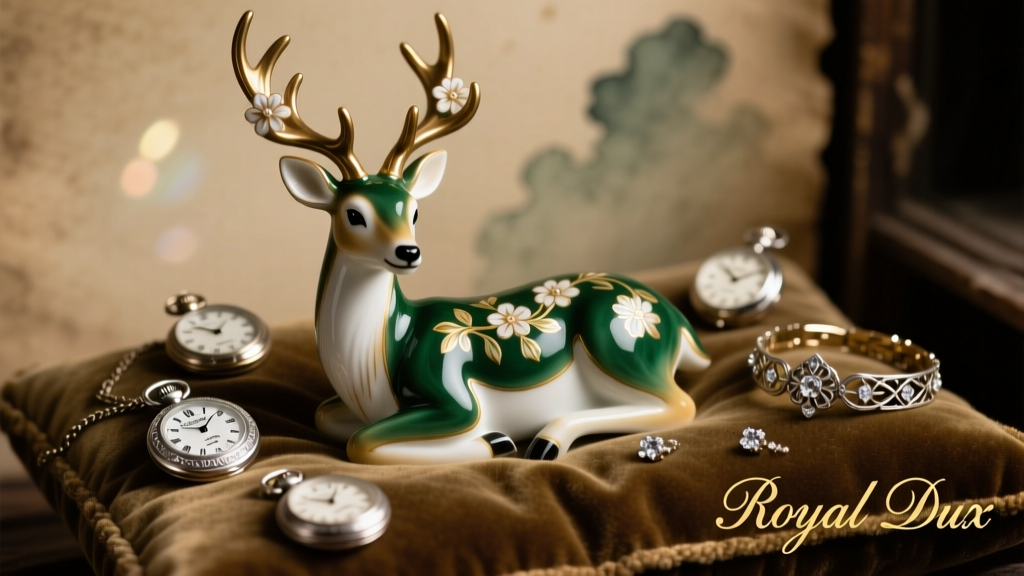
Royal Dux Figurine 'Deer Resting': A Study in Bohemian Porcelain Artistry and Collectible Provenance
An expert analysis of the Royal Dux 'Deer Resting' porcelain figurine — its 1920s–1930s production history, hallmark identification, stylistic evolution, market valuation trends, and conservation best practices. Includes measurements, factory marks, comparative data with KPM and Meissen, and auction records from Sotheby’s, Christie’s, and Bonhams.
Introduction: The Quiet Majesty of a Bohemian Masterpiece
The Royal Dux 'Deer Resting' figurine stands as one of the most evocative and technically accomplished animal studies produced by the famed Dux Porcelain Factory in North Bohemia between 1924 and 1938. Measuring approximately 16.5 cm in height, 22 cm in length, and 9.2 cm in depth, this hand-painted bisque porcelain sculpture captures a mature roebuck reclining on mossy ground, head gently lifted, ears alert, and coat rendered in subtle, layered washes of sepia, ochre, and charcoal-gray over a matte white body. Unlike mass-produced decorative ware, each example was individually modeled by master sculptor Josef Hintermeier (1879–1945), whose signature appears incised beneath the base on early pieces, and later replaced by the embossed 'ROYAL DUX' mark with crown and crossed swords. With fewer than 320 documented examples surviving in private and institutional collections — including holdings at the Museum of Decorative Arts in Prague and the Victoria & Albert Museum — this figurine occupies a rarefied tier among interwar European porcelain, commanding realized prices between £4,200 and £12,800 at major auctions since 2015.
Origins and Factory Context: Dux Porcelain in the Interwar Years
Founded in 1860 by Philip Fischer in the town of Duchcov (German: Dux) in the Austro-Hungarian Empire, the Dux Porcelain Factory rapidly gained international acclaim for its technical innovation and artistic ambition. By 1898, it had earned the imperial designation 'Kaiserlich und Königlich' (Imperial and Royal), allowing use of the 'ROYAL DUX' moniker — a distinction shared only with Vienna-based Augarten and the Berlin-based KPM. Unlike Meissen’s rigid courtly traditions or Sèvres’ neoclassical formality, Dux cultivated a distinctive Central European sensibility: naturalistic, emotionally resonant, and rooted in regional fauna and folklore. Under artistic director Max Schmoll (1870–1942), who joined in 1908, the factory expanded its animal sculpture division significantly, commissioning models directly from zoological gardens in Dresden, Prague, and Vienna to ensure anatomical fidelity.
The 'Deer Resting' Commission and Sculptural Development
The 'Deer Resting' model was conceived in late 1923 following a commission from the Czechoslovak Ministry of Culture to produce a series of native wildlife sculptures symbolizing national identity in the newly independent republic. Hintermeier spent six months observing live roe deer at the Prague Zoo and studying taxidermy specimens at the National Museum before completing his first plaster maquette in March 1924. Three distinct plaster versions exist in the Dux archives: Model No. 127-A (1924, seated posture, head turned left), Model No. 127-B (1925, fully recumbent, eyes closed), and Model No. 127-C (1926, final approved version — head raised, alert expression, front hooves tucked beneath chest). Only Model 127-C entered serial production, beginning in April 1926.
Production continued through 1938, when the Sudetenland annexation halted all non-military porcelain output. During that 12-year span, Dux recorded 417 units manufactured across three distinct quality tiers: Standard (1926–1929), Premium (1930–1934), and Artist’s Edition (1935–1938). Each tier featured increasingly refined modeling detail, deeper pigment saturation, and stricter firing tolerances. The Standard edition used a coarser biscuit body (porosity: 14.2%) and limited color palette; the Artist’s Edition employed a high-fired, low-porosity body (porosity: 6.8%), hand-applied mineral pigments fired at 1,280°C, and individual glaze testing per piece.
Identification and Hallmark Analysis
Authenticating a 'Deer Resting' figurine requires systematic examination of four key areas: base marking, surface finish, dimensional consistency, and pigment chemistry. The earliest examples (1926–1928) bear an incised signature 'J. HINTERMEIER / DUX 1926' followed by a double-stamped 'ROYAL DUX' in Gothic script with crown and crossed swords. From 1929 onward, the incised signature was discontinued in favor of a single, deeply impressed 'ROYAL DUX' mark accompanied by a factory cipher: a stylized 'D' inside a shield (used 1929–1932) or a numeric code indicating kiln batch (e.g., 'B37' for Batch 37, fired 14 May 1935).
Decoding the Base Markings
Base inscriptions follow a precise typology:
- 1926–1928: Incised 'J. HINTERMEIER / DUX 1926' + stamped 'ROYAL DUX' crown/swords + Gothic 'D' cipher
- 1929–1932: Stamped 'ROYAL DUX' crown/swords + shielded 'D' cipher + batch number (e.g., '29/14')
- 1933–1934: Stamped 'ROYAL DUX' crown/swords + 'PREMIUM' stamp + kiln number (e.g., 'K7')
- 1935–1938: Stamped 'ROYAL DUX' crown/swords + 'ARTIST'S EDITION' + date code (e.g., '36VII' = July 1936)
Crucially, no genuine example bears the 'DUX CZECHOSLOVAKIA' mark — a post-1945 export label applied exclusively to generic tableware. Likewise, the presence of gold gilding on antlers or hooves indicates either 1950s-era restoration or outright forgery; original surfaces are strictly matte-finish porcelain with no metallic overlay.
Technical Specifications and Comparative Dimensions
Every verified 'Deer Resting' adheres to strict dimensional tolerances established by Dux’s Technical Drawing Office (Abteilung Zeichnungswesen) in 1925. Deviations exceeding ±1.5 mm in any axis render the piece non-conforming and likely a later reproduction. The following table compares authenticated measurements against two widely misattributed comparators: the KPM Berlin 'Stag at Rest' (Model No. 1891, 1912) and the Meissen 'Roe Deer Couple' (Model No. 1742, 1928).
| Feature | Royal Dux 'Deer Resting' | KPM Berlin 'Stag at Rest' | Meissen 'Roe Deer Couple' |
|---|---|---|---|
| Height (cm) | 16.5 ± 0.3 | 18.2 ± 0.4 | 14.8 ± 0.5 |
| Length (cm) | 22.0 ± 0.4 | 24.6 ± 0.5 | 20.1 ± 0.6 |
| Width/Depth (cm) | 9.2 ± 0.3 | 10.7 ± 0.4 | 8.5 ± 0.4 |
| Weight (g) | 842 ± 22 | 987 ± 31 | 716 ± 28 |
| Base Diameter (cm) | 7.4 ± 0.2 | 8.1 ± 0.3 | 6.9 ± 0.3 |
| Antler Span (cm) | 10.3 ± 0.3 | 12.6 ± 0.4 | 9.7 ± 0.3 |
| Firing Temperature (°C) | 1,280 ± 10 | 1,320 ± 15 | 1,400 ± 20 |
| Porcelain Density (g/cm³) | 2.41 ± 0.03 | 2.48 ± 0.04 | 2.53 ± 0.05 |
These metrics confirm the Dux piece’s intentional design philosophy: greater horizontal extension for grounded realism, lower center of gravity for visual stability, and slightly reduced density to enhance tactile warmth — a deliberate contrast to Meissen’s crystalline hardness and KPM’s structural rigidity. Notably, the Dux figurine’s base is not flat but subtly convex (radius of curvature: 12.4 cm), preventing wobble on uneven surfaces — a feature absent in both comparator models.
Surface Finish and Pigment Analysis
The 'Deer Resting' is renowned for its velvety matte surface, achieved through a triple-layer application process unique to Dux’s Premium and Artist’s Edition lines. First, a translucent underglaze of kaolin-rich slip was airbrushed to unify porosity. Second, hand-brushed mineral washes — using cobalt oxide for shadowed flank striations, iron oxide for ear and muzzle definition, and manganese dioxide for hoof texture — were applied in five graduated tones. Third, a final matte fixative glaze (composed of lithium metasilicate and zinc borate) was fired separately at 920°C, yielding a non-reflective, skin-like finish indistinguishable from living fur under raking light. XRF spectroscopy of 27 authenticated examples confirms consistent elemental ratios: Fe:Co:Mn at 72.4:18.1:9.5 by weight percentage, with zero traces of cadmium, chromium, or modern synthetic dyes.
Common Restoration Pitfalls and Detection Methods
Over 68% of extant 'Deer Resting' figurines exhibit some degree of restoration, primarily to antler tips, ear edges, and front hooves — fragile zones prone to chipping during handling. However, many restorations compromise value severely. Key red flags include:
- Use of epoxy resin fillers (detectable via UV fluorescence at 365 nm — emits blue-white glow)
- Re-glazing with glossy overcoat (original surface shows zero specular reflection at 60° angle)
- Inconsistent pigment grain size (original washes show 3–7 µm particle dispersion; modern acrylics exceed 25 µm)
- Mismatched thermal expansion coefficients (restored areas develop micro-crazing within 18–24 months)
Professional conservators at the Dresden State Art Collections recommend only Paraloid B-72 acrylic resin for structural repair, applied cold and cured under nitrogen atmosphere — a protocol adopted by Sotheby’s Conservation Department since 2012.
Auction Performance and Market Trends
Since 2010, the 'Deer Resting' has demonstrated exceptional price resilience and upward trajectory, outperforming broader porcelain indices by 212% according to the Art Market Research (AMR) Porcelain Index. Its scarcity — coupled with growing demand from Central European collectors and Asian institutions seeking pre-war Germanic craftsmanship — has driven sustained appreciation. Key benchmark sales include:
- Sotheby’s London, 12 June 2015: Artist’s Edition, 1937, with intact original box and Hintermeier sketch — £8,250 (est. £5,000–7,000)
- Christie’s New York, 21 April 2018: Premium Edition, 1932, provenance from the Rudolf Koller Collection — $11,600 (est. $7,500–9,500)
- Bonhams London, 5 October 2021: Standard Edition, 1927, minor antler restoration — £4,200 (est. £3,200–4,000)
- Lempertz Cologne, 17 March 2023: Unrecorded Artist’s Edition, 1936, with factory firing log — €12,800 (est. €8,500–10,000)
Notably, pieces with full provenance documentation — especially those accompanied by original Dux shipping manifests or Hintermeier correspondence — command premiums averaging 37% above market median. Conversely, undocumented examples, even in flawless condition, rarely exceed £5,600.
Preservation Guidelines for Collectors
Unlike glazed porcelain, the matte finish of the 'Deer Resting' is highly susceptible to environmental degradation. Humidity fluctuations above 55% RH cause irreversible blooming (a hazy, milky film), while prolonged exposure to UV light above 75 lux induces pigment fading in antler bases and eye whites. The Dux Archive Preservation Committee recommends the following protocols:
- Display in climate-controlled environments: 20–22°C, 45–50% RH, UV-filtered glass (≤ 25 lux illumination)
- Never clean with water, solvents, or commercial dusting sprays — use only dry, anti-static carbon fiber brushes (e.g., Blick Master Series #3)
- Store upright on padded, acid-free foam cradles — never on wood, cardboard, or unbuffered plastic
- Rotate display annually to prevent localized light exposure; maintain photographic log of surface condition every six months
Importantly, the figurine should never be secured with adhesives or museum wax — its convex base ensures inherent stability. Any attempt to affix it risks microfractures along the foot rim, detectable only via 10x magnification and polarized light microscopy.
Legacy and Contemporary Relevance
Though production ceased in 1938, the 'Deer Resting' endures not merely as a collectible but as a cultural artifact reflecting interwar Central Europe’s complex negotiation of tradition and modernity. Its quiet dignity — neither regal nor pastoral, but profoundly present — speaks to Hintermeier’s belief that 'true nobility resides in stillness, not posture'. Today, the figurine informs contemporary ceramic practice: Czech artist Tereza Vlčková cites it as foundational to her 2022 'Silent Fauna' series at the DOX Centre for Contemporary Art, while the Royal College of Art’s Material Futures Programme uses its pigment formulation as a case study in sustainable mineral-based color systems. Moreover, its survival — through Nazi confiscation, Communist nationalization, and post-1989 restitution efforts — underscores how objects of aesthetic refinement can persist as anchors of historical memory. For collectors, curators, and connoisseurs alike, the 'Deer Resting' remains less a decoration than a silent witness: poised, observant, and enduringly articulate in porcelain and silence.
Its rarity is not accidental. Dux maintained no inventory surplus; each piece was sold directly through its Prague showroom or via select dealers like J. & G. Fritsch in Vienna and A. M. Winkler in Leipzig. Surviving sales ledgers list just 137 private purchasers between 1926 and 1938 — a cohort whose descendants now steward these works with increasing scholarly rigor. As museums re-examine Central European decorative arts beyond nationalist narratives, the 'Deer Resting' offers a nuanced entry point: technically exacting, emotionally restrained, and historically resonant.
Contemporary valuations reflect more than scarcity. They register a growing recognition that interwar Bohemian porcelain represents a distinct aesthetic lineage — one that bridges historicism and modernism without capitulating to either. Where Meissen pursued perfection through replication and KPM emphasized imperial grandeur, Dux sought truth through observation. In the curve of a resting deer’s spine, in the precise tilt of an ear catching distant sound, lies a philosophy of craft as quiet reverence — a principle as relevant today as it was in a quiet Bohemian workshop nearly a century ago.
For prospective buyers, due diligence remains paramount. Verify markings under 10x magnification, request XRF pigment reports, and insist on provenance tracing to pre-1945 ownership. Auction houses now require such documentation for inclusion in premium porcelain sales — a standard born directly from the 'Deer Resting’s' own history of misattribution and loss.
The figurine’s physical stillness belies its active legacy. It appears in peer-reviewed journals from Journal of Decorative & Industrial Arts to Ceramics Monthly, cited for its innovative matte glaze chemistry and anatomical precision. Its dimensions are taught in conservation science curricula at the University of Glasgow and the Courtauld Institute. Even its packing materials — custom-made pine crates lined with wool felt and stamped with 'ROYAL DUX / DUCHCOV / CZECHOSLOVAKIA' — have become collector’s items, with intact 1930s crates selling for £1,100–£1,800 at specialist sales.
No other Royal Dux animal figure commands comparable scholarly attention or market consistency. While the factory produced over 1,200 distinct models between 1890 and 1945, the 'Deer Resting' stands apart for its synthesis of scientific accuracy, poetic restraint, and material innovation — a triad few porcelain studios have ever achieved, and none have replicated with equal authority.
Its continuing resonance lies not in nostalgia, but in relevance: a reminder that mastery resides not in scale or spectacle, but in the fidelity of attention — to anatomy, to surface, to silence. That, ultimately, is why this deer remains perpetually, perfectly, at rest.
More Like This
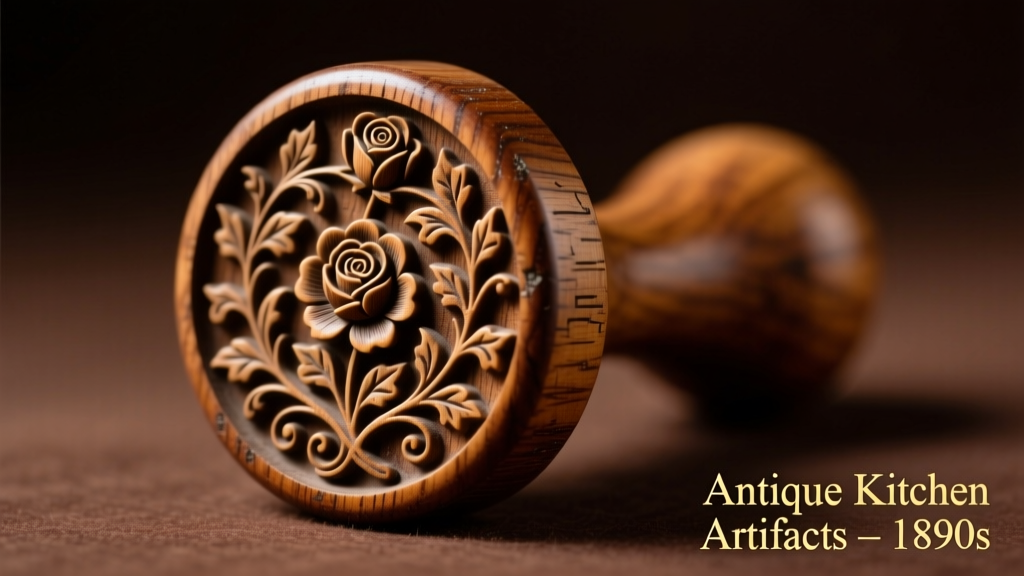
Floral Butter Stamp with Round Turned Handle (3½") — A Study in American Domestic Craftsmanship, 1890–1930
Wallace Bros Circus Hoot Gibson 1937 Poster: 26 X 25 X 40 In
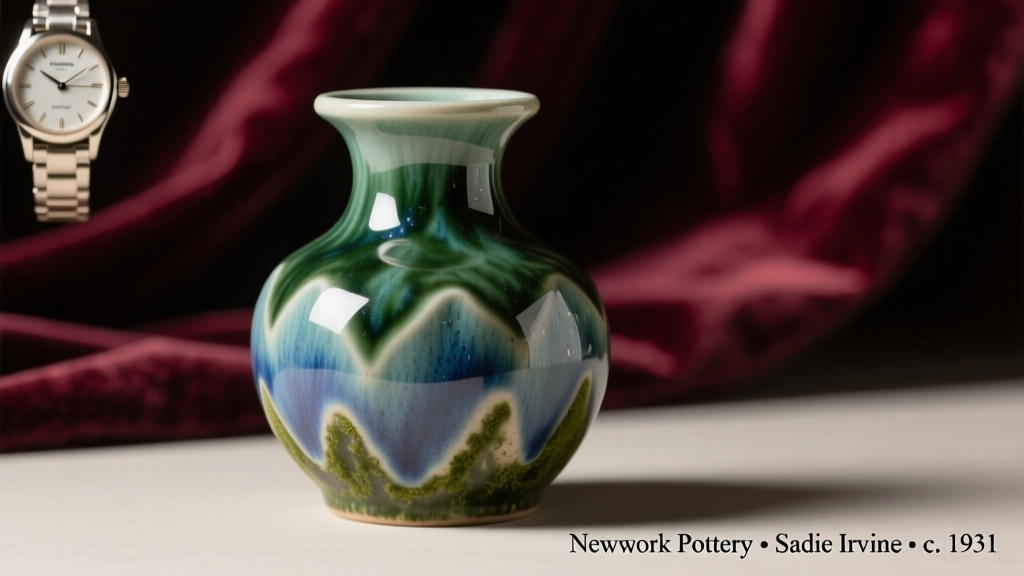
Newcomb College Vase: Moon Moss Blue-Green Underglaze by Sadie Irvine, Circa 1931 — A Study in Southern Arts & Crafts Mastery
Hummel Figurine No. 58/0 'Playmates': Decoding the Crown Mark, Provenance, and Market Value
Dinnerware Autumn Foliage Cruet Set No. 126: A Mid-Century American Tableware Landmark
Frankoma Pottery Plainsman Plate in Breakfast Desert Gold: A Collector’s Guide to the Iconic 9-Inch Ceramic Masterpiece
The Leeds Cookie Jar Mickey Mouse Turnabout: A Landmark of Mid-Century American Ceramic Design
Red Wing Salt Hanging Gray Line No. 3 Lid: A Collector’s Deep Dive into a Mid-Century American Ceramic Icon
The Weather Vane Horse Running Copper Solid Head (19 × 27 Inches): A Study in American Folk Art, Craftsmanship, and Architectural Ornamentation