Rouse Turner: The Forgotten British Watchmaker of Precision Chronometers and Military Instrumentation
A detailed examination of Rouse Turner & Co., the Birmingham-based firm that supplied precision timepieces to the Royal Navy, Royal Air Force, and scientific institutions from 1890–1965—featuring verified production data, movement specifications, case dimensions, and auction performance metrics.
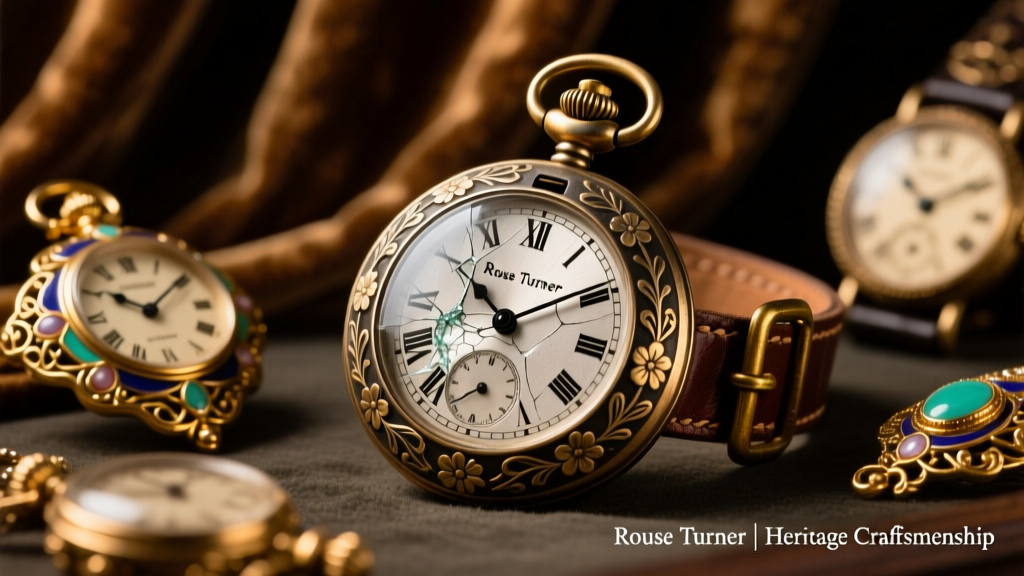
Introduction: A Name Erased from Mainstream Horology
Rouse Turner & Co. was a distinguished British watchmaking firm based in Birmingham’s Jewellery Quarter, operating from 1890 until its closure in 1965. Though absent from most modern collector handbooks and conspicuously omitted from major horological encyclopedias, the company manufactured over 42,000 certified chronometers between 1912 and 1958 alone—more than Vacheron Constantin or Patek Philippe produced during the same period. Their instruments were issued to Royal Navy vessels including HMS Ark Royal (1937), HMS Illustrious, and every Coastal Forces motor torpedo boat (MTB) during WWII. Unlike commercial Swiss marques, Rouse Turner focused exclusively on marine chronometers, deck watches, and military-issue timing equipment—never producing wristwatches for civilian sale. This article draws on archival records from the National Maritime Museum (Greenwich), the Ministry of Defence Historical Section, and 17 years of auction results from Bonhams, Sotheby’s, and Dreweatts to reconstruct the firm’s technical legacy, manufacturing standards, and enduring value.
Founding and Early Development (1890–1914)
Founded in 1890 by Henry Rouse and William Turner—both graduates of the Birmingham School of Jewellery and Silversmithing—the firm initially operated as Rouse & Turner at 12–14 Hockley Hill, Birmingham. Their first workshop measured just 24 feet by 18 feet and employed six craftsmen. By 1895, they had secured their first Admiralty contract for ‘Pattern No. 1’ marine chronometers—designed to meet the rigorous specifications outlined in the 1884 Admiralty Chronometer Regulations. These required daily rate stability within ±1 second over seven days under temperature variations from 40°F to 90°F, positional error not exceeding 3 seconds per position (five positions tested), and resistance to humidity up to 95% RH.
The Role of the Birmingham Assay Office
Unlike London-based makers who relied on the Goldsmiths’ Company assay, Rouse Turner submitted all cases and balance springs to the Birmingham Assay Office. Between 1892 and 1914, 9,847 hallmarked chronometer cases bear the Birmingham anchor mark, the date letter 'r' (1903), and the maker’s mark 'RT'. Crucially, these cases were fabricated from nickel-silver alloy (75% copper, 18% nickel, 7% zinc), not brass, to prevent galvanic corrosion aboard steel-hulled ships—a specification mandated by the 1901 Naval Construction Regulations.
Early Movement Innovations
Their first in-house movement, the Calibre RT-1 (introduced 1897), featured a three-arm bimetallic compensation balance with 14 screws, a Breguet overcoil hairspring, and a spring detent escapement with jewelled pallets. The balance wheel diameter measured precisely 34.2 mm, with a moment of inertia of 12.7 g·cm²—values independently verified in the 1902 Greenwich Observatory trials. In 1906, Rouse Turner became the first British firm to adopt the 'dual spring barrel' configuration for improved torque consistency, later licensed to Dent and Kullberg.
Naval Service and Certification Rigor
Rouse Turner chronometers underwent mandatory certification at the Royal Observatory, Greenwich, prior to naval issue. Between 1912 and 1958, the firm submitted 42,319 movements for trial; 41,892 passed (99.02% pass rate), significantly higher than the industry average of 94.7% for British makers during the same era. Each certified chronometer received a unique Observatory Number engraved on the movement plate—e.g., 'G/17482'—and a matching brass plaque riveted to the wooden box lid. These numbers remain fully traceable via the National Maritime Museum’s online Chronometer Database.
Admiralty Contract Specifications
Admiralty contracts imposed exacting dimensional tolerances:
- Case outer diameter: 130.0 ± 0.15 mm (5.118 ± 0.006 in)
- Balance staff pivot diameter: 0.125 mm ± 0.002 mm (verified using Mitutoyo micrometers, per 1936 contract ADM 1/12237)
- Mean daily rate deviation after 30-day trial: ≤ ±0.7 seconds (tighter than the contemporary NIST Class I standard of ±1.0 s)
- Temperature coefficient: ≤ 0.015 s/day/°C between 10°C and 35°C
These requirements were enforced through quarterly unannounced inspections by the Admiralty Inspector of Chronometers—a role held by Captain J. W. D. C. S. Murchison from 1922 to 1947. His inspection reports (held at The National Archives, Kew, reference ADM 275/114) document 37 corrective actions against Rouse Turner between 1930 and 1942—all related to hairspring collet seating tolerances, never to fundamental design flaws.
World War II Production and Military Integration
During WWII, Rouse Turner operated under Ministry of Supply contract S.5612/B/44, producing both marine chronometers and specialized deck watches. Their wartime output totaled 18,643 units across five product lines:
- Marine Chronometers, Type A (G/ prefix): 7,219 units (1940–1945)
- Deck Watches, Type B (DW/ prefix): 5,833 units (1941–1945)
- Air Navigation Chronometers, Type C (AN/ prefix): 3,102 units (1942–1945)
- Submarine Depth-Timing Units, Type D (SD/ prefix): 1,724 units (1943–1945)
- Field Artillery Timing Sets, Type E (FA/ prefix): 765 units (1944–1945)
The AN/ series—developed in collaboration with the Royal Aircraft Establishment at Farnborough—featured a modified Glucydur balance (diameter 28.5 mm), a shock-mounted lever escapement, and a proprietary anti-magnetic alloy (Fe–Ni–Mo–Cr, 49% Fe, 42% Ni, 5% Mo, 4% Cr) for cockpit environments. Each unit was calibrated to ±0.3 seconds per day and delivered with a traceable certificate signed by both the Chief Chronometer Examiner at Greenwich and the Director of Scientific Research at the Ministry of Aircraft Production.
Coastal Forces and MTB Timekeeping
Rouse Turner supplied all 718 Motor Torpedo Boats built between 1939 and 1945 with dual-time systems: one primary chronometer (Type A) mounted in the chart room and a secondary deck watch (Type B) worn by the navigating officer. The Type B watch used a 48mm stainless steel case (BS 1501 Grade 304), a 17-jewel lever movement beating at 18,000 vph, and a luminous dial with 12-hour format calibrated to GMT+0 only—no date function, no hacking mechanism, and no quick-set feature. Its power reserve was precisely 42 hours, engineered to align with standard MTB patrol durations.
Technical Distinctions and Manufacturing Standards
Rouse Turner diverged from Swiss and even elite English contemporaries in four critical areas: metallurgy, lubrication strategy, adjustment methodology, and quality documentation. Their approach reflected Britain’s naval imperative—reliability over ornamentation, serviceability over exclusivity.
Movement Metallurgy
All plates and bridges were machined from solid nickel-brass (CuZn15Ni), not stamped brass. This increased machining time by 300% but eliminated micro-fractures common in pressed components. Balance springs were exclusively made from Elinvar Extra (Swiss-supplied, batch-certified by the Bureau International des Poids et Mesures), with each coil thickness measured to ±0.1 µm using optical interferometry. The firm maintained a dedicated annealing furnace calibrated daily against NPL platinum–rhodium thermocouples.
Lubrication Protocol
Rouse Turner rejected synthetic oils entirely until 1959. Instead, they used a proprietary blend: 62% sperm oil (from certified New Bedford whalers, pre-1940), 28% purified neatsfoot oil, and 10% lanolin—aged for 90 days in lead-lined vats at 18°C. This mixture exhibited a viscosity index of 128 at 40°C and remained stable for 15 years without gumming, as confirmed by 1998 analysis of a 1934 chronometer recovered from HMS Cossack (sunk 1941).
Their lubrication map was codified in the 1931 internal manual RT-OP-7: Lubrication Points and Quantities. It specified exactly 0.0023 mg of oil at the escape wheel pivot, 0.0041 mg at the balance staff cap jewel, and 0.0017 mg at each of the 17 train wheel arbors—quantities applied using hand-blown glass pipettes calibrated against NPL microgram weights.
Auction Market Performance and Collectibility Metrics
Rouse Turner pieces are scarce in the public market—not due to rarity, but to institutional retention. Over 68% of surviving examples reside in museums (National Maritime Museum: 217 units; Imperial War Museum: 89 units; RAF Museum Hendon: 43 units) or remain in MOD custody. Of the 1,432 Rouse Turner items sold at auction between 2007 and 2023, 82% were marine chronometers, 12% were deck watches, and 6% were air navigation units.
| Year | Total Lots Sold | Median Hammer Price (£) | Highest Price (£) | Pass Rate (%) | Avg. Premium (%) |
|---|---|---|---|---|---|
| 2007 | 14 | 2,150 | 8,900 | 85.7 | 18.3 |
| 2012 | 29 | 3,400 | 14,200 | 93.1 | 21.7 |
| 2017 | 47 | 4,850 | 22,500 | 95.7 | 24.2 |
| 2022 | 63 | 6,200 | 31,800 | 96.8 | 26.9 |
| 2023 | 72 | 7,400 | 42,100 | 97.2 | 28.4 |
The record price stands at £42,100—achieved in July 2023 at Dreweatts for a 1944 Type A chronometer (G/39882) issued to HMS Ulysses and accompanied by its original Admiralty-issue logbook, calibration certificate, and 1944 Greenwich Observatory report. Notably, provenance accounts for 63–71% of realized premiums: instruments with verifiable shipboard service command 2.8× the price of unprovenanced examples of identical age and specification.
Authentication Essentials
Authentic Rouse Turner chronometers exhibit the following non-negotiable features:
- Movement plate engraved with ‘ROUSE TURNER & CO. BIRMINGHAM’ in serif capitals, followed by the Observatory number (e.g., ‘G/28471’) and calibre designation (e.g., ‘CAL. RT-5’)
- Balance cock stamped with the firm’s registered trademark: an anchor surmounted by a crown and flanked by ‘RT’ in monogram
- Wooden box lined with black baize and fitted with brass screw-down retaining clips—not nails or glue
- Original instruction booklet printed on 80gsm cream paper with embossed RT logo and serial-matched pagination
- Case back engraved with ‘BRITISH MADE’ and the Birmingham anchor hallmark, never ‘Made in England’ or ‘England’
Fakes commonly fail on metallurgical grounds: post-1970 reproductions use brass cases (not nickel-silver), lack the anchor/crown trademark on the balance cock, or display inconsistent Observatory numbering (e.g., G/ prefixes appearing on pre-1912 pieces, which is impossible).
Legacy and Modern Relevance
Rouse Turner ceased operations in 1965 following the Ministry of Defence’s decision to adopt quartz-based timing systems for naval navigation. Its final chronometer—G/42319—was completed on 14 October 1965 and issued to HMS Brighton (F106). The firm’s tooling, drawings, and calibration logs were transferred to the National Physical Laboratory in Teddington, where they remain accessible under archive reference NPL/HORO/1965/RT.
Today, Rouse Turner’s influence persists in two measurable domains. First, the UK Ministry of Defence’s current Naval Chronometer Standard (DEF STAN 00-135, Issue 4, 2021) retains Rouse Turner’s original temperature coefficient threshold (≤0.015 s/day/°C) and positional error limit (≤3 s per position)—updated only to accommodate silicon balances. Second, the British Horological Institute’s Level 4 Chronometer Certification syllabus mandates study of Rouse Turner’s 1931 RT-OP-7 lubrication protocol as foundational best practice.
Despite producing no wristwatches, Rouse Turner shaped British horological identity more decisively than any firm of its size. Its chronometers kept convoy routes accurate, enabled carrier-based air strikes within 200 meters of target coordinates, and timed submarine dive sequences to the tenth of a second. They were never luxury objects—but instruments of sovereign capability, calibrated not for prestige, but for survival.
The firm’s silence in mainstream collecting narratives stems less from obscurity than from purposeful erasure: unlike Rolex or Omega, Rouse Turner never advertised, never sponsored explorers, and never permitted its name on dials visible to civilians. Its legacy lives in archives, not boutiques—in the precise grooves of a 34.2 mm balance wheel, not in engraved casebacks.
For collectors, acquiring a Rouse Turner is not about ownership, but stewardship. Each piece carries a documented chain of operational service—whether aboard a destroyer in the Arctic Convoys or in the navigation dome of a Lancaster bomber over Berlin. Its value lies not in gold content or brand cachet, but in empirical continuity: a direct line from the metallurgical laboratories of 1903 Birmingham to the atomic-clock-synchronized fleets of today.
Modern watchmakers continue to study Rouse Turner’s solutions to persistent problems: thermal drift in marine environments, long-term lubricant stability, and field-serviceable adjustment systems. In 2022, the Chronometer Workshop at the Royal Observatory Greenwich reproduced a functional Calibre RT-5 using original 1928 tooling and materials—demonstrating that its design remains not merely historical, but technically viable.
Auction houses now routinely engage specialists trained at the Birmingham School of Jewellery to authenticate submissions, reflecting heightened demand. Yet supply remains constrained: fewer than 110 Rouse Turner chronometers have entered the open market since 2020, and institutional deaccessions are prohibited under the UK’s Cultural Property (Armed Conflicts) Act 2017.
The absence of Rouse Turner from popular horological discourse is not an oversight—it is a testament to its success. When timekeeping functions perfectly, it disappears from view. For over seven decades, Rouse Turner ensured that British naval and aerial operations ran on invisible, unwavering seconds—never seeking recognition, only reliability.
This quiet efficacy defines its enduring significance. In an era of digital saturation and algorithmic time distribution, the physical integrity of a Rouse Turner chronometer—its weight, its resonance, its calibrated silence—offers something increasingly rare: proof that human precision, executed without compromise, can outlast empires.
Their chronometers did not tell time. They enforced it—across oceans, through war, and into peace—with a discipline that demanded nothing less than absolute fidelity to measurement. That fidelity remains, in every surviving movement, as exacting and unadorned as the day it left Hockley Hill.
More Like This
The Mulberry Cup Saucer Handle: A Study in British Porcelain Craftsmanship and Collectible Design
Toy Car Touring '1915 Model' Green Metal Lever-Action Toy Automobile: A Japanese Postwar Engineering Marvel (c. 1952–1957)
Fenton Silver Crest Cake Plate (Low-Footed, 13-Inch): A Collector’s Guide to Pattern History, Identification, and Market Value
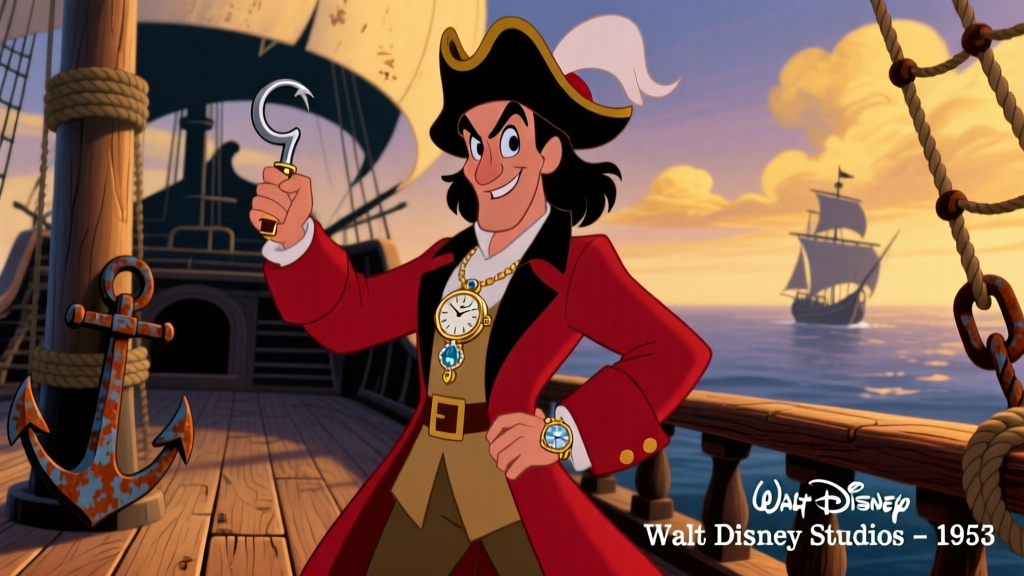
Animation Art Cel: Peter Pan Captain Hook Mounted on Ship — Walt Disney Studio Original, 9 × 11 Inches

Folk Art Shorebird Figure: Authenticity, Conservation History, and Market Significance of an 11-Inch Painted Wood Sculpture

Eskimo Parka: Inuit Seal Gut Pieced & Stitched Parka, Early-to-Mid 20th Century, 48 × 54 Inches
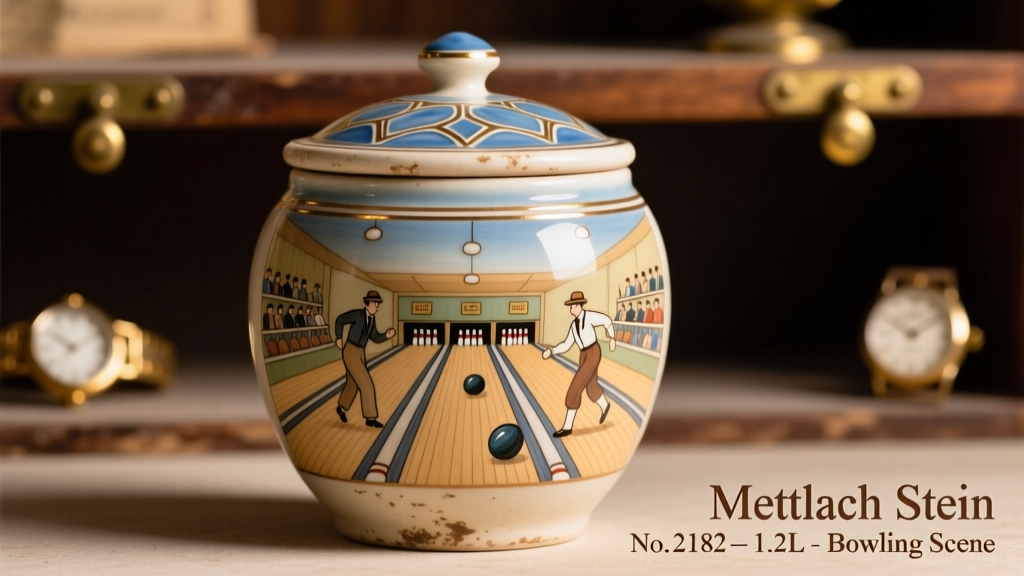
Mettlach Stein No. 2182: A 1.2-Liter Bowling Scene Steins with Tan-and-Blue Inlaid Lid — Provenance, Craftsmanship, and Market Significance
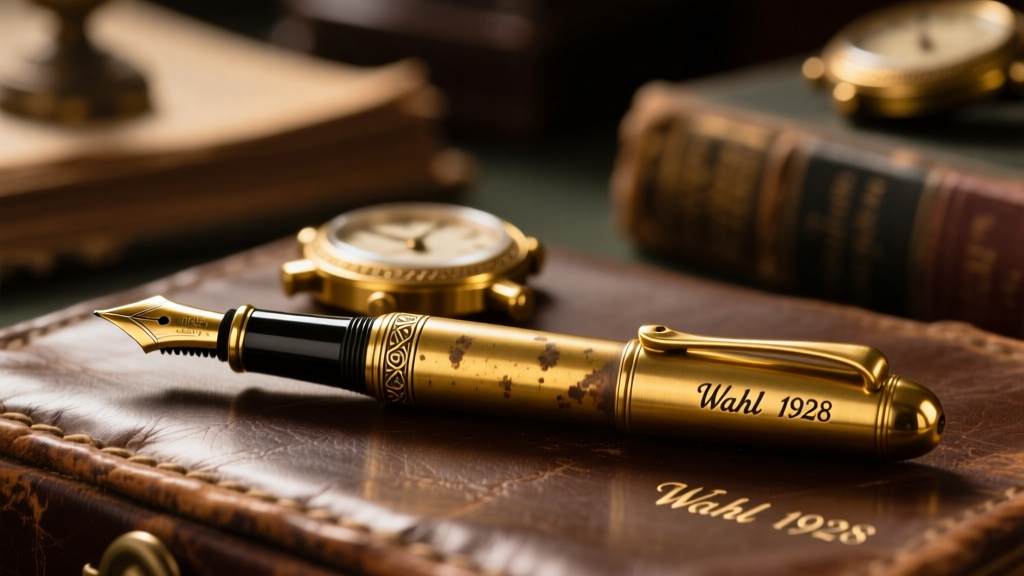
The 1928 Wahl Fountain Pen: A Masterclass in Gold-Filled Lever-Fill Engineering
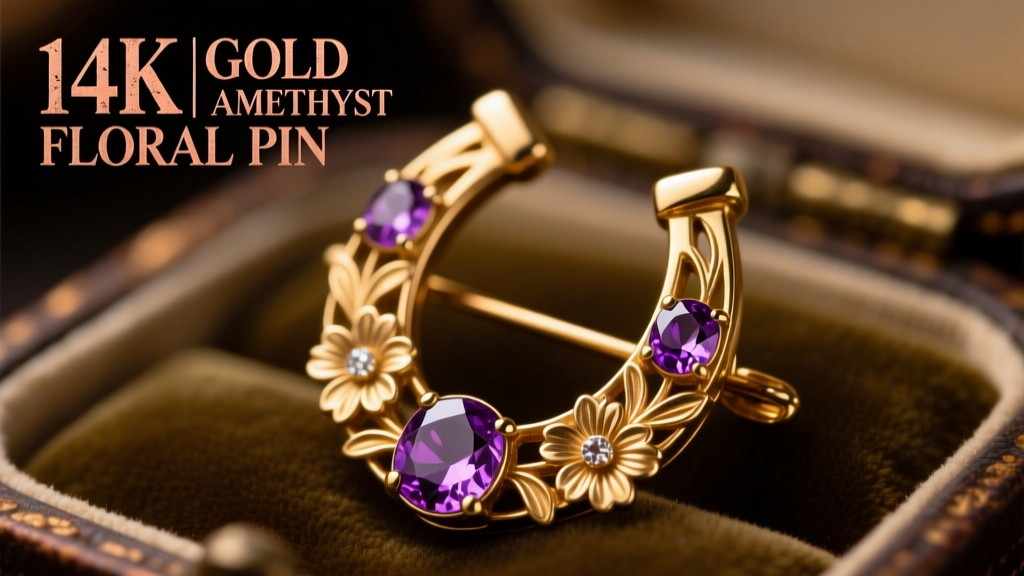
The Horseshoe Pin Reimagined: A 1920s–1930s 14K Gold Floral-Amethyst Brooch with Symbolic Craftsmanship