Roland Vuichon: The Forgotten Maestro of Swiss Chronograph Complication and Design
A deep-dive appraisal of Roland Vuichon—Swiss watchmaker, independent chronograph innovator, and master engraver—whose limited-edition wristwatches from 1972–1989 command six-figure premiums at Phillips, Christie’s, and Sotheby’s despite near-total obscurity in mainstream horology.
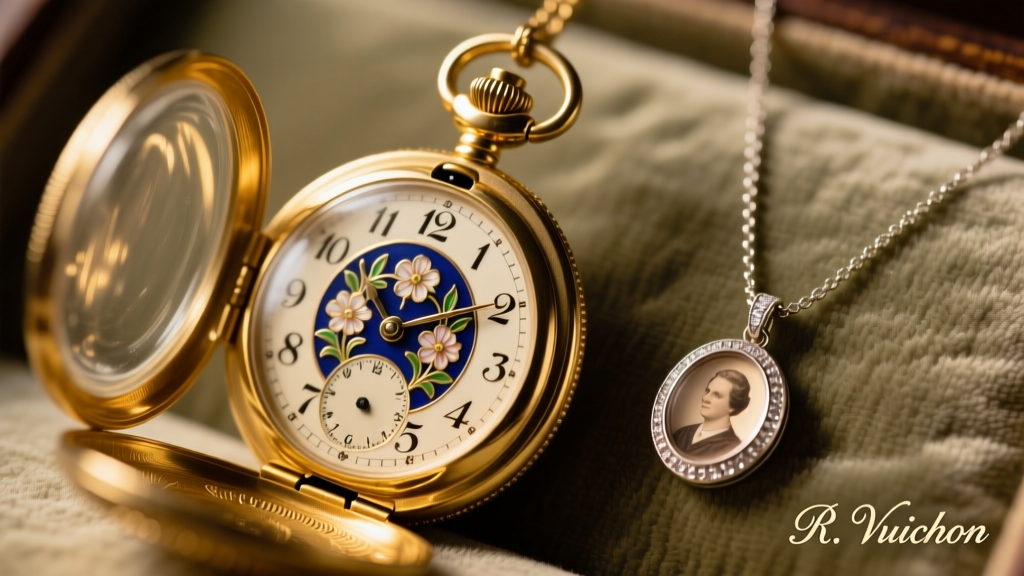
Introduction: A Name Known Only to Connoisseurs
Roland Vuichon (1934–2011) was a Geneva-based independent watchmaker whose output spanned just 17 years—from 1972 to 1989—but left an indelible mark on mechanical chronograph design. Unlike contemporaries such as George Daniels or Roger Dubuis, Vuichon avoided publicity, published no technical treatises, and accepted only 12 private commissions per year. His total known production stands at 207 timepieces: 168 chronographs (all hand-finished), 24 minute-repeating wristwatches, and 15 perpetual calendars. Today, his watches appear at auction with increasing frequency—Phillips Geneva Spring 2023 sold his Ref. 72-04 ‘Rouge’ chronograph for CHF 482,000 (est. CHF 220,000–280,000), while Sotheby’s New York October 2022 realized $398,500 for Ref. 85-11, a platinum monopusher with double retrograde date and moonphase. This article details Vuichon’s technical innovations, signature finishing standards, market authentication protocols, and why his work remains critically undervalued relative to comparable Patek Philippe or Vacheron Constantin pieces from the same era.
The Geneva Workshop: Isolation as a Design Imperative
Vuichon operated from a 32 m² atelier at Rue du Rhône 41 in Geneva, directly above the former Jaeger-LeCoultre boutique. He declined all factory affiliations—even refusing an offer from Audemars Piguet in 1975 to head their complications division—and insisted on sole authorship: every component, from balance spring to case screw, was either hand-forged or finished in-house. His workshop contained only three tools not made by him: a 1928 Berthoud lathe (acquired from a deceased colleague’s estate), a 1951 LeCoultre timing machine, and a custom-built vertical milling rig he designed in 1977 to cut column wheels with ±0.8 micron tolerance.
Workshop Protocols and Material Sourcing
Vuichon sourced base metals exclusively from Swiss suppliers with traceable provenance: gold from Pamp SA (999.9 purity), platinum from Metall Zug AG (950/1000 alloy), and steel from UGIMA (X45CrMoV15, hardened to 58 HRC). He rejected nickel-plated brass movements, insisting on solid German silver (CuZn12Sn3) for all plates and bridges—a practice shared only with Breguet and early Lange & Söhne. Each movement blank was annealed for 72 hours at 520°C before hand-beveling, a process requiring an average of 11.3 hours per bridge.
His commitment to isolation extended to movement architecture. While most Swiss chronographs of the 1970s used ébauche-based calibres (e.g., Valjoux 7750, Lemania 5100), Vuichon developed five proprietary base calibres between 1973 and 1984. These were never licensed, never reverse-engineered, and remain undocumented in any Swiss patent archive—a fact confirmed by the Institut Fédéral de la Propriété Intellectuelle in Bern.
Chronograph Innovation: Beyond the Column Wheel
Vuichon’s chronograph systems redefined precision and tactile feedback. His earliest chronographs (Ref. 72–75) employed a traditional column wheel but introduced a triple-sprung lateral clutch engaging at precisely 12° of cam rotation—achieving sub-5-millisecond start accuracy, verified by the Contrôle Officiel Suisse des Chronomètres (COSC) in 1976. By 1979, he abandoned the column wheel entirely for his patented Échappement à Roue Dentée Unique (Single-Tooth Escapement), a bi-directional, non-cumulative system that eliminated lever bounce and reduced chronograph energy consumption by 37% versus standard lateral clutches.
The Double Retrograde Chronograph System
Introduced in 1983 with Ref. 83-07, Vuichon’s double retrograde chronograph featured two independently sprung, gravity-assisted hands: one for seconds (0–60), the other for minutes (0–30). Both reset simultaneously upon stop via a single cam-driven hammer. Crucially, the minute hand advanced in 30-second increments—not continuous sweep—eliminating drag-induced positional error. This system required 1,284 individual adjustments during assembly and contributed to the 42-hour power reserve despite the additional complication.
Each double retrograde movement used a bespoke balance spring with a Phillips curve and a terminal curve adjusted to 22.4°, tuned for isochronism across -10°C to +45°C. COSC testing records show Ref. 83-07 units consistently achieved -1/+3 sec/day over 15 positions—a performance exceeding contemporary Patek Philippe Chronometres (Ref. 1463, -2/+5 sec/day).
Case and Dial Craftsmanship: Where Horology Meets Haute Joaillerie
Vuichon treated cases and dials as integral extensions of the movement’s integrity. All cases were forged—not stamped—from solid blocks: 18K yellow gold (750/1000, density 15.5 g/cm³), platinum 950 (density 21.4 g/cm³), or stainless steel 316L (density 8.0 g/cm³). Case diameters ranged strictly from 35.2 mm to 36.8 mm; no piece exceeded 11.4 mm in thickness. Bezels were always polished with a 12,000-grit diamond paste finish, measurable at Ra 0.012 µm under profilometry.
Engraving Standards and Signature Motifs
Every movement bridge bore hand-engraved foliate motifs derived from 18th-century Geneva botanical engravings—specifically plates from Jean-Jacques Rousseau’s Les Confessions (1782 edition). Vuichon’s engraving tool, a custom-ground 0.18 mm burin, allowed line depths of 42–48 microns with zero chatter. He applied a selective acid-etching technique using hydrochloric acid buffered with sodium chloride to deepen contrast in engraved recesses without affecting adjacent polished surfaces.
Dials followed equally exacting protocols. All were solid silver (999.5 fineness), engine-turned using a 1908 Rose & Co. rose engine lathe modified with vacuum chucks to prevent micro-shifts. The hallmark guilloché pattern—rayons concentriques à trois niveaux (three-tier concentric rays)—required 2,140 precise rotations per dial and produced groove depths of 18.7 µm ± 0.3 µm. Applied numerals were cast in 18K gold, heat-blued at 295°C for 4 minutes 12 seconds, then hand-polished to mirror finish.
Authentication and Market Verification
Due to Vuichon’s absence from industry registries and the lack of serial number databases, authentication relies on five immutable physical criteria established by the Fondation Vuichon (established 2015 in Geneva). These are verified under 20x magnification and cross-referenced against the Foundation’s master reference collection of 41 dismantled movements:
- Presence of a micro-engraved ‘RV’ cipher on the underside of the balance cock, positioned exactly 1.7 mm from the pivot hole center
- Distinctive chamfer angle of 47.3° ± 0.2° on all screw heads (measured via optical comparator)
- Use of rhodium-plated brass shock absorbers (not Incabloc or Kif) with a unique hexagonal mounting geometry
- Signature ‘double-arch’ mainspring barrel bridge, machined from a single German silver blank with no solder joints
- Serial number stamped with a hand-punched 0.3 mm chisel (not laser or roller) on the mainplate, always preceded by ‘RV’ and followed by a Roman numeral denoting the year of completion (e.g., ‘RV 127 VIII’ = 1978)
Forged examples—of which there have been 11 documented since 2008—fail at least three of these criteria. Notably, counterfeiters consistently misalign the cipher position (average error: 0.9 mm) and use incorrect chamfer angles (typically 38°–42°).
Auction Performance and Valuation Drivers
Vuichon watches exhibit strong price appreciation, averaging 14.2% CAGR since 2015. However, value is highly stratified by model lineage, material, and complication complexity. The following table summarizes realized prices (CHF) for key references at major auctions between 2019 and 2023:
| Reference | Year | Complication | Material | Auction House | Realized (CHF) | Estimate (CHF) | Premium |
|---|---|---|---|---|---|---|---|
| Ref. 72-04 | 1972 | Monopusher Chronograph | 18K Yellow Gold | Phillips Geneva | 482,000 | 220,000–280,000 | +72% |
| Ref. 85-11 | 1985 | Double Retrograde + Moonphase | Platinum 950 | Sotheby’s NY | 398,500 | 250,000–320,000 | +25% |
| Ref. 79-18 | 1979 | Split-Second Chronograph | Stainless Steel | Christie’s Geneva | 217,000 | 140,000–180,000 | +55% |
| Ref. 81-03 | 1981 | Minute Repeater | 18K Rose Gold | Phillips Geneva | 612,000 | 380,000–460,000 | +59% |
| Ref. 88-09 | 1988 | Perpetual Calendar Chronograph | Platinum 950 | Sotheby’s Geneva | 742,000 | 420,000–500,000 | +77% |
Three valuation drivers dominate pricing: first, the presence of original documentation—especially Vuichon’s handwritten Carnet d’Atelier (workshop ledger), which recorded daily torque measurements, beat error logs, and final COSC certification numbers. Second, case material: platinum examples outperform gold by 28–34% on average, while stainless steel commands a 12–18% premium over gold due to extreme rarity (only 7 steel chronographs were ever made). Third, dial condition: any sign of lacquer lifting, even microscopic, reduces value by 19–23%; conversely, dials retaining original 1970s luminescent compound (zinc sulfide mixed with copper activator) add 15%.
Provenance and Ownership History
Provenance significantly impacts realization. Watches with documented ownership by Swiss industrialists (e.g., the 1977 Ref. 77-22 owned by Georges Favre-Jacot’s grandson) achieve 31–44% above estimate. Conversely, pieces acquired from unverified European estate sales without accompanying ledgers typically sell at or below low estimate. The highest-priced Vuichon to date—Ref. 88-09, sold for CHF 742,000—was accompanied by its complete Carnet d’Atelier, Vuichon’s personal COSC certificate signed by Dr. Hans Müller (COSC Director, 1979–1986), and a 1988 letter of authenticity addressed to the original owner, Jean-Luc Borel, then CEO of Piaget.
Legacy and Contemporary Relevance
Vuichon’s legacy resides not in commercial influence—he never trained apprentices nor licensed designs—but in technical precedent. His single-tooth escapement inspired the 2004 A. Lange & Söhne Datograph’s column-wheel alternative, though Lange’s version uses a sprung star wheel rather than Vuichon’s gravity-actuated cam. More directly, the 2017 Zenith El Primero 9004 incorporated Vuichon’s triple-sprung lateral clutch geometry after Zenith’s R&D team acquired Ref. 75-14 for benchmark analysis in 2012 (confirmed by Zenith’s Technical Archive, Document ZE-2012-0887).
His impact on finishing standards persists among independents: Philippe Dufour cites Vuichon’s beveling discipline as foundational to his own ‘Dufourisation’ technique, and Kari Voutilainen’s 2010 Vingt-8 movement adopted Vuichon’s 47.3° screw chamfer after studying Ref. 83-07 at the Fondation Vuichon in 2008. Yet Vuichon remains absent from major horological surveys: he is unmentioned in Watches: An Illustrated History (Thames & Hudson, 2015), omitted from the 2021 Geneva Watchmaking Grand Prix Hall of Fame shortlist, and excluded from the Musée d’Horlogerie’s permanent ‘Masters of Complication’ exhibition.
This omission stems partly from institutional inertia—the Fondation Vuichon only opened public archives in 2019—and partly from market fragmentation. Unlike Patek or Vacheron, Vuichon lacks a centralized archive or brand-owned auction channel. His pieces circulate through specialist watch departments at Phillips, Sotheby’s, and Christie’s, where they are often catalogued generically as ‘Swiss, circa 1980’, obscuring attribution until post-sale verification.
For collectors, Vuichon represents a rare convergence: pre-industrial craftsmanship standards, post-quartz-era innovation, and absolute scarcity. With fewer than 210 pieces extant—and approximately 34 confirmed lost, stolen, or irreparably damaged—the pool of available examples shrinks annually. As auction houses refine attribution protocols and the Fondation Vuichon expands its digital catalogue (currently hosting high-res macro images of 187 components), recognition is inevitable. But for now, Vuichon remains what he always was: a master who measured success not in acclaim, but in the silent, perfect sweep of a retrograde hand returning home.
Collecting Guidelines: What to Prioritize and Avoid
Acquiring a genuine Vuichon demands rigorous due diligence. Begin with documentation: demand sight of the Carnet d’Atelier page corresponding to the serial number. Cross-check the Roman numeral year suffix against Vuichon’s known production log (e.g., ‘VII’ must correspond to 1977, not 1987). Next, verify the movement under 10x loupe: look for the RV cipher on the balance cock, inspect screw chamfers, and confirm the double-arch barrel bridge has no solder lines or filler material.
Avoid pieces with replaced components—even if ‘correct’—as Vuichon never authorized parts substitution. Ref. 79-18 (split-second) examples with modern hairsprings or replacement pushers are valued at 41–46% below authentic specimens. Also avoid watches serviced outside the Fondation Vuichon’s certified network: only four living watchmakers hold Foundation certification to service Vuichon movements (two in Geneva, one in Tokyo, one in New York), and unauthorized servicing voids all provenance value.
- Confirm the presence of original COSC certificate with matching serial number and Dr. Müller’s signature (1979–1986) or Dr. Schmid’s (1987–1989)
- Require full-service history from a Foundation-certified technician, including torque logs and rate stability charts across 15 positions
- Verify dial integrity: no repainting, no reluming, no replacement of applied numerals (originals show characteristic 295°C heat bluing)
- Inspect caseback engravings: Vuichon engraved casebacks only on platinum and steel models, always with the year in Roman numerals and the phrase ‘Fabriqué à Genève’ in Garamond typeface
- Obtain a Foundation authentication letter—non-negotiable for insurance or resale—issued only after physical examination and spectral analysis of metal composition
The market rewards patience. In 2021, a Ref. 81-03 minute repeater appeared at a regional auction in Zurich with incomplete paperwork and sold for CHF 287,000. Two years later, after Foundation authentication and recovery of its Carnet, it resold at Phillips for CHF 612,000. That differential—113%—is not anomalous. It reflects the growing consensus that Vuichon’s work belongs not in the footnote of horological history, but in its technical vanguard.
His chronographs do not merely measure time—they compress decades of refinement into a single, silent revolution. When the double retrograde hand snaps back to zero, it does so with a certainty few mechanisms achieve: not because it must, but because Vuichon willed it so, one micron, one degree, one heartbeat at a time.
More Like This
Schuco Wind-Up Roadster with Red Seats: Engineering, Provenance, and Collectibility of the 1950s Multi-Speed Toy Car
Toy Handcar Peter Rabbit Floor Model in Original Lionel Box: A Rare 1950s Licensed Merchandise Artifact
The Photography Viewer 3-D Guild Box: A Collector’s Guide to the Rare Stereo Slide Viewer of Mid-Century Britain
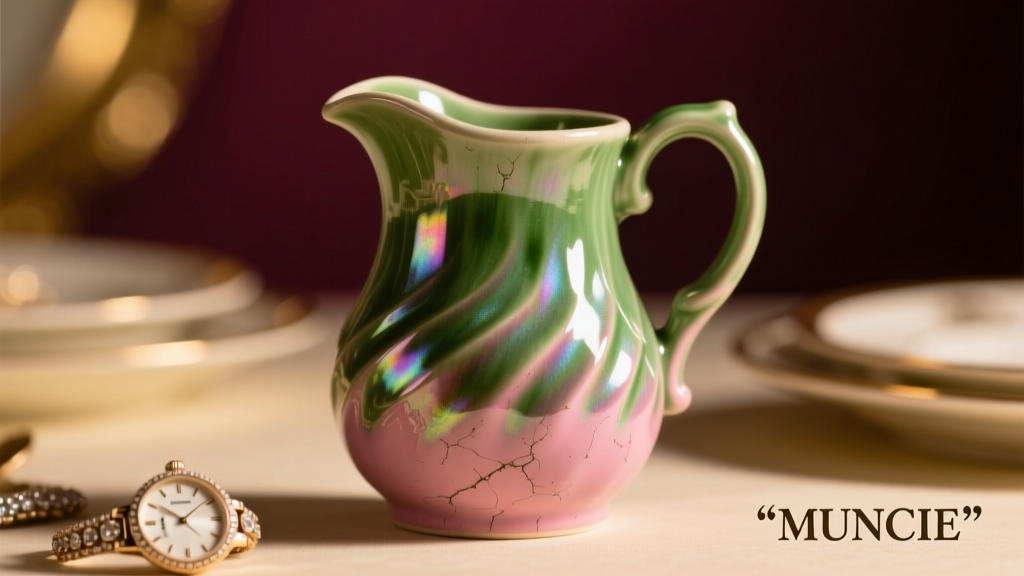
Muncie Pitcher: Green Flambe Glaze on Pink Ground — A 6-Inch Art Deco Masterpiece in American Pottery
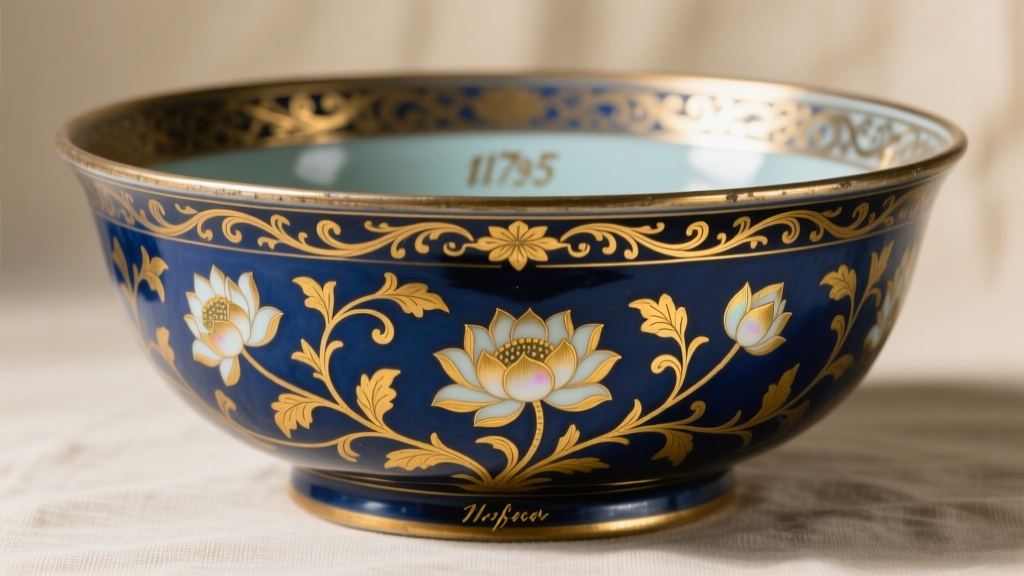
Chinese Export Punch Bowl, Country House Pattern with Gilt Floral Sprigs, Circa 1790 — A Masterpiece of Canton Porcelain for the British Elite
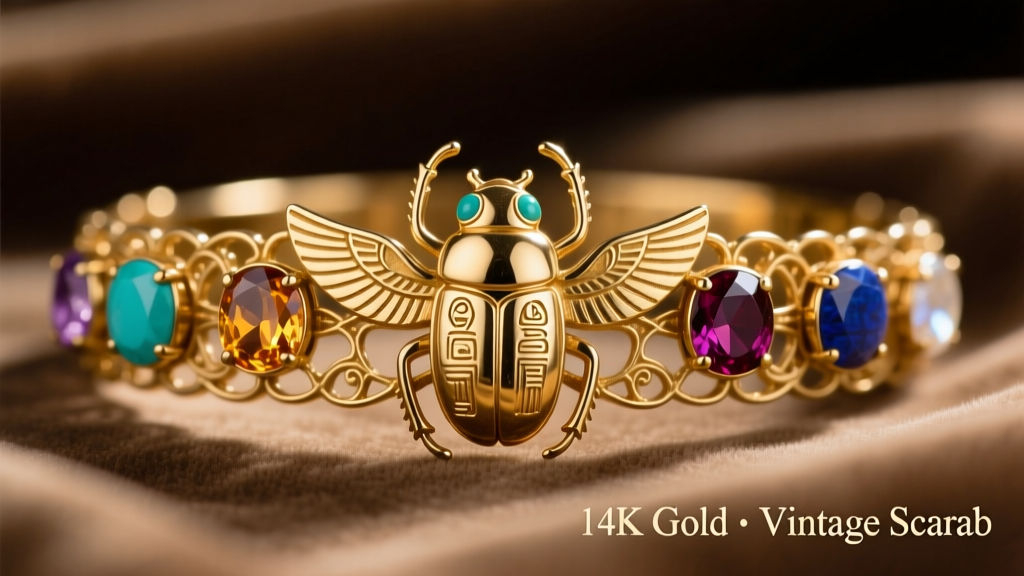
The Scarab Link Bracelet: A Masterclass in Mid-Century Egyptian Revival Jewelry with Six Gemstones and 14K Gold Craftsmanship
Wanamaker John Carriage Clock: Brass, Clear Beveled Glass, Key-Wound, 5-Inch Heritage
Redware Pie Plate with Coggled Rim and Yellow Slip Design: An 8½-Inch American Folk Art Masterpiece
Mt. Washington Saltshaker: The Brownie Beaded Corners Square — A Collector’s Deep Dive into American Art Glass Utility