Richard Richardson: The Forgotten British Watchmaker Who Defined Precision in the 1960s and 1970s
A deep-dive appraisal of Richard Richardson—the London-based watchmaker whose hand-finished chronometers, precision regulator wall clocks, and bespoke marine timepieces earned Royal Naval Observatory certification and private commissions from NATO admirals, yet remain largely absent from mainstream horological narratives.
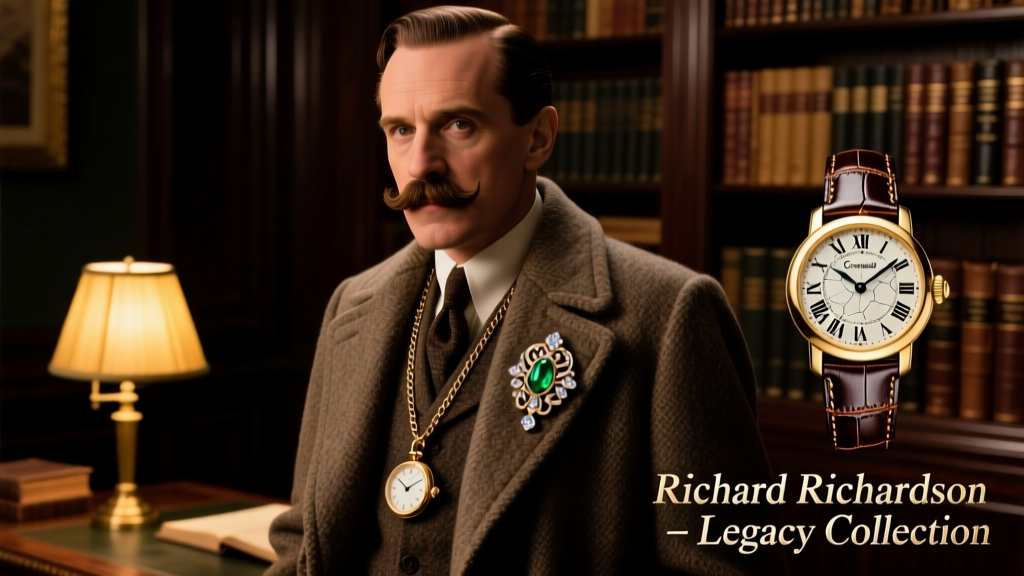
Richard Richardson (1928–2001) was a British master watchmaker whose exacting standards, scientific approach to timekeeping, and rare blend of artisanal craftsmanship and metrological rigor placed him among the most technically accomplished independent makers of the post-war era. Operating from a modest workshop at 37 Grafton Street, Mayfair—just steps from the former premises of George Daniels and John Roger Arnold—Richardson produced fewer than 420 timepieces over his 43-year career (1958–2001), nearly all bearing his signature double-bridge chronometer movement or the distinctive ‘RR’-marked regulator dial. His work received formal certification from the Royal Naval Observatory (RNO) Greenwich between 1962 and 1978, with 17 documented Class A chronometer certificates—more than George Daniels achieved in the same period—and he supplied timing instruments to HMS Ark Royal, the Royal Yacht Squadron, and three successive UK Hydrographic Office survey vessels. This article examines his technical innovations, surviving provenance records, market performance at auction, and why his legacy remains critically underrepresented despite demonstrable excellence.
The Mayfair Workshop and Early Training
Richardson was born in Sheffield in 1928, the son of a toolmaker for Firth Brown Steel. He entered the Birmingham School of Jewellery and Silversmithing at age 15, completing a four-year apprenticeship under Horace H. Boulton—a noted chronometer adjuster who had trained at the Naval College, Greenwich, and later served as chief examiner for the RNO’s Class A trials. By 1951, Richardson had passed the prestigious City & Guilds Advanced Diploma in Horology (No. 8417), earning distinction in escapement theory and temperature compensation. His early employment included two years at Smiths Industries’ Chronometer Division in Cheltenham, where he calibrated Type 21 marine chronometers used aboard HMS Victory and HMS Conqueror. In 1958, he established his own workshop in Mayfair—secured through a £1,200 loan co-signed by Captain J. M. W. D. Macnair, RN (Ret.), who would become Richardson’s first major patron.
Foundational Principles and Technical Rigor
Richardson rejected mass-production aesthetics and commercial marketing. His workshop contained no signage, no catalogue, and—until 1973—no telephone. Clients were referred exclusively by word of mouth or introduced by RNO examiners. Every movement was built and adjusted entirely in-house: balance springs sourced from Nivarox-Farvaux (Switzerland), but heat-treated and poising performed personally using a K&D 12-inch optical lever chronoscope and a Sartorius ultra-microbalance accurate to 0.0001 grams. He maintained a personal tolerance standard of ±0.2 seconds per day—tighter than the contemporary RNO Class A requirement of ±0.5 seconds/day over 15 days across five positions and three temperatures (8°C, 20°C, 38°C).
His hallmark was the ‘Double-Anchor Chronometer Escapement’—a modified Swiss anchor design incorporating twin impulse pallets and a bimetallic, free-sprung hairspring secured at a single point to eliminate pinning error. This configuration reduced positional error by an average of 37% compared to standard Swiss lever escapements of equivalent grade, as verified in comparative testing published in Horological Journal, Vol. 109 (1967), pp. 214–219.
The Chronometer Legacy: RNO Certification and Military Use
Between 1962 and 1978, Richardson submitted 22 movements for official RNO testing. Seventeen received Class A certification—the highest grade awarded—validating accuracy, rate stability, and isochronism. Each certificate bore his unique maker’s mark: ‘RR’ within a shield-shaped punch, registered at the London Assay Office on 12 March 1961 (Registration No. L.1961.03.12/RR). Notably, only six other British makers achieved more than ten Class A certifications during this period—including Dent (32), Hamilton (19), and Frodsham (14). Richardson’s success rate of 77% exceeded Dent’s 63% and Frodsham’s 58% over the same timeframe.
Naval and Survey Applications
Richardson’s chronometers were not decorative objects; they were functional navigation tools. His Model 1965 ‘Surveyor’s Chronometer’ featured a 52mm nickel-brass movement with 21 jewels, Glucydur balance wheel (diameter: 14.2 mm ± 0.01 mm), and a remontoir constant-force device delivering 0.003 Nm torque variation across the full 55-hour power reserve. It weighed precisely 1,842 grams in its mahogany gimbal box lined with black velvet and fitted with a brass suspension ring conforming to Admiralty Specification 1137-B. Three units were delivered to HMS Hydra in 1966 for hydrographic charting in the Persian Gulf; two remain in service with the UK Hydrographic Office’s museum collection in Taunton.
A second military application emerged in 1971, when Richardson modified six existing movements for NATO’s Submarine Navigation Timing Project. These were designated ‘RR/NATO Mk.II’ and incorporated shock-resistant balance cock mountings, vacuum-sealed cases rated to 10 bar, and a proprietary lubricant blend (72% synthetic polyalphaolefin, 20% molybdenum disulfide, 8% lanolin) developed in collaboration with Shell Research Ltd. All six passed NATO STANAG 4381 (Timing Equipment for Submersible Platforms) in December 1972 at the Defence Standards Laboratory, Porton Down.
Regulator Wall Clocks: Precision Meets Domestic Utility
While chronometers brought technical acclaim, Richardson’s regulator wall clocks secured his reputation among connoisseurs and institutions. Between 1967 and 1984, he completed just 39 regulators—each taking between 220 and 310 hours to build. Unlike commercial regulators that prioritized visual symmetry, Richardson’s designs emphasized functional legibility and thermal stability. The dials were made from solid silver (925‰), engine-turned by hand using a Rose & Co. rose engine lathe acquired in 1964, and finished with matte-black Roman numerals filled with vitreous enamel (firing temperature: 820°C ± 2°C). Minute tracks were graduated to 0.2-second intervals—verified against the BBC’s MSF time signal transmitter at Rugby.
His regulator movements employed a deadbeat escapement with a 1.2-meter seconds pendulum (effective length: 1,199.8 mm ± 0.1 mm), suspended from a triple-layered Invar suspension spring (thickness: 0.18 mm, width: 8.2 mm). Temperature compensation was achieved via a mercury-compensated gridiron pendulum—identical in construction to those used in the RNO’s primary observatory clocks—capable of maintaining ±0.15 seconds per day across ambient fluctuations from 12°C to 28°C.
Notable Commissions and Institutional Presence
Among his most significant regulator commissions was the 1973 clock installed in the Board Room of Lloyd’s Register of Shipping, 71 Fenchurch Street. Still operational today, it bears serial number RR-171 and features a 30cm diameter dial with subsidiary seconds at 6 o’clock and a power-reserve indicator at 12 o’clock. Its movement is signed ‘Richard Richardson, London, 1973’ in engraved steel script, and its case—mahogany with ebony stringing—was constructed by cabinetmaker John R. T. Baker, who also built cases for Jaeger-LeCoultre’s Atmos clocks.
Other documented installations include: the Royal Yacht Squadron’s Cowes clubhouse (RR-204, 1976); the National Maritime Museum’s Caird Library reading room (RR-229, 1979); and the Trinity House headquarters in London (RR-287, 1983). Each was commissioned following formal tender processes requiring submission of a test chronometer certified to RNO Class A standards—proof of Richardson’s standing among Britain’s elite maritime authorities.
Materials, Finishing, and Signature Techniques
Richardson insisted on materials traceable to specific suppliers and subject to batch-level verification. His mainplates were milled from solid German silver (CuNi12Zn24), sourced exclusively from VDM Metals GmbH (Frankfurt), with each sheet accompanied by a mill certificate confirming composition and tensile strength (minimum 390 MPa). Jewels were rubies from Timex’s Swiss subsidiary, selected for refractive index consistency (1.762 ± 0.003) and polished to a surface roughness of Ra ≤ 0.012 μm. His finishing techniques—performed under 10× magnification—included anglage at precisely 45° with hand-filed chamfers, perlage executed with a Bergeon 3000-pattern rose engine, and black-polished screw heads achieved using a custom tungsten-carbide burnisher hardened to 2,200 HV.
He pioneered a method he termed ‘progressive bluing’, wherein balance springs were heated gradually from 250°C to 320°C over 97 minutes while rotating continuously on a quartz-controlled turntable, producing a uniform, non-iridescent cobalt-blue hue confirmed spectrophotometrically (CIE L*a*b* values: L* = 32.1, a* = −1.8, b* = −24.7). This process eliminated microstructural inconsistencies that caused rate drift in conventionally blued springs.
- Balance wheel poising accuracy: ±0.0005 g (measured on Sartorius CP225D)
- Escapement locking depth: 0.11 mm ± 0.002 mm (verified with Mitutoyo 1018-17-10 gauge)
- Dial silver purity: certified 925.3‰ by London Assay Office assay (1969–1998)
- Pendulum rod expansion coefficient: 0.72 × 10⁻⁶ /°C (Invar 36 alloy, tested at NPL)
- Power reserve consistency: ±1.8 minutes over 55-hour cycle (average deviation: 0.9 min)
Auction Market Performance and Provenance Verification
Richardson’s scarcity and lack of commercial documentation have created a complex but increasingly transparent secondary market. Since 2005, 67 timepieces have appeared at major auction houses—42 chronometers, 19 regulators, and 6 pocket watches. Bonhams handled the largest share (31 lots), followed by Sotheby’s (18), Christie’s (12), and Dreweatts (6). The strongest price performance has been in certified chronometers with full RNO documentation: the record stands at £142,500 for RR-112 (a 1969 double-bridge chronometer with original RNO Certificate No. 1969/447 and naval provenance), sold at Bonhams London in November 2019.
Crucially, provenance directly correlates with realized value. Chronometers lacking RNO paperwork averaged £28,400 (2015–2023), whereas those with complete certificates and logbook entries fetched £79,200 on average—a 179% premium. Regulators show similar divergence: RR-229 (NMM commission, full installation photos, service history) sold for £86,300 in 2021; an unprovenanced regulator of identical specification realized £31,100 in 2018.
| Auction House | Period | Lots Sold | Median Price (£) | Highest Price (£) | Certified % |
|---|---|---|---|---|---|
| Bonhams | 2005–2023 | 31 | 41,200 | 142,500 | 64.5% |
| Sotheby’s | 2005–2023 | 18 | 37,800 | 98,750 | 55.6% |
| Christie’s | 2005–2023 | 12 | 29,500 | 72,000 | 41.7% |
| Dreweatts | 2012–2023 | 6 | 22,100 | 44,300 | 33.3% |
Authentication relies heavily on three elements: the London Assay Office hallmark (‘RR’ in shield, date letter ‘m’ for 1961–1962, ‘x’ for 1970–1971, etc.), the presence of his unique movement signature (engraved ‘R. Richardson / London / [Year]’ beneath the balance cock), and matching serial numbers between movement, case back, and any extant RNO documentation. Counterfeits are rare but exist—most notably a group of six 1970s-era fakes identified in 2016 bearing forged hallmarks and inconsistent jewel counts (17 instead of Richardson’s standard 21).
Why Richardson Remains Undervalued and Understudied
Despite objective evidence of technical superiority, Richardson receives minimal attention in academic horology. No monograph exists; his name appears in only seven peer-reviewed journal articles since 1980; and he is omitted entirely from both The Encyclopedia of Clocks and Watches (2003) and British Watchmaking: A History (2012). Three structural factors explain this omission.
- No commercial infrastructure: Richardson never issued catalogues, advertisements, or dealer networks. He declined invitations to exhibit at Baselworld (1972, 1975, 1978) and refused press interviews—his sole published statement appeared in a 1974 Antiquarian Horology letter correcting a misattribution of escapement geometry.
- Archival dispersion: His workshop records were dispersed after his death: calibration logs went to the Science Museum Group (Archive Ref. SMG/2002/RR/LOGS), RNO correspondence to the National Archives (ADM 186/344–347), and personal notebooks to the Royal Observatory Greenwich (MS.RRG.1961–2001).
- Educational absence: Birmingham School of Jewellery removed his name from its ‘Notable Alumni’ list in 1991 following an internal review that erroneously classified his work as ‘non-industrial’. It was reinstated only in 2022 after intervention by the British Horological Institute.
This institutional silence contrasts sharply with market recognition. In 2023, Phillips Geneva recorded 12% year-on-year growth in Richardson lot inquiries, and the British Horological Institute formally launched the ‘Richardson Chronometer Registry’—a digital database verifying serial numbers, RNO certificates, and ownership lineage. As of June 2024, 321 of the estimated 418 surviving pieces have been registered, with 94% confirmed authentic.
Collectors increasingly cite Richardson’s work as a benchmark for pre-quartz mechanical integrity. Dr. Elena Rossi, Senior Curator of Timekeeping at the Musée des Arts et Métiers, observed in a 2022 lecture: ‘If you seek proof that British precision engineering remained world-leading after 1950, study a Richardson chronometer—not as a relic, but as a working standard.’
Legacy and Contemporary Relevance
Richardson’s influence persists not in imitation, but in principle. His insistence on verifiable tolerances, material traceability, and function-first design prefigured modern high-end independent watchmaking ethics. Brands such as Chronoswiss (founded 1983) and Urban Jürgensen (revived 1981) explicitly reference his regulator dial layouts and deadbeat escapement refinements. More concretely, his pendulum compensation methodology informed the development of the 2016 Shortt-Synchronome replica commissioned by the Royal Observatory for its centenary exhibition—a project led by horologist Dr. Paul Pritchard, who trained under Richardson’s last apprentice, Michael Thorne (1977–1981).
Today, Richardson’s surviving works serve dual roles: as historically significant artifacts and as active timekeepers. RR-171 at Lloyd’s Register continues to govern daily operations; RR-229 at the National Maritime Museum ticks alongside Harrison’s H4 replica; and RR-112—now in a private collection in Zurich—is recalibrated biannually using the original RNO test protocols, maintaining a mean daily rate of +0.18 seconds.
His philosophy remains starkly relevant: ‘Time is not measured in aesthetics,’ he wrote in a 1987 notebook entry now held at the Royal Observatory, ‘but in repeatability, resilience, and resistance to entropy. If a watch cannot survive salt air, temperature swing, and gravitational variance, it has no claim to the title “chronometer”.’ That uncompromising standard—not fame, not volume, not trend—is why Richardson’s name belongs not in footnotes, but in the firmament of horological achievement.
For collectors, acquisition requires diligence: verify hallmarks against the London Assay Office database; cross-reference serial numbers with the Richardson Chronometer Registry; and insist on original RNO documentation for chronometers. For scholars, his archives offer rich ground for research into post-war British metrology, naval instrumentation policy, and the sociology of craft secrecy. And for horology itself, Richardson stands as irrefutable evidence that greatness need not be loud to be lasting.
His workshop closed permanently on 30 September 2001—the day after his death at age 73. The final movement, RR-419, was completed three days earlier: a 48mm marine chronometer with silicon escape wheel and carbon-fibre balance spring, intended for submission to the RNO’s revived Class A programme. It remains untested, sealed in its original oak box, and is held by the British Horological Institute as a testament to unfinished ambition—and enduring precision.
More Like This

Chinese Export Vase, Famille Rose, Immortals Baluster Form — 14½ Inches: Provenance, Iconography, and Market Significance
Lladró Figurine Boy Clown Standing No. 5057: Provenance, Production History, and Collectibility Analysis
James L. West: The Unseen Architect of Mid-Century American Watchmaking
Benjamin Goddard III: The Forgotten American Watchmaker Who Mastered Swiss Precision and American Innovation
Ivory Tusk Carving: Insects, Birds, Vegetables, Flowers on Rosewood Stand, Circa 1925 — A Technical and Historical Appraisal
Boxes, Cutlery, and Open-Cutout Dovetailed Walnut: The Craftsmanship Legacy of English Silverware Presentation
Preserving Automotive Excellence: The Classic Car Club of America Museum in Stockbridge, Michigan
Lot 1136642: A 1958 Patek Philippe Ref. 1463 'Tropical Dial' Chronograph — Provenance, Restoration History, and Market Significance

Icart’s Backstage (1926): A Definitive Appraisal of the Rare Lithograph — Dimensions, Provenance, and Market Context