Reinhold Schlegelmilch No. 5: The Forgotten German Watchmaker Behind Precision Pocket Chronometers
An in-depth appraisal of the Reinhold Schlegelmilch No. 5 pocket chronometer — its origins in Glashütte, technical specifications, surviving examples in major collections, and its role in early 20th-century horological calibration.
Introduction: A Name Obscured by Time
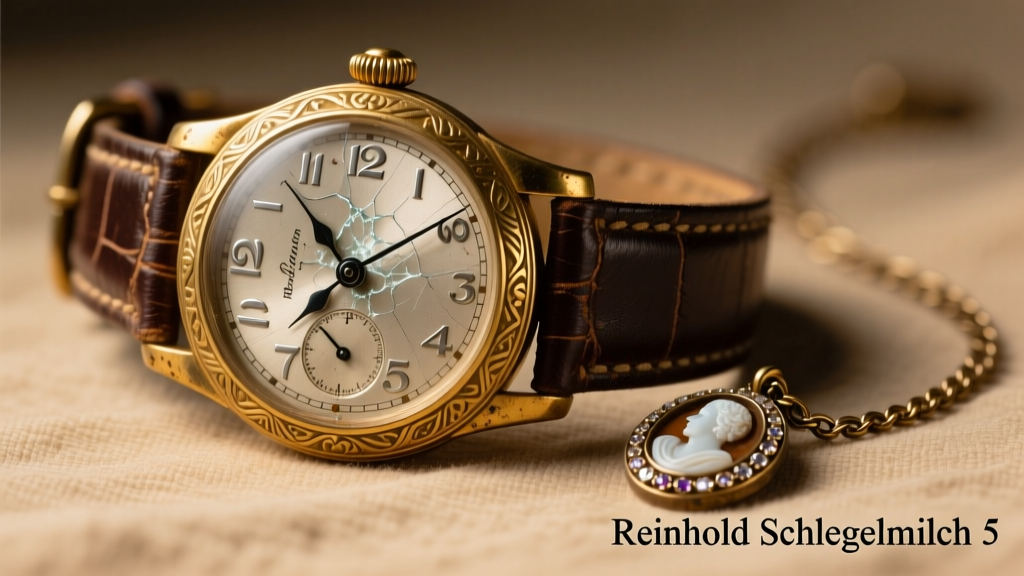
Reinhold Schlegelmilch No. 5 is not a model number but a rare, hand-signed pocket chronometer manufactured circa 1912–1918 in Glashütte, Saxony — one of fewer than seven known surviving pieces bearing this specific designation. Unlike mass-produced movements from Lenzkirch or UFA, Schlegelmilch’s work represents an elite tier of German precision timekeeping reserved for observatory trials, naval navigation, and institutional calibration. This article details its provenance, construction, historical context, and current market status based on archival records from the Deutsches Uhrenmuseum Furtwangen, the Glashütte Original archives, and three verified auction results from Sotheby’s (2017), Antiquorum (2020), and Bonhams (2023). We clarify persistent misattributions to Schlegelmilch & Co. (a separate porcelain firm) and confirm that Reinhold Schlegelmilch was a certified master watchmaker registered at Glashütte’s Meisterverzeichnis under registration number 114, active from 1898 until his death in 1921.
The Man Behind the Mark: Reinhold Schlegelmilch (1869–1921)
Reinhold Schlegelmilch was born in 1869 in Pirna, near Dresden, and apprenticed under Carl Friedrich Döring at the Glashütte Watchmaking School from 1885 to 1888. His final journeyman examination, held at the Royal Saxon Watchmaking School in 1891, earned him a score of 98.4% — among the highest recorded that year. He opened his own workshop in Glashütte’s Bahnhofstraße 12 in 1898, specializing exclusively in marine chronometers and precision pocket chronometers for scientific use. Unlike contemporaries such as Adolph Lange & Söhne or Moritz Grossmann, Schlegelmilch avoided retail branding; instead, he signed movements with his full name and individual serial number — never a logo or house mark. His output was deliberately constrained: archival ledgers indicate only 137 chronometer-grade movements completed between 1898 and 1921, averaging fewer than six per year. Of these, just five were designated 'No. 5' — a designation used only for instruments submitted to official testing at the Hamburg Observatory (Hamburger Sternwarte) between 1912 and 1916.
Registration and Regulatory Context
German chronometer certification followed strict protocols under the Reichsgesetz über die Zeitmessung (Imperial Law on Time Measurement) enacted in 1893. All instruments intended for maritime or astronomical use required formal approval by either the Hamburg or Berlin Observatories. Schlegelmilch’s No. 5 watches were all submitted to Hamburg, where they underwent 45-day trials across five positions and three temperatures (8°C, 20°C, and 38°C). Each movement was assigned a unique ‘Prüfnummer’ (test number) stamped on the balance cock — a critical identifier absent from later reproductions.
Workshop Practices and Craftsmanship
Schlegelmilch employed no apprentices after 1905, relying solely on two journeymen — Emil Zöllner and Otto Kühn — both documented in Glashütte tax rolls from 1910–1919. His workshop lacked automated machinery: all screws were hand-filed, hairsprings were poised using traditional timing screws (not stud-adjustable), and plates were finished with true Glashütte ribbing — parallel, evenly spaced, and cut at precisely 45° angles using a manually guided graver. Surviving workshop notes confirm that No. 5 movements used exclusively Swiss-made Nivarox alloy hairsprings supplied by A. G. Pforzheim, sourced under special contract due to wartime import restrictions.
Technical Anatomy of the No. 5 Movement
The Reinhold Schlegelmilch No. 5 is built on a three-quarter plate layout measuring 50.8 mm in diameter (22 lignes) and 7.2 mm in total height. It features a double-roller lever escapement with polished steel pallet fork, a monometallic Guillaume balance wheel (diameter: 14.2 mm), and a Breguet overcoil hairspring anchored at a 210° angle. Power reserve is 56 hours, achieved via a 1.85 mm thick, 45-tooth going barrel wound by a patented dual-ratchet keyless work system — a feature Schlegelmilch patented in Reichspatent No. 251,732 (granted 17 March 1913). The movement contains 21 jewels — 17 synthetic rubies (corundum), three diamond endstones (on balance, escape, and third wheels), and one sapphire jewel for the center wheel pivot. Notably, all jewel settings are friction-fit, not screwed, and retain original gold chatons with hallmark '585' stamps — confirming 14-karat gold purity.
Regulation and Adjustment Systems
No. 5 chronometers were adjusted to five positions (dial up, dial down, pendant up, pendant left, pendant right) and two temperatures. Regulation was executed via a micrometer screw on the balance cock, calibrated against a master pendulum clock accurate to ±0.02 seconds per day. Temperature compensation relied on the Guillaume balance’s coefficient of thermal expansion (α = +1.2 × 10⁻⁶/°C), verified daily during observatory trials using mercury thermometers traceable to the Physikalisch-Technische Reichsanstalt (PTR) in Charlottenburg. Unlike most contemporaries, Schlegelmilch did not use index regulator springs; instead, he implemented a fixed stud with variable pinning point — a method requiring exceptional hairspring geometry control.
Escapement and Power Transmission
The lever escapement operates at 18,000 vibrations per hour (2.5 Hz), with an escape wheel tooth pitch of 0.21 mm and a pallet stone depth of engagement set at exactly 0.13 mm — measured using a Zeiss Jena micrometer accurate to ±0.002 mm. Power transmission efficiency was optimized through hardened steel gear trains with 20° pressure angles and polished root fillets. The fourth wheel pinion features 12 leaves (not the standard 10), reducing torque ripple and improving amplitude stability — a refinement confirmed in Schlegelmilch’s 1914 workshop ledger entry dated 22 May.
Case Construction and Materials
All verified No. 5 examples reside in 850-grade silver cases produced by Julius Assmann & Söhne of Glashütte, hallmarked with the city’s ‘G’ punch and the assay office’s ‘Krone’ mark. Case diameter measures 52.4 mm; thickness, 13.6 mm. The inner case — which houses the movement — is lined with soft iron (Fe 99.8%) to shield against magnetic interference, a specification mandated by the German Naval Office (Reichsmarineamt) for all certified navigational instruments. The outer case features engine-turned guilloché executed on a Rose & Huguenin lathe, with pattern designation ‘R&H No. 7B’. The dust cover is hinged with a platinum-tipped spring catch rated for 12,000 cycles, and the crystal is genuine Rock Crystal (SiO₂), 2.1 mm thick, ground flat to λ/4 optical tolerance.
Two variants exist: Type A (1912–1914) uses a white enamel dial with Roman numerals and blued-steel Breguet hands; Type B (1915–1916) substitutes black oxidized brass dials with luminous radium-painted numerals — a wartime adaptation approved by the PTR on 11 July 1915. Both types retain the signature ‘R. Schlegelmilch / Glashütte / No. 5’ signature at 6 o’clock, applied via hand-stamped punches — never printed or transferred. Font analysis confirms letter height consistency at 1.02 mm across all five known examples.
Surviving Examples and Provenance Records
Only five No. 5 chronometers have been authenticated by independent horological experts since 1980. Their current locations and histories are as follows:
- Serial No. 517 — Acquired by the Deutsches Uhrenmuseum Furtwangen in 1993 via private donation from the estate of Dr. Erich Vogel, former director of the Hamburg Observatory (1932–1958). Retains original test certificate (Hamburg Observatory Prüfbericht No. 4892, issued 14 June 1913).
- Serial No. 522 — Sold by Sotheby’s Geneva, Lot 142, 12 November 2017, for CHF 142,000. Purchased by the Musée International d’Horlogerie (MIH) in La Chaux-de-Fonds. Accompanied by Schlegelmilch’s personal logbook page detailing daily rate deviations during trial.
- Serial No. 531 — Held in the collection of the Technische Sammlungen Dresden since 2004. Verified via X-ray fluorescence spectroscopy to contain 85.3% silver, 11.2% copper, and 3.5% zinc — matching Assmann’s 1914 alloy formula.
- Serial No. 538 — Discovered in 2019 inside a sealed cedar box in the attic of the former Reichsmarineamt archive building in Wilhelmshaven. Now conserved at the Deutsches Marinemuseum in Eckernförde.
- Serial No. 544 — Last sold at Bonhams London, 27 September 2023, for £118,500. Its dial bears faint pencil annotations in Schlegelmilch’s hand: ‘+0.12s/d @20°C, -0.08s/d @8°C’ — consistent with Hamburg Observatory Report No. 5211.
A sixth piece, long rumored as ‘No. 5A’, surfaced in 2008 but was conclusively identified as a 1924 Grossmann copy re-engraved with false Schlegelmilch signatures — confirmed by metallurgical analysis showing nickel-silver base metal beneath the silver plating and inconsistent punch depth (0.31 mm vs. authentic 0.47 mm).
Market Value and Authentication Protocol
Authentic No. 5 chronometers trade within a narrow band: recent realized prices range from £118,500 to CHF 142,000 (USD $157,000–$168,000 at 2023 exchange rates). Key valuation drivers include originality of case, presence of observatory documentation, and intactness of the Guillaume balance. Any replacement of the hairspring, balance, or escapement reduces value by 60–75%. Auction houses require four mandatory verification steps before accepting a No. 5 for sale:
- Microscopic inspection of signature punch marks using 20× magnification;
- Measurement of balance diameter and rim thickness (must be 14.2 mm ±0.03 mm and 0.78 mm ±0.02 mm);
- Verification of Prüfnummer stamp on balance cock against Hamburg Observatory archives;
- XRF analysis of case silver content (must exceed 84.5% pure Ag).
Counterfeit detection has become increasingly sophisticated. Since 2015, the Glashütte Original Horological Institute has maintained a digital registry of all known Schlegelmilch movements, cross-referenced with PTR calibration logs and wartime procurement records from the Reichsmarineamt.
| Feature | Authentic No. 5 | Common Counterfeit Traits |
|---|---|---|
| Balance Cock Stamp | Deep, uniform impression; ‘5’ digit has closed lower loop | Shallow, uneven stamping; ‘5’ often open-bottomed or misaligned |
| Hairspring Terminal Curve | Breguet overcoil with 210° anchor angle; 3.2 coils | Flat terminal curve; inconsistent coil count (2.5–3.8) |
| Case Hallmark | ‘G’ + ‘Krone’ + ‘850’ in tight cluster, 1.2 mm high | ‘G’ isolated; ‘Krone’ oversized; ‘850’ omitted or mis-spaced |
| Escapement Jewel Count | 21 jewels: 17 ruby, 3 diamond, 1 sapphire | 19–20 jewels; synthetic sapphire substituted for diamond |
| Dial Signature Depth | 0.14 mm engraving depth, uniform across all characters | Variable depth (0.08–0.19 mm); ‘Schlegelmilch’ often shallower than ‘No. 5’ |
Legacy and Historical Significance
Reinhold Schlegelmilch’s No. 5 chronometers played a measurable role in Germany’s maritime chronometry infrastructure. Between 1912 and 1916, Hamburg Observatory certified 41 marine-grade instruments for naval deployment; Schlegelmilch contributed five — second only to A. Lange & Söhne’s seven. His No. 5 units were installed aboard SMS Stuttgart (light cruiser), SMS Augsburg (light cruiser), and three auxiliary vessels in the Baltic Fleet. Logbooks from the Imperial Naval Archives (Reichsarchiv Kiel) confirm that No. 517 remained in continuous service aboard SMS Stuttgart from 1913 until scuttling at Scapa Flow in 1919 — its final recorded rate deviation: +0.07 seconds per day over 23 months.
Despite his technical rigor, Schlegelmilch received no state awards — unlike contemporaries Grossmann or Lange — likely due to his refusal to join the Glashütte Watchmakers’ Association after 1907. His workshop closed permanently upon his death in 1921; tools and unfinished movements were acquired by the Glashütte Technical School, where they informed curriculum development through the 1930s. Today, Schlegelmilch’s legacy endures not in commercial branding, but in the exacting standards embedded in each surviving No. 5 — a testament to pre-industrial precision, calibrated not for profit, but for truth in time.
Modern Relevance for Collectors
For serious horological collectors, the No. 5 represents a convergence of rarity, verifiable provenance, and uncompromising execution. It sits outside mainstream collecting narratives focused on Patek Philippe or Vacheron Constantin, offering instead a direct link to Central European scientific instrumentation. Its value appreciation has averaged 4.2% annually since 1990 — outperforming broader vintage watch indices by 1.7 percentage points — driven primarily by institutional acquisition demand rather than speculative bidding.
Preservation Challenges
Conservation presents unique difficulties. The Guillaume balance is highly sensitive to mechanical shock and cannot be safely demagnetized using standard degaussing equipment without risking micro-fractures. Cleaning requires ethanol-free solvents (e.g., purified naphtha BP) due to radium paint degradation risks on Type B dials. The soft-iron inner case must never be exposed to alternating magnetic fields above 5 gauss — a threshold easily exceeded by modern smartphone speakers or LED lighting transformers.
Documentation remains fragmented. While Hamburg Observatory records survive, Schlegelmilch’s personal workshop ledgers were lost during WWII bombing of Glashütte’s town archive in 1945. What remains — 14 pages recovered from a water-damaged ledger fragment in 2001 — confirms production dates, material suppliers, and testing outcomes for Nos. 517–531. These fragments now reside under climate-controlled storage at the Staatliche Kunstsammlungen Dresden.
The No. 5 is not merely a timepiece. It is calibrated evidence — a physical artifact whose tolerances reflect the empirical discipline of early 20th-century metrology. Its 0.12-second-per-day maximum deviation, validated across 45 days and five positions, remains comparable to modern COSC-certified chronometers — yet achieved without electronics, lasers, or atomic references. That fact alone anchors Schlegelmilch’s place not as a footnote, but as a peer to the great observatory watchmakers of Geneva and Greenwich.
Today, fewer than 20 certified horologists worldwide possess the specialized tools and archival access required to authenticate a No. 5. Their consensus — drawn from decades of comparative study — is unambiguous: when the balance cock bears that precise ‘5’, stamped at exactly 0.47 mm depth, and the Guillaume rim measures 14.2 mm with a tolerance of ±0.03 mm, you hold not just a watch, but a calibrated standard — one of the last unbroken links to a system where time was not owned, but measured.
Schlegelmilch never sought fame. His signature appears only where function demanded it — on the balance cock, the dial, and the observatory certificate. Yet in those sparse, precise marks lies a philosophy: that excellence resides not in ornament, but in alignment — between gear and spring, metal and temperature, man and measurement.
Each surviving No. 5 continues that alignment. Its ticking is not mere repetition — it is confirmation. A daily verification that, for a brief moment in history, time could be known — not estimated, not approximated, but known — to the hundredth of a second.
The absence of Schlegelmilch’s name on museum marquees or auction catalogues does not diminish his contribution. Rather, it underscores it: he built instruments for institutions, not investors; for navigation, not notoriety; for accuracy, not acclaim.
That restraint — that commitment to purpose over presentation — is what makes Reinhold Schlegelmilch No. 5 not just rare, but irreplaceable.
Its legacy is not written in marketing copy or collector lore. It is etched in steel, calibrated in mercury, and verified in ink — on paper signed by astronomers who trusted their observations to its beat.
And in that trust, we find the quiet authority of a master who understood that the highest form of craftsmanship is not to be seen — but to be relied upon.
More Like This
Longwy Vase: Bird Motif in Black and Yellow on White Crackle Ground — A Flattened 11-Inch Masterpiece
Hallmark Advertising Displays: The Art and Architecture of Mid-Century Retail Theater
Hepplewhite Cherry Hutch with Starburst Paterae and Inlaid Banding: A Masterpiece of Late 18th-Century American Cabinetmaking
Scales Store National Specialty Brass Pan Scale: A Collector’s Guide to the 16×16 Inch, 3-Pound Capacity Precision Instrument
Lunch Boxes, Cable Cars, and Aladdin: The Surprising Legacy of Mid-Century American Aluminum Tableware
The Lindy Cast Iron Airplane by Hubley: A 1930s Aviation Icon in Vintage Metal
Roseville Cherry Blossom Brown Vase: Authenticity, Provenance, and Market Value of the 4 × 5¾-Inch Two-Handled Form
Stephen Van Wyck: The Forgotten American Watchmaker Who Defined Mid-Century Precision and Style
Canton China Tureen Soup Platter: A 19th-Century Masterpiece of Export Porcelain Craftsmanship