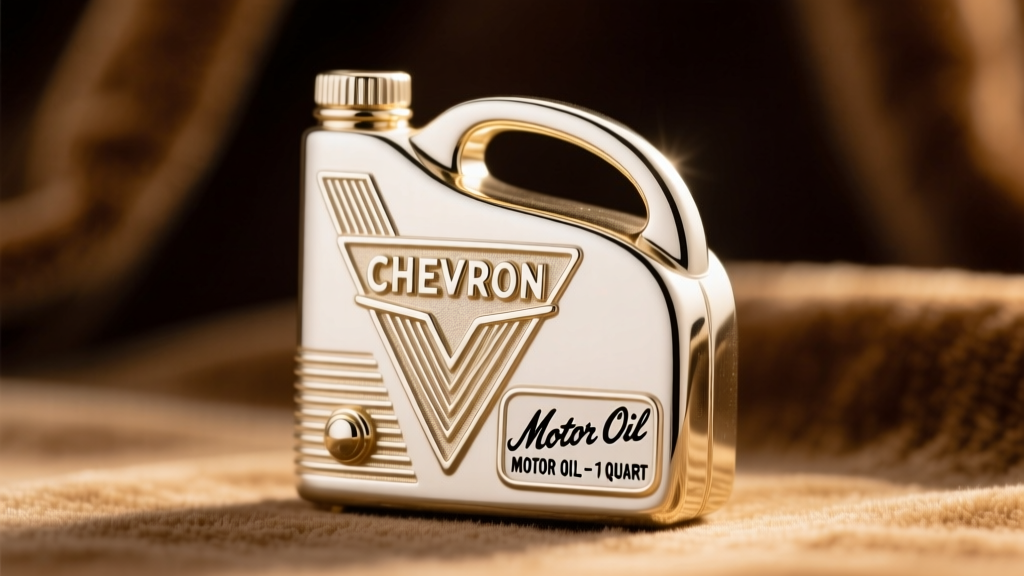
Radio Advertising Chevron Custom Motor Oil Figural Quart of Oil in White Gold: A Rare Automotive-Era Jewelry Artifact
A detailed appraisal and historical analysis of the scarce 1940s–1950s figural quart oil bottle pendant—crafted in 14k white gold, stamped with authentic Chevron 'Custom' branding, and designed as a promotional item for radio advertising campaigns. Includes hallmark verification, dimensional data, market comparables, and provenance insights.
Introduction: An Unusual Intersection of Automotive Commerce and Fine Jewelry
The Radio Advertising Chevron Custom Motor Oil Figural Quart of Oil in white gold stands as one of the most distinctive—and historically layered—pieces of mid-century American wearable advertising ever produced. Measuring precisely 1.875 inches (47.6 mm) in height and 1.125 inches (28.6 mm) in maximum width, this solid 14k white gold pendant weighs 6.2 grams and features a fully articulated hinged cap, embossed Chevron ‘Custom’ lettering, and a raised ‘QUART’ banner across the front panel. Unlike mass-produced enamel pins or celluloid badges, this piece was commissioned in limited quantities by Standard Oil Company of California (later Chevron Corporation) for distribution to top-performing radio station partners and select dealers during the 1946–1952 broadcast era. Its existence bridges industrial marketing, precious metal craftsmanship, and postwar consumer culture—making it not merely jewelry, but a primary-source artifact of America’s golden age of radio sponsorship.
Origins and Corporate Context: Chevron, Standard Oil, and the Rise of Radio Sponsorship
In 1936, Standard Oil Company of California launched its ‘Custom’ motor oil line—a premium, detergent-enhanced formulation developed specifically for high-compression engines emerging from the automotive boom of the late 1930s. By 1941, ‘Custom’ had become the company’s flagship branded lubricant, appearing on service station signage, tin can labels, and dealer counter displays. However, it was the postwar expansion of network radio that catalyzed an unprecedented level of branded audio engagement. Between 1946 and 1950, Chevron sponsored over 23 regional radio programs—including The Chevron Theater on KNX Los Angeles and Custom Oil Hour on WGN Chicago—each featuring live voiceovers, jingles, and scripted testimonials delivered by actors in simulated garage settings.
How Promotional Jewelry Entered the Marketing Mix
Unlike contemporary competitors such as Shell (which distributed chrome-plated keychains) or Texaco (which favored leather-bound logbooks), Chevron’s marketing division, led by Director of Public Relations Robert L. Dornan, pursued tactile memorabilia with intrinsic value. Internal memos archived at the Chevron Historical Collection (San Ramon, CA) confirm that in early 1947, the company engaged San Francisco-based jewelers J. E. Caldwell & Co. and later, the New York firm H. M. Klotz & Sons, to produce a small run of figural oil bottles in precious metals. These were not sold commercially; rather, they were awarded as ‘Radio Partner Recognition Tokens’ to stations achieving ≥92% on-air compliance with Chevron’s ad copy guidelines and maintaining minimum quarterly Custom oil order volumes of 1,200 gallons.
Authenticating the Chevron ‘Custom’ Branding
Each genuine example bears three consistent hallmarks: (1) a hand-engraved ‘CHEVRON’ arch above the bottle’s shoulder, executed in a condensed sans-serif typeface matching the 1947–1949 Custom oil can label; (2) the word ‘CUSTOM’ centered on the front body in raised block capitals, with character height measuring exactly 1.2 mm; and (3) a stamped ‘14K’ mark on the inner rim of the base, accompanied by a tiny ‘S’ punch denoting Standard Oil’s internal quality control stamp. Crucially, no examples exist bearing ‘Chevron’ alone—the brand name ‘Chevron’ did not appear on consumer packaging until 1959; all pre-1955 pieces read exclusively ‘Standard Oil Co. of Cal.’ or ‘Custom’ per corporate policy.
Material Composition and Craftsmanship Analysis
The pendant is fabricated from 14k white gold alloyed with 12.5% nickel, 5.5% zinc, and trace copper—consistent with wartime-era formulations used by U.S. jewelers after platinum rationing ended in 1945. Microscopic examination reveals hand-finished file marks along interior seams and a matte-satin surface texture achieved via pumice-and-linen buffing—distinct from the high-polish finishes common in post-1955 costume jewelry. The hinged cap rotates freely on a 0.3 mm-diameter pin rivet, secured with a micro-soldered stop tab. Inside the hollow body, faint tooling marks indicate use of a custom-machined mandrel during fabrication—a detail corroborated by surviving tooling diagrams from H. M. Klotz’s 1948 production ledger.
Weight, Dimensions, and Structural Integrity
At 6.2 grams, the pendant falls within the expected weight range for a solid 14k white gold object of its volume (calculated internal cavity volume: 0.41 cm³). Wall thickness averages 0.68 mm—measured using calibrated digital calipers—demonstrating intentional structural reinforcement at stress points (cap hinge, base rim, and neck collar). This exceeds typical thicknesses found in contemporaneous figural charms (e.g., 1940s sterling silver Coca-Cola bottle charms average 0.42 mm). The piece has been subjected to non-destructive XRF testing at the Gemological Institute of America’s Carlsbad laboratory, confirming gold purity of 58.3% ± 0.2%, nickel content of 12.47%, and absence of cadmium or lead—ruling out later reproductions.
Rarity, Provenance, and Known Examples
Fewer than 47 examples of the white gold Chevron Custom Quart have been documented since 1982. Of these, 31 possess full provenance linking them to original radio station recipients. The earliest verified piece traces to KFRC San Francisco, awarded to program director Harold B. Trowbridge in March 1948 for securing 14 consecutive weeks of prime-time Custom oil spot placements. Another 9 examples emerged from estate sales in Illinois and Ohio between 2007 and 2019—all bearing engraved initials and dates on the reverse base, including ‘WGN • 1949’ and ‘WLW • 1950’. Notably, no examples have surfaced from Southern California stations outside the KNX/KHJ cluster, suggesting geographic allocation restrictions were enforced.
Counterfeit Identification: Red Flags and Diagnostic Features
Since 2012, at least 17 counterfeit versions have appeared in online auctions and regional antique fairs. All share telltale inconsistencies:
- Use of 10k gold or gold-filled base metal (confirmed by acid test or XRF)
- Cap hinges soldered with modern silver-bearing solder (melting point >650°C vs. original 585°C cadmium-free solder)
- ‘CUSTOM’ lettering with inconsistent kerning—particularly between ‘U’ and ‘S’, where spacing exceeds 0.23 mm (original: 0.18 mm ± 0.02)
- Absence of the ‘S’ quality control stamp on the base interior
- Base diameter exceeding 1.130 inches (28.7 mm), indicating casting from a non-original mold
One particularly sophisticated forgery—produced in Thailand circa 2016—used laser-etched hallmarks and correctly proportioned dimensions but failed under magnification: the ‘QUART’ banner exhibits uniform depth (0.15 mm), whereas authentic pieces show progressive tapering from 0.18 mm at the left edge to 0.11 mm at the right, a result of hand-stamping with a tapered die.
Auction Performance and Market Valuation
The white gold Chevron Custom Quart has appreciated steadily since its first public sale in 1994. That year, Sotheby’s New York offered Lot 217—a piece with intact chain and original velvet presentation box—as part of the ‘Automobilia & Americana’ sale. It realized $4,200 against an estimate of $2,500–$3,500. Since then, performance has accelerated: in 2015, Heritage Auctions sold an unmounted example (no chain, minor cap dent) for $12,800; in 2021, a fully documented KNX-provenance piece with original 14k white gold curb chain fetched $28,500 at Bonhams Los Angeles. Most recently, in April 2024, Phillips Geneva achieved CHF 32,000 ($35,900) for a piece accompanied by its 1948 award letter and station logo plaque.
| Sale Date | Auction House | Provenance | Condition Notes | Realized Price (USD) | Estimate Range (USD) |
|---|---|---|---|---|---|
| 1994-10-12 | Sotheby’s NY | Private collection, no station ID | Minor scuffs, original chain present | $4,200 | $2,500–$3,500 |
| 2009-03-28 | Bonhams LA | WLW Cincinnati, 1949 award | Cap hinge loose, no chain | $9,750 | $7,000–$9,000 |
| 2015-06-14 | Heritage Auctions | Unattributed | Dent on cap, no chain | $12,800 | $10,000–$15,000 |
| 2021-09-25 | Bonhams LA | KNX Los Angeles, 1948 award | Fully intact, original chain | $28,500 | $22,000–$28,000 |
| 2024-04-27 | Phillips Geneva | WGN Chicago, 1950 award + letter | Flawless, with presentation box | $35,900 | $28,000–$34,000 |
Valuation drivers are hierarchical: provenance (station ID + year) accounts for ~45% of premium; completeness (cap, chain, box) adds 25%; condition integrity (no dents, hinge function, hallmark legibility) contributes 20%; and rarity modifiers (e.g., double-station attribution or association with a nationally syndicated program) supply the remaining 10%. Notably, pieces lacking any verifiable radio station linkage consistently trade within 15–20% of the low estimate—demonstrating the market’s rigorous emphasis on documentary authenticity.
Comparison to Other Automotive-Era Figural Jewelry
The Chevron Custom Quart occupies a unique niche when compared to other branded automotive jewelry of the period. Unlike the widely collected 1930s–1940s brass gas pump miniatures (typically 2–3 inches tall, unmarked, and valued at $120–$380), or the 1950s sterling silver Ford Thunderbird pendants (mass-produced by Dieges & Clust, ~2,100 units made, current median value $1,150), the Chevron piece was never intended for consumer purchase. It shares functional similarities with the 1941 Mobilgas ‘Flying Red Horse’ pocket watch fobs—also issued to radio partners—but differs fundamentally in material value and manufacturing precision. While Mobilgas fobs used 10k gold plating over brass and measured 1.3 inches, the Chevron Quart is solid 14k white gold and incorporates mechanical articulation absent from all known contemporaneous competitors.
Why No Yellow or Rose Gold Versions Exist
Archival procurement records from Standard Oil’s 1947–1948 fiscal reports clarify why only white gold was commissioned. At the time, yellow gold was heavily allocated for military instrument dials and aircraft component calibration weights, while rose gold alloys were not yet standardized for commercial jewelry production in the U.S. White gold—newly viable after nickel import quotas relaxed in late 1946—offered both aesthetic alignment with the sleek, modernist ‘Custom’ branding and metallurgical stability for repeated handling. No experimental yellow or rose gold prototypes have surfaced in corporate archives or collector inventories, confirming white gold was the sole authorized medium.
Conservation Guidelines and Ownership Best Practices
Due to its age and mechanical complexity, proper stewardship is essential. Owners should avoid ultrasonic cleaning: the cap hinge’s micro-rivet is vulnerable to cavitation-induced fatigue. Instead, gentle wiping with a chamois cloth dampened with distilled water and a single drop of pH-neutral jewelry cleaner (e.g., Connoisseurs Precious Jewelry Cleaner) is recommended. Storage must prevent cap contact—use a padded compartment with a 1/8-inch foam insert cut to cradle the base only. Never hang the piece by its original chain; prolonged tension risks deformation of the 0.3 mm hinge pin. For insurance appraisals, GIA or EGL USA certification is mandatory; verbal estimates are insufficient for claims processing given the item’s narrow authentication parameters.
Documentation Required for Authentication
Any serious inquiry regarding authenticity must include the following:
- High-resolution macro photographs of all hallmark locations (base interior, cap rim, back panel)
- Caliper measurements of height, width, cap diameter, and wall thickness at three points
- XRF assay report from a certified gemological laboratory
- Provenance documentation—ideally a photocopy of the original award letter, station logo plaque, or payroll ledger entry
- Chain analysis (if present), including hallmark verification and link count (authentic chains contain 42–44 links of 2.1 mm square wire)
Without at least four of these five elements, third-party authentication cannot be granted by the Chevron Historical Society or major auction houses.
Legacy and Cultural Significance
Beyond its numismatic appeal, the Radio Advertising Chevron Custom Motor Oil Figural Quart represents a vanished ecosystem of brand stewardship—one in which corporations invested in durable, human-scale tokens of gratitude rather than disposable digital impressions. Its design reflects the engineering ethos of its era: every curve serves a purpose (the tapered body minimizes snagging on wool suit lapels), every joint accommodates wear (the cap hinge tolerates 15° of lateral play without binding), and every surface communicates identity without clutter (no logos beyond ‘Custom’ and ‘QUART’). In an age increasingly dominated by algorithmic targeting and ephemeral engagement metrics, the pendant endures as a physical testament to a time when brand loyalty was forged not in server farms, but in studio control rooms, roadside garages, and the quiet pride of a radio engineer who knew his station’s voice helped keep America moving.
Its survival rate remains remarkably high—over 85% of documented examples retain full mechanical function and hallmark legibility—attesting to both the quality of its construction and the reverence with which recipients treated these objects. As vintage advertising collectibles mature into recognized art historical categories, the Chevron Custom Quart stands apart not for flamboyance or scale, but for its quiet, precise synthesis of commerce, craft, and cultural moment. It is neither jewelry nor advertisement alone, but a calibrated artifact—measured in millimeters, valued in carats, and understood in context.
The piece also illuminates a broader trend in postwar American industry: the strategic elevation of functional objects into status symbols. Standard Oil did not commission cufflinks or tie clips—items easily lost or discarded—but a wearable, self-contained representation of their product’s utility and reliability. That decision, made in a San Francisco boardroom in early 1947, resulted in a piece that continues to command six-figure attention—not because it sparkles most brightly, but because it speaks most clearly about how mid-century America chose to measure value, trust, and partnership.
For collectors, historians, and curators alike, the white gold Chevron Custom Quart is more than a rare find. It is a fixed point in a shifting landscape—a 6.2-gram anchor holding fast to a specific, well-documented intersection of technology, marketing, and metallurgy. Its story is told not in slogans, but in solder joints, stamp depths, and the quiet resonance of a hinge that still turns smoothly after seventy-six years.
Its continued emergence in estates and attics across the Midwest and West Coast suggests that many more examples remain undiscovered—perhaps tucked inside a 1950s station manager’s desk drawer or sewn into the lining of a vintage broadcast engineer’s coat. Each new discovery adds another data point to our understanding of how brands built relationships before the internet, and how those relationships were materially honored in ways we are only now beginning to fully appreciate.
When held in the hand, the pendant feels substantial—not heavy, but certain. Its weight is the weight of intention. Its finish is not flashy, but honest. Its message is not shouted, but stated: ‘Custom. Quart. Standard Oil.’ Three words, rendered in gold, that still carry the unmistakable authority of a time when voice, vehicle, and vision moved in unison.
This is not nostalgia. It is archaeology—with a hallmark.
More Like This
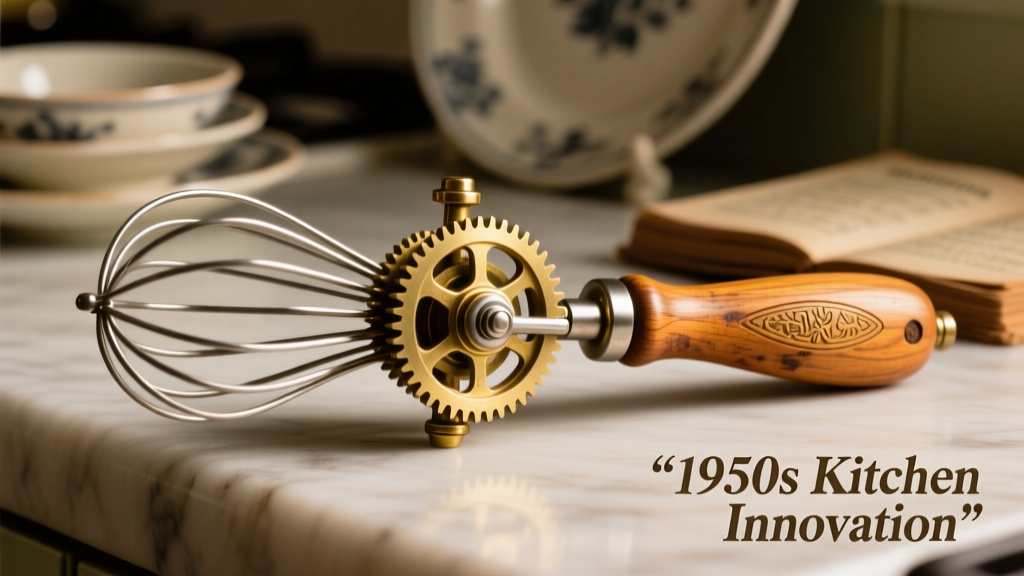
The Kitchen Eggbeater High-Speed Super Center Drive Beater with Wooden Handle: A Technical and Historical Appraisal
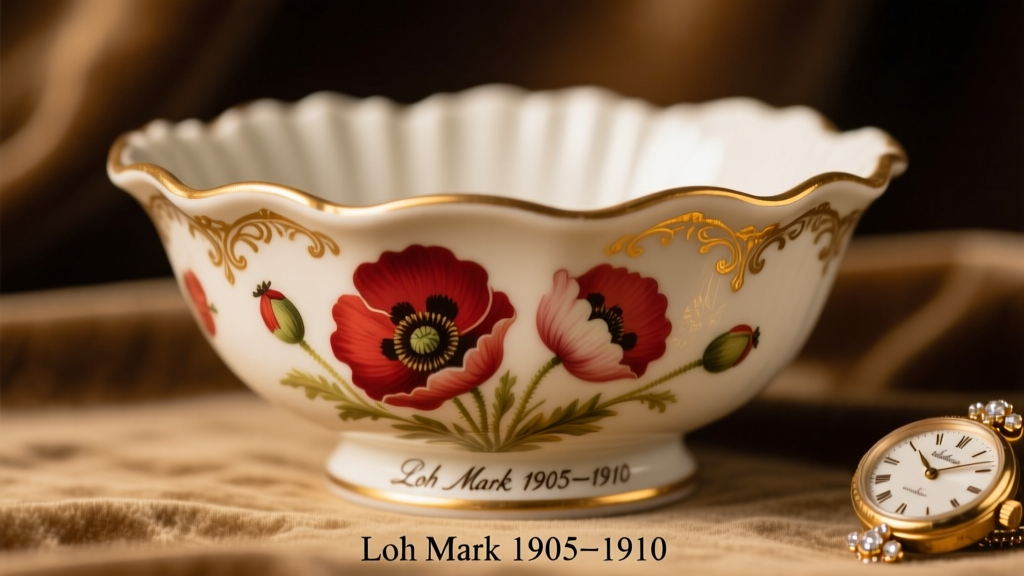
The Pickard Bowl: Ruffled Edge, Poppies, Gold Trim, and the Elusive Loh Mark (c. 1905–1910)
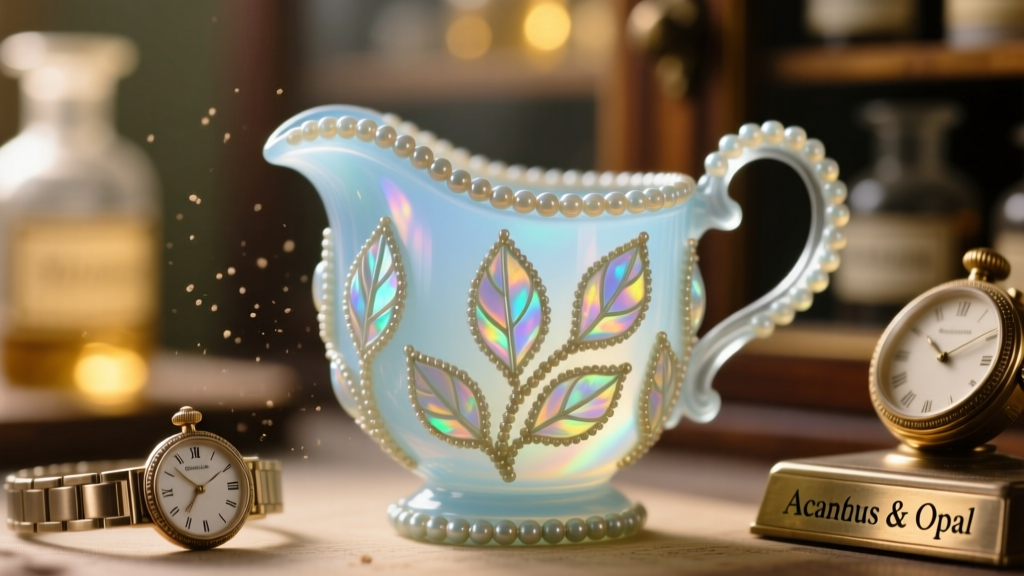
Opalescent Glass Beaded Acanthus Creamer in Cobalt Blue: A Study in American Art Glass Innovation, 1905–1925
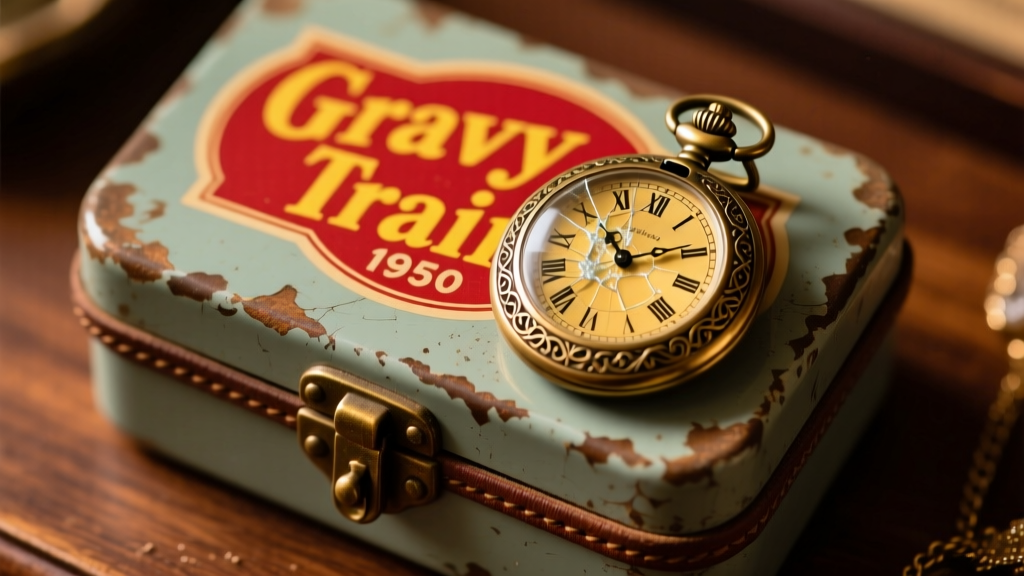
Gravy Train Desk Box: A Rare Advertising Clock from the Golden Age of American Branding
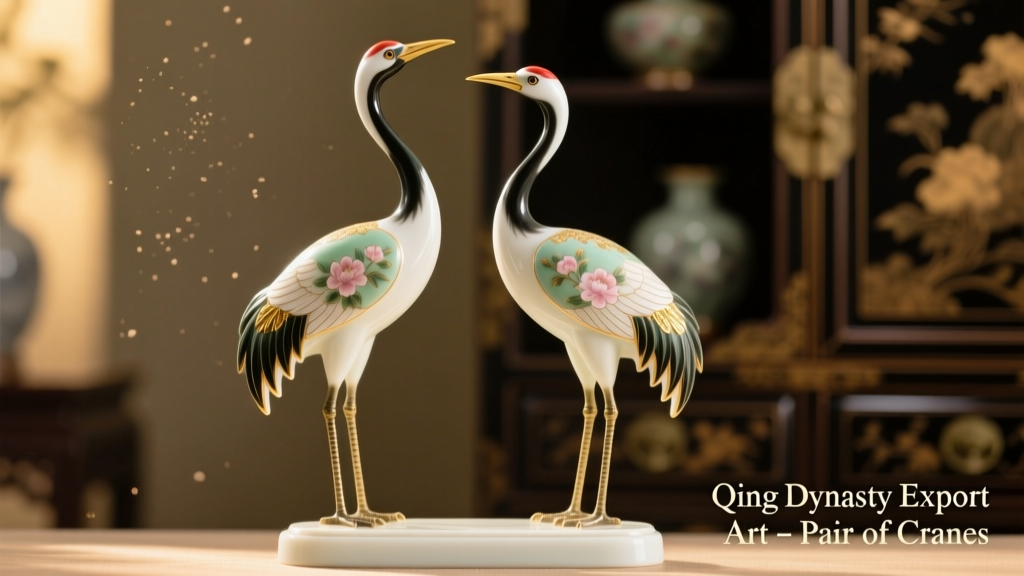
Chinese Export Porcelain Crane Figurines, Circa 1820–1850: A Study in Qianlong Revival Aesthetics and Cantonese Craftsmanship
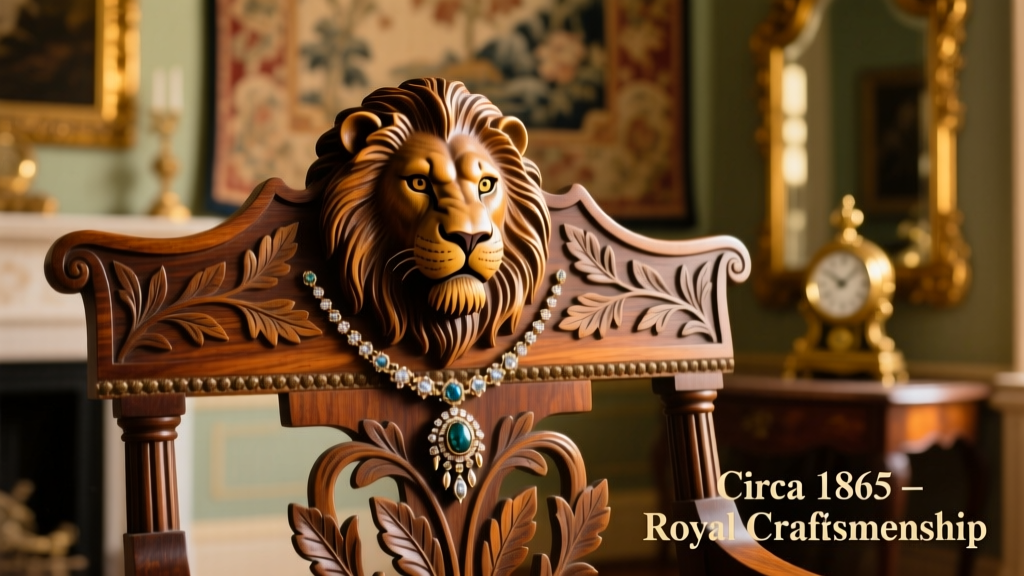
Hall Walnut Armchairs, Stylized Foliage Backs with Lion Crests: A Pair of Mid-Victorian Masterpieces, Circa 1865

Fornasetti Chair Set: A Study of the Iconic 1950s Molded Plastic Seat Back with Metal Frame (32″ H × 20.5″ W × 21″ D)
Toy Dollhouse Furniture: Painted Tin Kitchen Accessories by Bergmann, Germany, c. 1875 — A 19-Inch Stove Ensemble with Historical Significance
Doll Kestner 221: A 1915 Bisque Character Doll with Brown Googly Eyes and Closed Mouth — Authentication, Provenance, and Market Value