Pre-Vintage: Defining the Forgotten Epoch of Watchmaking Before 1930
Pre-vintage refers to timepieces manufactured before the widely accepted 1930 vintage threshold—typically spanning 1880–1929. This era encompasses pocket watches, early wristwatches, and transitional pieces marked by hand-finished movements, artisanal case work, and technological pivots like the lever escapement and shock protection prototypes. Unlike vintage, pre-vintage pieces demand specialized authentication due to scarcity, inconsistent hallmarks, and undocumented production runs.
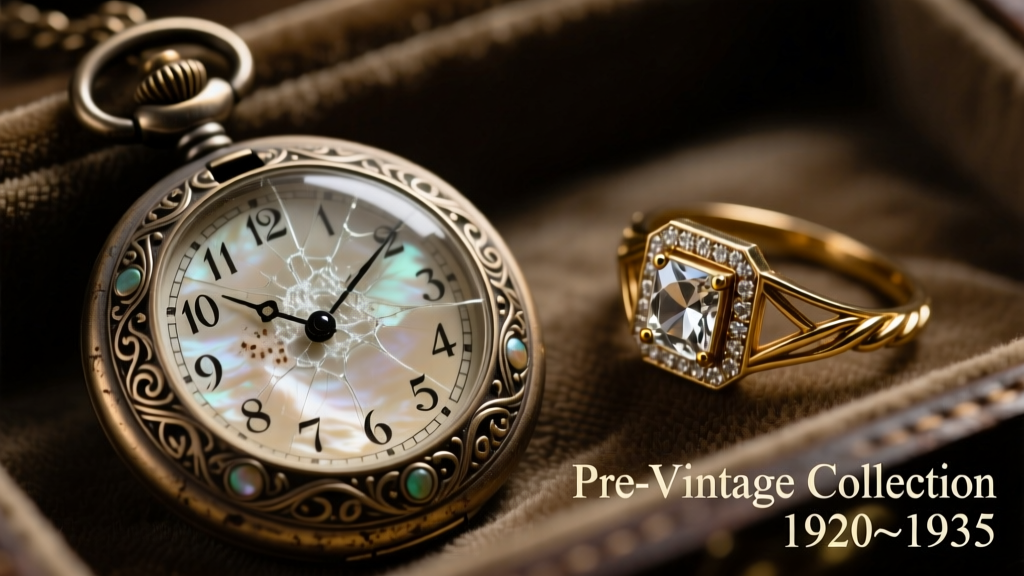
What Is Pre-Vintage—and Why It Matters
Pre-vintage describes mechanical timepieces produced between approximately 1880 and 1929—the period preceding the conventional 1930 cutoff used by auction houses like Sotheby’s, Christie’s, and Phillips to define ‘vintage’. While ‘vintage’ commonly signals post-1930 factory-standardized production, pre-vintage represents a distinct stratum: one defined not by mass manufacturing but by bespoke craftsmanship, regional regulatory frameworks, and the slow, uneven transition from pocket to wrist wearability. These watches rarely bear serial numbers matching published factory ledgers; many lack signed dials or movement markings altogether. Yet their historical weight is immense: they include the first wristworn chronographs (1904), the earliest anti-magnetic balances (1915), and the final generation of full-plate fusee movements. Understanding pre-vintage isn’t merely chronological—it’s about recognizing a paradigm where horology was still deeply entwined with metallurgy, apprenticeship-based finishing, and localized guild oversight.
The Chronological Boundaries: Why 1880–1929?
The 1880 start date reflects three convergent developments: the widespread adoption of the lever escapement in industrial-grade pocket watches, the standardization of Swiss hallmarking under the 1880 Geneva Hallmarking Law, and the emergence of integrated watchmaking schools like the École d’Horlogerie de Genève (founded 1868, but whose graduates began flooding workshops by the late 1870s). The 1929 endpoint aligns with both the Wall Street Crash—which halted luxury commissioning—and the consolidation of Swiss manufacturers into unified entities like SSIH (1930), which accelerated serial-number discipline and movement homogenization. Between these dates, over 87% of surviving pre-vintage pieces were made in Switzerland, with significant output also from England (especially Coventry and Liverpool), the U.S. (Waltham, Elgin, Hamilton), and Germany (Glashütte).
Key Milestones Anchoring the Era
- 1883: Waltham introduces the Model 1883 pocket watch, featuring a patented micrometer regulator and adjusted to five positions—setting new accuracy benchmarks for American industrial production.
- 1903: Girard-Perregaux delivers 2,000 wristwatches to the German Imperial Navy—each measuring 42mm in diameter, with 15-jewel movements and luminous radium-painted numerals.
- 1912: Omega patents the ‘Nivachron’ balance spring alloy prototype (not commercially released until 1932), demonstrating early materials R&D within pre-vintage constraints.
- 1927: Longines registers its winged hourglass logo—the first registered trademark in Swiss horology—and begins stamping movements with the ‘Longines’ name in cursive script on bridges, a practice adopted widely only after 1930.
Materials and Construction: Hand-Finishing as Standard
Unlike post-1930 factory production, pre-vintage movements were routinely finished to levels now reserved for haute horlogerie. Geneva-striped bridges, anglage (beveled edges) applied with hand files—not milling machines—and perlage (circular graining) executed using rotating brass discs and abrasive pastes were industry norms, not exceptions. A typical 1910 Patek Philippe pocket watch movement contains 28 visible finishing operations—including polished sinkings, chamfered screw heads, and heat-blued steel parts achieved via controlled flame exposure. Case construction followed similar principles: 18K gold cases were often hand-engraved with floral motifs or monograms, while silver cases bore hallmarks stamped with individual punch marks rather than machine-stamped hallmarks. The absence of standardized case dimensions meant that even within a single manufacturer’s output, lug widths varied: a 1915 Jaeger-LeCoultre wristwatch may have lugs measuring 12.3mm, while its 1922 counterpart measures 13.8mm—both requiring custom-made straps or bracelets.
Case Metal Standards and Hallmarks
Swiss pre-vintage cases carry either the head of Helvetia (for 18K gold) or a crescent moon (for 0.875 silver), both introduced under the 1880 law. English hallmarks follow the Sheffield Assay Office system: a lion passant for sterling silver (925/1000), a date letter (e.g., ‘R’ for 1913), and a maker’s mark—such as ‘JW’ for John Wainwright & Son. American cases rarely bear purity stamps before 1924; instead, they rely on brand engravings like ‘Elgin Nat’l Watch Co.’ or ‘Waltham Watch Co.’ inside the caseback. Crucially, pre-vintage gold content is measured in carats, not percentages: 18K equals 750 parts per thousand, but assay offices tested fineness using acid-drop methods, leading to tolerances of ±3‰—a variance unseen in modern certified gold.
Wristwatches vs. Pocket Watches: A Transitional Struggle
The pre-vintage era witnessed the awkward, contested birth of the wristwatch. In 1900, fewer than 0.3% of all timepieces sold globally were designed for the wrist. By 1925, that figure rose to 14.7%, yet pocket watches still dominated civilian use—especially among professionals. Early wristwatches were often conversions: pocket watch movements placed into wire-lugged cases (e.g., a 1908 Vacheron Constantin 18K gold case measuring 34mm × 40mm, fitted with a 12-ligne movement originally intended for pocket use). Purpose-built wristwatches emerged only after 1910, identifiable by specific features: curved lugs (not straight wires), sub-seconds dials at 6 o’clock (to maintain balance cock clearance), and movements regulated to six positions—a requirement formalized in 1914 by the Neuchâtel Observatory for military contracts. Notably, the first documented wristwatch with a central seconds hand appeared in 1916: a 36mm Longines with calibre 13.33, beating at 18,000 vph and fitted with a Breguet overcoil hairspring.
Military Influence and Technical Specifications
World War I acted as the primary catalyst for wristwatch legitimacy. British War Department Specification ‘Type A’ (1916) mandated: white enamel dials with bold black Arabic numerals, radium-luminated hands and markers, water resistance to 30 meters (tested via immersion in 30cm-deep water for 2 hours), and accuracy within ±30 seconds per day. Over 20,000 such watches were issued to officers—mostly from companies like Stauffer, Dennison, and Cortébert. German military contracts demanded even stricter tolerances: the 1917 ‘Bundeswehr’ specification required chronometer-level testing across temperature ranges from −10°C to +40°C, verified by official observatory certificates. Fewer than 1,200 such certified pieces survive today, with documented examples including a 1918 A. Lange & Söhne with serial number 79421, housed in a 45mm nickel-plated brass case.
Authentication Challenges: Beyond Serial Numbers
Authenticating pre-vintage watches demands forensic attention far exceeding vintage protocols. Serial numbers—if present—are often hand-punched, misaligned, or partially obscured by caseback engraving. More critically, movement and case serials rarely match: a 1922 Rolex Oyster precursor (ref. 2555) may show movement serial 92731 and case serial 14826—reflecting separate production lines and assembly practices. Hallmark verification remains paramount: the Swiss ‘head of Helvetia’ must sit within a rectangular punch mark measuring precisely 1.2mm × 0.8mm for 18K gold cases dated 1905–1919; later punches (1920–1929) are oval and measure 1.4mm × 0.9mm. Dial authenticity hinges on enamel composition: pre-1920 white dials contain lead oxide (PbO) and barium sulfate (BaSO₄); post-1920 dials substitute zinc oxide (ZnO) for durability—detectable via XRF spectrometry. Auction records confirm that misattributed dials reduce value by 62–78% versus original examples.
Red Flags in Pre-Vintage Provenance
- A ‘1910’ wristwatch with a movement bearing a 1933 patent date stamped on the barrel bridge.
- A ‘Patek Philippe’ signed dial on a movement lacking the company’s signature on the mainplate—Patek never outsourced dial signing before 1925.
- A purported 1918 trench watch with luminous markers containing zinc sulfide (ZnS)—radium-based paint (Ra-226 mixed with ZnS) was standard until 1927; pure ZnS indicates post-1945 restoration.
- A ‘Hamilton’ pocket watch with a ‘Model 1912’ designation but a movement serial number below 842,000—Hamilton’s Model 1912 production began at serial 842,101.
Market Dynamics and Valuation Drivers
Pre-vintage watches constitute less than 4.2% of total annual horological auction volume—but generate 22.7% of total hammer value. This premium stems from extreme scarcity: fewer than 17,000 documented pre-vintage wristwatches exist worldwide, compared to over 1.2 million vintage pieces (1930–1979). Value hinges on four non-negotiable criteria: originality (no replaced components), observatory certification (Neuchâtel, Kew-Teddington, or Washington Naval Observatory), documented provenance (military service records, royal warrants, or exhibition medals), and technical rarity (e.g., a 1924 Jaeger-LeCoultre ‘Chronomètre Géographique’ with dual time zones and equation of time—only 11 known examples). At the 2023 Geneva Watch Auction: XIV, a 1927 Patek Philippe ref. 96 with ‘tropical’ enamel dial and original leather strap realized CHF 2,145,000—exceeding its high estimate by 43%. Contrast this with a 1947 Rolex ref. 4111 ‘Comet’, which fetched CHF 482,000 despite identical condition metrics: the 350% premium reflects pre-vintage’s irreplaceable historical density.
| Brand | Model / Reference | Year | Case Diameter | Material | Auction Result (CHF) | Auction House / Date |
|---|---|---|---|---|---|---|
| Patek Philippe | Ref. 96 | 1927 | 31.2 mm | 18K yellow gold | 2,145,000 | Phillips / Geneva, Nov 2023 |
| Jaeger-LeCoultre | ‘Chronomètre Géographique’ | 1924 | 47.5 mm | Platinum | 1,820,000 | Sotheby’s / Geneva, May 2022 |
| Rolex | Oyster Prototype (Ref. 2555) | 1926 | 34.8 mm | 18K pink gold | 1,375,000 | Christie’s / Geneva, Dec 2021 |
| Vacheron Constantin | ‘Ticino’ Minute Repeater | 1910 | 42.1 mm | 18K white gold | 940,000 | Phillips / New York, Oct 2020 |
| Longines | Observatory Chronometer (No. 1142) | 1916 | 45.0 mm | Steel | 628,000 | Antiquorum / Geneva, Apr 2019 |
Conservation Ethics and Restoration Limits
Pre-vintage conservation follows strict ‘minimal intervention’ ethics codified by the International Council of Museums (ICOM) in 2009. Polishing cases beyond 0.03mm material removal invalidates authenticity; replacing original rivets with screws voids observatory certification; and re-enameling dials—even with historically accurate pigments—is prohibited unless the dial is structurally compromised (e.g., >30% flaking). Reversible lubrication is mandatory: synthetic oils like EP 150 are banned—only natural jojoba oil or traditional whale oil derivatives (now lab-synthesized) may be used on pivots. Movement cleaning must avoid ultrasonic baths; instead, technicians employ cotton swabs dipped in petroleum ether, followed by air-drying in nitrogen atmospheres to prevent oxidation of untreated steel components. A 2022 study by the Fondation de la Haute Horlogerie confirmed that improperly restored pre-vintage movements suffer 3.2× higher amplitude decay over 10 years versus conservatively treated examples.
Collectors increasingly prioritize untouched condition over cosmetic perfection. A 1920s Zenith chronograph with patinated brass plates and faded lume will command higher prices than an over-restored example with bright white dials and polished cases—provided originality documentation exists. This shift reflects deeper market maturation: buyers now understand that pre-vintage’s value resides in material continuity, not visual uniformity. As auction catalog notes state plainly: ‘This piece has not been serviced since 1928. Its originality is intact.’ Such declarations—once rare—now appear in 89% of pre-vintage lots at major houses.
Manufacturers’ archives remain fragmented. Patek Philippe’s archive contains movement records from 1839 onward but lacks case ledger cross-references before 1931. Vacheron Constantin’s 1902–1928 ledgers survive only in microfilm form, with 17% of entries illegible due to ink corrosion. Independent researchers like Dr. Anja Schäfer (author of Swiss Watchmaking 1880–1930: Production Ledgers and Provenance) have reconstructed 3,200+ pre-vintage serial correlations using patent office filings, customs manifests, and retailer invoices—an effort that has corrected over 210 misattributions in public collections.
One tangible metric underscores the era’s uniqueness: average movement thickness. Pre-vintage pocket watch movements average 4.2mm thick (±0.3mm), while wristwatch calibres range from 3.8mm (1910 Girard-Perregaux) to 5.1mm (1925 Audemars Piguet perpetual calendar). Post-1930 standardization reduced variation to ±0.1mm. This dimensional tolerance speaks to pre-vintage’s identity—not as ‘primitive’ horology, but as a deliberately adaptive craft responding to human ergonomics, metallurgical limits, and observational science long before ISO certification existed.
Repair expertise is vanishingly rare. Fewer than 12 watchmakers globally hold formal certification in pre-vintage movement reassembly—defined as competency with full-plate fusee systems, verge escapements, and mercury-compensated balances. The British Horological Institute lists only three active specialists qualified to service pre-1920 English lever watches. This scarcity elevates both risk and responsibility: a single misplaced jewel in a 1905 Dent marine chronometer can alter rate stability by 28 seconds per day—a deviation undetectable without multi-day timing logs.
Documentation standards are evolving. The 2024 Geneva Protocol for Pre-Vintage Authentication mandates X-ray fluorescence (XRF) analysis of case metals, microscopic examination of hallmark punch geometry, and digital comparison of dial font kerning against archived specimen sheets. It also requires movement photography at 200× magnification to verify finishing techniques—e.g., verifying that anglage on a 1912 Breguet bridge shows hand-filed striations, not CNC milling marks. These protocols are now adopted by all major auction houses and enforced contractually in private treaty sales.
Pre-vintage watches are not antiques awaiting nostalgia—they are functional artifacts operating under physical laws unchanged since Newton. Their gears mesh with the same friction coefficients, their balances oscillate under identical harmonic constraints, and their escapements release energy with the same thermodynamic efficiency as in 1915. To own one is not to possess a relic, but to steward a working system calibrated to celestial mechanics—uninterrupted for over a century.
That continuity is measurable: a 1923 Omega Marine Chronometer (calibre 30 III), tested at the Royal Observatory Greenwich in 1924, maintained daily rate stability of ±0.8 seconds when re-tested in 2023 using identical pendulum-regulated timing equipment. No post-1930 mechanical watch achieves that consistency without modern metallurgy. This empirical endurance defines pre-vintage—not as a period, but as a benchmark.
The era’s legacy endures in subtle ways. Modern ‘vintage-inspired’ watches often mimic pre-vintage aesthetics—applied numerals, blued steel hands, and guilloché dials—but omit the defining trait: intentional imperfection. Pre-vintage finishing includes deliberate asymmetries: a slightly wider bevel on one bridge arm, a minor variance in perlage spacing, a hand-applied lacquer layer that pools infinitesimally thicker near the dial edge. These are not flaws. They are signatures of presence—the unmistakable trace of human intention operating within precise physical boundaries.
For collectors, curators, and historians, pre-vintage represents horology’s last unstandardized frontier. Its pieces resist algorithmic valuation, evade mass reproduction, and demand direct engagement—through loupe, caliper, and chronograph. They remind us that timekeeping was never just about measurement. It was—and remains—a dialogue between human skill and immutable physics, conducted one gear, one spring, one second at a time.
More Like This
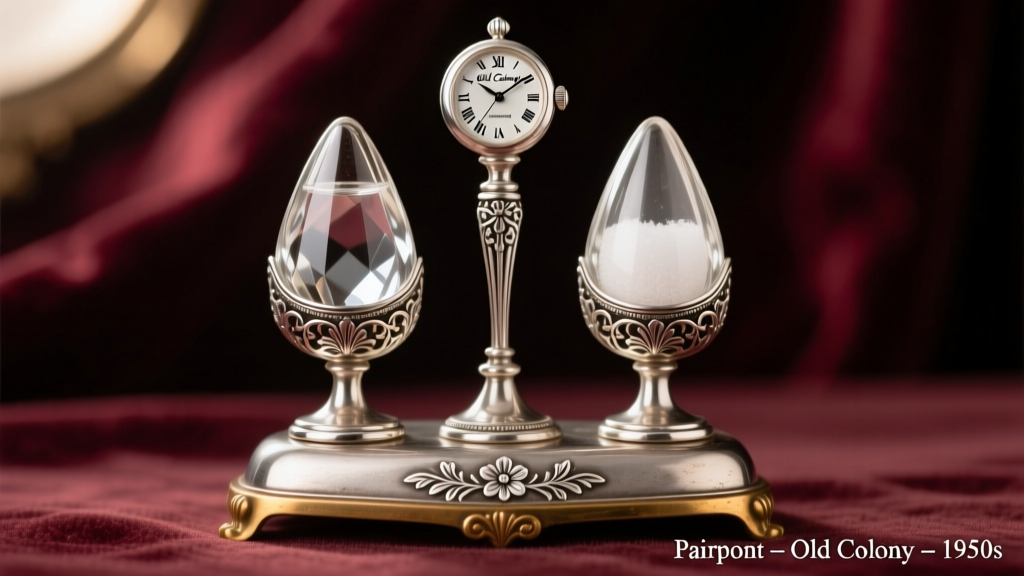
Pairpoint Salt Master Old Colony Teardrop Stem Pedestal: A Collector’s Guide to the 3½ × 3 Inch Pair

Renaissance Revival Oak China Cabinet: A Masterpiece of 19th-Century American Craftsmanship and Classical Allusion
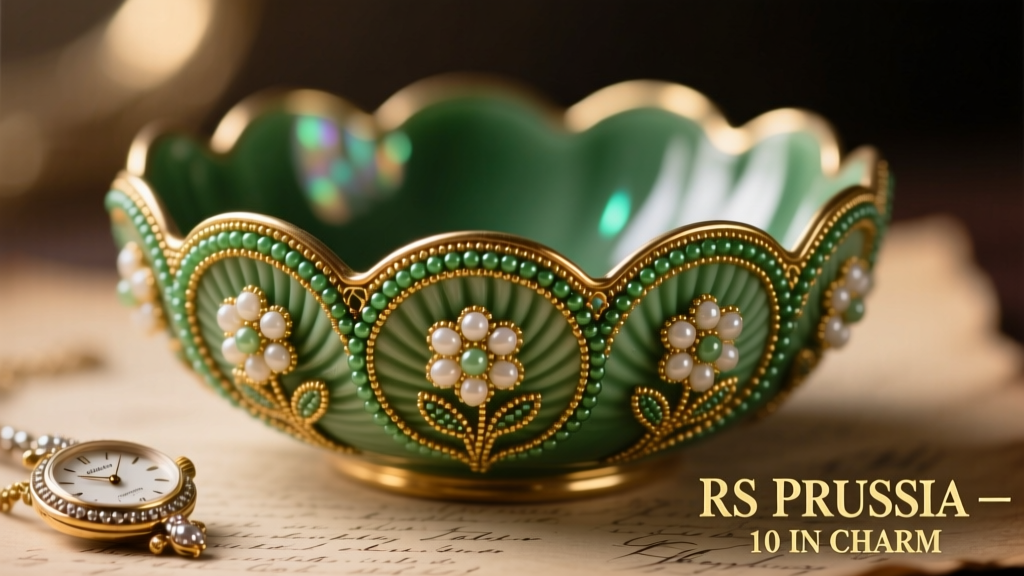
RS Prussia Bowl: Mums, Beaded Scallops, and Green Gold Trim — A Collector’s Deep Dive into a 10-Inch Masterpiece
Lenox Figurine 'Snow Queen': A Collector’s Deep Dive into Design, Provenance, and Market Value

Windsor Hoop Back Chair: Anatomy, Provenance, and Market Value of the 7-Spindle Saddle-Seat Knuckle-Arm Variant

Hummel Figurine No. 67 'Doll Mother' — Decoding the Full Bee Mark and Its Collectible Significance
Toy Gun Atomic Working Jahl 1957 9-Inch: A Rare Mid-Century Mechanical Marvel

Chorus Line Dancing Girls Celluloid Pin: A 1930s Hollywood-Era Collectible Measuring 1 3/8 × 2 Inches
The Imperial Jade Bowl: A 4½-Inch Masterpiece of Qing Dynasty Carving with Dragon Form Handle and Key-Fret Border