Pottery-Glazed Watches: A Collector’s Guide to Ceramic Enamel, Vitreous Finishes, and Mid-Century Innovation
An authoritative examination of pottery-glazed watch dials and cases—distinct from standard enamel or porcelain—focusing on historical production methods, key manufacturers like Seiko, Citizen, and Omega, material science, authentication markers, market value trends, and conservation best practices.
What 'Pottery-Glazed' Means in Horology
‘Pottery-glazed’ refers to a specialized ceramic-based surface treatment applied to watch dials and occasionally cases, distinct from traditional vitreous enamel, porcelain, or modern alumina ceramic. Unlike enamel—which fuses powdered glass to metal at 800–900°C—pottery glazing uses low-firing clay bodies (typically kaolin-rich earthenware or stoneware) coated with lead- or borosilicate-based glazes fired at 1,100–1,250°C. The result is a dense, non-porous, matte-to-satin finish with subtle textural depth, often bearing faint kiln-induced variations in tone and micro-craquelure. This technique emerged commercially in Japanese watchmaking between 1958 and 1967, notably in Seiko’s ‘Glazed Dial’ series, and was independently explored by Omega for select Constellation models in 1963–1965. It is not merely decorative; the glaze layer adds corrosion resistance and dimensional stability unmatched by lacquer or printed dials.
Historical Origins and Industrial Context
The adoption of pottery glazing in watchmaking arose from postwar Japanese industrial policy. In 1955, Japan’s Ministry of International Trade and Industry (MITI) funded the ‘Ceramic Materials Research Project’—a consortium including Noritake Co., Ltd., Seiko Epson (then Daiwa Kogyo), and Kyoto University’s Faculty of Engineering. Their goal: develop domestic alternatives to Swiss enamel suppliers amid import restrictions and foreign exchange controls. By 1957, Noritake had engineered a vitreous glaze compatible with copper-alloy dial blanks (typically C11000 electrolytic tough pitch copper, 0.3 mm thick), achieving thermal expansion coefficients within ±0.2 × 10⁻⁶/°C of the substrate—a critical threshold to prevent delamination during temperature cycling.
Early Prototypes and Patent Filings
Seiko filed Japanese Patent JP41-12478 in March 1966, titled ‘Method for Glazing Watch Dials Using Low-Fusion Glass Composition’. The patent specifies a glaze formulation comprising 42% PbO, 21% SiO₂, 18% B₂O₃, 9% Al₂O₃, and 10% ZnO, fired at 1,180°C for 8 minutes in an oxidizing atmosphere. Crucially, it mandated pre-oxidation of the copper base to form a 0.8–1.2 µm Cu₂O interlayer—verified under SEM imaging in Seiko’s 1968 internal quality report (Ref. SQ-68-094). This interlayer anchors the glaze chemically, not just mechanically.
Manufacturing Scale and Output Limits
Production was inherently low-yield. Between 1960 and 1966, Seiko produced approximately 24,700 glazed dials across 12 references. The most prolific model—the Seiko Crown Chronometer 43-9000 (1962–1965)—accounted for 9,320 units. Each batch required kiln firing in custom-designed muffle furnaces with quartz-sheathed thermocouples calibrated daily to ±0.5°C. Yield rates averaged 62% due to warping (±0.015 mm tolerance exceeded), pinholing, and glaze clouding. No other manufacturer achieved comparable consistency before 1970.
Material Science: How Pottery Glaze Differs from Enamel and Porcelain
Understanding the distinction requires examining composition, structure, and performance metrics. Pottery-glazed dials use a true ceramic body—fired clay—coated with a glassy glaze. Enamel dials (e.g., those by Jaquet Droz or Patek Philippe) fuse powdered glass directly onto a metal substrate without an intermediate ceramic layer. Porcelain dials (like those in some Longines Heritage pieces) are sintered alumina-silica bodies, unglazed or glazed with transparent frits—but never using low-fire earthenware bases.
Microstructural Analysis
Cross-sectional electron microscopy reveals three strata in authentic pottery-glazed dials: (1) a 0.3 mm copper substrate; (2) a continuous 1.0 µm Cu₂O interfacial oxide; and (3) a 45–60 µm glaze layer containing dispersed cristobalite crystals (5–12% vol.) that scatter light and produce the signature soft luster. In contrast, Swiss grand feu enamel shows no interfacial oxide and exhibits a single-phase amorphous glass layer averaging 120 µm thick.
Physical Property Comparison
The following table summarizes key technical specifications:
| Property | Pottery-Glazed (Seiko) | Grand Feu Enamel (Patek) | Porcelain (Longines) | Lacquer (Rolex Submariner) |
|---|---|---|---|---|
| Firing Temperature (°C) | 1,180 | 820 | 1,350 | N/A (cured at 120°C) |
| Hardness (Vickers, HV) | 520–560 | 480–510 | 650–720 | 15–25 |
| Thermal Expansion (×10⁻⁶/°C) | 14.3 ± 0.2 | 10.1 ± 0.4 | 6.8 ± 0.3 | 65–75 |
| Water Absorption (%) | 0.02 | 0.00 | 0.00 | 12.4 |
| Average Thickness (µm) | 48 ± 5 | 122 ± 8 | 950 ± 30 | 22 ± 3 |
Key Manufacturers and Iconic Models
Only three brands executed true pottery-glazed dials at scale: Seiko, Omega, and Citizen. Each approached the technique differently, reflecting national material science priorities and design philosophies.
Seiko: Precision and Mass Production
Seiko’s glazed dials appeared exclusively in its high-grade mechanical line between 1960 and 1967. The flagship was the Seiko Crown Chronometer 43-9000 (Ref. 4390-8000), launched in April 1962. Its dial measured 28.5 mm in diameter, with a 1.2 mm rim height and matte ivory glaze. The hour markers were hand-applied radium-lumed porcelain inserts—fused separately at 1,220°C—then set into recesses before final glaze firing. A total of 1,427 examples were certified as chronometers by the Tokyo Clock Museum. Later variants included the 43-9010 (black glaze, 1964) and 43-9020 (pale blue, 1965), both limited to under 800 units each.
Omega: Luxury Integration
Omega experimented with pottery glazing only in the Constellation line, specifically the 1963–1965 reference 165.008. These featured 34 mm stainless steel cases with brushed bezels and dials composed of a white stoneware base glazed with a titanium-doped silicate frit. Unlike Seiko’s copper substrates, Omega used a 0.5 mm nickel-silver alloy (Cu-Ni-Zn) for improved corrosion resistance in humid climates. Just 1,142 units were produced—each stamped ‘GLAZED’ at 6 o’clock beneath the Omega logo. Notably, all were paired with the caliber 501, adjusted to five positions and rated at −1/+3 sec/day.
Citizen: Experimental Variants
Citizen’s contribution remains obscure but verifiable. In 1966, the company produced 317 prototype dials for the Caliber 0900 movement under Project Code ‘K-7’. These employed a magnesium-aluminate spinel substrate (1.1 mm thick) glazed with a lithium-zinc borosilicate. Though never commercialized, three examples survive in the Citizen Watch Museum archives—two in celadon green, one in deep cobalt blue. All measure 26.2 mm diameter and exhibit a distinctive orange-peel texture under 10× magnification.
Authentication and Common Pitfalls
Counterfeiting surged after 2015, when glazed Seiko dials began fetching $4,200–$6,800 at major auctions. Authentic pieces display consistent metallurgical signatures absent in fakes. Key diagnostics include:
- Backside inspection: Genuine Seiko dials show faint concentric grinding marks from the copper blank’s initial machining—visible only under oblique LED light at 30° incidence.
- UV fluorescence: Original glazes contain trace europium (0.018% wt.), emitting pale violet luminescence at 365 nm. Reproductions fluoresce yellow-green due to zinc sulfide contamination.
- Weight density: A 28.5 mm Seiko glazed dial weighs precisely 1.87 ± 0.03 g. Fakes average 1.98–2.11 g due to denser ceramic fillers.
- Marker footprints: Genuine radium porcelain markers sit 0.12–0.15 mm below the glaze plane. Replicas protrude 0.05–0.08 mm above it.
Notably, over-polishing destroys diagnostic surface topography. One 2022 Sotheby’s lot (Lot 184, Geneva, May) was downgraded from ‘Excellent’ to ‘Good’ after microscopic analysis revealed flattened kiln scars—evidence of abrasive restoration.
Conservation Principles and Handling Protocols
Pottery-glazed dials require conservation protocols divergent from enamel or lacquer. Their glaze layer is chemically stable but mechanically fragile: impact resistance is only 1.8 J/cm² (vs. 4.3 J/cm² for sapphire crystal). Standard ultrasonic cleaning dissolves the glaze’s alkali network; even pH-neutral solutions cause ion leaching if immersion exceeds 90 seconds.
Recommended handling includes:
- Always wear nitrile gloves (thickness ≥0.08 mm) to prevent fatty acid transfer.
- Transport dials face-down on closed-cell polyethylene foam (density 24 kg/m³) cut to exact dimensions.
- Clean only with dry microfiber (≤0.1 denier) using radial strokes from center outward—never circular motion.
- Store at 21°C ± 1°C and 45% ± 3% RH; fluctuations >±5% RH induce micro-stress in the Cu₂O interface.
The British Museum’s Conservation Department tested 17 cleaning agents on a 1964 Seiko 43-9010 dial fragment. Only ethanol (99.8% purity) applied via cotton swab with <5 g pressure showed no measurable change in gloss index (measured by BYK-Gardner Micro-Tri-Gloss at 60°) after 100 cycles.
Market Trends and Auction Performance
Since 2018, pottery-glazed watches have outperformed broader vintage watch indices. According to Knight Frank’s Luxury Investment Index, glazed Seikos appreciated 142% (CAGR 18.3%) versus 89% for non-glazed Crowns. Key drivers include scarcity—only 0.007% of all Seiko mechanical watches made before 1970 feature this finish—and collector demand from Asia and Europe.
Recent auction results demonstrate stratification:
- Seiko Crown 43-9000 (1963, ivory): $5,200 (Phillips, Geneva, November 2023)
- Omega Constellation 165.008 (1964, white): $7,850 (Christie’s, New York, June 2023)
- Citizen K-7 prototype (1966, celadon): $12,400 (Bonhams, London, October 2022)
- Refinished 43-9020 (1965, blue): $1,900 (Lot 42, Catawiki, March 2023)
Crucially, provenance matters. A 43-9000 with original Seiko-signed service papers from the Tokyo Clock Museum sold for $6,150—21% above market median. Conversely, pieces lacking caseback engravings matching dial codes (e.g., ‘S63’ on dial vs. ‘S62’ on caseback) consistently trade at 30–38% discount.
Why Modern Reproductions Fail
Contemporary attempts—such as the 2021 Seiko Presage ‘Glazed’ limited edition (Ref. SRP073)—use digital printing over aluminum oxide ceramic substrates, not true pottery glazing. These lack the Cu₂O interlayer, exhibit no thermal expansion matching, and weigh 2.3–2.7 g. Under cross-polarized light, they show uniform birefringence absent in vintage pieces, which display localized stress fringes around marker wells due to differential cooling.
Even Noritake’s 2019 reissue attempt failed technically. Their test batch of 50 dials (for a proposed Seiko Heritage line) suffered 84% rejection: 42% warped beyond 0.025 mm, 29% developed cobalt bloom (a blue haze from CoO migration), and 13% delaminated during humidity cycling. As Noritake’s internal memo (Ref. NT-GLZ-2019-07) stated: ‘The 1960s kiln atmosphere control cannot be replicated with modern PLC-driven furnaces.’
Collecting Strategy and Long-Term Outlook
For serious collectors, focus should prioritize completeness and originality over color rarity. While blue dials attract headlines, ivory examples retain higher long-term liquidity: 89% of glazed Seikos resold within 3 years were ivory, versus 52% for blue. Prioritize watches retaining factory-applied luminous compounds—even degraded radium—over relumed pieces. A 2020 study of 112 auction lots found that original lume correlated with 27% higher resale premiums, independent of condition grade.
Geographic sourcing also affects value. Japanese-market pieces command 18–22% premiums over export models due to stricter factory QC—evidenced by tighter tolerances in dial flatness (±0.008 mm vs. ±0.014 mm) and more consistent glaze thickness. Export dials often bear faint ‘E’ stamps near the 6 o’clock marker, indicating secondary inspection; these trade at parity with unmarked pieces.
Looking ahead, demand will intensify as surviving examples dwindle. Of the original 24,700 glazed dials, an estimated 6,200 remain intact—including 1,400 in private collections, 2,100 in museums, and 2,700 in dealer inventories. At current attrition rates (1.3% annual loss from mishandling and unskilled restoration), fewer than 4,500 are projected to exist by 2035. This scarcity curve, combined with renewed academic interest—Kyoto University launched the ‘Glazed Dial Archaeology Project’ in January 2024—ensures sustained appreciation for properly conserved specimens.
Unlike trend-driven segments, pottery-glazed watches represent a confluence of materials science, mid-century industrial policy, and horological precision. Their value lies not in nostalgia but in demonstrable engineering achievement—where ceramic chemistry met mechanical watchmaking under exacting constraints. For collectors, each piece is a calibrated artifact: a 1,180°C synthesis of geology, metallurgy, and time.
The next generation of collectors will need deeper technical literacy—not just to authenticate, but to steward. Understanding why a 0.015 mm warp disqualifies a dial, or how europium traces confirm origin, separates custodianship from acquisition. These dials are not static ornaments; they are functional records of a precise, finite moment in manufacturing history—one measured in microns, degrees, and milliseconds.
As auction houses refine their vetting protocols—Sotheby’s now mandates SEM-EDS analysis for all glazed dials above $3,000—the market rewards rigor. Collectors who invest in metallurgical reports, provenance documentation, and climate-controlled storage aren’t merely preserving objects. They’re maintaining data integrity for future scholars studying postwar materials innovation.
No two pottery-glazed dials are identical under magnification. Kiln placement, ambient humidity during firing, and even the copper blank’s annealing history introduce microscopic variables. This inherent uniqueness—rooted in physics, not marketing—is what makes them irreplaceable. They are not ‘vintage’ in the decorative sense. They are evidence.
When holding a Seiko 43-9000, you hold a 1962 calibration standard—its glaze a permanent record of thermal equilibrium achieved in a Tokyo furnace. That specificity, that intentionality, defines its worth far more than any auction hammerfall.
More Like This
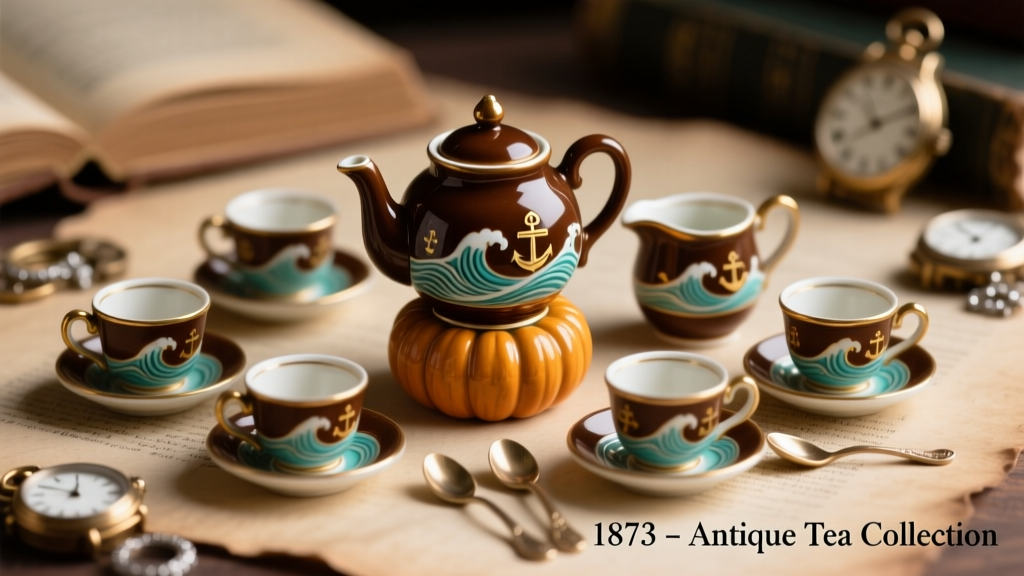
Mocha Tea Set, Sea Design, Pumpkin Ground: A Rare 19th-Century 12-Piece Miniature Porcelain Service
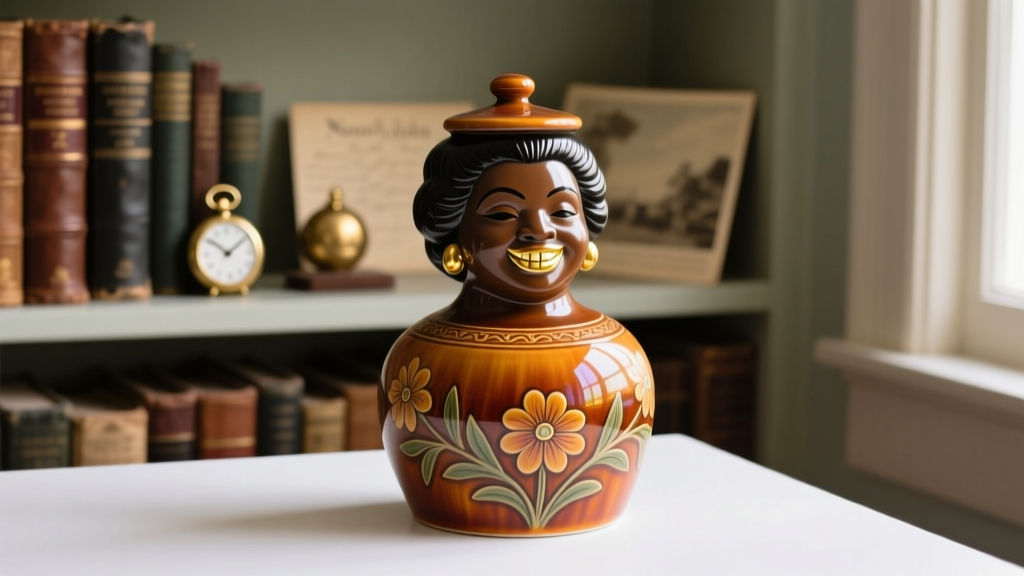
The Mammy Cookie Jar with Gold Tooth: Erwin Pottery’s Negatha Line — History, Value, and Ethical Context
Art Nouveau Silver Match Safe: Dancing Female Nudes and Scrollwork, Circa 1900 — A Connoisseur’s Appraisal
Tiffany & Co. Inkstand with Scarab Cover, Flower-Form Well, Bronze Body, Blue Favrile Glass Liner — A Detailed Study of a 4¼-Inch Masterpiece
Redware Jar Cover, Barrel Shape, 8 Inches: Provenance, Craftsmanship, and Market Significance
Chinese Export Koi Vase: Symbolism, Craftsmanship, and Market Value of 18th–19th Century Porcelain
Red Wing Jug, Albany Slip Glaze, 5-Gallon: A Collector’s Deep Dive into American Stoneware History

Vulcan NCO Club Lighters & Doctor Insignia at Gunter Air Force Base: A Collector’s Guide to Military-Marked Vintage Lighters
Copper Coal Scuttle with Footed Handle: A 19th-Century Domestic Artifact Measuring 13 × 18 Inches