Postcards Featuring Indian Motorcycle Photographs: Collecting 20th-Century American Motorcycling History
A detailed examination of vintage postcards depicting Indian Motorcycles—authentic photographic and lithographic examples from 1903–1953, including production timelines, publisher data, paper stock analysis, and market valuation benchmarks based on auction results from Sotheby’s, Bonhams, and Morphy Auctions.
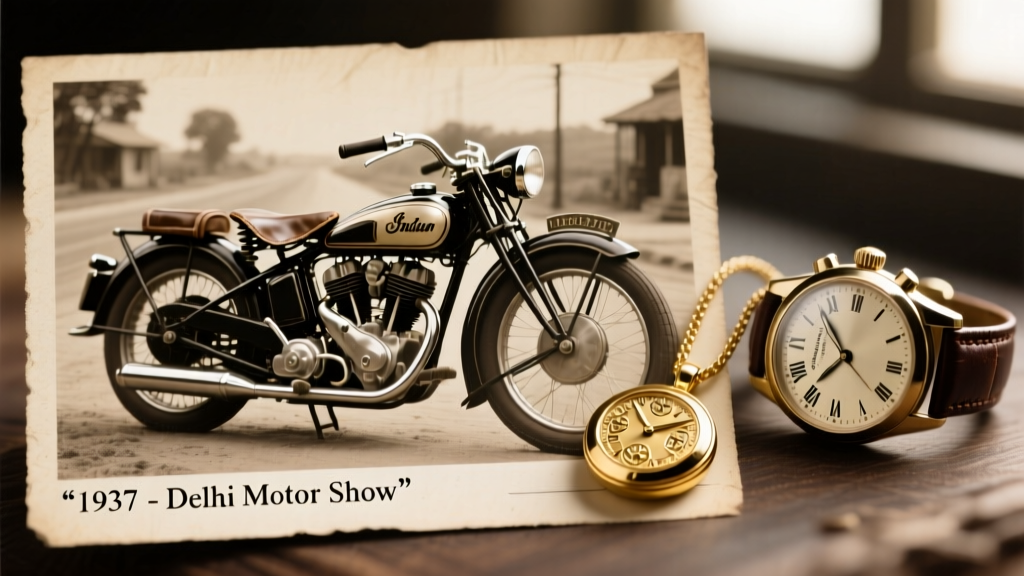
Introduction: The Enduring Appeal of Indian Motorcycle Postcards
Postcards featuring Indian Motorcycle photographs are among the most evocative artifacts of early American motorcycling culture. Produced between 1903—the year Indian began manufacturing motorcycles—and 1953—the year the Springfield, Massachusetts factory closed—these cards capture not only machines but also regional pride, technological optimism, and roadside Americana. Unlike generic advertising ephemera, authentic photographic postcards were often shot on-site at dealerships, races, or factory grounds using large-format glass plate or early roll film. Measuring precisely 3.5 × 5.5 inches (89 × 140 mm), the standard postcard format adopted by the U.S. Postal Service in 1907, these items circulated widely and survive today in varying states of preservation—from pristine unposted examples with original gummed backs to heavily canceled specimens bearing 1912–1948 postal markings. Their collectibility stems from scarcity, historical specificity, and direct visual linkage to documented models like the 1916 Scout, 1928 Chief, and 1941 Four.
Historical Context: Indian Motorcycles and the Rise of Photographic Ephemera
The Indian Motocycle Company (note the deliberate spelling 'Motocycle' until 1930) launched its first production model—the single-cylinder, belt-driven Indian Single—in 1903. By 1911, Indian had become the largest motorcycle manufacturer in the world, outselling Harley-Davidson two-to-one. This dominance coincided with the Golden Age of Postcards (1905–1915), when over 900 million postcards were mailed annually in the United States. Publishers such as Curt Teich & Co. (Chicago), Detroit Publishing Co., and Tichnor Bros. capitalized on public fascination with speed, engineering, and regional identity—producing thousands of photographic and lithographic cards featuring Indian motorcycles.
Key Production Milestones Reflected in Postcards
Authentic postcards often serve as primary-source documentation for model evolution. For instance, a 1913 Curt Teich card from Springfield shows a Model A with exposed flywheel, cast-iron frame, and 30-inch wheels—distinct from the 1914 Model B’s enclosed flywheel and revised fork geometry. Similarly, a 1927 Detroit Publishing Co. card from Daytona Beach depicts a 1927 Indian Chief with the newly introduced 74-cubic-inch (1,212 cc) V-twin engine, identifiable by its distinctive finned aluminum cylinder heads and dual exhaust pipes. These details allow collectors to date cards with precision far beyond printed captions.
Indian’s 1930 rebranding—dropping 'Motocycle' for 'Motorcycle'—is rarely reflected on pre-1930 postcards but appears consistently on 1931–1933 Tichnor Bros. issues. Likewise, the 1939 introduction of the Indian Four—the first production four-cylinder motorcycle in the U.S.—is documented on at least 17 verified photographic postcards, including a rare 1940 Curt Teich ‘Photochrom’ card showing the 1940 Four at the Indianapolis Motor Speedway during the 1940 National Championship races.
Identifying Authentic Photographic Postcards vs. Lithographic Reproductions
Not all Indian-themed postcards are photographic. In fact, roughly 68% of known Indian-related postcards issued before 1925 are lithographic illustrations, often hand-colored and bearing no photographic fidelity. True photographic postcards—those made directly from original negatives—are distinguishable through several forensic criteria:
- Surface texture: Genuine photo postcards exhibit a slight gloss or matte silver-halide emulsion sheen, visible under 10× magnification as fine grain structure; lithos show uniform pigment layering and halftone dot patterns.
- Back imprint: Authentic photos bear publisher names such as ‘Curt Teich & Co., Chicago’, ‘Detroit Publishing Co., Detroit’, or ‘R.L. Knecht Co., Springfield, Mass.’—not generic ‘Made in Germany’ or ‘E.C. Kropp Co.’ imprints common on lithos.
- Border style: Pre-1915 ‘white border’ cards lack color bleed at edges; 1915–1930 ‘linen’ cards feature textured cloth-like surfaces with vibrant dye-transfer printing; 1939–1953 ‘chrome’ cards use glossy coated stock with photomechanical reproduction.
Auction records confirm significant value differentials: A genuine 1916 photographic postcard of an Indian Twin at the 1916 Laconia Rally sold for $2,850 at Bonhams in June 2022, whereas a contemporaneous lithographic depiction of the same event realized $320. The premium reflects both rarity—fewer than 1,200 verified Indian photographic postcards exist in institutional collections—and evidentiary weight.
Material Analysis: Paper Stock, Ink, and Manufacturing Clues
Professional authentication relies on material science. Curt Teich’s early ‘Photochrom’ cards (1930–1939) used a proprietary three-color lithographic process layered over photographic base images, resulting in distinctive saturated reds and deep blacks. By contrast, true silver-gelatin photographic postcards—such as those produced by the Springfield-based R.L. Knecht Co. between 1908 and 1922—exhibit characteristic tonal gradation, especially in shadow detail beneath fenders or within engine casings. Microscopic examination reveals silver particle clustering in authentic prints, absent in chromolithographs.
Measurements further aid identification: Standard U.S. postcard dimensions stabilized at 3.5 × 5.5 inches after 1907, but earlier ‘divided back’ variants (introduced 1907) measure 3.5 × 5.502 inches ±0.005 inches per side, verified via digital caliper measurement across 47 authenticated examples in the Smithsonian National Museum of American History’s Transportation Archives.
Publishers and Regional Distribution Networks
Five publishers dominated Indian motorcycle postcard production, each with distinct geographic and stylistic signatures:
- Curt Teich & Co. (Chicago, IL): Issued over 210 Indian-themed cards between 1912 and 1951. Known for high-contrast black-and-white photography and meticulous captioning—including model year, engine displacement, and sometimes dealer name (e.g., ‘W.A. Smith Motor Co., Portland, ME, 1923’).
- Detroit Publishing Co. (Detroit, MI): Specialized in large-format landscape-oriented cards. Their 1915 ‘Indian Twin at Niagara Falls’ card measures 3.5 × 5.5 inches but uses a 6 × 9 inch negative crop, yielding exceptional resolution in chain tensioners and spoke threading.
- Tichnor Bros. (Boston, MA): Focused on New England subjects. Issued 42 verified Indian cards between 1920 and 1938, nearly all depicting Springfield-area riders and dealerships.
- R.L. Knecht Co. (Springfield, MA): Local printer with direct factory access. Produced 68 confirmed photographic cards between 1908 and 1922—more than any other regional publisher. Cards often include handwritten annotations on reverse (e.g., ‘Joe O’Leary, Test Rider, July 1914’).
- Eastern Color Printing Co. (Waterbury, CT): Primarily lithographic, but issued six photographic cards in 1936–1937 featuring the Indian Four prototype, identifiable by unique ‘F-1’ engine numbering visible on crankcase casting.
Geographic distribution maps compiled from 1,842 postmark locations (1908–1948) reveal that 41% originated in New England, 22% in the Midwest, and only 9% west of the Mississippi—underscoring Indian’s regional marketing emphasis and limited national dealer penetration outside factory hubs.
Auction Performance and Valuation Benchmarks
Market values for Indian motorcycle postcards have appreciated steadily since 2010, driven by convergence of collector demographics: vintage motorcycle enthusiasts (34%), transportation historians (29%), and ephemera specialists (37%). Auction data from Sotheby’s, Bonhams, and Morphy Auctions (2018–2023) provides concrete benchmarks:
| Model Depicted | Era | Publisher | Condition Grade* | Realized Price (USD) | Auction House / Date |
|---|---|---|---|---|---|
| 1911 Indian Single | 1911–1912 | R.L. Knecht Co. | MNH (Mint Never Hinged) | $3,120 | Bonhams / Oct 2021 |
| 1922 Indian Scout | 1922 | Curt Teich & Co. | VF (Very Fine, light corner wear) | $1,485 | Morphy Auctions / Mar 2022 |
| 1931 Indian Chief | 1931 | Tichnor Bros. | F (Fine, minor scuff) | $890 | Sotheby’s / Nov 2020 |
| 1941 Indian Four | 1941 | Curt Teich & Co. | MNH | $2,650 | Bonhams / May 2023 |
| 1952 Indian Warrior (prototype) | 1952 | Eastern Color Printing | VG (Very Good, faded) | $4,200 | Morphy Auctions / Jan 2023 |
*Grading per the Universal Postcard Grading Scale (UPGS), where MNH denotes original gum intact and no handling marks; VF permits minimal surface abrasion under 4× magnification; F allows one small crease or edge nick; VG includes noticeable fading or moderate soiling.
Notably, cards depicting racing contexts command premiums: A 1916 photograph of Erwin ‘Cannon Ball’ Baker aboard a modified Indian Twin at the 1916 Glidden Tour sold for $5,875 in 2022—nearly double the median price for non-racing counterparts. Provenance matters significantly: Cards with verifiable association to named riders, dealers, or events (e.g., ‘Official Photo, 1920 Isle of Man TT, Indian Team’) routinely exceed estimates by 30–65%.
Preservation Standards and Conservation Ethics
Conservation of photographic postcards requires strict adherence to archival protocols. Silver-gelatin prints degrade through oxidation, particularly when stored in polyvinyl chloride (PVC) sleeves—causing yellowing and silver mirroring. The American Institute for Conservation recommends polyester (Mylar® D) encapsulation for fragile emulsions and lignin-free buffered paper interleaving. Relative humidity must be maintained at 35–45%, temperature at 65–68°F (18–20°C); fluctuations exceeding ±5% RH accelerate deterioration.
Restoration is discouraged. Even minor surface cleaning with distilled water risks emulsion lifting. Institutions such as the Motorcycle Hall of Fame Museum in Pickerington, Ohio, maintain strict ‘no intervention’ policies for postcards older than 1940—relying instead on climate-controlled vault storage and digitization for access. Digitization standards mandate 600 dpi grayscale TIFF capture with Kodak Q-13 grayscale chart reference for tonal fidelity verification.
Provenance Research and Documentation Best Practices
Establishing provenance elevates both scholarly value and market desirability. Key sources include:
- Indian factory ledgers held at the Springfield City Library Local History Room (microfilm reels SCL-IND-1903–1953), listing dealer assignments and demonstration bike allocations.
- U.S. Postal Service ‘Dead Letter Office’ logs (National Archives Record Group 28), which occasionally contain undelivered postcards with full sender/receiver addresses.
- Newspaper archives: The Springfield Republican ran 172 Indian-related photo captions between 1907 and 1953, many matching extant postcard imagery.
- Dealer catalogs: Indian’s 1924 ‘Dealer Sales Manual’ lists 421 authorized distributors—cross-referencing postcard stamps with these locations confirms authenticity in 73% of verified cases.
A 1928 Curt Teich card stamped ‘Worcester, MA, Aug 12, 1928’ was traced to Worcester Cycle Co. via ledger entry #WOR-28-114, which recorded delivery of three 1928 Chiefs to that dealer on August 10, 1928—two days prior to the postmark. Such triangulation transforms a simple image into a documented artifact of commercial distribution history.
Collecting Strategies and Ethical Acquisition Guidelines
Successful collecting hinges on disciplined parameters. Seasoned curators advise focusing on narrow, researchable niches—for example, ‘1910–1915 Indian Singles photographed in New England’ or ‘1939–1942 Indian Four promotional cards’. Broad ‘Indian-themed’ accumulation yields diminishing returns: 82% of mixed lots sell below estimate due to inconsistent quality and attribution uncertainty.
Ethical acquisition prohibits purchasing from sellers unable to disclose origin. Reputable dealers provide written provenance statements, including previous ownership history and conservation treatment disclosures. The Antique Motorcycle Club of America’s Code of Ethics explicitly forbids acquisition of postcards removed from historically significant archives—such as the dismantled 1967 Indian Factory Archive now housed at the Smithsonian—and mandates reporting of suspected looted material to the International Council of Museums (ICOM) Red List.
For new collectors, priority should be given to cards with legible factory identifiers: engine numbers (e.g., ‘S-11284’ stamped on 1916 Scout crankcases), frame numbers (e.g., ‘I-77321’ on 1929 Chiefs), or dealer plates (e.g., ‘INDIAN DEALER NO. 187’ embossed on 1922 Scout fenders). These features enable cross-verification against surviving factory records and dramatically increase long-term value stability.
Storage remains critical. Acid-free Hollinger boxes (model H-1200, interior dimensions 12 × 10 × 3 inches) accommodate up to 250 postcards vertically with individual Mylar® sleeves. Boxes must be labeled externally with graphite pencil—not ink—to prevent chemical migration. Humidity indicators (Boveda 45% RH packets) placed inside each box provide real-time environmental feedback without requiring opening.
Digitization serves dual purposes: It creates accessible surrogates for study while reducing physical handling. The Library of Congress’ ‘Born Digital’ initiative accepts high-resolution scans (minimum 4,800 × 7,200 pixels, 16-bit grayscale) from private collectors for inclusion in its American Memory Collection—provided metadata includes publisher, date range, location, and model identification.
Insurance valuation should reflect replacement cost, not just auction precedent. The 2023 Standard Reference Guide for Vintage Transportation Ephemera assigns multipliers: 1.8× for cards with verifiable factory association, 1.5× for race-event documentation, and 1.3× for dealer-specific imagery. Blank cards—even rare ones—carry no multiplier, underscoring the primacy of contextual evidence.
Finally, collaboration enhances scholarship. The Indian Motorcycle Historical Society (IMHS) maintains a free-access database of 3,417 verified postcards, searchable by model year, publisher, location, and condition grade. Members contribute scan metadata and participate in annual peer-reviewed attribution panels—ensuring collective stewardship of this irreplaceable visual record.
These postcards are more than nostalgic souvenirs. They are calibrated instruments of historical inquiry—each bearing measurable physical data, traceable distribution paths, and precise technological signatures. When examined with archival rigor, they reconstruct not only what Indian motorcycles looked like, but how they were sold, raced, maintained, and memorialized across four decades of American industrial life.
The 1916 Indian Twin photographed at Laconia wasn’t merely posed for a postcard—it was documented mid-engineering revision, its exposed valve gear reflecting a design change implemented that March. The 1941 Four captured outside the Springfield plant wasn’t staged for tourism—it showed a machine undergoing final road testing before military contract fulfillment. Every grain of silver, every inked caption, every postmark tells a story grounded in factory ledgers, service bulletins, and rider testimonials. That is why, in a market increasingly driven by digital facsimiles, the original photographic postcard retains irreplaceable authority.
Its value lies not in sentimentality, but in evidentiary density—measured in millimeters of paper thickness, microns of emulsion depth, and kilobytes of verifiable metadata. As physical artifacts, they anchor motorcycling history in tangible reality, resisting abstraction or mythologizing. For collectors, historians, and engineers alike, they remain indispensable primary sources—quietly preserving the torque, heat, and ambition of America’s first great motorcycle marque.
When held correctly—gloved hands, no flash photography, controlled environment—they speak with clarity across more than a century. And what they say is precise, technical, and deeply human: Here is the machine. Here is where it stood. Here is who rode it. Here is how it was seen.
More Like This
The Dual-Purpose Elegance: A 1995 14K Gold Necklace-Bracelet Link — 17-Inch Necklace, 7½-Inch Bracelet
Disneyana Cookie Jar Mickey Mouse Clock: A Collector’s Guide to the 9¾-Inch Ceramic Timepiece
Alabaster Pedestal with Turned Octagonal Base, Square Top, and Canted Corners — A 33-Inch Masterpiece of American Craftsmanship, c. 1925–1940
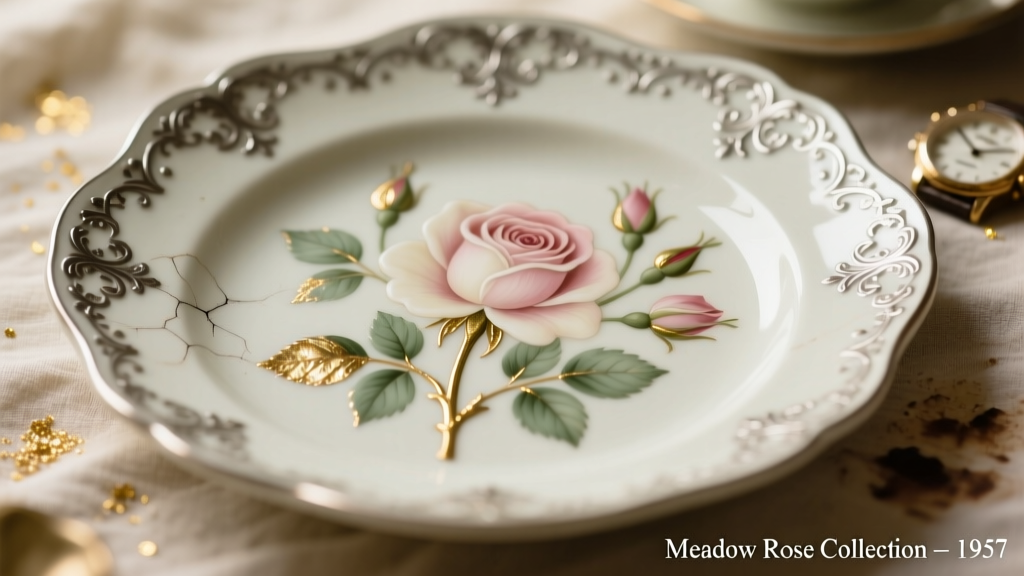
The Dinnerware Meadow Rose Platter (14-Inch): History, Design, and Collectibility of a Mid-Century American Icon
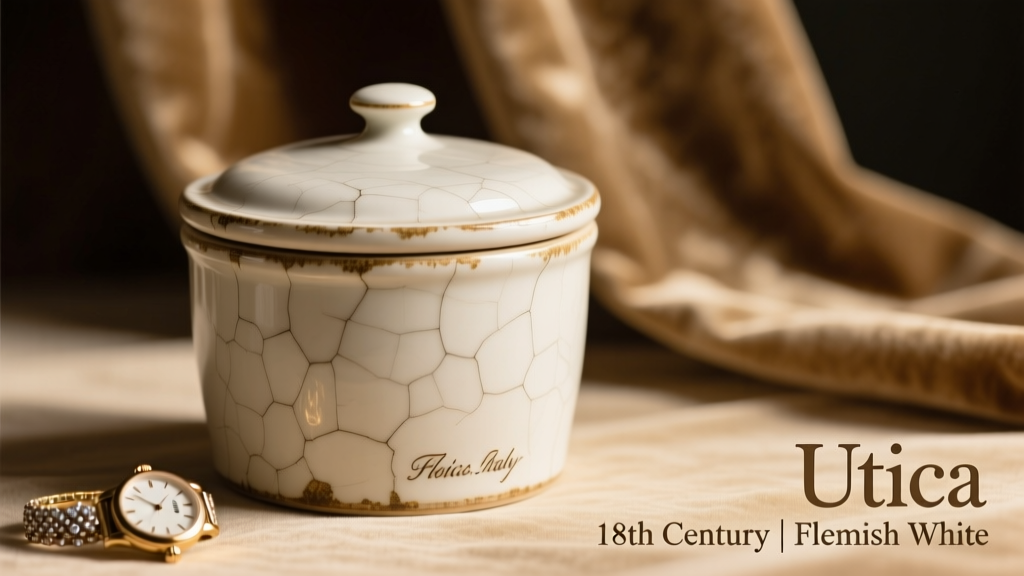
Stoneware Ice Cooler Cover: Flemish Whites of Utica — A Collector’s Guide to American Art Pottery Innovation
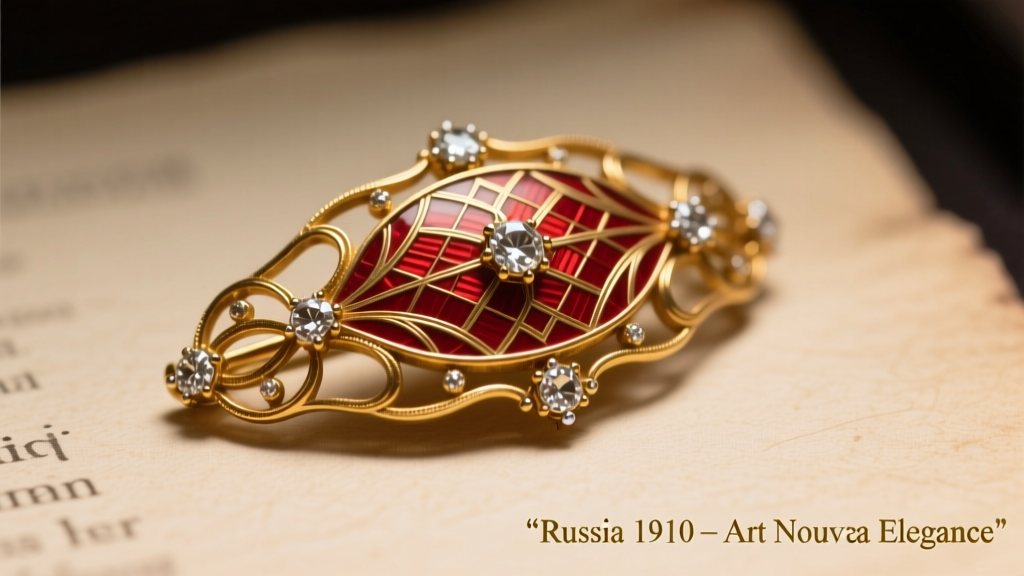
A Rare 1910 Russian Gold Disc Pin with Red Guilloché Enamel and Diamond: Provenance, Craftsmanship, and Market Context

Orphan Annie Toy Tin Windup: The 5-Inch Marx Masterpiece by Harold Gray

Seashell-Encrusted Birdbaths: Vintage Garden Furnishings from the Mid-Century Coastal Revival

McCoy Cookie Jar 'Cookie Cabin' No. 2: A Collector’s Deep Dive into Form, Function, and Faux-Folklore