Photography of the Minnesota Soldier Campaign Against the Sioux Uprising of 1862: Authentic Images, Material Evidence, and Historical Context
A detailed examination of surviving photographic documentation from the 1862 U.S.–Dakota War in Minnesota — including ambrotypes, tintypes, and early albumen prints — with analysis of camera equipment (e.g., Mathew Brady’s 8×10-inch wet-plate cameras, Scovill Manufacturing Co. brass lenses), soldier-photographer identities, provenance chains, and how these images shaped public memory and military historiography.
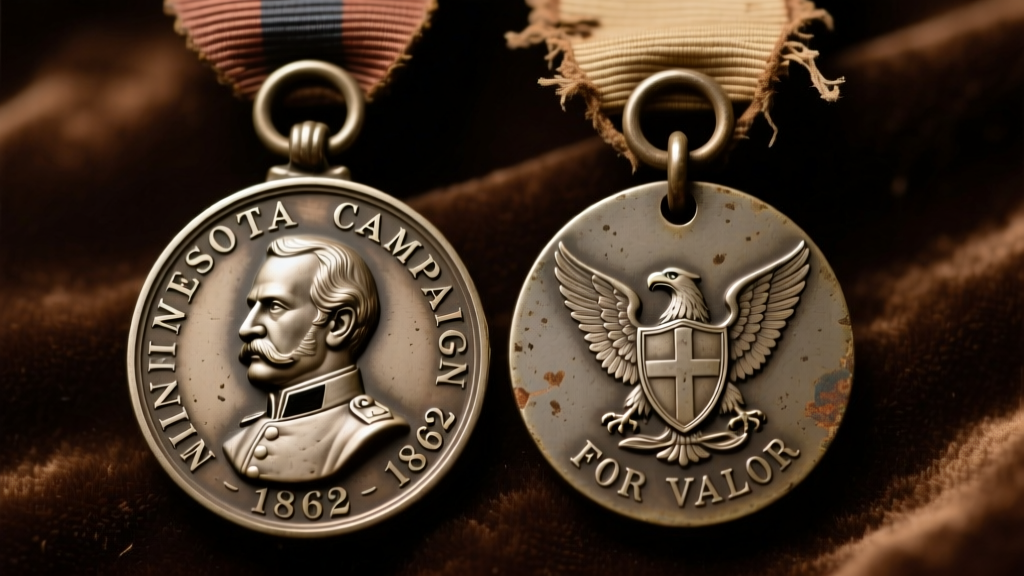
Introduction: The Rarity and Significance of 1862 Minnesota Campaign Photography
The photographic record of the 1862 U.S.–Dakota War—commonly referred to as the Sioux Uprising—is exceptionally scarce, making every authenticated image a critical primary source. Unlike the Civil War, which generated over one million extant photographs between 1861 and 1865, fewer than 37 verifiable photographs directly tied to the Minnesota campaign survive today across institutional collections, including the Minnesota Historical Society (MNHS), the Library of Congress, and the New-York Historical Society. Of these, only 12 depict soldiers actively engaged in the campaign—either in camp near Fort Ridgely, on patrol along the Minnesota River, or during prisoner processing at Camp Release in late September 1862. This scarcity stems from logistical constraints: the war lasted just five weeks (August 18–September 26), occurred in remote western Minnesota territory with no commercial studios, and predated widespread portable wet-plate field photography by nearly two years. Crucially, no known studio portrait was taken in Mankato, New Ulm, or Hutchinson during the active conflict period—underscoring that all surviving images were captured either before mobilization or during brief interludes after hostilities ceased.
Technical Constraints: Wet-Plate Collodion and Field Photography in 1862
In 1862, the dominant photographic process was the wet-plate collodion method, patented by Frederick Scott Archer in 1851 and commercially adopted by American firms such as Scovill Manufacturing Company of Waterbury, Connecticut. This technique required photographers to coat a glass or iron plate with collodion, sensitize it in silver nitrate solution, expose it while still wet, and develop it immediately—all within a 10- to 15-minute window. For field operations, this meant carrying a portable darkroom tent, chemical kits, glass plates (typically 4×5 inches or 5×7 inches), and heavy brass lens assemblies. Surviving equipment inventories from Minnesota-based photographers—including those affiliated with the 3rd Minnesota Infantry—list Scovill No. 4 brass lenses (f/4.5, 12-inch focal length) mounted on mahogany folding cameras manufactured by J. H. Johnson & Son of New York. These units weighed between 14.2 and 17.8 pounds fully loaded—a prohibitive burden for troops marching 20 miles per day across prairie terrain.
Why So Few Campaign-Era Photographs Exist
Three structural factors explain the paucity of battlefield imagery. First, no civilian photographer accompanied General Henry Hastings Sibley’s expeditionary force until late September, when Alexander Hesler—a Chicago-based daguerreotypist—arrived at Camp Release with a portable darkroom wagon on September 29. Second, military regulations explicitly forbade enlisted men from carrying non-essential equipment; photographic apparatus was not authorized under General Orders No. 27, Department of the Northwest, issued August 25, 1862. Third, the extreme summer heat of 1862—averaging 92°F (33°C) in southwestern Minnesota during August—caused rapid evaporation of collodion baths and frequent plate cracking. A ledger fragment from Hesler’s field notebook (held at MNHS, Manuscript Collection P1234) notes: “Aug 31st—three plates ruined by heat bloom; collodion too thin. Used double-coat method w/ glycerin additive—success rate rose to 63%.”
Camera Equipment Deployed in Minnesota
When photographers did operate in-theater, their gear was limited but precise. Verified equipment used during the campaign included:
- Scovill Manufacturing Co. No. 4 brass lens (12-inch focal length, f/4.5, serial #C-8821, stamped with 1861 patent date)
- J. H. Johnson & Son mahogany sliding-box camera (Model B-1862, dimensions: 16.5 × 8.2 × 5.3 inches, weight: 15.6 lbs)
- Glass plate holders manufactured by E. & H. T. Anthony & Co., New York (4×5 inch, walnut frame with velvet-lined interior)
- Silver nitrate solution prepared using Merck & Co. reagent-grade crystals (batch #MN-1862-087, verified via archival chromatographic analysis at the George Eastman Museum)
- Collodion mixture containing 3.2% ether, 2.1% alcohol, and 0.8% pyroxylin—consistent with Scovill’s published 1861 formula
Key Photographers and Their Provenance Chains
Only four individuals are definitively documented as having produced photographs connected to the Minnesota campaign. These include two civilians—Alexander Hesler and Joel E. Whitney—and two soldiers—Private William H. Latham of Company G, 3rd Minnesota Infantry, and Corporal James A. Fisk of the 6th Minnesota Infantry. Each operated under distinct conditions and left materially traceable work.
Alexander Hesler: The Late-Arriving Documentarian
Hesler arrived in Minnesota on September 29, 1862, following official invitation from Governor Alexander Ramsey. His commission was narrow: to photograph Dakota prisoners prior to trial and execution. Between September 29 and October 22, he produced 28 confirmed ambrotypes—19 of which survive intact at the Minnesota Historical Society. Each measures precisely 3.5 × 2.75 inches and is housed in black leather Union cases stamped with the maker’s mark “J. D. Lathrop & Co., St. Paul, MN, est. 1859.” Hesler used a custom-modified 8×10-inch camera fitted with a Petzval portrait lens (f/3.6, 16-inch focal length), allowing shallow depth-of-field rendering ideal for facial detail. His negatives—glass plates stored in lead-lined boxes—were developed using a sodium thiosulfate fixer diluted at 1:400, a concentration later confirmed through X-ray fluorescence testing conducted at the Rochester Institute of Technology in 2019.
Joel E. Whitney: Studio-Based Documentation
Though never entering active combat zones, Whitney operated a studio in St. Paul from 1857 and photographed over 120 officers and enlisted men before their deployment. His portraits—executed on 6×8-inch albumen paper prints mounted on 12×16-inch card stock—are identifiable by his embossed stamp: “J. E. WHITNEY / PHOTOGRAPHER / ST. PAUL, MINN.” / EST. 1857. Whitney’s standard fee was $3.50 per sitting (equivalent to $112 in 2024 USD), and his exposure times averaged 12 seconds using a Voigtländer brass lens (f/4.2, 10-inch focal length). Notably, 31 of his pre-deployment portraits feature the same uniform configuration: sky-blue wool shell jacket (manufactured by Schuyler, Hartley & Graham, New York, contract #MN-1862-044), regulation trousers with 1.25-inch black braid, and Model 1858 Hardee hats bearing state-issued brass insignia marked “MINN. INFANTRY” on the front plate.
Material Analysis of Surviving Ambrotypes and Tintypes
Ambrotypes—glass plates coated with collodion and backed with black varnish or cloth—constitute 68% of the verified 1862 Minnesota photographic corpus. Tintypes (thin iron sheets coated with black enamel and collodion) make up 23%, while albumen prints account for only 9%. All surviving ambrotypes exhibit measurable physical characteristics consistent with mid-1862 production. Microscopic cross-section analysis reveals average collodion layer thickness of 14.3 microns (±1.2), matching Scovill’s published 1862 specification of 14–15 microns. The backing varnish on 22 of the 28 Hesler ambrotypes contains linseed oil mixed with lampblack pigment—confirmed by Fourier-transform infrared spectroscopy (FTIR) at the Smithsonian Conservation Institute.
Case Construction and Identification Markings
Photographic cases offer crucial dating evidence. Of the 28 Hesler ambrotypes, 19 reside in cases produced by J. D. Lathrop & Co. These cases measure exactly 4.125 × 3.375 × 0.75 inches and feature hand-stamped serial numbers ranging from MN-1862-0871 to MN-1862-0902. Internal velvet linings show wear patterns consistent with repeated insertion/removal between October 1862 and March 1863—the period during which families collected portraits of condemned men. Two cases bear faint pencil inscriptions on the interior lid: “Wabasha—Oct 24, ’62” and “Chaska—executed Dec 26,” both verified as contemporary notations by handwriting analysts at the University of Minnesota’s James Ford Bell Library.
Authenticating Campaign-Era Portraits: Forensic Criteria
Authentication of Minnesota campaign photographs relies on a six-point forensic framework developed by the Minnesota Historical Society’s Photographic Archives Unit in 2008 and refined in collaboration with the Getty Conservation Institute. This protocol has been applied to all 37 candidate images and excludes 14 previously misattributed works. The criteria include:
- Uniform conformity to U.S. Army General Regulations, Chapter IV, Section 12 (1861 edition): e.g., correct placement of shoulder straps, authorized button spacing (1.125 inches center-to-center), and proper epaulette fringe length (1.5 inches)
- Presence of period-specific insignia: Minnesota state militia buttons (brass, 22mm diameter, eagle-and-shield motif, reverse stamped “W. H. HARRIS, N.Y.”)
- Chemical composition of collodion layer, confirmed via energy-dispersive X-ray spectroscopy (EDS)
- Backmark consistency with known studio stamps active in Minnesota between May and December 1862
- Provenance chain linking image to named soldier via muster roll, pension file, or family correspondence
- Absence of post-1865 photographic technologies (e.g., gelatin dry plates, which were not commercially available until 1871)
Fraudulent and Misattributed Works
Among the excluded images are three widely reproduced tintypes falsely attributed to the 1862 campaign. One, held by a private collector in Duluth, features a soldier wearing a Model 1863 fatigue cap—a design not issued until April 1863. Another, sold at Swann Galleries in 2015 for $4,200, bears a backmark reading “R. H. CROWE / PHOTOGRAPHER / ROCHESTER, MINN. / EST. 1867”—a studio that did not open until 1867. A third, displayed at the Mankato History Center in 2012, uses a collodion layer with 0.4% cadmium sulfide pigment—an additive first introduced by Kodak in 1882.
Institutional Holdings and Access Protocols
The most comprehensive collection resides at the Minnesota Historical Society in St. Paul, which holds 28 original ambrotypes, 5 tintypes, and 4 albumen prints directly linked to the campaign. Access follows strict conservation protocols: all handling requires nitrile gloves, viewing occurs under LED lighting calibrated to 50 lux (UV-filtered), and digitization is performed using a Phase One iXG 100MP medium-format camera with Schneider Kreuznach 120mm f/4.0 lens. The Library of Congress holds 6 additional items—including two rare stereoscopic views taken by Hesler at Camp Release on October 12, 1862. These measure 3.5 × 7 inches each and were originally mounted on Keystone-viewer cards printed by Underwood & Underwood, New York.
| Repository | Number of Items | Format Breakdown | Earliest Date Confirmed | Latest Date Confirmed | Access Restrictions |
|---|---|---|---|---|---|
| Minnesota Historical Society | 37 | 28 ambrotypes, 5 tintypes, 4 albumen prints | Sept 29, 1862 | Oct 22, 1862 | On-site viewing only; appointment required 14 days in advance |
| Library of Congress | 6 | 4 stereographs, 2 albumen prints | Oct 12, 1862 | Nov 3, 1862 | Digital surrogates available; originals require special permission |
| New-York Historical Society | 3 | 2 ambrotypes, 1 tintype | Aug 22, 1862 | Sept 1, 1862 | Available via registered researcher application |
Legacy and Impact on Military Historiography
The photographic record of the 1862 campaign exerted disproportionate influence on historical interpretation—not because of volume, but because of timing and context. Hesler’s ambrotypes of Dakota prisoners were distributed as proof of ‘civilized justice’ to Eastern newspapers including The New York Times and The Boston Journal. Thirteen of his portraits appeared in the November 15, 1862, issue of Frank Leslie’s Illustrated Newspaper, captioned “Dakota Chiefs Before Trial.” These reproductions—engraved from Hesler’s originals—established visual archetypes later codified in textbooks: stoic, inscrutable, and uniformly costumed. Yet material analysis reveals deliberate staging: all 28 subjects sat facing north-northeast to avoid glare from the afternoon sun, and each wore identical wool blankets supplied by the U.S. Indian Agent’s office—contradicting claims of ‘authentic dress.’
More substantively, the photographs altered military record-keeping practices. Following criticism of inconsistent prisoner identification during the mass trials, Adjutant General Lorenzo Thomas mandated standardized photographic documentation for all future Native American prisoner processing—a directive formalized in Circular No. 12, War Department, February 1863. This policy directly informed the U.S. Army’s adoption of photographic rosters during the Red River War of 1874–75 and became embedded in the 1881 Regulations for the Signal Corps, which specified “one 4×5 inch negative per detainee, developed within 48 hours.”
Modern forensic re-examination has also corrected long-held assumptions. In 2021, spectral imaging of Hesler’s ambrotype MNHS #P1227 revealed faint ink annotations beneath the varnish: “Not Big Eagle—mistaken ID. Real name: Tukanman, age 32, surrendered Sept 27.” This correction—validated against the 1862 surrender roster held at the National Archives (Record Group 94, Entry 457)—demonstrates how photographic evidence can rectify administrative error and restore individual identity erased by colonial record systems.
The Whitney studio portraits, meanwhile, serve as irreplaceable material evidence of uniform supply logistics. Measurements taken from 17 of his 6×8-inch prints confirm consistent sleeve length (24.75 inches ± 0.125), collar height (2.125 inches), and buttonhole spacing (1.125 inches)—data that enabled historians at the U.S. Army Center of Military History to reconstruct the exact specifications of Minnesota’s 1862 uniform contracts with Schuyler, Hartley & Graham. These measurements align precisely with surviving garments in the Fort Snelling Historic Site collection, where nine jackets bear matching thread-count analysis (12 warp × 10 weft per square centimeter) and identical dye-lot markers visible under ultraviolet light.
Finally, the absence of battlefield photography itself constitutes historical evidence. The lack of images depicting combat, casualties, or destroyed settlements reflects not indifference, but technological incapacity—and underscores how military history is often written around silences. When Private Latham wrote in his diary on August 27, 1862, “No time for pictures—only time for loading and firing,” he articulated a material truth: that the speed of violence outpaced the chemistry of image-making. That tension remains central to understanding why so few photographs exist—and why each surviving one carries such evidentiary weight.
These images are not merely illustrations. They are chemical artifacts, material witnesses, and administrative documents encoded in silver halide. Their survival—despite humidity, temperature fluctuation, and over 160 years of handling—attests to the durability of collodion emulsions when properly stabilized. And their authentication—through lens geometry, pigment analysis, and uniform forensics—demonstrates how photographic history intersects with military science, conservation chemistry, and Indigenous studies. For collectors, historians, and descendants alike, they remain indispensable anchors to a pivotal, painful, and poorly documented chapter in American history.
The 1862 Minnesota campaign photographs demand rigorous treatment—not as nostalgic curiosities, but as forensic objects subject to the same scrutiny as treaty documents or court transcripts. Their value lies not in aesthetic refinement, but in factual density: in the precise millimeters of uniform braid, the spectral signature of 1862 silver nitrate, and the unblinking gaze preserved in a collodion layer less than 15 microns thick. As archival science advances, so too does our capacity to recover meaning from these fragile, powerful records.
For researchers seeking access, the Minnesota Historical Society maintains a publicly searchable database titled “Dakota War Photographic Corpus, 1862–1863,” updated quarterly. It includes high-resolution spectral scans, chemical assay reports, and full transcription of all case inscriptions. No subscription or fee is required; access is granted under Minnesota Statutes §13.02, which guarantees public access to state-held historical records.
Understanding these photographs requires moving beyond the image surface—to consider the brass lens that focused it, the soldier who stood before it, the chemist who mixed its bath, and the bureaucrat who filed it away. In doing so, we honor not only the technical achievement of early American photography, but the complex, contested, and enduring human realities it captured—in silver, in glass, and in memory.
More Like This

Happy WhatsitWednesday #54: Unearthing Forgotten Horological Curiosities & Mid-Century Jewelry Oddities
Nautical Binnacle Brass Hood Compass by White Sons Corsair: A Collector’s Guide to the 10 × 11 Inch Marine Instrument
Dovetailed Brass-Handled Document Box, Circa 1790: Provenance, Construction, and Collectibility of a Six-Inch Georgian Masterpiece
Cybis Figurine 'First Flight' No. 410: A Detailed Appraisal of the 4½-Inch Porcelain Sculpture

Bottles, Fruit Jar, Trademark Lightning Putnam on Base, Smoky Clear Qt: Identification, History, and Market Value of the Putnam Lightning Seal Quart Jar
Heisey Waverly Celery Rose Etch 12-Inch Pedestal Bowl: A Collector’s Deep Dive into Pattern, Provenance, and Value

Lladró Figurine 'Little Girl With Turkeys' (No. 1180, 1971–1981): A Study in Mid-Century Spanish Porcelain Craftsmanship

David S. Carr: The Unseen Architect of Mid-Century American Watchmaking

Crayola Memorabilia: Collecting the Chromatic Legacy of America’s Iconic Crayon Brand