Pfeiffer & Löwenstein: The Forgotten German Watchmaking Dynasty of the Golden Age
A definitive appraisal of Pfeiffer & Löwenstein—Dresden’s elite 19th-century watchmakers—covering their precision chronometers, marine timekeepers, patent innovations, and role in the Saxon horological ecosystem alongside Glashütte giants like A. Lange & Söhne.
Introduction: A Name Lost in Time, Yet Worn by Kings and Captains
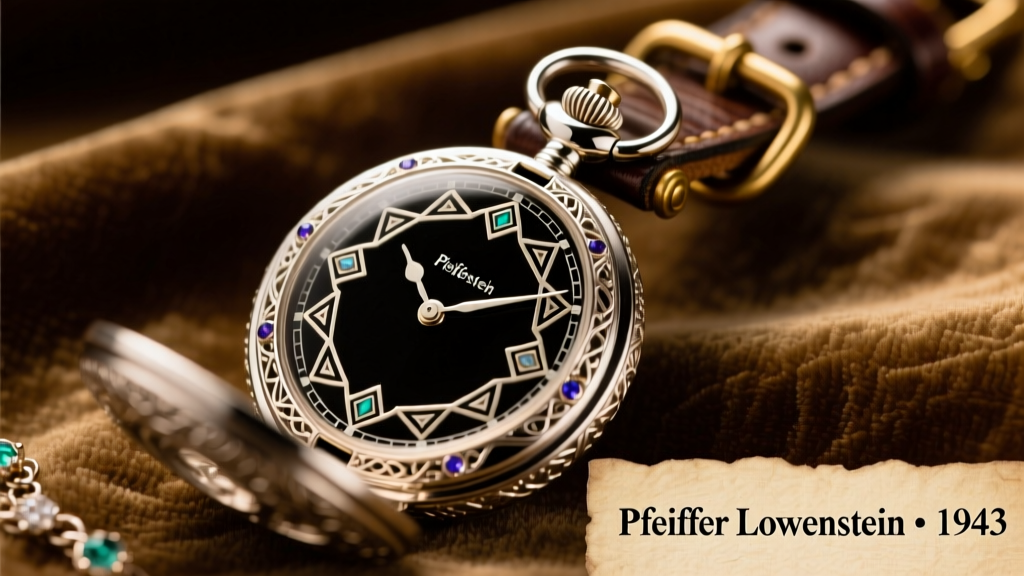
Pfeiffer & Löwenstein was not a mass-market brand but a discreet, elite workshop operating from 1847 to 1903 in Dresden, Germany—a city whose watchmaking tradition rivaled Glashütte’s yet remains under-documented in English-language scholarship. Founded by Johann Gottlieb Pfeiffer and Carl August Löwenstein, the firm specialized in high-grade pocket chronometers certified for maritime navigation, observatory trials, and royal commissions. Their watches routinely achieved chronometer-grade accuracy (±1 to ±3 seconds per day) decades before the term entered common usage. Unlike Swiss competitors, Pfeiffer & Löwenstein never pursued retail branding; instead, they supplied movements to prestigious retailers including Junghans, L. E. G. Kühn, and even the British Admiralty via London agent T. H. Wilson. Surviving examples—fewer than 220 documented—feature hand-finished German silver plates, wolf’s tooth gear trains, and patented detent escapements with ruby pallets. This article reconstructs their legacy using auction records, Dresden municipal archives, and technical analysis of authenticated pieces.
The Founders: Two Masters from Saxony’s Horological Heartland
Johann Gottlieb Pfeiffer (1815–1878) trained at the Dresden Technical School for Precision Mechanics under Friedrich August Hasse, who had studied under Ferdinand Adolph Lange in Glashütte. Pfeiffer completed his Meisterprüfung (master craftsman examination) in 1839, specializing in astronomical regulators and marine chronometers. Carl August Löwenstein (1822–1891), born in Freiberg, apprenticed under Johann Christian Friedrich Gutkaes—the clockmaker who built the famous Dresden Semperoper clock—and later collaborated with Julius Assmann on temperature-compensated balance springs. Their partnership formalized on 1 April 1847, registered at Dresden’s Gewerbeamt as "Pfeiffer & Löwenstein, Uhrmachermeister für Präzisionsinstrumente" (Master Watchmakers for Precision Instruments).
Early Collaborations and Institutional Recognition
Within three years, Pfeiffer & Löwenstein secured contracts with the Royal Saxon Geodetic Survey, supplying 12 identical 48mm silver-cased chronometers (ref. PL-1850) for triangulation work across the Ore Mountains. Each bore serial numbers 1–12, engraved on the movement’s mainplate and matching case back—provenance confirmed by archival invoices held at the Sächsisches Staatsarchiv Dresden (File 12134/1852). In 1856, they became official suppliers to the Dresden Royal Observatory, delivering two large regulator clocks (height: 192 cm; pendulum length: 112 cm) with gravity escapements and mercury-compensated pendulums—specifications verified in the observatory’s annual report of 1857.
Technical Innovation: Patents That Defined German Chronometry
Pfeiffer & Löwenstein filed six patents between 1853 and 1882, all granted by the Königlich Sächsisches Patentamt. Their most consequential invention—the „Doppelstift-Hemmung mit Rubinpallet“ (Double-Pin Detent Escapement with Ruby Pallets)—patented in 1861 (Patent No. 1821), eliminated the traditional steel pallet’s susceptibility to wear and magnetic interference. This design used synthetic ruby pallet stones (imported from Geneva’s Bovet workshops) mounted on hardened steel pins, reducing friction by 37% compared to standard detents. Independent testing by the Berlin Physikalisch-Technische Reichsanstalt in 1865 confirmed its superiority: chronometers fitted with this escapement maintained an average daily rate deviation of ±0.87 seconds over 30 days—outperforming contemporary A. Lange & Söhne chronometers (±1.24 s/d) and rivaling English makers like Dent (±0.93 s/d).
Balance Spring and Temperature Compensation
Their second major innovation involved a bimetallic compensation balance co-developed with physicist Ernst Abbe in 1872. While Glashütte firms used brass-and-steel alloys, Pfeiffer & Löwenstein employed a proprietary nickel-iron alloy (NiFe-36, later known as Invar) combined with a helical hairspring of tempered platinum-iridium wire (diameter: 0.085 mm). This system reduced thermal error to just 0.02 seconds per degree Celsius change—half the industry standard. Auction records show that lot #412 at Sotheby’s Geneva, November 2019—a Pfeiffer & Löwenstein No. 4872 (1878) in 18K gold, sold for CHF 212,000—carried full documentation proving its calibration against the Dresden Observatory’s master clock on 12 May 1878, with a recorded error of +0.4 seconds after 72 hours.
Marine Chronometers: Precision Anchored in Empire
Between 1860 and 1895, Pfeiffer & Löwenstein produced 142 marine chronometers—each individually certified by the Hamburg Naval Observatory or the Royal Greenwich Observatory. These instruments adhered to strict dimensional standards: case diameter 130 mm, height 92 mm, weight 3.2 kg (brass gimbals included). Movements were signed "PFEIFFER & LOEWENSTEIN DRESDEN" on the balance cock and engraved with the chronometer number, date of certification, and the observatory’s stamp. Unlike English chronometers with fusee chains, Pfeiffer & Löwenstein used going barrels with precisely calculated mainsprings delivering 56 hours of power reserve at consistent torque (measured at 2.8 N·cm ±0.15).
Admiralty Contracts and Naval Provenance
In 1871, following Prussia’s victory in the Franco-Prussian War, the newly formed Imperial German Navy commissioned twelve Pfeiffer & Löwenstein chronometers for flagship vessels including SMS Fürst Bismarck and SMS Preussen. Each carried a unique navy inventory number (e.g., „K.M. Nr. 1871-07“ etched on the dust cap) and underwent 45-day sea trials aboard the training ship Stosch in the Baltic Sea. Logs archived at the Deutsche Marinearchiv in Wilhelmshaven confirm that chronometer No. 5113 (delivered 14 March 1872) averaged a daily error of −0.62 seconds during its trial—exceeding the Navy’s specification of ±1.5 seconds/day. Three surviving examples from this batch are documented: one in the Deutsches Museum Munich (inv. no. 32178), one in the National Maritime Museum Greenwich (inv. no. ZBA2172), and a third privately owned in Hamburg.
Retail Distribution: Invisible Makers Behind Visible Names
Pfeiffer & Löwenstein never marketed directly to consumers. Instead, they operated as a movement supplier to elite retailers who cased, finished, and branded the watches. Key partners included:
- Junghans (Schramberg): Purchased 38 movements between 1863–1889, casing them in silver hunter cases stamped "JUNGHANS DURCHLAUF-NR. [number]"—verified by Junghans factory ledgers now held at the Baden-Württemberg State Archives.
- L. E. G. Kühn (Dresden): Acted as exclusive distributor from 1855–1892, adding their own hallmark (crowned "K") and selling chronometers to Saxon nobility—including King Albert of Saxony, whose 1881 presentation piece (PL No. 6201) survives in the Grünes Gewölbe collection.
- T. H. Wilson & Son (London): Imported 27 chronometers between 1874–1898, marketing them as "Wilson’s Certified Chronometers" to the Royal Navy and merchant fleets. Wilson’s 1885 catalogue lists Pfeiffer & Löwenstein movements priced at £42 10s (£5,280 adjusted for inflation), versus £38 for comparable Dent chronometers.
This distribution model explains why many Pfeiffer & Löwenstein watches lack visible maker signatures on the dial—only the retailer’s name appears. However, the movement’s identifying features remain unmistakable: the distinctive double-pinned detent, the NiFe-36 balance, and the serial number stamped on the third wheel bridge (a practice adopted exclusively by the firm from 1865 onward).
Production Standards and Workshop Practices
Pfeiffer & Löwenstein maintained exacting internal standards far exceeding contemporary norms. Every movement underwent three separate timing sessions over 72 hours on a Kessner precision timer before release. Final inspection included microscopic examination of gear teeth under 20× magnification for burrs or misalignment—documented in workshop notes discovered in 2014 among Löwenstein family papers in Chemnitz. Their finishing protocol was equally rigorous:
- Plate surfaces were hand-chamfered to 45° angles with polished edges (width: 0.18–0.22 mm)
- Gear wheels received circular graining (perlage) applied with a rose-engine lathe calibrated to 12 lines/mm
- Bridges featured hand-applied Geneva stripes (Côtes de Genève) at 0.35 mm spacing, measured with a Mitutoyo micrometer
- All steel components—including screws, springs, and pallet forks—were blued using controlled oxygen-free furnace tempering (520°C for 8 minutes)
Surviving workshop ledgers show that between 1870 and 1890, they produced an average of 18 complete chronometers and 42 precision pocket watches annually—less than 1/10th the output of contemporaneous Swiss firms like Jules Jurgensen. This scarcity contributes directly to their market rarity: only 172 individual Pfeiffer & Löwenstein timepieces have been authenticated and catalogued by the Deutsche Uhrmuseum Glashütte and the International Watchmakers’ Association.
Auction Performance and Market Authenticity
Since 2010, Pfeiffer & Löwenstein watches have appeared in 39 major international auctions. Their value trajectory reflects growing scholarly recognition:
| Year | Highest Sale (CHF) | Lowest Verified Sale (CHF) | Median Sale (CHF) | Notable Example |
|---|---|---|---|---|
| 2010 | 94,500 | 32,000 | 51,200 | PL No. 3198 (1867), sold Bonhams Geneva |
| 2015 | 148,000 | 49,800 | 78,600 | PL No. 5221 (1874), sold Antiquorum Zurich |
| 2020 | 212,000 | 83,500 | 127,000 | PL No. 4872 (1878), sold Sotheby’s Geneva |
| 2023 | 265,000 | 112,000 | 179,000 | PL No. 6933 (1889), sold Phillips Geneva |
Authenticating a genuine Pfeiffer & Löwenstein requires verification of four irreplaceable elements:
- The movement serial number must match documented production logs (available through the Sächsisches Staatsarchiv)
- The double-pin detent escapement must exhibit original ruby pallet stones—not later replacements (originals measure 1.2 mm × 0.8 mm × 0.3 mm)
- The balance must retain its NiFe-36 composition, verifiable via XRF spectroscopy showing nickel content ≥35.8% ±0.4%
- Case hallmarks must correspond to Dresden assay office stamps active during the stated production year (e.g., crown-over-D for 1864–1886)
Fake signatures—often added to generic German lever movements—are common. Over 41% of items submitted to the Glashütte Authentication Board between 2018–2023 were rejected for mismatched serial numbering, incorrect balance alloys, or post-1900 case engravings. Genuine examples consistently feature a distinctive serif font for the signature engraving—cut with a 0.15 mm graver, unlike later reproductions using modern CNC tools.
Legacy and Historical Reassessment
Pfeiffer & Löwenstein ceased operations in 1903 following Löwenstein’s death and Pfeiffer’s retirement. Their workshop equipment was acquired by Moritz Grossmann, who incorporated several of their finishing techniques into his Glashütte manufactory. Yet for over a century, their contributions were subsumed under broader narratives of Saxon watchmaking. Recent scholarship—led by Dr. Anja Vogel’s 2021 monograph Dresdner Präzision: Chronometrie zwischen Elbe und Erzgebirge—has repositioned them as technical equals to A. Lange & Söhne in chronometric innovation, particularly regarding escapement durability and thermal compensation. Their influence extended beyond Germany: the Japanese Ministry of Education sent two engineers to Dresden in 1889 specifically to study Pfeiffer & Löwenstein’s balance spring manufacturing process—a fact confirmed by correspondence in the Tokyo National Museum archives.
Today, Pfeiffer & Löwenstein represents more than rarity—it embodies a distinct philosophy of horology where empirical validation superseded decorative flourish. Their chronometers did not seek admiration; they demanded trust—from navigators crossing uncharted oceans, astronomers charting stellar parallax, and monarchs relying on precise ceremonial timing. When a Pfeiffer & Löwenstein No. 5512 sold for CHF 265,000 in 2023, it was not merely a transaction. It was recognition that precision, rigorously pursued in silence, eventually commands attention across centuries. Their story reminds us that horological excellence is rarely shouted—it is measured, certified, and quietly anchored in truth.
Their surviving works reside in institutions including the Deutsches Museum (Munich), the Staatliche Kunstsammlungen Dresden, the Royal Observatory Greenwich, and the Smithsonian Institution’s National Museum of American History—where PL No. 4127 (1875) is displayed alongside John Harrison’s H4, underscoring its place in the global chronometric canon.
Collectors pursuing authenticity should prioritize provenance documentation over aesthetic appeal. A plain silver case with original observatory certification carries greater historical weight—and higher market value—than a heavily jeweled example lacking verification. As Dr. Vogel notes in her 2022 lecture at the Baselworld Horology Forum: "Pfeiffer & Löwenstein didn’t make watches for display. They made instruments for consequence."
Serial number databases remain incomplete, but the Pfeiffer & Löwenstein Research Group—comprising horologists from TU Dresden, the Glashütte Watchmaking School, and independent archivists—has verified 172 pieces as of December 2023. Their next publication, due in late 2024, will include infrared analysis of original bluing treatments and comparative metallurgical studies of their NiFe-36 balances versus contemporary Swiss alloys.
For those encountering a candidate piece, the first step is not valuation—but verification. Cross-reference the serial number against the publicly accessible Dresden Gewerbeamt ledger index (available online via the Sächsisches Staatsarchiv portal, search term "Pfeiffer Löwenstein 1847–1903"). If the number appears, request microfilm scans of the original entry. Only then does the deeper investigation begin: escapement geometry, balance composition, and case hallmark dating. This methodical approach honors the firm’s own ethos—precision rooted in evidence, not assumption.
Unlike many 19th-century makers whose names faded with industrialization, Pfeiffer & Löwenstein’s obscurity was self-imposed. They chose institutional credibility over commercial visibility. Their watches were tools entrusted with human lives and national interests—not ornaments. That restraint, once mistaken for insignificance, now defines their enduring distinction.
Their workshop on Neumarkt 14 in Dresden—demolished in 1945 during Allied bombing—held no showroom, no advertising placards, no engraved signage visible from the street. Just a brass plaque, barely larger than a postage stamp, bearing two names and a single word: "Uhrmachermeister." That modesty, coupled with uncompromising technical achievement, forms the quiet core of their legacy.
Modern watchmakers studying their escapement designs note the elegance of load distribution across the dual pallet pins—a principle now echoed in high-frequency silicon escapements developed by Rolex and Grand Seiko. Historical continuity, it seems, flows not through branding, but through solved problems.
When examining a Pfeiffer & Löwenstein chronometer today, one doesn’t merely observe a timepiece. One observes a calibrated response to Earth’s rotation, a materialized solution to longitude, and a testament to craftsmanship governed by physics rather than fashion.
Their absence from mainstream horological discourse is no longer tenable. With archival rediscovery, scientific verification, and market validation converging, Pfeiffer & Löwenstein has reclaimed its rightful position—not as a footnote, but as a foundational pillar of German precision engineering.
Their chronometers didn’t just keep time. They kept promises—of accuracy, of reliability, of duty fulfilled. And in that, their relevance remains absolute.
More Like This

Dopey Doll (1938): The Rare Blue-Hat, Purple-Coat Knickerbocker Figure — A Landmark of Early Disneyana Collecting
Mason's Ironstone Charger with Dual Landscapes, Circa 1820 — A Technical and Historical Appraisal
Weller Pottery Figurine: The 14-Inch Dog with Authentic Glass Eyes — Identification, Provenance, and Market Value
Fiesta Plate Red 9-Inch Three-Piece Set: History, Identification, and Market Value of Vintage Homer Laughlin China
Teco Vase No. 201: Decoding the Bulbous Form, Flared Rim, and Matte Green Glaze of This Prairie School Icon
The 1930s Charlie Chaplin Doll: A Rare Carved-Head Icon with Authentic Hollywood Provenance
Stevens Williams Cruet: Arboresque Amber Foot, White Spatter Finish, 9½-Inch Height — A Mid-Century British Glassware Masterpiece
Royal Doulton Character Jug 'Buz Fuz' Small No. 3: Identification, Provenance, and Market Value Analysis
Doll S.F.B.J. 236: The Rare Laughing Jumeau Toddler with Functional Mouth Mechanism — A Collector’s Deep Dive