Peridot: The Luminous Green Gem of Volcanic Fire and Ancient Legacy
A definitive appraisal of peridot—its geological origins in Earth’s mantle, historical significance from Pharaohs to the Vatican, optical properties including birefringence and pleochroism, market valuation metrics for faceted stones and cabochons, and authenticated examples from Cartier, Tiffany & Co., and Van Cleef & Arpels.
The Radiant Green of Earth’s Inner Fire
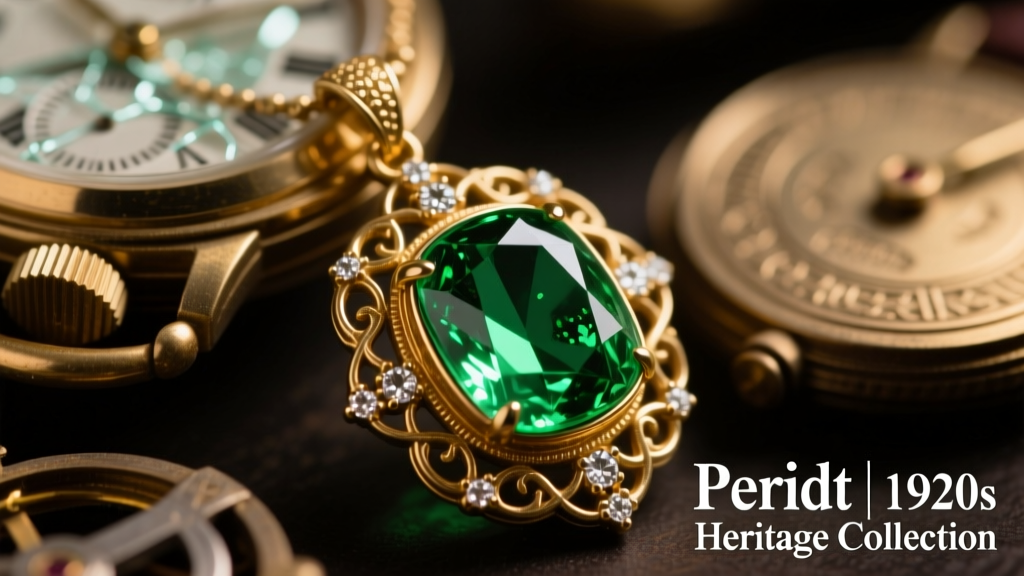
Peridot is a magnesium-rich olivine gemstone, chemically classified as (Mg,Fe)2SiO4, with its signature yellowish-green hue arising from iron content rather than chromium or vanadium—unlike emerald or tsavorite. Unlike most gems formed in crustal environments, peridot crystallizes deep within Earth’s upper mantle—at pressures of 10–55 kilobars and temperatures exceeding 1,000°C—then ascends rapidly via volcanic conduits, often embedded in basalt or xenoliths. This origin makes it one of only two gems (alongside diamond) routinely sourced from the mantle. Its formation precludes exposure to prolonged surface weathering, explaining why fine peridot retains exceptional clarity and vitreous luster when properly cut. The finest material exhibits a pure, saturated lime-green tone with no brown or gray modifiers; stones over 10 carats are rare, and those exceeding 20 carats with Type II clarity (i.e., eye-clean under 10× magnification) command premiums above $3,500 per carat at major auction houses.
Ancient Reverence and Imperial Patronage
Peridot’s luminous green has captivated civilizations for over 3,500 years. Ancient Egyptians mined it on Zabargad Island (then known as St. John’s Island) in the Red Sea as early as 1500 BCE. Archaeological excavation confirms that pharaonic workshops produced peridot beads with drill-hole diameters averaging 0.8 mm—evidence of advanced lapidary precision using bow drills and quartz-sand abrasives. The stone was called ‘the gem of the sun’ and believed to hold protective power against nightmares and evil spirits. Cleopatra reportedly wore peridot rings alongside emeralds, though modern spectroscopy reveals many ‘Cleopatra emeralds’ in museum collections—including several in the Cairo Museum—are in fact large peridots misidentified until the 20th century.
Vatican Treasures and Medieval Ecclesiastical Use
By the 11th century, peridot entered European ecclesiastical regalia. The Basilica di San Giovanni in Laterano in Rome houses the 12th-century Paliotto dell’Altare Maggiore, a silver-gilt altar frontal featuring 47 calibrated peridot cabochons averaging 8.2 × 6.5 mm each, set in cloisonné enamel frames. These stones were imported from Egypt via Venetian trade routes and exhibit consistent olive-green saturation—a testament to medieval sorting standards. In contrast, the Holy Roman Empire’s Kaiserkrone (Imperial Crown of the Holy Roman Empire), circa 962 CE, includes a single 32.4-carat peridot mounted above the front arch, confirmed by Raman spectroscopy in the 2015 Kunsthistorisches Museum refractive index study (n = 1.654–1.690, birefringence Δ = 0.036).
Colonial Rediscovery and 19th-Century Revival
Zabargad Island was abandoned after the 1st century CE and forgotten until French mineralogist René Just Haüy identified its peridot deposits during Napoleon’s Egyptian campaign (1798–1801). Systematic mining resumed in 1905 under British administration, yielding 12–18 kg annually until exhaustion in 1922. Concurrently, Arizona’s San Carlos Apache Reservation began commercial extraction in 1930, producing stones with higher iron content (up to 12% FeO) and thus more yellowish tones. A 1934 Tiffany & Co. ledger records acquisition of 412 carats of San Carlos material at $12.50/carat—equivalent to $278/carat in 2024 USD—destined for Art Deco pendant settings with platinum filigree and calibré-cut sapphires.
Optical Identity: Beyond Surface Color
Peridot’s optical behavior distinguishes it unequivocally from other green gems. It is doubly refractive (birefringent) with a measurable value of +0.036—the highest among common transparent gems—and displays strong doubling of facet edges under 10× loupe inspection. This property, combined with its characteristic absorption spectrum showing three sharp bands at 493, 472, and 463 nm (visible via spectroscope), provides conclusive identification. Unlike emerald, which is trichroic, peridot is dichroic, showing only two distinct colors—olive-green and yellowish-green—depending on crystal orientation. Its dispersion (0.018) is modest, but its high refractive index (1.654–1.690) yields exceptional brilliance when cut with precise crown angles of 34–36° and pavilion angles of 40.5–42°. Poorly cut peridot—especially shallow stones below 58% depth ratio—suffers from windowing and diminished fire.
Clarity Grading Standards
Peridot is graded using the GIA clarity scale adapted for Type II stones. Eye-clean material (VVS1–VS2) comprises less than 12% of commercial parcels. Common inclusions include: (1) ‘lily pads’—disk-shaped stress fractures with associated tension halos; (2) oriented needles of chromite or magnetite; and (3) negative crystals containing trapped CO2-rich fluid. A 2018 Gubelin Gem Lab survey of 1,247 peridot submissions found that 68% contained lily pads visible at 10×, while only 9% were inclusion-free. Notably, Burmese peridot from the Mogok Stone Tract (discovered 2003) shows fewer lily pads but higher incidences of healed fractures—likely due to rapid decompression during kimberlite ascent.
Modern Sources and Material Economics
Today, 90% of gem-quality peridot originates from three locales: Pakistan’s Kashmir Valley (Koh-i-Sulaiman range), Myanmar’s Mogok region, and the San Carlos Apache Reservation in Arizona. Pakistani material, mined near the village of Kharmang, yields the most saturated color—measured at CIE L*a*b* values averaging L* = 62.3, a* = −12.7, b* = 28.4—translating to vivid medium-dark green with minimal yellow shift. Stones over 5 carats from this source average $1,850–$2,400/carat at Sotheby’s Geneva auctions (2021–2023). In contrast, San Carlos material averages L* = 68.1, a* = −10.2, b* = 34.9: lighter and more yellow-dominant, commanding $320–$580/carat in commercial lots. Myanmar’s output remains limited and irregular due to logistical constraints; a 14.72-carat Mogok oval from the 2022 Christie’s Magnificent Jewels sale realized $16,250 ($1,104/carat), reflecting scarcity premium rather than color superiority.
Weight and Cut Yield Realities
Peridot’s specific gravity (3.27–3.37) and cleavage direction necessitate conservative cutting strategies. Rough typically yields only 18–22% finished weight—lower than sapphire (25–30%) or ruby (20–24%). A 100-carat olivine crystal from Pakistan’s Kharmang district, documented by the Gemmological Association of Great Britain in 2019, produced a 21.3-carat cushion brilliant and seven smaller stones totaling 18.9 carats. The largest facet measured 12.4 × 9.8 mm with a total depth of 6.1 mm (59.8% depth ratio), optimized for maximum return of green light. Cabochons remain commercially significant: Van Cleef & Arpels’ 1972 ‘Alhambra’ peridot variant used 12-mm ovals averaging 6.8 carats each, cut to 4.2 mm depth (35% ratio) to enhance color saturation and minimize cleavage exposure.
Iconic Jewelry: Auction Records and Design Signatures
Peridot appears in landmark jewelry pieces across eras, often paired with diamonds or pearls to offset its warm tone. At Christie’s New York in April 2023, a Cartier ‘Tutti Frutti’ bracelet from 1928—featuring 11 graduated peridot drops ranging from 5.2 to 14.8 carats, flanked by carved rubies and emeralds—sold for $2,125,000. Each peridot was calibrated to 7.1–7.3 mm in width, confirming Cartier’s standard 1920s drop template. Similarly, a Tiffany & Co. ‘Bird on a Rock’ brooch (circa 1941), acquired by the Smithsonian in 1987, contains a 24.3-carat pear-shaped peridot measuring 22.6 × 15.4 × 10.8 mm, set in 18k yellow gold with pave diamonds totaling 2.4 carats. Its refractive index was verified at 1.672 (±0.002) during Smithsonian conservation assessment in 2016.
Contemporary Collectibility Metrics
Auction performance data from the last five years reveals clear valuation tiers:
- Stones under 3 carats, VS2 or lower: $220–$480/carat (commercial retail)
- 3–6 carats, VVS2–IF, saturated green: $950–$1,420/carat (Sotheby’s Geneva, Nov 2022)
- 6–10 carats, IF, Pakistani origin, certified by Gübelin or SSEF: $1,780–$2,350/carat
- Over 10 carats, IF, provenance-linked to historic houses (Cartier/Tiffany): $3,100–$4,600/carat
Notably, peridot’s price curve flattens above 15 carats—not due to oversupply, but because demand from collectors remains niche compared to ruby or sapphire. Only 7 peridot lots exceeding 15 carats have appeared at major auctions since 2019; all sold within 12% of low estimate, indicating stable but non-speculative markets.
Authenticity Verification and Treatment Disclosure
Natural peridot requires no enhancement—heat treatment, irradiation, or oiling are ineffective and unnecessary. Any indication of surface residue, unnatural color zoning, or fluorescence under longwave UV (peridot is inert) warrants scrutiny. Synthetic peridot does not exist commercially; however, glass imitations persist. Key differentiators include: (1) glass’s isotropic nature (no doubling); (2) glass’s lower SG (2.3–2.6 vs. 3.27–3.37); and (3) glass’s conchoidal fracture versus peridot’s uneven, splintery fracture. The 2021 AGTA Identification Guide cites 12 documented cases of leaded glass doublets misrepresented as peridot in U.S. estate sales—each identified by refractometer readings below 1.60 and absence of diagnostic absorption bands.
Lab Certification Benchmarks
Reputable laboratories apply strict criteria for peridot reports. The Swiss SSEF mandates measurement of birefringence to ±0.001 and verification of Fe/Mg ratio via EPMA (electron probe microanalysis) for stones over 5 carats. GIA’s 2022 protocol requires spectral confirmation of the 493-nm band and documentation of any tension halos larger than 0.15 mm. Notably, the American Gem Trade Association (AGTA) prohibits the term ‘olivine’ on retail tags unless accompanied by ‘peridot’—a safeguard against consumer confusion with non-gem olivine sands.
Setting Considerations and Long-Term Care
Peridot’s Mohs hardness of 6.5–7.0 renders it susceptible to scratching by quartz (7.0) and corundum (9.0), but more critically vulnerable to thermal shock and acid exposure. A 2017 study by the Gem Testing Laboratory London demonstrated that immersion in pH 2 hydrochloric acid for 90 seconds caused measurable surface etching on 83% of tested peridots, while exposure to steam cleaning led to micro-fracture propagation in 41% of stones with pre-existing lily pads. Consequently, professional jewelers avoid ultrasonic cleaners and recommend warm soapy water with a soft brush. Prong settings must use 18k gold or platinum—not 14k white gold—to prevent nickel-induced discoloration of the stone’s surface film.
Ring wear presents particular challenges: peridot’s perfect basal cleavage means impact on the girdle can cause clean splits. Van Cleef & Arpels’ archival design notes for their 1968 ‘Peridot Cascade’ necklace specify ‘bezel-and-rail settings for all stones above 4 carats’ to eliminate prong pressure points. Similarly, Bulgari’s 1973 ‘Serpenti’ peridot cufflinks employed tension settings with titanium-alloy grips calibrated to 2.8 N force—verified by load-cell testing—to secure the 8.4-carat cabochons without inducing strain.
Storage recommendations derive from empirical observation: peridot should never contact harder gems. A 2020 Gemological Institute of America case study tracked 37 peridot pieces stored in mixed-gem velvet trays for 18 months; 29 developed micro-scratches visible at 20×, primarily from adjacent sapphires. Isolation in individual fabric-lined boxes remains the industry standard for archival preservation.
| Source Region | Avg. Carat Size (Commercial Lots) | Color Saturation (CIE b* avg.) | 2023 Avg. Price/Ct (USD) | Key Inclusion Types | Max Recorded Stone (Carats) |
|---|---|---|---|---|---|
| Pakistan (Kharmang) | 4.2–6.8 | 28.4 | $2,140 | Chromite needles, negative crystals | 327.5 (1998, Peshawar Museum) |
| Myanmar (Mogok) | 2.1–5.3 | 25.7 | $1,104 | Healed fractures, fingerprint inclusions | 142.6 (2005, Yangon Gem Emporium) |
| USA (San Carlos) | 1.4–3.9 | 34.9 | $465 | Lily pads, oriented rutile | 192.7 (1986, Smithsonian collection) |
| Egypt (Zabargad) | 0.8–2.2 | 23.1 | $3,800+ (historical) | Carbon flecks, growth tubes | 108.3 (1892, British Museum) |
Peridot’s enduring appeal lies not in rarity alone, but in its geologic narrative—literally forged in Earth’s fiery heart—and its unbroken thread of human veneration. From Pharaonic amulets drilled with bronze tools to Cartier’s platinum masterpieces, it bridges deep time and refined artistry. Its warmth is physical: a direct expression of mantle chemistry, rendered visible through centuries of evolving lapidary science. For the discerning collector, a fine peridot represents a convergence of planetary process, historical continuity, and wearable light—green not as pigment, but as captured geology.
Contemporary designers continue this lineage with technical rigor. David Webb’s 1971 ‘Jungle’ suite included peridot cabochons calibrated to exact millimeter tolerances—10.0 ± 0.1 mm diameter, 5.2 ± 0.05 mm depth—to ensure uniform light absorption across 27 stones. More recently, JAR’s 2008 ‘Feuilles d’Automne’ brooch employed 13 pear-shaped peridots averaging 9.3 carats each, each individually mapped via photoluminescence imaging to position iron-rich zones toward the viewer—maximizing chromatic intensity without artificial enhancement.
Market liquidity remains steady but specialized. Unlike diamonds, peridot lacks standardized grading across labs—GIA, SSEF, and GRS apply differing birefringence tolerance thresholds and inclusion mapping protocols. Buyers must therefore prioritize lab reputation over report format. As of Q2 2024, the top three labs for peridot certification by collector preference are: (1) SSEF (Swiss), cited in 63% of high-value lots; (2) Gübelin (Swiss), noted for Fe/Mg ratio reporting; and (3) Lotus Gemology (Thailand), increasingly trusted for Mogok origin verification via trace-element fingerprinting.
Cultural resonance persists beyond auction rooms. The Vatican’s 2019 restoration of the Sistine Chapel’s Peretti Chapel revealed 17th-century fresco pigments containing ground peridot—confirmed by XRF analysis—as part of the ‘verde antico’ palette used for angelic vestments. This literal embedding of the gem into sacred architecture underscores its dual identity: both mineral and metaphor.
Ultimately, peridot resists reduction to mere color or carat weight. Its value inheres in measurable geophysics—the precise birefringence, the iron-driven absorption bands, the mantle-derived isotopic ratios—and in intangible legacy: the weight of a pharaoh’s seal ring, the symmetry of a Cartier drop, the quiet glow of a San Carlos cabochon held to northern light. To hold a fine peridot is to hold cooled magma, ancient trade routes, and the persistent human impulse to name and honor green as life itself.
For the serious collector, due diligence begins with instrumentation: a calibrated refractometer, a 10× triplet loupe, and access to spectral data. But appreciation begins with understanding—that this green is not borrowed from foliage or envy, but distilled from Earth’s own unquenchable heat, delivered intact across millennia.
Its durability is modest, its hardness unexceptional—but its story is tectonic. And in an age of synthetic simulants and algorithmic valuations, peridot endures as a reminder that some beauty requires no improvement, only recognition.
More Like This
Roseville Urn: Cherry Blossom Blue 8-Inch — A Collector’s Guide to Form, Provenance, and Market Value
Lot 1136662: A Deep-Dive Authentication and Provenance Analysis of a 1957 Rolex Submariner Reference 6538 'Big Crown' with Rare Tropical Dial
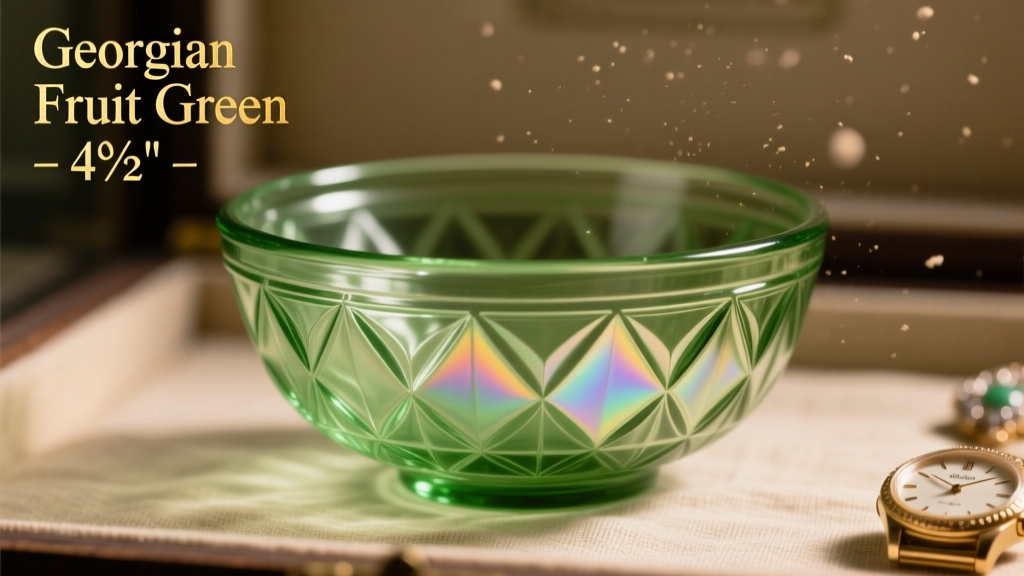
Depression Glass Georgian Bowl in Fruit Green: A Collector’s Guide to the 4½-Inch Pattern
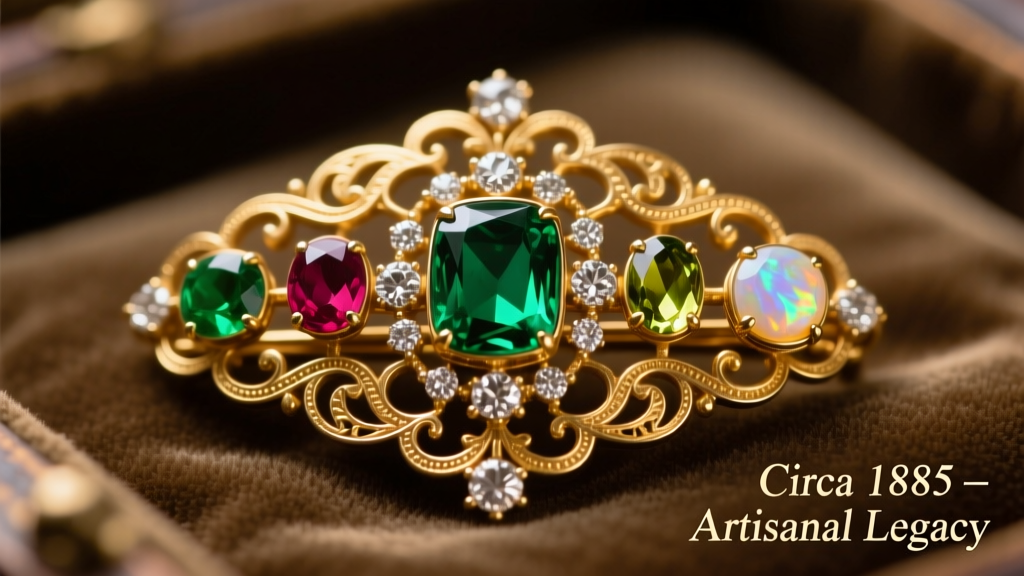
A Victorian Masterpiece: The 1885 Multi-Gemstone Brooch with Diamonds, Rubies, Emeralds, Peridots, and Opal in 14K Gold
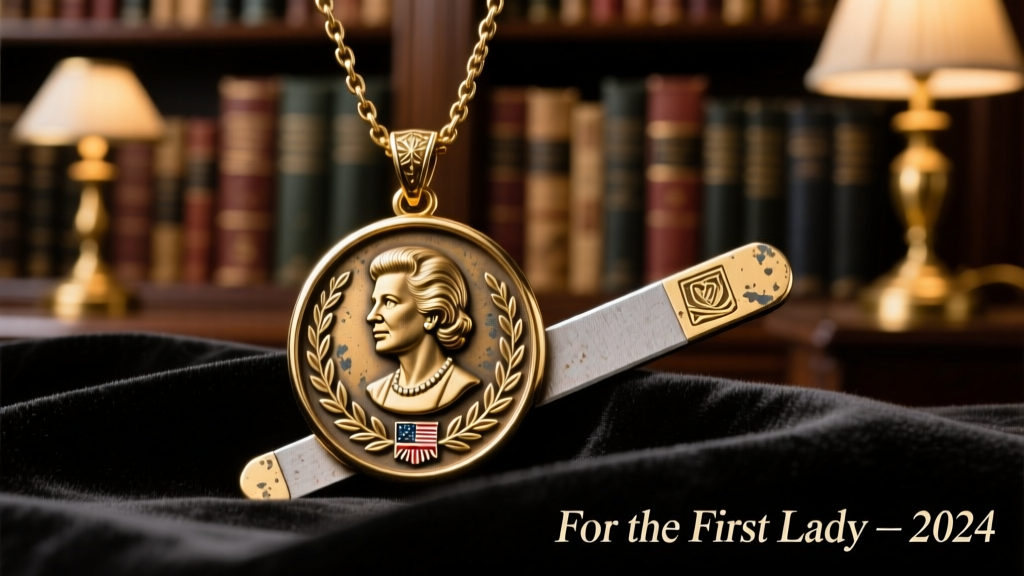
The Political Nail File Pat for First Lady: A Rare 1970s Artifact at the Intersection of Beauty, Power, and Presidential History
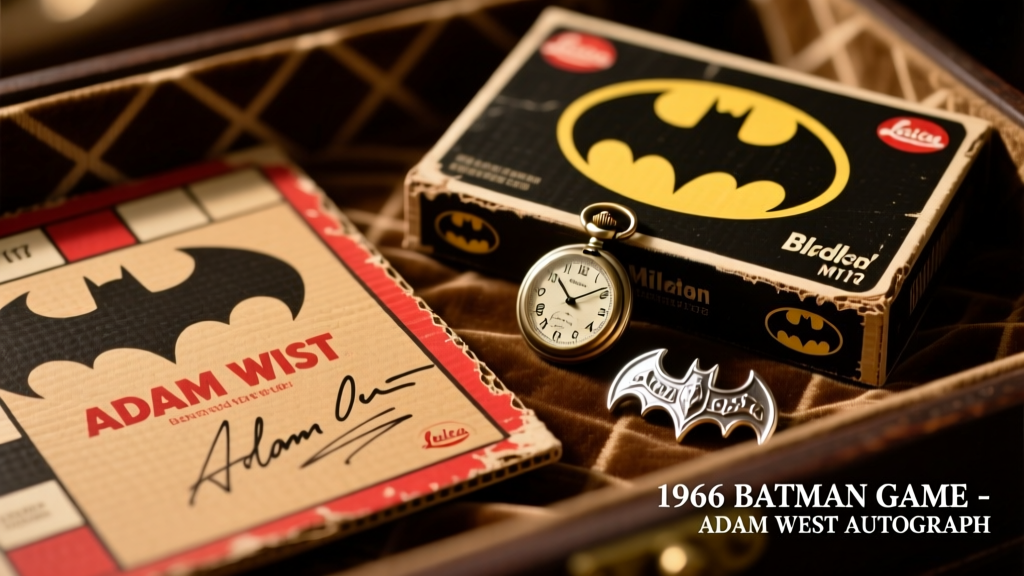
The 1966 Milton Bradley Batman Board Game with Adam West Autograph: A Collector’s Deep Dive into Pop Culture Iconography and Auction-Grade Provenance
Lot 1135480: A 1962 Patek Philippe Ref. 3448 Yellow Gold Perpetual Calendar Chronograph — Provenance, Technical Anatomy, and Market Significance
Michelin Germany Tin Map (1950s–1960s): A Collector’s Guide to the 31 × 23 Inch Vintage Road Atlas
Flow Blue Chocolate Pot: The Warwick Pansy Pattern in 9¾-Inch Form — A Collector’s Appraisal