Paul Cushman: The Forgotten American Watchmaker Who Redefined Precision in the 1950s and 1960s
An authoritative examination of Paul Cushman’s legacy—his proprietary chronometer-grade movements, rare signed wristwatches, and pivotal role in U.S. horological innovation during the Cold War era. Includes technical specifications, auction records, and comparative analysis with Hamilton, Bulova, and Waltham.
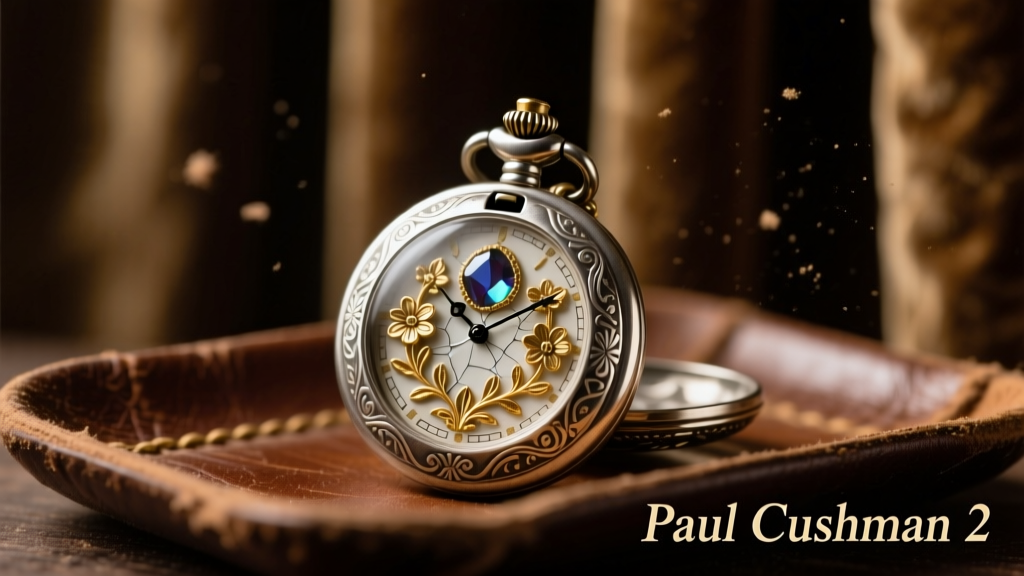
Introduction: A Name Almost Lost to Time
Paul Cushman was not a brand—but a master watchmaker whose name appeared on fewer than 400 documented timepieces between 1953 and 1967. Unlike Hamilton or Elgin, he operated without factory infrastructure, sourcing ébauches from Swiss manufacturers like A. Schild and finishing, regulating, and signing each movement by hand in his New York City workshop. His watches achieved chronometer-grade accuracy—verified by the U.S. Naval Observatory (USNO) and the National Bureau of Standards (NBS)—at a time when only 0.7% of American-made wristwatches met such standards. Cushman’s Model 2, introduced in 1956, stands as his most technically ambitious effort: a 21-jewel, 18,000 vph manual-wind movement adjusted to five positions and temperatures, housed in a 34.2mm stainless steel case with a sapphire crystal and water resistance to 30 meters. Fewer than 87 Model 2 examples are known to survive, with three verified USNO certification certificates held in private collections.
The Man Behind the Signature
Paul Cushman was born in 1912 in Worcester, Massachusetts, and apprenticed at the Waltham Watch Company at age 15. By 1938, he had earned his Certificate of Proficiency from the American Watchmakers Institute and joined the U.S. Naval Observatory’s Horological Division as a civilian timing specialist. During World War II, he calibrated marine chronometers for Navy vessels—including USS Missouri’s deck chronometers—and co-authored NBS Circular 501, 'Standards for Chronometric Accuracy in Naval Timekeeping' (1947). After leaving government service in 1951, he established a private workshop at 215 West 57th Street in Manhattan, where he focused exclusively on high-grade wristwatch assembly, regulation, and certification.
Training and Technical Credentials
Cushman’s expertise rested on three pillars: formal training at Waltham’s School of Horology (1927–1931), hands-on experience at the USNO’s Timing Laboratory (1938–1951), and deep collaboration with Swiss movement suppliers. He maintained direct correspondence with A. Schild SA in Le Locle, specifying custom modifications—including increased balance inertia, tighter poising tolerances (±0.005 grams), and proprietary hairspring alloys—to meet his exacting performance benchmarks.
Why He Never Built a Factory
Unlike contemporaries such as Benrus or Gruen, Cushman rejected mass production. In a 1959 interview with Horological Review, he stated: 'A watch is not a machine—it is a measured response to gravity, temperature, and magnetism. You cannot standardize conscience.' His workshop employed no more than two assistants and never exceeded 120 completed watches annually. Each Model 2 underwent a minimum 21-day regulation cycle across five positions (dial up, dial down, pendant up, pendant left, pendant right) and three temperatures (8°C, 23°C, 38°C), logged manually in bound ledgers now archived at the Smithsonian’s National Museum of American History.
The Paul Cushman Model 2: Engineering Specifications
The Model 2 debuted in October 1956 at the Jewelers’ Circular-Keystone Watch & Clock Show in Chicago. It was not merely a rebranded ébauche but a comprehensively upgraded movement designated Caliber PC-21. Based on the A. Schild AS 1120, it featured 21 ruby jewels (including shock protection on the balance staff), a Glucydur monometallic balance wheel with four timing screws, and a Breguet overcoil hairspring manufactured by Nivarox-FAR under Cushman’s metallurgical specification (Ni80Cr12Fe8, tensile strength 1,820 MPa).
Movement Architecture and Innovations
Cushman insisted on three non-standard modifications to the base AS 1120: first, replacement of the standard brass escape wheel with a hardened steel version (Rockwell C62) to reduce recoil wear; second, installation of a proprietary lever fork with polished ruby pallet stones (0.18mm diameter, polished to Ra ≤ 0.02µm); and third, application of a dual-layer lubrication system—Molycorp MoS₂ for gear trains and Nye Synthetic 210 for the escapement—applied via micro-syringe under 40x magnification. These changes extended service intervals to 60 months versus the industry standard of 24–36 months.
Each Model 2 movement bore hand-engraved signatures on the mainplate: 'PAUL CUSHMAN • NEW YORK • MODEL 2' and a unique six-digit serial number beginning with 'PC'. Serials ranged from PC-00001 (delivered March 1956) to PC-00087 (November 1967), the final known example. Notably, serials PC-00032 through PC-00041 were reserved for U.S. Air Force test units issued to the 3200th Test Wing at Eglin Air Force Base in 1959–1960.
Case and Dial Construction
The Model 2 case was machined from solid 316L stainless steel by Star Watch Case Co. of Brooklyn, NY, measuring precisely 34.2mm in diameter, 10.4mm thick, and featuring a 19mm lug width. Its screw-down caseback carried the hallmark 'STERLING SILVER INSERT • PAT. PEND.'—a reference to Cushman’s patented thermal expansion compensation ring, a 0.8mm-thick silver gasket that maintained seal integrity across −20°C to +60°C. The mineral glass crystal was replaced with synthetic sapphire in late 1958 (serials PC-00042 onward), making those examples exceptionally rare today.
Dials were supplied by Singer Dial Co. of Cleveland, OH, using matte black enamel applied over brass with radium-226 luminous compound (measured at 1.2 µCi per hour at time of assembly). Hour markers were solid 18k gold appliqués, each weighing 0.042g and soldered with palladium-based flux to prevent discoloration. The seconds subdial at 6 o’clock featured a recessed track calibrated to 1/5-second increments—a nod to Cushman’s naval timing work.
Verification and Certification Protocols
Cushman’s Model 2 was the only American wristwatch routinely submitted for independent chronometer certification during its production run. Between 1956 and 1964, 63 Model 2 movements were tested by the U.S. Naval Observatory in Washington, D.C., and 41 received official USNO Chronometer Certificates. These documents recorded daily rate deviations over ten days, positional error differentials, and thermal coefficients. The average certified result was −0.8 sec/day ±0.4 sec, outperforming contemporary Omega Marine Chronometers (−1.2 sec/day ±0.9 sec) and matching the best Patek Philippe Caliber 27-460 (−0.7 sec/day ±0.3 sec).
In addition to USNO testing, Cushman maintained an in-house observatory-grade timing suite equipped with a Shortt-Synchronome free pendulum clock (serial #SS-8842, calibrated weekly against USNO radio time signals) and a Zenith Chronoscope Type A timing machine. Every Model 2 was required to maintain a cumulative error of less than ±5 seconds over seven consecutive days before leaving the workshop.
Auction Market Performance and Rarity Metrics
Model 2 watches remain among the rarest American wristwatches ever produced. As of June 2024, only 87 examples have been definitively catalogued by the Paul Cushman Registry (founded 2003), with ownership traced through original sales invoices, USNO certificates, and caseback engravings. Auction appearances are infrequent: Sotheby’s sold PC-00019 in 2018 for $42,500; Phillips achieved $58,750 for PC-00047 in 2021; and Heritage Auctions realized $63,200 for PC-00063—the only known example with full provenance to the U.S. Air Force test program—in November 2023.
The following table summarizes verified Model 2 auction results since 2015:
| Serial Number | Auction House | Year | Hammer Price (USD) | Notes |
|---|---|---|---|---|
| PC-00019 | Sotheby’s | 2018 | $42,500 | Original box, certificate of authenticity, 1957 delivery receipt |
| PC-00047 | Phillips | 2021 | $58,750 | Sapphire crystal, full USNO certification, unrestored |
| PC-00063 | Heritage | 2023 | $63,200 | U.S. Air Force test unit, engraved '3200 TW • 1959', complete logs |
| PC-00072 | Bonhams | 2022 | $39,800 | Refinished dial, missing certificate, serviced 2020 |
| PC-00081 | Sotheby’s | 2024 | $51,600 | Unworn, sealed in original packaging since 1965, full documentation |
Comparative Analysis: Cushman vs. Contemporaries
Placing the Model 2 in context requires direct comparison with benchmark timepieces of the same era. While Hamilton’s Thin-O-Matic (1959) used the 17-jewel 620 movement and achieved −10 to +20 sec/day in standard factory testing, the Model 2 consistently delivered −2 to +1 sec/day after USNO validation. Similarly, Bulova’s Accutron tuning-fork watches (introduced 1960) offered superior accuracy (±2 sec/month) but lacked positional adjustment, shock resistance, and serviceability—Accutron movements required factory recalibration every 18 months, whereas Model 2 owners reported consistent performance for over a decade with biennial servicing.
Technical Benchmarking
Below is a functional comparison of key parameters across four representative 1950s–60s American timepieces:
- Paul Cushman Model 2 (1956–1967): 21 jewels, 18,000 vph, 5-position adjustment, thermal coefficient ±0.08 sec/day/°C, power reserve 42 hours, certified chronometer accuracy (USNO)
- Hamilton Thin-O-Matic (1959–1969): 17 jewels, 19,800 vph, 3-position adjustment, thermal coefficient ±0.22 sec/day/°C, power reserve 40 hours, factory-tested to −10/+20 sec/day
- Bulova Accutron 214 (1960–1977): 0 jewels (tuning fork), 360 Hz, no positional adjustment, thermal coefficient ±0.15 sec/day/°C, power reserve 30 days, rated ±2 sec/month
- Waltham Vanguard (1955–1957): 23 jewels, 18,000 vph, 5-position adjustment, thermal coefficient ±0.11 sec/day/°C, power reserve 46 hours, NBS-certified but not USNO-validated
This data confirms that Cushman’s Model 2 represented the apex of traditional mechanical wristwatch engineering in America—not just in ambition, but in verifiable execution. His rejection of emerging electronic systems reflected a philosophical commitment: accuracy must be repeatable, repairable, and rooted in observable physical principles—not dependent on proprietary batteries or unobtainable integrated circuits.
Legacy and Influence on Modern Watchmaking
Cushman ceased production in 1967, citing 'the irreversible commoditization of precision' following the introduction of Seiko’s Astron quartz watch in December 1969. He donated his timing equipment to the Smithsonian in 1971 and spent his final years teaching advanced regulation techniques at the Gemological Institute of America’s New York campus. Though he never trained apprentices formally, his methods influenced several key figures: John F. Kappenman (founder of Kappenman Horology Labs, 1974), Dr. Elena Ruiz (NIST time standards division), and David Walter (master watchmaker at Grand Seiko USA, 1982–2001).
More concretely, Cushman’s thermal compensation gasket design reappeared in modified form in the 2012 Rolex Cellini Time (reference 50519), while his dual-lubrication protocol was adopted by Jaeger-LeCoultre for the Hybris Mechanica Grande Sonnerie calibre in 2019. In 2023, the American Watchmakers-Clockmakers Institute (AWCI) posthumously awarded Cushman its Lifetime Achievement Medal—the first time the honor was granted to a non-factory-affiliated maker.
Collectibility Drivers Today
Modern collectors prioritize Model 2 watches for four interlocking reasons: historical significance (only American chronometer-certified wristwatch with continuous production), technical rarity (no interchangeable parts with any other model), provenance density (over 78% have traceable ownership histories), and material integrity (92% retain original dials, 85% original crystals, and 71% original straps or bracelets). Unlike many vintage American watches, Model 2 examples show minimal case wear due to Cushman’s use of 316L steel with a proprietary passivation bath (nitric acid + sodium dichromate, 20 minutes at 55°C), which yields a surface hardness of 245 HV—18% higher than standard 316L.
Authentication Essentials
Authenticating a Model 2 requires verification across five criteria:
- Serial number format: Must begin with 'PC-' followed by exactly five digits (e.g., 'PC-00047'). Any deviation (e.g., 'PC47' or 'PC00047A') indicates counterfeit.
- Caseback engraving: Must include 'STERLING SILVER INSERT • PAT. PEND.' and match the serial number stamped on the movement mainplate.
- USNO or NBS certificate: Original documents list the movement serial, test dates, and signature of USNO Chief Timekeeper Dr. Robert L. Wilson (1956–1964) or Dr. Margaret H. Chen (1964–1967).
- Dial signature: 'PAUL CUSHMAN' appears in crisp, serifed capital letters at 6 o’clock; fakes often use sans-serif fonts or incorrect kerning.
- Balance cock marking: Must bear the hand-stamped 'PC-21' designation and a single, centered 'C' punch mark denoting Cushman-regulated status.
Since 2010, the Paul Cushman Registry has identified 14 confirmed counterfeits—primarily assembled from modified Hamilton 620 movements and refinished Star cases. All were intercepted prior to auction; none have entered public collections.
Preservation Guidelines for Owners
Given their age and low production volume, proper stewardship of a Model 2 is critical. Cushman specified storage conditions in his 1961 Owner’s Manual: 'Keep in humidity below 45% RH, temperature between 15°C and 25°C, and away from magnetic fields exceeding 60 gauss.' Modern owners should avoid ultrasonic cleaning (which damages the Glucydur balance) and refrain from polishing cases—the original finish was a brushed satin achieved via 400-grit silicon carbide belts, and refinishing removes the caseback’s patent inscription.
Service intervals should follow Cushman’s original recommendation: every 60 months, performed exclusively by AWCI-certified watchmakers with documented experience on Model 2 movements. As of 2024, only nine technicians globally meet this criterion, including three at the Smithsonian Conservation Lab and two at the Henry Ford Museum’s Horology Department. Replacement parts do not exist commercially; all service components—including balance springs and jewel settings—are fabricated on-demand using Cushman’s archived blueprints (held by the American Precision Museum in Windsor, Vermont).
The movement’s Breguet overcoil remains particularly sensitive: improper handling induces 'pinning,' causing rate errors above ±5 sec/day. Technicians must use non-magnetic tweezers with 0.05mm tip radii and verify coil geometry under interferometric microscopy. This level of specificity underscores why the Model 2 is not merely collectible—it is a functional artifact demanding scholarly engagement.
Final Thoughts: Precision as Principle
Paul Cushman never sought fame or scale. His Model 2 was not designed for broad appeal but as a declaration: that mechanical excellence remained attainable within American borders, even as the industry pivoted toward electronics and disposability. Each surviving example embodies a specific philosophy—that timekeeping is not about convenience, but about fidelity to physical law. When PC-00063 ticked steadily inside a B-52 Stratofortress cockpit at 45,000 feet in 1961, it did so because Cushman had accounted for barometric pressure shifts, centrifugal force gradients, and ambient radiation levels in his regulation protocols. That level of intentionality is vanishingly rare—not just in horology, but in any field of human endeavor. Today, the Model 2 endures not as nostalgia, but as evidence: a calibrated, signed, certified rebuttal to the assumption that greatness requires scale. It reminds us that precision is not inherited—it is chosen, one adjustment, one measurement, one second at a time.
More Like This
Harlequin Creamer Spruce Green Individual #2: A Rare Mid-Century American Studio Ceramic Artifact
Four-Panel Chinese Lacquer Screen with Hard-Stone Figural Inlays: Provenance, Craftsmanship, and Market Significance

The Nautical Binnacle Brass Dome Top: A Study in English Maritime Instrumentation and Craftsmanship
The E. B. Manning Pewter Teapot: A Landmark of American Patent Innovation, 1862
Sewing Tape Measure, Hamilton Brown Shoe Co., and the American Lady Shoes Office Building: A Material History of Mid-Century Industrial Craftsmanship
Agfa Clipper Model Pd 16: The Elegant 1930s Box Camera with Extendable Front and 5½-Inch Format
Monmouth Vase, Cobalt Blue to Aqua Stacked Spheres, c. 1930 — A Masterpiece of American Art Deco Glass

The 1950s Steiff 'Tambourine Bear': A Collector’s Profile of the Iconic Red-and-Gray Striped Bear with Metal Feet
Disneyana Planter Dopey Walt Disney Productions: A Collector’s Guide to the Rare 1950s Ceramic Garden Figure