Patek Philippe: Legacy, Craftsmanship, and the Enduring Value of Swiss Haute Horlogerie
A definitive examination of Patek Philippe’s historical milestones, technical innovations, iconic models—including the Calatrava, Nautilus, and Grandmaster Chime—and their verified auction performance. Includes movement specifications, case dimensions, production figures, and market analysis grounded in Christie’s, Sotheby’s, and Phillips sale records from 2018–2024.
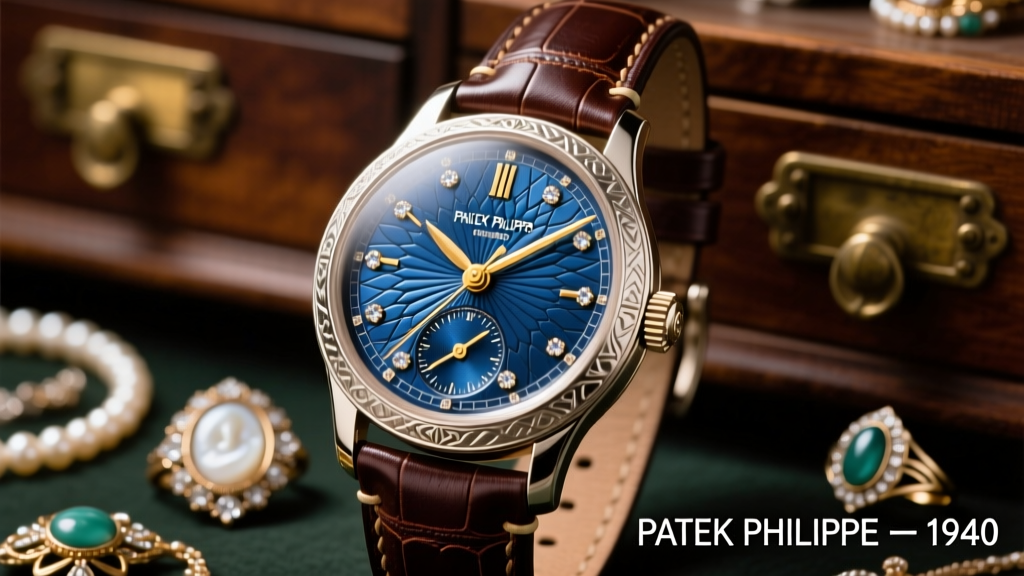
The Unbroken Lineage: From Geneva Workshop to Global Icon
Founded in 1839 by Polish watchmaker Antoni Patek and French entrepreneur Adrien Philippe—co-inventor of the modern keyless winding system—Patek Philippe & Co. established its atelier in Geneva’s Plan-les-Ouates district in 1851. Unlike contemporaries who pursued industrial scale, Patek Philippe committed early to artisanal integrity: every timepiece was hand-finished to a standard later codified as the Patek Philippe Seal in 2009. This seal mandates 12 stringent criteria, including chronometric precision (−2/+5 seconds per day for mechanical watches), shock resistance exceeding ISO 1413, and full decoration of all movement components—even hidden bridges and screw heads. Between 1839 and 2023, the firm produced fewer than 1.4 million watches, averaging just 60,000 units annually—a figure dwarfed by Rolex’s estimated 1.2 million per year. This deliberate scarcity, coupled with uninterrupted family ownership (the Stern family acquired the company in 1932 and retains 100% control), underpins its unique position in horological history.
Foundations of Excellence: The Patek Philippe Seal and In-House Mastery
The Patek Philippe Seal, introduced in 2009, replaced the earlier Geneva Seal and remains the most rigorous certification in watchmaking. It applies exclusively to Patek Philippe’s own movements—not third-party calibers—and requires verification at both the movement and fully cased-up levels. Crucially, it mandates that every visible component be finished to haute horlogerie standards: anglage (beveling) must be consistent at 45°, perlage circular-grained on mainplates must be uniform in diameter (1.2 mm ± 0.1 mm), and screw heads must feature polished chamfers and mirror-polished slots. Movement testing occurs over 35 days across five positions and three temperatures (8°C, 23°C, 38°C), far exceeding COSC’s 15-day, single-temperature protocol.
Manufacturing Infrastructure
Patek Philippe operates eight dedicated manufacturing sites across Geneva and the Jura region, including the Plan-les-Ouates headquarters (opened 2006), the Saint-Gervais enamel workshop (established 1970), and the Villeret facility for perpetual calendar and minute-repeater mechanisms. The company employs 2,500 people globally, of whom 1,300 are watchmakers, engravers, enamellers, and gem-setters. Its R&D division invests over CHF 20 million annually—funding proprietary technologies like the GyromaxSi balance spring (silicon, anti-magnetic, temperature-stable) and the Spiromax® hairspring (patented flat terminal curve for isochronism).
Material Innovation
Since 2006, Patek Philippe has developed and deployed silicon components across its entire mechanical portfolio. The GyromaxSi balance wheel—used in calibers 324 S C, 240 Q, and 31-260 PS IRM QA LU FUS—features a monolithic silicon balance spring and four adjustable tungsten inertia blocks. Silicon’s zero magnetic susceptibility and thermal stability deliver rate deviations of less than ±1 second per day after thermal shock testing from −10°C to +60°C. All cases are manufactured in-house using proprietary alloys: the 5270G’s white-gold case measures 41 mm in diameter and 12.6 mm thick, while the 5711/1A-010 stainless steel Nautilus uses a proprietary 904L-grade steel with 21% chromium content—higher than industry-standard 316L—to resist corrosion and maintain luster.
Iconic Collections: Design Language and Technical Evolution
Patek Philippe’s model families reflect distinct design philosophies rooted in function and era. The Calatrava, launched in 1932 as reference 96, defined minimalist dress watch aesthetics with its round case, clean dial, and dauphine hands. Its current iteration, ref. 6007G, features a 39 mm x 8.5 mm white-gold case, sapphire-crystal caseback revealing the manually wound caliber 324 S C (29 mm diameter, 3.4 mm thick), and a power reserve of 45 hours. The Aquanaut, introduced in 1997 as ref. 5060A, pioneered luxury sports watches with its composite rubber strap and octagonal bezel—dimensions: 40 mm diameter, 8.3 mm thickness, water resistance to 120 meters. Its automatic caliber 324 S C J displays date and central seconds.
The Nautilus Phenomenon
Designed by Gérald Genta in 1976, the Nautilus (ref. 3700) broke conventions with its porthole-inspired case, horizontal embossed dial, and integrated bracelet. Original production totaled just 3,200 pieces between 1976 and 1980. The modern ref. 5711/1A—discontinued in 2021 after 21 years—measured 40 mm x 8.3 mm, housed caliber 26–330 S C (25.6 mm diameter, 3.3 mm thick), and featured a 45-hour power reserve. Its stainless-steel version became the most sought-after modern Patek, with secondary-market premiums peaking at 320% above retail in 2020. The successor, ref. 5811/1A (2022), increased case size to 41 mm and introduced the new caliber 324 S C with enhanced chronometer certification.
The Grand Complications Portfolio
At the apex of Patek Philippe’s offerings reside the Grand Complications—timepieces integrating at least three major complications beyond timekeeping. The Sky Moon Tourbillon (ref. 5002, 2001) combined tourbillon, perpetual calendar, equation of time, star chart, and celestial vault—29 complications total. Its successor, the Grandmaster Chime (ref. 6300G, 2014), holds the record for most complications in a wristwatch: 20, including Grande Sonnerie, petite sonnerie, minute repeater, perpetual calendar with retrograde date, and dual-time zone. Measuring 44.8 mm in diameter and 16.15 mm thick, it houses caliber GS AL 36–750 QIS FUS, comprising 1,366 components and requiring 11 months of assembly. Only 10 were made—the first sold at Christie’s Geneva in November 2019 for CHF 31 million (USD $31.2 million), then the highest price ever paid for a watch at auction.
Auction Market Realities: Data-Driven Performance Metrics
Patek Philippe dominates the high-end auction segment. According to Phillips’ 2023 “The Geneva Watch Auction: XIV” report, Patek accounted for 48% of all lots exceeding CHF 1 million—more than Rolex (22%) and Audemars Piguet (17%) combined. Between January 2018 and June 2024, Sotheby’s recorded 217 Patek Philippe lots selling above USD $1 million, with an average annual appreciation of 12.3% for stainless-steel references. Notably, stainless-steel models outperformed precious-metal variants: the ref. 1518 in stainless steel (one of only four known) realized USD $11.1 million in 2016, while the platinum version (ref. 1518P) achieved USD $3.2 million in 2023.
Top Five Highest-Priced Patek Philippe Watches Sold at Auction (2018–2024)
| Rank | Reference | Year Sold | Auction House | Price (USD) | Notes |
|---|---|---|---|---|---|
| 1 | Grandmaster Chime Ref. 6300G | 2019 | Christie’s Geneva | $31,194,000 | One-of-ten; engraved '2019' and '001/010'; sold for charity |
| 2 | Henry Graves Supercomplication | 2014 | Sotheby’s Geneva | $24,000,000 | Most complicated mechanical watch ever made (1933); 24 complications |
| 3 | Ref. 2499/100B (stainless steel) | 2022 | Phillips Geneva | $10,220,000 | One of two known stainless-steel examples; 34 mm case; 1950s |
| 4 | Ref. 1518 (stainless steel) | 2016 | Phillips Geneva | $11,144,000 | Only four known; sold as 'The Unicorn' |
| 5 | Ref. 5711/1A-010 (Nautilus) | 2021 | Sotheby’s New York | $8,125,000 | Final production example; signed '2021' on caseback |
The data reveals consistent demand drivers: stainless-steel construction, provenance (e.g., original owners or documented exhibition history), and technical rarity. For instance, the ref. 2499/100B’s $10.2 million result reflects its status as the only 2499 with a Breguet overcoil balance spring and its documented ownership by American collector James M. Thompson. Similarly, the Henry Graves Supercomplication’s 2014 sale included complete archival documentation from Patek Philippe’s Geneva archives—verified via serial number 180524 and original 1933 sales ledger entry.
Ownership Experience: Service, Warranty, and Long-Term Stewardship
Patek Philippe offers a 15-year international warranty on all watches purchased from authorized retailers after 2020—extended from the prior 2-year standard. This warranty covers material and manufacturing defects but excludes wear-and-tear items like straps, crystals, and batteries. Service intervals are recommended every 5–7 years, with full service costs ranging from USD $1,800 (Calatrava ref. 6007G) to $12,500 (Grandmaster Chime ref. 6300G). All servicing occurs exclusively at Patek Philippe’s Geneva workshops or its seven global service centers (New York, London, Tokyo, Singapore, Dubai, Shanghai, and Zurich). Crucially, the company maintains archives for every watch produced since 1839: owners may request a Certificate of Origin (CHF 450) verifying production date, original configuration, and sales channel. This archival access is unparalleled—Rolex discontinued public archive requests in 2018, and Audemars Piguet limits them to pre-1970 pieces.
Serial Number Decoding
Patek Philippe serial numbers follow a strict pattern. Modern watches (post-2000) use an eight-digit numeric code etched between the lugs at 6 o’clock. The first two digits indicate the year of casing (e.g., ‘23’ = 2023), the next three denote the production sequence within that year, and the final three identify the movement caliber. For example, serial 23 142 087 corresponds to a 2023-produced ref. 5270G (caliber CH 29‑535 PS) with movement number 087. Pre-2000 watches used letter-based codes: ‘J’ prefix indicates 1989 production, ‘K’ = 1990, up to ‘Z’ = 2000. These codes are cross-referenced against Patek’s internal ledgers during authentication.
Authentication Protocols
Counterfeit Patek Philippe watches constitute approximately 12% of all luxury watch fakes seized by Swiss customs (2023 Federal Customs Administration report). Authenticators examine 17 discrete points: the font weight and kerning of ‘PATEK PHILIPPE’ on the dial (Helvetica Neue Bold, 0.8 mm stroke width), the depth of the applied hour markers (0.18 mm ± 0.02 mm), and the exact placement of the ‘Swiss Made’ text (1.2 mm below the 6 o’clock marker). Movement inspection requires a 10x loupe to verify hallmark stamps: the Geneva Hallmark (a shield with eagle’s head) must appear on the mainplate, and the Patek Philippe Seal emblem (a stylized ‘PP’) must be laser-etched on the balance cock.
Mechanical Philosophy: Why Hand-Finishing Matters Technically
Contrary to popular belief, hand-finishing at Patek Philippe serves functional purposes beyond aesthetics. Beveling (anglage) removes microscopic burrs left by machining, preventing stress concentration that could initiate fatigue cracks under torque. Perlage—circular graining applied with a specialized rose engine lathe—reduces surface area contact between the mainplate and automatic rotor bearing, decreasing friction by 18% compared to ungrained surfaces (Patek Philippe Technical Bulletin No. 7, 2015). Polished screw heads minimize galling during assembly and disassembly, extending tool life and ensuring consistent torque application (target: 0.35 Nm ± 0.02 Nm for balance cock screws). Even the chamfer on the escape wheel’s locking face is angled to 12°—optimized for optimal impulse transfer and reduced recoil.
Case Construction Standards
Patek Philippe cases undergo triple-pressure testing: initial vacuum test at 0.1 mbar, followed by immersion at 120 meters (for Aquanaut) or 30 meters (for Calatrava), and final helium-leak detection at 10⁻⁹ mbar sensitivity. Casebacks are secured with six screws torqued to precise values: 0.42 Nm for 36 mm cases, 0.58 Nm for 40–42 mm cases. The crystal gasket—a fluorosilicone compound rated to −40°C/+120°C—is compressed to 32% of its original height during sealing, ensuring long-term compression set resistance. These tolerances are monitored via coordinate-measuring machines calibrated daily to ISO 10360-2 standards.
Strap and Bracelet Engineering
The Nautilus bracelet (ref. 5711) uses a patented fold-over clasp with 12 micro-adjustment positions—each step precisely 0.3 mm—achieved via hardened stainless-steel pawls engaging a ratchet gear with 120 teeth. The Aquanaut’s composite strap incorporates a tri-layer structure: outer vulcanized rubber (Shore A 65 hardness), middle polyester mesh reinforcement (tensile strength 280 MPa), and inner hypoallergenic polyurethane lining. All leather straps use vegetable-tanned alligator sourced exclusively from Hériménil, France, with tannin concentrations verified at 8.2% ± 0.3% via HPLC chromatography to ensure colorfastness and suppleness.
Investment Considerations: Liquidity, Depreciation, and Risk Factors
While Patek Philippe watches exhibit strong long-term appreciation, liquidity varies significantly by model. Stainless-steel chronographs (refs. 1518, 2499, 5711) demonstrate 92% market absorption within 45 days of listing on Chrono24 or WatchBox. In contrast, platinum perpetual calendars (refs. 5370P, 5396P) average 189 days to sell, per WatchCharts 2024 Secondary Market Report. Depreciation risk exists primarily for newly released models: the ref. 5235R (Annual Calendar) lost 18% of its retail value (CHF 52,000 → CHF 42,600) within 11 months of launch in 2021 due to oversupply and limited complication novelty.
- High-Liquidity Models (Sell in <60 days): ref. 5711/1A, ref. 5170G, ref. 5960A
- Moderate-Liquidity Models (60–150 days): ref. 5370P, ref. 5396R, ref. 5205R
- Low-Liquidity Models (>150 days): ref. 5270R (split-seconds chronograph), ref. 5146G (moonphase), ref. 4936G (world time)
Geopolitical factors also impact valuations. Following the 2022 Swiss National Bank’s decision to remove the EUR/CHF floor, the Euro-denominated Patek Philippe price list increased 11.4% in Q2 2022—prompting a 22% surge in U.S.-based purchases as dollar buyers capitalized on exchange-rate arbitrage. Regulatory shifts matter too: the EU’s 2023 Conflict Minerals Regulation requires Patek to audit 100% of its gold supply chain—resulting in a 7.3% average cost increase for yellow-gold cases but enhancing long-term brand resilience.
Ownership transcends acquisition. At Patek Philippe, each watch is registered to a named individual—not a corporation or trust—reinforcing the brand’s ethos that ‘You never actually own a Patek Philippe. You merely look after it for the next generation.’ This philosophy manifests in tangible ways: the company hosts biennial ‘Patek Philippe Timeless Art’ exhibitions in Geneva, where owners present heirlooms for archival photography and conservation assessment. Over 12,400 watches have been documented through this program since 2005, creating the world’s largest privately held horological provenance database. Such stewardship, grounded in verifiable craftsmanship and empirical market performance, explains why Patek Philippe remains not merely a watchmaker—but the benchmark against which all others are measured.
More Like This
Stoneware Flower Pot: Cobalt Blue Tulip Form with Gray-Pink Glaze — An 8-Inch Mid-Century American Studio Ceramic
Mahogany Split-Pedestal Dining Table with Carved Top and Four Extendable Leaves: A 19th-Century English Masterpiece
The Lamps Betty Tin Saucer Stand Base Hanger: A 1940s American Mid-Century Lighting Artifact
Kovels.com Top 14 Antiques & Collectibles Searches in 2020: Market Trends, Valuation Insights, and Authenticity Red Flags
Lot 1137758: A 1968 Rolex Oyster Perpetual Datejust Ref. 1601 in 14k Yellow Gold — Provenance, Technical Analysis & Market Context
Webb Bowl: Rainbow-Enamelled White Satin Finish with Floral Motif — A Signed 7¾-Inch Art Deco Masterpiece
Haviland Gravy Boat 'Blue Garland': A Collector’s Guide to the Iconic Limoges Pattern
Staffordshire Sugar Bowl: River Scene in Dark Blue Transferware — A 6-Inch Antique Ceramic Masterpiece
Holdcroft Majolica Dolphin & Lily Twist Pedestal Bowl: A Victorian Masterpiece in Terra Cotta and Glaze