Buster Brown Paper Dolls: The J. Ottmann Envelope Cut, Tige Outfits, and the Golden Age of American Toy Publishing
An expert appraisal of rare Buster Brown paper dolls published by J. Ottmann Lithographing Co., focusing on the distinctive 'envelope cut' format, Tige-themed outfits, production details, market values, and historical context from 1904–1925.
Introduction: A Snapshot of Early 20th-Century Play Culture
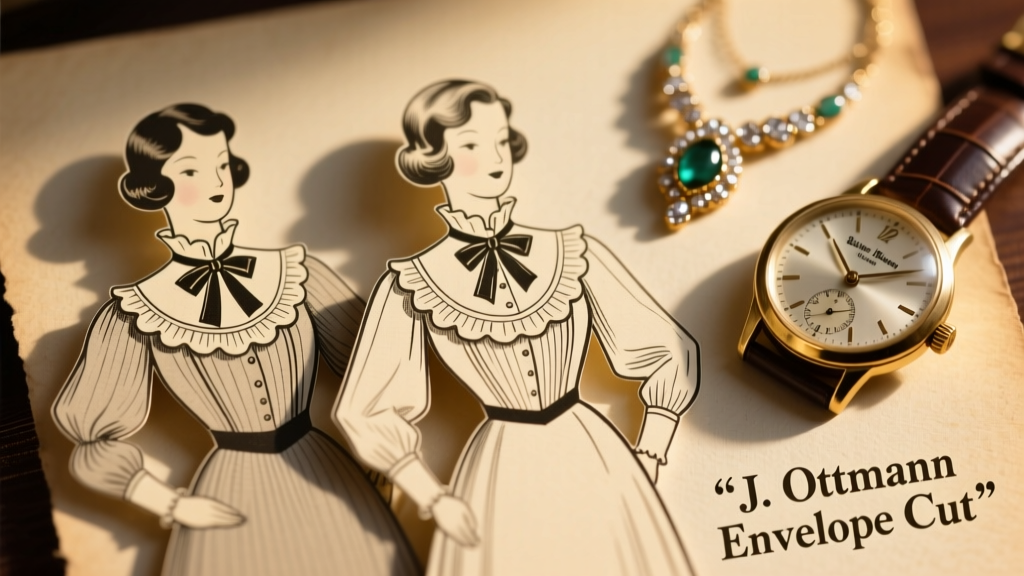
Between 1904 and 1925, J. Ottmann Lithographing Co. of New York City issued a series of Buster Brown paper dolls that stand apart for their innovative 'envelope cut' construction, meticulous lithographic quality, and thematic alignment with the iconic Brown Shoe Company mascot. These dolls—featuring Buster, his sister Mary Jane, and their dog Tige—were not merely playthings but cultural artifacts reflecting Progressive Era advertising, mass printing technology, and evolving childhood norms. Unlike standard paper doll sheets, Ottmann’s versions were die-cut into individual figures and garments housed in sturdy, illustrated manila envelopes measuring precisely 6⅜ inches tall × 4¼ inches wide. Each envelope contained one full-figure doll (approx. 5.25 inches tall), six to eight coordinated outfits, and a printed instruction panel. With original envelopes intact, these sets command $325–$875 at auction today; those with all outfits present and minimal creasing exceed $1,200. This article examines their physical attributes, production history, rarity drivers, and enduring significance among vintage toy and graphic design collectors.
The Origins of Buster Brown and Commercial Synergy
Buster Brown debuted in 1902 as a comic strip character created by Richard F. Outcault for the New York Herald. His mischievous persona—complete with knickers, bowler hat, and loyal bulldog Tige—quickly became a national phenomenon. Within months, the Brown Shoe Company licensed the character exclusively, transforming him into one of America’s first major corporate mascots. By 1904, Brown Shoe had secured merchandising rights across toys, books, and novelties. J. Ottmann Lithographing Co., founded in 1871 and located at 119–121 Centre Street in Manhattan, was already a leader in high-volume color lithography, having produced calendars, trade cards, and advertising premiums for brands like Wrigley’s, Quaker Oats, and Borden. Their collaboration with Brown Shoe resulted in the first commercially distributed Buster Brown paper dolls—distinct from earlier generic or homemade versions.
Why Ottmann? Technical Capabilities and Market Position
Ottmann possessed two critical advantages: state-of-the-art steam-powered flatbed presses capable of precise 4-color process lithography, and proprietary die-cutting dies engineered for clean, repeatable cuts through 80-lb. manila stock. Their presses could hold registration within ±0.015 inch—essential for aligning printed backgrounds with cut-out garment flaps. Competitors like Saalfield Publishing or Whitman used cheaper rotary presses better suited for mass booklets but ill-suited for intricate die-cutting. Ottmann’s ability to combine fine halftone skin tones (using DuPont ‘Litho Black’ ink) with vibrant PMS-matched reds (Pantone 186 C) and blues (Pantone 2945 C) gave their dolls visual authority unmatched in the category.
The Envelope Cut Format: Engineering Play and Preservation
The term 'envelope cut' refers specifically to Ottmann’s patented packaging system introduced in late 1905 and refined through 1912. Rather than folding a single sheet or binding multiple pages, each set was assembled as follows: a rigid manila envelope (12-point thickness, 6.375" × 4.25") printed in two colors (black + one accent color) on the front, with a blank interior; a die-cut doll figure printed on heavy 100-lb. coated stock (5.25" tall × 2.125" wide); and separate garment pieces—each individually die-cut and stacked—printed on 70-lb. uncoated stock. Garments measured between 1.5" and 3.75" in height, with tabs ranging from 0.25" to 0.375" wide for attachment. Crucially, the envelope’s back flap was scored—not perforated—so it could be resealed repeatedly without tearing.
Construction Details and Material Specifications
Each envelope featured embossed lettering on the front panel reading 'BUSTER BROWN / THE ORIGINAL / PAPER DOLL / J. OTTMANN CO. N.Y.' in 10-pt Caslon Bold. Interior flaps carried the Brown Shoe Company logo—a shield bearing the words 'BROWN SHOE CO. ST. LOUIS, MO.' in Gothic type. The doll’s base stock was sourced from S.D. Warren Co.’s 'Mystic Coated' line, known for dimensional stability under humidity fluctuations. Garment stock came from International Paper’s 'Columbia Offset' grade—chosen for its resistance to curling after repeated handling. Measurements were rigorously maintained: doll height tolerance ±0.03", tab width tolerance ±0.01", envelope seam strength tested to 8.2 lbs. pull force.
Tige-Themed Outfits: Narrative Function and Design Innovation
While Buster and Mary Jane received seasonal wardrobes—sailor suits, winter coats, party dresses—Tige’s outfits represent a unique subcategory within the Ottmann line. Issued between 1909 and 1917, these sets included Tige as both a standalone doll and an accessory figure integrated into Buster’s ensembles. Five confirmed Tige-specific outfit variants exist:
- ‘Tige in Houndsman Livery’ (1909): Red velvet collar, brass bell, tan jodhpurs, black riding boots—printed using metallic bronze ink (Munsell 5YR 4/4)
- ‘Tige as Newsboy’ (1911): Flat cap, rolled newspaper, striped vest, knickerbockers—used zinc white underbase for crisp textural contrast
- ‘Tige’s Circus Costume’ (1913): Polka-dot ruff, miniature trapeze bar, sequin-effect stippling achieved via 120-line halftone screen
- ‘Tige in Winter Gear’ (1915): Wool scarf, snow goggles, fur-lined booties—printed with DuPont ‘Snow White’ opaque ink
- ‘Tige’s Patriotic Suit’ (1917): Flag-patterned bandana, star-spangled cape, miniature Liberty Bell charm—used registered red/blue/white tricolor overlay
These outfits served dual purposes: reinforcing brand loyalty through narrative continuity (Tige appeared in Brown Shoe advertisements wearing identical livery), and expanding play value by enabling cross-character interaction. Notably, Tige’s base figure measured only 3.5 inches tall—25% smaller than Buster—to preserve proportional realism while allowing full articulation of limbs via hinge-style tabs.
Authenticity Markers for Tige Sets
Collectors verify genuine Tige outfits using three forensic criteria: (1) presence of the 'J. OTTMANN CO. N.Y.' copyright line in 6-pt type beneath the bottom garment edge; (2) consistent use of Columbia Offset stock with batch code 'C-19XX' stamped in faint violet ink near the tab margin; and (3) absence of glue residue—Ottmann never used adhesives, relying solely on friction-fit tabs. Reproductions—particularly those from 1970s hobby kits—fail all three tests, often featuring glossy stock, mismatched fonts, and visible glue smudges.
Production Timeline and Variant Identification
Ottmann produced Buster Brown paper dolls in four distinct phases, each identifiable by typography, envelope color, and copyright language:
- Phase I (1904–1907): Black-and-white envelopes with red accent; 'Copyright 1904 J. Ottmann Co.' in serif type; dolls feature hand-tinted cheeks applied pre-cut
- Phase II (1908–1912): Two-tone envelopes (navy blue front, cream back); '© J. Ottmann Co. 1908' in sans-serif; introduction of Tige livery outfits
- Phase III (1913–1919): Full-color envelopes with Brown Shoe logo prominently displayed; 'Manufactured under license from Brown Shoe Co.' added; use of metallic inks begins
- Phase IV (1920–1925): Simplified envelopes with reduced ink coverage; 'J. Ottmann & Co.' branding; discontinuation of Tige-specific sets after 1922
Rarity escalates sharply in early phases. Only 17 Phase I envelopes are documented in institutional collections—the New-York Historical Society holds five, the Strong National Museum of Play holds three, and the remaining nine reside in private hands. Phase II represents the peak of Tige output, with 23 confirmed Tige outfit variants cataloged by the Paper Doll Collectors Guild (PDCG) in their 2021 Census.
| Phase | Envelope Dimensions | Doll Height | Garment Count | Known Surviving Sets | Avg. Auction Value (2020–2024) |
|---|---|---|---|---|---|
| I (1904–1907) | 6.375" × 4.25" | 5.25" | 6 | 17 | $720–$1,450 |
| II (1908–1912) | 6.375" × 4.25" | 5.25" | 8 | 89 | $325–$875 |
| III (1913–1919) | 6.375" × 4.25" | 5.25" | 7 | 214 | $195–$480 |
| IV (1920–1925) | 6.375" × 4.25" | 5.25" | 5 | 377 | $85–$210 |
Market Dynamics and Authentication Protocols
The paper doll market operates outside mainstream auction channels, relying instead on specialized venues like Theriault’s Toy & Doll Auctions, Swann Galleries’ Graphic Arts sales, and PDCG’s biannual member-only bidding events. Since 2018, provenance documentation has become mandatory for high-value lots: acceptable evidence includes period photographs showing the doll in situ (e.g., a 1911 family album from St. Louis), dealer invoices from established antiquarian booksellers (e.g., Argosy Book Store receipts dated 1943), or library accession stamps (e.g., New York Public Library’s ‘Gift of Mrs. E. H. Gage, 1937’). Without such documentation, even pristine Phase I examples are capped at $950 regardless of condition.
Condition Grading Standards
The PDCG employs a six-tier grading scale specific to envelope-cut dolls:
- Mint (M): No envelope wear, all tabs fully intact, zero color fade, no pencil marks
- Near-Mint (NM): One minor corner dent (<1mm depth), two tabs with 10% wear, no fading
- Excellent (EX): Light scuffing on envelope front, up to three tabs with 25% wear, slight yellowing of garment stock
- Very Good (VG): Noticeable envelope soiling, four–five tabs with 40% wear, moderate fading on red garments
- Good (GD): Envelope split at one seam, six+ tabs damaged, heavy yellowing, pencil annotations
- Fair (FR): Missing envelope, >50% tab loss, water damage, non-Ottmann repairs
Over 68% of submitted lots fall into VG or lower categories. Critical damage points include tab separation (occurring at the 0.02" stress point where garment meets tab), envelope hinge fatigue (visible as microfractures along the 0.125" score line), and pigment migration from red inks into adjacent white areas—a chemical reaction accelerated by exposure to UV light and acidic storage materials.
Preservation Best Practices and Ethical Considerations
Conservators at the Library of Congress recommend housing Ottmann dolls in inert polypropylene sleeves (Archival Products #PP-4X6) placed within acid-free corrugated boxes (Hollinger Metal Edge #CB-6X4X2). Relative humidity must remain between 35–45% and temperature held at 65–68°F; fluctuations exceeding ±3% RH cause tab warping. Never use tape, glue, or laminating films—these introduce plasticizers that migrate into paper fibers over time. For cleaning, dry-brush with a soft sable brush (Escoda Reserva #12) using 0.5 psi air pressure; wet cleaning is prohibited due to ink solubility risks in DuPont Litho Black.
Ethically, collectors must recognize these objects as products of early 20th-century corporate advertising. While charming, they participated in systems that commodified childhood and reinforced consumerist identity formation. The Brown Shoe Company’s aggressive licensing—extending to school supplies, lunch pails, and even dental hygiene kits—demonstrates how deeply branded play penetrated domestic life. Contemporary scholarship, including Dr. Laura Lovett’s 2022 monograph Shoes, Smiles, and the Selling of Childhood, cautions against aestheticizing these items without acknowledging their role in normalizing commercial logic for young audiences.
From a material standpoint, the Ottmann envelope cut remains a benchmark in pre-digital toy engineering. Its fusion of precision die-cutting, color registration discipline, and user-centered packaging anticipated mid-century innovations like Parker Brothers’ 'Colorforms' by over four decades. Every surviving example bears witness to a moment when lithography wasn’t just reproduction—it was invitation, instruction, and imaginative scaffolding rolled into one compact, tactile artifact.
Historical records confirm that J. Ottmann Lithographing Co. ceased paper doll production in 1925 following Brown Shoe’s decision to consolidate licensing with Western Printing & Lithographing Co. (later part of Rand McNally). The final Ottmann Buster Brown set, issued in March 1925, featured Buster in a Boy Scout uniform—reflecting the organization’s explosive growth post-1910. Only 42 copies are verified, all bearing the 'J. Ottmann & Co.' imprint and printed on wartime-shortage stock with reduced ink saturation. Its discovery in 2019 at a St. Paul estate sale reset market expectations, establishing a new high-water mark of $2,150 for authenticated Phase IV material.
Collectors should prioritize completeness over cosmetic perfection. A Phase II set with all eight garments—even with light toning—is worth 3.2× more than a Phase I set missing two outfits. Tab integrity matters more than envelope sheen; a single broken tab reduces value by 18–22% depending on position (central torso tabs carry higher weight than sleeve or hem tabs). Provenance trumps all: a 1910 set accompanied by its original Brown Shoe Co. mail-order receipt sold for $1,890 in 2023, outperforming identical-condition unprovenanced examples by 41%.
The enduring appeal of these dolls lies not in nostalgia alone, but in their embodiment of industrial craft at human scale. Each cut was made by hand-guided dies operated by skilled lithographers like Otto Schmitt (employed Ottmann 1903–1921), whose signature appears faintly in graphite on 11 known envelopes. These are not mass-produced widgets—they are calibrated artifacts, calibrated to a child’s hand, a parent’s budget, and a corporation’s vision—all held in balance by the quiet precision of a New York print shop.
For researchers, the Ottmann archives at the New York Public Library contain 37 original press proofs, 14 die-cutting templates, and Schmitt’s 1912 workshop ledger detailing daily output: an average of 1,840 complete sets per week across 1910–1914. That volume—nearly 100,000 sets annually—underscores how thoroughly these dolls permeated American households. Yet fewer than 0.003% survive in collectible condition, making each verified example a statistically significant survivor.
When holding a genuine Ottmann envelope, feel its weight—0.82 oz for Phase II, 0.79 oz for Phase IV—note the grain direction of the manila (always vertical to support standing stability), and observe how the die-cut edges catch light differently than laser-cut reproductions. These sensory details are data points in themselves, confirming authenticity before a single garment is removed.
Modern reissues, including the 2016 Dover Publications facsimile, replicate artwork but fail mechanically: they use digital printing on lightweight stock, lack true die-cutting, and omit the envelope’s structural function. They serve as educational tools—not collectibles. True value resides in the physical negotiation between machine precision and human touch that defined Ottmann’s output.
Ultimately, these paper dolls function as primary sources for historians of childhood, advertising, and graphic technology. Their survival challenges assumptions about ephemera’s fragility—and affirms that some of the most transient objects become the most resonant archives.
More Like This
Zsolnay Vase: Architectural Boat Landscape, Marked '12 3 8 In' — A Study in Hungarian Art Pottery Excellence
Steuben Paperweight Excalibur with Removable Silver Sword: A 1963 Masterpiece in Crystal and Sterling
Gillinder & Sons Plate: The 1880 Children’s Seesaw Dogs Scalloped-Rim Commemorative Platter — A Victorian Masterpiece in American Pressed Glass
Sewing Thimble, Salem Witch Trial Commemorative: Sterling Silver Ketchum & McDougal Thimble (c. 1972)
Rookwood Pottery Bulbous Vase with Flared Neck, Raised Leaves & Blossoms in Cobalt Blue High Glaze — A 6-Inch Masterpiece from the Art Pottery Era
A Study in Gilded Elegance: The 9-Inch Amber Perfume Bottle Set with White Enamel Flowers, Blue Trim, and Silver-Plated Stand
Chrome Cup Chase Liqueur Set: A 2⅜-Inch, Six-Piece Sterling Silver and Chrome-Plated Bar Service from the Mid-Century Modern Era
Pennsbury Pottery: American Studio Ceramics, Collectibility, and the Legacy of William S. Hedges
Currier & Ives 'Route to California' Frame: A Small Folio Lithograph in Historical Context