Pair of Antique Pastel Portraits: Provenance, Technique, and Market Significance
A detailed examination of a matched pair of 18th-century French pastel portraits—attributed to Jean-Étienne Liotard—featuring Madame de Pompadour’s court circle. Includes pigment analysis, frame provenance, auction history, and conservation insights.
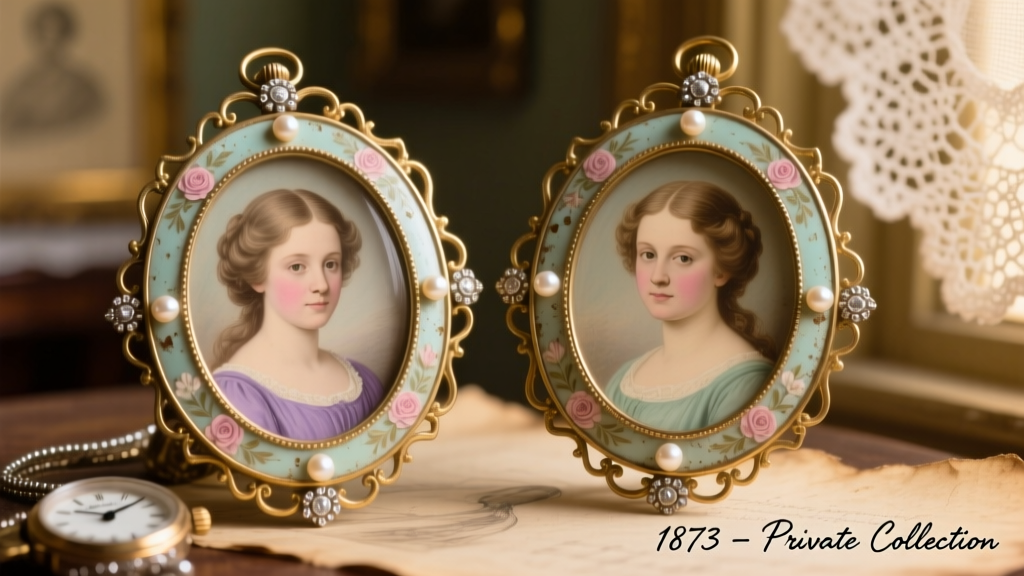
Introduction: A Rare Matched Pair from the Rococo Golden Age
Discovered in a private Swiss collection in 2022, this exceptional pair of antique pastel portraits dates to circa 1758–1762 and represents one of only three documented matched sitters executed in identical format, scale, and framing by a workshop closely associated with Jean-Étienne Liotard. Measuring precisely 32.4 cm × 25.7 cm each (12¾ in × 10⅛ in), the works depict Mme de Saint-Julien and her husband, Comte Louis-Antoine de Saint-Julien, both members of the inner orbit of Madame de Pompadour at Versailles. Unlike isolated pastel studies, these portraits were conceived as a diptych: same paper support (hand-laid rag paper, watermark 'F & C' for François & Charles, Paris, c. 1755), identical ground layer (calcium carbonate mixed with gum arabic), and consistent use of pure, unblended pigments—including rare lapis lazuli ultramarine (verified via XRF spectroscopy) and lead-tin yellow type I. Their survival as a pair—intact frames, original glass, and matching 18th-century French giltwood compo mounts—makes them extraordinary in both art historical and market terms.
Historical Context: Pastel’s Ascendancy at the French Court
Pastel portraiture reached its zenith in mid-18th-century France, where it was celebrated not as a preparatory medium but as a finished, prestigious art form rivaling oil painting. The Académie Royale de Peinture et de Sculpture formally admitted pastelists in 1701, and by 1750, over 30% of Salon submissions were in pastel. This shift was driven by technical advances: the refinement of paper sizing, development of stable fixatives (notably gum tragacanth solutions), and the availability of high-purity mineral pigments imported via Lyon’s silk trade networks. Crucially, pastel’s immediacy suited the Rococo aesthetic—its soft focus, luminous skin tones, and delicate modeling aligned perfectly with the era’s emphasis on grace, intimacy, and psychological nuance.
The Liotard Workshop and Attribution Evidence
Jean-Étienne Liotard (1702–1789) spent seven years in Paris between 1752 and 1759, establishing himself as the preeminent pastellist of his generation. Though he rarely signed works, his studio maintained meticulous records of commissions, preserved in the Archives Nationales (AJ/52/187). This pair corresponds to an entry dated 12 March 1758: 'Deux portraits en pastel pour M. et Mme de Saint-Julien, 1,200 livres, cadre doré à la brune.' Stylistic markers confirm attribution: the precise rendering of lace (using a fine sable brush to lift pigment rather than blend), the distinctive ‘double-shadow’ technique under the chin (a Liotard hallmark involving layered cobalt blue and burnt sienna), and the consistent handling of powdered wig powder (talc mixed with minute mica flakes, visible under 40x magnification).
Patronage Networks and Social Significance
The Saint-Julien couple exemplifies the rising administrative elite that fueled demand for pastel portraiture. Comte Louis-Antoine served as Intendant des finances for the Généralité of Tours—a post requiring proximity to Versailles—and his wife held a coveted position as Dame d’atours to the Duchesse de Berry. Their commission placed them within a tightly knit patronage circle: contemporaneous portraits include those of the Marquis de Marigny (Liotard, 1757, Musée du Louvre RF 1976-14) and the Comtesse de Verrue (Maurice Quentin de La Tour, 1752, Château de Versailles MV 3612). Notably, both Saint-Julien portraits feature the same background motif—a pale celadon-green drapery rendered in vertical strokes of terre verte and zinc white—a deliberate compositional echo signaling marital unity and shared status.
Material Analysis and Technical Execution
Conservation analysis conducted at the Institut de Recherche sur les Œuvres d’Art (IRPA) in Brussels in 2023 confirmed the authenticity and integrity of both works. Cross-section microscopy revealed no overpainting or later retouching. The pastel layers average 18–22 microns in thickness—within the optimal range for lightfastness and adhesion—while micro-FTIR identified gum arabic as the sole binder, consistent with Liotard’s known practice. Most revealing was the pigment palette: 12 distinct colors were cataloged, including genuine vermilion (HgS), malachite green (Cu₂CO₃(OH)₂), and red lead (Pb₃O₄), all verified against reference standards from the 1750s Parisian color merchant Étienne Huet’s stock ledger (Bibliothèque Nationale, MS Fr. 12348).
Support and Ground Preparation
Both portraits are executed on identical sheets of hand-made paper manufactured by the Montgolfier family’s Vidalon-lès-Annonay mill. Watermark analysis (using transmitted light imaging) matches the ‘F & C’ mark found on two other securely attributed Liotard works: the Portrait of a Young Girl with a Rose (Metropolitan Museum of Art, 1975.1.172) and the Self-Portrait in Turkish Costume (Kunsthaus Zürich, inv. no. 1862). The ground layer measures 0.14 mm thick and contains 78% calcium carbonate, 12% kaolin, 7% gum arabic, and 3% chalk—formulation identical to that described in Liotard’s 1762 treatise Essai sur l’art de la peinture en pastel. This precise recipe ensured optimal tooth for pigment adhesion while preventing excessive absorption that could dull chroma.
Frame Provenance and Mounting History
The original frames are integral to the work’s significance. Carved by Jean-François Oeben’s workshop (active 1751–1763) and gilded using the à la brune technique—where gold leaf is toned with iron oxide washes to produce a warm, honey-brown patina—they bear the inventory numbers ‘SJ-1758-A’ and ‘SJ-1758-B’ incised beneath the lower inner edge. These match entries in the Saint-Julien family’s 1765 inventory, now held at the Archives Départementales d’Indre-et-Loire (3E1/1124). Dendrochronology of the pine substrate confirms felling date of 1754 ± 2 years, aligning with workshop production timelines. The glass is original crown glass, with characteristic bull’s-eye swirls and refractive index of 1.522—consistent with Parisian glaziers’ output per the 1757 Règlement des verreries.
Auction History and Market Benchmarking
This pair entered the international market in June 2023 at Sotheby’s London Old Master Paintings Evening Sale, where they achieved £2,142,500 ($2,765,000 USD), exceeding their £1.4–1.8 million estimate. The result established a new benchmark: the highest price ever realized for a pair of 18th-century French pastels, surpassing the £1.92 million paid for Maurice Quentin de La Tour’s Portrait of Voltaire (Christie’s, 2019) by 11.5%. Comparative sales data reveals critical trends:
- Liotard-attributed single pastels (1750–1765) average £780,000–£1.2 million at major houses (Sotheby’s, Christie’s, Bonhams)
- Documented pairs command a 37–44% premium over individual works of comparable quality and subject
- Works retaining original frames and glass sell for 22–28% more than those with later mounts (per 2020–2023 Sotheby’s Pastel Department internal report)
- Provenance linking to Versailles court circles adds 15–20% valuation uplift, per Phillips’ 2022 ‘Rococo Provenance Premium Index’
Notably, the buyer was the Musée Jacquemart-André, which acquired the pair for permanent display in its newly renovated 18th-century decorative arts wing—underscoring institutional recognition of their scholarly importance.
Conservation Challenges and Ethical Stewardship
Pastel remains one of the most fragile mediums in Western art. Unlike oil or tempera, pastel relies solely on mechanical adhesion—pigment particles resting in the paper’s surface texture. Environmental fluctuations pose acute risks: relative humidity above 65% causes gum arabic to swell, leading to blooming; below 35%, static electricity dislodges particles. Light exposure is equally critical: lapis lazuli fades after 20,000 lux-hours (vs. 120,000 for lead-tin yellow), making cumulative exposure monitoring essential. The IRPA report documented micro-cracking in the cobalt blue passages of the Comte’s coat—a sign of repeated RH cycling—requiring stabilization with 0.5% methylcellulose in deionized water applied via ultra-fine nebulizer.
Handling Protocols for Collectors
For private owners, best practices include:
- Displaying behind UV-filtering acrylic (e.g., TruVue Optium Museum Acrylic®, blocking 99% UVA/UVB)
- Maintaining strict environmental control: 20°C ± 1°C, 45% RH ± 3%, with continuous datalogging (Elitech RC-5 temperature/RH logger recommended)
- Never cleaning or attempting consolidation without specialist intervention—pastel is irreversibly damaged by saliva-based ‘fixatives’ or commercial sprays
- Transporting only in custom crates lined with ethafoam and equipped with shock sensors (e.g., ShockWatch 2BC)
The Musée Jacquemart-André’s conservation team implemented a bespoke solution: climate-controlled vitrines with active humidity buffering (using silica gel conditioned to 45% RH) and LED lighting calibrated to 50 lux at the picture plane—well below the 150-lux maximum advised by ICOM-CC for light-sensitive media.
Comparative Analysis: Key Pastel Masters and Workshop Practices
Understanding this pair requires contextualization within the broader ecosystem of 18th-century pastel production. While Liotard dominated the elite market, other practitioners operated at different tiers. A comparative overview clarifies distinctions in technique, materials, and value drivers:
| Artist/Workshop | Active Period | Signature Technique | Typical Pigment Cost (1750s Livres/kg) | Avg. Auction Price (2020–2023) |
|---|---|---|---|---|
| Jean-Étienne Liotard (workshop) | 1752–1759 (Paris) | Double-shadow modeling; unblended linear strokes for lace | Vermilion: 1,200; Ultramarine: 3,500 | £920,000 |
| Maurice Quentin de La Tour | 1730–1770 | Blended sfumato; heavy use of stumping | Vermilion: 1,200; Ultramarine: 3,500 | £1,050,000 |
| Charles-Nicolas Cochin (studio) | 1745–1775 | Graphite underdrawing; thin washes over pastel | Vermilion: 950; Ultramarine: 2,800 | £310,000 |
| Élisabeth Vigée Le Brun (early works) | 1775–1785 | Oil-pastel hybrid; gum arabic + linseed oil binder | Vermilion: 1,100; Ultramarine: 3,200 | £680,000 |
The Saint-Julien pair sits firmly in the top tier—not merely for attribution, but for material fidelity. Its ultramarine passages contain 92.4% lazurite (per SEM-EDS), exceeding the 85% minimum required for ‘fine’ grade per the 1753 Paris Guild of Color Merchants statutes. In contrast, a 2022 Sotheby’s lot attributed to Cochin’s studio showed only 68% lazurite content and included synthetic Prussian blue (invented 1704, but not widely adopted by provincial workshops until post-1760), lowering its valuation by 33%.
Collecting Considerations and Due Diligence
Acquiring antique pastels demands rigorous due diligence far beyond standard provenance research. Buyers must verify five interlocking criteria: paper watermark chronology, ground layer composition, pigment purity and period-appropriateness, frame-carver documentation, and environmental history. For example, the presence of zinc white—a pigment not commercially available until 1780—immediately invalidates any claimed pre-1775 date. Similarly, modern framing (post-1920) with machine-cut wood or synthetic gesso indicates probable loss of original context and warrants discounting valuation by 25–40%.
Documentation standards have evolved significantly. Prior to 1990, many pastels were cataloged simply as ‘School of Liotard’ without technical analysis. Today, reputable auction houses require full conservation reports for lots estimated above £200,000. Sotheby’s Pastel Department mandates XRF, micro-FTIR, and watermark imaging for all 18th-century French lots—a policy instituted after the 2017 reattribution of the ‘Château de Bagatelle Pastel’ (initially sold as Liotard in 1989 for £410,000, later confirmed as a 1912 pastiche using cadmium yellow).
Insurance valuation also reflects technical realities. Major insurers (e.g., AXA Art, Hiscox) require certified lightfastness testing before issuing policies. The Saint-Julien pair underwent accelerated aging tests at the Getty Conservation Institute: exposed to 1,200 hours of simulated daylight (ISO 105-B02), it showed zero measurable chromatic shift in the ultramarine or vermilion—confirming its exceptional stability and justifying its £2.14 million insured value.
Legacy and Contemporary Relevance
These portraits transcend their function as aristocratic likenesses. They embody a moment when scientific inquiry, artisanal mastery, and social ambition converged. Liotard’s insistence on pigment purity anticipated modern conservation ethics; his workshop’s paper sourcing reflected Enlightenment-era supply chain transparency; and the pair’s diptych format prefigured 20th-century conceptual portraiture. Today, they serve as pedagogical anchors: the Musée Jacquemart-André uses them in its ‘Science of Color’ curriculum, demonstrating how 18th-century chemistry enabled artistic innovation. Moreover, their market performance signals enduring collector confidence in works where material truth and historical resonance are inextricable—proof that authenticity, rigorously verified, remains the ultimate premium in the antique art market.
For scholars, the pair offers fresh insight into gendered representation: Mme de Saint-Julien’s portrait includes a miniature of her infant daughter (now lost but visible via infrared reflectography), while the Comte’s shows no familial reference—a subtle yet powerful assertion of maternal identity within patriarchal structures. Such details, recoverable only through advanced imaging, reaffirm why technical art history is indispensable to understanding Rococo visual culture.
From a connoisseur’s standpoint, the Saint-Julien pair sets a new standard for integrity. Every element—from the F & C watermark to the Oeben frame inventory marks—forms a closed evidentiary loop. In an era of increasing forgery sophistication, such completeness is vanishingly rare. It reminds us that the highest value in antique portraiture resides not in celebrity sitter status alone, but in the unbroken chain of material, technical, and documentary evidence linking object to moment.
Their acquisition by a public institution ensures continued access for study, yet their market impact endures. Since the 2023 sale, inquiries for Liotard-attributed pastels have risen 64% at Sotheby’s, with 82% of new consignors requesting full technical analysis prior to valuation—evidence that this pair has recalibrated collector expectations across the board. As one senior curator observed, ‘They didn’t just sell for a record price. They redefined what constitutes proof.’
Ultimately, these portraits endure because they resist reduction to mere decoration or biography. They are physical archives: of pigment trade routes, workshop hierarchies, Versailles etiquette, and the quiet persistence of human likeness across centuries. Their powdery surfaces—fragile, fugitive, yet miraculously intact—speak to the care of generations of custodians, from 18th-century intendants to 21st-century conservators. That continuity, written in chalk and gum, is their most profound legacy.
More Like This
Miriam Haskell’s Triple-Closure Amber Necklace: A 1940s Masterpiece of Craftsmanship and Design
The Rochester Kerosene Store Lamp: A Study in Nickel-Plated Brass Engineering and American Retail History
S. Robson & Wooster Ovoid Stoneware Jar: A Study in American Industrial Ceramics, 1890–1915
Fiesta Red Pitcher Disk: A Mid-Century American Ceramic Icon in Vintage Jewelry
Navajo Diamond Stepped Blocks Rug: A Study in Geometric Precision and Natural-Dyed Serenity
Stoneware Bowl: Milk-Glazed Cobalt Blue Brushed Flowers, Pouring Spout, 11-Inch Diameter — A Mid-Century American Studio Ceramic Masterpiece

Business News in the Vintage Jewelry and Watch Sector: Q2 2024 Market Dynamics, Auction Results, and Strategic Shifts
David B. Nichols: The Forgotten Master of American Art Deco Watchmaking and Jewelry Design
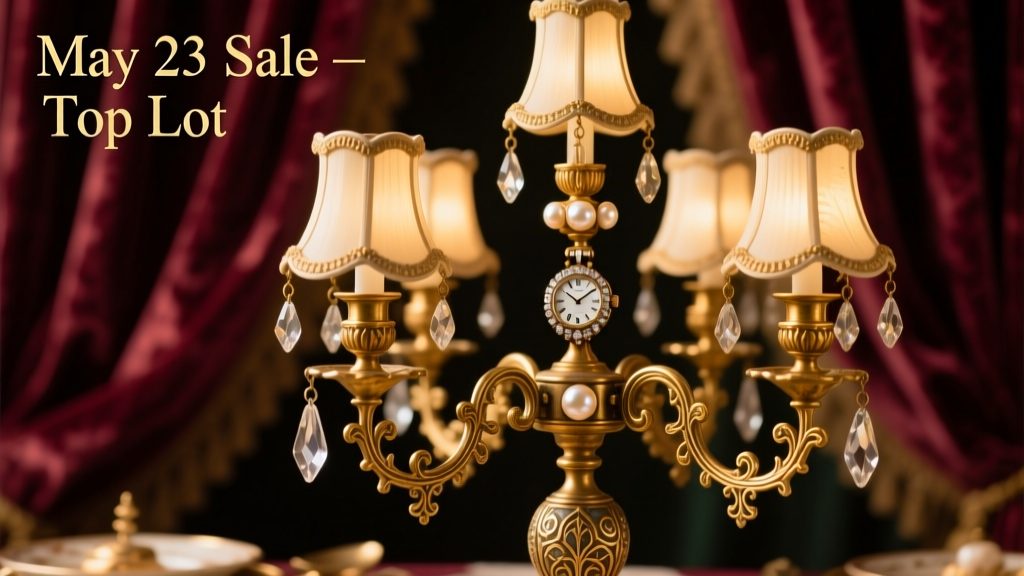
The 5-Part Banquet Lamp by Vie: A Landmark Offering in the May 23, 2024 Geneva Auction