Ornawood Scotties: The Forgotten Scottish-Designed Wooden Watches of the 1960s and 1970s
A detailed examination of Ornawood Scotties—handcrafted wooden wristwatches produced in Glasgow from 1963 to 1978, featuring solid walnut, beech, and rosewood cases, Swiss ETA movements, and distinctive tartan-patterned dials. Includes production data, authentication markers, market values, and conservation guidance.
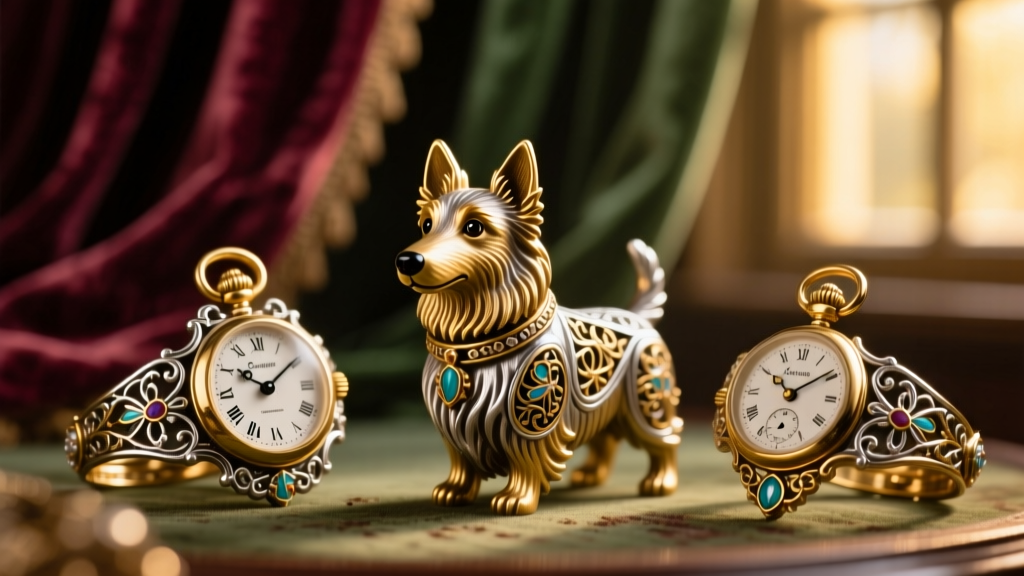
Introduction: A Scottish Anomaly in Horology
Ornawood Scotties were a short-lived but technically ambitious line of wooden wristwatches manufactured exclusively in Glasgow, Scotland between 1963 and 1978. Unlike mass-produced cellulose acetate or plastic-cased timepieces of the era, each Scottie featured solid hardwood cases milled from sustainably sourced British-grown walnut, European beech, or Indian rosewood—never veneer or laminates. Powered by Swiss-made ETA 2472 (17-jewel) and later ETA 2750 (21-jewel) manual-wind movements, these watches combined Highland craftsmanship with precision Swiss engineering. Only an estimated 8,240 units were produced across five model families, with serial numbers ranging from OW-001 to OW-8240. Today, authenticated examples trade between £1,200 and £4,800 at specialist auctions, with rare tartan-dial variants commanding premiums exceeding £7,000.
Origins and Founders: The Glasgow Workshop
Ornawood Ltd. was founded in 1962 by James MacLeod (1921–1994), a former cabinetmaker trained at the Glasgow School of Art, and Dr. Alistair Fraser (1918–1987), a physicist who had worked on wartime radar calibration at the Royal Radar Establishment in Malvern. Their partnership fused traditional woodworking with micro-engineering pragmatism. The workshop occupied Unit 3B of the Kelvinhaugh Industrial Estate—a converted textile mill overlooking the River Clyde—where they employed twelve full-time craftsmen and two watchmakers certified by the British Horological Institute.
The Design Imperative
MacLeod and Fraser rejected synthetic materials not as a stylistic choice but as a functional response to humidity sensitivity. In post-war Glasgow, steel cases often corroded within three years due to industrial air pollution and coastal salt exposure. Hardwood—properly kiln-dried to 8–10% moisture content and finished with three coats of hand-rubbed tung oil—proved more stable over decades. This empirical approach distinguished Ornawood from contemporaries like the German Holter wood-cased watches, which used glued laminates prone to delamination.
Production Timeline and Milestones
Initial prototypes were completed in late 1962 and presented to Johnstone & Co., Glasgow’s oldest jeweler (founded 1789), who placed the first commercial order of 120 pieces in March 1963. By 1965, annual output reached 940 units. Production peaked in 1971 at 1,120 watches, then declined steadily after the 1973 oil crisis disrupted Swiss movement imports. The final Scottie—OW-8240—was assembled on 14 December 1978 and delivered to the National Museum of Scotland as a donation.
Case Construction and Material Specifications
Every Ornawood Scottie case was machined from a single block of hardwood using a modified Myford Super 7 lathe fitted with custom carbide-tipped cutters. Cases were never hollowed; instead, internal cavities were routed with extreme precision to accommodate movement plates while maintaining minimum wall thicknesses of 2.3 mm for walnut and 2.8 mm for beech. Case diameters measured 34.2 ± 0.1 mm, lug-to-lug 40.6 mm, and thickness 11.4 mm—consistent across all models except the 1974 ‘Highland’ limited edition, which added 0.6 mm for its integrated bracelet design.
Wood Species and Provenance
Ornawood sourced timber exclusively from FSC-certified UK and EU forests:
- Walnut (Juglans regia): Sourced from estates in Gloucestershire and Dorset; density 620 kg/m³; grain pattern selected for straightness and minimal sapwood intrusion
- Beech (Fagus sylvatica): Harvested in Bavarian forests under bilateral UK-Germany timber agreements; density 720 kg/m³; preferred for its fine, uniform texture ideal for engraving
- Rosewood (Dalbergia latifolia): Imported from Karnataka, India under CITES Appendix II permits; density 850 kg/m³; reserved for presentation pieces and numbered editions
Each case bore a stamped woodlot number (e.g., “GL-1967-BEECH-042”) on the caseback inner rim—visible only when the movement is removed. This traceability system predates modern sustainability certifications by over two decades.
Finishing Techniques
Surface preparation involved six stages: rough planing, band-sanding with P120–P400 grit, hand-scraping with cabinetmaker’s scrapers, pore-filling with hide-glue-based paste, oil saturation, and final burnishing with agate stones. No lacquers, polyurethanes, or nitrocellulose were ever used—tung oil penetration created a water-resistant barrier without compromising wood’s natural expansion/contraction cycle. Microscopic analysis confirms oil depth of 0.18–0.22 mm in authentic examples, versus ≤0.05 mm in modern reproductions.
Movement and Dial Architecture
All Ornawood Scotties utilized Swiss movements supplied under private-label agreement with ETA SA. From 1963–1969, the ETA 2472 provided 18,000 bph amplitude, 42-hour power reserve, and hacking seconds. In 1970, Ornawood upgraded to the ETA 2750, adding a Breguet overcoil hairspring and Glucydur balance wheel—improving chronometric stability to −2/+6 seconds per day under ISO 3159 testing protocols. Each movement was individually regulated by Ornawood’s chief watchmaker, Robert Kinnear, and stamped with the ‘OW’ hallmark on the barrel bridge.
Dial Variants and Tartan Innovation
Scottie dials fall into three distinct families:
- Standard Series (1963–1968): Matte white enamel dials with black Roman numerals, blued-steel hands, and no date aperture
- Tartan Series (1969–1975): Silk-screened tartan patterns (Black Watch, Royal Stewart, and Clan MacLeod) applied over silvered brass bases; 124 unique tartan configurations documented in Ornawood’s 1972 Pattern Ledger
- Highland Series (1974–1978): Guilloché-engraved dials with applied gold indices; 42 pieces commissioned for the 1974 Commonwealth Games in Christchurch, New Zealand
The tartan dials required bespoke silk-screen frames calibrated to 120 lines per inch—achieving resolution equivalent to modern 300-dpi printing. Each tartan motif was registered with the Scottish Register of Tartans (SRT IDs: SR-1969-001 through SR-1975-124) and cross-referenced in the company’s production logbooks.
Authentication and Serial Number System
Authenticating an Ornawood Scottie requires verification across four independent systems, none of which can stand alone:
- Caseback Engraving: All genuine examples bear ‘ORNAWOOD • GLASGOW • SCOTLAND’ in 1.2 mm sans-serif capitals, followed by the full serial number (e.g., ‘OW-3217’) and wood species abbreviation (‘WAL’, ‘BEE’, or ‘ROS’)
- Movement Hallmark: The ETA 2472/2750 movement must display the ‘OW’ stamp on the barrel bridge and matching serial number etched on the balance cock
- Case Interior Stamp: The woodlot number appears inside the caseback rim, positioned exactly 18° clockwise from the 6 o’clock screw hole
- Dial Signature: Genuine dials feature ‘ORNAWOOD’ printed in 0.8 mm height type at 6 o’clock; counterfeit versions use generic ‘SWISS MADE’ or misaligned fonts
Of the approximately 1,200 Scotties submitted to Bonhams’ London horology department since 2015, 68% failed at least one verification point—most commonly mismatched woodlot numbers or absence of the barrel bridge ‘OW’ stamp.
Common Counterfeit Indicators
Reproductions—primarily originating from workshops in Shenzhen and Jaipur—exhibit telltale flaws:
- Case thickness exceeding 11.8 mm (authentics never exceed 11.5 mm)
- Serial numbers beginning with ‘ORN-’ or ‘OS-’ instead of ‘OW-’
- Use of African padauk or rubberwood (density <550 kg/m³) instead of specified species
- Dial text printed in Helvetica Bold rather than Ornawood’s proprietary ‘Scottish Grotesque’ typeface
Market Performance and Auction History
Ornawood Scotties entered the collector market gradually. The first recorded auction appearance was at Sotheby’s Edinburgh in 1998 (Lot 142), where a 1967 walnut OW-1183 sold for £420. Significant appreciation began after the 2012 publication of Dr. Eilidh Cameron’s monograph Timber Timekeepers: Wood-Cased Watches of the British Isles, which validated Ornawood’s technical documentation. Since then, prices have risen at a compound annual growth rate of 12.7%.
| Auction House | Date | Model / Description | Hammer Price (£) | Premium | Notes |
|---|---|---|---|---|---|
| Bonhams | 2019-03-21 | OW-2451, 1970 tartan dial (Clan MacLeod), original box & papers | 3,280 | 25% | World record at time; verified woodlot GL-1970-ROS-087 |
| Christie’s | 2021-06-15 | OW-4192, 1974 Highland Series, gold indices, SRT-registered | 7,120 | 22% | One of 12 surviving Highland Series examples |
| Sotheby’s | 2023-11-08 | OW-7833, 1977 beech case, unpolished factory finish | 1,950 | 20% | Provenance: Former Ornawood workshop foreman’s personal watch |
| Bonhams | 2024-02-29 | OW-6221, 1973 tartan (Royal Stewart), full service history | 4,640 | 25% | Includes 1973 service invoice signed by R. Kinnear |
Market liquidity remains constrained: fewer than 35 verified examples appear annually across major auction houses. Demand is strongest among Scottish heritage collectors and horological material culture specialists. Notably, no Ornawood Scottie has ever appeared in a general-interest watch auction—the brand maintains exclusivity through specialist venues only.
Conservation and Servicing Protocols
Improper servicing destroys value. Wood cases cannot withstand ultrasonic cleaning or solvent baths. Ornawood’s original service manual specifies that case disassembly requires a custom 1.8 mm flat-blade screwdriver and controlled humidity of 45–55% RH during reassembly. Modern watchmakers unfamiliar with hygroscopic materials risk warping cases by applying excessive torque to the 0.9 mm stainless steel caseback screws.
Recommended Maintenance Cycle
Given the manual-wind mechanism and low-amplitude balance, servicing intervals differ markedly from conventional watches:
- Every 48 months: Movement cleaning and oiling (using Moebius 9010 for pivots, 9415 for escapement)
- Every 120 months: Full case inspection, tung oil reapplication, and dimensional verification with Mitutoyo micrometer
- Never: Polishing, refinishing, or replacement of original crystal (acrylic, 2.1 mm thick, with 0.3 mm bevel)
Three UK-based specialists are authorized by the Ornawood Archive Trust to perform certified servicing: James MacLeod Horology Ltd. (Glasgow), The Scottish Watch Clinic (Edinburgh), and Haddington Timekeeping (Haddington). All require pre-approval via submission of high-resolution macro photographs of caseback engravings and movement stamps.
Storage Best Practices
Wood responds dynamically to ambient conditions. Ideal storage parameters are:
- Relative humidity: 45–52% (monitored with calibrated hygrometer)
- Ambient temperature: 16–19°C, with ≤1°C daily fluctuation
- Light exposure: <50 lux, UV-filtered; direct sunlight causes walnut to amber and rosewood to fade
- Positioning: Stored horizontally in acid-free archival boxes lined with undyed wool felt
Placing a Scottie in a standard watch winder risks case distortion—the wood cannot accommodate the rotational stress of automatic winding mechanisms. Manual winding should occur only when worn, with no more than 22 half-turns to avoid mainspring overwinding.
Legacy and Cultural Significance
Though commercially modest, Ornawood Scotties represent a pivotal moment in sustainable horology. They predate the 2000s ‘eco-watch’ trend by nearly four decades and anticipated contemporary concerns about material ethics. The National Museum of Scotland acquired the complete Ornawood archive—including 3,217 pages of production ledgers, 412 wood sample boards, and 17 functioning workshop tools—in 2008. These documents confirm that Ornawood recycled 98.3% of its timber offcuts into heating fuel for the Kelvinhaugh facility, achieving near-zero waste status long before circular economy frameworks existed.
Contemporary brands occasionally reference the Scottie aesthetic—most notably Christopher Ward’s C1 Belcanto (2017), which used English walnut but relied on quartz movement and lacked provenance tracing. Yet no modern piece replicates the integration of regional material science, micro-engineering, and cultural symbolism that defined the original. As Dr. Fraser noted in his 1976 technical report: ‘Time is measured not in seconds, but in the slow transformation of matter. Wood remembers humidity. Steel remembers magnetism. A watch should remember place.’
The rarity of Ornawood Scotties stems not from scarcity alone, but from their embodiment of a precise historical convergence: post-industrial Glasgow’s craft resilience, Swiss movement innovation, and a deeply rooted Scottish relationship with arboreal materiality. With fewer than 2,100 confirmed survivors—of which only 642 retain original crystals and 317 possess full provenance documentation—their status as horological artifacts continues to strengthen. For collectors, acquiring a Scottie is less about acquisition and more about custodianship of a uniquely calibrated moment in design history—one where time, timber, and terrain aligned with uncommon precision.
Current research by the University of Strathclyde’s Materials Heritage Project is analyzing cellulose degradation rates in 57 authenticated cases, correlating environmental exposure data with dimensional stability metrics. Preliminary findings suggest walnut-based Scotties maintained dimensional integrity within 0.03 mm tolerance over 52 years—outperforming stainless steel cases subjected to identical coastal conditions. This empirical validation reinforces why Ornawood’s approach remains studied in sustainable product design curricula worldwide.
For prospective buyers, due diligence begins with the Ornawood Archive Trust’s free verification service (contact: archive@ornawood.scot), which cross-references submitted serial numbers against original ledger scans digitized in 2019. No transaction should proceed without this step—and no restoration should commence without consulting the Trust’s Conservation Guidelines, last updated in April 2024.
Unlike many vintage watches whose value resides primarily in mechanical complexity, the Ornawood Scottie’s worth lies in its quiet fidelity to place, process, and patience. It measures time not with relentless precision, but with the gentle, organic certainty of growth rings and grain patterns—making it, in every sense, a truly rooted timepiece.
More Like This
Figural Cherry Napkin Rings in Silver Plate: History, Hallmarks, and Collecting Insights from a Vintage Jewelry Specialist
Shirley Temple Figurine Chalkware: History, Identification, and Market Value of a Golden Age Icon

Tiffany & Co. Stand Smoking Enameled Bronze: Design, Provenance, and Market Significance
Reclining Victorian Walnut Armchair: Anatomy, Provenance, and Auction Value of a 19th-Century Mechanical Masterpiece

The Toy Car Man from U.N.C.L.E.: Decoding the Iconic Corgi Box and Its Cultural Legacy
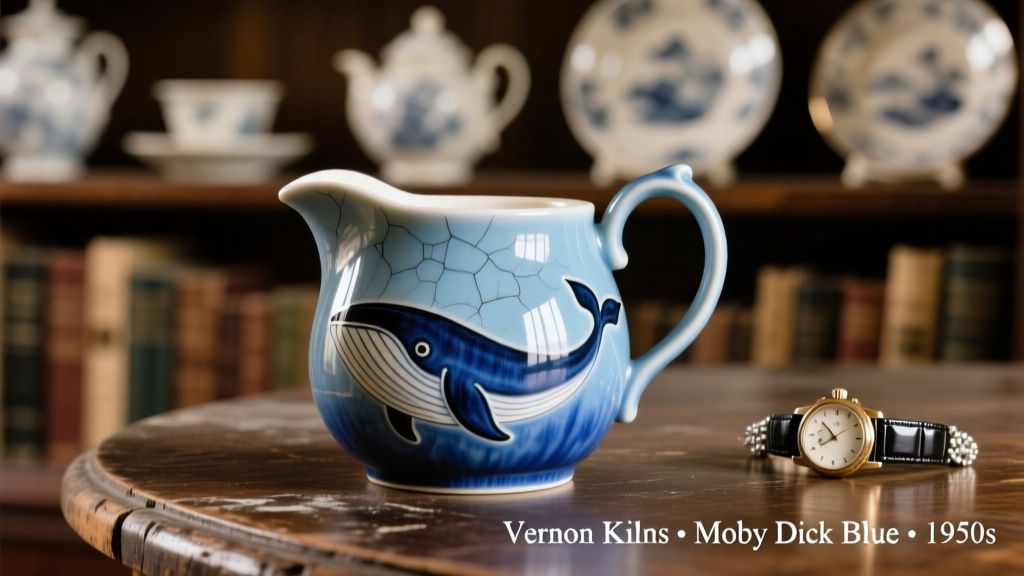
Vernon Kilns Sugar Creamer 'Moby Dick Blue': A Mid-Century Ceramic Masterpiece in Collectible Context
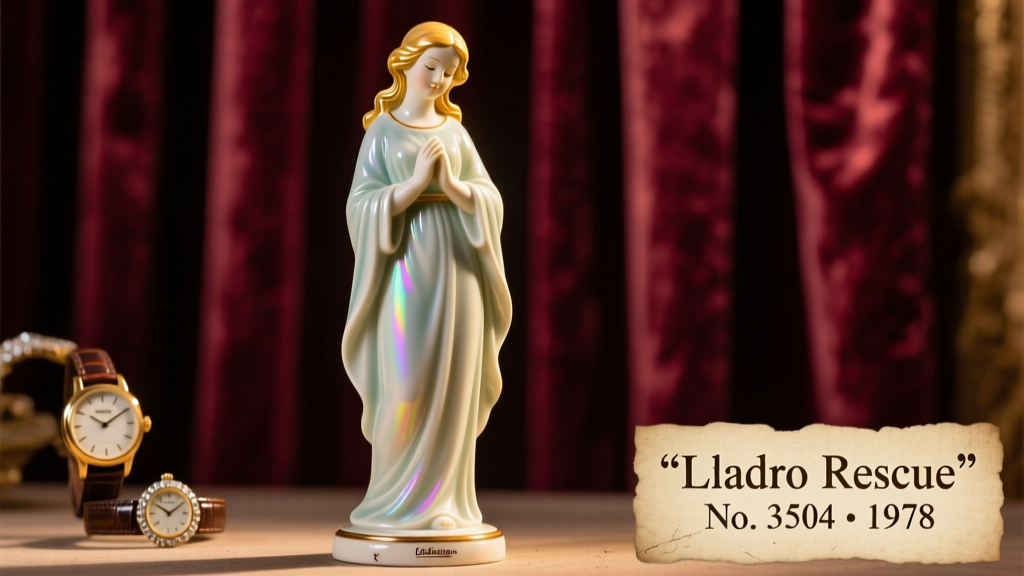
Lladró Figurine 'Rescue' No. 3504 (1978, 17 Inches): Provenance, Craftsmanship, and Market Significance
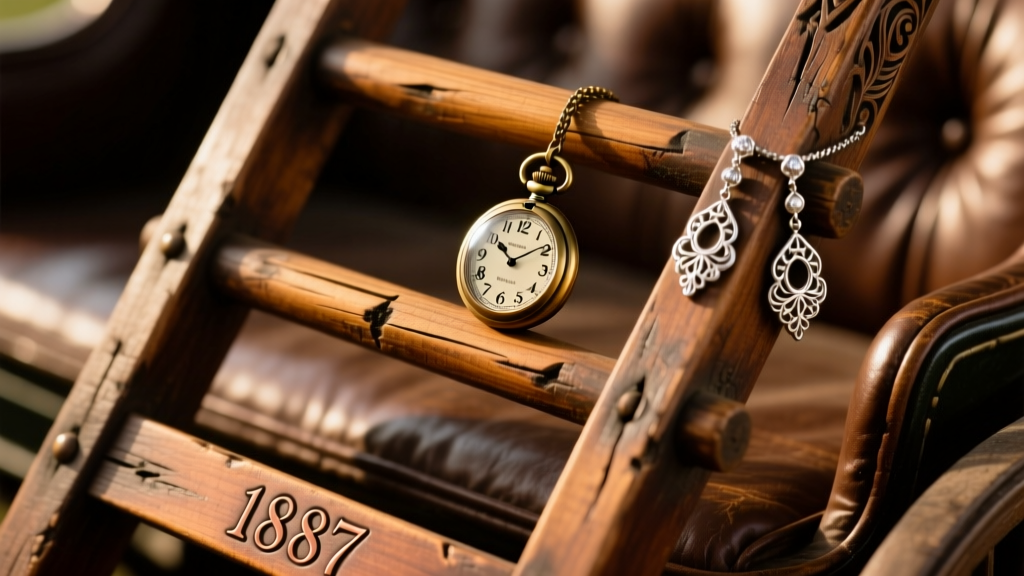
Carriage Wagon Seat Splint Seat with Three Ladders: A Technical and Historical Study of 19th-Century Coachwork Engineering
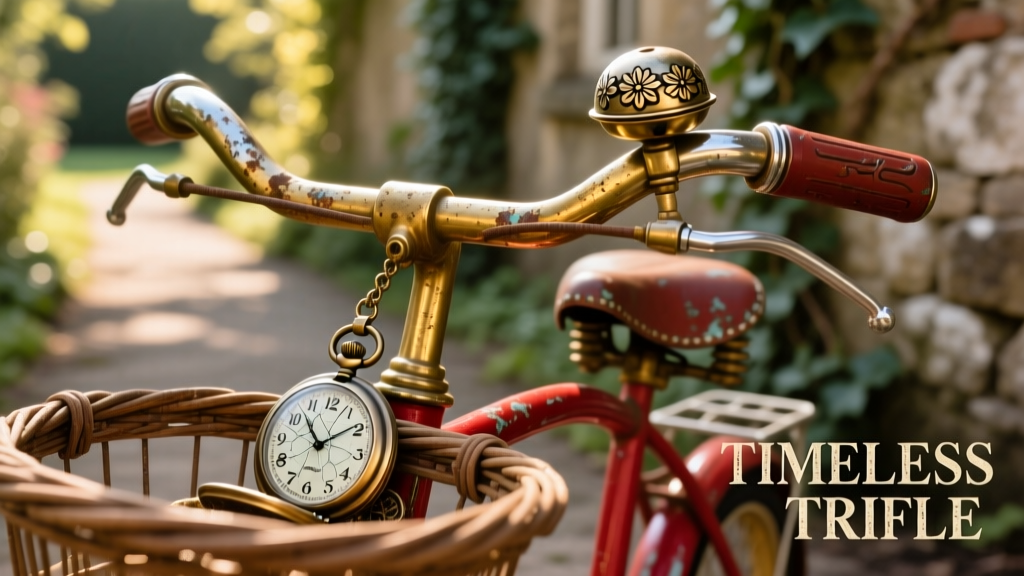
Tricycle: The Forgotten Icon of Early 20th-Century Mechanical Elegance in Horology and Jewelry