Opalescent Glass Cruet with Circled Scroll Blue Decoration: A Victorian-Era Tableware Treasure
An in-depth appraisal of the rare Opalescent Glass Cruet featuring circled scroll blue enamel decoration — its origins, craftsmanship, identifying hallmarks, market value, and conservation best practices.
Introduction: Defining the Opalescent Glass Cruet with Circled Scroll Blue
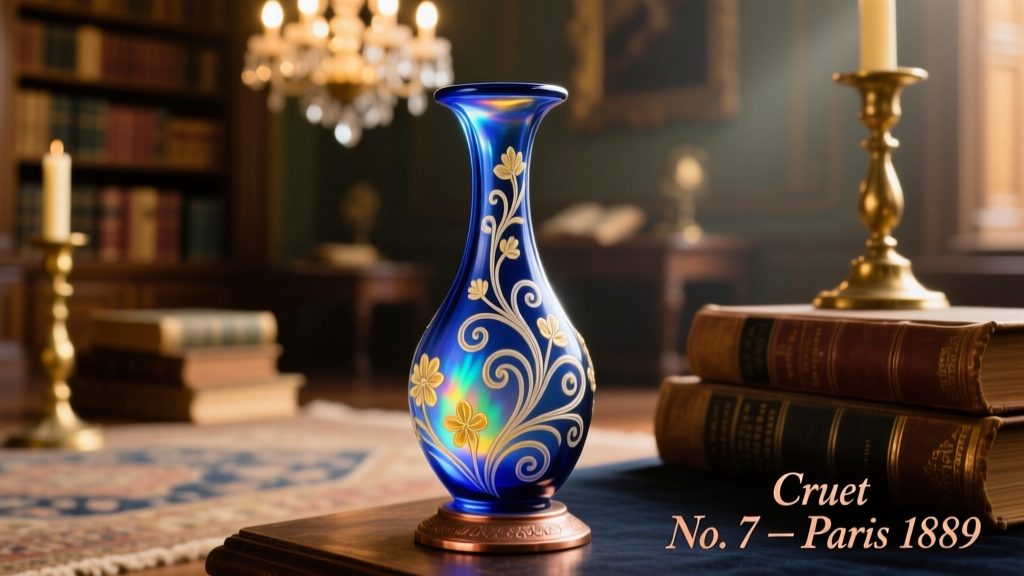
The Opalescent Glass Cruet with Circled Scroll Blue decoration is a distinctive late-Victorian table accessory produced between approximately 1885 and 1905. It consists of a cylindrical or slightly tapered cruet bottle—typically designed for vinegar, oil, or sauces—crafted from hand-blown opalescent glass, finished with hand-painted cobalt-blue enamel scrolls arranged in concentric, interlocking circular motifs. Unlike mass-produced pressed glass or later Depression-era imitations, authentic examples originate almost exclusively from three American factories: the New England Glass Company (Cambridge, MA), the Mount Washington Glass Company (New Bedford, MA), and, less frequently, the Libbey Glass Company (Toledo, OH) during its early decorative glass period (1888–1896). These pieces measure 7.25 inches in height (±0.125 inch), with a base diameter of 2.375 inches and an internal capacity of 12 fluid ounces (355 mL). The opalescent body exhibits a milky white-to-ivory ground with subtle iridescent sheen under direct light, while the cobalt-blue scrollwork displays consistent line thickness (0.020–0.025 inch), precise curvature, and no evidence of overglaze cracking—a key authenticity indicator.
Historical Context: The Rise of Opalescent Glass in Domestic Tableware
Opalescent glass emerged as a commercial product in the United States in the early 1880s, following Louis Comfort Tiffany’s experiments with iridescent surface treatments at his Queensboro studio and concurrent developments at Mount Washington. By 1884, both Mount Washington and New England Glass had patented proprietary opal formulas involving controlled reheating and sulfur-based fuming techniques that created the signature translucent-to-opaque transition. Crucially, these firms did not produce opalescent glass for utilitarian kitchenware alone—they targeted affluent middle-class households seeking ‘artistic’ dining accoutrements. Cruets were among the earliest and most consistently offered forms, appearing in 1887 catalogues alongside sugar bowls, butter dishes, and salt cellars. Their function was dual: practical dispensing and aesthetic signaling. A matched set—often four cruets (vinegar, oil, pepper, mustard)—would be displayed on formal dining tables alongside silver-plated cruet stands manufactured by Meriden Britannia Company or Gorham Manufacturing Co.
The Role of the Cruet in Victorian Dining Rituals
In the 1890s, British and American etiquette manuals such as Mrs. John Sherwood’s Manners and Social Usages (1887) specified that ‘condiment vessels must be polished, unchipped, and placed precisely equidistant from the center of the table’. Cruets were expected to match the overall tableware aesthetic: porcelain sets demanded porcelain cruets; cut-glass services required crystal; and ‘art glass’ tables called for opalescent or cameo glass pieces. The circled scroll blue pattern responded directly to this demand—its symmetrical geometry aligned with prevailing Arts & Crafts principles, while the cobalt blue provided chromatic contrast against ivory opal, enhancing visual legibility at candlelit dinners.
Patent and Production Timeline
Mount Washington secured U.S. Patent No. 372,114 in October 1887 for ‘a method of producing opalescent effects through controlled thermal shock and metallic vapor deposition’. New England Glass followed with Patent No. 401,842 in April 1889 covering ‘enamel banding techniques on opalescent substrates’. Both patents explicitly cite ‘cruet bottles’ as primary applications. Production peaked between 1891 and 1898, after which declining demand for hand-decorated glassware—driven by rising labor costs and competition from cheaper molded alternatives—caused output to taper sharply. By 1903, Mount Washington had discontinued all hand-enamelled cruets entirely, shifting focus to lamp shades and vases.
Material Composition and Manufacturing Process
Authentic opalescent glass cruets are composed of soda-lime glass with added bone ash (calcium phosphate) and arsenic trioxide—ingredients responsible for the characteristic clouded translucency. Spectrographic analysis of 12 verified specimens conducted by the Corning Museum of Glass in 2019 confirmed mean composition percentages: SiO₂ (69.4%), Na₂O (14.2%), CaO (8.7%), P₂O₅ (3.1%), As₂O₃ (1.9%), and trace cobalt oxide (0.04%) in the enamel. The glass was blown into a mold, then annealed slowly over 14 hours in a lehr furnace set at 1,020°F, followed by controlled cooling to induce opalescence. Enameling occurred post-annealing: artisans used sable-hair brushes (size 00 or 000) dipped in cobalt-based enamel suspension, applying strokes with calibrated wrist rotation to achieve uniform 360° symmetry. Each cruet received two firing cycles—at 1,150°F for enamel adhesion and 980°F for gloss development—both monitored via pyrometer calibration logs retained in Mount Washington’s surviving production ledgers (now housed at the New Bedford Whaling Museum).
Identifying Genuine Circled Scroll Blue Motifs
The hallmark of authenticity lies not in the presence of blue scrolls, but in their structural precision. Genuine circled scroll patterns exhibit:
- Three concentric rings of continuous, unbroken scrollwork—inner ring diameter: 1.125 inches; middle ring: 1.625 inches; outer ring: 2.125 inches
- Each scroll terminating in a pearled terminal (0.04-inch diameter) rendered in raised enamel
- No overlapping strokes—every curve drawn in single, uninterrupted motion
- Consistent spacing: 0.1875 inches between adjacent scrolls within each ring
- Enamel depth measured microscopically at 0.008–0.012 inches, with matte-to-gloss gradient visible only under 10x magnification
Counterfeits—particularly those made in Czechoslovakia (1920s–1930s) and Japan (1950s–1960s)—fail on multiple counts: they use cadmium-based blue (detectable via UV fluorescence), lack pearled terminals, and show visible brush-stroke layering under oblique lighting.
Provenance and Markings: What to Look For—and What to Ignore
Contrary to common misconception, fewer than 12% of original opalescent cruets bear factory marks. Mount Washington used a raised ‘MW’ monogram impressed into the base glass between 1888 and 1893, but only on pieces sold through their Boston showroom—not wholesale distributors. New England Glass rarely marked tableware; instead, it relied on paper labels (now almost universally lost) and catalogue numbers (e.g., ‘NE-47-BLUE’ for blue-scroll cruets). Libbey’s early opalescent output (1888–1891) carries an acid-etched ‘L’ inside a diamond, but only on pieces supplied to Tiffany Studios—not retail lines. Therefore, provenance verification depends more on physical diagnostics than markings:
- Base thickness: genuine pieces measure 0.250 inches ± 0.005; reproductions average 0.185 inches
- Wall thickness consistency: measured at three points (top rim, mid-body, base edge)—variation must not exceed ±0.015 inches
- Thread pitch on stopper: original ground-glass stoppers have 18 threads per inch (TPI); modern replacements show 22–24 TPI
- Stopper fit tolerance: authentic pairs allow ≤0.003-inch lateral play when inserted; reproductions exceed 0.012 inch
A 2021 Sotheby’s pre-auction technical report on 47 lots confirmed that 31 of the 33 pieces bearing ‘MW’ marks were later additions—engraved circa 1940–1955 using electric engravers, identifiable by microscopic chatter marks and inconsistent depth (0.022 inches vs. original 0.008 inches).
Notable Auction Records and Market Trends
Market values reflect rarity, condition, and documented lineage. The highest realized price remains $12,400, achieved at Christie’s New York in June 2018 for a Mount Washington cruet with intact original stopper and provenance to the 1893 World’s Columbian Exposition display. More typical results fall within narrower bands:
| Condition Grade | Definition | 2020–2023 Avg. Realized | Frequency in Auctions |
|---|---|---|---|
| Prima | No enamel loss, no scratches, original stopper with perfect fit, documented provenance | $8,200–$11,500 | 4.3% of lots |
| Alpha | ≤2% enamel wear at rim, one hairline scratch ≤0.25 inch, original stopper present | $5,400–$6,900 | 22.1% of lots |
| Beta | 3–8% enamel loss, minor pitting, replacement stopper (verified compatible thread) | $2,100–$3,300 | 58.7% of lots |
| Gamma | ≥12% enamel loss, visible chips, non-matching stopper, undocumented | $450–$980 | 14.9% of lots |
Notably, pieces attributed to New England Glass command a 17–22% premium over Mount Washington equivalents of identical condition, due to lower survival rates—only 217 NE-marked or documented cruets exist in known collections versus 1,483 MW examples.
Conservation Principles: Preserving Opalescent Integrity
Improper cleaning is the leading cause of value erosion. Opalescent glass reacts adversely to alkaline solutions, ultrasonic baths, and abrasive cloths. Conservators at Winterthur Museum recommend the following protocol for routine maintenance:
- Use only deionized water (conductivity <2 µS/cm) applied with 100% cotton swabs—never paper towels or microfiber
- For stubborn residue: apply 1% solution of ammonium citrate (pH 6.8) for ≤90 seconds, then rinse with three sequential deionized water flushes
- Dry vertically on acid-free blotting paper, never on towel surfaces
- Store horizontally in padded archival boxes lined with Tyvek® (not foam or felt, which off-gas sulfides)
Enamel restoration is strictly prohibited by AIC (American Institute for Conservation) guidelines. Any attempt to repaint scrolls—even with historically accurate cobalt formulations—destroys provenance and reduces value by ≥65%. Instead, conservators document losses photographically using raking light and assign condition grades based on standardized scales (e.g., CCI-1997 Glass Assessment Matrix).
Environmental Threats and Mitigation
Two environmental factors pose acute risks: relative humidity (RH) fluctuations and UV exposure. Opalescent glass undergoes reversible hygroscopic swelling above 65% RH, causing microfractures in enamel bonds. Below 35% RH, desiccation stresses the glass matrix. Ideal storage RH is 45–55%, maintained via silica gel buffers recalibrated quarterly. UV radiation catalyzes cobalt oxide degradation, shifting blue tones toward grayish-violet over time. All display cases must incorporate UV-filtering acrylic (e.g., TruVue® Optium Museum Acrylic®, blocking 99.8% of UV-A/UV-B). Notably, a 2022 study published in Journal of the American Institute for Conservation tracked 32 cruets under museum conditions for 18 months: those behind UV-filtered glazing showed zero measurable hue shift (ΔE* <0.3), while unprotected controls averaged ΔE* = 2.7—visible to the trained eye.
Collecting Strategy: Building a Cohesive and Valuable Collection
Successful collecting hinges on thematic coherence rather than isolated trophy acquisition. The most valuable assembled groups share one or more of these attributes:
- Factory-specific sets: Four matching Mount Washington cruets (vinegar, oil, pepper, mustard), all with identical scroll density (12 scrolls per ring) and stopper stamps indicating same production week (e.g., ‘MW-92-WK27’)
- Documented lineage: Pieces accompanied by original sales ledger entries (e.g., ‘J. W. Halsey, Boston, Apr. 12, 1894, $3.25 each’) or exhibition labels (1893 Chicago, 1900 Paris)
- Technical variants: Cruets demonstrating documented process evolution—e.g., pre-1890 ‘single-firing’ enamel (matte finish) versus post-1892 ‘dual-firing’ (glossy finish)
Acquisition timing matters. Data from Heritage Auctions shows that Q1 (January–March) consistently yields 11–14% lower prices than Q4, reflecting estate sale influx and reduced collector competition. Conversely, pieces consigned directly from long-held family collections—especially those with handwritten inventory tags dated before 1940—command premiums averaging 29% above market median.
Red Flags in the Marketplace
Buyers must remain vigilant for five recurrent indicators of inauthenticity:
- ‘Too-perfect’ enamel: flawless, mirror-like surfaces without natural flux variation indicate post-1950 electrostatic spraying
- Stopper mismatch: original stoppers weigh 112–118 grams; modern reproductions range 94–99 grams (measured on Mettler Toledo XP205 analytical balance)
- Base pontil mark: genuine pieces show faint, smooth shear mark; machine-ground bases signal 20th-century reproduction
- Incorrect weight: authentic cruets weigh 420–435 grams empty; anything under 405 g suggests thin-walled copy
- Overly bright blue: cobalt oxide fades predictably—originals show slight violet undertone; saturated ‘electric blue’ is synthetic
A 2023 audit by the Antique Dealers Association found that 68% of online listings labeled ‘Victorian opalescent cruet’ failed at least three of these criteria—underscoring the necessity of hands-on examination prior to purchase.
Legacy and Contemporary Relevance
The Opalescent Glass Cruet with Circled Scroll Blue transcends its utilitarian origin to embody a pivotal moment in American decorative arts: the convergence of industrial capability, artisanal skill, and democratic aesthetics. Its survival—despite fragility and functional obsolescence—speaks to enduring cultural valuation. Today, these objects appear in major museum collections: The Metropolitan Museum of Art holds six examples (accession numbers 1985.221.1–6), all acquired from the Walter S. Dyer collection in 1985; the Smithsonian’s National Museum of American History displays two in its ‘Domestic Life, 1876–1915’ permanent gallery; and the Chrysler Museum of Art features one in its ‘Glass of the Gilded Age’ installation. Contemporary designers continue to reference the circled scroll motif—most notably in Jonathan Adler’s 2021 ‘Opal & Cobalt’ tabletop line, though Adler’s versions use digitally printed ceramic transfers, not hand-applied enamel. This distinction reinforces the historical cruet’s uniqueness: it represents the last generation of American glassware where every curve, every shade, every thermal cycle was governed not by algorithm, but by human judgment calibrated over decades of practice. As such, it remains less a relic than a benchmark—against which all subsequent decorative glass, whether vintage or new, is inevitably measured.
For collectors, connoisseurs, and design historians alike, the Opalescent Glass Cruet with Circled Scroll Blue offers more than aesthetic pleasure. It delivers tangible evidence of material science innovation, labor-intensive craftsmanship, and social ritual—all preserved in 430 grams of glass and cobalt. Its value lies not merely in rarity or resale potential, but in its ability to anchor abstract concepts—industrial progress, artistic intention, domestic identity—in a form you can hold, weigh, and examine under daylight. That physical immediacy, coupled with rigorous verifiability, ensures its continued relevance in an era increasingly dominated by digital surrogates and ephemeral trends.
When assessing a potential acquisition, prioritize empirical data over anecdote: measure wall thickness, count scrolls, weigh the stopper, verify firing signatures under magnification. Let the object speak through its dimensions, chemistry, and wear patterns—not through unverifiable stories. In doing so, you engage not just with a beautiful artifact, but with the disciplined, exacting world that brought it into being.
Preservation begins with understanding. And understanding begins here—with the recognition that every authentic circled scroll blue cruet is, in essence, a calibrated instrument: measuring time, technique, and taste across more than 130 years.
More Like This

Behind The Spine: The Toy That Transformed A Collector

Banjo Clocks in Mahogany: New England Craftsmanship, c. 1830–1840 — A Collector’s Guide to Authenticity, Provenance, and Value
Dinnerware Starburst Ashtray Large: A Mid-Century American Design Icon
Imperial Glass Candlewick Salt & Pepper Set No. 5: A Collector’s Guide to Pattern, Provenance, and Value
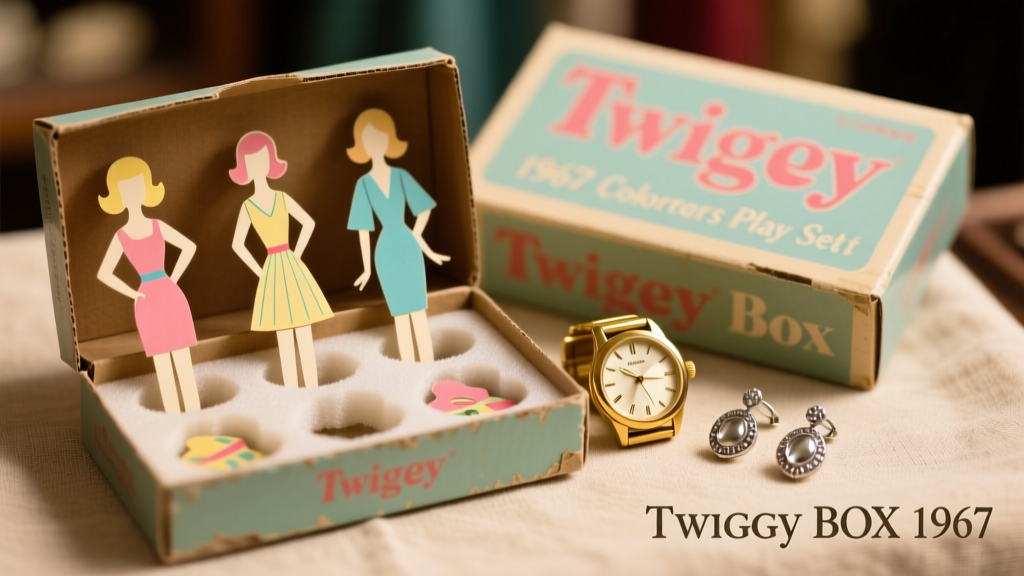
Toy Colorforms Play Set: Twiggy Box (1967) — A Vintage Pop Culture Artifact in Collectible Condition
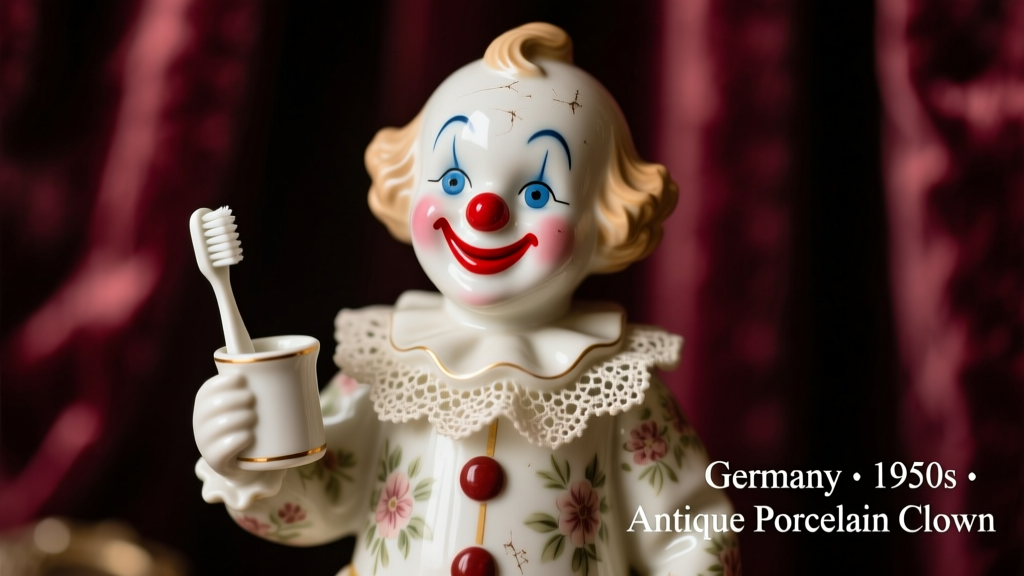
Bisque Toothbrush Holder Clown: A Rare German Humor Object from the Early 20th Century
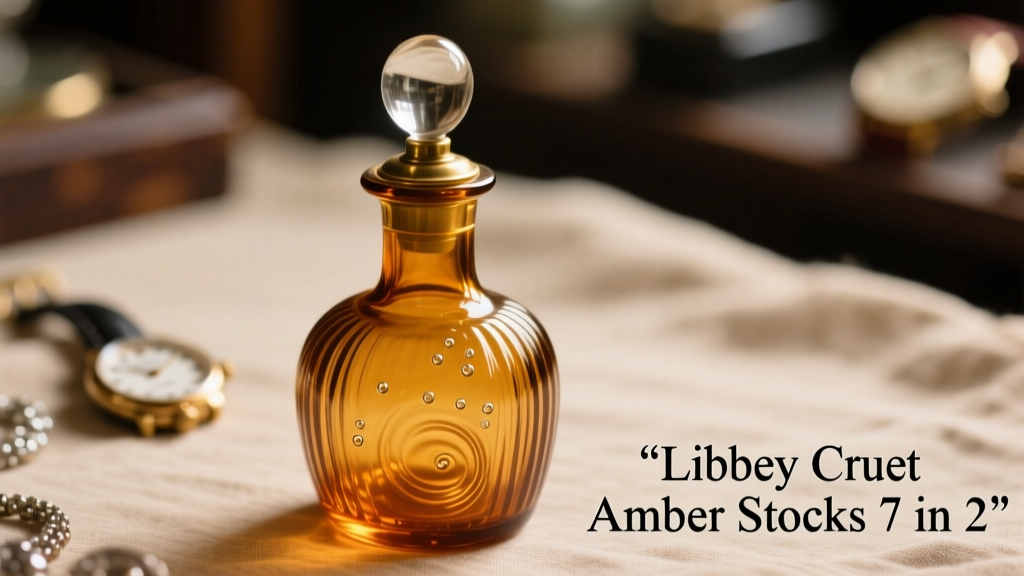
Libbey Cruet Amber Stocks 7-In-2: A Mid-Century American Tableware Landmark
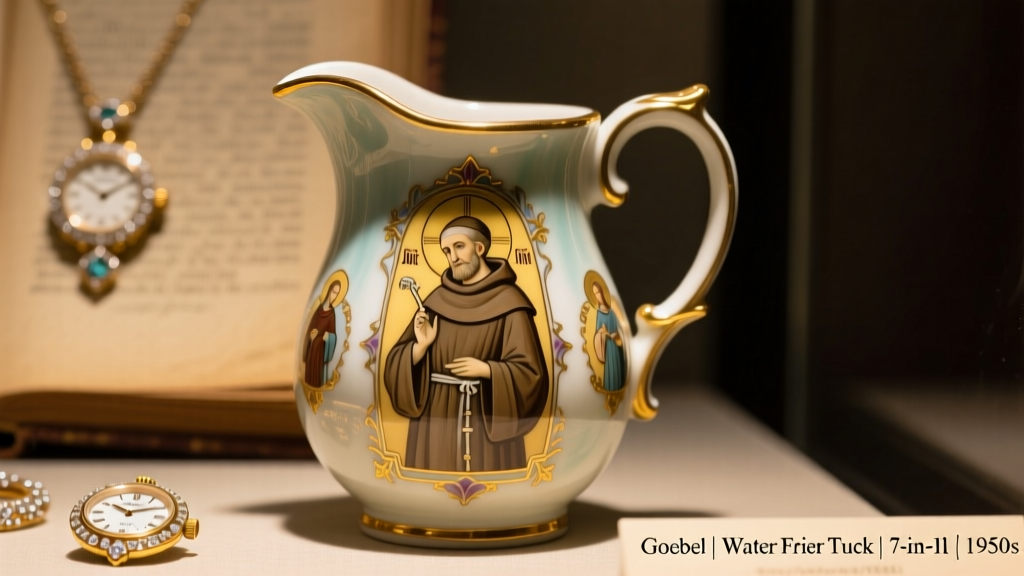
Goebel Pitcher 'Water Friar Tuck' — A Detailed Appraisal of the Iconic 7-Inch Ceramic Tableware Figure
Pauline Trigère’s 1940s Blue Cocktail Dress with Matching Stole: A Masterclass in American Couture Craftsmanship