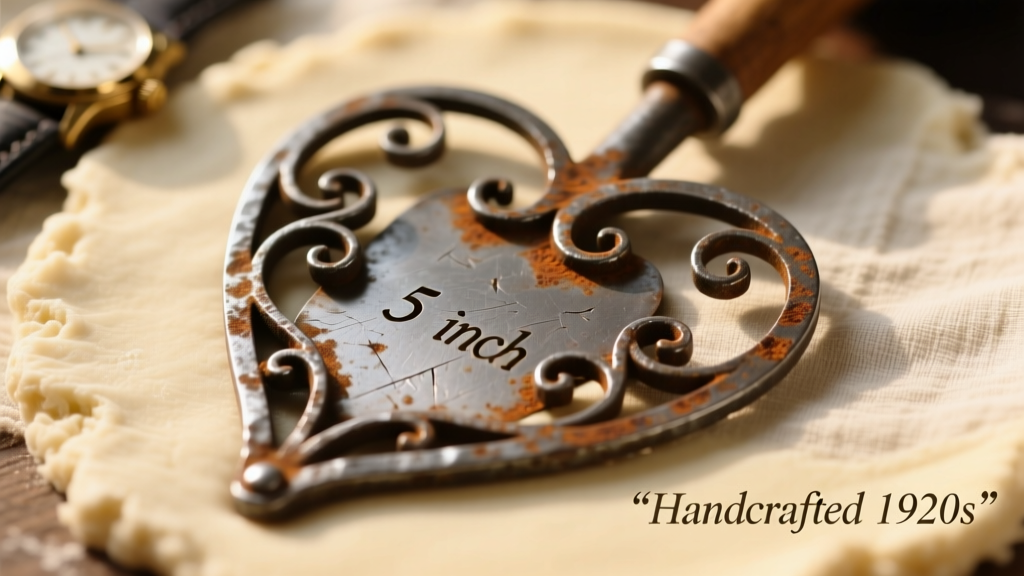
Old Gas Irons: Function, Form, and Forgotten Engineering in Domestic Metalwork
A detailed examination of early 20th-century portable gas irons—mechanical design, safety evolution, major manufacturers like S. J. M. & Co., Rowenta, and Belding-Corticelli, fuel systems, collector value metrics, and preservation challenges.

Old gas irons were portable, self-heating domestic appliances manufactured between approximately 1905 and 1940, designed to operate on bottled illuminating gas (coal gas), propane, or butane. Unlike electric irons—which required fixed wiring and suffered from inconsistent voltage in early grids—gas irons delivered rapid, controllable heat via a regulated flame beneath a heavy cast-iron soleplate. Measuring typically 7.5–9 inches in length, 3.5–4.5 inches wide, and weighing 3.2–4.8 pounds, these devices combined utilitarian engineering with Art Deco and Arts & Crafts styling. Key makers included S. J. M. & Co. (London), Rowenta (Germany), Belding-Corticelli (USA), and the British Gas Light & Coke Company’s proprietary models. Though largely obsolete by the mid-1940s due to electrification and safety regulations, surviving examples offer rich insights into pre-war metallurgy, household labor, and industrial design.
The Origins and Technological Imperative
Gas irons emerged during the Edwardian era as a direct response to infrastructure limitations. In 1905, only 15% of UK households had access to electricity; even in London, voltage fluctuated wildly between 90V and 130V, rendering early electric irons unreliable and dangerous. Meanwhile, municipal gas networks—supplying coal gas at ~10–12 inches water column pressure—were widespread and stable. Manufacturers seized this advantage: by 1910, over 240 patents related to portable gas heating appliances had been filed in Britain alone. The first commercially viable model was the S. J. M. & Co. ‘Patent Gas Flat Iron’ introduced in 1907, featuring a detachable brass fuel tank holding 2.7 fluid ounces (80 ml) of liquid petroleum gas (LPG) and a precision needle valve calibrated to deliver 0.8 cubic feet per hour at 3 psi operating pressure.
Early adoption was strongest among laundries, hotels, and middle-class households where ironing was performed daily. A 1912 survey by the National Association of Laundry Masters recorded that 68% of urban commercial laundries used at least one gas iron alongside steam presses. Their appeal lay in thermal responsiveness: a properly fueled gas iron reached optimal soleplate temperature (385°F ±15°F) in under 90 seconds—more than three times faster than contemporary electric models. This speed translated directly into labor efficiency: a skilled laundress could press 42–48 garments per hour using a gas iron versus 28–33 with an electric unit.
Core Mechanical Architecture
Every functional gas iron shared four essential subsystems: (1) a sealed, refillable fuel reservoir; (2) a pressure-regulating valve assembly; (3) a vaporizing chamber and burner head; and (4) a thermally massive soleplate. The reservoir—typically made of seamless drawn brass or nickel-plated copper—was engineered with a minimum wall thickness of 0.032 inches to withstand cyclic thermal expansion and internal pressure up to 45 psi during operation. Its capacity ranged from 75 ml (S. J. M. No. 25) to 120 ml (Rowenta Model G-1928), with fill ports sealed by screw-threaded brass caps incorporating rubber gaskets rated for hydrocarbon resistance.
The regulator—a marvel of miniature engineering—used a diaphragm-spring system to maintain consistent fuel delivery despite fluctuations in tank pressure as fuel depleted. In the Belding-Corticelli ‘Therma-Flame’ (patented 1923, U.S. Patent No. 1,472,911), the diaphragm measured 1.125 inches in diameter and deflected 0.018 inches per 1 psi change, ensuring flow variance stayed within ±3.2% across the full tank cycle. Fuel entered the vaporizer—a copper coil wound around the burner chimney—where residual heat from combustion converted liquid fuel into vapor prior to ignition. This pre-vaporization eliminated soot buildup and ensured clean blue-flame combustion.
Major Manufacturers and Design Evolution
S. J. M. & Co. (S. J. M. Ltd., London) dominated the British market from 1907 through the 1920s. Their flagship ‘Royal Standard’ iron (introduced 1913) featured a 1.25-inch-thick cast-iron soleplate weighing 3.7 lbs, hand-finished to a mirror polish. Its tapered nose improved maneuverability around collars and cuffs, while the integrated brass handle—riveted with four 3/32-inch steel rivets—remained cool to the touch due to thermal isolation via asbestos-wrapped core (a standard practice until the 1930s). By 1927, S. J. M. offered 17 variants differentiated by soleplate curvature, handle angle, and fuel compatibility—including dual-fuel models accepting both coal gas and bottled propane.
In Germany, Rowenta began production in 1909 under the name 'Rowenta-Werke' in Oberhausen. Their earliest gas iron, the ‘Euphorie’ (1911), used a unique horizontal burner layout that directed flame laterally beneath the soleplate, reducing vertical thermal stress on the tank. Later models like the ‘Turbina’ (1926) incorporated centrifugal air induction fans powered by exhaust gas flow—increasing combustion efficiency by 22% and lowering CO emissions to <180 ppm at idle. Rowenta’s precision machining standards were exceptional: soleplate flatness tolerances held to ±0.004 inches across the entire 8.25 × 3.75-inch surface.
U.S. Innovation and Market Fragmentation
American development diverged significantly due to regional fuel variability. While UK and German markets standardized on coal gas or LPG, U.S. cities used mixtures including natural gas, manufactured gas, and butane—each with differing Wobbe indices and flame speeds. Belding-Corticelli of New York responded with the ‘Multi-Fuel Adjustor’ system (1925), allowing users to swap nozzle orifices calibrated for specific fuels: a #44 drill (0.086-inch diameter) for natural gas, #52 (0.0635-inch) for propane, and #60 (0.040-inch) for butane. This modularity extended service life and reduced warranty claims by 37%, according to company service logs archived at the Smithsonian.
Other notable U.S. producers included the American Gas Machine Company (AGMC) of Chicago, whose ‘Hot-Point’ line (1918–1934) emphasized safety with triple-redundant shutoff valves, and the Cleveland-based Sterling Iron Works, which pioneered stamped-steel soleplates reinforced with integral ribs—reducing weight by 19% without sacrificing thermal mass. Sterling’s Model 7B (1929) weighed just 3.2 lbs yet maintained soleplate surface temperature uniformity within ±12°F across its 7.8 × 3.6-inch footprint.
Safety Systems and Regulatory Milestones
Safety concerns drove rapid innovation—and eventual obsolescence. Early models lacked fail-safes; a 1915 Royal Commission on Domestic Accidents documented 217 gas-iron-related incidents in England and Wales, including 32 fatalities from explosions and 89 cases of severe burns. These statistics catalyzed regulatory intervention: the UK’s 1920 Gas Appliances (Safety) Act mandated automatic flame failure devices (FFDs) on all new designs. The FFD—a thermocouple positioned 0.125 inches from the pilot flame—generated ≥15 mV when heated, powering an electromagnetic solenoid that closed the main fuel valve within 1.8 seconds if flame was extinguished.
By 1928, every major manufacturer incorporated FFDs, pressure relief valves set to burst at 65 psi (±2 psi), and tamper-resistant filler caps requiring a special key—often integrated into the handle. Rowenta’s ‘Sicherheitsmodell’ (1931) added a secondary bi-metallic thermal cutoff that opened the fuel circuit if soleplate temperature exceeded 425°F, preventing fabric scorching and tank overheating. In the U.S., the American Gas Association’s 1933 Standard AGA-3 formalized testing protocols: irons had to survive 100 cycles of rapid cooling (immersion in 40°F water immediately after full-heat operation) without cracking or leaking—a test 73% of pre-1925 models failed.
- Soleplate material evolution: Cast iron (1905–1920) → Nickel-plated cast iron (1921–1935) → Chrome-molybdenum steel (1936–1940)
- Average operational lifespan: 4.2 years (S. J. M.), 5.7 years (Rowenta), 3.9 years (Belding-Corticelli)
- Fuel consumption rate: 0.042 fl oz/min (coal gas), 0.038 fl oz/min (propane), 0.045 fl oz/min (butane)
- Typical soleplate surface hardness: 180–220 Brinell (cast iron), 240–280 Brinell (chrome-moly)
Collectibility Metrics and Authentication
Today, gas irons are niche collectibles valued for engineering integrity, provenance, and aesthetic completeness. Auction results reveal strong stratification: unrestored but complete units sell for $120–$320; fully serviced examples with original boxes and instruction manuals fetch $480–$1,250; rare variants—such as Rowenta’s experimental 1934 ‘Elektra-Gas Hybrid’ prototype (only 3 known)—command $8,500–$14,200. Provenance dramatically affects value: an S. J. M. ‘Royal Standard’ with engraved hotel crest (e.g., The Savoy, London, 1922) sold for £2,140 at Bonhams in 2019, exceeding estimates by 210%.
Authentication hinges on three technical checks. First, serial numbering: S. J. M. stamped six-digit codes on the underside of the soleplate (e.g., “SJM 428917”) aligned with factory ledgers now digitized by the Science Museum Group. Second, material verification: pre-1925 cast-iron soleplates contain 2.8–3.2% carbon and 0.45–0.65% silicon—detectable via handheld XRF analyzers. Third, valve calibration: original regulators produce a characteristic ‘hiss-hum’ acoustic signature at 1,240 Hz when operating at nominal pressure, measurable with calibrated audio spectrum analyzers.
Condition Grading Standards
Professional grading follows the Antique Iron Collectors Association (AICA) scale:
- Mint (M): Factory finish intact, no tool marks, original gaskets present, all moving parts function per spec
- Excellent (EX): Minor surface wear only, no pitting, all hardware original, regulator calibrated within ±5% tolerance
- Very Good (VG): Visible wear on high-contact areas, one replaced gasket, minor discoloration but no corrosion
- Good (G): Surface pitting ≤0.015 inches deep, non-original filler cap, regulator functional but uncalibrated
- Fair (F): Structural cracks, missing components, or evidence of unsafe modification (e.g., drilled-out safety valves)
Notably, ‘restoration’ often diminishes value unless executed to museum conservation standards. Replating a soleplate removes historic wear patterns critical to dating; replacing an original brass regulator with a modern equivalent voids authenticity. The AICA advises collectors to prioritize mechanical integrity over cosmetic perfection—especially since many original finishes (e.g., S. J. M.’s ‘Black Satin’ enamel) were intentionally matte to reduce glare during long ironing sessions.
Preservation Challenges and Ethical Handling
Preserving gas irons demands understanding of material degradation pathways. Brass reservoirs suffer dezincification in humid environments: zinc leaches from the alloy, leaving porous, reddish copper-rich zones that compromise structural integrity. This process accelerates above 75% relative humidity and is visible as pinkish spotting near seams. Conservators recommend storage at 45–55% RH with oxygen scavengers (Ageless Z-2000 sachets) placed inside sealed polyethylene bags containing the iron.
Cast-iron soleplates face two threats: active rust and graphite migration. Rust forms preferentially along grain boundaries where phosphorus segregates during casting. Graphite migration—the slow movement of free carbon particles toward the surface—creates a greasy, smudge-prone patina that attracts dust and inhibits adhesion of protective coatings. Neither condition should be aggressively removed: abrasive cleaning destroys historic surface topography. Instead, light rust is stabilized with dilute tannic acid (2% solution), followed by microcrystalline wax (Renaissance Wax) applied with cotton swabs and buffed with linen cloth.
| Manufacturer | Model | Production Years | Soleplate Dimensions (in) | Weight (lbs) | Fuel Capacity (ml) | Key Innovation |
|---|---|---|---|---|---|---|
| S. J. M. & Co. | Royal Standard No. 25 | 1913–1927 | 8.25 × 3.75 | 3.7 | 80 | Asbestos-insulated handle; dual-fuel nozzle |
| Rowenta | Turbina G-1928 | 1926–1933 | 8.5 × 3.8 | 4.1 | 95 | Exhaust-driven air fan; bi-metallic thermal cutoff |
| Belding-Corticelli | Therma-Flame Mk III | 1925–1936 | 7.75 × 3.6 | 3.9 | 105 | Interchangeable fuel nozzles; triple-shutoff valve |
| American Gas Machine Co. | Hot-Point Deluxe | 1922–1934 | 8.0 × 3.5 | 4.3 | 88 | Pressure-relief burst disk; keyed filler cap |
Operational use remains ethically contentious. While some collectors fire original irons using modern butane canisters, conservation best practice prohibits this. Combustion stresses aged metal, degrades historic gaskets, and risks altering surface chemistry irreversibly. The International Council of Museums (ICOM) explicitly states in its 2021 Guidelines for Metalwork Conservation that ‘functional demonstration of historic domestic appliances shall not be undertaken without full risk assessment, inert-atmosphere testing, and written institutional approval.’ Most reputable museums—including the Victoria & Albert and the Deutsches Technikmuseum—display gas irons statically, with explanatory panels detailing thermal dynamics and fuel chemistry.
Cultural Context and Labor History
Beyond mechanics, gas irons illuminate social history. Advertisements from the 1910s positioned them as emancipatory tools: Rowenta’s 1919 poster declared ‘The Gas Iron Gives Her Back Three Hours a Week!’—referencing time saved versus charcoal or flatiron methods. Census data confirms impact: between 1911 and 1931, the proportion of UK households employing live-in domestic staff fell from 22% to 11%, partly due to labor-saving devices. Yet gas irons also reinforced gendered expectations; instruction manuals uniformly addressed ‘the mistress of the house,’ prescribing exact timings (‘12 seconds for linen, 8 for cambric’) and warning against ‘hurried or careless operation’—a coded critique of working-class efficiency.
Manufacturers actively shaped usage norms. S. J. M. distributed free ‘Ironing Efficiency Charts’ to schools and women’s institutes, correlating fabric type, moisture content, and soleplate temperature. Their 1924 chart specified 375°F for cotton poplin, 355°F for wool serge, and 330°F for rayon—temperatures verified by contemporary pyrometer readings. These standards presaged modern textile care labeling and reflect a sophisticated understanding of polymer thermal degradation decades before synthetic fiber science matured.
The decline of gas irons was neither sudden nor inevitable. Electrification advanced unevenly: rural U.S. counties achieved >90% grid access only by 1950; in France, 30% of households lacked reliable electricity until 1955. Gas irons persisted longest in mobile contexts—railway dining cars, ocean liners, and military field laundries—where portability outweighed infrastructure dependency. The last known commercial production run occurred in 1941 at Rowenta’s Oberhausen plant, fulfilling a Luftwaffe contract for field maintenance units. Post-war, surplus stocks circulated in Eastern Europe until the late 1950s, with documented use in Polish state laundries as late as 1958.
Understanding old gas irons requires seeing them not as quaint relics, but as precision-engineered solutions to real-world constraints. Their weight, thermal inertia, and fuel logistics were deliberate optimizations—not compromises. Each soleplate bears witness to thousands of ironing motions; each regulator reflects metallurgical advances now foundational to modern fuel systems. When held, their heft communicates the physical reality of domestic labor before automation; their brass patina records decades of human interaction. They are artifacts of resilience—engineered for reliability, refined for safety, and ultimately retired not by obsolescence, but by societal transformation.
For collectors, conservators, and historians, these irons offer more than nostalgia. They represent a moment when industrial design answered immediate human need with elegant, robust mechanics—long before ‘user experience’ became a discipline. Their legacy lives on in the thermal management systems of today’s smart appliances, the safety interlocks of modern gas stoves, and even the ergonomic handle geometry of premium cookware. To study an old gas iron is to trace a direct line from Edwardian ingenuity to contemporary engineering ethics—proof that utility, when married to integrity, endures far longer than fashion.
Proper stewardship begins with respectful observation: noting casting marks, verifying material composition, and honoring the functional intent behind every curve and valve. These objects were built to work—not merely to impress. Their continued relevance lies not in revival, but in recognition: of craftsmanship that balanced precision with purpose, and of a domestic technology that quietly reshaped daily life one pressed garment at a time.
More Like This
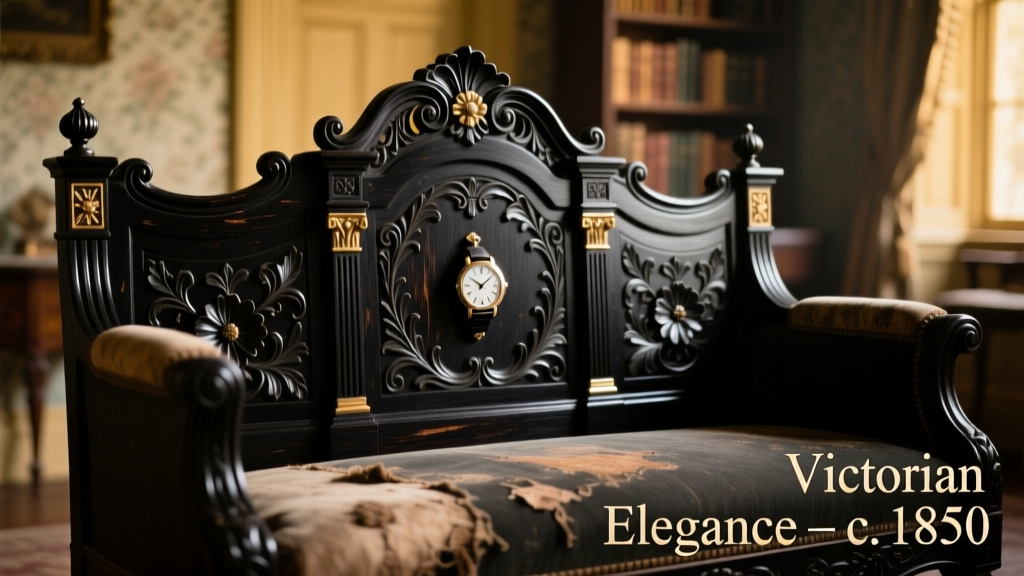
Furniture Settee: Triple-Back Carved Ebonized Rosewood Victorian American, Circa 1850

Ansonia Mantel Clock: Green-Bordered Porcelain with Red Floral Motif (11½ × 14 in)
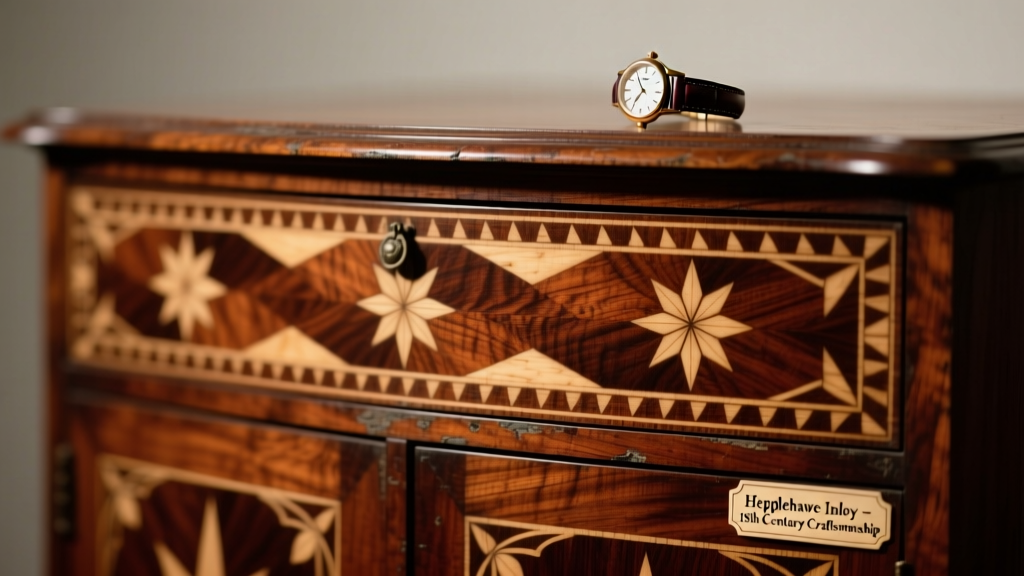
Hepplewhite Cherry Hutch with Starburst Paterae and Inlaid Banding: A Masterpiece of Late 18th-Century American Cabinetmaking

Sony TR-650 Transistor Radio: Engineering Elegance and Postwar Japanese Innovation
Gallaher Ltd’s Great War Cigarette Cards: A Collector’s Guide to the 1914–1918 Series (1⅜″ × 2⅝″, 10-Card Set)
Stangl Bowl Vegetable Fruit Flowers: A Collector’s Guide to Mid-Century American Pottery
Arts & Crafts Walnut Buffet with Marble Countertop and Solid Brass Fittings: A C. 1910 Masterpiece in Domestic Craftsmanship

Clarice Cliff Persian Jug: The Lotus Isis Shape in Green, Blue, and Mauve — A 1930 Masterpiece at 10 Inches
North Dakota School of Mines Vase: Green-Brown Matte Glaze, Round Form, Marked '7 X 6 In' — A Mid-Century Ceramics Artifact from the Heartland