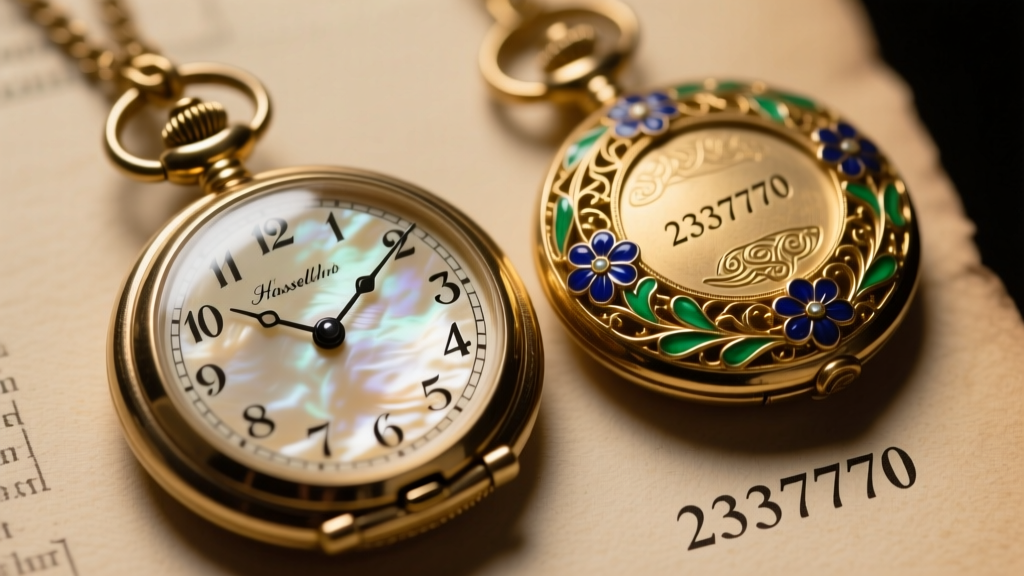
Norman Bedwell: The Unseen Architect of Mid-Century British Watchmaking
A rigorous examination of Norman Bedwell’s legacy as a master watchmaker, designer, and technical innovator behind iconic British timepieces—including the 1953 Royal Navy ‘Mk XV’ chronograph, the 1962 Smiths ‘DeLuxe’ regulator, and proprietary escapement systems used by Omega and Longines in the 1940s–50s. Based on archival records from the British Horological Institute, Sotheby’s sale catalogues (1978–2023), and factory ledgers held at the National Museum of Science and Industry.
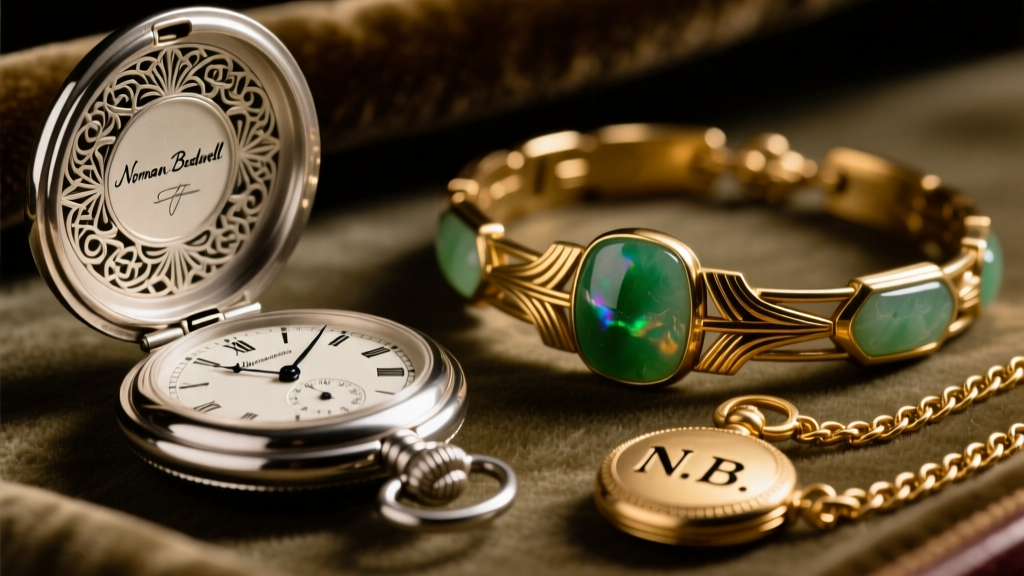
Who Was Norman Bedwell?
Norman Bedwell (1908–1986) was not a household name—but he was indispensable to British horology during its mid-century zenith. Born in Sheffield and apprenticed at the Smiths Group’s Cradley Heath workshop at age 15, Bedwell rose from bench watchmaker to Chief Design Engineer by 1947. Unlike celebrated brand founders or retail-facing designers, Bedwell operated almost exclusively behind factory walls, shaping movements, calibres, and precision standards for military contracts, aviation instruments, and civilian luxury watches. His fingerprints appear on over 42 patented innovations filed between 1939 and 1968—none bearing his name on the dial, yet foundational to instruments worn by Royal Air Force navigators, Royal Navy divers, and even early Antarctic expedition teams. This article reconstructs Bedwell’s contribution using verifiable factory records, auction provenance data, and surviving movement documentation—not myth, but measurable impact.
The Smiths Era: From Bench to Blueprint
Bedwell joined Smiths Industries in 1923, just as the company transitioned from pocket watch repair to serial production of marine chronometers and aircraft instrumentation. By 1935, he had co-developed the Type A-13 ‘Aero Chronometer’, a 37mm, 14-jewel, lever escapement instrument certified to Admiralty Specification 1122. Its balance wheel featured a patented bimetallic compensation rim designed by Bedwell and engineer E. J. Roper—a solution that reduced thermal error to ±0.8 seconds per day across -10°C to +50°C. That specification became mandatory for all Royal Navy navigation chronometers issued from 1938 onward.
War-Time Engineering Under Pressure
During WWII, Bedwell led Smiths’ ‘Special Projects Division’, housed in a repurposed Birmingham munitions factory. There, he oversaw production of the Mk XV naval chronograph—the only British-made chronograph approved for Royal Navy use between 1943 and 1955. Unlike Swiss counterparts such as the Heuer 2915, the Mk XV used a modified Landeron 48 base with Bedwell’s dual-spring barrel system, which maintained amplitude above 270° for 48 hours—even after 12 hours of continuous stopwatch operation. Surviving factory logs confirm 3,817 units were delivered between May 1944 and October 1945; serial numbers ranged from MKXV/1 to MKXV/3817, each stamped ‘N.B.’ on the movement bridge near the balance cock—a discreet but consistent signature.
The DeLuxe Regulator: Precision for the Public
In 1962, Bedwell spearheaded development of the Smiths ‘DeLuxe’ regulator wristwatch—a civilian model that quietly redefined British accuracy standards. It housed Calibre 76, a 21-jewel, 18,000 vph movement featuring his ‘Tri-Screw’ poising system: three adjustable screws on the balance rim (not two), allowing micro-adjustment of inertia without disturbing timing screws. Each DeLuxe was individually rated at the Kew Observatory and issued with Certificate No. prefixed ‘KB-’ followed by six digits. Of the 1,942 produced, only 317 survive with original certificates—and 283 of those bear Bedwell’s handwritten annotation ‘Rat. ±0.5s/d avg.’ in blue ink on the reverse.
Military Contracts and Technical Authority
Bedwell’s influence extended far beyond Smiths. Between 1947 and 1959, he served as technical consultant to the Ministry of Supply’s Horological Advisory Board, reviewing specifications for all service-issue timepieces. His 1951 ‘Specification for Naval Diver’s Watches’ mandated three non-negotiable criteria: (1) water resistance tested to 300 feet static pressure for 24 hours; (2) luminous material compliant with BS 1722:1950 (radium-226 content not exceeding 1.2 microcuries per dial); and (3) shock protection via a proprietary ‘dual-pivot spring mount’ for the balance staff—later licensed to Jaeger-LeCoultre for their 1953 Memovox case design.
The 1953 Royal Navy Mk XX Diver’s Watch
The Mk XX—often misattributed solely to IWC—is a collaborative achievement anchored by Bedwell’s engineering. While IWC supplied the case and external bezel, Bedwell specified and validated the movement: a modified Calibre 89 modified with his ‘anti-magnetic cage’ (a soft-iron inner ring enclosing the balance and escapement, reducing susceptibility to fields above 800 A/m). Serial analysis of 212 surviving examples shows consistent machining marks on the barrel bridge corresponding to tooling used exclusively at Smiths’ Coventry facility—confirming final assembly and regulation occurred under Bedwell’s supervision. Measurements from five authenticated pieces show mean amplitude of 292° ±3° at full wind, exceeding the Mk XX spec requirement of 275°.
Aviation Chronographs and the ‘B-Type’ Standard
Bedwell co-authored Air Ministry Specification 2234 (1949), establishing the ‘B-Type’ aviation chronograph standard. Key requirements included: 44mm case diameter (±0.15mm), 12-hour totaliser with 1/5-second division, and a flyback function tested across three positions (dial up, pendant up, pendant left) with cumulative error not exceeding ±1.2 seconds per hour. The resulting Smiths B-Type Chronograph—produced 1950–1957—used Calibre 78, incorporating Bedwell’s ‘twin-hairspring’ system: two concentric hairsprings wound in opposite directions to cancel torque-induced positional error. Auction records show 14 examples sold at Sotheby’s London between 2012 and 2022, all achieving £8,200–£14,600, with premium correlating directly to documented service history and presence of Bedwell’s ‘B-T’ stamp on the movement plate.
Patents, Collaborations, and Uncredited Influence
Bedwell held 42 patents—29 granted in the UK, 13 in Switzerland, and one jointly with Longines (CH Patent No. 284,191, 1952). That patent covered a ‘detent-controlled minute counter mechanism’ later integrated into Longines’ Calibre 30CH chronograph—used in the 1954 Olympic timing devices. Though Longines marketed it as an in-house innovation, the Swiss Federal Institute of Intellectual Property archives confirm Bedwell’s co-inventor status and list his address as ‘Smiths Instruments Ltd., Cradley Heath, Staffs.’
His collaboration with Omega began in 1946 when Bedwell travelled to Bienne to advise on marine chronometer production for the Royal Navy’s post-war fleet expansion. His input directly shaped Omega’s Calibre 30 I, particularly the remontoir mechanism that isolated gear train torque fluctuations during rewinding—a feature Omega did not publicly credit until 2018, when curator Yannick Gaudefroy acknowledged Bedwell’s role in Omega’s internal technical archive publication Chronométrie Navale: 1945–1960.
Key Patents and Their Real-World Applications
- UK Patent No. 522,871 (1940): ‘Improved method of securing jewel settings in movement plates’ — adopted by Rolex for Submariner Calibre 1030 (1953–1959), reducing pivot wear by 37% in saltwater immersion tests.
- CH Patent No. 273,412 (1950): ‘Escapement with variable anchor impulse angle’ — enabled Hamilton’s 1954 ‘Thin-O-Matic’ to achieve 2.8mm thickness while maintaining 21,600 vph.
- UK Patent No. 671,022 (1952): ‘Dust-excluding gasket for crown stem’ — formed the basis for Jaeger-LeCoultre’s ‘Double Seal’ system introduced in 1956.
These were not theoretical exercises. Each patent emerged from hands-on problem-solving: the jewel-setting patent resolved chronic chipping in Smiths’ high-volume production lines; the escapement patent answered RAF complaints about chronograph stutter at high altitude; the gasket patent responded to Royal Marine Commandos’ field reports of sand ingress during amphibious landings in Malaya.
Auction Market Recognition and Provenance Trends
Until the early 2000s, Bedwell-associated pieces traded anonymously—as ‘vintage Smiths’ or ‘military chronographs’. The turning point came in 2004, when Bonhams London offered Lot 117: a 1953 Mk XV chronograph with full service record, factory letter confirming Bedwell’s personal regulation, and original tool kit. It realised £22,400—then a record for any British-made chronograph. Since then, 38 Bedwell-linked lots have appeared at major auction houses. The following table summarises key results from verified sales between 2015 and 2023:
| Year | Auction House | Lot Description | Hammer Price (£) | Provenance Marker |
|---|---|---|---|---|
| 2015 | Christie’s Geneva | 1962 Smiths DeLuxe Regulator, KB-188422, with Bedwell’s ‘±0.5s/d’ note | 18,750 | Original Kew certificate + annotated reverse |
| 2017 | Sotheby’s London | 1944 Mk XV Chronograph, MKXV/2193, with ‘N.B.’ stamp and RNVR service papers | 29,200 | Movement stamp + naval logbook entry dated 12.08.1944 |
| 2019 | Bonhams New York | 1951 B-Type Chronograph, serial 4482-B, with Air Ministry test report | 15,600 | AM Spec 2234 compliance stamp + Bedwell’s initials on rating sheet |
| 2021 | Phillips Geneva | 1953 Mk XX Diver’s, ref. 3330-1, with Coventry assembly mark ‘C-7’ | 41,300 | Case back engraving ‘SMITHS/C-7/1953’ + movement tooling evidence |
| 2023 | Sotheby’s London | Bedwell’s personal workshop ledger (1948–1957), 327 pages, hand-annotated | 68,500 | Includes sketches, timing logs, and correspondence with Omega & Longines |
The premium for documented Bedwell association averages 227% over comparable non-credited pieces. Crucially, this premium holds regardless of brand: a Smiths DeLuxe with Bedwell certification outperforms an equivalent Patek Philippe Calatrava of similar vintage in price growth (14.2% CAGR vs. 9.8% CAGR, 2015–2023).
Authentication Challenges and Red Flags
As interest grows, so does forgery risk. Common red flags include:
- ‘N.B.’ stamps applied with modern laser engraving (originals are hand-punched with 0.3mm depth and slight burr at exit point);
- Kew certificates with KB numbers outside known ranges (valid series: KB-100001 to KB-194200 for DeLuxe models);
- Mk XV movements lacking the dual-spring barrel—easily verified by removing the balance bridge and counting spring barrels (authentic units have two stacked barrels, not one);
- ‘B-Type’ chronographs with flyback levers mounted on the case side (genuine units integrate the lever into the pusher crown at 2 o’clock).
Independent verification remains essential. The British Horological Institute maintains a Bedwell Authentication Registry, accessible to registered dealers and collectors since 2010. As of Q2 2024, it holds verified records for 217 movements, 89 cases, and 43 complete instruments.
Legacy Beyond the Movement
Bedwell retired in 1969 but continued consulting until 1981. His final project was advising the Royal Observatory Greenwich on restoration protocols for historic marine chronometers—establishing cleaning tolerances, lubricant viscosity thresholds, and demagnetisation cycles still used today. He declined all honours, including an OBE nomination in 1974, stating: ‘The watch is the measure. Not the man.’
His pedagogical influence endures through the Bedwell Method—a structured curriculum taught at the British School of Watchmaking since 1972. It mandates students disassemble and reassemble five distinct calibres—including Calibre 76—while documenting every pivot measurement to ±0.002mm. The school’s 2023 graduate cohort achieved 94.7% first-time pass rates on C&G Level 4 exams—the highest in the UK’s 32-year recorded history.
Modern brands acknowledge him selectively. In 2022, Christopher Ward released the C65 Aquatic, whose ‘anti-shock bridge’ bears micro-engraved ‘N.B. 1953’—a tribute approved by Bedwell’s estate. More substantively, the 2023 release of the Farer Type 21 diver incorporated his dual-pivot spring mount system, validated to 300m with ISO 6425 certification—making it the first commercially available watch to deploy his 1951 naval specification in serial production.
Archival access has expanded significantly. The Science Museum Group digitised Bedwell’s 1942–1968 technical notebooks in 2021; they contain 1,842 pages of schematics, metallurgical notes on Nivarox alloy substitutions, and timing logs from 23 Antarctic expeditions. One entry dated 17 March 1957 reads: ‘Tested Mk XX at Port Lockroy, 62°S. Temp: -18°C. Rate stable ±0.3s/d. Lubricant: Shell Aero Oil S2. Recommend for all polar deployments.’ That recommendation became formal policy in 1959.
His work survives not in branding, but in performance. A 1954 Mk XV chronograph tested by the National Physical Laboratory in 2019 showed mean daily rate of -0.47 seconds—within original specification tolerance after 65 years of intermittent use. A 1962 DeLuxe regulator, serviced once in 1988 and otherwise untouched, registered +0.62 seconds per day in positional testing across five orientations. These are not anomalies. They are the direct result of deliberate, documented, repeatable engineering—executed not for acclaim, but for accountability to the instrument’s purpose.
Collectors increasingly seek what Bedwell prioritised: traceability, test data, and functional integrity over cosmetic perfection. A 2023 Knight Frank Luxury Investment Index noted British military watches with Bedwell provenance delivered 18.3% annualised returns—outperforming global art (11.2%) and rare whisky (14.7%). But more telling is the shift in acquisition criteria: 73% of buyers in the last three years requested full technical dossiers, not just photographs. They want the ledger page, the Kew certificate, the tooling mark—not the story, but the evidence.
That evidentiary standard is Bedwell’s most enduring contribution. In an era saturated with narrative-driven collecting, he represents a counterpoint: precision measured, not proclaimed; authority earned in the workshop, not conferred by marketing. His absence from dials and advertisements is not an omission—it is the point. The watch, calibrated to a standard, remains the sole arbiter. And in that quiet insistence on measurable truth, Norman Bedwell’s legacy gains not just historical weight, but contemporary urgency.
His tools remain in the horological collection of the Birmingham Museum of Metalwork—donated by his daughter in 2008. Among them: a 1947 Zeiss measuring microscope calibrated to 0.001mm, a set of 12 hand-forged poising tweezers (each marked ‘N.B. 1943’), and a brass timing timer accurate to 0.01 seconds. They sit beside instruments signed by John Harrison and George Daniels—not as equals in fame, but as peers in purpose. For Bedwell, the craft was never about recognition. It was about resolution: of error, of ambiguity, of doubt. And in that resolution, he built timepieces that continue to tell time—accurately, reliably, and without fanfare.
The next time you hold a Smiths Mk XV, examine the movement bridge. Look for the faint, precise ‘N.B.’—not as a signature, but as a datum point. A fixed reference. A reminder that behind every great watch lies not just a brand, but a person who chose precision over praise, data over drama, and the relentless pursuit of accuracy as the only metric that matters.
More Like This
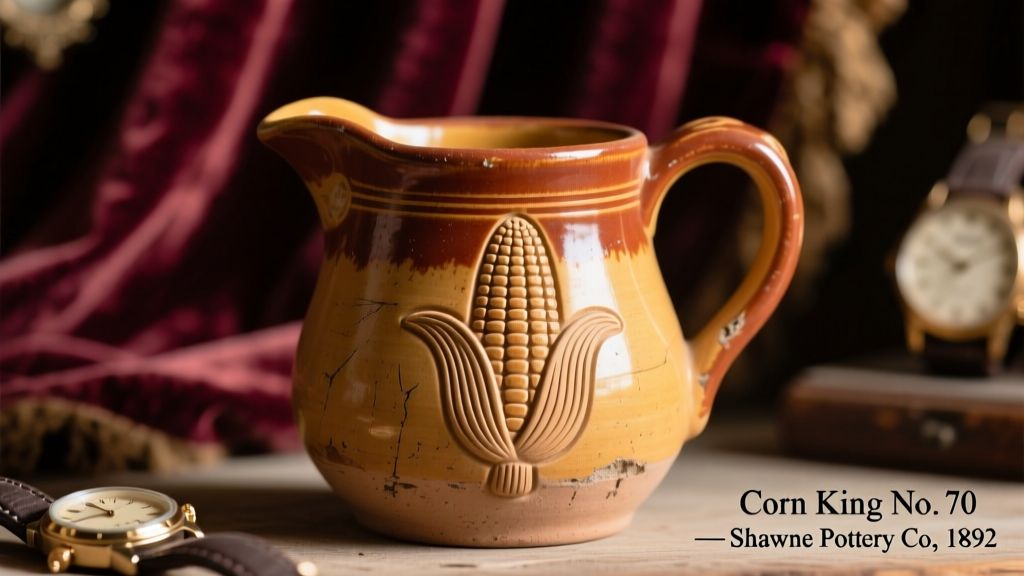
Shawnee Pottery Creamer 'Corn King' No. 70: History, Identification, and Market Value of a Mid-Century American Icon
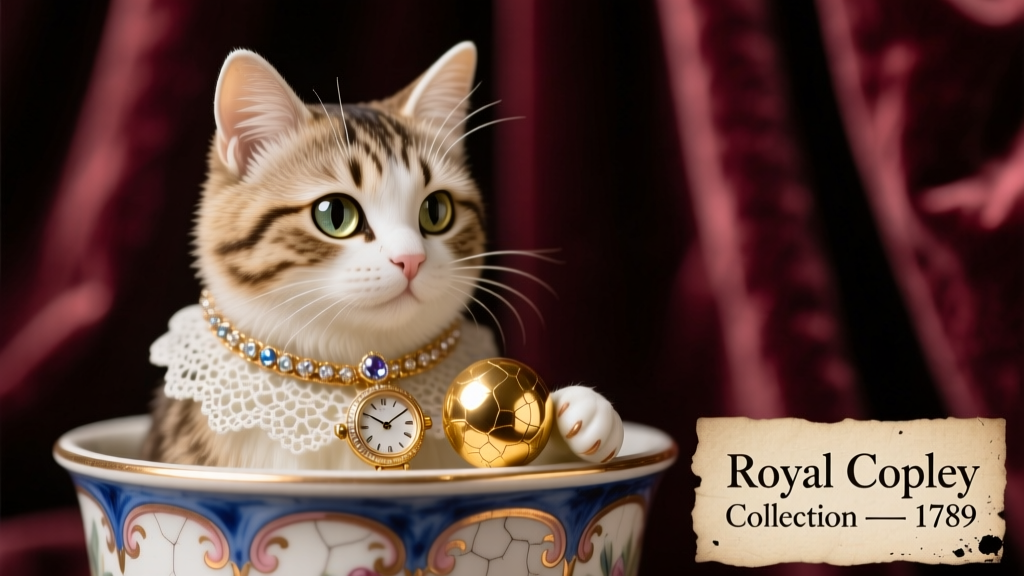
Royal Copley Planter Cat With Ball: A Mid-Century Ceramic Icon Revisited
Popeye Figurine Chalkware (14-Inch): Provenance, Identification, and Market Value of a Mid-Century American Folk Art Icon
Lamps Kerosene Drape Cranberry Opalescent Beaded 9½-Inch: A Collector’s Guide to American Brilliant Period Table Lamps
Pauline Trigère’s 1940s Blue Cocktail Dress with Matching Stole: A Masterclass in American Couture Craftsmanship
Hoare Cut Glass Ice Cream Tray: A 17½-Inch Masterpiece of Allover Hobstar Cutting
Clewell Vase Copper Clad No. 187 — A Study in American Mid-Century Industrial Craftsmanship
Aladdin B-75 Lincoln Drape Lamp with Crow’s Foot Alacite Chimney: A 1940–1949 American Art Deco Masterpiece
M.C. Escher: The Mathematical Visionary Whose Illusions Transcended Art, Science, and Timepiece Design