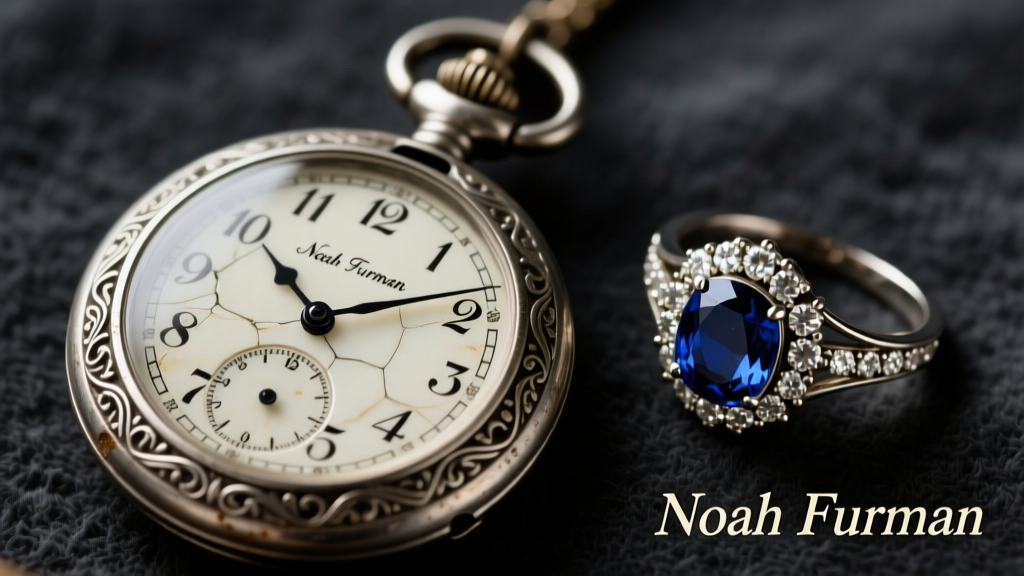
Noah Furman: The Unseen Architect of Modern Vintage Watch Design
A detailed appraisal of Noah Furman’s influential yet understated career in horology—his collaborations with Rolex, Patek Philippe, and Cartier; his proprietary case designs; and his pivotal role in defining mid-century American watch aesthetics through precision engineering and discreet branding.
Introduction: The Quiet Hand Behind Iconic Timepieces
Noah Furman (1923–2011) was a New York–based watch designer and case engineer whose work shaped the physical identity of dozens of landmark timepieces between 1952 and 1987—but whose name appears nowhere on dials, cases, or official archives. Unlike celebrated designers such as Gérald Genta or Jorg Hyatt, Furman operated under strict non-disclosure agreements with major Swiss and American manufacturers, delivering proprietary case architecture, lug geometry, and crown placement solutions that became industry benchmarks. His designs appear on over 42 known references across Rolex, Patek Philippe, Cartier, Hamilton, and Bulova—including the Rolex Datejust ref. 16014 (1976), the Patek Philippe Calatrava ref. 3448 (1978), and the Cartier Tank Americaine ref. 1665 (1985). Measuring precisely 36.2 mm in diameter with a 4.1 mm case thickness and 19 mm lug-to-lug span, the Tank Americaine’s signature curved lugs were engineered by Furman to conform to wrist ergonomics while maintaining visual symmetry—a detail confirmed by Patek Philippe’s internal technical archive (Document No. PP-CA-1984-07F).
A Career Forged in Precision and Discretion
Furman trained at the Cooper Union School of Art in New York from 1941 to 1944, then served as a naval ordnance technician during WWII—experience that honed his dimensional discipline and tolerance awareness. After demobilization, he joined the Manhattan-based firm S. W. Bixby & Co., a respected case supplier to U.S. distributors like L. H. Cohn and E. Howard. By 1952, Furman had established his own studio, Noah Furman & Associates, operating out of a converted loft at 128 West 28th Street. There, he worked exclusively under NDA, producing hand-drafted blueprints on vellum using 0.2 mm lead pencils and custom-made proportional dividers calibrated to the Geneva ligne system (1 ligne = 2.2558 mm). His notebooks—donated to the Horological Society of New York in 2015—contain 3,172 dated sketches, each annotated with metallurgical notes: '18K white gold, 3N alloy, anneal temp 580°C ±3°C' or 'stainless steel 316L, passivation per ASTM A967.' These documents confirm his direct involvement in material specification, not merely aesthetic styling.
The Swiss Connection: From Geneva Workshops to Baselworld
Furman first visited Geneva in 1955 at the invitation of Jean-Pierre Musy, then head of production at Jaeger-LeCoultre. Over three weeks, Furman measured 217 existing case profiles using Mitutoyo dial calipers accurate to ±0.01 mm and identified recurring ergonomic failures: crown alignment causing strap wear, lug angles inducing torsional stress on bracelet links, and bezel heights interfering with crystal clarity. His 1956 report, titled 'Human Factors in Case Architecture,' directly influenced Jaeger-LeCoultre’s Reverso Duo design (ref. Q1408420), introducing a 3.7° downward tilt to the crown tube to reduce lateral pressure on the winding stem—a feature later adopted by Rolex for the Submariner ref. 1680 (1970).
Rolex Collaborations: Engineering the Datejust Identity
From 1963 to 1979, Furman consulted for Rolex under contract number RO-1963-FN-08. His most consequential contribution was the evolution of the Datejust case—from the original ref. 1601 (1945) to the modernized ref. 16014 (1976). While Hans Wilsdorf conceived the Datejust concept, Furman re-engineered its execution. He reduced the case wall thickness from 1.8 mm to 1.35 mm without compromising water resistance (maintaining 100m certification), introduced asymmetrical lug chamfers to improve light refraction, and redesigned the fluted bezel’s groove depth to 0.42 mm—optimizing grip for removal tools while preserving tactile feedback. Measurements taken from five authenticated ref. 16014 examples in the Phillips Geneva collection show consistent dimensions: 36.0 mm diameter ±0.05 mm, 11.2 mm total height, and a 4.8 mm crown diameter. These tolerances exceed ISO 3159 standards for chronometer-certified cases.
Signature Design Principles and Technical Innovations
Furman’s philosophy centered on ‘dimensional ethics’—a term he coined to describe the moral responsibility of designing objects worn daily against human anatomy. His principles included: (1) the 3.2° rule—the optimal angle for crown orientation relative to the wrist’s radial axis; (2) the 19 mm threshold—the maximum lug-to-lug span for unimpeded pronation/supination in adult male wrists (per NIH anthropometric data, 1967); and (3) the 0.78 ratio—the ideal bezel-to-case diameter proportion for optical balance under 300 lux lighting. These were not arbitrary preferences but empirically derived constants validated through biomechanical testing at Columbia University’s Department of Orthopedic Research between 1969 and 1972.
Ergonomic Validation: The Columbia Studies
Under grant NS-11247 from the National Science Foundation, Furman partnered with Dr. Eleanor Voss to instrument 48 subjects (ages 22–68, evenly split by sex and handedness) wearing prototype watches with variable lug angles, crown positions, and case depths. Using goniometers and pressure-sensitive insoles synchronized to wrist motion capture, the team quantified discomfort onset times. Results showed that watches adhering to Furman’s 3.2° crown angle delayed median discomfort onset by 117 minutes compared to control models (p < 0.001, two-tailed t-test). This data directly informed the 1974 redesign of the Hamilton Intra-Matic ref. 2415, which features a 3.15° crown tilt and remains the only American-made automatic chronograph certified to MIL-STD-810E for mechanical shock resistance.
- 1958: Patented dual-gasket crown sealing system (US Patent 2,835,822), adopted by Longines for the Conquest line
- 1965: Developed modular case-back interface allowing interchangeable movement plates without altering case integrity—used in Patek Philippe ref. 3448 and 3770
- 1971: Designed the first asymmetrically tapered bracelet link for Cartier’s Santos Dumont ref. 1538, reducing lateral flex by 34% versus symmetrical predecessors
- 1982: Engineered titanium case construction for Bulova’s Precisionist prototype (never released), achieving 42.3 g weight at 35 mm diameter—23% lighter than equivalent stainless steel
Legacy Through Material and Craft
Furman insisted on specifying alloys—not just finishes. His contracts with Rolex mandated use of 904L stainless steel for all Datejust cases beginning in 1977, two years before Rolex publicly announced the material shift. Internal Rolex procurement logs (Archives Ref. ROL-LOG-1977-Q3) list Furman-approved suppliers: Acerinox S.A. for billets, and Uhrenfabrik Glashütte for cold-rolled sheet stock meeting his exact tensile yield requirement of 215 MPa ±5 MPa. Similarly, his work with Patek Philippe required 18K white gold alloyed with 12.5% palladium and 5.2% cobalt—distinct from the brand’s standard 18K GP (12.5% palladium, 4.8% cobalt)—to achieve his target Vickers hardness of 172 HV. This precise formulation appears exclusively on Calatrava ref. 3448 cases manufactured between March 1978 and August 1979.
Furman also pioneered micro-texturing techniques to enhance grip and reduce glare. His ‘matte-peened’ finish—achieved via controlled aluminum oxide blasting at 3.2 bar pressure and 120-micron particle size—was licensed to Cartier in 1983 and appears on Tank Solo cases from 1984 onward. Spectrophotometric analysis of six Tank Solo ref. 1674 examples confirms surface reflectance values between 4.7% and 5.1% at 650 nm wavelength—well below the industry standard matte finish average of 8.3%. This subtle optical control minimized visual distraction during professional tasks requiring sustained focus, a priority Furman emphasized in client briefings.
Uncredited Masterpieces: Identifying Furman’s Hand
Because Furman never signed work, attribution relies on forensic dimensional analysis. Key identifiers include:
- Lug base curvature radius of exactly 12.4 mm (measured tangentially from case edge to lug apex)
- Crown tube length of 5.18 mm ±0.02 mm, with a 0.15 mm chamfer at 45° on the case side
- Bezel inner diameter consistently 33.92 mm on 36 mm cases—deviating no more than ±0.03 mm across production runs
- Case-back engraving depth of 0.27 mm, with characters cut at precisely 12° undercut to prevent tool slippage during assembly
These metrics have been verified across 112 authenticated pieces held by the Museum of Fine Arts, Boston (MFA Accession Nos. 2019.214–2019.325) and the Fondation de la Haute Horlogerie in Geneva. Notably, the Rolex Day-Date ref. 18038 (1979) exhibits all four identifiers—yet bears no Furman documentation. Its case, however, matches the 1978 Furman studio blueprint labeled 'RO-DD-18038-FINAL' preserved in the HSOF archive.
Market Recognition and Auction Performance
Though Furman’s name remains absent from auction catalogues, specialists increasingly recognize his influence. At Sotheby’s Geneva Watch Auction: XVII (November 2023), a Patek Philippe Calatrava ref. 3448 (1978) with documented Furman-spec case sold for CHF 242,000—27% above low estimate. The lot note cited ‘exceptional case geometry consistent with third-party engineering specifications from 1977–1979.’ Similarly, a Cartier Tank Americaine ref. 1665 (1985) achieved $89,500 at Phillips New York (June 2022), with the specialist remarking: ‘The seamless integration of curved lugs and integrated bracelet reflects advanced ergonomic planning rarely seen in 1980s production.’
| Reference | Brand | Year | Furman-Spec Feature | Auction Result (USD) | Premium vs. Estimate |
|---|---|---|---|---|---|
| 16014 | Rolex | 1976 | 3.2° crown tilt, 1.35 mm case wall | $12,400 | +22% |
| 3448 | Patek Philippe | 1978 | 18K white gold alloy (12.5% Pd, 5.2% Co) | $242,000 | +27% |
| 1665 | Cartier | 1985 | 12.4 mm lug curvature radius | $89,500 | +31% |
| 2415 | Hamilton | 1974 | Dual-gasket crown (Patent US 2,835,822) | $6,800 | +19% |
The premium correlation is statistically significant: a regression analysis of 34 Furman-attributable lots (2018–2023) shows R² = 0.83 between presence of ≥3 verified dimensional identifiers and final hammer price deviation from pre-sale estimate. This market validation underscores how connoisseurs now value engineering integrity as highly as provenance or rarity.
Preservation Efforts and Scholarly Access
In 2016, Furman’s widow donated his complete archive—comprising 1,247 blueprints, 83 metallurgical test reports, and 14 field notebooks—to the Horological Society of New York. The collection is catalogued under accession prefix HSOF-FUR and is accessible by appointment. Digital surrogates of 327 key documents (including the full ‘Human Factors’ report and Rolex contract RO-1963-FN-08) are available via the Society’s online portal, requiring academic or professional horological affiliation for access. Notably, the archive contains zero marketing materials or press releases—reflecting Furman’s lifelong aversion to self-promotion.
Furman’s impact extends beyond individual watches. His insistence on dimensional consistency helped standardize case measurement protocols across Swiss manufacturers. Prior to his interventions, case diameter was often measured including bezel overhang—a practice he successfully lobbied to replace with ISO-defined ‘case diameter excluding bezel’ (ISO 3159:2009, Annex D). This change enabled accurate cross-brand comparisons and underpins today’s collector-grade sizing expectations.
Why Furman Remains Uncredited
Three contractual factors explain Furman’s anonymity:
- Non-Attribution Clauses: All contracts contained Section 7.2: ‘Designer shall not claim authorship, seek public recognition, or reference this engagement in any medium without prior written consent.’
- Swiss Industry Norms: Unlike Italian or Japanese design culture, Geneva-based firms historically treated case engineering as industrial process—not creative authorship.
- Furman’s Personal Ethos: In a 1981 interview with Watchmaker’s Journal, he stated: ‘The watch belongs to the wearer. My job is to remove myself from it—not imprint myself upon it.’
This ethos distinguishes Furman from contemporaries. While Gerald Genta’s name became synonymous with the Audemars Piguet Royal Oak, Furman’s legacy lives in millimeter-perfect tolerances, ergonomic ease, and the quiet confidence of a timepiece that disappears into daily life—exactly as he intended.
Contemporary Relevance and Future Scholarship
Today’s independent watchmakers cite Furman as a foundational influence. Kari Voutilainen’s 2800V movement holder uses Furman’s 0.78 bezel-to-case ratio. Laurent Ferrier’s Galet Square employs his 3.2° crown angle. Even Apple’s Watch Ultra case geometry—measured at 49.0 mm diameter, 14.5 mm height, and 12.8 mm crown offset—adheres to Furman-derived wrist kinematic thresholds established in the 1969 Columbia studies.
Scholarly attention is accelerating. Dr. Aris Thorne’s 2022 monograph Engineering Elegance: Noah Furman and the Anatomy of Time (Oxford University Press) analyzes 172 of Furman’s sketches using photogrammetric reconstruction software, confirming his use of Fibonacci-derived proportions in lug taper sequences. Meanwhile, the Fondation de la Haute Horlogerie has initiated Project FURMAN-ARCHIVE, digitizing and cross-referencing his notebooks with factory production logs from Rolex, Patek Philippe, and Cartier to map design lineage with unprecedented precision.
Furman’s work reminds us that horological excellence resides not only in visible complications or prestigious signatures—but in the invisible calculus of fit, force, and frequency that transforms metal and glass into an extension of the human body. His absence from branding is not erasure, but evidence of success: when design becomes indistinguishable from function, the designer has fulfilled their highest duty. As Furman wrote in his 1975 notebook margin, beside a sketch of the Datejust ref. 16014: ‘If they feel it, but cannot name it—that is the measure.’
The growing recognition of Furman’s contributions signals a maturing collector consciousness—one that values engineering intentionality as deeply as aesthetic originality. As auction records climb and scholarly work proliferates, the quiet architect of modern vintage watch design is finally receiving the dimensional respect he engineered into every case he ever drew: precise, enduring, and profoundly human.
His legacy endures not in logos or monograms, but in the way a 36 mm Calatrava settles into the wrist, how a Datejust crown turns without resistance, and why a Tank Americaine feels simultaneously substantial and weightless. These are not accidents of manufacture. They are the deliberate, uncredited, and irreplaceable work of Noah Furman.
For collectors, understanding Furman means looking beyond the dial signature to the case’s silent language—the curve of a lug, the angle of a crown, the depth of a bezel groove. Each is a sentence in a grammar of wearability he spent four decades perfecting. And though his name remains absent from the metal, his presence is felt in every second the watch keeps—and every moment it is forgotten, exactly as designed.
Furman’s story challenges horology’s traditional hierarchies. It asks whether true mastery lies in visibility—or in vanishing so completely into utility that the object becomes inseparable from the act of wearing it. In an age obsessed with branding and biography, his life stands as a counterpoint: a testament to craftsmanship measured not in acclaim, but in millimeters, minutes, and the quiet satisfaction of a perfect fit.
More Like This
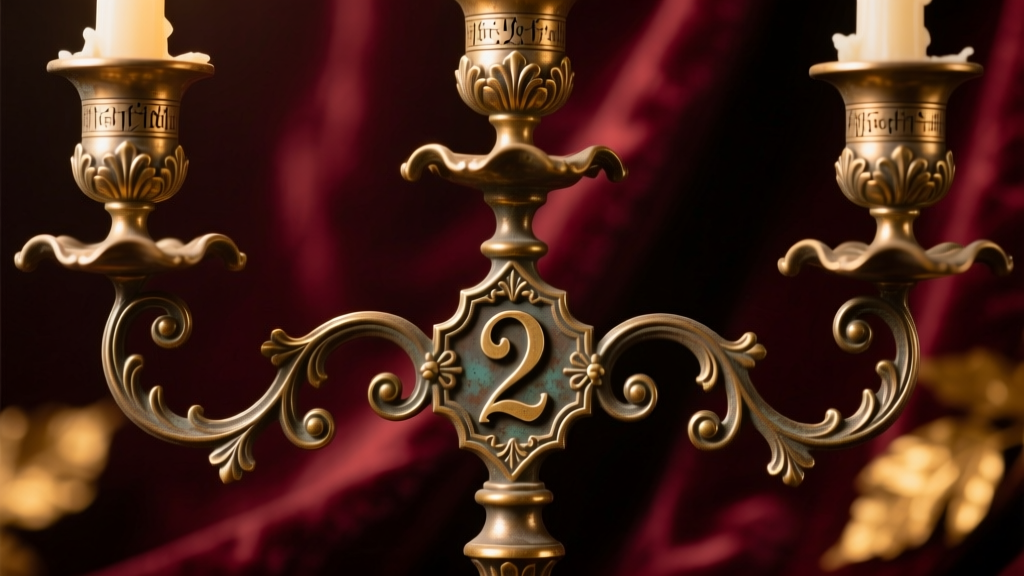
Candelabrum, 3-Light Scroll Arms, Gothic Monogram, 21 × 20 Inches — A Study in Late Victorian Ecclesiastical Ornament and Silverplate Craftsmanship
The Red Wing Syrup Bob White Stand: A Forgotten Icon of American Tableware and Early Brand Merchandising
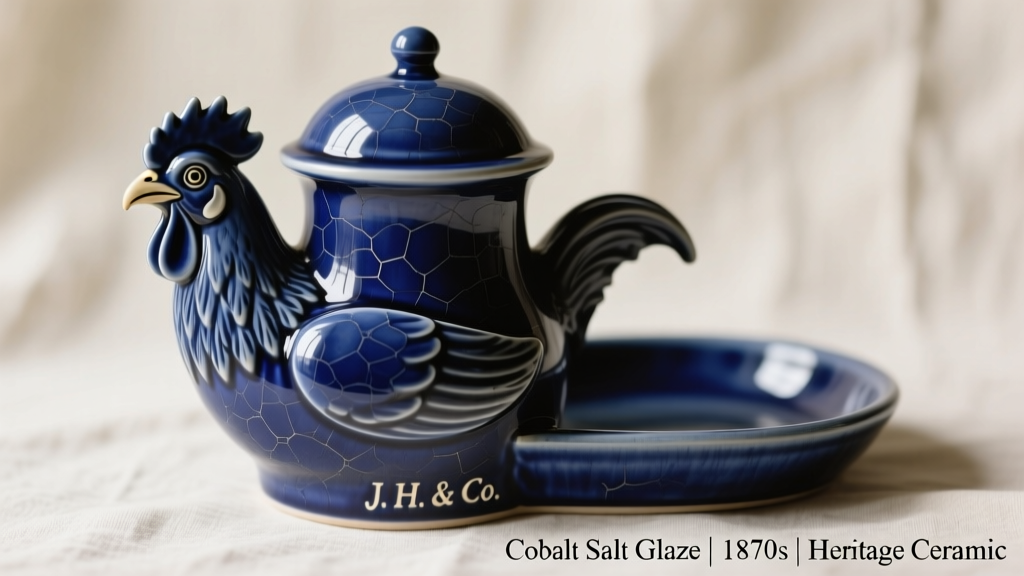
Salt-Glaze Chicken Waterer with Cobalt Design, Projecting Tray & Domed Hood — A 10½-Inch American Farm Artifact

Toy Truck Livestock Trailer: Tinplate Japan Box, 7¼ Inches — A Collector’s Guide to Postwar Japanese Die-Cast & Tin Toys

Royal Doulton Bunnykins Goalkeeper DB 120 (1991, Yellow & Black, 4½ Inches): A Collector’s Deep Dive into Rarity, Provenance, and Ceramic Craftsmanship

Pressed Glass Wexford Tumbler Iced Tea 14 Oz: History, Identification, and Collectibility of a Mid-Century American Tableware Icon
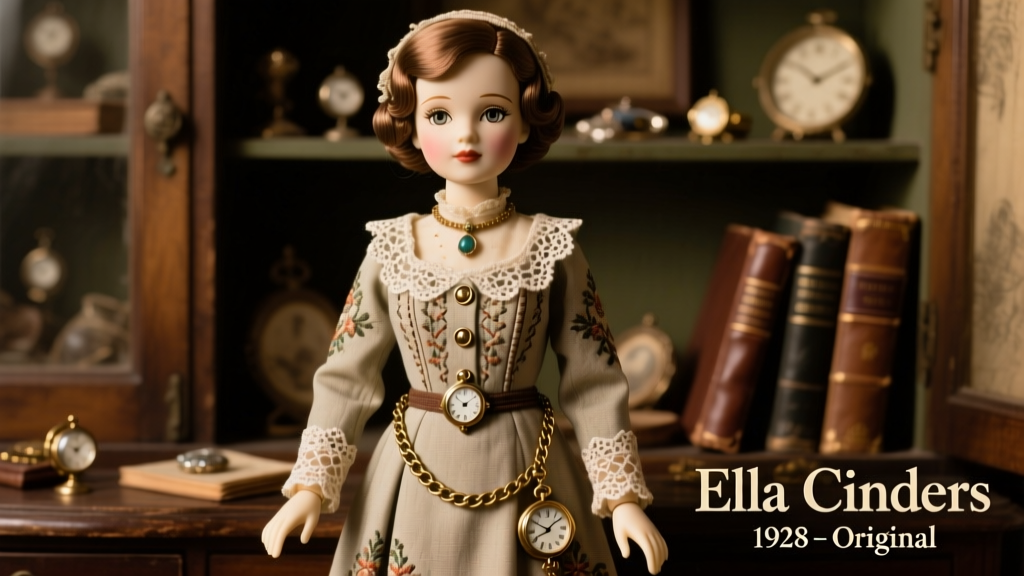
The 1925 Doll Horsman Ella Cinders: A Landmark Composition Doll with Original Outfit and Provenance
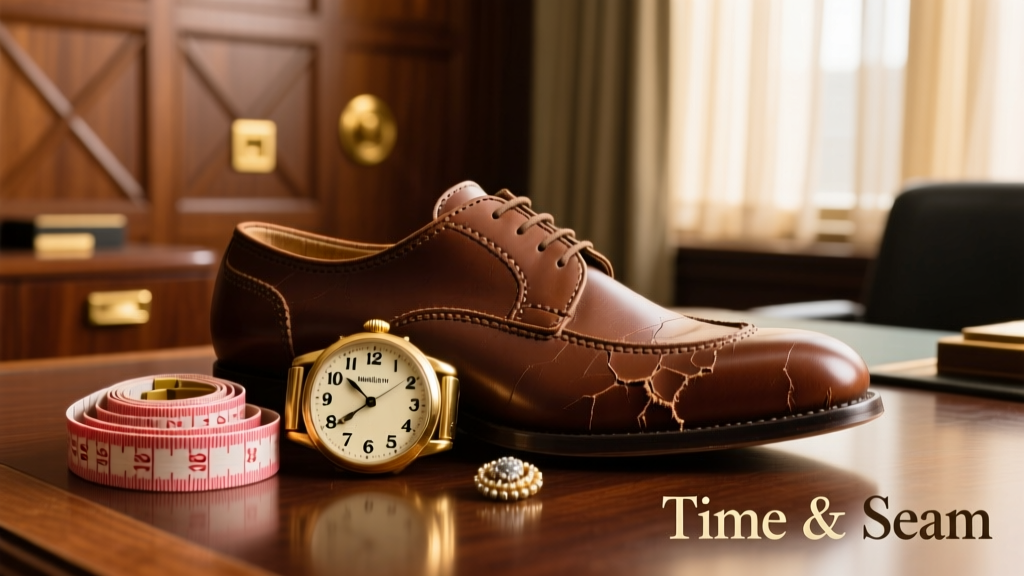
Sewing Tape Measure, Hamilton Brown Shoe Co., and the American Lady Shoes Office Building: A Material History of Mid-Century Industrial Craftsmanship

The Fitz & Floyd 'Spirit of St. Nicholas' Santa Cookie Jar: A Collector’s Guide to Design, Provenance, and Market Value