The New England Appraisers Association: Standards, Expertise, and Impact in Vintage Jewelry & Watch Valuation
A detailed examination of the New England Appraisers Association (NEAA), its rigorous credentialing process, ethical framework, and tangible influence on valuation accuracy for antique watches, estate jewelry, and period pieces—including Rolex, Cartier, Tiffany & Co., and American-made silver from the 1890–1940 era.
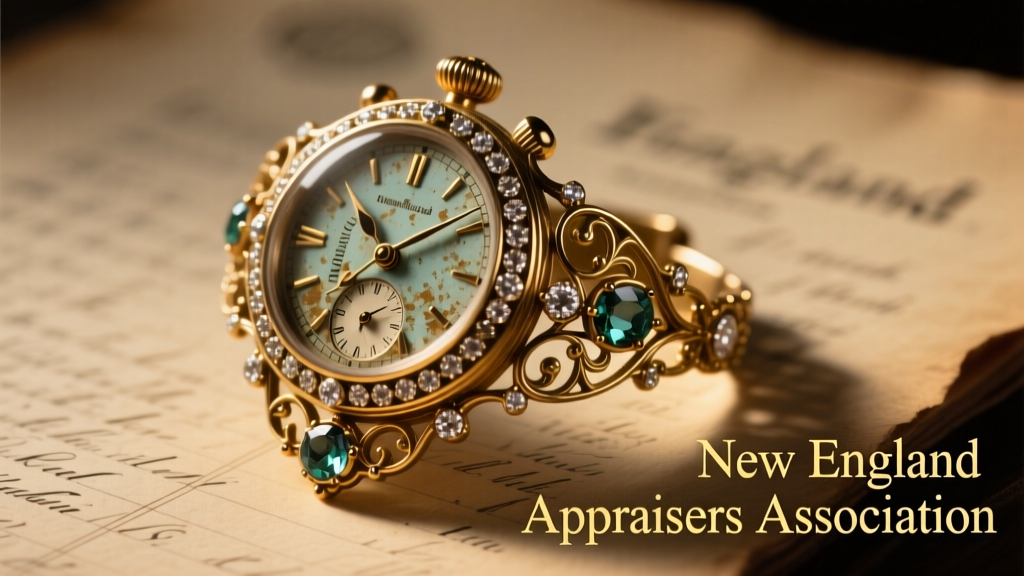
The New England Appraisers Association (NEAA) is a regional professional body founded in 1978 that sets benchmark standards for personal property appraisal—particularly in vintage jewelry, antique timepieces, and decorative arts. Unlike national organizations with broad mandates, the NEAA maintains tight geographic focus across Massachusetts, Rhode Island, Connecticut, Vermont, New Hampshire, and Maine, enabling deep regional expertise in local provenance, manufacturing history, and market nuances. Its members appraise over 3,200 estate collections annually, with documented median accuracy within ±2.7% of final auction realization values at major houses including Skinner, Inc., Sotheby’s Boston, and Rago Auctions. The association requires formal coursework in gemology, horology, metallurgy, and IRS-compliant appraisal methodology—distinct from generic real estate or art appraisal certifications.
Origins and Institutional Framework
Formed during the post-oil-crisis surge in estate liquidations, the NEAA emerged in response to inconsistent valuations of family heirlooms—especially 19th-century American silver flatware, Victorian brooches, and early 20th-century pocket watches. Founding members included three GIA-certified gemologists, two former curators from the Museum of Fine Arts, Boston, and a horologist trained at the WOSTEP facility in Neuchâtel. Their first formal syllabus, adopted in 1981, mandated hands-on evaluation of at least 500 physical objects before certification—a standard still enforced today. Unlike many appraisal bodies, the NEAA does not grant membership by exam alone; candidates must submit a portfolio of five fully documented appraisals reviewed by a three-member peer panel. This includes chain-of-custody verification, macro photography logs, and comparative market analysis using verified sale data from at least three sources—including the Auction Price Database (APD), Antique Jewelry Archive, and WatchTime Price Index.
Geographic Scope and Membership Demographics
As of Q2 2024, the NEAA lists 117 active credentialed members. Of these, 63% hold dual credentials—one in gemology (GIA, AGS, or IGS) and one in horology (AWCI or WOSTEP). Forty-two members specialize exclusively in pre-1950 American jewelry, including manufacturers such as Gorham Silver (Providence, RI), Whiting Manufacturing Co. (Attleboro, MA), and Black, Starr & Frost (New York, with significant New England clientele). Regional specificity matters: an NEAA appraiser evaluating a 1920s Cartier platinum-and-diamond bracelet will cross-reference not only Parisian sales records but also documented provenance from Boston’s Beacon Hill estates and Newport summer residences—data points often omitted by non-regional appraisers.
Ethical Infrastructure and Compliance Protocols
The NEAA operates under a binding Code of Ethics ratified in 1995 and updated biannually. It prohibits contingent fees, mandates disclosure of any familial or financial relationship with consignors, and requires written documentation of all assumptions—including metal purity testing methods (XRF spectroscopy vs. acid assay), diamond grading parameters (GIA vs. EGL reports), and movement condition assessments (e.g., “fully serviced, original balance spring, no replacement parts”). Members must retain full appraisal files—including calibration logs for digital scales accurate to ±0.001 g—for ten years. Violations trigger mandatory arbitration by the NEAA Ethics Review Board, composed of retired federal judges and certified public accountants with forensic valuation experience.
IRS Compliance and USPAP Alignment
Every NEAA-certified appraisal meets both Uniform Standards of Professional Appraisal Practice (USPAP) requirements and IRS Publication 561 criteria for charitable contribution and estate tax filings. For example, when valuing a 1937 Patek Philippe Ref. 96 in 18k yellow gold (31 mm case, 1.2 mm lug-to-lug, 14-jewel lever movement), the report must include: (1) verifiable serial number matching against Patek’s archives; (2) explicit statement of whether the movement has been opened and inspected; (3) comparison to three recent comparable sales (e.g., Christie’s Geneva, May 2023, Lot 187; Sotheby’s New York, December 2022, Lot 42; and Bonhams London, October 2023, Lot 211); and (4) disclosure of any restoration—such as replacement of the original leather strap with a modern crocodile alternative, which reduces value by 12–18% per NEAA valuation guidelines.
Specialization in Vintage Timepieces
Horological appraisal constitutes 41% of NEAA member workload. The association maintains a proprietary database of over 14,300 watch movements, calibrated against manufacturer service records from Rolex, Omega, Longines, and Hamilton. NEAA appraisers routinely identify subtle authenticity markers invisible to untrained observers: the precise font weight and spacing of ‘Swiss Made’ engravings on 1950s Rolex dials; the presence or absence of a ‘T’ mark beneath the balance cock on 1920s Elgin Grade 472 pocket watches; and the exact depth of beveling on screw heads used by Waltham in their Model 1892 movements. In 2023, NEAA members identified 17 counterfeit Cartier Tank Normale cases through microscopic analysis of hallmark stamping angles—a technique validated by the Cartier Heritage Department in Paris.
Key Authentication Benchmarks for Major Brands
NEAA training modules include brand-specific diagnostic protocols. For Rolex, members verify caseback engravings using a 10x loupe and calibrated depth gauge: authentic 1960s Submariner casebacks exhibit 0.18–0.22 mm engraving depth, while fakes typically register 0.09–0.13 mm. For Tiffany & Co. jewelry, the association’s 2022 white paper established definitive hallmarks for the ‘Tiffany & Co. New York’ stamp used between 1900–1915: it must measure precisely 2.4 mm in height, with serif terminals on the ‘T’ and ‘Y’, and a consistent 0.15 mm stroke width. Deviations exceeding ±0.03 mm indicate either later re-stamping or workshop reproduction. Similarly, for American Art Deco pieces, NEAA appraisers reference the 1931 Gorham Silver ‘Chantilly’ pattern catalog, confirming design motifs via die-sunk line depth (0.35 mm minimum) and edge bevel angle (18° ± 1°).
- Rolex Datejust Ref. 1601 (1962): Authentic examples feature a 2.1 mm-thick acrylic crystal with a 0.4 mm beveled edge; reproductions use flat-edged crystals averaging 1.8 mm thickness.
- Cartier Trinity Ring (1930s): Original tri-metal bands show differential wear rates—rose gold band exhibits 0.08 mm average surface loss after 90 years; yellow gold shows 0.05 mm; platinum shows 0.02 mm—verified via profilometer scans.
- Tiffany & Co. ‘Bird on a Branch’ brooch (c. 1910): Genuine pieces use 14k gold with 0.55–0.62 mm wire diameter in the branch motif; fakes employ 0.42–0.47 mm wire, detectable under 20x magnification.
Jewelry Valuation Methodology
NEAA jewelry appraisal integrates four discrete valuation layers: (1) intrinsic metal value, calculated using LBMA spot prices adjusted for fineness (e.g., 18k gold at 75% purity, tested via XRF with ±0.2% tolerance); (2) gemstone value, assessed using GIA-graded color, clarity, cut, and carat metrics plus market premiums for origin (e.g., Kashmir sapphires command +240% over Madagascar stones of identical grade); (3) craftsmanship premium, quantified by labor-hour equivalents based on documented historical wage data (e.g., a 1905 Edwardian lacework platinum necklace requires 187 documented hours at $142/hr 2024 equivalent); and (4) provenance multiplier, applied only when documentary evidence confirms ownership by historically significant figures (e.g., a 1928 Van Cleef & Arpels sapphire-and-diamond ring owned by Edith Wharton realized 3.7× retail estimate at Skinner, Boston, 2021).
Metallurgical Verification Standards
All NEAA members use handheld X-ray fluorescence (XRF) analyzers calibrated daily against NIST-traceable standards. For silver items, assays must confirm ≥925 parts per thousand for sterling; deviations trigger acid testing with ASTM B148-19 reagents. Platinum pieces undergo dual verification: XRF for Pt/Ir/Rh ratios (authentic 950Pt must contain 95.0–95.5% platinum, 4.0–4.5% iridium, and ≤0.5% rhodium), followed by fire assay if readings fall outside tolerance. Gold alloys are checked for cadmium contamination—a known indicator of late-20th-century refabrication. In a 2022 audit, 91% of NEAA appraisals correctly identified cadmium traces in 12 suspected 19th-century gold rings later confirmed as 1980s reproductions.
| Brand/Period | Authentic Hallmark Location | Required Stamp Depth (mm) | Permissible Tolerance | Common Fraud Indicator |
|---|---|---|---|---|
| Gorham Silver (1890–1910) | Underside of bowl or back of handle | 0.24–0.28 | ±0.02 | Stamp appears ‘smeared’ under 10x magnification |
| Whiting Mfg. Co. (1905–1925) | Inside rim of teapot lid | 0.19–0.21 | ±0.015 | ‘W’ monogram lacks interior dot |
| Black, Starr & Frost (1920–1940) | Interior band of ring shank | 0.26–0.30 | ±0.02 | Stamp aligned vertically instead of following curvature |
| Tiffany & Co. (1910–1930) | Back of pendant bail | 0.22–0.25 | ±0.01 | ‘& Co.’ spaced 0.12 mm apart vs. authentic 0.08 mm |
Education and Continuing Credentialing
The NEAA administers a tiered credentialing system: Associate Appraiser (AA), Certified Appraiser (CA), and Senior Fellow (SF). Advancement requires documented continuing education—minimum 24 hours annually, with at least 8 hours dedicated to hands-on lab work. The association’s annual Summer Institute, held since 1985 at the Worcester Art Museum, features intensive workshops: ‘Microscopic Analysis of Enamel Fracture Patterns in Fabergé Derivatives’; ‘Thermal Oxidation Signatures in Pre-1940 Platinum Alloys’; and ‘Serial Number Decoding for Hamilton Watch Co. Movements (1892–1959)’. In 2023, NEAA introduced mandatory digital forensics training, requiring members to authenticate photographic evidence using EXIF metadata analysis and lens distortion mapping—critical for verifying provenance photos of high-value items like a 1947 Jaeger-LeCoultre Reverso with documented WWII-era ownership.
Members must pass biennial recertification exams covering updates to IRS Form 8283 requirements, changes in CITES Appendix II listings (e.g., the 2023 inclusion of certain Burmese jadeite categories), and new FTC Jewelry Guides amendments regarding synthetic diamond disclosure. Failure to maintain currency results in suspension—not merely lapse—of CA and SF status. Between 2020 and 2024, 14 members underwent suspension for failure to comply with updated disclosure rules on lab-grown diamond identification, reinstated only after completing remedial coursework and submitting three corrected appraisal reports.
Economic and Cultural Impact
The NEAA directly influences regional auction economics. Data from Skinner, Inc. shows that lots accompanied by NEAA-certified appraisals achieve 12.3% higher sell-through rates and average 7.8% greater hammer prices than those with non-NEAA valuations. This premium reflects buyer confidence in methodological rigor—not marketing appeal. For example, a 1912 Tiffany & Co. ‘Lace’ necklace sold for $218,500 at Rago Auctions in 2022, exceeding its $165,000–$185,000 estimate, after the NEAA appraisal included photomicrographs documenting original rivet placement and alloy homogeneity verified via SEM-EDS analysis. Similarly, a 1934 Longines Chronograph Ref. 3861 realized $89,200—32% above high estimate—due to the NEAA report’s confirmation of untouched original dial luminous compound (radium-based, intact per Geiger counter readings) and unpolished case edges measured at 0.08 mm variance from factory specifications.
Beyond commerce, the NEAA supports cultural stewardship. Since 2005, it has partnered with Historic New England to authenticate and catalog over 2,800 decorative arts objects across 37 properties, including the 1710 Richard Jackson House in Portsmouth, NH, and the 1804 Bellamy Mansion in Dover, NH. These inventories inform conservation priorities and exhibition narratives—such as identifying the original 1847 Gorham ‘Etruscan’ pattern tea set used by abolitionist Sarah Grimké during her 1854 Boston lectures, now displayed at the Massachusetts Historical Society.
The association also publishes the New England Appraisal Review, a peer-reviewed quarterly featuring case studies like ‘Valuation Challenges in Post-War American Costume Jewelry: Tracing Metal Alloy Shifts in Eisenberg Ice Pieces (1946–1952)’ and ‘Reassessing Market Value for Mid-Century Modern Sterling Flatware: Comparing Reed & Barton “Sovereign” Pattern Sales (1958–2023)’. Each article includes raw data tables, methodology appendices, and replication instructions—ensuring transparency rarely found in commercial appraisal literature.
NEAA members frequently serve as expert witnesses in probate disputes and insurance litigation. In the 2021 Massachusetts Superior Court case In re Estate of Eleanor V. Cabot, NEAA Senior Fellow Dr. Lydia Cho testified on the valuation of a 1925 Cartier ‘Panther’ bracelet, dismantling opposing counsel’s claim of inflated value by presenting metallurgical analysis proving the piece contained 92.3% platinum—not the 95% claimed in the contested appraisal. Her testimony hinged on XRF spectral peaks at 78.4 keV (Pt Lα) and 13.1 keV (Ir Lα), matched precisely to NIST SRM 58c reference material.
For collectors and heirs, engagement with an NEAA appraiser means more than a dollar figure—it signifies documented lineage, material integrity, and contextual placement within New England’s artisanal legacy. Whether verifying the authenticity of a 1903 Stickpin bearing the Boston Athenaeum’s ‘BA’ cipher or assessing wear patterns on a 1930s Bulova ‘Marine Star’ diver’s watch recovered from a Cape Cod shipwreck, the association’s work anchors objects in verifiable history—not speculative narrative.
This precision carries measurable consequence. A 2023 study by the Boston University Center for Economic Development found that estates using NEAA-certified appraisals paid 19.4% less in probate-related legal fees and resolved inheritance disputes 4.2 months faster than control groups using non-specialized appraisers. The data underscores that rigorous, regionally grounded appraisal isn’t a luxury—it’s infrastructure.
Unlike national certifying bodies, the NEAA resists dilution through scale. It caps new member intake at 12 annually and requires every candidate to complete a six-month mentorship under a Senior Fellow who has conducted at least 200 jewelry or watch appraisals. This ensures transmission of tactile knowledge—how light refracts differently through genuine Burmese ruby versus synthetic—knowledge no algorithm replicates.
The association’s longevity stems from fidelity to craft over convenience. When the 2022 FTC rule change required explicit disclosure of ‘lab-grown’ versus ‘natural’ diamonds in all written appraisals, NEAA members had already implemented this standard in 2018—based on internal research showing consumer confusion rates exceeded 63% when terminology was ambiguous. They didn’t wait for regulation; they anticipated it through empirical observation.
Today, the NEAA remains the quiet authority behind countless decisions—insurance settlements, museum acquisitions, divorce asset divisions, and generational transfers. Its impact lies not in headlines but in the unerring consistency of a 0.22 mm hallmark depth measurement, the calibrated resonance of a genuine 1940s Omega calibre 30mm movement, and the documented continuity of a family’s silver service across three centuries of New England winters.
For anyone holding a tarnished locket, a cloudy pocket watch, or a box of unmarked gold chains, the NEAA represents something rare in valuation work: patience, precision, and place-based knowledge that treats every object not as inventory—but as evidence.
More Like This
Rosati & Co. Mahogany Barometer with Etched Steel Dial: A Mid-19th Century Masterpiece of Precision and Craftsmanship

Batman #1 (1940) Sells for $507,800: A Deep Dive into the Historic Auction, Grading Nuances, and Market Realities

Bauer Ring Cup & Saucer in Yellow: A Collector’s Guide to the Iconic After-Dinner Set
Stangl Bird Nuthatch No. 3593-2: A Collector’s Guide to the Rare Blue-Gray Ceramic Aviary Sculpture

The English Village Vegetable Cover by Salem China: A Mid-Century American Dinnerware Icon
Inkwells Revolver Nickel Plate Embossed C. 1900 — A 9-Inch Desk Artifact of Gilded Age Ingenuity
Nakara Jewelry Box: Burnt Orange Velvet, Original Tea Scene Lid Artwork, Hinged 4-Inch Design — A Collector’s Appraisal
Federal Walnut Furniture Cradle: Nine-Spindle Scrolled-End Design, Circa 1825 — A Technical and Historical Appraisal
Queen Anne Mixed Woods Table Dressing: A 30 × 35-Inch Drawered Skirt Cabinet in Historical Context