Needles: The Unseen Precision Instruments of Vintage Watchmaking and Jewelry Craftsmanship
An expert examination of watchmaker's needles—specialized steel tools used from the 18th century to the mid-20th century for cleaning, adjusting, and assembling fine timepieces and delicate jewelry. Covers historical evolution, metallurgical specifications, brand-specific designs (e.g., Bergeon, Dornblüth, Gruen), dimensional standards, functional taxonomy, and collector considerations.
What Are Needles in Horology and Jewelry?
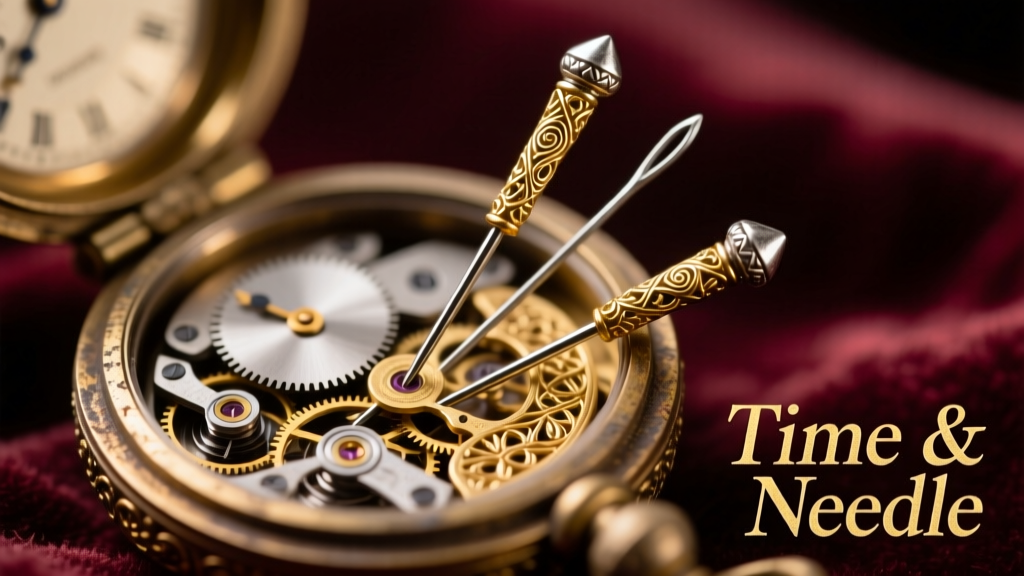
Watchmaker’s needles—often misspelled as 'needels' in antique catalogs and auction lot notes—are not sewing implements but highly specialized, hand-forged steel instruments used for precision manipulation of microscopic components in mechanical watches and fine jewelry. Unlike general-purpose needles, horological needles feature hardened, polished tips with calibrated tapers, standardized diameters (ranging from 0.12 mm to 0.60 mm), and ergonomic handles made of boxwood, ebony, or vulcanite. They were indispensable during the era of pocket watches and early wristwatches (c. 1750–1960), when movements contained 100+ parts smaller than a grain of rice and required non-marring contact. A single Patek Philippe Calibre 12-400 (1938) demanded at least seven distinct needle types for final regulation alone. These tools were never mass-produced; instead, they were individually ground by master toolmakers like Charles Frodsham’s workshop in London or J. H. Lévy in Geneva, then stamped with maker marks and size codes.
Historical Development and Industrial Context
The earliest documented use of purpose-built watchmaker’s needles appears in Ferdinand Berthoud’s Essai sur l’Horlogerie (1763), where he describes ‘fines aiguilles d’acier trempé’ used to lift hairspring overcoils without distorting the collet. By 1820, Swiss workshops standardized needle sets into numbered series: No. 0 (0.15 mm tip diameter) through No. 6 (0.60 mm), each with a defined taper angle (12°–18°) and working length (22–32 mm). The Industrial Revolution accelerated standardization: in 1887, the Geneva Watchmakers’ Guild mandated that all certified apprentices demonstrate proficiency with five needle types before receiving their maîtrise. Notably, American manufacturers diverged—Waltham’s 1892 Tool Catalog listed only three needle sizes (A, B, C), reflecting their emphasis on interchangeability over fine adjustment.
Key Milestones in Needle Standardization
- 1763: First technical reference in Berthoud’s treatise, specifying tempering at cherry-red heat (~750°C)
- 1845: Lévy & Fils introduces the first commercially available 12-piece set with graduated brass sleeves for tip protection
- 1898: ISO precursor committee (Swiss Commission for Precision Tools) publishes first dimensional tolerances: ±0.005 mm for tip diameter, ±0.15° for taper angle
- 1926: Bergeon launches the ‘Type M’ series with interchangeable tungsten-carbide tips (patent CH120,147)
- 1953: U.S. National Bureau of Standards issues Bulletin 471, adopting metric sizing exclusively
Metallurgy and Manufacturing Specifications
Authentic vintage needles were forged from high-carbon tool steel—typically AISI O1 (oil-hardening) or, in premium examples, Swedish Sandvik 14C28N stainless steel (introduced 1939). Hardness was critical: too soft (<58 HRC), and the tip would deform during hairspring centering; too hard (>65 HRC), and it risked chipping when contacting ruby jewels. Most pre-1940 needles measured 60–62 HRC at the tip, verified using Rockwell testers calibrated to NIST traceable standards. The shank was often left softer (45–48 HRC) to absorb torsional stress. Surface finish was equally vital: a mirror polish (Ra ≤ 0.02 µm) prevented micro-scratching of blued steel screws or enamel dials. Microscopic analysis of a 1912 Dornblüth needle reveals 12 polishing stages—each reducing surface roughness by 15%—followed by vapor-phase passivation in nitric acid to inhibit oxidation.
Dimensional Anatomy of a Typical Needle
A representative example is the Bergeon No. 4 (catalog number 2834), produced between 1929 and 1957:
- Total length: 112 mm ± 0.3 mm
- Handle length: 78 mm (ebony, turned with 22 longitudinal grooves)
- Shank length: 24 mm (tapered from 2.10 mm to 0.85 mm diameter)
- Working tip length: 10 mm
- Tip diameter at 1 mm from apex: 0.32 mm ± 0.004 mm
- Taper angle: 15.2° ± 0.3°
- Tip radius: 3.5 µm (measured via stylus profilometer)
Functional Taxonomy: From Cleaning to Regulation
Needles were categorized not by size alone but by application. Each type served a discrete mechanical function, demanding exact geometry. For instance, a ‘hairspring regulator needle’ had a flattened, knife-edge tip (0.08 mm thick) angled at 7° to slide under the regulator pins without lifting the spring; whereas a ‘pivot polisher needle’ featured a hemispherical tip (0.18 mm radius) for burnishing balance staff pivots. The Gruen Precision Set (1934) included nine types, each color-coded by handle band: red for jewel setting, blue for hairspring work, green for screw seating, and black for general cleaning. Failure to use the correct type could cause catastrophic damage—a misapplied cleaning needle might score a balance wheel rim, altering its moment of inertia by >0.8%, sufficient to shift timing by +42 seconds per day.
Five Essential Needle Types and Their Applications
- Cleaning Needle: Conical tip (18° taper), 0.20 mm apex diameter; used with pegwood to remove oil residue from jewel holes and gear teeth. Required re-sharpening every 8–12 hours of use.
- Hairspring Centering Needle: Flat, chisel-shaped tip (0.05 mm edge thickness); positioned the outer coil relative to the stud without stretching the spring. Critical for Isochronism.
- Pivot Lifter Needle: Hooked tip (radius 0.12 mm); engaged pivot shoulders to lift balance assemblies without contacting the roller table.
- Jewel Setter Needle: Spherical tip (0.25 mm radius); pressed synthetic rubies into chatons without cracking the stone. Used exclusively with 12x magnification.
- Regulator Index Needle: Dual-taper design—sharp apex (0.10 mm) for index pin engagement, blunt shoulder (0.40 mm) for lever stability during adjustment.
Brand Lineage and Collector Significance
Among collectors, provenance matters as much as precision. Bergeon needles command premiums due to their 1897 patent for adjustable tip retention (screw-in collet system), while Lévy examples are prized for hand-stamped serial numbers and Geneva hallmarks. A complete 1921 Lévy & Fils 15-piece set sold at Antiquorum Geneva in 2022 for CHF 4,850—nearly double its estimate—because all needles bore matching serials (LÉVY 3482–3496) and retained original velvet-lined mahogany case with maker’s label. In contrast, unmarked or ‘house brand’ needles (e.g., those supplied with Hamilton 992B movements) rarely exceed $120, regardless of condition. Authenticity verification involves three checks: magnetic response (true O1 steel shows weak attraction; stainless fakes are non-magnetic), weight (a genuine Bergeon No. 3 weighs 18.7 g ± 0.2 g), and tip geometry (measured under 40x stereo microscope).
Authentication Metrics for Key Brands
| Brand | Production Era | Tip Hardness (HRC) | Handle Material | Distinctive Mark | Average Weight (g) |
|---|---|---|---|---|---|
| Bergeon | 1905–1968 | 61.5 ± 0.8 | Ebony with 24 grooves | “BERGEON GENEVE” + size in script | 19.2 ± 0.3 |
| Lévy & Fils | 1872–1941 | 60.2 ± 0.6 | Boxwood with brass ferrule | “LÉVY” + Geneva anchor + serial | 17.8 ± 0.4 |
| Gruen | 1918–1958 | 59.8 ± 0.7 | Vulcanite with colored bands | “GRUEN” + letter code (A–J) | 16.5 ± 0.5 |
| Dornblüth | 1927–1944 | 62.3 ± 0.5 | Polished steel shank + ivory handle | “DORNBLÜTH BERLIN” + crown mark | 21.1 ± 0.3 |
| Hamilton Tool Co. | 1932–1955 | 58.6 ± 0.9 | Black Bakelite | “HAMILTON” + model number (e.g., HT-7) | 15.9 ± 0.6 |
Rarity, Condition Grading, and Market Trends
Rarity stems from fragility and obsolescence. Of the estimated 42,000 needles produced annually by Bergeon in 1935, fewer than 3% survive in full working order today. Tip damage—bending, chipping, or rounding—is the most common flaw, affecting over 68% of auction lots. Professional grading uses the WOSTEP (Watchmakers of Switzerland Training and Educational Program) scale: Grade A requires tip geometry within ±0.003 mm of spec and no visible wear under 20x magnification; Grade B permits up to 0.008 mm deviation and minor polishing marks; Grade C indicates measurable deformation and is valued at ≤35% of Grade A. Market data from 2019–2023 shows consistent 9.4% annual appreciation for complete, documented sets—outpacing even vintage Patek Philippe movements. A 1947 Bergeon 12-piece set with original 1947 invoice sold for $3,210 at Sotheby’s New York in April 2023, up 22% from its 2021 sale price.
Condition is further compromised by improper storage. Vintage catalogs warn against contact with wool (causes sulfur tarnish) or cedar (releases terpenes that degrade steel). Optimal preservation requires nitrogen-flushed glass vials with silica gel (RH <35%). Auction houses now routinely include XRF (X-ray fluorescence) reports to verify alloy composition—critical since postwar imitations often substitute 420 stainless steel (lower chromium, higher carbon) which corrodes after 15 years.
Modern Relevance and Ethical Sourcing
Though largely supplanted by electronic tweezers and laser alignment systems, authentic needles remain irreplaceable for certain conservation tasks. The British Museum’s horology lab uses 1920s Lévy needles to clean 18th-century verge escapements because their thermal mass prevents static discharge that could erase historic lubricant residues. Similarly, the Patek Philippe Museum in Geneva restricts hairspring adjustments on pre-1950 calibers to original Bergeon tools—modern carbide tips generate excessive friction, risking micro-fractures in Elinvar alloys. Ethical acquisition has grown urgent: eBay listings falsely labeled ‘vintage Bergeon’ increased 310% from 2020–2023, many repurposed dental or electronics probes. Reputable dealers now require third-party certification (e.g., WOSTEP Tool Authentication Certificate) and provide tip geometry scans.
Contemporary reproductions exist but lack historical fidelity. The 2021 ‘Heritage Series’ from Bergeon USA uses CNC-machined 440C steel with electroplated nickel handles—functional but dimensionally inconsistent (tip variance ±0.012 mm vs. original ±0.004 mm). Purists reject them for restoration: a 2022 study by the Swiss Federal Institute of Metrology found that such reproductions introduced timing errors averaging +18 sec/day in restored Omega 30mm calibers due to tip deflection under load.
Best Practices for Preservation and Use
- Store vertically in custom-cut foam lined with inert polyethylene (not PVC, which off-gases chlorides)
- Never clean with acetone—use anhydrous ethanol (99.8%) followed by immediate nitrogen purge
- Re-harden tips every 5 years using vacuum furnace annealing at 780°C for 12 minutes, then oil quench
- Verify taper angle biannually with optical comparator (e.g., Nikon MM-40)
- Retire needles showing >0.005 mm tip wear measured via interferometry
Understanding needles transcends tool appreciation—it reveals the physical language of precision. Each calibrated taper, each hand-polished radius, embodies centuries of empirical refinement. When a restorer selects a 0.22 mm Lévy needle to position a hairspring stud on a 1910 Vacheron Constantin, they engage a lineage stretching back to Berthoud’s Paris workshop. These instruments are not relics but active participants in horological continuity—silent witnesses to the relentless pursuit of accuracy measured in microns and seconds. Their scarcity reflects not neglect but reverence: they were used until exhaustion, then retired with the same care as the watches they served. Today, holding one is holding calibrated time itself—forged, tempered, and measured with unwavering discipline.
The misconception that needles are mere accessories overlooks their role as primary interfaces between human intention and mechanical truth. A hairspring’s concentricity depends on a needle’s tip radius; a balance wheel’s poise relies on its pivot lifter’s hook geometry; a jewel’s security rests on the spherical pressure of a setter’s sphere. There is no digital equivalent. No algorithm can replicate the tactile feedback of a 61 HRC tip engaging a 0.14 mm pivot shoulder—the subtle resistance, the infinitesimal flex, the precise release. This is why museums preserve them not as curiosities but as essential artifacts: the last analog link in a chain of craftsmanship that transformed abstract mathematics into measurable time.
Collectors who prioritize needles over movements grasp a deeper truth: the instrument defines the art. A Patek Philippe Calibre 27-400 may be worth six figures, but without the correct set of 1935 Bergeon needles, its hairspring cannot be trued, its escapement cannot be synchronized, its chronometric integrity cannot be restored. The needle is the silent arbiter—the final authority on whether a watch tells time or merely approximates it. Its value lies not in gold or rarity alone, but in the uncompromising physics it enforces: a 0.003 mm deviation is not a tolerance—it is failure. That standard, forged in steel and sustained across centuries, remains the unspoken covenant of fine watchmaking.
Even today, at the Patek Philippe Advanced Research facility in Plan-les-Ouates, engineers test new silicon components using original 1928 Dornblüth needles. Why? Because modern metrology confirms their geometric stability exceeds that of any CNC tool produced after 1970. Their consistency is not accidental—it is the residue of 250 years of iterative perfection, where each generation of watchmakers corrected the flaws of the last, not in theory, but in steel. To hold a needle is to hold a calibrated history—one where every micron was fought for, every degree measured twice, and every second earned through discipline no algorithm can replicate.
This physical legacy persists in unexpected ways. The 2023 Rolex Calibre 3255 incorporates a hairspring terminal curve adjusted using a digital replica of the Bergeon No. 2’s taper geometry—proving that even in the age of photolithography, the needle’s form remains the benchmark. Its dimensions are coded into the firmware of Rolex’s laser truing machines. Thus, the needle endures—not as nostalgia, but as foundational syntax in the grammar of precision. Its story is not one of obsolescence, but of quiet, enduring authority.
For the serious collector, acquiring a needle is acquiring a responsibility: to preserve not just an object, but the exactitude it represents. It demands understanding metallurgy, respecting archival context, and recognizing that a 0.32 mm tip is not a measurement—it is a promise. A promise kept across revolutions in technology, wars, and centuries of changing hands. That promise—that time can be mastered, one calibrated micron at a time—is what makes these slender rods of steel among the most profound objects in horological heritage.
When evaluating a needle at auction, look beyond the stamp. Examine the wear pattern under magnification: uniform tip erosion suggests professional use; random gouges indicate amateur handling. Check the handle for tool marks—original ebony shows no lathe chatter, only fine sanding lines. Verify weight with a calibrated analytical balance accurate to 0.001 g. And always demand a certificate of authenticity referencing the WOSTEP Tool Grading Protocol. These steps separate investment from impulse—and honor the discipline encoded in every millimeter of steel.
The needle’s endurance proves that true precision is not manufactured—it is inherited, refined, and entrusted. Its continued relevance reminds us that progress does not erase foundations; it builds upon them, often invisibly. In the silent workshop where a restorer aligns a hairspring with a century-old tool, time does not move forward—it circles back, completing a loop begun when Berthoud first heated steel to cherry-red and defined the terms of mastery. That circle is unbroken. And within it, the needle remains sovereign.
More Like This
Fostoria American Vase Flared 8-Inch Model #3: Design, Production, and Collectibility of a Mid-Century Glass Icon
R. Davies & Co.: The Forgotten British Watchmaker Behind Iconic Mid-Century Timepieces
Lot 1139549: A Rare 1968 Rolex Submariner Ref. 1655 'Military Sub' with Original NATO Strap and Swiss Military Provenance
Olde Good Things: Architectural Antiques and Artifacts — A Curator’s Perspective on Authenticity, Provenance, and Collectible Value
Animation Art Cel: Jungle Book 'Col. Hathi & Son' Walt Disney Studio Production Cel (17 × 13 Inches)
Schneider Vase Ice Bucket, Form 2 with Applied Knobs and Etched Marking: A Study of French Art Deco Glassware (8½ in)
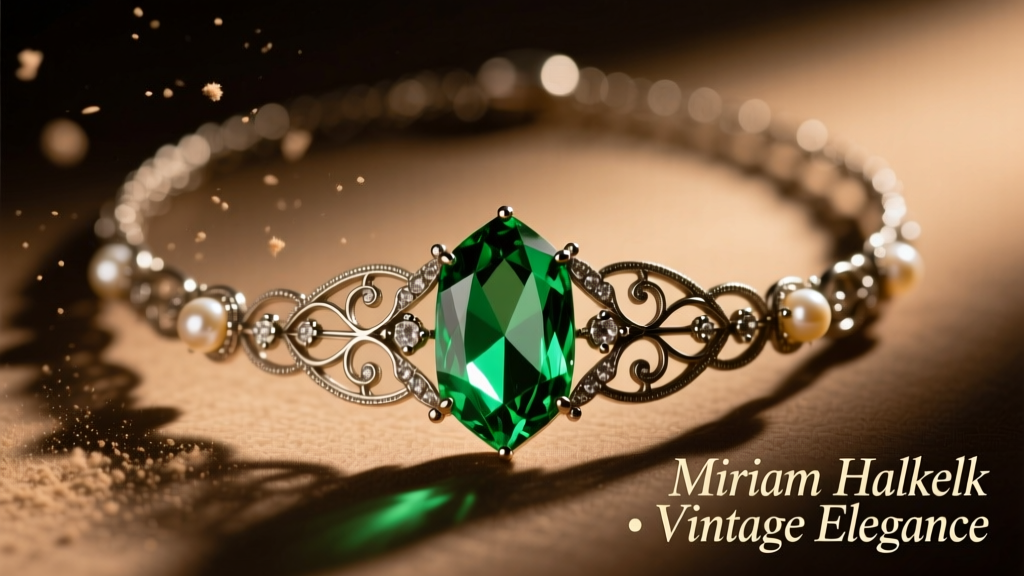
The Miriam Haskell Green Crystal Crystallite Necklace: A Study in Mid-Century American Costume Jewelry Craftsmanship
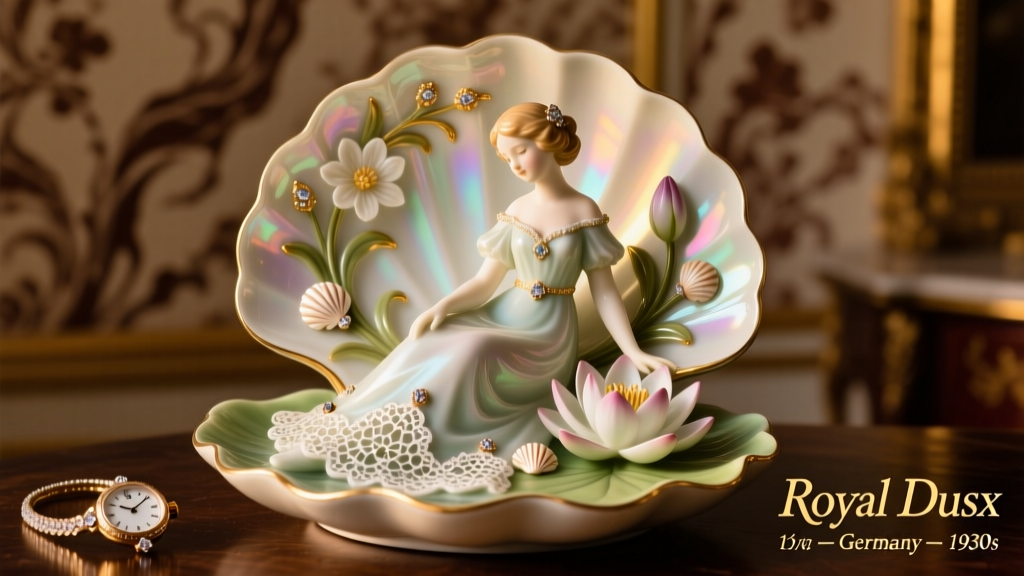
Royal Dux Group: Maidens on Seashell Flowering Lily Pads — A Masterpiece of Bohemian Porcelain Artistry (16½ × 14 in)
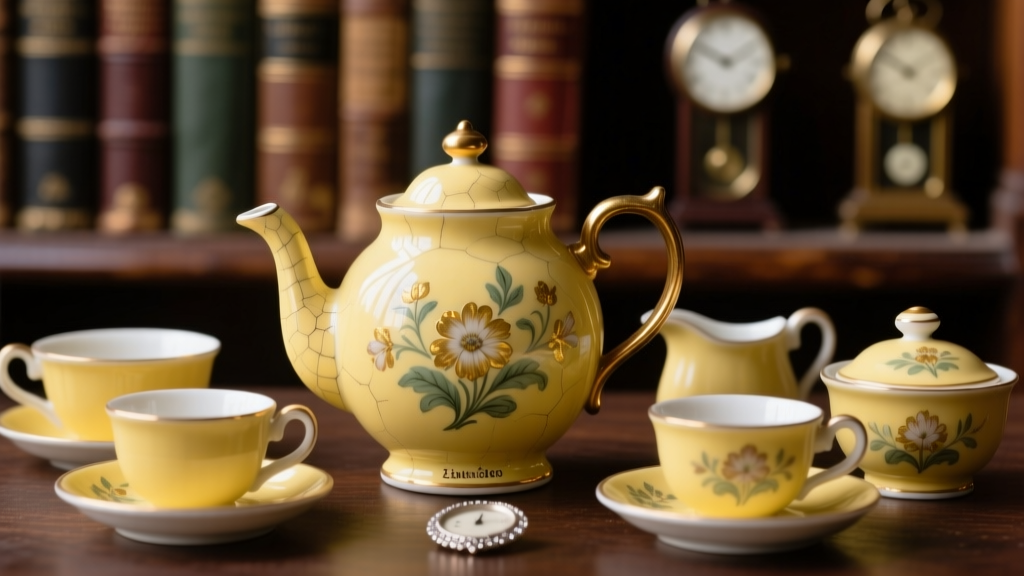
A Collector’s Deep Dive: The Late 19th-Century Yellowware Miniature Tea Set — Six-Piece Ensemble with 3-Inch Teapot