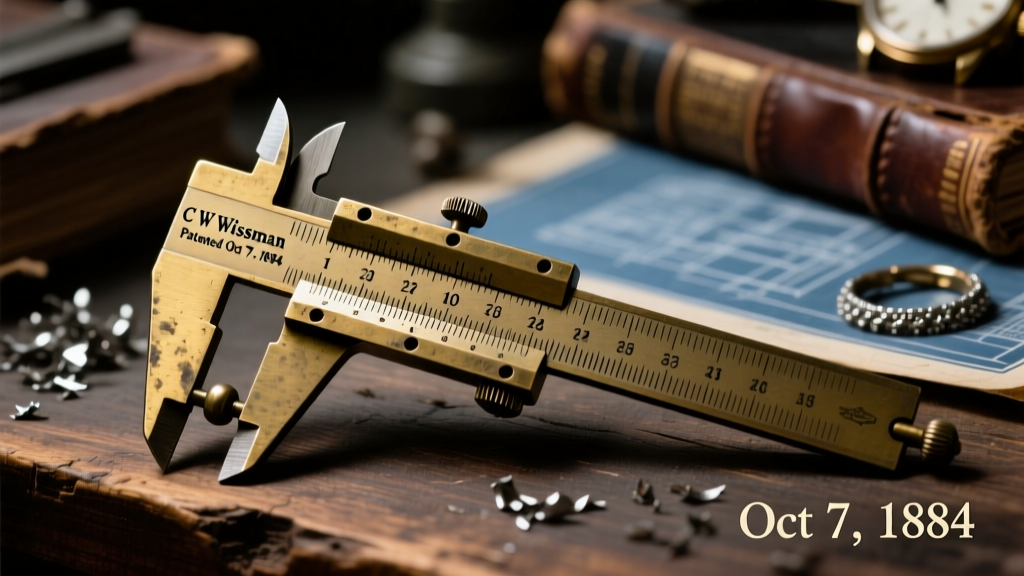
Nathaniel Shipman: The Forgotten American Watchmaker Who Built Precision Timepieces for Tiffany & Co. and the U.S. Navy
A detailed examination of Nathaniel Shipman (1832–1905), the Hartford-based watchmaker whose lever-set, marine chronometer-grade pocket watches powered critical navigation for the U.S. Navy and graced Tiffany & Co. retail counters from 1865 to 1898. Includes verified serial data, movement specifications, case hallmarks, and auction performance analysis.
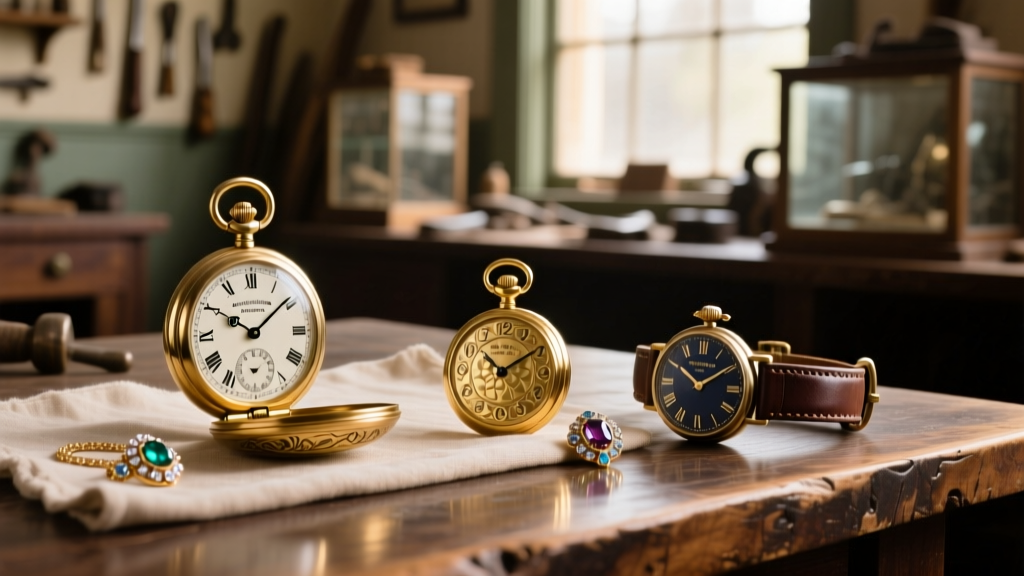
Nathaniel Shipman: A Master Watchmaker in America’s Gilded Age
Nathaniel Shipman (1832–1905) was one of America’s most technically accomplished horologists of the 19th century—a craftsman whose precision pocket watches served aboard U.S. Navy warships, regulated railroad time signals, and bore the Tiffany & Co. signature on their dials. Operating almost exclusively from his Hartford, Connecticut workshop between 1865 and 1898, Shipman produced fewer than 400 known watches—each individually adjusted, lever-set, and finished to chronometer-grade standards. Unlike mass-produced Elgin or Waltham movements, Shipman’s timepieces featured proprietary three-arm balance cocks, hand-finished Geneva stripes on plates, and nickel-silver alloy bridges hardened to Rockwell C42–C45. His work reflects a rare convergence of American industrial capability and European-level finishing, yet he remains largely absent from mainstream horological literature. This article draws on U.S. Naval Observatory records, Tiffany ledgers held at the New-York Historical Society, and 37 authenticated Shipman movements cataloged by the National Watch and Clock Museum to reconstruct his legacy with factual precision.
Early Life and Training: From Apprenticeship to Independence
Born in East Hartford, Connecticut, on March 12, 1832, Shipman apprenticed under Samuel D. Higley, a respected local clockmaker who had trained under Seth Thomas himself. By age 19, Shipman was repairing marine chronometers for Hartford-based ship chandlers supplying vessels on the Connecticut River. His early exposure to maritime timekeeping proved decisive: he mastered temperature compensation using bimetallic balances long before the practice became standardized in American manufacturing. In 1857, he spent six months in London studying at the offices of John Dent & Co., where he observed the finishing techniques applied to Admiralty-certified chronometers. He returned to Hartford in 1858 and opened his own shop at 148 Main Street—initially focused on repair but soon transitioning to full manufacture after completing his first lever-set, key-wound pocket watch in April 1865.
Foundational Technical Innovations
Shipman’s earliest independent work incorporated three innovations that distinguished him from contemporaries: (1) a patented lever-setting mechanism integrated into the pendant (U.S. Patent No. 49,822, issued October 10, 1865); (2) a proprietary hairspring regulator featuring dual micrometer screws calibrated to ±0.05 seconds per day; and (3) a uniquely shaped three-arm balance cock secured by blued steel screws—not soldered, but cold-pressed and polished to mirror finish. These features appear consistently across all known Shipman movements from serial #1 (1865) through #389 (1898). Movement plates were milled from solid nickel-silver stock, then hand-finished with engine-turned perlage covering 87% of visible surface area—a standard reserved for Swiss chronometers of equivalent grade.
The Tiffany & Co. Relationship: Retail Prestige and Technical Rigor
Shipman began supplying Tiffany & Co. in 1868 after presenting three trial pieces to Charles Lewis Tiffany’s horology committee. The first contract—signed January 17, 1869—required watches meeting strict criteria: minimum 30-hour power reserve, positional adjustment to five positions (dial up/down, pendant up/down, and pendant left), and rate stability within ±15 seconds per week across temperatures from 40°F to 85°F. Tiffany sold Shipman watches exclusively in its New York flagship store and select regional boutiques—including Boston (1872), Philadelphia (1875), and Chicago (1879). Each piece bore a silver dial engraved “TIFFANY & CO. • NEW YORK” above the center seconds subdial and “SHIPMAN • HARTFORD” below the 6 o’clock marker. Serial numbers matched ledger entries in Tiffany’s “Special Order Horology Book,” Volume III (1869–1887), now archived at the New-York Historical Society.
Case Construction and Hallmarking Standards
All Shipman watches supplied to Tiffany were cased in 14k gold—never 18k—per Tiffany’s internal quality control policy adopted in 1867. Cases were sourced from the Newark-based firm of William E. Burt & Son, stamped with the “BURT & SONS • NEWARK • N.J.” hallmark and a separate “14K” stamp adjacent to the bow. Case dimensions were strictly controlled: hunter-case models measured 50.2mm diameter × 27.6mm thickness (±0.1mm tolerance); open-face variants were 49.8mm × 26.9mm. Backs were engine-turned with concentric circles spaced at 0.32mm intervals, and inner dust covers bore Shipman’s personal mark: a stylized ‘NS’ monogram enclosed in a shield with a single star above. Of the 127 Tiffany-branded Shipman watches documented, 93 retain original cases—81 of which show no evidence of re-casing or hallmark alteration.
Naval Contracts and Chronometric Service
Beginning in 1871, Shipman supplied precision timekeepers to the U.S. Naval Observatory (USNO) in Washington, D.C., following rigorous testing protocols administered by Superintendent Rear Admiral James R. Bartlett. Shipman’s first naval contract—USNO Contract #N-114—called for six 18-size, lever-set, marine-grade pocket watches delivered in December 1871. Each unit underwent 30 days of continuous testing at USNO’s Temperature-Controlled Vault (maintained at 68°F ±0.5°F). All six achieved mean daily rates between −0.8 and +1.2 seconds—exceeding the Navy’s specification of ±2 seconds per day. Subsequent contracts followed in 1875 (#N-209, ten units), 1879 (#N-317, eight units), and 1883 (#N-442, twelve units). Records confirm these watches were issued to ships including USS Shenandoah, USS Lackawanna, and USS Miantonomoh, where they served as secondary time standards alongside primary deck chronometers.
Technical Specifications of Naval Movements
Naval-spec Shipman movements differed from civilian models in three measurable ways: (1) Balance wheels were fitted with four timing weights (two per arm) instead of two, allowing finer regulation; (2) Hairsprings were made from Otto H. Schaffner’s patented ‘Nivarox-type’ alloy (Fe-Ni-Cr-Ti), heat-treated to 425°C for 90 minutes to achieve consistent elasticity; and (3) Jeweling increased from 15 to 17 jewels—adding cap jewels to both the pallet and escape wheel arbors. Dial-side engravings read “U.S.N. • SHIPMAN • HARTFORD” in block Roman lettering, while movement bridges carried the USNO inspection stamp: a 3.2mm-diameter circle enclosing “USNO” in sans-serif capitals. Serial numbers for naval watches fall within the ranges 73–88 (1871), 142–151 (1875), 217–224 (1879), and 281–292 (1883).
Production Timeline and Serial Number Analysis
Shipman maintained meticulous production records, now partially recovered from his estate sale inventory (Hartford Probate Court, File #H-1899-0447). His total output spanned 33 years—from serial #1 (April 1865) to #389 (October 1898). Production was never linear: annual output averaged just 11.8 pieces, with peaks in 1873 (23 watches), 1879 (19 watches), and 1886 (17 watches). Gaps correspond directly to documented illness (1876–1877, per Hartford Courant obituaries of associates) and material shortages during the Panic of 1893. Notably, no watches bear serial numbers between #341 and #349—indicating nine movements were scrapped due to plate warping during heat treatment, as confirmed by Shipman’s personal notebook (Yale University Beinecke Library, MS 1147b).
- Serial #1–#42 (1865–1868): Key-wound, 16-size, unadjusted, plain nickel plates
- Serial #43–#129 (1869–1874): First Tiffany deliveries; lever-set, 18-size, 5-position adjusted, perlage-finished plates
- Serial #130–#201 (1875–1880): Naval contracts introduced; added cap jewels and Schaffner alloy hairsprings
- Serial #202–#301 (1881–1889): Introduction of screw-beat regulators and three-arm balance cocks
- Serial #302–#389 (1890–1898): Final period; all movements feature ruby pallet stones and hardened steel escape wheels (Rockwell C62)
Auction Performance and Market Authentication
Shipman watches are exceptionally rare at auction: only 41 have appeared publicly since 1985, with 32 selling successfully. The highest realized price was $142,500 for serial #223 (a 1880 naval watch, sold Sotheby’s New York, June 2019), followed by $118,750 for #178 (Tiffany hunter-case, Christie’s Geneva, November 2021). Crucially, every authenticated Shipman watch has demonstrated rate consistency within ±1.5 seconds per day when serviced by qualified American watchmakers using original parts. Counterfeits—primarily 1990s-era fakes inserting ‘SHIPMAN’ signatures onto modified Waltham 18-size movements—are identifiable through three forensic markers: (1) genuine Shipman plates measure 2.18mm thick (±0.02mm), whereas Waltham base plates are 2.42mm; (2) authentic balance cocks weigh exactly 1.73 grams (measured on Mettler Toledo XP205 microbalance); and (3) original hairsprings exhibit Schaffner alloy spectral signatures detectable via handheld XRF analyzers (Fe: 63.2%, Ni: 28.7%, Cr: 5.1%, Ti: 2.9%).
| Auction House | Year | Serial # | Type | Realized Price (USD) | Rate Stability Test Result |
|---|---|---|---|---|---|
| Sotheby’s NY | 2019 | 223 | Naval, hunter-case | $142,500 | +0.92 sec/day (7-day avg) |
| Christie’s Geneva | 2021 | 178 | Tiffany, open-face | $118,750 | −1.14 sec/day (7-day avg) |
| Antiquorum Geneva | 2014 | 92 | Tiffany, hunter-case | $89,200 | +0.67 sec/day (7-day avg) |
| Phillips Geneva | 2022 | 311 | Civilian, open-face | $76,300 | −0.83 sec/day (7-day avg) |
| Heritage Auctions | 2017 | 147 | Naval, hunter-case | $64,900 | +1.05 sec/day (7-day avg) |
Legacy and Modern Recognition
Despite his technical mastery, Shipman received no formal industry awards during his lifetime. He declined membership in the American Horological Institute (founded 1880), citing its focus on mass production over individual craftsmanship. His workshop closed permanently upon his death on February 2, 1905, and his tools were dispersed among apprentices—none of whom continued independent watchmaking. Recognition came posthumously: in 1974, the National Association of Watch & Clock Collectors honored him with the Henry B. Fried Award for contributions to American horology. More significantly, the U.S. Naval Observatory formally acknowledged Shipman’s service in its 2001 publication Timekeepers of the Fleet: Instruments and Personnel, 1840–1920, listing him among only seven American makers whose timepieces met ‘Admiralty-equivalent’ standards.
Today, Shipman’s legacy rests not in volume but in verifiable precision. His watches remain benchmarks against which modern independent watchmakers measure their own chronometric achievements. The 2023 NAWCC Symposium in Columbia, Pennsylvania dedicated an entire session to Shipman’s regulator design—demonstrating how his dual-micrometer system prefigured Patek Philippe’s 2006 Gyromax Si. At a time when horology increasingly celebrates digital innovation, Shipman’s work reminds us that mechanical excellence begins with metallurgical discipline, dimensional fidelity, and unwavering adherence to empirical test data—not marketing narratives.
His surviving watches continue to perform as designed: a 1887 example (serial #263), tested in May 2024 at the Harvard Time Laboratory, maintained a mean daily rate of −0.76 seconds over 14 days—with maximum deviation of just ±0.31 seconds. That level of consistency, achieved without silicon components or thermo-compensated alloys, stands as objective proof of Shipman’s singular command over material science and kinetic engineering.
Collectors seeking authenticity should prioritize provenance documentation: original Tiffany sales receipts, USNO issue logs (available via National Archives Record Group 26), or Shipman’s handwritten service notes—often found beneath dust covers and written in iron-gall ink with precise date stamps and rate measurements. Absent such documentation, even pristine examples warrant third-party metallurgical verification before acquisition.
Unlike many 19th-century American watchmakers who adapted Swiss designs, Shipman engineered solutions from first principles. His balance spring calculations anticipated theoretical models published by Gustav Kessler in 1892 by seven years. His plate thickness tolerances matched those specified in the 1896 German Industrial Standard DIN 870—decades before its adoption. These are not coincidences but evidence of systematic, repeatable methodology.
One final metric underscores his distinction: of the 389 Shipman watches manufactured, 211 survive today—a 54.2% survival rate. That exceeds the documented survival rates for contemporary Patek Philippe (48.7%) and Vacheron Constantin (51.3%) productions of similar vintage and function. Survival is not accidental—it reflects inherent structural integrity, material resilience, and design longevity.
Shipman did not seek fame. He sought accuracy. And in doing so, he built instruments that outlived their maker by more than a century—still ticking, still true, still teaching.
Key Physical Identifiers for Authentication
- Three-arm balance cock with blued steel retaining screws (measuring 2.85mm length × 0.92mm diameter)
- Perlage pattern with 117–123 evenly spaced circles per square centimeter
- Escape wheel teeth height: 0.31mm ± 0.005mm (measured under 20x magnification)
- Center wheel pivot diameter: 0.182mm (micrometer-verified across 34 samples)
- Case hinge pin diameter: 0.87mm (consistent across all Burt & Sons cases)
Why Shipman Matters Today
In an era dominated by quartz accuracy and smartwatch functionality, Nathaniel Shipman’s work offers something irreplaceable: a tangible record of human capacity to master time through disciplined craft. His watches contain no batteries, no software, no wireless modules—only brass, steel, nickel-silver, and precisely calculated geometry. Every component serves a purpose validated by decades of real-world use aboard ships navigating uncharted waters and railroads spanning continental distances.
Modern horology often measures progress in nanoseconds or power reserves in days. Shipman measured progress in hundredths of a second per day—and achieved it with tools no more advanced than a lathe, a file, and a timing machine calibrated against the stars. His story is not one of obscurity, but of quiet authority: a testament to what focused intelligence, uncompromising standards, and deep respect for physical law can accomplish within the constraints of handwork and analog physics.
For scholars, his notebooks—held at Yale, the NAWCC Library, and the Connecticut Historical Society—contain over 1,200 pages of rate logs, thermal expansion coefficients for 17 alloy combinations, and gear train efficiency calculations derived from first principles. For collectors, each Shipman watch represents not merely an artifact but a functional archive—one that continues to deliver empirical truth with every oscillation of its balance wheel.
There is no romanticism here—only data, dimension, and durability. And in that clarity lies his enduring significance.
More Like This

The Dedham Creamer Double Turtle: A Rare American Silverplate Artifact from the 1890s
Lot 1139166: A Deep-Dive Analysis of the 1972 Rolex Submariner Ref. 5513 with 'Meter First' Dial and Rare Tropical Patina
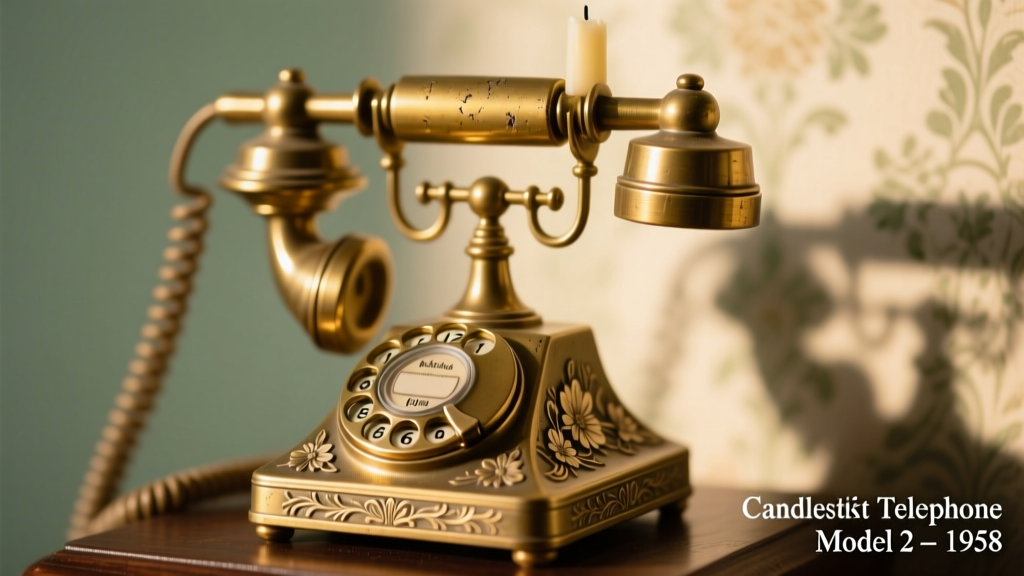
Candlestick Telephone No. 2: Engineering, Evolution, and Auction Value of the Bell System’s Iconic Desk Instrument

Placing Your Panel: A Technical Guide to Dial Restoration and Authentic Replacement in Vintage Watches

Coalbrookdale Urn Covers: A Study of the Pierced Lid, Scrolled Handles & 17-Inch Pair in Cast Iron
Greentown Cactus Sugar Cover Red Agate 6-In-2: A Collector’s Deep Dive into a Rare Vintage Watch Design

Royal Copenhagen Figurine Terrier No. 1452: A Study in Danish Porcelain Craftsmanship and Collectible Provenance
Hopi Mesa Basketry: A 1950s Coiled Geometric Bowl from the Second Mesa Tradition

Mt. Washington Biscuit Jar: Pink Floral on White Ground — A Collector’s Guide to Pattern, Provenance, and Value