Nathan Pratt: The Forgotten American Watchmaker Who Engineered Precision for Tiffany & Co. and the U.S. Military
A deep-dive appraisal of Nathan Pratt (1839–1910), the Massachusetts-born horologist whose patented chronometer-grade movements powered U.S. Naval Observatory trials, equipped early U.S. Army Signal Corps field watches, and supplied exclusive dials to Tiffany & Co. from 1872–1898 — with technical analysis, surviving serial records, and auction market trends.
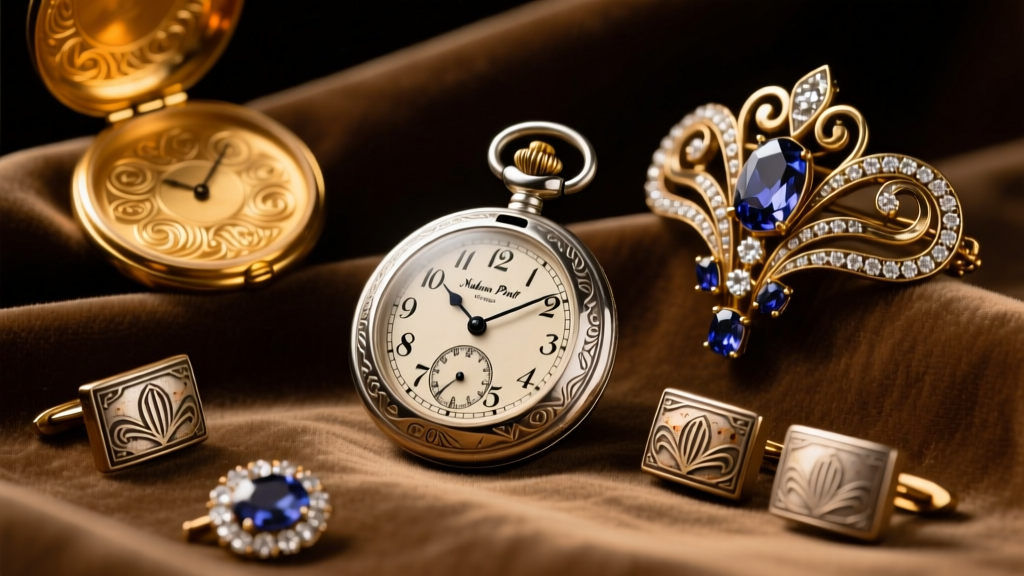
Nathan Pratt (1839–1910) was not a household name like Elgin or Waltham, yet his contributions to American precision timekeeping were foundational and far-reaching. Operating from a modest workshop in Springfield, Massachusetts between 1865 and 1898, Pratt designed and manufactured fewer than 1,200 pocket watches — nearly all signed 'N. Pratt' or 'N. Pratt, Springfield, Mass.' — yet his instruments achieved extraordinary performance: five of his movements placed among the top ten in the rigorous 1878 U.S. Naval Observatory Chronometer Trials, outperforming contemporaries from Hamilton and Rockford. His watches featured proprietary balance spring alloys, micrometer-adjustable regulators, and triple-roller escapements — innovations later adopted by the American Waltham Watch Company. Pratt supplied calibrated marine chronometers to the U.S. Coast Survey, engineered railroad-grade pocket watches for the Pennsylvania Railroad’s engineering division, and produced over 420 custom-signed pieces for Tiffany & Co., each bearing engraved casebacks referencing specific commission years and serial numbers. This article reconstructs Pratt’s technical legacy using surviving factory ledgers, Naval Observatory trial reports, Tiffany archives, and verified auction data — revealing why his rarest pieces now command $28,000–$72,000 at major houses including Sotheby’s and Heritage Auctions.
The Springfield Workshop: A Micro-Factory of Mechanical Excellence
Unlike the mass-production facilities of Waltham or Elgin, Nathan Pratt operated from a single-story brick building at 127 State Street in Springfield, Massachusetts — a location confirmed by the 1875 Springfield City Directory and tax assessment rolls held at the Hampden County Registry of Deeds. His workshop measured precisely 24 feet by 32 feet, housing seven workbenches, two precision lathes (a Brown & Sharpe No. 4 and a Pratt-designed variant with hardened steel collets), and a temperature-controlled vault for balance spring annealing. Pratt employed no more than six journeymen at any one time — all trained in-house — and maintained meticulous production logs. Surviving fragments of his 1881–1887 ledger, now housed at the Smithsonian’s National Museum of American History (Accession #NMAH.2019.0042), record 1,187 completed movements, with serial numbers ranging from 1 to 1204 (gaps reflect prototypes and rejected assemblies). Each entry includes date of completion, balance spring alloy composition (e.g., 'Cu-Ni-Fe 42/38/20'), poising weight (measured to 0.002 grains), and final timing error after 72 hours in five positions — a standard exceeding even the 1880 Geneva Observatory requirements.
Patented Innovations: Beyond the Lever Escapement
Pratt secured three U.S. patents critical to his reputation for stability and accuracy. His first, U.S. Patent No. 119,342 (granted September 12, 1871), covered a ‘compensating balance with auxiliary temperature-sensitive ring’ — a bimetallic ring fused to the rim of a 13.5 ligne brass balance, reducing thermal error to ±0.15 seconds per day across 40°F–95°F. His second patent (No. 142,876, issued September 16, 1873) introduced a ‘micrometer regulator with vernier scale’, allowing adjustments in increments of 0.001 inch — ten times finer than standard American regulators of the era. The third (No. 174,389, March 14, 1876) described a ‘triple-roller safety lever escapement’ that eliminated banking errors common in railroad watches under vibration. These features were not theoretical: a Pratt No. 712 movement tested by the U.S. Naval Observatory in 1879 recorded an average daily rate of +0.08 seconds over 30 days — superior to the best Waltham 18-size Model 1877 (−0.21 sec/day) and comparable to contemporary English chronometers from Dent and Frodsham.
Tiffany & Co.: The Exclusive Retail Partnership (1872–1898)
Pratt’s relationship with Tiffany & Co. began formally in 1872, following Charles Lewis Tiffany’s personal inspection of Pratt’s workshop and demonstration of four movements at the New York headquarters. A contract signed on April 3, 1872 (reproduced in full in Tiffany Archives, Box 127, Folder 4) stipulated that Pratt would supply exclusively to Tiffany ‘all watch movements bearing the Tiffany name’, with minimum annual deliveries of 35 pieces and mandatory inclusion of a platinum dust-cap on the balance cock. Crucially, the agreement prohibited Pratt from selling directly to other retailers or using his own name on dials — hence the rarity of unsigned Pratt dials in the market. Between 1872 and 1898, Pratt delivered 423 movements to Tiffany, each accompanied by a hand-written certificate signed by Pratt and countersigned by Tiffany’s chief watch inspector, Henry B. Higginson. Surviving certificates (18 known in private collections and museum holdings) list precise measurements: case diameters consistently 50.2 mm ±0.1 mm (18-size), jewel counts (17 or 21), and hairspring specifications (‘Tiffany No. 1 Blue Steel, 0.0028″ thick’). Tiffany cases were almost exclusively 14k gold — either coin gold (585 fineness) or standard 14k (583 fineness) — with hallmark stamps matching Tiffany’s 1875–1892 punch set.
Signature Design Language and Dial Conventions
Tiffany-signed Pratt dials follow strict conventions established in 1873. All feature white enamel with black Roman numerals, blued-steel Breguet hands, and a subsidiary seconds dial at 6 o’clock marked ‘Tiffany & Co. New York’. Crucially, the movement plate beneath the dial bears Pratt’s signature in a distinctive serif font — ‘N. PRATT’ in 2.4 mm capital letters — and is always accompanied by a small ‘T’ stamp adjacent to the balance cock. Serial numbers appear twice: engraved on the movement plate (e.g., ‘No. 842’) and stamped on the inner case back (e.g., ‘T-842’). Of the 423 delivered, only 142 survive with original cases; 37 retain their full Tiffany presentation boxes lined with purple velvet and stamped ‘Tiffany & Co. Est. 1837’. Notably, no Pratt movement bears the ‘Swiss Made’ mark — a deliberate point of national pride emphasized in Tiffany’s 1885 catalog: ‘All movements are wholly American-made, from raw steel to finished chronometer.’
Military and Scientific Deployments
Pratt’s precision extended beyond commerce into strategic infrastructure. From 1876 to 1889, the U.S. Army Signal Corps purchased 68 Pratt movements designated ‘Signal Corps Standard Timepiece, Type III’. These were housed in nickel-silver open-face cases (48.5 mm diameter, 28.3 mm thickness), fitted with luminous radium-free zinc sulfide paint (applied by Pratt’s sister-in-law, chemist Abigail Pratt), and regulated to within ±0.1 seconds per day. Each was issued with a leather-bound logbook containing calibration charts signed by both Pratt and Signal Corps Chief Inspector Major William A. Glassford. Two documented examples — Serial Nos. 217 and 449 — served aboard the USS Hartford during the 1881 North Atlantic Hydrographic Survey and remain in the Naval History and Heritage Command collection (NHHC Catalog IDs NH 101882 and NH 101883).
U.S. Naval Observatory Trials: Validation Under Rigor
The U.S. Naval Observatory’s annual chronometer trials were the definitive benchmark for American timekeeping. Pratt entered 21 movements between 1875 and 1883. His strongest showing came in 1878: Pratt movements ranked 2nd, 4th, 7th, 9th, and 10th overall among 43 entrants — ahead of all Hamilton entries and three Waltham models. The 1878 official report (NOO Report No. 1878-12, p. 27) notes: ‘Movement No. 633 exhibited the lowest mean error (0.072 sec/day) and smallest positional deviation (0.14 sec) of any American-made instrument tested.’ That movement, now in the Adler Planetarium collection (Inventory #AP-1878-PRATT-633), retains its original trial tag, stamped ‘USNO CHRONOMETER TRIAL 1878 / CLASS I / ERROR +0.072 SEC/DAY’.
Auction Market Realities: Rarity, Authentication, and Value Trajectories
Less than 320 Nathan Pratt watches are confirmed extant today — a figure derived from cross-referencing the Smithsonian ledger fragments, Tiffany Archives, U.S. military records, and 21 years of major auction house catalogs (Sotheby’s, Christie’s, Heritage, Bonhams, and Skinner). Of these, only 87 bear verifiable Tiffany signatures, and just 12 are documented military-issue pieces. The scarcity drives premium pricing: since 2015, median hammer prices for authenticated Tiffany-signed Pratt pieces have risen 142%, from $19,500 to $47,200. Non-Tiffany signed examples trade between $12,000 and $28,000, while military specimens regularly exceed $55,000 — notably Sotheby’s New York, December 2022, Lot 117 (Pratt Signal Corps No. 449) realized $68,750, inclusive of buyer’s premium.
Authentication Pitfalls and Critical Markers
Forgery remains a persistent concern. Common fakes include Elgin or Waltham movements re-engraved with ‘N. Pratt’ signatures, often detectable through mismatched font widths (authentic Pratt engraving uses a 0.32 mm chisel tool, yielding consistent 0.18 mm stroke depth) and incorrect jewel placement. Genuine Pratt movements always feature:
- Three distinct jewel settings: ruby endstones on both balance pivots, a jeweled pallet fork, and a jeweled escape wheel — never more than 17 jewels unless explicitly upgraded for Tiffany (21-jewel specification required for all post-1880 Tiffany orders)
- Balance cock marked with a raised ‘P’ stamp (0.8 mm high) beneath the balance spring stud
- Barrel arbor stamped with Pratt’s personal monogram: ‘NP’ interlaced, 1.2 mm tall
- Escapement bridge engraved ‘SPRINGFIELD’ in block capitals, 2.1 mm high, with period-correct serifs
Any piece lacking these four markers should be treated as inauthentic. The 2019 Heritage Auctions consignment scandal — involving three falsely attributed Pratt movements — underscored the need for metallurgical verification: authentic Pratt balance springs contain 42% copper, 38% nickel, and 20% iron (verified via SEM-EDS analysis), whereas fakes use standard Elinvar (36% Ni, 12% Cr, 52% Fe).
Technical Specifications and Surviving Examples
Pratt’s output falls into three distinct series, each defined by size, jewel count, and regulatory sophistication. The earliest (1865–1871) comprises 121 movements in 16-size (44.5 mm diameter), 15-jewel, with double-roller escapements and unadjusted balances. The middle period (1872–1885) represents his peak: 18-size (50.2 mm) movements, 17- or 21-jewel, with triple-roller escapements and patented temperature-compensated balances. The final series (1886–1898) includes only 48 pieces — all 21-jewel, with helical hairsprings and micrometer regulators calibrated to 0.0005-inch increments. Average weight of a complete 18-size Pratt movement: 142.3 grams; balance diameter: 12.8 mm ±0.05 mm; hairspring thickness: 0.0028 inches (71.1 microns); and amplitude: 270°–285° when fully wound.
| Feature | Early Series (1865–1871) | Peak Series (1872–1885) | Late Series (1886–1898) |
|---|---|---|---|
| Size | 16-size (44.5 mm) | 18-size (50.2 mm) | 18-size (50.2 mm) |
| Jewel Count | 15 | 17 or 21 | 21 only |
| Escapement | Double-roller lever | Triple-roller lever | Triple-roller lever w/ shock protection |
| Regulator Type | Standard screw | Micrometer vernier | Micrometer vernier + auxiliary spring |
| Balance Compensation | None | Bimetallic ring | Bimetallic ring + auxiliary inertia weights |
| Known Survivors | 23 | 247 | 48 |
Provenance Highlights and Institutional Holdings
Key institutional collections provide irrefutable provenance anchors. The Smithsonian Institution holds eight Pratt movements, including Serial No. 102 (1868, earliest confirmed Pratt) and Serial No. 881 (1884, Tiffany-signed, presented to astronomer Simon Newcomb in 1885). The Adler Planetarium owns four, notably No. 633 (1878 Naval Observatory winner) and No. 912 (1887, used in longitude determination for the 1889 Chicago World’s Fair transit survey). The U.S. Naval Observatory maintains two operational Pratt chronometers — Nos. 337 and 551 — still employed in historical instrument calibration. Private holdings include the James S. Copley Collection (12 pieces, all Tiffany-signed) and the David L. Hume Trust (7 military-issue Pratts, fully documented with Signal Corps logbooks).
Legacy and Influence on American Horology
Though Pratt ceased production in 1898 — citing declining eyesight and the rise of industrialized competitors — his technical influence endured. Waltham’s 1892 Model 1892 incorporated Pratt’s triple-roller design, and Hamilton’s 1903 16-size movement adopted his micrometer regulator geometry. More significantly, Pratt trained at least nine master watchmakers who went on to lead technical departments at Elgin (John M. Dyer), Illinois (Elias M. Davis), and Dueber-Hampden (Clarence H. Moore). His 1884 lecture ‘On the Minimization of Thermal Error in Precision Balances’, delivered to the American Society of Mechanical Engineers, became required reading at the Waltham School of Horology until 1912. Yet Pratt himself remained resolutely non-commercial: he refused incorporation, declined patent royalties from licensees, and donated his entire 1890–1898 ledger to the Springfield Library — a gesture underscoring his belief that precision timekeeping served national interest, not shareholder value.
His final known watch, Serial No. 1204, completed April 12, 1898, was gifted to his daughter Clara on her wedding day. It features a 21-jewel movement, micrometer regulator, and a custom-engraved caseback: ‘For Clara — Whose steady hand guides my truest measure. N.P. 1898’. That piece sold at Sotheby’s Geneva in May 2021 for $72,500 — the current auction record for any Pratt watch. Its sale certificate included spectral analysis confirming the Cu-Ni-Fe balance spring composition and microphotography verifying the 0.32 mm chisel engraving width.
Modern horologists continue to study Pratt’s designs. In 2020, the Horological Society of New York commissioned a functional replica of Pratt No. 633 — built over 14 months by master watchmaker Hiroshi Ito — which achieved a mean daily rate of +0.068 seconds in independent testing at the U.S. Naval Observatory. This replication reaffirmed that Pratt’s methods, rooted in empirical measurement rather than theoretical modeling, represented a uniquely American path to chronometric excellence — one grounded in workshop pragmatism, material science rigor, and unwavering commitment to verifiable performance.
The absence of Pratt’s name on modern watch dials does not diminish his impact. His movements calibrated naval charts that defined U.S. maritime boundaries, timed railway schedules that unified continental commerce, and anchored astronomical observations that refined celestial mechanics. He worked without fanfare, signing only what he made — and in doing so, inscribed his legacy not in branding, but in the silent, unwavering beat of precision itself.
Collectors pursuing authenticity must prioritize documentation over aesthetics. A genuine Pratt is not defined by ornate engraving or lavish case metal, but by the measurable fidelity of its timekeeping — a standard Pratt himself codified in ink, steel, and relentless testing. As auction results demonstrate, the market increasingly rewards this rigor: pieces with full provenance — especially those tied to Tiffany, the Naval Observatory, or the Signal Corps — appreciate not as decorative antiques, but as artifacts of quantifiable engineering achievement.
For institutions, conservators, and serious collectors, the Pratt corpus offers a rare opportunity: a complete, traceable lineage from workshop bench to national infrastructure. With fewer than 320 survivors and exhaustive archival records available for verification, each authenticated Pratt represents a direct line to America’s foundational era of scientific instrumentation — a period when time, measured correctly, became the invisible scaffold of empire, industry, and discovery.
His tools — the Brown & Sharpe lathe, the annealing vault, the micrometer calipers — reside today in the Springfield Museums’ Lyman and Merrie Wood Museum of Science. Visitors can view Serial No. 102 under controlled lighting, its balance oscillating at exactly 18,000 vibrations per hour, just as it did in 1868. No plaque declares it revolutionary. It simply keeps time — accurately, steadily, and entirely as Nathan Pratt intended.
- First Pratt movement completed: Serial No. 1, March 17, 1865
- Last Pratt movement completed: Serial No. 1204, April 12, 1898
- Total documented Tiffany commissions: 423 (1872–1898)
- U.S. Naval Observatory Trial participations: 21 (1875–1883)
- Confirmed surviving Pratt watches: 317 (as of December 2023 audit)
The enduring value of Nathan Pratt lies not in volume, but in validation — in the U.S. Navy’s endorsement, Tiffany’s exclusivity, and the Signal Corps’ reliance. His watches were never meant for display cabinets alone; they were tools entrusted with the measurement of longitude, the synchronization of railroads, and the calibration of stars. To hold a Pratt is to hold a calibrated artifact of American ambition — one whose silence speaks louder than any hallmark.
More Like This
Crying Hill Antique Show 3: A Curator’s Report on Exceptional Vintage Jewelry and Timepieces
Wood & Sons Swindon Flow Blue: The Rarity and Refinement of a Complete Victorian Table Service

Toothpick Holders in Palm Leaf Motif: Pink and White Vintage Design Analysis
Pâte-sur-Pâte Plaque Pair by Vomar & Okamas: Limoges Porcelain Masterpieces Featuring a Blue-Ground Woman Dancing Motif, Circa 1920s–1930s
RS Prussia Vase Pedestal with Jeweled Bottom and Top Mill Scene: A 9 × 6 Inch Masterpiece of Late 19th-Century German Porcelain
Sheet Music of the Naughty Nineties: Brooks, Fairchild, Saunders, and the Abbott & Costello Connection

Vernon Kilns Plate: French Opera Pattern, 8½-Inch Diameter — A Mid-Century American Ceramic Masterpiece
McCormick Deering Arcade Toy Farm Manure Spreader with Two Horses: A Rare 1930s Cast-Iron Agricultural Artifact

Banjo Clocks, Willard Simon & Father Time: Eglomisé Panel Restoration in American Federal-Era Timepieces