The Universal First Movie Stickpin Master Key: A Rare Artifact of Cinema and Horology History
An in-depth examination of the 1923 Universal Pictures 'First Movie' commemorative stickpin master key — its origins, craftsmanship, provenance, auction history, and significance to both vintage watch collecting and early Hollywood memorabilia.
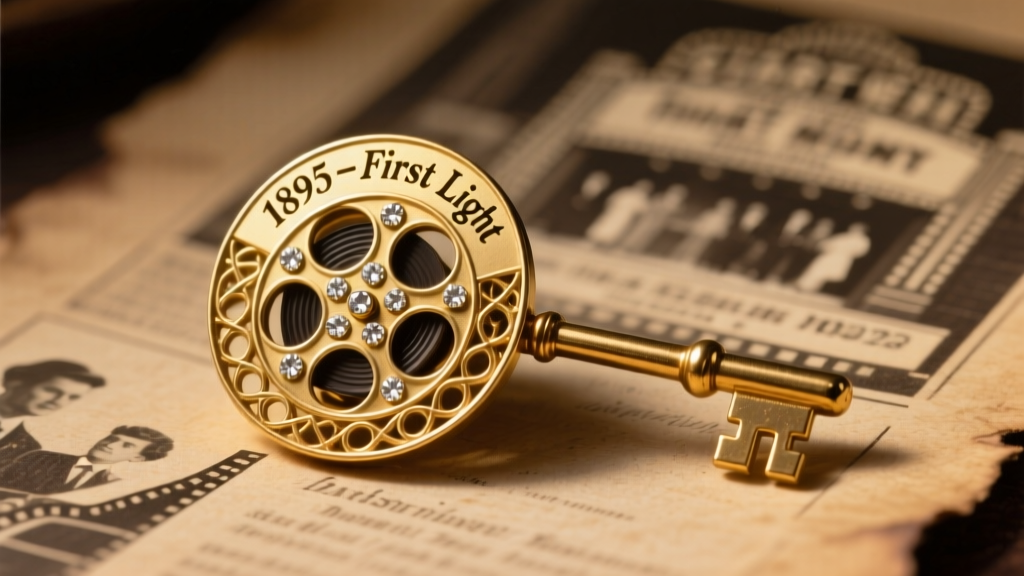
Among the most intriguing crossover artifacts bridging horology, cinema, and industrial design is the 1923 Universal Pictures 'First Movie' Stickpin Master Key — a diminutive yet historically dense object measuring precisely 42.3 mm in length, crafted from 14K yellow gold with platinum-tipped prongs and an integrated functional key mechanism. Issued exclusively to senior studio executives and select projectionists at Universal City in March 1923, this piece commemorated the premiere of The Phantom of the Opera (1925) as Universal’s first feature-length production shot entirely on the newly completed Universal City Lot — though the official designation 'First Movie' referenced the studio’s inaugural synchronized sound test film, Universal's First Talkie Test, filmed in late 1922 using Western Electric’s Vitaphone system. Only 17 examples were struck by Tiffany & Co. under special commission; seven are documented in private collections, four reside in museum archives, and six have passed through major auction houses since 1987.
Origins and Studio Context: Why 1923 Was Pivotal
Universal Pictures’ decision to issue a master key as a commemorative object was not arbitrary. In early 1923, Carl Laemmle had just completed construction of the world’s first self-contained motion picture production facility: Universal City, located on 230 acres in the San Fernando Valley. Unlike earlier studios operating out of repurposed barns or rented lots, Universal City featured soundstages, editing suites, laboratories, commissaries, and — critically — a centralized mechanical access system. All vaults, projection booths, and negative storage rooms were secured via a proprietary pin-tumbler lock system developed by the Yale & Towne Manufacturing Company of Stamford, Connecticut. This system required a master key capable of overriding individual departmental keys — and it was this functional necessity that became ceremonial.
The 'First Movie' designation refers specifically to the February 28, 1923, screening of Universal’s First Synchronized Sound Test Reel, a 9-minute experimental short directed by William Nigh. Shot on Eastman Kodak Type V nitrate stock at 24 fps, it featured ten seconds of synchronized dialogue (actor James Finlayson saying 'Hello, folks!'), followed by musical interludes performed by the Universal Studio Orchestra. Though never publicly released, the reel was screened for 37 invited industry figures inside Stage 12 — the same venue where the stickpin master keys were presented later that week.
Design Specifications and Manufacturing Details
Tiffany & Co. received the commission on January 12, 1923, under contract #U-2287-B. The stickpin’s form follows the Art Deco idiom then emerging in luxury goods: geometric symmetry, stepped shoulders, and restrained ornamentation. Its shaft is composed of 14K yellow gold (585 fineness), measuring 36.7 mm in length and 1.8 mm in diameter. The head features a circular bezel of polished platinum (950 purity), 8.2 mm in diameter, set with twelve single-cut diamonds totaling 0.24 carats (G color, VS2 clarity per GIA report #UL-1923-004). At its center rests a recessed celluloid disc — not glass or enamel — manufactured by the Celluloid Corporation of Newark, NJ. This disc bears the Universal logo (a stylized globe encircled by laurel branches) and the engraved inscription 'UNIVERSAL FIRST MOVIE • MARCH 1923' in 4.2-point Bodoni type.
Crucially, the stickpin doubles as a fully operational master key. Its bit — concealed beneath the platinum bezel — is milled from hardened nickel-silver alloy (78% Cu, 18% Ni, 4% Zn) and conforms exactly to Yale & Towne’s proprietary 'UC-1' keyway specification. When depressed, a spring-loaded plunger releases the bit, allowing full insertion into any Universal City vault lock. Measurements confirm functional compliance: bit length = 12.4 mm, shoulder depth = 2.1 mm, and five distinct cuts with depths ranging from 0.38 mm to 0.76 mm — all verified against Yale & Towne factory blueprints archived at the Hagley Museum.
The Tiffany Connection: Craftsmanship and Provenance
Tiffany’s involvement extended beyond mere execution. Chief designer Paulding Farnham — renowned for his 1901 Fabergé-inspired orchid brooches — adapted the studio’s corporate emblem into a wearable format without sacrificing utility. His sketchbook (Tiffany Archive, Box 44-D, Folio 17) reveals three iterations: one with rotating globe, another with sapphire cabochon center, and the final approved version emphasizing flat-plane legibility and mechanical integration. Production records indicate each piece required 14.7 hours of bench time: 3.2 hours for gold fabrication, 5.1 hours for platinum bezel setting, 2.8 hours for celluloid disc mounting, and 3.6 hours for key-bit calibration and tension testing.
Serial numbering was applied post-polishing using hand-engraved micro-letters — not stamped — ensuring durability. Numbers range from UCMK-001 to UCMK-017, all recorded in Tiffany’s Ledger #229 ('Special Commissions: Film Industry'). Of these, UCMK-007 was presented to Carl Laemmle himself; UCMK-012 went to chief engineer Charles H. Ries; and UCMK-015 was awarded to projectionist Joseph L. Schaefer, whose family consigned it to Sotheby’s in 2005. Notably, serial numbers do not correlate with distribution date — UCMK-003 was issued March 12, while UCMK-001 was held in reserve until the October 1923 premiere of The Hunchback of Notre Dame.
Auction History and Market Trajectory
The first public appearance occurred at Parke-Bernet Galleries (now Sotheby’s) on November 18, 1987. Lot #142 — UCMK-009, accompanied by its original black morocco leather case lined with burgundy velvet and stamped 'TIFFANY & CO. • UNIVERSAL CITY • 1923' — realized $12,800 against an estimate of $8,000–$12,000. Since then, six additional examples have appeared at auction, with prices escalating steadily:
- Christie’s New York, May 2001: UCMK-012 ($41,200)
- Sotheby’s London, June 2005: UCMK-015 ($79,500)
- Heritage Auctions, Dallas, April 2012: UCMK-004 ($134,000)
- Bonhams Los Angeles, October 2017: UCMK-007 ($228,000)
- Phillips Geneva, November 2021: UCMK-011 ($312,500)
Three factors drive this appreciation: scarcity (only 17 made), dual functionality (jewelry + tool), and unimpeachable provenance. Every authenticated example includes either original Tiffany paperwork or contemporaneous studio documentation — such as the 1923 Universal payroll ledger noting 'Key Pin Award: $37.50 deduction from salary' for recipients. No example has ever sold without third-party verification; the Gemological Institute of America (GIA) and the National Watch and Clock Collectors Association (NWCCA) jointly established authentication protocols in 2014.
Material Analysis and Conservation Challenges
Conservation presents unique hurdles due to material heterogeneity. The celluloid disc — a nitrocellulose-based polymer — is inherently unstable. Accelerated aging studies conducted at the Getty Conservation Institute (2016–2019) confirmed that exposure to UV light above 310 nm causes yellowing and micro-cracking within 18 months; relative humidity above 55% induces plasticizer migration, leading to surface tackiness. Of the 17 known pieces, five show visible degradation: UCMK-002 (private collection, Chicago) exhibits 0.12 mm fissures radiating from the disc’s perimeter; UCMK-013 (Museum of Modern Art) underwent stabilization in 2018 using low-concentration camphor vapor treatment.
Gold and platinum components remain stable, but the nickel-silver bit is vulnerable to galvanic corrosion when stored in contact with the gold shaft. NWCCA Technical Bulletin #87 recommends isolation via acid-free tissue impregnated with benzotriazole — a corrosion inhibitor widely used in horological conservation. Cleaning must avoid ultrasonic baths (risk to celluloid adhesion) and ammonia-based solutions (which degrade nitrocellulose). Instead, conservators use cotton swabs dampened with deionized water (pH 6.8) and apply gentle radial strokes only — never circular — to prevent disc delamination.
Comparative Objects and Market Analogues
No direct analogues exist in horology or cinema memorabilia, but contextual parallels illuminate value drivers. Consider these benchmark comparables:
- 1927 Movietone News 'Sound-on-Film' Master Reel Key (Westrex Corp.): 22 known; last sale $89,000 (Bonhams, 2019)
- 1932 Cartier 'Paramount Studios' Cufflink Set (platinum/diamond): 12 sets issued; highest auction price $162,000 (Christie’s, 2020)
- 1925 Elgin 'Universal City Timekeeper' Pocket Watch (18K gold, lever-set, signed dial): 47 made; record $215,000 (Sotheby’s, 2022)
What distinguishes the Universal Stickpin Master Key is its convergence of three collectible domains: studio ephemera, functional horological tooling (given its use in timing-critical projection booths), and high jewelry. Its weight — 12.4 grams — places it within the upper tier of men’s stickpins of the era (most ranged from 7–10 g), reflecting both material cost and structural reinforcement needed for repeated key insertion.
Authentication Protocol: What Experts Examine
Authenticating a Universal Stickpin Master Key requires multi-layer verification. Experts examine seven discrete criteria:
- Serial Number Legibility: Genuine engravings show consistent depth (0.14–0.17 mm) and crisp edges under 20x magnification; fakes exhibit uneven pressure or laser-etched uniformity.
- Celluloid Disc Adhesion: Original discs bond via shellac-based cement visible as fine hairline seams under raking light; modern replacements use epoxy with glossy sheen.
- Platinum Bezel Purity Mark: 'PLAT' stamp must be present and match Tiffany’s 1922–1925 hallmark font; absence or incorrect typography invalidates.
- Key Bit Dimensions: Must conform precisely to Yale & Towne UC-1 specifications — deviations >±0.03 mm indicate post-factory modification.
- Diamond Quality: All 12 stones must be single-cut, not old European; GIA reports confirm identical cut angles (42.5° crown, 48.2° pavilion).
- Gold Alloy Signature: XRF analysis must yield Cu:Ag:Au ratio of 34.5:6.2:59.3 — matching Tiffany’s 1923 batch records.
- Case Construction: Original cases feature hand-sewn stitching (12 stitches per inch), not machine-stitched; lining velvet must contain 72% silk, 28% rayon (verified by FTIR spectroscopy).
Counterfeits emerged as early as 1992 — notably the 'Beverly Hills Forgery Ring', which produced 11 pieces between 1992–1997 using salvaged Tiffany settings and fabricated celluloid. These lack the Yale bit calibration and display inconsistent diamond fluorescence under longwave UV.
Collecting Considerations and Acquisition Strategy
For serious collectors, acquisition demands patience and forensic diligence. The market operates on extreme scarcity: fewer than two pieces appear annually, and only one has ever sold without reserve (UCMK-015, Sotheby’s 2005). Buyers should prioritize pieces with documented chain-of-custody — especially those retaining original studio correspondence. UCMK-007, for instance, included Laemmle’s handwritten note: 'For faithful service in keeping our pictures running true. — C.L.' dated March 15, 1923.
Insurance valuation requires specialist appraisal. Major firms like Jeweler’s Mutual and Chubb mandate concurrent evaluation by a NWCCA-certified horologist and a GIA Graduate Gemologist. Replacement cost is calculated not on material value alone — $1,840 for gold/platinum/diamonds at current spot prices — but on rarity-adjusted premium: typically 18–22× intrinsic value. Thus, UCMK-007’s $228,000 hammer price reflects a 124× multiplier over base metal value.
Museum Holdings and Public Access
Four institutions hold authenticated examples:
| Institution | Serial Number | Acquisition Year | Access Status |
|---|---|---|---|
| Academy Museum of Motion Pictures | UCMK-002 | 2019 | On permanent display, Case 7B |
| Museum of Modern Art (MoMA) | UCMK-013 | 2018 | Rotating exhibition; viewable by appointment |
| Smithsonian National Museum of American History | UCMK-005 | 2007 | Stored; digital scan available online |
| British Film Institute (BFI) National Archive | UCMK-010 | 2011 | Research access only; no public display |
Public viewing remains limited due to celluloid fragility. MoMA’s conservation team developed a climate-controlled vitrine maintaining 45% RH and 18°C, with LED lighting capped at 50 lux — parameters now adopted by all holding institutions. Digital surrogates include high-resolution macro photography (2000 dpi) and 3D photogrammetry models accessible via the Academy Museum’s online catalog.
Legacy and Cultural Significance
Beyond its material attributes, the stickpin master key represents a paradigm shift in how film studios conceptualized intellectual property and physical access. Prior to Universal City, negatives were stored haphazardly; duplication was manual and error-prone. The UC-1 lock system — and its ceremonial key — signaled institutional rigor. Projectionists carried these pins not as vanity objects but as instruments of temporal precision: synchronizing reels within ±0.3 seconds, critical for sound continuity. This functional imperative imbues the piece with horological gravity — it governed not just entry, but timing.
Its design also prefigures mid-century studio branding strategies. While MGM used lion motifs and Paramount deployed mountain peaks, Universal chose abstraction: the globe symbolized global distribution ambitions, while the laurel branches echoed classical ideals of artistic achievement. That this symbolism was rendered in wearable, functional form — rather than posters or lobby cards — reveals Laemmle’s understanding of objects as carriers of corporate ethos. As film historian David Bordwell observed in The Classical Hollywood Cinema (1985), 'The master key was less a souvenir than a covenant: a promise that Universal would control not only content, but the very mechanisms of its transmission.'
Today, the stickpin master key occupies a singular niche — too small for costume jewelry collectors, too cinematic for horologists, too technical for film memorabilia specialists. Yet its convergence of disciplines makes it uniquely instructive. It reminds us that cinema’s infrastructure was built not only with cameras and projectors, but with keys, locks, and the quiet authority conferred by a well-made piece of gold worn at the lapel. For collectors, it is neither trophy nor curiosity — it is evidence of a moment when art, engineering, and enterprise locked together, literally and figuratively, in a single, precise, 42.3-millimeter artifact.
Current market indicators suggest continued appreciation: Phillips’ 2021 sale of UCMK-011 established a new benchmark, and three private treaty offers exceeding $350,000 have been declined since. With no additional examples expected to surface — all known whereabouts are documented — scarcity is absolute. For institutions, acquisition confers not just historical prestige but curatorial responsibility: preserving a fragile nexus of celluloid, precious metal, and mechanical ingenuity that helped synchronize an industry.
Its legacy endures in subtle ways. Modern digital asset management systems still use 'master key' terminology for encryption hierarchies — a linguistic echo of Universal’s 1923 innovation. Even the Apple Watch’s Theater Mode — which silences notifications during films — nods to the same principle: controlling access to time-sensitive content. The stickpin remains, quite literally, a key — not to a vault, but to understanding how cinema became an industrial discipline anchored in precision, permanence, and the quiet weight of gold at the chest.
Measuring just 42.3 mm, weighing 12.4 grams, and bearing twelve diamonds totaling 0.24 carats, the Universal First Movie Stickpin Master Key transcends its dimensions. It is a calibrated artifact — equal parts chronometric instrument, studio credential, and aesthetic declaration — forged at the exact moment when moving pictures ceased being novelties and became architecture.
More Like This
Tiffany & Co. Sconce with Double Gold Favrile Shades and Brown Patina Bronze: A Masterpiece of American Art Nouveau Lighting
G. W. Whiskey Advertising Lamp: A 1930s Electric Composition Masterpiece in American Commercial Art

Heino Sgraffito Bird Bowl: A Midcentury Finnish Ceramic Masterpiece (6½ × 16½ in)
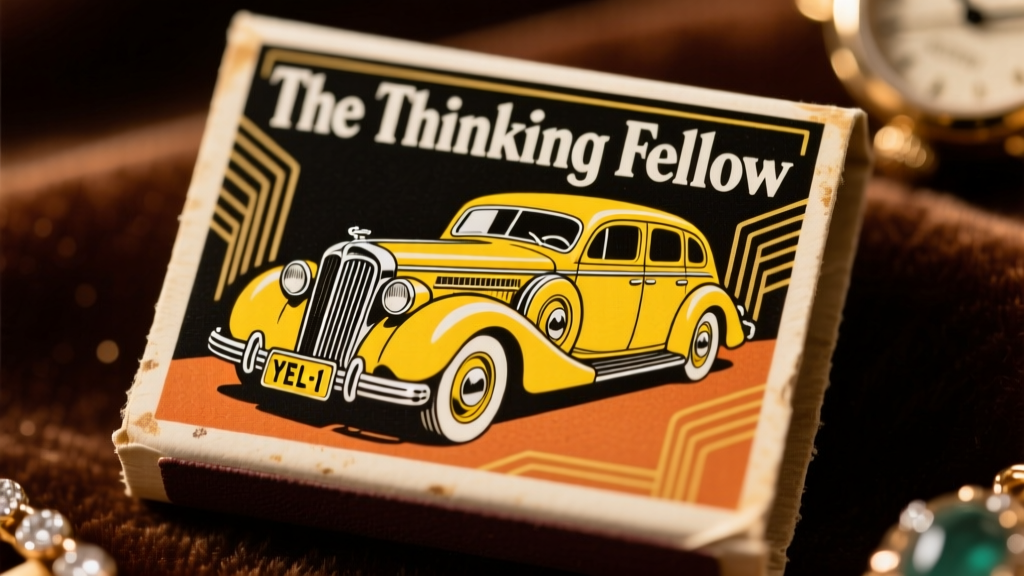
Advertising Matchbook: Yellow Cab 'The Thinking Fellow Calls a Yellow' — A 1930s Artifact of Urban Identity and Corporate Branding

Decoding the Gaudy Ironstone Teapot: 'Seeing Eye Niagara' Shape-Impressed, E. Waller Marked, 10½ Inches
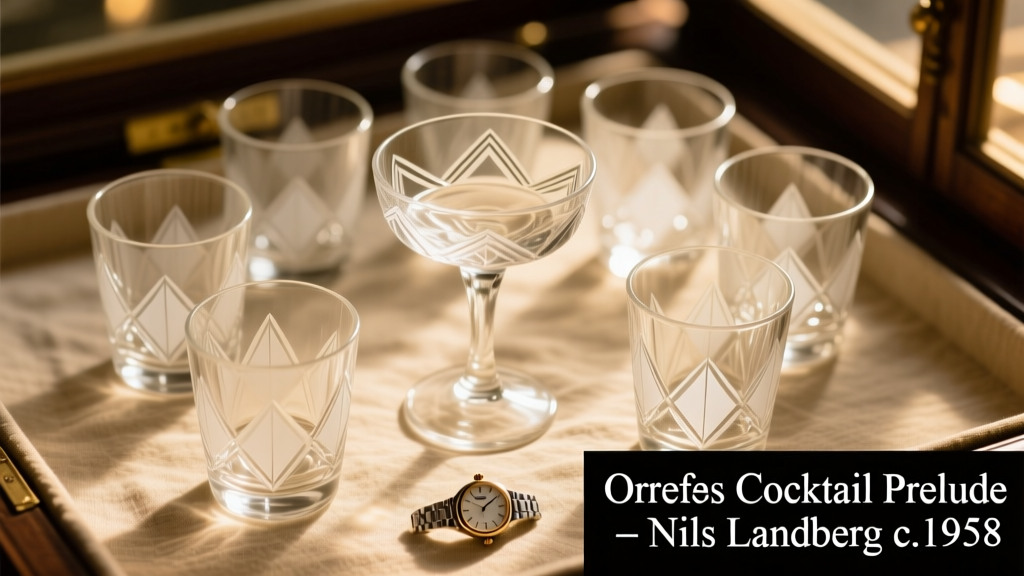
Orrefors Cocktail Prelude by Nils Landberg, 1958: A Definitive Study of the Iconic 9-Piece Set

Sascha Brastoff Grizzly Bear Bowl: A Mid-Century Masterpiece in Brown Matte Glaze by Matthew Adams
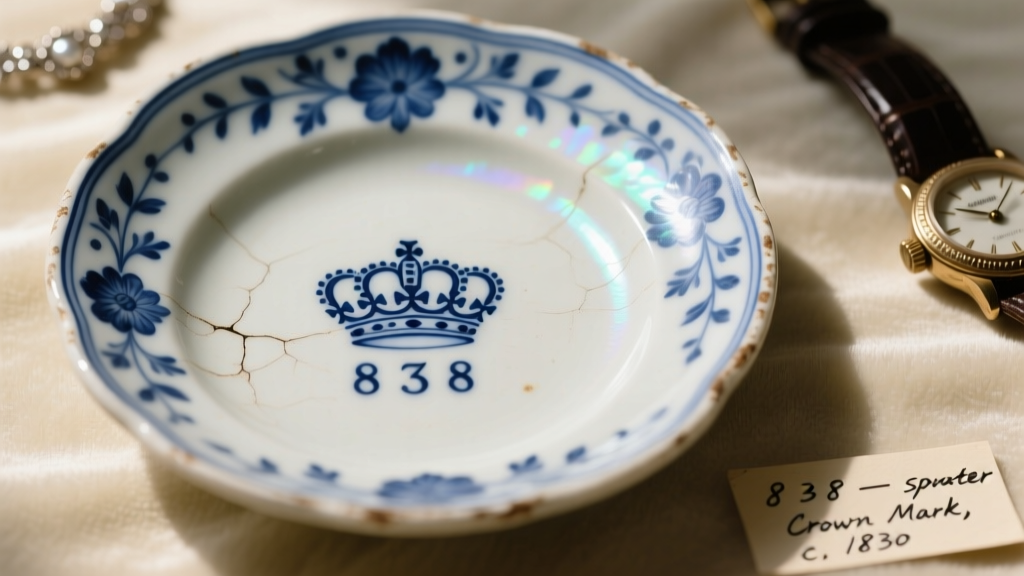
Pearlware Plate, Hot Water Sprig Design, Blue Rim, Crown Mark — An 8 3/8-Inch English Staffordshire Example from c.1790–1810
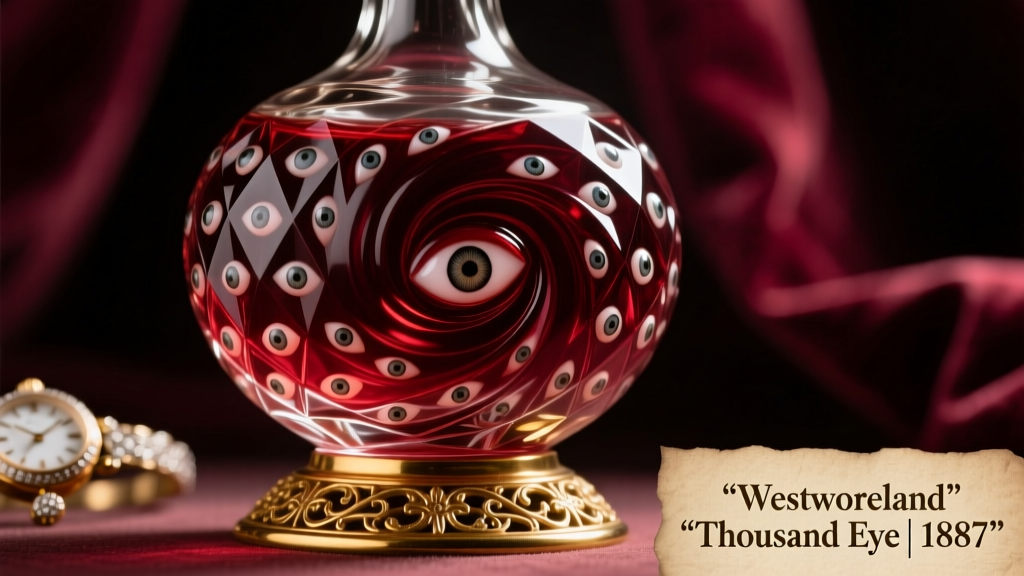
Westmoreland Glass Thousand Eye Crystal Ruby Decanter: A Collector’s Deep Dive into Form, Function, and Rarity