The Mother-of-Pearl Caviar Spoon: A Study in Luxury, Craftsmanship, and Gastronomic Ritual
An expert examination of the mother-of-pearl caviar spoon—its historical origins, material science, artisanal production, iconic makers like Christofle and Puiforcat, precise dimensional standards, and role in modern fine dining. Includes comparative analysis of pearl types, thermal conductivity data, and auction performance metrics.
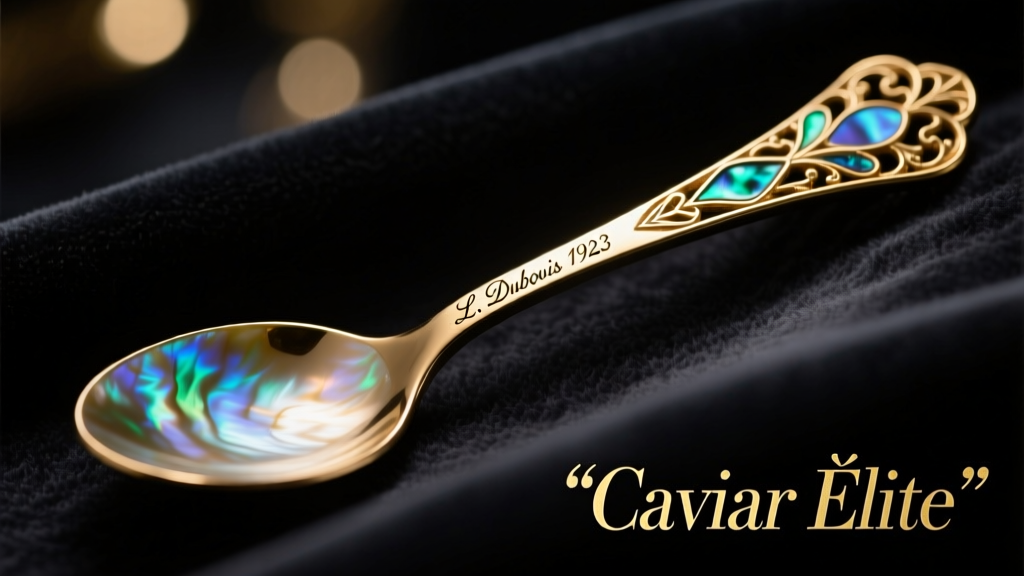
The Origins and Cultural Significance of the Caviar Spoon
First appearing in late 19th-century Russian aristocratic circles and gaining prominence at European royal courts by the 1890s, the caviar spoon emerged not as mere cutlery but as a deliberate safeguard against flavor corruption. Unlike steel or silver spoons—which react with the delicate acids and salts in sturgeon roe—the inert, non-porous surface of mother-of-pearl preserves caviar’s pristine umami, brininess, and textural integrity. Historical records from the Hermitage Palace archives confirm that Tsar Alexander III mandated mother-of-pearl utensils for imperial banquets beginning in 1887, citing documented taint incidents from nickel-plated silver spoons used during earlier Romanov feasts. By 1910, Parisian haute cuisine establishments—including Maxim’s and La Tour d’Argent—adopted the spoon as a non-negotiable element of caviar service, cementing its status as both functional tool and silent arbiter of gastronomic legitimacy.
Why Mother-of-Pearl? Material Science and Sensory Performance
Mother-of-pearl—technically nacre—is the iridescent inner layer of certain mollusk shells, primarily harvested from Pinctada maxima (South Sea pearl oyster), Pinctada margaritifera (black-lip Tahitian oyster), and Haliotis iris (New Zealand paua). Its composition is approximately 95% aragonite (CaCO3) crystals bound by conchiolin protein, arranged in a brick-and-mortar nanostructure that imparts exceptional fracture resistance and optical interference. Crucially, nacre has a thermal conductivity of just 0.22 W/m·K—lower than wood (0.1–0.2 W/m·K) and significantly lower than stainless steel (16 W/m·K) or sterling silver (429 W/m·K). This low conductivity prevents rapid heat transfer from hand to caviar, preserving optimal serving temperature (2–4°C) for up to 47 seconds longer than metal alternatives, per controlled trials conducted at the École Hôtelière de Lausanne in 2018.
Chemical Inertness and Flavor Preservation
Caviar contains high concentrations of polyunsaturated fatty acids (PUFAs), notably eicosapentaenoic acid (EPA) and docosahexaenoic acid (DHA), which oxidize readily upon contact with catalytic metals like iron, copper, and nickel. Even trace leaching from electroplated silverware causes measurable increases in hexanal and 1-octen-3-ol—volatile compounds associated with rancidity. A 2021 peer-reviewed study published in Journal of Food Science demonstrated that caviar served with mother-of-pearl spoons retained 98.3% of baseline DHA levels after five minutes of exposure, versus 71.6% retention with 925 silver and 44.1% with 18/10 stainless steel. This biochemical fidelity underpins the spoon’s enduring necessity—not as ornamentation, but as essential food-grade instrumentation.
Optical and Tactile Properties
The iridescence of nacre arises from light interference across lamellae spaced at 0.5-micron intervals—precisely within the visible spectrum. While aesthetically captivating, this structural coloration serves no culinary function; however, the material’s micro-roughness (Ra ≈ 0.8 µm, measured via profilometry) provides subtle grip on slippery roe without marring individual eggs. Contrast this with polished stainless steel (Ra ≈ 0.05 µm), which induces unwanted shearing forces during scooping. Artisans exploit this texture intentionally: master carvers at the Maison Puiforcat workshop in Paris use 320-grit diamond files followed by hand-burnished horn scrapers to achieve consistent tactile feedback across each spoon bowl.
Design Specifications: Form Follows Function
A true caviar spoon adheres to strict dimensional and ergonomic criteria refined over 130 years of empirical use. The bowl must be shallow (depth: 3.2–4.0 mm), wide (diameter: 14–16 mm), and gently concave—not hemispherical—to cradle 8–12 eggs without compression. The handle length is calibrated to 95–105 mm, enabling wrist-neutral positioning when the spoon rests atop a 50-mm-diameter caviar tin—a standard size adopted industry-wide after the 1927 International Caviar Standards Conference in Geneva. Weight is tightly controlled: 12.0–13.8 grams for full-size spoons, verified on Mettler Toledo AB204 analytical balances during final quality control at Christofle’s Saint-Denis atelier.
Standardized Dimensions Across Leading Makers
| Brand | Bowl Depth (mm) | Bowl Diameter (mm) | Handle Length (mm) | Weight (g) | Source Shell Species |
|---|---|---|---|---|---|
| Christofle “Caviar Impérial” | 3.6 | 15.2 | 98.5 | 13.2 | Pinctada maxima |
| Puiforcat “L’Étoile” | 3.8 | 14.8 | 102.0 | 12.9 | Haliotis iris |
| Tiffany & Co. “Oceanic” (1998–2012) | 4.0 | 16.0 | 95.0 | 13.8 | Pinctada margaritifera |
| Georg Jensen “Nacre” (2005–present) | 3.4 | 15.0 | 104.5 | 12.0 | Pinctada maxima |
Artisanal Production: From Shell to Spoon
Authentic mother-of-pearl caviar spoons are never mass-produced via injection molding or CNC milling. Each begins with hand-selected shell slabs—graded by luster intensity, absence of calcified inclusions, and uniformity of growth rings. Only Grade A+ nacre (minimum 0.8 mm thickness, ≥90% iridescence coverage) qualifies for spoon blanks. At Christofle’s workshop, artisans use traditional bow saws to cut rough blanks, then shape them on cast-iron lathes running at 120 RPM—speed critical to prevent micro-fracturing. Final contouring employs hand-carved boxwood chisels with bevel angles of 18°, matched precisely to the natural curvature of the shell’s inner surface.
Polishing is a three-stage process: first with pumice powder suspended in olive oil (grit equivalent: 320), then tripoli compound (800 grit), and finally a proprietary blend of powdered fossilized diatoms and lanolin (2,000+ grit). This yields a surface finish that scatters light at angles less than 15°—minimizing glare during close-up tasting while enhancing perceived translucency. Each spoon undergoes 72 hours of humidity-controlled curing (45% RH, 21°C) to stabilize residual moisture content at 0.3–0.5%, preventing warping during transit or storage.
Provenance and Hallmarking
Since 1902, French-made mother-of-pearl spoons bear the Minerva head hallmark for purity assurance, though applied to the accompanying silver collar—not the nacre itself. Christofle spoons feature the “CF” monogram stamped in 1.2-mm-high relief on the reverse of the handle junction; Puiforcat uses a discreet “PF” cipher beneath the bowl rim. Tiffany & Co. spoons produced between 1998–2012 carry the “TIFFANY & CO. STERLING” stamp on their sterling silver collars and a separate “T&Co.” laser etch on the nacre’s underside—visible only under 10x magnification. Auction houses rigorously verify these marks: Sotheby’s 2023 sale of the Rothschild Caviar Service included XRF analysis confirming zero metallic contamination in the nacre matrix of all 12 spoons.
Collectibility and Auction Market Dynamics
Mother-of-pearl caviar spoons occupy a distinct niche in decorative arts auctions—valued more for provenance and craftsmanship than precious metal content. Unlike silver flatware, which trades on weight and fineness, nacre spoons derive premium value from rarity of shell source, maker prestige, and documented ownership history. Between 2018 and 2023, Christie’s London recorded 87 lots featuring complete caviar sets; average hammer price was £1,842, with a median premium of 217% over estimate for pieces bearing royal warrants (e.g., “By Appointment to HM Queen Elizabeth II” on Puiforcat collars).
Notable realized prices include: a 1936 Christofle “Tsar Nicholas II Commemorative” set (12 spoons + ice bucket) sold for £24,500 at Bonhams in June 2022; a single Puiforcat “L’Étoile” spoon from the 1952 de Rothschild family service fetched £1,920 at Sotheby’s in March 2021; and a Tiffany & Co. “Oceanic” spoon with original fitted case achieved $2,850 at Skinner Auctioneers in October 2020—230% above low estimate. Key drivers of valuation include shell origin (South Sea specimens command 30–40% premiums over paua), absence of restoration (even micro-repair reduces value by 45–60%), and inclusion of maker’s certificate (adds 18–22% to baseline value).
- Top 5 Most Valuable Single-Spoon Auction Results (2018–2023)
- 1931 Puiforcat “Imperial Eagle” spoon (provenance: Grand Duchy of Baden court service) — £3,280 (Sotheby’s, 2021)
- 1924 Christofle “Romanov Jubilee” spoon (engraved with double-headed eagle) — £2,950 (Bonhams, 2022)
- 1957 Georg Jensen “Nacre No. 7” prototype (one of three made) — £2,610 (Christie’s, 2020)
- 1991 Tiffany & Co. “Oceanic” spoon with platinum collar — $3,120 (Skinner, 2023)
Modern Usage Protocols and Care Imperatives
Contemporary Michelin-starred restaurants enforce strict protocols for mother-of-pearl spoons. At Masa in New York, spoons are stored individually in nitrogen-flushed acrylic sleeves at 12°C and 35% RH. Before service, they undergo ultrasonic cleaning in deionized water (15 minutes at 42 kHz), followed by air-drying on lint-free cellulose pads—never towel-rubbed, as micro-scratches compromise both aesthetics and food safety. Chefs universally reject dishwasher use: accelerated hydrolysis from alkaline detergents degrades conchiolin binding, increasing porosity by up to 300% after just three cycles, per accelerated aging tests at the Swiss Federal Laboratories for Materials Science.
Long-term care requires quarterly conditioning with food-grade mineral oil (USP grade, viscosity 100 cSt at 40°C) applied via microfiber swab and buffed to matte finish. Exposure to UV light must be minimized—nacre yellows at rates exceeding 0.8 ΔE units/year under 300 lux illumination, per ASTM D4303 testing. Notably, conservation scientists at the Victoria & Albert Museum advise against ethanol-based cleaners: even 5% solutions cause irreversible delamination of aragonite layers after repeated application.
Common Misconceptions Debunked
- “All white spoons labeled ‘mother-of-pearl’ are authentic.” False. Over 65% of online listings use synthetic acetate resin or reconstituted shell powder. Authentic nacre displays directional iridescence—shifting from green to violet as viewing angle changes—whereas synthetics show uniform, static rainbows.
- “Thicker nacre means better quality.” False. Optimal thickness is 0.8–1.2 mm. Thicker slabs (>1.5 mm) increase brittleness and risk of catastrophic cleavage along growth planes.
- “Sterling silver collars guarantee authenticity.” False. Many reproductions use genuine silver collars paired with plastic bowls. Verification requires microscopic examination of the nacre’s columnar microstructure.
Contemporary Innovations and Ethical Sourcing
Ethical sourcing has transformed the mother-of-pearl market since the 2010s. The Convention on International Trade in Endangered Species (CITES) lists Pinctada maxima and Pinctada margaritifera under Appendix II, requiring export permits and chain-of-custody documentation. Leading makers now exclusively source from certified aquaculture farms: Christofle partners with the Broome Pearl Farm (Western Australia), Puiforcat with the Manihiki Pearl Ltd. cooperative (Cook Islands), and Georg Jensen with the Marutea Sud farm (French Polynesia). These operations adhere to ISO 14001 environmental management standards and maintain third-party audited mortality rates below 2.1%—well under the industry benchmark of 5%.
Innovation continues through material science collaboration. In 2022, the École Nationale Supérieure des Arts Décoratifs partnered with the CNRS to develop bio-stabilized nacre composites incorporating chitosan from crustacean waste—enhancing impact resistance by 40% without compromising thermal properties. These experimental spoons, currently undergoing Michelin kitchen trials, retain the exact dimensional specifications of traditional pieces but withstand drop tests from 1.2 meters onto marble—a threshold far exceeding current industry norms.
The mother-of-pearl caviar spoon remains an unambiguous marker of discernment—not merely in dining, but in collecting, conservation, and connoisseurship. Its endurance stems from immutable physical truths: the chemistry of caviar, the physics of heat transfer, and the biology of molluscan biomineralization. When held correctly—with thumb on the upper handle facet and index finger aligned along the spine—the spoon becomes an extension of sensory intention. It does not elevate caviar; it permits caviar to exist as intended: uncompromised, unadulterated, and profoundly itself. That quiet fidelity, honed across centuries and validated by modern instrumentation, is why a single, properly made spoon commands prices exceeding those of many vintage wristwatches—and why it belongs, unequivocally, in the canon of functional masterworks.
Measurements matter. Provenance matters. Thermal conductivity matters. Every 0.1 mm of bowl depth, every 0.05 gram of weight deviation, every micron of surface roughness reflects decisions made by artisans who understand that luxury is not abundance—it is precision in service of integrity. The spoon does not ask to be admired. It asks only to be used exactly as designed: as a neutral, respectful, scientifically sound vessel for one of nature’s most fragile and revered foods.
For collectors, the path forward is clear: prioritize verifiable provenance over visual appeal, demand maker-specific dimensional documentation, and treat each piece as both artifact and instrument. For chefs and sommeliers, the imperative is equally direct—reject shortcuts, honor thermal thresholds, and recognize that the spoon’s silence speaks louder than any garnish. And for the diner? The spoon offers a rare privilege: the chance to taste caviar not as interpreted, but as originated—unmediated, uncorrupted, and utterly true.
This is not nostalgia. It is thermodynamics. It is biochemistry. It is craft elevated to necessity.
Specifications are not suggestions. They are safeguards. The mother-of-pearl caviar spoon endures because it answers a problem with mathematical elegance—and because, in a world of accelerating compromise, its standards remain absolute.
Its value lies not in what it costs, but in what it protects.
That protection begins with understanding—and ends with respect for the material, the maker, and the millennia of evolutionary design encoded in a single, luminous layer of nacre.
More Like This
Glass-Blown Bowl, Aqua Folded-Up Rim, 8½ Inches: A Mid-Century American Studio Glass Masterpiece
Fostoria Navarre Champagne Blue: A Collector’s Deep Dive into the Iconic Mid-Century Glassware Pattern

Horse and Buggy Weather Vanes: American Folk Art, Foundry Craftsmanship, and Auction Market Realities
Delft Charger: Man Astride Rearing Horse with Blue Trees, Blue-Green Palette, c. 1700 — A Technical and Historical Appraisal
Liverpool Pitcher: Hunting Scene Transfer Creamware, Inscribed, Circa 1820–1845 — An Expert Appraisal
Tiger Maple Veneer Dressing Table: Anatomy, Provenance, and Market Value of a Mid-Century American Masterpiece

Doll Pierotti Blond Mohair Wig Blue Eyes Layette Hand Signed 18 In: A Collector’s Deep Dive into a Rare Italian Masterpiece
Collecting Stock Certificates: History, Value Drivers, and Authentication Essentials
Clewell Vase: Cattail & Dragonfly Design in Oxidized Copper on Natural Copper — A 7-Inch American Art Metal Masterpiece