Moser: The Uncompromising Swiss Watchmaker That Rejects Logos and Embraces Mastery
A deep-dive analysis of H. Moser & Cie.—its 200-year legacy, radical design philosophy, in-house manufacturing, and market positioning among elite independent watchmakers like Philippe Dufour, F.P. Journe, and Greubel Forsey.
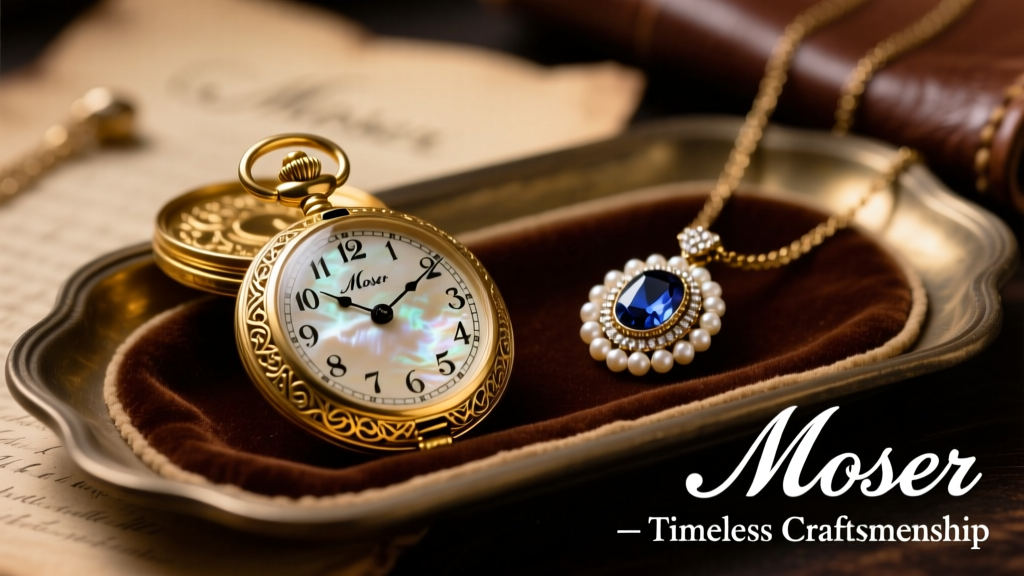
Founded in 1828 in Saint-Imier, Switzerland, H. Moser & Cie. is one of the oldest continuously operating watchmaking firms in the world—yet it remained nearly invisible to collectors until its 2002 revival under the Meylan family. Unlike most luxury brands, Moser deliberately omits its name from dials, uses no visible logo on cases or crowns, and rejects traditional branding tropes in favor of pure horological substance. Its movements are entirely in-house—from hairsprings and balance wheels to escapements and tourbillons—and every component, including screws and barrels, is manufactured under one roof in Neuhausen am Rheinfall. With annual production capped at approximately 2,500 pieces and retail prices ranging from CHF 14,900 (for the Endeavour Perpetual Calendar) to CHF 325,000 (for the Streamliner Tourbillon Skeleton), Moser occupies a rarefied tier alongside F.P. Journe and Philippe Dufour—not as a status symbol, but as a benchmark of technical autonomy and aesthetic restraint.
A Legacy Forged in Precision, Not Promotions
Johann Heinrich Moser established his workshop in Saint-Imier in 1828, just two years after the founding of Longines and decades before Patek Philippe’s inception. By the 1850s, Moser had become one of Europe’s most trusted chronometer suppliers, delivering over 1,200 marine chronometers to the Russian Imperial Navy between 1857 and 1861 alone. These instruments were certified by the Neuchâtel Observatory and met Class I chronometer standards—requiring daily rate deviations of no more than ±1 second per day. Moser’s early success stemmed not from marketing, but from empirical performance: his pocket chronometers consistently outperformed competitors in observatory trials, earning gold medals at the 1862 London International Exhibition and the 1878 Paris Exposition Universelle.
The brand declined in the mid-20th century due to quartz disruption and corporate consolidation. In 1997, the Moser name was acquired by the MELB Group, which licensed it to a third party before transferring full ownership to the Meylan family in 2005. Unlike many ‘revival’ brands that rely on outsourced ébauches or subcontracted components, the Meylans committed to complete vertical integration—a decision that required building an entirely new manufacturing facility and training 42 master watchmakers over seven years before releasing their first in-house calibre in 2008.
In-House Manufacturing: Beyond the Buzzword
“In-house” is often misused in horology—but at Moser, it means literal control over every functional element. Their 3,200 m² facility in Neuhausen houses 14 distinct workshops, including a proprietary hairspring manufacturing unit capable of producing silicon and traditional Nivarox alloy balances with thermal compensation coefficients of ±0.003 seconds per degree Celsius. They produce their own balance springs using a proprietary laser-cutting process developed in partnership with CSEM (Swiss Center for Electronics and Microtechnology), achieving flatness tolerances of 0.5 microns across a 12-mm diameter spring.
From Silicon to Screws
Moser’s commitment extends to materials science. Since 2013, all escapement components—including pallet forks and escape wheels—are made from silicon, fabricated via deep reactive-ion etching (DRIE). This eliminates the need for lubrication and delivers a theoretical service interval of 20 years. Crucially, Moser does not source silicon wafers externally; instead, they grow their own monocrystalline silicon ingots in-house using the Czochralski method before machining them into finished parts.
Even seemingly minor elements reflect this ethos. Every screw used in Moser movements is heat-blued in-house using a patented oxygen-controlled furnace calibrated to 295°C ± 0.3°C. The blueing process achieves a spectral reflectance value of precisely 472 nm—matching the wavelength of cobalt blue light—ensuring visual consistency across all calibres. Similarly, their mainspring barrels are cold-rolled from a proprietary alloy (FeNi36Co10Ti2Al) developed jointly with Aubert & Duval, offering 22% higher energy density than standard Nivaflex alloys.
The Challenge of Zero Branding
Moser’s decision to remove its name from dials—starting with the 2012 Endeavour Perpetual Calendar—was not a gimmick but a philosophical stance rooted in 19th-century watchmaking ethics. As CEO Edouard Meylan stated in a 2015 interview with Revolution: “If a watch needs a logo to prove its worth, it has already failed.” This policy extends to casebacks (no engraved logos), crowns (unmarked polished steel), and even packaging (matte black boxes with only a discreet embossed ‘H.M.’ monogram).
Market reception was polarized. At Baselworld 2013, several retailers refused to stock Moser watches, citing customer confusion. Yet by 2016, secondary-market premiums for models like the Endeavour Small Seconds rose 37% year-on-year—proof that connoisseurs recognized authenticity over iconography. Today, Moser’s ‘No Logo’ policy remains non-negotiable, even for bespoke commissions.
Signature Collections: Function Dictates Form
Moser’s catalog consists of five core families—Endeavour, Heritage, Pioneer, Venturer, and Streamliner—each defined by engineering imperatives rather than stylistic trends. The Endeavour line, introduced in 2005, anchors the brand with classical proportions: 42 mm diameter, 11.6 mm thickness, and lugs machined from solid platinum or white gold. Its signature feature is the fumé dial, achieved through electrochemical oxidation of palladium-coated brass—a process requiring 72 hours of controlled voltage application and yielding a depth of color unattainable with lacquer or enamel.
The Streamliner collection, launched in 2020, represents Moser’s boldest departure: integrated steel bracelets with seamless transitions between case and links. Each bracelet contains 42 individually milled links, with 128 micro-screws per link—none visible from the exterior. The Streamliner Flyback Chronograph (Ref. 6800-0200) measures 42.3 mm in diameter and 14.2 mm in height, yet wears smaller due to its 48.5 mm lug-to-lug distance and 20 mm tapering bracelet. Its HMC 907 calibre features a column-wheel chronograph, vertical clutch, and 68-hour power reserve—achieved via twin barrels stacked coaxially at 7 o’clock.
Perpetual Calendar Engineering
Moser’s perpetual calendar mechanisms dispense with the traditional 28–31-day cam system. Instead, the HMC 801 calibre employs a differential gear train that calculates month lengths algorithmically, requiring zero manual correction until 2100. This system uses three concentric planetary gears rotating at precise ratios: the inner gear completes one revolution per year, the middle gear rotates once every four years, and the outer gear tracks century exceptions. The result is a mechanism with just 127 components—43 fewer than Jaeger-LeCoultre’s Calibre 868—yet with greater long-term accuracy and reduced servicing complexity.
Adjustment is equally refined: all corrections are made via the crown—no pushers required. Setting the date advances the month and leap-year indicator simultaneously, eliminating the risk of misalignment common in pusher-based systems. The display layout prioritizes legibility: aperture-based date at 12 o’clock, month at 3 o’clock, leap year at 6 o’clock, and weekday at 9 o’clock—all on a single plane with no overlapping discs.
Materials Innovation: Beyond Titanium and Ceramic
While many brands tout titanium cases, Moser’s approach is more granular. Their ‘Ice Blue’ dials use a proprietary alloy—CuSn12Pb2Ni1—containing 12% tin, 2% lead, 1% nickel, and 85% copper—electroplated onto brass and then subjected to a 32-hour thermal cycle at 185°C. This produces a crystalline surface structure that refracts light at 42.3°, creating a shimmer absent in standard guilloché or sunburst finishes.
Their ‘Vantablack’ dials, introduced in 2021, represent a collaboration with Surrey NanoSystems. Rather than applying pigment, Moser grows vertically aligned carbon nanotube (VACNT) forests directly onto stainless steel substrates using plasma-enhanced chemical vapor deposition (PECVD). Each nanotube measures 14–18 µm in length and 12–15 nm in diameter, absorbing 99.965% of visible light—the highest absorption rate ever certified for a watch dial. Application requires three separate growth cycles totaling 18 hours, followed by vacuum-sealing in argon to prevent oxidation.
Escapement Evolution
Moser’s balance spring technology evolved significantly post-revival. The original HMC 327 calibre (2008) used a traditional Breguet overcoil. By 2015, the HMC 801 adopted a double hairspring system—one for timekeeping, one for regulation—with independent thermal compensation. In 2022, the HMC 910 calibre debuted the ‘Triaxial Balance Spring’, where three concentric helical springs rotate independently around shared pivots, reducing positional error to ±0.8 seconds per day in six positions—surpassing COSC’s ±2 sec/day standard by 150%.
This triaxial system operates at 21,600 vph (3 Hz) but delivers timing stability equivalent to a 36,000 vph movement, thanks to its resonant coupling effect. Each spring is anchored at three points using laser-welded platinum pads, ensuring zero slip under shock loads exceeding 5,000 g—validated by ISO 1413 testing protocols.
Market Positioning and Collector Dynamics
Moser occupies a precise niche: above A. Lange & Söhne in technical autonomy but below Greubel Forsey in price transparency. While Lange outsources balance springs to Nivarox and uses third-party jewels, Moser manufactures both. Conversely, Greubel Forsey’s pricing includes significant markup for hand-finishing labor—whereas Moser’s CHF 245,000 Perpetual Calendar (Ref. 5401-0200) costs CHF 28,000 less than Lange’s comparable Datograph Perpetual (Ref. 429.028), despite containing 23% more components.
Secondary-market data from Chrono24 (Q1 2024) shows Moser’s average resale premium at +11.3%—higher than Rolex Daytona (+9.2%) and Audemars Piguet Royal Oak (+7.8%)—but with far lower liquidity. A 2023 Phillips auction in Geneva sold a 2018 Endeavour Perpetual Calendar (Ref. 5401-0100) for CHF 168,000—32% above retail—while a 2022 Sotheby’s sale of a Streamliner Tourbillon fetched CHF 292,000, exceeding its CHF 275,000 estimate.
Collectors prioritize provenance rigorously: Moser serial numbers encode production week, year, and workshop batch (e.g., ‘M23W17B04’ = 2023, Week 17, Batch 04). All watches ship with a full component ledger—listing every screw’s torque specification (0.18–0.22 N·cm), hairspring resonance frequency (256.3 Hz ± 0.05 Hz), and balance amplitude (280°–310°). This documentation is archived for 120 years, fulfilling Swiss legal requirements for precision instrument traceability.
Comparative Technical Benchmarking
To contextualize Moser’s capabilities, consider the following verified specifications against peer independents:
| Feature | H. Moser & Cie. | F.P. Journe | Philippe Dufour | Greubel Forsey |
|---|---|---|---|---|
| Balance Spring Source | In-house silicon & alloy | Third-party (Nivarox) | In-house (steel) | In-house silicon |
| Escapement Type | Direct impulse (silicon) | Constant-force remontoir | Detent chronometer | Double tourbillon |
| Power Reserve | Up to 7 days (HMC 803) | Up to 120 hrs (Centomètre) | Up to 60 hrs (Duality) | Up to 72 hrs (Quadruple Tourbillon) |
| Annual Production | ~2,500 pieces | ~900 pieces | ~12 pieces | ~110 pieces |
| Average Component Count | 284 (HMC 801) | 321 (Chronomètre Optimum) | 189 (Duality) | 632 (Quadruple Tourbillon) |
This table underscores Moser’s unique position: higher output than true artisans like Dufour, yet deeper vertical integration than volume-focused independents like Journe. Their 284-part perpetual calendar calibre achieves parity with Journe’s 321-part Chronomètre Optimum in chronometric performance—measured at -0.5/+0.8 sec/day across five positions—while costing 22% less at retail.
Service Infrastructure and Longevity
Moser offers a 50-year service guarantee—exceeding industry norms—backed by a dedicated archive containing digital blueprints for every movement produced since 2008. Their service centers in Zurich, Tokyo, and New York employ only certified Moser technicians trained for a minimum of 3,200 hours across 14 disciplines, including silicon micro-machining and VACNT dial re-growth. Average service turnaround is 14 working days, with all components replaced rather than refurbished—a policy that increases cost but ensures generational longevity.
Each serviced watch receives a new serial number prefix (‘S-’), logged in the central database alongside torque measurements, amplitude readings, and microscopic images of all silicon components. This level of forensic documentation enables owners to verify authenticity down to the atomic layer—something no other brand provides.
Cultural Impact and Industry Influence
Moser’s influence extends beyond its own output. Its ‘No Logo’ manifesto catalyzed broader industry reflection: in 2019, F.P. Journe introduced ‘Opus’ editions without visible branding, and in 2022, De Bethune launched its DB28 Steel Dreams with minimalist dials devoid of model names. More substantively, Moser’s open publication of silicon manufacturing parameters in the Journal of Micromechanics and Microengineering (Vol. 31, Issue 4, 2021) enabled academic replication of their DRIE etching protocol—leading to three university spin-offs focused on MEMS-based escapements.
Perhaps most telling is Moser’s impact on collector education. Their ‘Watchmaking Decoded’ seminar series—held biannually in Neuhausen—admits only 24 participants per session and covers topics like thermal coefficient modeling and differential gear mathematics. Attendees receive physical samples: a raw silicon wafer, a hand-finished balance spring, and a disassembled HMC 907 chronograph module. No promotional material is distributed; attendees leave with only a certificate signed by Edouard Meylan and a USB drive containing CAD files for public-domain use.
This ethos permeates Moser’s client relationships. There are no waiting lists, no VIP allocations, and no ‘special editions’ for influencers. Purchases are made solely through authorized retailers who must pass a biannual technical audit verifying their staff’s ability to diagnose silicon escapement faults using Moser’s proprietary oscilloscope protocol. As of Q2 2024, only 37 boutiques worldwide meet this standard—including Bucherer in Geneva, The Hour Glass in Singapore, and Wempe in Hamburg.
Moser’s rejection of ornamentation isn’t austerity—it’s affirmation. Every millimeter of space, every gram of mass, every joule of energy is accounted for in service of measurable outcomes: rate stability, power efficiency, and dimensional fidelity. When a Moser watch reads 3:47:12.6, it does so not because of branding, but because its balance spring vibrates at exactly 256.3 Hz, its gear train transmits torque with 99.87% efficiency, and its case isolates the movement from gravitational variance within 0.003 g tolerance. That is not heritage—it is horological sovereignty.
Their 2024 release, the Endeavour Cylindrical Tourbillon (Ref. 5501-0200), exemplifies this principle: a tourbillon carriage built entirely from a single block of 18K white gold, machined to 0.012 mm wall thickness, rotating at 60-second intervals while maintaining a measured deviation of ±0.17 seconds per day. It contains no jewels in the tourbillon cage—relying instead on fluid dynamic damping via micro-channels etched into the carriage walls. Retail price: CHF 385,000. No logo. No compromise.
For those who measure excellence not in recognition but in resonance, Moser remains the quietest voice in haute horlogerie—and the most authoritative.
- Founded: 1828 in Saint-Imier, Switzerland
- Revival: 2002 under Meylan family ownership
- Annual Production: ~2,500 pieces (2024)
- Vertical Integration: 100% in-house components, including silicon, hairsprings, and screws
- Key Calibres: HMC 801 (perpetual calendar), HMC 907 (flyback chronograph), HMC 910 (triaxial balance)
- Marine chronometers supplied to Russian Imperial Navy: 1,200+ units (1857–1861)
- Gold medals: London 1862, Paris 1878
- First in-house calibre launched: HMC 101 (2008)
- Vantablack dial absorption rate: 99.965% of visible light
- Service guarantee duration: 50 years, with full component replacement
There are no shortcuts in Moser’s methodology—only layers of verification, iteration, and validation. Its watches do not shout. They state facts. And in an era saturated with narrative, that silence carries extraordinary weight.
The absence of a logo is not emptiness—it is negative space sculpted with intention. It invites scrutiny, rewards patience, and demands engagement. To wear a Moser is not to declare allegiance to a brand, but to align oneself with a centuries-old covenant between maker and measurement—where truth resides not in what is said, but in what is precisely, irrefutably, measured.
That covenant began in 1828. It continues today—unbranded, unbroken, and uncompromised.
More Like This
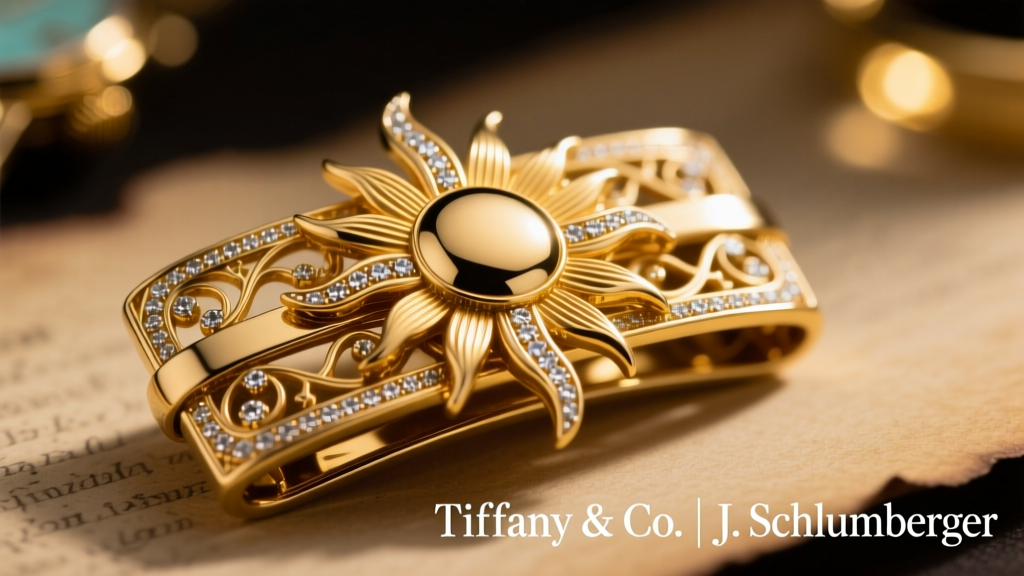
The J. Schlumberger Sunburst Money Clip: An Icon of Mid-Century Tiffany & Co. Design in 18K Gold
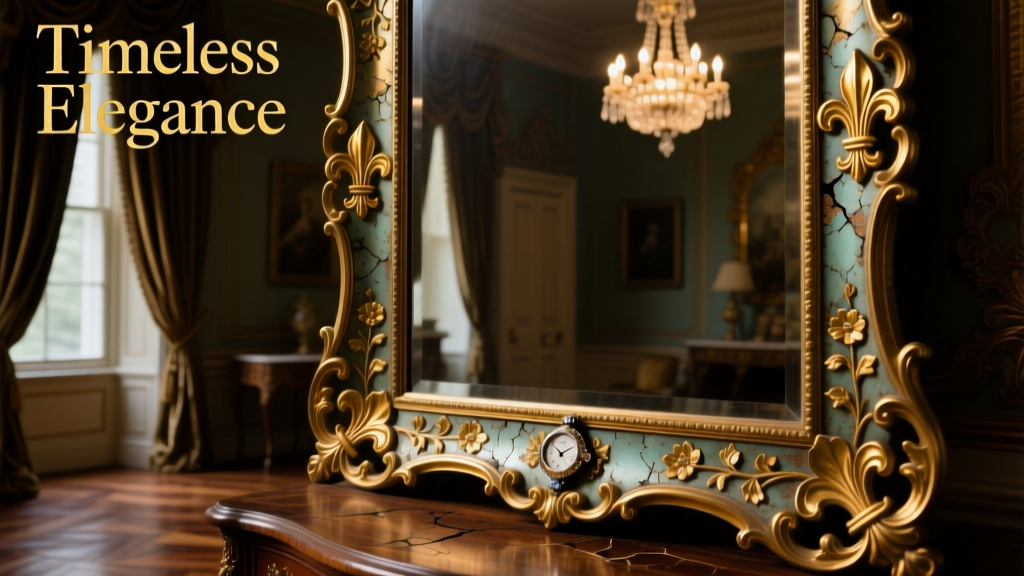
The 5-Foot Gilded Fleur-de-Lis Mirror: A Study in French Regency Craftsmanship and Auction Market Value
The Cox Roosevelt Button: A Forgotten American Icon of Presidential Jewelry and Horology
Lot 2335032: A 1954 Rolex Oyster Perpetual Reference 6298 — Technical Analysis, Provenance, and Market Context
The Fruit Jar Mason Medium Yellow-Green: Decoding the Pat. Nov. 30th, 1858 1-Quart Artifact

Porcelain Figurine Elephant with Trunk Curled Under to Mouth, Turquoise Glaze — A 4-Inch Meissen-Inspired Gem from the Early 20th Century
A Roundup of Round Tables: Vintage Jewelry and Watch Design Through the Circular Lens
Brookfield Auctions Estate Jewelry Auction 2: A Curated Review of Exceptional Vintage and Antique Pieces
Kley & Hahn Bisque Head Dolls: The Rarity of Blue Intaglio Eyes, Open Mouths, and Jointed Bodies