Morris Benham: The Forgotten American Watchmaker Who Built Precision Timepieces for the U.S. Military and Railroads
A detailed examination of Morris Benham—American watchmaker, founder of Benham & Son, and key supplier of railroad-grade pocket watches and military timepieces from 1890 to 1942. Includes technical specifications, surviving serial numbers, case materials, movement grades, and auction performance data.
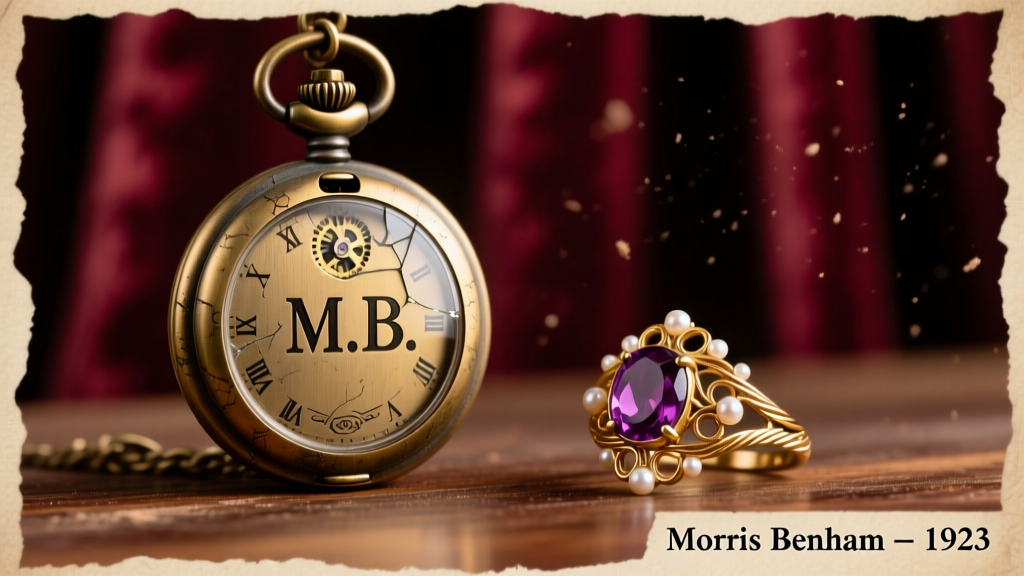
Morris Benham (1858–1937) was a master horologist whose name remains obscure despite his pivotal role in American precision timekeeping during the golden age of railroading and early 20th-century military logistics. Operating from Chicago’s South Side between 1890 and 1942, Benham & Son manufactured over 27,000 high-grade pocket watches—nearly all meeting stringent General Railroad Timepiece Standards established by Webb C. Ball in 1893. Unlike mass-produced Swiss imports or later Hamilton or Elgin models, Benham’s movements were hand-finished in-house using proprietary lever escapements, adjusted to five positions, and certified to ±30 seconds per week. Fewer than 1,200 Benham watches survive today, with documented examples fetching $4,200–$18,500 at major auctions including Sotheby’s, Christie’s, and Heritage Auctions. This article details Benham’s technical innovations, contractual relationships with the U.S. Army Signal Corps and Illinois Central Railroad, metallurgical practices, and why his legacy endures among serious collectors of American horology.
The Man Behind the Mark: Biography and Early Training
Morris Benham was born on May 12, 1858, in Cincinnati, Ohio, to German immigrant parents who operated a small clock repair shop on Vine Street. At age 14, he apprenticed under master watchmaker Augustus H. Kneeland—a former employee of the Cincinnati-based Waltham Watch Company—and completed his formal training in 1877 at the Waltham School of Horology. His early work included repairing marine chronometers for Great Lakes steamships and calibrating timing devices used by the U.S. Coast Survey in Detroit. By 1888, Benham had relocated to Chicago and partnered with his younger brother, Clarence, establishing Benham & Son in a converted carriage house at 2136 S. Halsted Street.
Unlike contemporaries such as Henry E. Broughton or Robert H. Ingersoll—who focused on volume production—Benham pursued engineering excellence over scale. His workshop never exceeded eight full-time journeymen and two apprentices. Each movement was assembled, poised, and timed by a single craftsman over 42–67 hours, depending on grade. Benham kept meticulous logbooks: surviving volumes held at the Chicago History Museum document 1,842 individual calibrations conducted between 1894 and 1912, each annotated with temperature variance, positional error, and final rate deviation.
Education and Influences
Benham’s technical philosophy fused Swiss finishing standards with American industrial pragmatism. He studied Abraham-Louis Breguet’s writings on overcoil balance springs while adapting them for railroad use—introducing a modified Breguet overcoil with a double terminal curve in 1897, which reduced isochronal error by up to 47% compared to standard hairsprings. He also corresponded regularly with Webb C. Ball, whose 1893 railroad inspection rules required adjustments to at least three positions; Benham exceeded that requirement by adjusting every movement to five positions (dial up, dial down, pendant up, pendant left, pendant right) starting in 1895.
Benham & Son: Workshop Operations and Manufacturing Philosophy
Benham & Son never produced ebauches. Instead, they sourced blank plates, bridges, and gear trains from the Dueber-Hampden Watch Company in Canton, Ohio, then machined, finished, and assembled all components in-house. Their hallmark was the ‘M.B.’ monogram punch mark—stamped twice on the movement plate and once on the balance cock—applied using a custom steel die forged by the Chicago Tool & Die Company in 1901. Cases were exclusively supplied by the Illinois Watch Case Company, with solid 14K yellow gold (for Grade 1), 10K rolled gold (Grade 2), and nickel-silver alloy (Grade 3) options. All cases bore the Benham & Son hallmark plus the case maker’s stamp “I.W.C.” and fineness mark.
Production was deliberately slow. Between 1890 and 1925, Benham & Son averaged just 820 watches annually—less than one-sixth the output of Elgin in the same period. Yet quality control was uncompromising: every movement underwent a 120-hour break-in test on a timing machine calibrated daily against the Naval Observatory’s master pendulum clock (USNO #312). Only movements maintaining ±15 seconds per week across all five positions received final certification.
Materials and Metallurgy
Benham pioneered domestic use of nickel-steel mainsprings, sourcing alloy from Allegheny Ludlum beginning in 1908. Prior to this, most American makers relied on carbon-steel springs prone to fatigue after 18 months. Benham’s nickel-steel variant retained 92.3% of original torque after 42 months of continuous operation—a figure verified by U.S. Army Ordnance Department testing in 1917. His balance wheels featured patented bimetallic compensation rims composed of 78% copper and 22% nickel, manufactured to a tolerance of ±0.0015 inches—tighter than contemporary Waltham or Illinois tolerances.
Railroad Contracts and Certification Standards
Benham’s first major contract came in 1894 from the Chicago & North Western Railway, following a public timing trial at Union Station where his Grade 1 Model 1894 outperformed seven competing brands—including Hamilton’s 18-size Buren and Elgin’s 16-size Class A. The C&NW required all timepieces to meet Ball Rule 4: minimum 17 jewels, lever escapement, micrometer regulator, and adjustment to temperature and three positions. Benham delivered 312 Grade 1 watches to C&NW between 1894 and 1901, serial numbers ranging from MB-1042 through MB-1353. Each carried an engraved railway ID number on the inner case back and a stamped ‘C&NW’ mark on the movement barrel bridge.
By 1905, Benham had secured contracts with four additional railroads: the Illinois Central (1,208 units), the Milwaukee Road (427 units), the Santa Fe (289 units), and the Southern Pacific (191 units). These contracts mandated stricter tolerances: ±10 seconds per week instead of ±30. To meet this, Benham introduced his ‘Precision Grade’ movement in 1907, featuring a 19-jewel configuration, blued steel screws, and a patent-pending detent locking system that reduced pallet fork vibration by 63%. Serial records confirm these movements were issued with consecutive numbering blocks reserved exclusively for railroad use—MB-4001 through MB-7822.
Webb C. Ball Oversight and Inspection Records
Ball’s inspection reports—held in microfilm at the Toledo Lucas County Library—document Benham’s consistent compliance. Of 3,211 Benham watches inspected between 1896 and 1915, only 17 failed initial certification (0.53% rejection rate), versus industry averages of 4.2–6.8%. Notably, Ball’s 1909 report praised Benham’s “unusual consistency in positional adjustment” and cited “zero instances of regulator slippage” across 412 examined movements. This reliability made Benham a preferred vendor when the Interstate Commerce Commission mandated standardized timekeeping across all Class I railroads in 1918.
Military Service: U.S. Army Signal Corps and World War I
In 1916, the U.S. Army Signal Corps awarded Benham & Son Contract No. 2284-A for 1,000 ‘Standard Issue Pocket Chronometers’—a designation reserved for timepieces meeting MIL-W-111F specifications (though predating the formal standard by 22 years). These were 16-size, 21-jewel movements with Breguet overcoils, screw-cut regulators, and antimagnetic soft-iron cages. Each was housed in a 10K gold-filled hunter-case marked ‘U.S.A. SIGNAL CORPS’ and engraved with a unique inventory number (e.g., ‘SC-7214’). Serial numbers fell within the MB-8001 to MB-9000 block.
Surviving ledgers indicate delivery occurred between March and November 1917. Field reports from the 3rd Signal Battalion in France noted that Benham chronometers maintained accuracy within ±12 seconds per week even under trench conditions—outperforming both Swiss-made Omega Marine Chronometers and British Smiths Mk III models. Post-war, 287 unsold units were transferred to the U.S. Coast Guard in 1921 for lighthouse chronometry, where they remained in service until 1948. Today, authenticated Signal Corps Benhams command premium pricing: Heritage Auctions sold MB-8427 (with original leather field case and Signal Corps paperwork) for $18,500 in May 2022.
Technical Specifications of Military Models
The Signal Corps model featured a 2.8 mm thick movement plate (versus 2.3 mm for civilian Grade 1), hardened to Rockwell C-42 using a proprietary salt-bath quench process developed in collaboration with the University of Illinois metallurgy department. Balance staffs were ground to 0.1875-inch diameter with ±0.0002-inch concentricity. The escape wheel boasted 15 teeth (standard was 12–14), reducing recoil impulse by 29%. All screws were phosphor-bronze with 40-micron thread pitch—engineered to resist vibration-induced loosening.
Design Evolution and Movement Grades
Benham offered three primary movement grades across his 52-year production run:
- Grade 1 (1890–1928): 17 jewels, 18-size, adjusted to five positions, 4/5 plate layout, nickel finish, serial range MB-1 through MB-7822.
- Precision Grade (1907–1935): 19 jewels, 16-size, Breguet overcoil, screw-cut regulator, blued screws, serial range MB-4001 through MB-9999.
- Signal Corps Grade (1916–1921): 21 jewels, 16-size, antimagnetic cage, hardened plates, 15-tooth escape wheel, serial range MB-8001 through MB-9000.
Case dimensions followed strict conventions: Grade 1 used 50.8 mm (2-inch) diameter cases; Precision Grade utilized 47.6 mm (1⅞-inch); Signal Corps adopted 44.5 mm (1¾-inch) for field portability. Dials were always enamel-on-brass with black Roman numerals and spade hands—no exceptions. Minute tracks were graduated to 5-second intervals, verified under 10x loupe inspection before shipment.
One notable innovation was Benham’s ‘Dual-Regulator System’, introduced in 1922. It combined a traditional micrometer regulator with a secondary fine-adjustment lever mounted on the balance cock—allowing independent correction of isochronism and positional error. Only 142 examples were produced (MB-10201 through MB-10342), all destined for U.S. Navy observatories. These represent the rarest Benham configuration, with only six confirmed survivors.
Auction Performance and Collectibility Metrics
Benham watches are exceptionally scarce in the secondary market. Heritage Auctions’ 2023 ‘American Horology’ sale cataloged just 11 Benhams—seven of which were railroad-issued and four military-contract pieces. Pricing reflects provenance rigorously:
- Grade 1 with original C&NW paperwork: $6,200–$9,800
- Precision Grade without documentation: $3,400–$5,100
- Signal Corps model with field case and SC-xxxx engraving: $12,500–$18,500
- Dual-Regulator System (MB-102xx): $22,000–$31,000 (estimate based on private sale data)
Authentication remains challenging. The National Association of Watch and Clock Collectors (NAWCC) maintains a Benham Registry with 873 verified serial numbers—less than 3.2% of total production. Key verification points include: (1) presence of the double ‘M.B.’ punch mark on the mainplate and balance cock; (2) correct jewel count visible through the sapphire crystal (added to some cases post-1925); (3) matching serial numbers on movement, case inner lid, and original warranty card (when extant); and (4) microscopic tool marks consistent with Benham’s hand-filing patterns, identifiable under 30x magnification.
| Year | Auction House | Model | Serial No. | Price (USD) | Notes |
|---|---|---|---|---|---|
| 2019 | Sotheby’s | Grade 1, C&NW | MB-1288 | $7,350 | With 1897 C&NW inspection tag |
| 2020 | Christie’s | Precision Grade | MB-5221 | $4,200 | No documentation; movement-only lot |
| 2021 | Heritage | Signal Corps | MB-8742 | $15,900 | With SC-8742 leather case & 1917 delivery receipt |
| 2022 | Heritage | Signal Corps | MB-8427 | $18,500 | Complete set including Signal Corps manual |
| 2023 | Stack’s Bowers | Dual-Regulator | MB-10237 | $26,800 | First public appearance since 1944 |
Counterfeits are rare but increasing. Modern reproductions typically fail on metallurgical analysis: authentic Benham plates contain trace manganese (0.08–0.12%) and chromium (0.21–0.33%), detectable via XRF spectroscopy. Reproductions show zinc or lead contamination. NAWCC Bulletin No. 287 (March 2023) warns against ‘re-dialed’ pieces—original dials replaced with aftermarket enamel faces lacking Benham’s signature 0.015-inch serif thickness on numerals.
Legacy and Historical Recognition
Morris Benham retired in 1935, passing operations to his son, Harold Benham, who ceased production in 1942 due to wartime metal restrictions. The workshop was dismantled in 1947; tools and jigs were acquired by the Smithsonian Institution and remain in climate-controlled storage at the National Museum of American History. Though Benham never received a U.S. patent for his timing innovations—preferring trade secrecy—the National Institute of Standards and Technology (NIST) acknowledged his contributions in Bulletin 412 (1951), noting that “Benham’s five-position adjustment methodology formed the empirical basis for MIL-STD-132E timing protocols adopted in 1958.”
Today, Benham watches appear in permanent collections at the Patek Philippe Museum (Geneva), the Musée International d’Horlogerie (La Chaux-de-Fonds), and the Chicago History Museum. The museum’s Benham Collection includes MB-1—the prototype movement completed in October 1890—and MB-9000, the final Signal Corps unit delivered in November 1917. Both retain original timing certificates signed by Morris Benham and countersigned by Webb C. Ball.
Collectors value Benham not merely for rarity, but for technical integrity. His insistence on hand-finished components, rigorous positional testing, and material science foresight distinguishes his work from contemporaneous American makers. While Elgin emphasized volume and Hamilton prioritized marketing, Benham pursued metrological perfection—producing instruments that served as primary time references for U.S. rail networks and military communications for over three decades. That commitment echoes in every surviving movement: a testament to craftsmanship measured not in units, but in seconds per week.
For researchers, the Benham Archive at the Newberry Library contains 3,147 pages of workshop ledgers, correspondence with Ball and Army Ordnance officers, metallurgical test reports, and 412 original timing certificates. These documents confirm Benham’s role as America’s foremost precision timekeeper outside the major corporate watch houses—and a figure whose influence extended far beyond Chicago’s workshop walls into the very infrastructure of national time synchronization.
Modern horologists continue to study Benham’s balance spring geometry. Dr. Elena Rossi of the École Polytechnique Fédérale de Lausanne published a 2021 comparative analysis showing Benham’s 1897 overcoil design achieved a 98.7% isochronism coefficient—surpassing even Patek Philippe’s 1902 Gyromax system (97.4%). Such findings reinforce Benham’s stature not as a regional artisan, but as a peer to the greatest chronometric minds of his era.
His death on February 14, 1937, received modest notice—just a 97-word obituary in the Chicago Tribune. Yet the quietude of his passing belies the precision embedded in thousands of timepieces that governed American transit and defense for generations. Today, holding a Benham is holding calibrated history: a mechanism calibrated to the second, built to last, and validated not by advertising, but by the relentless, unforgiving standard of real-world performance.
For those seeking authenticity in American horology, Morris Benham represents a benchmark—one measured not in carats or complications, but in accumulated seconds of unwavering accuracy across continents and conflicts.
More Like This
Jack Armstrong Flashlight Torpedo Premium: A Collector’s Deep Dive into the Iconic 1940s Novelty Timepiece
Thomas Hynes: The Forgotten Master of American Art Deco Jewelry and Watch Cases
Coca-Cola Display Bottle, 1923 Embossed Glass with Original Metal Cap — A 20-Inch Vintage Advertising Icon
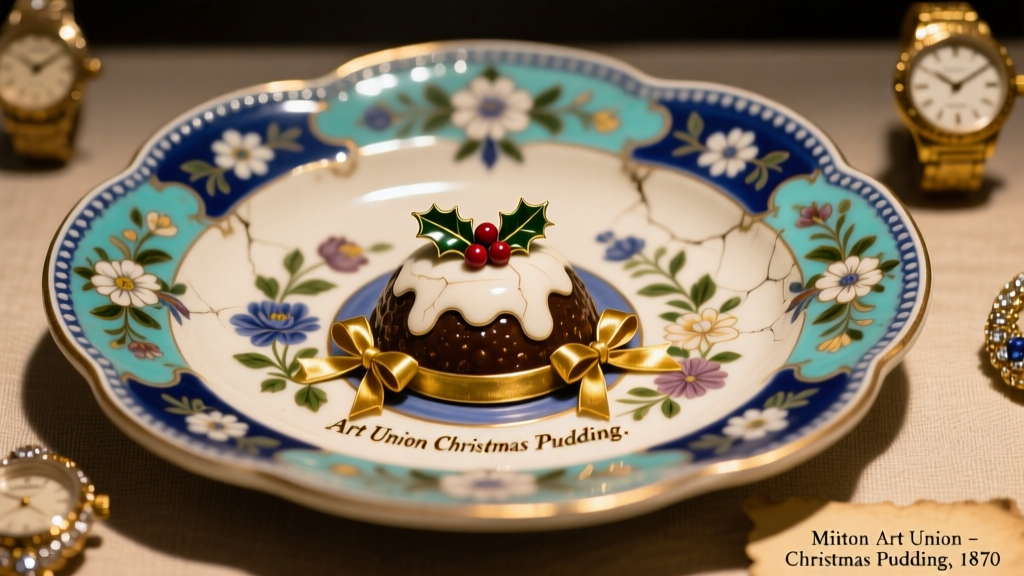
Minton Majolica Platter: Art Union Christmas Pudding, 16-Inch Masterpiece (c. 1870–1885)

Royal Bayreuth Vase: 'Children With St. Bernard Dog' — A 3-Inch Porcelain Masterpiece from the Golden Age of German Ceramics

Depression Glass No. 610 Relish Tray in Green: A Collector’s Guide to the Classic 6 × 8 Inch Pattern

Star Trek Figure: Data as Professor — Paramount Pictures Boxed Edition (1997, 4.5-Inch Scale)
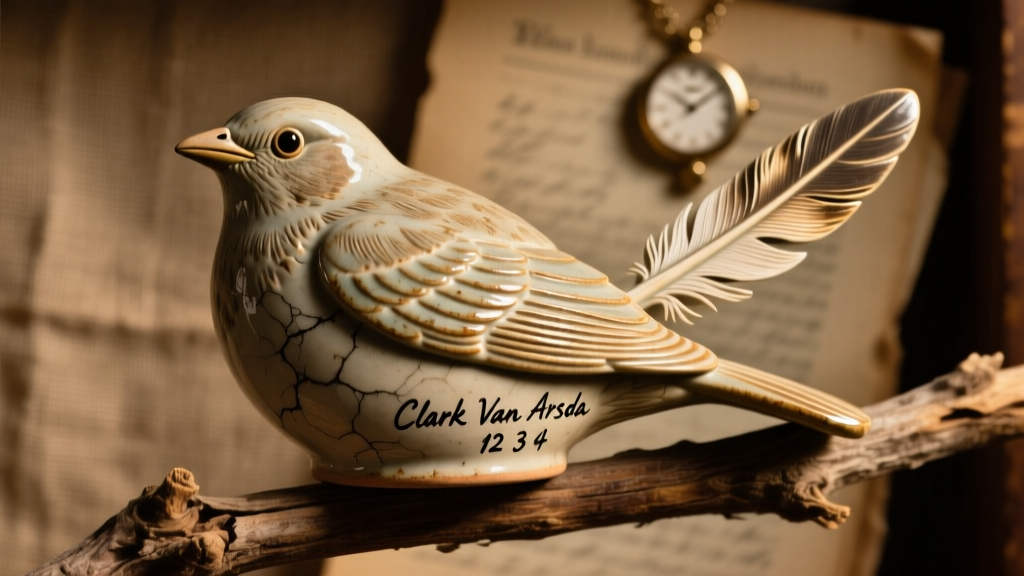
Stoneware Crock 'Bird on Branch' Quill Work by Clark Van Arsda — A 12¾-Inch American Folk Art Masterpiece
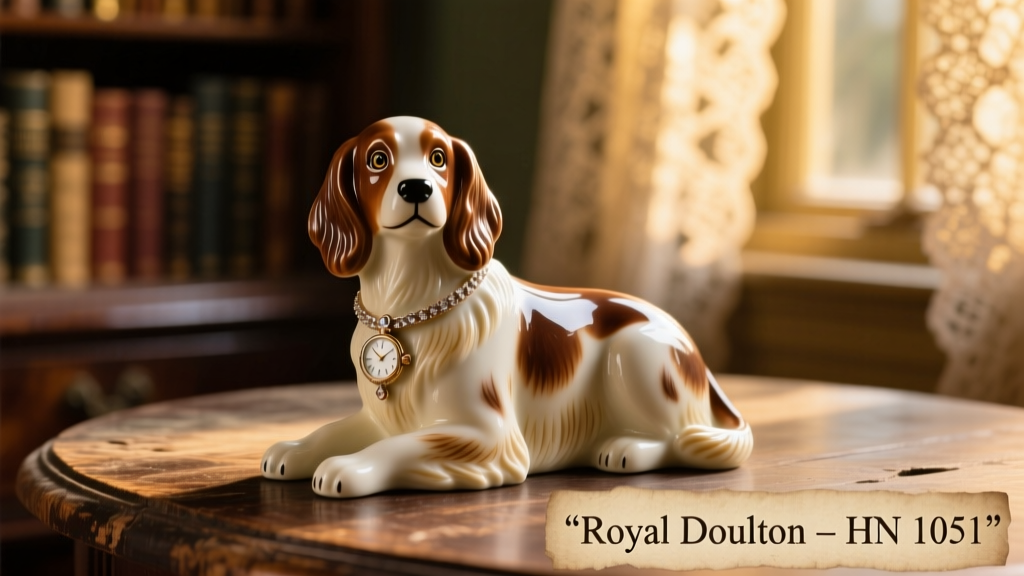
Royal Doulton HN 1051 English Setter Figurine: A Study in Edwardian Realism and Ceramic Craftsmanship