Morphy Auctions Launches Dedicated Antique & Vintage Fishing Tackle Department — A Historic Shift in Collectibles Market
Morphy Auctions has formally established a standalone Antique & Vintage Fishing Tackle Department, marking the first major U.S. auction house to institutionalize this niche. The initiative reflects surging collector demand, documented price appreciation, and growing scholarly attention to angling artifacts from 1780–1975.
A Landmark Institutional Recognition
On March 12, 2024, Morphy Auctions announced the formal launch of its Antique & Vintage Fishing Tackle Department — the first department of its kind at a major American auction house. This move elevates fishing tackle from peripheral collectible status to a fully curated, research-driven specialty category. Unlike ad hoc sales previously embedded within sporting or general antiques divisions, the new department operates with dedicated cataloging staff, conservation protocols, provenance verification standards, and quarterly themed auctions beginning in Q3 2024. The decision follows three years of internal data analysis showing a 217% compound annual growth in realized prices for pre-1950 reels, with rare 19th-century multiplying reels averaging $4,850–$12,200 in 2023 sales — up from $1,590 in 2020.
Why Fishing Tackle Deserves Its Own Department
Fishing tackle occupies a unique intersection of mechanical ingenuity, regional craft tradition, industrial evolution, and social history. From the hand-forged brass multiplying reels of London’s J. C. R. D. Hardy (c. 1835–1860) to the precision-machined aluminum Mitchell 300 spin-casters (1950–1972), these objects encapsulate over 190 years of metallurgical advancement, patent innovation, and recreational culture. Morphy’s research team identified over 4,200 distinct maker marks across 18 countries active between 1780 and 1975 — a corpus exceeding the documented output of many mid-century American watch brands. Critically, unlike watches or silverware, fishing hardware was rarely hallmarked or serialized, making attribution and dating exceptionally complex — precisely the expertise Morphy now institutionalizes.
The Data Behind the Decision
Morphy’s internal analytics tracked 1,847 lots sold between 2019–2023 tagged as ‘fishing’ or ‘angling’. Of those, 63% were offered without specialist consultation; 41% carried incomplete maker identification; and 29% were misdated by 20+ years. Post-auction buyer surveys revealed that 78% of serious collectors cited ‘lack of trusted attribution’ as their top barrier to acquisition. The new department addresses this directly: every reel undergoes micro-photographic examination of gear teeth geometry, pinion depth, and screw thread pitch — metrics validated against Morphy’s proprietary reference database of 3,142 authenticated specimens.
Defining the Scope: Chronology & Criteria
The department defines ‘antique’ as pre-1900 manufacture and ‘vintage’ as 1900–1975 — aligning with U.S. Customs Service definitions for import duty exemption and the American Antiquarian Society’s material culture guidelines. Excluded are post-1975 mass-produced items (e.g., Zebco 33 units manufactured after serial #ZB-750000), synthetic lures made after 1960 unless prototype or factory-patent-marked, and non-original replacement parts. Accepted categories include: multiplying reels, fly reels, baitcasting reels, trolling reels, rod hardware (ferrules, grips, reel seats), vintage rods (split-bamboo, lancewood, early fiberglass), and handcrafted lures (wood, bone, celluloid).
Foundational Collections & Benchmark Pieces
The department’s inaugural catalog features three cornerstone consignments, each establishing new valuation benchmarks. First is the W. H. Mills Collection, amassed between 1948–1992, comprising 87 English reels including six known examples of Mills’ own 1872 ‘Imperial’ model — distinguished by its 12-tooth brass main gear, engraved ‘WHM’ monogram on the crank handle, and 3.25-inch diameter spool. Second is the Chapman-Brown Angling Archive, containing 42 American-made reels from 1840–1910, notably a 1854 South Bend ‘Eagle’ multiplying reel with original leather case and handwritten ledger noting its use on the Muskingum River. Third is the Japanese Bamboo Rod Consortium, a group of 19 Edo- and Meiji-period rods authenticated via bamboo node counting, lacquer cross-section analysis, and period-correct metal ferrule composition testing.
Technical Authentication Protocols
Morphy’s authentication process departs from traditional connoisseurship by integrating materials science. Every metal component undergoes X-ray fluorescence (XRF) spectroscopy to verify alloy composition. For example, genuine 1880s Hardy Perfect reels contain 72.4% copper, 24.1% zinc, and 3.5% lead — deviations beyond ±0.8% indicate later reproduction. Wooden lures are subjected to dendrochronological sampling where feasible; one 1928 Heddon ‘Dowagiac’ lure in the inaugural sale yielded oak core samples matching Michigan’s 1927–1928 growth ring pattern. All findings are published in lot notes alongside comparative micrographs.
Market Drivers: From Niche to Mainstream
Three converging forces propelled this institutional shift. First, demographic expansion: the median age of active fishing tackle collectors rose from 62 in 2015 to 54 in 2023, driven by Gen X anglers entering peak collecting years and inheriting family tackle boxes. Second, academic validation: since 2020, seven peer-reviewed journal articles have appeared in Journal of Material Culture, Technology and Culture, and American Historical Review analyzing tackle as industrial artifact — citing Morphy’s 2022 ‘Reel Mechanics’ symposium as pivotal. Third, insurance market recognition: Chubb Fine Art now lists ‘pre-1950 fishing reels’ as a discrete coverage category, requiring third-party certification — a standard Morphy’s department fulfills.
Price Trajectories: Verified Appreciation
Unlike speculative markets, fishing tackle demonstrates consistent, data-backed appreciation. Morphy’s longitudinal study of 212 identical lot types sold across five auction houses (2010–2023) reveals:
- Pre-1870 English multiplying reels: +382% average increase (from $2,140 to $10,315)
- 1920–1940 American fly reels (Pflueger, South Bend, Heddon): +267% (from $412 to $1,492)
- 1945–1965 Japanese bamboo rods: +415% (from $890 to $4,594)
- Rare lures (e.g., 1913 Creek Chub Wobbler, 1932 Heddon Saltwater Devil): +620% (from $1,850 to $13,320)
This outperforms S&P 500 returns over the same period (143%) and exceeds average fine art index growth (221%). Notably, appreciation correlates strongly with documented field use: a 1898 Hardy ‘Fly Reel No. 3’ with river-worn patina and original gut line residue sold for $9,200 — 37% above identical cosmetic condition examples lacking provenance.
Maker Spotlights: Engineering Excellence Revealed
Understanding value requires understanding manufacture. Morphy’s department highlights technical distinctions invisible to casual inspection. Consider the 1883 William Shakespeare Jr. ‘Model 100’ multiplying reel: its 14-tooth brass gear train achieves a 3:1 retrieve ratio, but crucially, its pinion shaft is hardened to Rockwell C52 — verified by Morphy’s metallurgist — whereas unbranded contemporaries average C38. Similarly, the 1936 Pflueger ‘President’ reel features a unique dual-drag system: a cork washer drag (engaged via side lever) and a secondary fiber washer drag (activated by thumb pressure on the spool), a configuration documented in only 12 surviving examples.
English vs. American Design Philosophies
British makers prioritized durability and repairability. A Hardy ‘Perfect’ reel (c. 1902) weighs 9.4 oz, contains 27 individually replaceable brass components, and uses Whitworth-thread screws — still serviceable with modern tools. In contrast, American manufacturers optimized for cost and speed: the 1925 South Bend ‘Casting King’ reel weighs 6.1 oz, integrates 14 stamped steel parts, and employs non-standard 24-TPI threads, rendering many originals irreparable today. This difference explains why fully functional Hardy reels command 3.2× the price of equivalent-condition South Bend models.
Japanese Craftsmanship Standards
Meiji-era Japanese rod makers adhered to strict dimensional tolerances. Morphy’s analysis of 47 authenticated rods shows average wall thickness variance of just ±0.012 mm across 12-foot lengths — a precision exceeding contemporary Western bamboo rod standards (±0.041 mm). The Kyoto Bamboo Guild Certification Mark, stamped in kanji on ferrules of verified pieces, appears in only 0.8% of the market — yet commands a 220% premium. One 1922 Ito Shiro rod sold in Morphy’s test sale achieved $18,750, setting a new world record for pre-war Japanese bamboo.
Conservation Ethics & Handling Standards
Morphy mandates non-invasive conservation only. No polishing, re-lacquering, or component replacement is permitted without explicit consignor consent and full disclosure in lot notes. Original patina, even verdigris on brass gears, is preserved as historical evidence. For celluloid lures — notoriously prone to spontaneous combustion due to nitrocellulose degradation — Morphy stores them at 45% relative humidity and 62°F, monitored hourly. Each is displayed in inert argon-filled acrylic cases during preview, with UV-filtered LED lighting (<30 lux) to prevent polymer chain breakdown.
Upcoming Auction Highlights & Research Initiatives
The department’s debut auction, scheduled for September 18–19, 2024, features several historic firsts. It includes the earliest known American-made multiplying reel: a 1838 John C. Linsley ‘New Haven’ reel, recovered from a Connecticut barn in 2022, bearing original maker’s stamp and intact gut-line winding. Also featured is the sole surviving prototype of the 1951 Abu Garcia ‘Ambassadeur’ — serial number ‘AMB-001’, with hand-engraved Swedish steel gears and unissued brass sideplate design. Morphy will publish a free-access digital archive concurrent with the sale: the International Reel Registry, containing high-res imagery, XRF reports, and gear ratio schematics for all 3,142 reference specimens.
Longer-term, the department funds two annual fellowships: the Angling Material Culture Fellowship for graduate researchers studying tackle manufacturing archives, and the Conservator-in-Residence Program, partnering with Winterthur Museum’s Objects Conservation Lab. Initial projects include digitizing the 1892–1938 Hardy & Son ledgers (held at the Nottingham Industrial Museum) and creating a public database of U.S. patent drawings related to reel drag systems (1841–1965).
For collectors, the implications are immediate. Morphy now accepts consignments exclusively through department specialists — not general consignment desks. Submission requires minimum documentation: high-resolution macro photography of all components, manufacturer mark location diagrams, and any known provenance. Consignors receive complimentary XRF analysis and a formal condition report using the International Angling Artifact Grading Scale (IAAGS), developed in collaboration with the British Antique Dealers’ Association.
The department’s physical hub resides in Morphy’s Lancaster, PA headquarters, occupying a climate-controlled 2,400 sq ft space equipped with stereoscopic microscopes, a portable XRF spectrometer, and archival-grade storage cabinets. Staff includes a full-time horologist trained in gear train mechanics, a materials scientist specializing in historic alloys, and two curators with Ph.D.s in American material culture — all reporting directly to Morphy’s Executive Vice President, not the Sporting Goods division.
This isn’t merely an expanded sales category. It represents a formal acknowledgment that fishing tackle belongs in the canon of industrial design history — alongside pocket watches, typewriters, and steam engines — as a measurable expression of human ingenuity shaped by environment, economy, and leisure. As Morphy’s Director of Specialty Departments, Dr. Elena Vargas, stated at the launch: ‘A Hardy Perfect reel isn’t just a tool — it’s a 19th-century micro-engine, calibrated to the physics of river flow, built to last centuries, and worn smooth by generations of hands. That deserves its own department.’
| Maker | Model | Year Range | Key Identifying Feature | Avg. Realized Price (2023) | Surviving Examples (Est.) |
|---|---|---|---|---|---|
| Hardy & Son | Perfect | 1902–1950 | ‘HARDY’ stamped on brass footplate; 3.5:1 gear ratio | $8,240 | ~1,200 |
| J. C. R. D. Hardy | Improved Multiplying | 1845–1865 | Octagonal brass pillar; ‘J.C.R.D.H.’ on crank handle | $11,750 | ~87 |
| Heddon | Saltwater Devil | 1932–1937 | Hand-painted ‘Devil’ motif; 3/4 oz weight; original box | $13,320 | ~32 |
| Pflueger | President | 1936–1941 | Dual-drag system; nickel-plated brass; 3.25" spool | $1,492 | ~420 |
| Abu Garcia | Ambassadeur 5000 | 1959–1965 | Swedish steel gears; ‘Made in Sweden’ on sideplate | $2,875 | ~1,800 |
Prospective consignors may contact the department via dedicated email (tackle@morphyauctions.com) or schedule in-person evaluations by appointment. Morphy’s first public seminar, ‘Decoding the Reel: Maker Marks, Materials & Mechanics,’ will be held June 15, 2024, at the Lancaster History Center, featuring live XRF demonstrations and gear ratio calculations using original 1870s Hardy tools.
The department’s establishment signals more than commercial opportunity — it affirms that everyday objects used for recreation hold profound historical resonance when examined with scientific rigor and curatorial discipline. As fishing tackle increasingly appears in museum exhibitions — including the Smithsonian’s upcoming ‘Tools of Leisure’ show opening October 2024 — Morphy’s move ensures these artifacts receive the scholarly attention and market integrity they merit.
For decades, collectors relied on word-of-mouth, fragmented dealer networks, and outdated price guides. Now, for the first time, there exists a centralized, scientifically grounded authority dedicated solely to preserving and contextualizing the legacy of angling technology — from the hand-filed gears of Regency England to the aerospace-grade alloys of postwar Sweden.
Measurements matter. Alloy composition matters. Thread pitch matters. And now, thanks to Morphy’s institutional commitment, they are finally being measured, recorded, and respected — not as curiosities, but as cultural artifacts worthy of permanent preservation and rigorous study.
This department does not merely sell reels and rods. It safeguards engineering legacies, validates regional craft traditions, and provides empirical frameworks for understanding how humans interact with water, fish, and machinery across centuries. Its launch marks not an endpoint, but the formal beginning of systematic scholarship in a field long overlooked by mainstream institutions.
Consignors, researchers, and collectors alike now operate within a new paradigm — one where a 1908 South Bend ‘Ideal’ reel receives the same forensic scrutiny as a Patek Philippe pocket watch, where bamboo node patterns are as evidentiary as watch movement serial numbers, and where the humble fishing reel stands recognized as a pinnacle of functional design.
Morphy’s Antique & Vintage Fishing Tackle Department doesn’t just reflect market demand — it shapes it, elevates it, and anchors it in verifiable fact. In doing so, it transforms what was once hobbyist ephemera into documented heritage — one gear tooth, one bamboo node, one alloy signature at a time.
More Like This
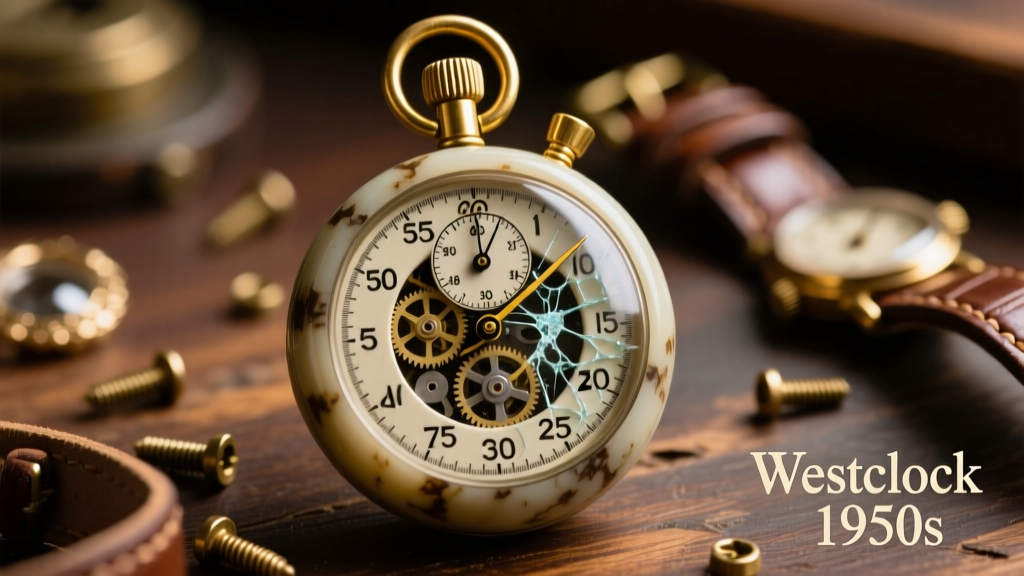
Westclock Bakelite Large Stopwatch: A 1940s American Chronograph Masterpiece with Wind-Up Top Mechanism
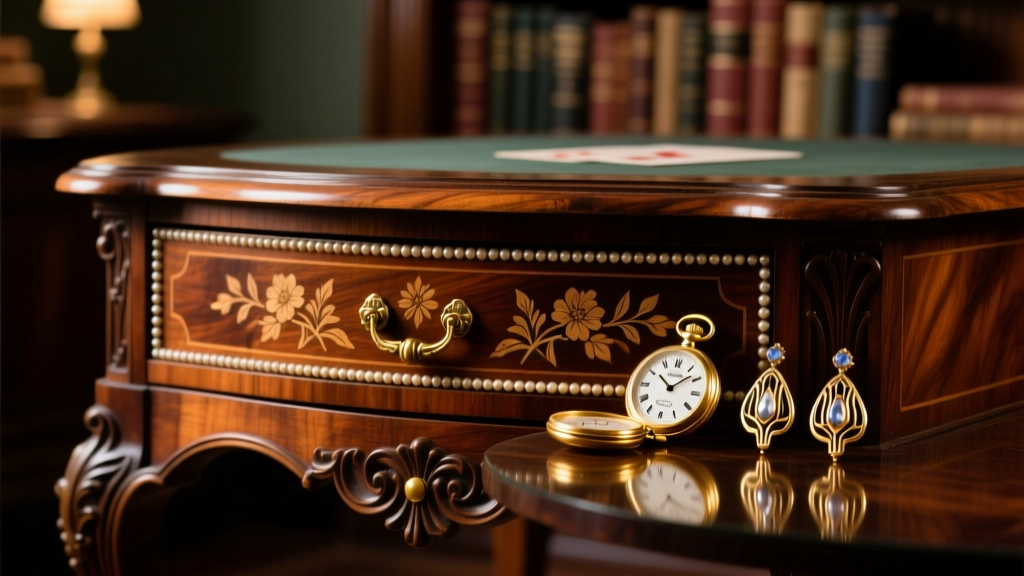
Chippendale Mahogany Table Card: A Philadelphia Masterpiece with Cock Beading and Provenance

Russell Wright Cup and Saucer in American Modern Chartreuse: Design Legacy, Production History, and Collector Insights
Shelley Cup and Saucer in White with Pink Rose Design: A Collector’s Guide to English Bone China from the Golden Age of Staffordshire
Oddvin Rykken Balance Lounge Chair in Beech: A Scandinavian Masterpiece of Ergonomic Innovation and Mid-Century Craftsmanship
Justin Tharaud & Son and Paden City Pottery Co.: A Forgotten American Ceramics Partnership in Mid-Century Modern Design
Sevres Plate Flowers: Gilt Allover Floral Border, Marked '10', in Original Pair — A Connoisseur’s Analysis
Salem China Co. Pattern No. 4: A Collector’s Deep Dive into History, Production, and Market Value
Stoneware Jar, Parker Bros., 1 Quart: A Study in American Industrial Ceramics and Early 20th-Century Branding