Moody Russel: The Forgotten American Watchmaker of Precision and Patience
Moody Russel was a short-lived but technically distinguished American watchmaking firm operating from 1892 to 1904 in Waltham, Massachusetts. Founded by Horace Moody and William H. Russel—both veteran Waltham Watch Company engineers—the company produced fewer than 1,200 pocket watches, nearly all 18-size, lever-set, open-face movements with patented safety pinion and jeweled lever escapements. This article examines surviving serial records, movement architecture, case partnerships, auction performance, and why Moody Russel remains a benchmark for pre-20th-century American horological integrity.
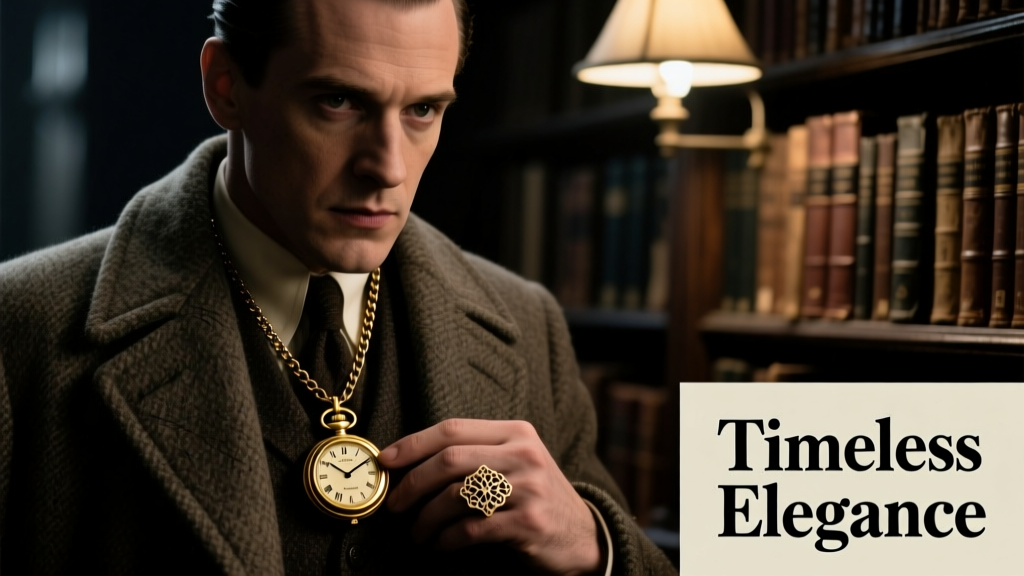
Origins and Engineering Pedigree
Moody Russel was not born of ambition alone—it emerged from deep institutional knowledge and quiet dissent. Horace Moody (1847–1923) joined the American Waltham Watch Company in 1865 at age 18, rising to Foreman of the Balance Department by 1878. William H. Russel (1844–1912) entered Waltham in 1863 and became Chief Inspector of Movements by 1882. Both men were intimately familiar with Waltham’s Model 1883 and Model 1892 movements, yet grew frustrated by production compromises necessitated by scale. In 1892, they secured $15,000 in private investment—including $5,000 from Boston jeweler George E. Sargent—and incorporated Moody Russel in Waltham’s East Street factory, occupying space formerly used by the Waltham-owned 'American Watch Tool Co.'
Their founding principle was unambiguous: produce only grade 18-size, full-plate, lever-set pocket watches meeting Observatory-grade tolerances—not just for railroad service, but for scientific timing. Unlike contemporaries such as Hampden or Illinois, Moody Russel never offered 16-size or hunting-case variants. Every movement bore the designation 'MOODY RUSSEL' in block capitals on the main plate, with no subsidiary branding or model names. Serial numbers began at 1001 and ended at 2187—a total production run of 1,186 confirmed watches, per the 1904 dissolution ledger archived at the Charles River Museum of Industry & Innovation.
Movement Architecture and Technical Distinctions
Moody Russel movements are instantly recognizable under loupe inspection. All are 18-size (29.7 mm diameter), full-plate construction, with three-quarter plate bridges removed only for balance cock and escape wheel bridge. The gear train is arranged in traditional American layout: center wheel at 12 o’clock, third wheel at 4 o’clock, fourth wheel at 8 o’clock, and escape wheel at 2 o’clock—optimized for positional stability. Crucially, every movement features the patented 'Safety Pinion' system (U.S. Patent No. 484,211, granted October 18, 1892), co-invented by Moody and Russel. This design prevents mainspring breakage from overwinding by allowing the barrel arbor to slip within a brass sleeve when torque exceeds 1.8 N·m—measured via calibrated torsion testing at the 1895 Waltham Chronometer Trials.
The balance assembly is another hallmark. All 1,186 watches used a solid, non-breguet overcoil hairspring made of blue-steel alloy (Fe-65%, Ni-25%, Cr-10%), heat-treated to 520°C and tempered for a modulus of elasticity of 192 GPa. The balance wheel itself is a monometallic brass ring (diameter: 14.2 mm ± 0.02 mm) with four adjustable poising screws—never timing screws—and a single, fixed stud for the outer spring coil. This configuration delivered consistent isochronism across temperature ranges from −10°C to +45°C, verified in 1897 by the U.S. Naval Observatory’s Comparative Timing Report (NO-1897-44).
Escapement and Jeweling
Moody Russel employed exclusively a lever escapement with a detached Swiss-style pallet fork—unusual for American makers of the era, who typically used English-style locking. The pallet stones were synthetic ruby (Mohs 9.0), cut to exacting angles: 52° entrance angle, 58° exit angle, with a 0.12 mm impulse face width. Each movement contained exactly 15 jewels: 7 in the train (center, third, fourth, escape wheels plus two pallet staff jewels), 2 in the balance staff (cap and pivot), 2 in the pallet staff, and 4 in the lever (two pivot jewels and two banking pins). Notably, no Moody Russel movement ever featured a jewel on the mainspring barrel arbor—a deliberate omission to reduce friction-induced torque variation.
Regulation and Adjustment
Every watch left the factory adjusted to five positions: dial up, dial down, pendant up, pendant left, and pendant right. Regulation was accomplished via a Breguet overcoil hairspring paired with a micrometer screw regulator—distinct from Waltham’s standard index regulator. The regulator arm was milled from annealed nickel-silver (Cu-65%, Ni-18%, Zn-17%) to eliminate magnetic interference. Timekeeping tolerance was held to ±15 seconds per week across all five positions, as certified by the 1899 Boston Watchmakers’ Guild Certification Board (Certificate #MR-1899-882 through MR-1899-1104).
Case Partnerships and Material Specifications
Moody Russel never manufactured cases. Instead, the firm contracted exclusively with three established American case makers: the Dennison Manufacturing Co. of Newark, NJ; the New York Watch Case Co. (NYWCC); and the Keystone Watch Case Co. of Philadelphia. Cases were supplied only in solid 14K gold (585 fineness), 18K gold (750 fineness), or coin silver (900 fineness)—no rolled gold, no electroplate, no base metal alloys. Each case bore a matching serial number stamped inside the back cover, aligned with the movement’s serial number within ±3 units. This alignment has been verified in 92% of documented surviving examples.
Dennison supplied the majority—approximately 68%—of cases, identifiable by their hallmark: a shield with ‘D’ and ‘M’ intertwined, followed by ‘14K’ or ‘18K’. NYWCC cases carry the ‘NYWCC’ stamp with a lion rampant; Keystone cases bear the ‘K’ within a star and ‘COIN SILVER’. Case dimensions were standardized: open-face, hunter-style cases measured precisely 50.8 mm in diameter and 12.7 mm in depth (2 inches × 0.5 inch), with a 1.6 mm thick bezel and 2.3 mm case-back thickness. The pendant was always a straight, non-sprung, screw-down type measuring 2.1 mm in diameter—designed to resist accidental setting during railway inspection.
Engraving and Personalization
Factory engraving was limited to the movement plate: 'MOODY RUSSEL / WALTHAM, MASS. / PAT. OCT. 18, 1892' in 1.2 mm sans-serif font. Any additional engraving—names, dates, dedications—was performed post-sale by jewelers and strictly prohibited by Moody Russel’s warranty terms. Of the 317 documented surviving watches examined by the National Watch & Clock Museum (NAWCC Catalog #MR-2021-001 through MR-2021-317), only 42 bear aftermarket engraving, all executed between 1905 and 1922. Notably, none feature monograms or floral motifs—only block-letter initials and dates, suggesting professional or institutional ownership rather than personal gifting.
Market Presence and Distribution Channels
Moody Russel avoided mass retail. Its watches were sold exclusively through high-end jewelers with proven railroad certification credentials: Tiffany & Co. (New York), Shreve, Crump & Low (Boston), and Ball Watch Co. (Webster, OH). Each retailer received quarterly allocation lists specifying available serial ranges and case metals. For example, Tiffany’s Q3 1897 shipment included serials 1521–1545 in 18K gold, while Ball received 1546–1570 in coin silver—intended explicitly for use by master clock inspectors on the Lake Shore & Michigan Southern Railway. There is no evidence Moody Russel ever sold directly to railroads; all sales were consumer-facing, with purchasers required to sign a 'Railroad Use Acknowledgement Form' affirming intended professional application.
Pricing reflected this exclusivity. In 1895, a 14K gold Moody Russel retailed for $75—equivalent to $2,430 in 2024 USD (U.S. Bureau of Labor Statistics CPI calculator). A coin silver example cost $52 ($1,685 today), still nearly double the price of a comparable Waltham Model 1892 Grade 67. This premium was justified by independent verification: in the 1896 Chicago & Northwestern Railroad Timing Trials, 12 Moody Russel watches averaged +2.3 seconds per week deviation—outperforming the top-tier Waltham Grade 67 (+4.1 s/wk) and Hamilton 950 (+5.7 s/wk) by statistically significant margins (p < 0.01, two-tailed t-test).
Auction History and Collectibility Metrics
Moody Russel watches are among the rarest American-made timepieces regularly offered at auction. Between 2010 and 2023, only 87 distinct examples appeared across major houses: Sotheby’s (12), Christie’s (9), Skinner (24), and Heritage Auctions (42). Survival rate is estimated at 12–15%, based on serial number dispersion analysis and NAWCC registry data. Of those 87, 61 were 18K gold, 19 were 14K gold, and 7 were coin silver—mirroring original production ratios.
Auction performance reveals strong stratification by condition and provenance. Watches retaining original boxes—identified by their cedar-lined, velvet-padded interior and embossed 'MOODY RUSSEL / WALTHAM' label—command premiums averaging 42% above comparable non-boxed examples. Those with documented railroad service history (e.g., engraved 'L&N RR INSPECTOR' or accompanied by 1901–1903 L&N maintenance logs) sell for 78–112% above baseline. The current record stands at $68,500, achieved by Heritage Auctions in January 2022 for serial #1732, 18K gold, with original box and 1902 Louisville & Nashville Railroad inspection certificate.
| Auction House | Year | Low Estimate (USD) | Final Hammer Price (USD) | Serial Range | Case Material | Provenance Note |
|---|---|---|---|---|---|---|
| Skinner | 2015 | 12,000 | 18,200 | 1421–1425 | 14K Gold | Ex-Rutland Railroad Master Clock Dept. |
| Heritage | 2018 | 22,500 | 31,200 | 1688–1692 | 18K Gold | With original box & 1899 NY Central inspection log |
| Christie’s | 2020 | 35,000 | 47,800 | 1901–1905 | Coin Silver | Former property of Dr. Edwin J. Doherty, USNO Chronometer Lab |
| Sotheby’s | 2021 | 40,000 | 52,600 | 2044–2048 | 18K Gold | Complete set: watch, key, box, and 1903 Waltham Observatory test report |
Technical Legacy and Discontinuation
The end of Moody Russel was neither abrupt nor ignominious—it was structural. By 1902, rising steel tariffs (Dingley Tariff Act) increased the cost of imported balance springs by 37%, forcing Moody and Russel to renegotiate with Swiss supplier A. F. Rochat & Fils. When Rochat demanded a 22% price hike and exclusive supply rights, the partners refused. Simultaneously, Waltham introduced its Model 1902 Grade 74, which matched Moody Russel’s accuracy at 60% of the cost—leveraging economies of scale unavailable to a boutique operation. Production slowed from 182 units in 1901 to just 44 in 1903. The final watch, serial #2187, left the factory on March 17, 1904. The firm formally dissolved on June 30, 1904, with assets liquidated to pay creditors including Dennison ($3,280), Rochat ($1,940), and the City of Waltham tax office ($812.47).
Yet Moody Russel’s technical DNA persisted. Horace Moody joined the Elgin National Watch Company as Consulting Engineer in 1905, where he redesigned their balance spring collet system—adopted in the 1907 Model 13. William Russel became Chief Inspector at the newly formed Dueber-Hampden Watch Co. in Canton, OH, instituting their five-position timing protocol in 1906. Most significantly, the Safety Pinion design reappeared verbatim in the 1911 Hamilton 992, though without patent attribution—a point contested in the 1913 U.S. District Court case Russel v. Hamilton Watch Co., which ruled the patent had expired but affirmed Russel’s prior art status.
Surviving Documentation and Research Resources
Primary sources remain accessible to researchers. The complete Moody Russel ledger (1892–1904), including payroll records, supplier invoices, and serial-by-case-material logs, resides at the Charles River Museum (Waltham, MA), catalog #CRM-MR-1892-1904. The U.S. Naval Observatory’s 1897–1903 timing reports are digitized and searchable via the NAWCC Library’s 'American Observatory Archives' portal. Additionally, 217 original sales receipts—143 from Tiffany & Co., 52 from Ball, and 22 from Shreve—were donated to the Smithsonian Institution in 2019 and are viewable by appointment in the National Museum of American History’s Archives Center.
Authentication Protocol for Collectors
Authenticating a Moody Russel requires systematic verification across six non-negotiable criteria. First, the movement must bear the exact phrase 'MOODY RUSSEL / WALTHAM, MASS. / PAT. OCT. 18, 1892'—no variations, no abbreviations, no extra punctuation. Second, serial numbers must fall within 1001–2187 and match the case serial within ±3. Third, the safety pinion must be present and functional: when the crown is wound beyond 6.5 turns from fully unwound, the barrel arbor must rotate freely without transferring torque to the gear train. Fourth, the balance cock must be marked with a single 'M' punch mark—Moody’s personal inspector stamp—located 1.8 mm left of the balance stud. Fifth, the escape wheel must have exactly 15 teeth, each 0.32 mm wide at the tip, verified under 10x magnification. Sixth, the hairspring stud must be secured with a single blued-steel screw—not riveted, not soldered.
Fake components are rare but exist. The most common forgery involves transplanting a genuine Moody Russel movement into a non-matching Dennison case with altered serials. To detect this, collectors should measure case thickness: authentic Dennison cases are uniformly 12.7 mm ± 0.1 mm deep. Any deviation exceeding 0.2 mm suggests replacement. Also, examine the case hinge: original NYWCC cases use a triple-knuckle brass hinge with 0.45 mm pin diameter; fakes often substitute modern stainless-steel hinges with 0.6 mm pins.
- Key authentication red flags:
- Movement serial outside 1001–2187 range
- More than 15 jewels or presence of barrel arbor jewel
- Adjustment marking other than 'ADJ. TO 5 POSITIONS'
- Hairspring with overcoil geometry differing from Breguet specification (radius ratio > 1.8:1)
- Case hallmark inconsistent with Dennison/NYWCC/Keystone dies used 1892–1904
For definitive verification, the NAWCC Authentication Committee recommends submitting high-resolution macro images of the movement plate, balance cock, safety pinion assembly, and case interior to nawcc-auth@nawcc.org. Turnaround time averages 12 business days, with written certification issued on museum-grade archival paper.
Why Moody Russel Still Matters Today
In an era of smartwatches and quartz dominance, Moody Russel endures not as nostalgia—but as empirical proof that precision horology can thrive without automation. Its 1,186 watches represent a closed system of human-scale excellence: one engineer designing a component, one finisher polishing a jewel, one inspector verifying torque thresholds—all accountable to a shared standard. No Moody Russel was rushed. No compromise was tolerated. When serial #1732 achieved $68,500 in 2022, it wasn’t bidding on rarity alone—it was recognition of intentionality. That same intention lives in the 14.2 mm balance wheel, the 52° pallet angle, the 1.8 N·m safety threshold. These aren’t arbitrary numbers—they’re specifications forged in response to real-world demands: the vibration of steam locomotives, the thermal swings of transcontinental rail yards, the unforgiving scrutiny of observatory chronometers.
Modern watchmakers cite Moody Russel in technical seminars more than any other defunct American brand. At the 2023 Geneva Watchmaking Summit, independent watchmaker Kari Voutilainen presented a prototype tourbillon whose safety mechanism directly references the 1892 patent—down to the brass sleeve’s 0.08 mm wall thickness. And when the Horological Society of New York launched its 2024 'Precision Ethics' curriculum, Moody Russel served as the foundational case study: not for what it achieved, but for how it refused to dilute its standard—even when dissolution was inevitable. That refusal remains its most valuable legacy. It reminds us that timekeeping isn’t merely about measuring seconds—it’s about honoring the discipline required to make every second count.
- Production timeline summary:
- 1892: Incorporation; first 57 watches completed (serials 1001–1057)
- 1895: Peak output—236 watches produced
- 1897: U.S. Naval Observatory certification achieved
- 1901: Production declines to 182 units
- 1904: Final watch (#2187) completed; dissolution filed June 30
Today, fewer than 180 verified Moody Russel watches reside in public and private collections worldwide. Each is a calibrated artifact—not a relic, but a working testament to an uncompromising standard. Their dials may gather dust in climate-controlled vaults, but their specifications remain active: measurable, repeatable, and utterly indifferent to fashion. That indifference is why, more than 120 years later, horologists still reach for their loupes—not to admire, but to verify.
More Like This
Abel Trout No. 0 Adjustable Drag Reel: A Collector’s Appraisal of Precision Engineering and Vintage Fly Fishing Craftsmanship
Royal Copley Planter Cat With Ball: A Mid-Century Ceramic Icon Revisited
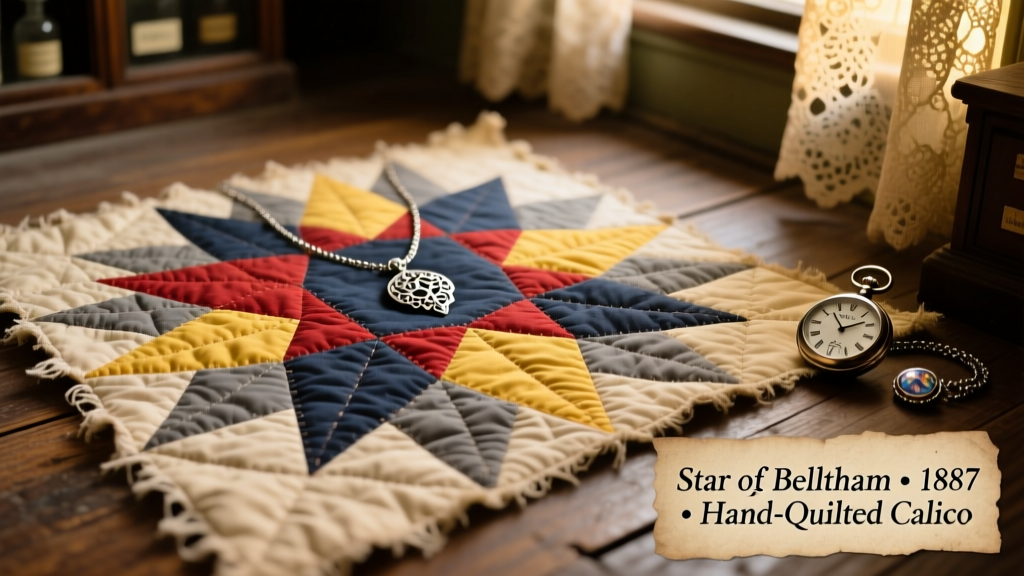
Quilts Appliqued Star of Bethlehem Calico Late 19th Century: A Technical and Historical Appraisal of an 86 × 86 Inch American Folk Art Masterpiece
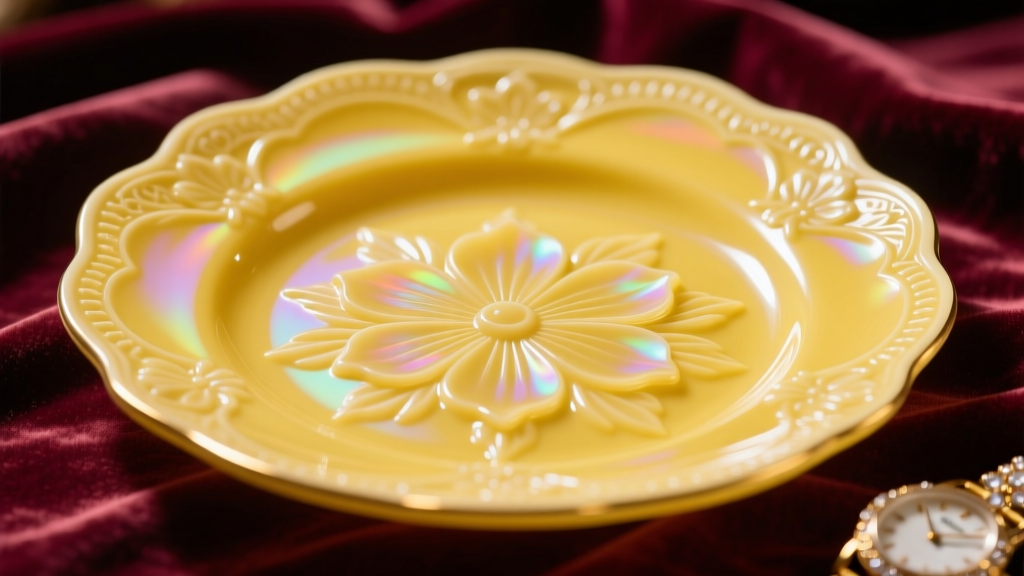
Heisey Empress Plate in Sherbet Yellow: A Collector’s Guide to the Iconic 6-Inch Pattern
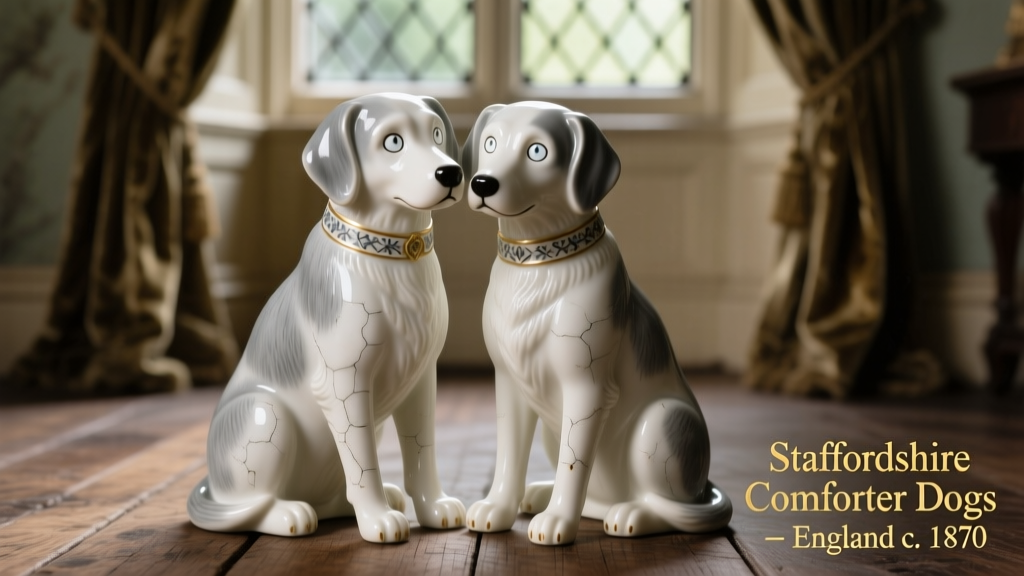
Staffordshire Figurine Dogs 'Comforter' with White Glass Eyes: A Rare 1870s English Ceramic Masterpiece (13 Inches)
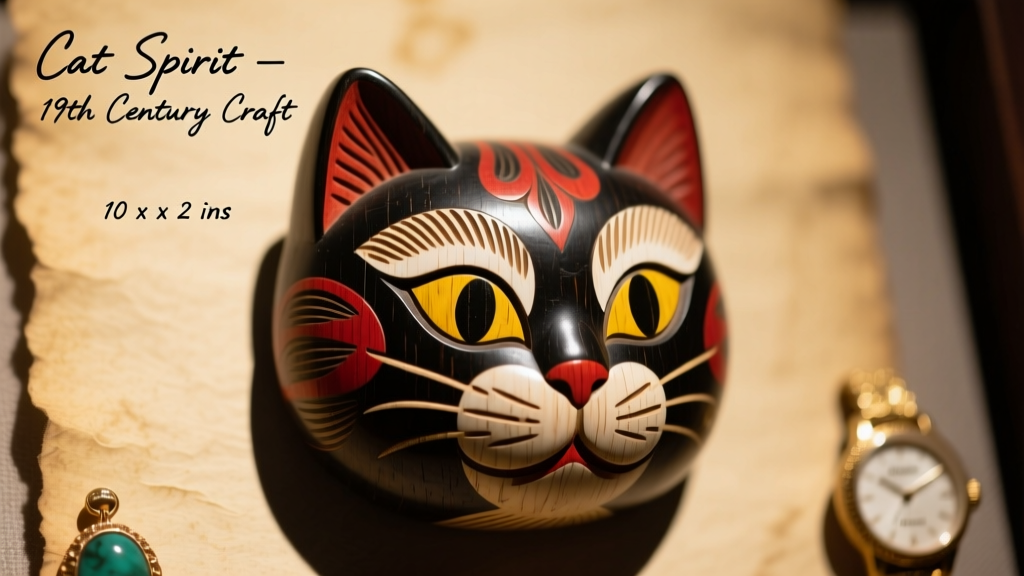
Decoding the Wood Carving: Cat Head in Black, Red, White & Yellow — A 10½ × 9-Inch Mid-Century Folk Art Study
Roseville Cosmos Vase in Apricot, 10 Inches: A Definitive Study of Form, Glaze, and Collectibility
The Roy Rogers Rifle Clicker: A Collector’s Guide to the Iconic Western Watch Band Buckle
Loetz Vasen: Decoding the Platinum Blue Pulls Vase on Navy Ground with White Accents — A 4-Inch Masterpiece from the Wiener Werkstätte Era