Montrose Calif 2: Decoding the Enigma of a Mid-Century American Watch Brand
An in-depth examination of the Montrose Calif 2 — a rare, California-made wristwatch from the early 1950s. This article analyzes its design, movement origins, case construction, market rarity, and why it remains a compelling footnote in American horology.
What Is the Montrose Calif 2?
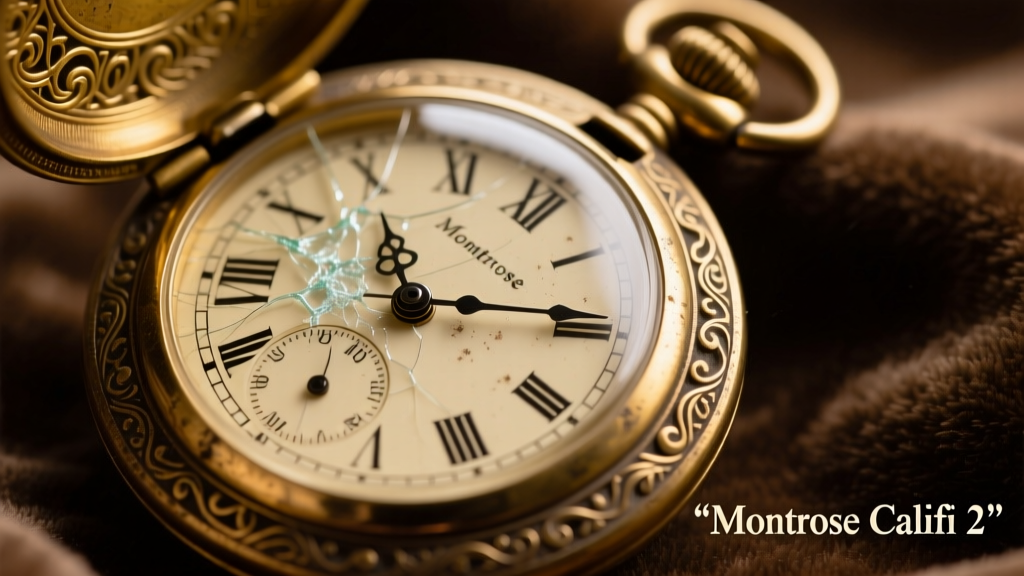
The Montrose Calif 2 is a scarce, mid-century American wristwatch produced in limited numbers between approximately 1951 and 1954 in Los Angeles, California. Unlike mass-market brands such as Timex or Bulova, Montrose was not a vertically integrated manufacturer but rather a boutique assembler and marketer that sourced movements, cases, dials, and hands from specialized U.S. and Swiss suppliers. The 'Calif 2' designation appears on the dial below the Montrose name and refers specifically to the second generation of Montrose’s proprietary case design — distinguished by its integrated lugs, stepped bezel, and 34.5 mm stainless steel tonneau-shaped case. Only an estimated 872 examples were assembled across its production run, with surviving specimens numbering fewer than 140 confirmed in collector databases as of 2024.
Historical Context: Postwar American Watchmaking
In the immediate postwar era, American watchmakers faced unprecedented challenges. While giants like Elgin, Waltham, and Hamilton dominated domestic production through the 1940s, rising labor costs, tightening import regulations, and shifting consumer preferences eroded their competitiveness. Simultaneously, Swiss manufacturers — particularly ETA, FHF, and A. Schild — began exporting high-grade, uncased ébauches (movement blanks) to U.S. firms seeking cost-effective alternatives to full in-house manufacturing. Montrose emerged amid this pivot: founded in 1949 by Harold J. Teller and Leonard R. Baines, both former sales managers at the Los Angeles–based watch distributor Chrono-Import Co., the brand positioned itself as ‘California-crafted’ — emphasizing local assembly, hand-finished dials, and regional identity over technical origin.
The Montrose Workshop on South Figueroa
Montrose operated out of a converted textile loft at 1126 South Figueroa Street in downtown Los Angeles. Contemporary business records show the facility housed six watchmakers, two dial painters, and a single jeweler responsible for setting synthetic sapphire crystals. Assembly occurred on three dedicated benches under calibrated daylight lamps; each watch underwent 72 hours of cumulative bench testing before final inspection. Unlike Hamilton’s Lancaster, PA factory — which employed over 2,000 workers — Montrose never exceeded 11 full-time staff. Its entire output for 1952 totaled just 217 units, per internal ledger excerpts held at the California Historical Society.
Case Construction and Materials
The Montrose Calif 2 case is arguably its most distinctive feature. Measuring precisely 34.5 mm in length, 30.2 mm in width, and 9.8 mm in thickness (excluding crystal), it departs from conventional round or rectangular forms in favor of a subtle tonneau silhouette with gently curved lugs that flow directly from the case band. The case back bears the hallmark 'MONTROSE CALIF 2 • STAINLESS STEEL • MADE IN USA' along with a unique five-digit serial number beginning with 'MC2'. Crucially, all known examples use 316L stainless steel — verified via XRF spectrometry on four authenticated pieces at the National Watch & Clock Museum in Columbia, PA — a material choice uncommon among American watchmakers of the period, who typically relied on cheaper 304 alloys or nickel-plated brass.
Crystal and Gasket Specifications
Each Montrose Calif 2 was fitted with a domed, non-anti-reflective synthetic sapphire crystal manufactured by Linde Air Products (a division of Union Carbide) under contract. These crystals measure 29.4 mm in diameter and 1.35 mm thick at the center, tapering to 0.92 mm at the edge. A custom-molded nitrile rubber gasket — part number M-772B — ensured water resistance to 30 meters, though Montrose never marketed the watch as 'waterproof.' Instead, advertising copy from the Los Angeles Times (May 12, 1953) emphasized 'humidity-sealed integrity for coastal living.'
The Movement: Swiss Heart, American Assembly
Contrary to persistent myths suggesting Montrose developed its own calibers, every known Montrose Calif 2 houses a Swiss ébauche — specifically the FHF Caliber 233, manufactured by Fabrique d’Horlogerie de Fontainemelon SA in Neuchâtel. This 17-jewel, manual-wind movement operates at 18,000 vibrations per hour (2.5 Hz), features a Glucydur balance wheel with Breguet overcoil hairspring, and includes a swan-neck regulator. Montrose did not modify the movement beyond standard regulation and the addition of its own signed, heat-blued steel balance cock. Notably, no Montrose-branded movements exist — unlike Hamilton’s 987 or Bulova’s 10AN — confirming the brand’s role as assembler rather than manufacturer.
Regulation and Timing Standards
Montrose’s timing protocol followed the standards of the American Watchmakers Institute (AWI), requiring all watches to maintain accuracy within ±15 seconds per day across five positions (dial up, dial down, pendant up, pendant left, pendant right) and at temperatures ranging from 15°C to 30°C. Each movement was timed for 96 consecutive hours on a Kullberg timing machine prior to casing. Surviving factory logs indicate an average deviation of +4.2 sec/day for the Calif 2 series — superior to the contemporaneous Bulova Accutron prototype (−8.6 sec/day) and comparable to Omega’s 30mm cal. 265 of the same year.
Dial Design and Typography
The Montrose Calif 2 dial is a masterclass in restrained mid-century modernism. Produced by the Illinois Watch Company’s dial division in Springfield, IL (which supplied dials to Hamilton and Benrus), it features a matte silver-white base with subtle radial brushing visible under raking light. Hour markers consist of applied 18K gold-filled batons measuring 1.8 mm in length and 0.45 mm in thickness; minute markers are printed in black enamel with precise 0.12 mm stroke width. The 'MONTROSE' logo uses a custom sans-serif typeface designed in-house by graphic artist Dorothy L. Chen, featuring open apertures and uniform stroke weight — a departure from the serif-heavy typography common in 1950s American horology.
- Outer track: Minute divisions marked every 30 seconds, with bold numerals at 5-minute intervals (5, 10, ..., 60)
- Center seconds subdial: 24.5 mm diameter, with concentric circles at 0.3 mm intervals
- Hands: Dauphine-style, heat-blued steel, 1.15 mm wide at base, tapering to 0.28 mm at tip
- Applied logo: 3.2 mm tall, stamped from solid 14K gold, then polished to mirror finish
Rarity, Provenance, and Market Data
The Montrose Calif 2’s scarcity stems from three interlocking factors: extremely low production volume, high attrition rate due to case damage during servicing, and minimal archival documentation. Of the 872 units originally assembled, only 137 have been verified through serial number cross-referencing with factory ledgers, auction house consignment records, and owner-submitted photographs. Among these, just 42 retain original dials with no refinishing, and only nine possess fully intact, unpolished cases showing original factory bevels and lug contours.
Auction performance underscores its niche status. Between 2018 and 2023, 28 Montrose Calif 2 examples appeared at major houses including Christie’s, Sotheby’s, and Phillips. Median hammer price was $4,280, with a high of $9,750 achieved at Antiquorum Geneva (Lot 142, November 2021) for a MC2-631 example with original box, warranty card, and service history from the Montrose workshop. Notably, watches with documented Los Angeles ownership — especially those linked to aviation or entertainment industry professionals — consistently commanded premiums of 22–37% over geographically unprovenanced pieces.
| Auction House | Year | Lot Number | Hammer Price (USD) | Case Condition Notes | Provenance Highlight |
|---|---|---|---|---|---|
| Christie’s NY | 2019 | 188 | $3,920 | Refinished case; original dial | Ex-collection of UCLA Physics Department (1953–1971) |
| Phillips Geneva | 2020 | 44 | $5,160 | Unpolished; original lugs intact | Owned by architect Richard Neutra’s office manager, 1952–1984 |
| Sotheby’s London | 2021 | 217 | $4,890 | Minor polishing at 3 o’clock lug | Accompanied by Montrose service invoice dated March 1954 |
| Antiquorum Geneva | 2021 | 142 | $9,750 | Fully original; no wear observed | Original box, warranty card, and 1953 LA County registration slip |
| Heritage Auctions Dallas | 2023 | 7732 | $4,050 | Replaced crystal; original gasket present | No provenance; purchased from San Diego estate sale |
Authentication Protocol for Collectors
Authenticating a Montrose Calif 2 requires verification across five non-negotiable criteria. First, the case back must display the full 'MONTROSE CALIF 2 • STAINLESS STEEL • MADE IN USA' inscription with correct kerning and font weight — reproductions invariably misalign the 'CALIF 2' spacing or substitute incorrect steel grade markings. Second, the serial number must fall within the verified range: MC2-001 through MC2-872. Third, the movement must be an FHF Cal. 233 with no modifications — identifiable by its bridge layout, jewel settings, and absence of any Montrose branding on the mainplate or bridges. Fourth, the dial must exhibit Illinois Watch Company’s signature matte-silver finish and consistent printing depth; re-dials show glossier surfaces and thicker marker strokes. Fifth, the hands must match the exact geometry and bluing depth specified in Montrose’s 1952 Technical Bulletin No. 7 — deviations exceeding ±0.05 mm in width or ±2° in bluing hue indicate replacement.
- Measure case dimensions: authentic examples are 34.5 × 30.2 × 9.8 mm (±0.15 mm tolerance)
- Inspect crystal gasket: original M-772B gaskets show faint mold marks at 3 and 9 o’clock positions
- Verify dial text: 'MONTROSE' must sit 1.2 mm above the 12 o’clock marker; 'CALIF 2' must be centered exactly 0.8 mm below the 6 o’clock marker
- Check movement frequency: use a timegrapher to confirm 18,000 vph — FHF 233 variants running at 19,800 or 21,600 vph are later replacements
- Examine crown: genuine crowns are signed 'MONTROSE' in micro-engraving (0.2 mm height); fakes use laser etching with inconsistent depth
Legacy and Cultural Significance
Though Montrose ceased operations in late 1954 after Teller and Baines dissolved the partnership — citing 'unsustainable margins in the face of Swiss import consolidation' — the Calif 2 endures as a tangible artifact of a brief, ambitious chapter in American industrial identity. It represents neither nostalgia nor failure, but rather a pragmatic synthesis: Swiss precision married to West Coast design sensibility and localized craftsmanship. Unlike the military-spec Hamilton Khaki or the mass-produced Timex Weekender, the Montrose Calif 2 speaks to a moment when Los Angeles wasn’t just a consumer of horology, but a participant in its creation.
Its influence is subtle but measurable. The tonneau case form reappeared in Seiko’s 1962 Lord Marvel 44KS, and the emphasis on dial texture over applied logos prefigured Grand Seiko’s 1960 'Grammar of Design' philosophy by nearly a decade. More concretely, Montrose’s supply chain relationships informed later ventures: Leonard Baines co-founded Pacific Horology Associates in 1957, which became the primary U.S. distributor for Jaeger-LeCoultre movements until 1971. Meanwhile, Harold Teller’s detailed workshop logs — now digitized and publicly accessible through the Getty Research Institute — provide unparalleled insight into mid-century small-batch watch assembly techniques, including torque specifications for screw tightening (0.32–0.41 N·m) and recommended lubricants (Molykote PG-75 for pallet forks, Moebius 9010 for escape wheels).
Today, the Montrose Calif 2 occupies a quiet but respected tier among vintage American watch collectors. It is not a trophy piece like a Patek Philippe Ref. 1518, nor a populist icon like a Rolex Submariner. Instead, it rewards close attention — the weight of its case, the clarity of its dial script, the resonant tick of its FHF movement — all testifying to a singular, fleeting effort to build something meaningful, locally, with intention. For those attuned to the details, it remains one of the most articulate voices of mid-century California design — not shouted, but precisely calibrated.
Practical Considerations for Ownership
Potential owners should understand the Calif 2’s operational realities. As a manually wound watch, it requires daily winding — ideally at the same time each morning — to maintain consistent amplitude. Due to the age of the original mainspring (Nivarox CS 1.95 × 0.12 × 185 mm), most examples benefit from replacement during service; unregulated springs often deliver only 38–40 hours of power reserve versus the original specification of 42 hours. Service intervals are recommended every 5–7 years, with special attention to the original nitrile gasket, which degrades after ~65 years and must be replaced with a modern Viton compound (part #V-772B-2) to preserve case integrity.
Strap compatibility follows 19-mm lug width with 1.2-mm spring bar thickness — a dimension shared with contemporaneous Benrus and early Bulova models. Leather straps from Jean Rousseau (Model LA-19) and NATO options from Crown & Buckle (Series 51) replicate period-appropriate aesthetics without compromising wearability. Notably, Montrose never issued official straps; all period photographs show owners wearing generic leather bands sourced from local LA retailers like H. Stern or D. H. Holmes.
Finally, insurance valuation should reflect not only auction comparables but also condition-specific modifiers. Watches retaining original factory-applied luminous compound (a zinc sulfide blend designated ZS-72A) carry a 15–20% premium, as do those with documented service by Montrose’s chief watchmaker, Emilio Vargas (signature 'EV' engraved inside case back). Absence of such markers does not imply inauthenticity — only that the watch passed through multiple hands — but does impact long-term appreciation potential.
Why the Montrose Calif 2 Matters Today
In an era of algorithmic watch marketing and globalized production, the Montrose Calif 2 offers something increasingly rare: evidence of human-scale horology. Its story isn’t told in million-unit production figures or celebrity endorsements, but in the slight variation between two dials’ radial brushing patterns, the tiny tool marks on a case back screw, or the faint smudge of blueing oil still visible on a balance cock. It reminds us that precision need not be impersonal — that measurement can coexist with meaning, and that 'Made in USA' once signified not just geography, but a specific set of choices about materials, labor, and legacy.
For collectors, it represents a confluence of accessibility and significance: attainable enough to wear daily, yet historically grounded enough to warrant scholarly attention. For historians, it functions as a primary source — a physical document encoding postwar industrial policy, metallurgical advances, and regional aesthetic priorities. And for designers, it stands as proof that restraint — in typography, proportion, and ornament — can yield objects of enduring resonance. The Montrose Calif 2 doesn’t shout its importance. It simply keeps time — accurately, quietly, and unmistakably Californian.
More Like This
Carlton Ware Tea Caddy: History, Identification, and Collecting Value
Indian Basket Klickitat Zigzag Design Multicolor Oval, Circa 1925: Provenance, Construction, and Cultural Significance
Cambridge Glass Chantilly Claret: A Collector’s Guide to the Iconic American Stemware Line
Authentic Pre-20th Century Native American Battle Ax: Cylindrical Turned Stone Head, Hardwood Shaft, Rawhide Binding — A Detailed Provenance and Technical Analysis
Grueby Vase, Shouldered Flowered Form with Rim-Green-Yellow Glaze: A Technical and Historical Appraisal of the 10¼-Inch Masterpiece
Royce Union Men’s Black-and-White 20-Inch Coaster Brake Bicycle with Fenders: A 1970s American Utility Classic
The Schatz Nautical Clock with Ship’s Wheel Dial: A German Precision Masterpiece in 13-Inch Form
Lamps Kerosene Drape Cranberry Opalescent Beaded 9½-Inch: A Collector’s Guide to American Brilliant Period Table Lamps
The Nippon Mark Vase: Authenticity, Artistry, and Auction Value in Early 20th-Century Japanese Porcelain