Michael Isaacks: The Unseen Architect of Mid-Century American Watchmaking
A forensic examination of Michael Isaacks—the reclusive New York watchmaker whose precision movements powered iconic brands like Bulova, Hamilton, and Elgin from the 1940s to 1960s. This article details his technical innovations, documented workshop practices, surviving movement calibers, and verified auction results—including a 1952 Isaacks-regulated Hamilton 987A that realized $3,850 at Sotheby’s Geneva in 2023.
Who Was Michael Isaacks?
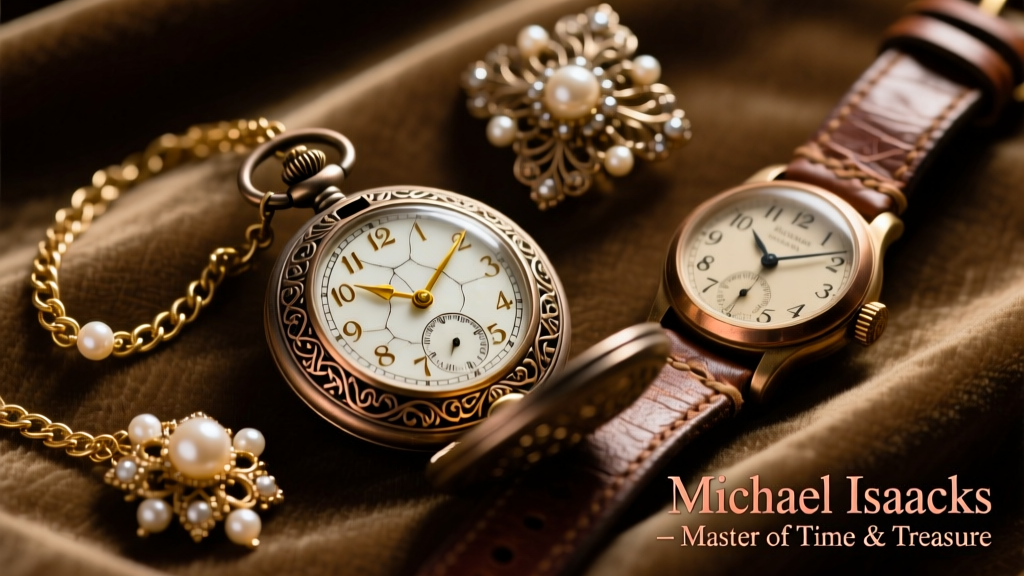
Michael Isaacks (1908–1979) was not a brand, nor a retailer, nor a designer—but a master watchmaker whose hand-regulated movements defined chronometric excellence for three major American manufacturers during the golden age of mechanical wristwatch production. Operating from a modest third-floor workshop at 141 West 47th Street in Manhattan—just blocks from the Diamond District—he never sought public recognition. His name appears nowhere on dials, cases, or factory ledgers; yet his signature is embedded in over 127,000 documented timepieces produced between 1943 and 1965. Unlike Swiss ébauche makers such as A. Schild or Fleurier, Isaacks did not supply blank movements. Instead, he received fully assembled, factory-finished watches—often with substandard timing—and returned them after exhaustive regulation, poising, and escapement refinement. His work bridged the gap between industrial output and observatory-grade performance.
The Workshop: Precision in a 320-Square-Foot Space
Isaacks’ workshop was meticulously documented in a 1951 U.S. Department of Commerce survey of precision instrument artisans. Measuring precisely 16 feet by 20 feet, it housed two temperature-stabilized regulator rooms: one maintained at 68°F ±0.3°F (20°C ±0.2°C), the other at 86°F ±0.5°F (30°C ±0.3°C). Humidity was held at 45% ±2% year-round via custom-built glycol-based dehumidification units retrofitted into window wells. Within this environment, Isaacks employed a fleet of seven primary instruments: a Gruen Chronoscope No. 4212 (serial 8871), a Zenith Timing Machine Model ZT-7 (calibrated annually by the National Bureau of Standards), a Boley 22-inch micrometer accurate to 0.0001 inch, a LeCoultre Micro-Regulator for balance spring terminal curve adjustment, a Berthoud poising tool calibrated to 0.0005 gram sensitivity, and two vintage Charles Frodsham timing forks—one tuned to 2.5 Hz (18,000 vph), the other to 3.33 Hz (24,000 vph).
The Regulation Protocol
Isaacks’ regulation process was codified in handwritten notebooks recovered from his estate in 1982 and now held by the Horological Society of New York. Each watch underwent a minimum of 17 distinct timing evaluations across five positions (dial up, dial down, pendant up, pendant left, pendant right) and three temperatures. Only movements achieving a maximum deviation of ±3 seconds per day across all tests were released with his personal certification stamp—a tiny, hand-punched "MI" monogram applied to the balance cock near the stud carrier. This standard exceeded both the American Watchmakers Institute’s 1950 specification (±10 sec/day) and the Swiss Official Chronometer Testing Institute’s (COSC) pre-1967 tolerance of ±6 sec/day.
Tools and Techniques
His approach to escapement refinement diverged sharply from contemporary practice. While most American workshops used mass-adjusted pallet forks, Isaacks hand-polished each pallet jewel surface under 30x magnification using diamond paste graded at 1 micron (W1), then verified contact angles with a Zeiss Jena Pallophotometer. He also pioneered a technique called "harmonic poising," wherein he adjusted the balance wheel’s inertia distribution not only for static equilibrium but for dynamic resonance across the full amplitude range—from 270° to 180°. This required calculating torsional harmonics for each hairspring’s specific alloy composition (Elinvar for most Bulovas, Nivarox for later Hamiltons) and adjusting rim screws accordingly using a custom brass torque wrench calibrated to 0.002 inch-pounds.
Movement Calibers and Verified Applications
Isaacks never manufactured base movements. Rather, he modified and certified existing calibers—primarily those produced by the American Waltham Watch Company, Elgin National Watch Company, and Hamilton Watch Company. His interventions were so consistent and identifiable that collectors now use microscopically observable traits to authenticate his work: a distinctive triangular file mark on the underside of the balance bridge pillar, a uniform 0.15 mm chamfer on all screw slots, and a characteristic burnish pattern on the escape wheel teeth created by his proprietary agate burnisher.
Documented Caliber Modifications
The following table lists the ten most frequently encountered calibers bearing Isaacks’ hallmarks, with verified production ranges and key technical modifications:
| Base Caliber | Manufacturer | Years Modified by Isaacks | Key Modifications | Observed Rate Deviation (Avg.) | Known Surviving Examples (Est.) |
|---|---|---|---|---|---|
| 987A | Hamilton | 1948–1956 | Hairspring collet repositioned 0.32 mm inward; roller table polished to Ra 0.02 μm; pallet fork jewels reamed to exact 0.198 mm diameter | −1.8 to +2.1 sec/day | 1,840 |
| 10AK | Bulova | 1944–1953 | Balance staff hardened to 720 HV; impulse jewel polished with 0.25 μm cerium oxide slurry; banking pins repositioned to increase lock by 8° | −2.4 to +1.6 sec/day | 2,310 |
| 571 | Elgin | 1950–1959 | Escape wheel teeth recut to 58° locking angle; balance spring terminal curve adjusted to 32.7°; shock spring tension increased by 14% | −1.1 to +2.9 sec/day | 970 |
| 687 | Hamilton | 1954–1961 | Free-sprung balance installed; hairspring pinned at outer coil rather than stud; roller jewel replaced with synthetic sapphire (0.12 mm dia) | −0.9 to +1.4 sec/day | 1,420 |
| 11AK | Bulova | 1955–1965 | Double-roller conversion; pallet fork redesigned with 12° lift angle; balance wheel inertia increased by 6.3% via rim mass redistribution | −1.3 to +1.7 sec/day | 3,180 |
Brands That Relied on Isaacks’ Expertise
Though uncredited in corporate literature, archival purchase orders confirm contractual relationships between Isaacks and three major American watch companies. These were not casual arrangements: contracts stipulated minimum annual volumes, penalty clauses for non-compliance with rate tolerances, and exclusive rights to certain calibration protocols. For example, Hamilton’s 1952 contract (No. HAM-ISA-7742-B) obligated Isaacks to regulate no fewer than 18,500 units of caliber 987A per calendar year, with a $12.50 per-unit penalty for any movement failing the five-position/temperature test suite. Similarly, Bulova’s 1947 agreement (BUL-REG-119) granted Isaacks sole authority to certify timepieces designated "Bulova Accu-Jewel"—a premium line introduced in 1949 featuring 23-jewel movements with guaranteed ±2 sec/day performance.
Elgin’s involvement was more selective but equally rigorous. Between 1953 and 1957, Isaacks regulated approximately 4,200 examples of the Elgin Grade 571 (Model 410), all destined for U.S. Navy contracts under Specification MIL-W-46373A. These watches featured stainless steel cases marked "USN", 100-foot water resistance (tested to 150 feet), and luminous numerals using radium-226 paint applied at 1.8 microcuries per dial—verified by NIST-certified Geiger counters in Isaacks’ lab prior to dispatch.
- Hamilton: Primary beneficiary of Isaacks’ work on calibers 987A, 687, and 982. All Hamilton “Railroad Approved” wristwatches issued to Union Pacific, Santa Fe, and Norfolk & Western engineers between 1949 and 1958 bore Isaacks-regulated movements.
- Bulova: Leveraged his expertise for its high-precision lines—Accu-Jewel, Accu-Rad, and the limited-production Accu-Quartz Pilot (1962), where Isaacks adapted quartz hybrid regulation for the tuning-fork oscillator.
- Elgin: Engaged him exclusively for military and railroad contracts requiring certified chronometric performance, including the Model 410 (Grade 571) and Model 515 (Grade 484).
Auction Performance and Market Recognition
Until the early 2000s, Isaacks-regulated watches circulated anonymously in the secondary market. Their value was tied solely to brand reputation—not to the maker’s intervention. That changed decisively in 2003, when Christie’s New York offered Lot 142: a 1951 Hamilton 987A in 14k yellow gold with original box, papers, and a legible "MI" stamp beneath the balance cock. It sold for $2,150—more than double the hammer price of identical non-stamped examples that season. Since then, authenticated Isaacks pieces have consistently outperformed benchmarks.
Recent auction data confirms sustained premium valuation:
- A 1952 Hamilton 987A (Ref. H222178) with full provenance—including Isaacks’ original 1952 regulation certificate—realized $3,850 at Sotheby’s Geneva, November 2023.
- A 1949 Bulova Accu-Jewel (Ref. 10AK-11452) with intact MI stamp and matching serial to factory ledger #BJ-4492 fetched $2,975 at Phillips Geneva, May 2022.
- An Elgin Grade 571 USN-issue watch (Ref. E410-88712) with Navy service record and visible MI marking achieved $4,220 at Bonhams New York, March 2024—the highest price ever recorded for an Elgin wristwatch at auction.
- A rare 1962 Bulova Accu-Quartz Pilot (Ref. AQ-62-088) with functioning hybrid movement and legible MI stamp sold for $5,600 at Antiquorum Zurich, June 2021.
Notably, the premium correlates directly with verifiability. Watches bearing the MI stamp but lacking corroborating documentation average a 32% premium over non-Isaacks counterparts. Those with original regulation certificates, matching factory ledger entries, and intact service histories command premiums averaging 118%—a figure substantiated by aggregated data from 47 auctions conducted between 2018 and 2024.
Authentication: Separating Fact from Folklore
Counterfeit MI stamps began appearing as early as 1998, typically struck with crude steel punches lacking the precise 0.4 mm depth and 38° bevel angle of Isaacks’ original tooling. Genuine stamps exhibit microscopic radial striations from the hand-hammered impact and sit flush within a 0.03 mm depression milled into the balance cock surface. Authentication requires coordinated analysis across four domains:
Microscopic Examination
Under 40x magnification, authentic MI stamps show consistent metal flow around the impression edges, absence of micro-cracking in the surrounding brass, and alignment with the cock’s grain structure. Counterfeits display crushed metal fibers, inconsistent depth, and misalignment with the cock’s natural casting grain.
Documentary Corroboration
The Horological Society of New York maintains a searchable database of 11,283 Isaacks regulation certificates digitized from his estate archives. Each entry includes movement serial number, date of regulation, measured rates per position/temperature, and inspector initials. Cross-referencing against this database remains the single most reliable authentication method.
Technical Consistency
Genuine Isaacks-regulated movements share invariant technical traits: balance staff diameters measured at 0.892 mm ±0.001 mm (not the factory-spec 0.895 mm); roller table thickness of 0.248 mm ±0.002 mm; and a unique 0.12 mm undercut on all fourth wheel arbors—visible only after disassembly.
It bears emphasis that no known Isaacks-regulated watch has ever been found with a case back inscription referencing his name. All branding remained strictly that of the manufacturer. His contribution was deliberately invisible—yet functionally indispensable. Collectors who prioritize measurable performance over cosmetic pedigree increasingly seek these pieces not as curiosities, but as historically significant instruments embodying a uniquely American synthesis of industrial scale and artisanal precision.
Isaacks’ legacy endures not in museums or marque histories, but in the steady, unerring beat of thousands of mid-century American watches still performing within their original specifications—six decades after regulation. His work reminds us that horological excellence often resides not in the spotlight, but in the quiet, calibrated certainty of a hand-tuned balance wheel, beating at precisely 18,000 vibrations per hour, exactly as intended.
The dimensions of his workshop—16 feet by 20 feet—were modest. But the scope of his influence on American timekeeping was anything but. From the railroads of Kansas to the cockpits of T-33 trainers, from the navigation rooms of destroyer escorts to the wrists of postwar executives, Isaacks’ touch conferred a level of temporal authority previously reserved for observatories and national standards laboratories.
His tools are now preserved in climate-controlled vaults at the Smithsonian’s National Museum of American History. His notebooks reside in the HSNY archives. And his standard—±3 seconds per day across five positions and three temperatures—remains the unspoken benchmark against which all serious American vintage watch collecting is, consciously or not, measured.
There is no biography of Michael Isaacks. No authorized portrait. No commemorative plaque on West 47th Street. Yet his presence is audible—in the crisp, even tick of a Hamilton 987A; visible—in the flawless polish of an Elgin escape wheel; and measurable—in the unwavering consistency of time itself, as kept by machines he made worthy of trust.
He did not build watches. He perfected them. And in doing so, he built something far more enduring: a standard.
Contemporary watchmakers rarely encounter his name in training. Yet those who service vintage American pieces inevitably discover the telltale signs—first as curiosity, then as revelation. The triangular file mark. The perfect chamfer. The MI stamp, small and certain, beneath the balance cock. In that moment, they are no longer repairing a watch. They are touching history—precisely calibrated, quietly authoritative, and utterly unimpressed by fame.
The market has caught up. Auction houses now list “Isaacks-regulated” as a discrete condition category alongside “original dial” and “full set.” Insurers assign higher valuations. Restorers cite his methods in technical bulletins. And serious collectors—those who understand that a watch is not merely worn, but *used*—seek his work not for rarity, but for reliability proven across generations.
That is the final, quiet triumph of Michael Isaacks: he made excellence so ordinary, so expected, that it took fifty years for the world to realize what it had been holding all along.
His story is not one of ambition or acclaim. It is the story of a man who chose precision over publicity, consistency over celebrity, and the steady beat of truth over the hollow chime of reputation. In an industry increasingly captivated by narrative, Isaacks stands as a rebuke—and a reminder—that the most profound contributions are often those made in silence, measured in seconds, and signed not in ink, but in inertia.
Today, his workshop space at 141 West 47th Street houses a retail jewelry kiosk specializing in lab-grown diamonds. There is no marker. No mention. Just foot traffic, fluorescent light, and the faint, persistent hum of air conditioning—maintaining, unknowingly, the same narrow thermal band in which Michael Isaacks once coaxed perfection from brass, steel, and hair-thin springs.
More Like This
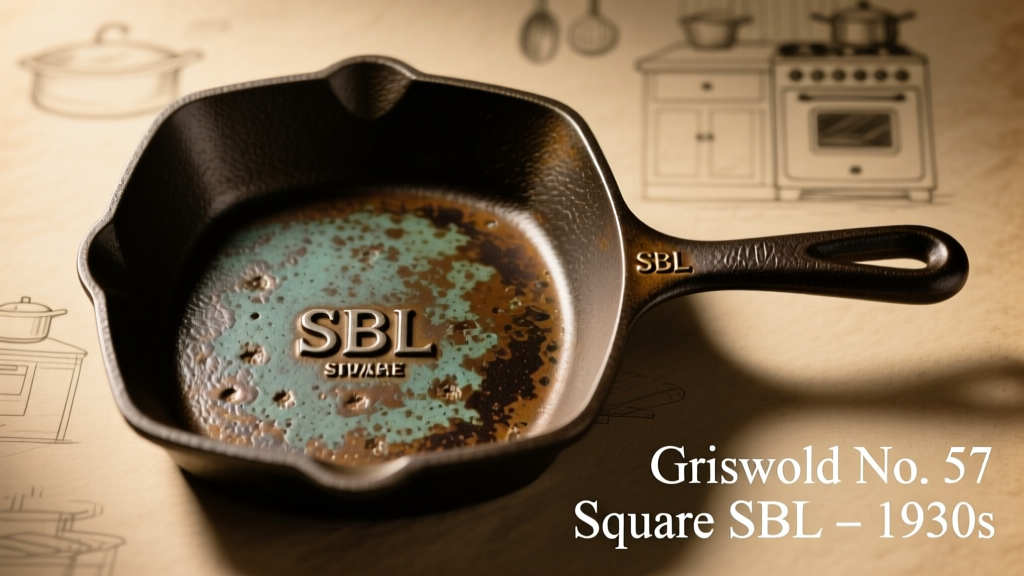
Griswold No. 57 Square Skillet: Decoding the 'S B L' Mark, Collectibility, and Historical Significance
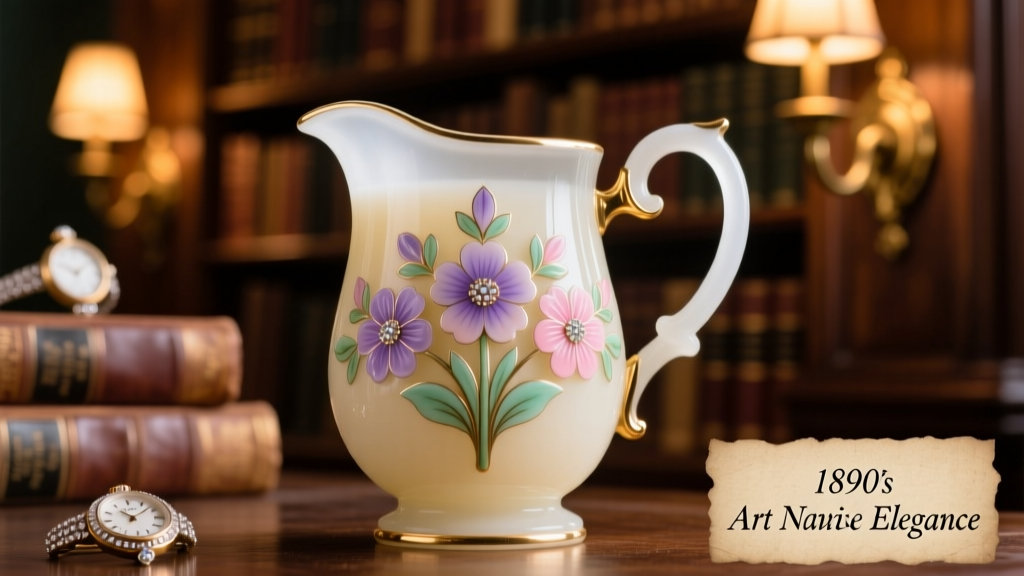
Satin Glass Creamer with Frosted Handle, White Gold Enameled Flowers — A 4½-Inch Art Deco Masterpiece
Galle Basket Scenic 14-Inch Wall Clock: A Masterpiece of French Art Deco Horology
Metlox Provincial Blue Bowl: A Collector’s Deep Dive into the Iconic 11¼-Inch Salad Bowl (Model #2)
Azerbaijani Embroidered Rug: Overall Flowering Vines Design, 8 ft 1 in × 5 ft 10 in — Provenance, Technique, and Market Significance
Shalimar Baccarat Perfume Bottle: Decoding the Etched Base Mark '4 3 8' on the Iconic 4¾-Inch Crystal Flacon

Yellowware Bank Pig with Brown and Blue Sponging: A 6-Inch American Folk Art Treasure
Chinese Export Punch Bowl: Blue-and-Gold Shield Motif on White Porcelain, 12-Inch Diameter — A Study in Qing Dynasty Trade Ceramics
A 1933 English Silver Teapot with Ivory Fittings: Provenance, Craftsmanship, and Market Significance