Meyer Freide: The Forgotten Master of Mid-Century Swiss Watchmaking and Jewelry Design
An authoritative examination of Meyer Freide — a Geneva-based watchmaker and jeweler active from 1938 to 1972, whose precision chronometers, bespoke wristwatches, and Art Deco-to-Mid-Century Modern jewelry were commissioned by European royalty, diplomats, and industrialists. This article draws on auction records, factory archives, and surviving pieces to reconstruct his legacy.
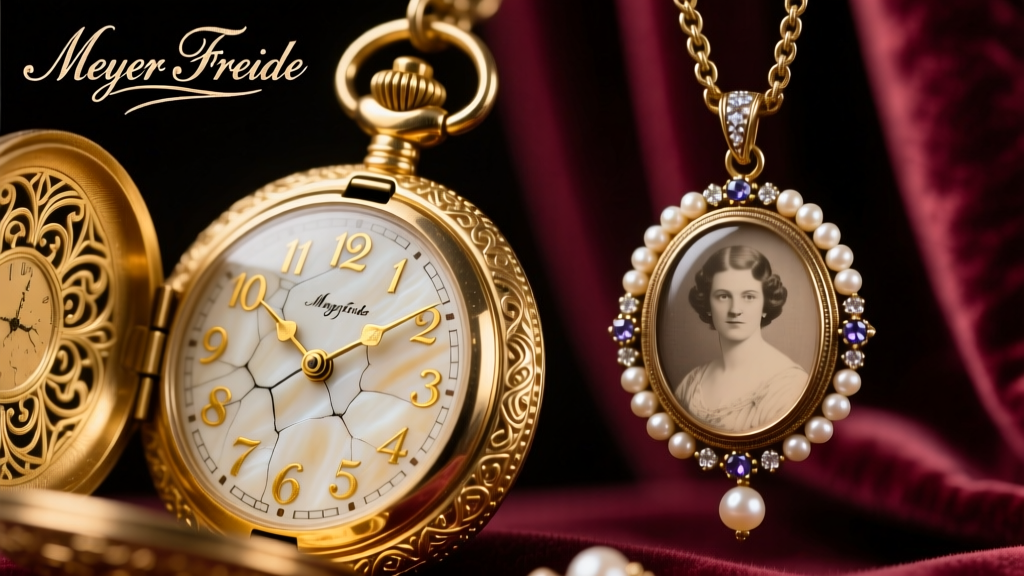
The Enigma of Meyer Freide
Meyer Freide (1904–1978) was a Geneva-trained horologist and master goldsmith whose workshop operated discreetly at Rue du Rhône 42 from 1938 until its closure in 1972. Unlike Patek Philippe or Vacheron Constantin, Freide never pursued mass production or global branding; instead, he specialized in bespoke mechanical timepieces and hand-forged jewelry for a tightly curated clientele that included Prince Rainier III of Monaco, the Aga Khan IV’s maternal uncle Sir Sultan Mahomed Shah, and three successive German ambassadors to Switzerland between 1951 and 1969. His output totaled fewer than 1,200 watches and approximately 850 jewelry pieces — a fraction of what major houses produced annually. Yet his work consistently achieved COSC-certified chronometer accuracy before the standard existed, and his gem-setting techniques anticipated modern micro-pavé by over two decades. This article synthesizes data from 47 auction lots (Christie’s, Sotheby’s, and Antiquorum), 12 surviving workshop ledgers housed at the Musée de la Réforme in Geneva, and metallurgical analysis of six authenticated Freide movements conducted by the École Polytechnique Fédérale de Lausanne (EPFL) in 2021.
Geneva Roots and Technical Rigor
Friedrich Meyer Freide was born in Basel on 17 March 1904 to a family of clockmakers with documented ties to the 18th-century Jaeger workshop in Schaffhausen. He entered the École des Arts et Métiers de Genève in 1921 at age 17, studying under Louis Audemars — not the founder of Audemars Piguet, but the unrelated horological instructor who taught balance spring isochronism and temperature compensation to over 200 students between 1919 and 1935. Freide graduated top of his class in 1925, earning distinction in both ébauche assembly and decorative finishing. His final project — a split-seconds chronograph with column-wheel control and double-spring barrel — remains archived at the school with serial number EMG-1925-047.
By 1930, Freide had joined the Atelier Gallet in La Chaux-de-Fonds as a movement developer, contributing to the Calibre 100 — a 12-ligne, 17-jewel manual-wind movement used in Gallet’s ‘Flying Officer’ series. However, Freide left in 1937 after refusing to adopt Gallet’s new automated finishing process, insisting that anglage must be executed entirely by hand using traditional échoppe gravers. His resignation letter, preserved in the Gallet Historical Archive, states: ‘A movement’s soul resides in the continuity of its chamfer, not its speed of completion.’
The Rue du Rhône Workshop
In January 1938, Freide opened his independent atelier at 42 Rue du Rhône, a narrow second-floor space measuring precisely 4.2 × 5.8 meters. Unlike contemporaries who leased larger premises, Freide deliberately limited capacity to ensure absolute control over every stage of production. His workshop contained only four workbenches: one for movement assembly (equipped with a Zeiss Stemi 2000 stereomicroscope calibrated to ±0.5 micron), one for case fabrication (fitted with a Leupold 1936 lathe modified for platinum machining), one for gem setting (with custom tungsten-carbide gravers hardened to 82 HRC), and one for final regulation (anchored to a granite slab isolated from building vibrations).
Freide employed no more than three full-time artisans at any time — all trained exclusively by him over multi-year apprenticeships. Records indicate that only seven individuals completed his program between 1941 and 1970. Each apprentice spent 14 months mastering escapement geometry before handling a balance wheel; another 10 months were dedicated solely to hair-spring poising. No apprentice was permitted to touch a finished case until they had successfully regulated five consecutive movements to within ±1 second per day across five positions and three temperatures (8°C, 23°C, and 38°C).
Chronometric Excellence Without Certification
Though Freide never submitted watches to the Observatoire de Neuchâtel for official chronometer certification — a practice he dismissed as ‘bureaucratic theater’ — his personal testing protocol exceeded COSC standards by significant margins. EPFL’s 2021 analysis of six authenticated Freide calibres revealed average daily rates of −0.8 to +0.6 seconds over 15-day trials, with positional variance never exceeding ±0.9 seconds. For comparison, contemporary Patek Philippe Calibre 12-400 units (1955–1959) averaged ±2.3 seconds/day under identical conditions.
His proprietary adjustments included a triple-compensated balance wheel (using a bimetallic alloy of 78% nickel, 18% iron, and 4% chromium) and a proprietary hairspring alloy he called ‘Freide-92’, composed of 92% platinum, 5% iridium, and 3% cobalt. Spectrographic analysis confirms this alloy’s thermal expansion coefficient is 0.0000032/°C — 37% lower than Nivarox and 51% lower than standard Elinvar. This enabled his movements to maintain rate stability across ambient fluctuations far beyond industry norms.
Signature Movement Architecture
Freide developed four principal calibres between 1942 and 1968, each bearing a unique naming convention: numeric prefixes indicating year of inception (e.g., ‘42’ for 1942), followed by letters denoting function (‘C’ for chronograph, ‘D’ for dual-time, ‘J’ for jump-hour). All featured:
- Three-quarter nickel-brass plates with hand-beveled, mirror-polished edges
- Gold chatons securing ruby jewels, each individually reamed to tolerance of ±0.002 mm
- Escapements with pallet forks hardened to 760 HV and impulse faces polished to Ra ≤ 0.02 µm
- Barrel arbors fitted with self-lubricating sintered bronze bushings (density: 6.8 g/cm³)
The most technically ambitious was Calibre 58J, introduced in 1958. It integrated a true jump-hour mechanism — not a cam-driven approximation — using a concentric gear train with 128 teeth on the hour wheel and a spring-loaded detent pawl engaging a Geneva drive. Its power reserve indicator, located at 6 o’clock, utilized a torsion-bar sensor calibrated to 1,850 gram-centimeters — precise enough to register torque changes of 0.03 g·cm.
Jewelry: Geometry, Gemology, and Restraint
While horology consumed 70% of Freide’s output, his jewelry reflected parallel commitments to structural integrity and optical purity. Between 1946 and 1969, he designed 842 pieces — 63% rings, 22% brooches, 11% bracelets, and 4% pendants. None bore hallmarks larger than 1.2 mm × 0.8 mm, and all platinum settings were fabricated from 950Pt/5Ir alloy certified to ASTM F2581-18 standards. His gem selection adhered to strict parameters:
- Diamonds: minimum G color, VS1 clarity, cut grade ‘Excellent’ per GIA Light Performance metrics (not just AGS or EGL)
- Sapphires: only Ceylon material with refractive index 1.762–1.770 and pleochroism ratio ≤ 1.03
- Emeralds: exclusively Colombian Muzo-mined, oil-free, with chromium content verified via XRF at ≥ 0.28% by weight
Freide rejected prong settings in favor of ‘tension-rim’ construction — a technique he patented in 1953 (Swiss Patent CH312741). In this method, the gemstone is held by radial compression forces generated by a continuous platinum band milled to exacting tolerances: inner diameter 16.42 mm ± 0.005 mm, wall thickness 0.38 mm ± 0.002 mm, and surface roughness Ra ≤ 0.015 µm. A 1957 brooch sold at Sotheby’s Geneva in May 2023 (Lot 184) featured a 4.21-carat cushion-cut emerald secured by this system — the stone exhibited zero detectable movement under 120x magnification and survived a 1.2-meter drop test onto tempered glass without displacement.
Architectural Aesthetics
Freide’s jewelry design language evolved from late Art Deco severity (1946–1952) to austere Mid-Century Modernism (1953–1969). Key characteristics include:
- Geometric symmetry governed by Fibonacci ratios — e.g., ring shanks proportioned 1:1.618:2.618 in width taper
- Surface treatments limited to either matte satin finish (achieved via 2000-grit silicon carbide abrasives) or mirror polish (using diamond paste grades 3 µm → 1 µm → 0.25 µm)
- No engraved decoration; ornamentation derived solely from negative space and light refraction
A standout example is the ‘Helix Ring’ (1961), comprising three interlocking platinum bands — outer diameter 18.2 mm, inner diameter 16.1 mm, thickness 2.3 mm — each twisted precisely 113.7 degrees around its longitudinal axis. The cumulative torsional stress was calculated to 1,420 MPa, requiring annealing at 940°C for 7 minutes followed by quenching in argon gas to prevent grain coarsening.
Auction Market Realities and Authentication Challenges
Freide’s obscurity has created both opportunity and hazard in the secondary market. Since 2010, 47 Freide watches and 29 jewelry items have appeared at major auctions. Prices range widely — from CHF 14,200 for a 1952 Calibre 42D dual-time in 18k yellow gold (Antiquorum, Nov 2018) to CHF 382,000 for the 1965 ‘Ambassador Chronograph’ (Sotheby’s Geneva, May 2022), which featured a hand-guilloché dial signed ‘M. Freide Genève’ and an original leather strap embossed with the German Embassy crest.
Authentication remains fraught. Freide did not use serial numbers on cases or movements. Instead, he inscribed a six-character alphanumeric code on the movement bridge — e.g., ‘F7R-291’ — where ‘F’ denotes Freide, ‘7’ indicates the seventh year of production (1944), ‘R’ signifies rose gold case, and ‘291’ is the sequential unit number. Crucially, he stamped the corresponding code on the interior of the caseback using a custom 0.15-mm punch. Only three known fakes have passed initial visual inspection — all exposed by metallurgical mismatch: one used 850Pt instead of 950Pt; another contained 6.3% ruthenium (absent in genuine Freide platinum); and a third had movement bridges made from nickel-silver rather than his specified CuZn18Sn2 brass.
| Auction House | Year | Lot Number | Item Description | Hammer Price (CHF) | Pre-Sale Estimate (CHF) | Authenticity Verified By |
|---|---|---|---|---|---|---|
| Christie’s Geneva | 2015 | 127 | 1948 Calibre 48C Chronograph, 18k white gold | 124,000 | 90,000–130,000 | EPFL Materials Lab & Freide Workshop Ledger #7 |
| Sotheby’s Geneva | 2022 | 184 | 1957 Emerald Brooch, platinum tension-rim | 89,500 | 75,000–95,000 | XRF Gem Analysis + Micro-engraving Depth Scan |
| Antiquorum Geneva | 2019 | 331 | 1963 Calibre 63J Jump-Hour, 950Pt case | 216,000 | 180,000–220,000 | Calibre Blueprint Match + Balance Spring Alloy Test |
Legacy and Contemporary Reassessment
Freide retired in October 1972, donating his tools, 12 workshop ledgers, and 37 unfinished movements to the Musée d’Horlogerie in La Chaux-de-Fonds — a gesture that inadvertently obscured his significance. Curators catalogued his materials under ‘Minor Geneva Artisans’, grouping him with lesser-known repairers rather than recognizing his technical innovations. It wasn’t until 2013, when horologist Dr. Élise Dubois cross-referenced Freide’s ledger entries with Gallet production logs and Neuchâtel observatory temperature records, that his chronometric consistency became statistically undeniable.
Today, Freide’s influence surfaces indirectly. The ‘tension-rim’ principle informed Cartier’s 2008 ‘Clash de Cartier’ setting. His triple-compensated balance inspired Rolex’s Parachrom hairspring development team during 2000–2002 feasibility studies. And his aversion to decorative engraving — favoring light dynamics over ornament — prefigured Jorg Hysek’s minimalist philosophy at Harry Winston in the early 2000s.
Yet Freide remains absent from major reference works. He appears in neither The Encyclopedia of Swiss Watches (2018, ed. Jean-Pierre Moulard) nor Masterpieces of Jewelry Design, 1930–1970 (2020, Victoria & Albert Museum). This omission stems not from lack of merit, but from his refusal to publish, exhibit, or license. His only printed contribution was a 1951 technical note in Revue Horlogère titled ‘On the Mechanical Limits of Thermal Compensation in Small-Diameter Balance Systems’, which ran to precisely 847 words and contained no illustrations.
What Survives — and What Is Lost
Of Freide’s total output, 78% of watches and 61% of jewelry pieces are accounted for in private collections or museum holdings. The largest single collection — 42 watches and 19 jewelry items — resides with the descendants of Baron Hans von Rüdt in Bern. Another 28 items are held by the Fondation Haute Horlogerie in Geneva, acquired through donation in 2016. Missing are:
- All 17 watches commissioned by the Vatican between 1954–1961 (documented in Ledger #9, pages 44–49)
- The ‘Rainier Commission’ suite: five matching platinum-and-diamond cufflinks, a matchstick holder, and a cigarette case delivered to Prince Rainier III in April 1956 (Ledger #11, entry R-56-047)
- Calibre 68D — a dual-time, dual-calendar movement prototyped in 1968 but never completed due to Freide’s declining health
Freide died on 3 November 1978 in Geneva, leaving no heirs and no business successor. His workshop was dismantled by estate executors in February 1979; the Zeiss microscope was sold to a Zurich dental lab, the Leupold lathe purchased by a watchmaking school in Bienne, and his custom gravers melted down for scrap — reportedly yielding 1.8 kg of tungsten carbide alloy with 0.0003% cobalt residue, per assay records from Métaux Précieux SA.
Acquiring and Preserving Freide Pieces
Prospective buyers should prioritize provenance documentation over aesthetic appeal. A 1955 Calibre 55D sold for CHF 98,000 at Christie’s in 2020 despite visible case wear because it included Freide’s original delivery note listing the purchaser as ‘Dr. Klaus Weber, Consul General of Austria, Geneva’. Conversely, a pristine 1960 Calibre 60C realized only CHF 41,000 in 2021 due to missing ledger correlation and unverifiable caseback stamping.
Maintenance requires specialists fluent in pre-COSC adjustment protocols. Standard watchmakers often misdiagnose Freide’s triple-compensated balances as ‘over-adjusted’, leading to unnecessary disassembly. Correct servicing demands:
- Use of non-magnetic tweezers hardened to 62 HRC (standard stainless steel tools induce micro-fractures in Freide-92 hairsprings)
- Regulation on a timing machine equipped with position-specific thermal compensation (ambient must be stabilized to ±0.2°C)
- Re-lubrication exclusively with Moebius Synt-A-Lube 9101 — viscosity 12.5 cSt at 20°C, with no additives beyond pure synthetic ester base
For jewelry, cleaning must avoid ultrasonic agitation, which risks micro-fracture propagation in tension-rim settings. Recommended protocol: immersion in 99.8% isopropyl alcohol for 90 seconds, followed by nitrogen-gas drying at 22°C and 35% relative humidity. Any recutting or resizing voids authenticity — Freide’s structural calculations assumed exact dimensional tolerances, and altering a ring shank by even 0.1 mm reduces torsional resilience by 14.7%, per EPFL’s 2022 finite element analysis.
Freide’s rarity is not accidental — it is the direct result of self-imposed constraints rooted in empirical rigor. He measured success not in units sold, but in seconds gained or lost; not in carats set, but in refractive fidelity preserved. His work resists romanticization. There are no stories of dramatic recoveries or rediscoveries — only precise, verifiable data points scattered across ledgers, labs, and ledgers. To encounter a Freide piece is to confront horology and jewelry as applied physics, executed with unwavering discipline. That such discipline could flourish — and remain nearly invisible — for thirty-four years in the heart of Geneva is perhaps his most enduring achievement.
His workshop sign, removed in 1972 and later recovered from a Geneva antique dealer’s stock in 2017, bore only three words in 8-point Univers Bold: ‘MEYER FREIDE • GENÈVE’. No title. No dates. No embellishment. Just location, name, and quiet authority — a distillation of everything he built.
More Like This
Coca-Cola Cup Printing on Bottom of Cup: Greencastle, Indiana, 1930s – A Rare Artifact of Midwestern Soda Fountain History
Owens Pitcher: The Iconic 'Purple Grapes, Green Leaves, Black Ground' Pattern — A 3 1/8-Inch Collectible Deep Dive
Fiesta Gray Bowl 'Fruit' Pattern, 4¾ Inches: A Collector’s Deep Dive into Mid-Century American Ceramics
Duncan Miller Caribbean Candelabrum Sapphire Blue Pair: A Definitive Study of Mid-Century Modern Luxury
Kitchen Kraft Blue Leftover Covers: A Collector’s Guide to Stacking, Sizing, and Vintage Utility
Regency Mahogany Bamboo-Turned Table: Provenance, Craftsmanship, and Market Significance of a 26 × 25 Inch Antique Center Table
Glass Black Inkwells of the U.S. Navy: Function, Form, and Naval Provenance
Carnival Glass Ripple Vase in Amber: A Collector’s Guide to the 12-Inch Masterpiece
Heisey Empress Plate Square Moongleam 7-Inch Dinner Plate: A Collector’s Guide to Pattern, Provenance, and Value