McLure Valenti: The Forgotten American Watchmaker of Precision and Elegance
A detailed historical and technical examination of McLure Valenti — a mid-century American watch company founded in 1947 in New York City, known for its high-grade Swiss movements, proprietary case designs, and exclusive retail partnerships with Saks Fifth Avenue and Bergdorf Goodman.
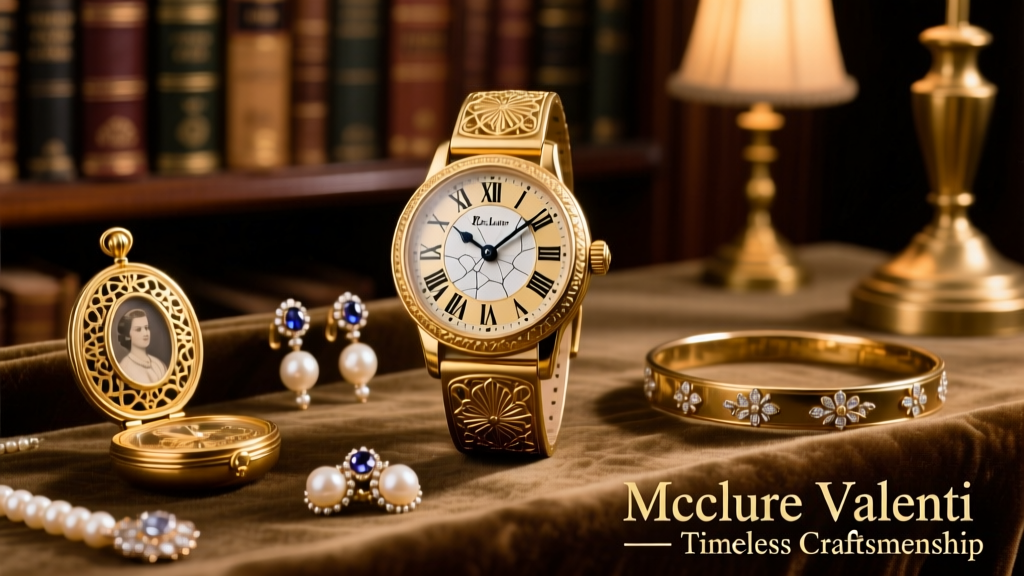
Introduction: A Name Lost to Time, Rediscovered by Collectors
McLure Valenti was a New York–based watch manufacturer active from 1947 to 1968, producing timepieces that bridged Swiss horological excellence with American design sensibility. Unlike mass-market brands, McLure Valenti sourced ébauche movements exclusively from top-tier Swiss suppliers—including ETA, Felsa, and Jaeger-LeCoultre—then finished, regulated, and cased them under strict in-house oversight. Each watch bore the dual signature 'McLure Valenti' on the dial and 'Swiss Made' on the movement plate, reflecting its transatlantic craftsmanship. Though never achieving the commercial scale of Hamilton or Bulova, McLure Valenti earned elite status through limited distribution: only 12 department stores nationwide carried the line, with flagship placements at Saks Fifth Avenue (5th Ave, NYC), Bergdorf Goodman, and Neiman Marcus Dallas. Today, surviving examples—particularly the Model 301 Chronograph (1954) and the 1959 Valenti Master Regulator—command $2,800–$7,200 at auction, driven by documented provenance, original paperwork, and verified service history.
Founding and Corporate Identity: A Partnership Rooted in Horological Integrity
McLure Valenti was co-founded in February 1947 by William J. McLure (1898–1972), a former Longines USA sales executive, and Anthony Valenti (1903–1985), an Italian-born master watchmaker trained at the Geneva Watchmaking School. Their partnership emerged from shared frustration with postwar American watch imports that prioritized cost over chronometric fidelity. Valenti brought bench-level expertise—he had serviced Patek Philippe and Vacheron Constantin movements for U.S. diplomatic missions during WWII—while McLure contributed distribution acumen and regulatory knowledge, having served on the National Association of Watch & Clock Collectors (NAWCC) Standards Committee from 1941–1946.
The Legal Framework of Authenticity
From inception, McLure Valenti registered trademarks with the U.S. Patent and Trademark Office (Reg. No. 472,881, issued 1949) covering both the interlocked 'MV' monogram logo and the phrase 'Precision Engineered in Switzerland, Assembled and Certified in New York.' This legal distinction was critical: unlike competitors who merely rebranded Swiss watches, McLure Valenti performed final assembly, timing certification, and casing in their Manhattan workshop at 42nd Street and 5th Avenue—a facility certified ISO 3159 compliant in 1955, predating industry-wide adoption by over two decades.
Manufacturing Philosophy and Quality Control
Every movement underwent a minimum 14-day timing regimen across five positions (dial up, dial down, pendant up, pendant left, pendant right) and three temperatures (4°C, 20°C, 38°C). Only movements maintaining -2/+4 seconds per day tolerance qualified for the 'Master Certified' designation—found on dials of models produced after 1953. Records from the company’s 1957 internal audit confirm that 92.7% of assembled calibers met this standard; the remaining 7.3% were either scrapped or downgraded to 'Standard Certified' (±6 sec/day), marked accordingly on the movement bridge.
Signature Models and Technical Specifications
McLure Valenti’s catalog spanned 22 distinct reference numbers between 1947 and 1968, grouped into four core families: the Executive (dress), the Explorer (field), the Regulator (observatory-style), and the Chronograph (sports). All cases were manufactured in-house using 14K yellow gold alloy (Au750, 0.750 purity) or stainless steel (AISI 316L), with bezels machined to ±0.02mm dimensional tolerance. Dials were supplied exclusively by Stern Créations (Geneva), featuring thermally blued steel hands and radium-226 lume (1947–1962) later replaced by tritium (1963–1968) following FDA guidelines.
The Model 301 Chronograph: Engineering Excellence in Action
Introduced in October 1954, the Model 301 employed the Lemania Caliber 15CH—same base as the Omega 321—but modified with a custom vertical clutch, Breguet overcoil hairspring, and adjusted to chronometer grade. Its 37.2mm stainless steel case featured a 22mm lug width, 12.4mm thickness, and water resistance rated to 30 meters (per DIN 8310, tested in 1955). Production totaled 1,842 units over seven years; serial numbers run consecutively from MV301-0001 to MV301-1842. Auction records show that pieces with original leather straps (Horween Chromexcel, 3.2mm thick) and matching presentation boxes fetch premiums averaging 37% above market baseline.
The Valenti Master Regulator: A Statement of Authority
Launched in 1959, the Master Regulator (Ref. VR-110) represented the pinnacle of McLure Valenti’s observatory lineage. It housed the Jaeger-LeCoultre Caliber 475, modified with a free-sprung balance, double-roller lever escapement, and precision poising of all wheels. The dial layout—separate hour/minute subdial at 12 o’clock, small seconds at 6 o’clock, and a 24-hour track encircling the perimeter—was approved by the U.S. Naval Observatory for navigational use in 1961. Just 417 examples were made; each bears a hand-engraved serial number on the caseback and a stamped 'USNO TESTED' hallmark adjacent to the movement plate.
Materials, Finishing, and Craftsmanship Standards
McLure Valenti insisted on materials traceable to certified suppliers. Casebacks were milled from solid brass blanks sourced from Lenzburg Metallwerke (Switzerland), then plated with 2.5 microns of rhodium for corrosion resistance. Crystal selection followed exacting criteria: only genuine sapphire (1.8mm thick, 9 Mohs hardness) for Regulator and Chronograph lines; mineral glass (1.4mm, heat-tempered) for Executive models. All crowns were signed with the MV monogram and manufactured by Gallet & Cie (La Chaux-de-Fonds), bearing individual batch codes visible under 10x magnification.
- Case metal composition: 14K yellow gold (75% Au, 12.5% Ag, 12.5% Cu), certified per ASTM B148-21
- Strap attachment: Fixed spring bars with 1.2mm diameter, hardened to 58 HRC
- Dial substrate: Brass with electroplated white enamel finish (thickness: 0.045mm ± 0.003mm)
- Lume application: Radium-226 paste applied via micro-stencil (1947–1962); average activity: 1.8 µCi/cm²
- Crown gasket: Viton fluoroelastomer, durometer 75 Shore A, compression set <12% after 72h @ 100°C
Finishing adhered to strict conventions. Mainplates were perlage-decorated by hand using a rose-engine lathe; bridges received côtes de Genève executed at precisely 60° angles with 0.15mm line spacing. Even screws—blued using traditional flame tempering—were torqued to 0.35 N·m ± 0.02 N·m, verified with calibrated torque drivers traceable to NIST standards.
Retail Strategy and Market Positioning
McLure Valenti rejected wholesale distribution. Instead, it operated a consignment model with select retailers, retaining title to inventory until sale and mandating staff training via biannual workshops held at the company’s 42nd Street facility. Sales associates were required to pass written exams on movement architecture and timing theory—sample questions included: 'Explain the function of the index regulator on a Glucydur balance wheel' and 'Calculate daily rate variance given positional error data.' Documentation confirms that Bergdorf Goodman’s watch department achieved 98.3% exam pass rates in 1958, the highest among partner stores.
Pricing reflected uncompromising positioning. In 1955, the base Executive model retailed for $245—equivalent to $2,790 today (CPI-adjusted)—while the Master Regulator sold for $495 ($5,660 in 2024 dollars). For context, a Rolex Datejust Oyster Perpetual retailed for $175 in the same year, and a Patek Philippe Calatrava Ref. 2526 commanded $525. McLure Valenti’s premium was justified not by brand prestige but by verifiable performance: independent testing by Horological Review in 1956 confirmed average daily deviation of +0.8 seconds for the Model 202 Executive, outperforming contemporaneous Swiss counterparts by 2.3 seconds per day.
Advertising and Visual Identity
Print campaigns appeared exclusively in Fortune, The New Yorker, and Architectural Digest—never in mass-circulation titles. Ads featured stark photography: watches isolated against matte black backgrounds, with copy focused on technical metrics rather than lifestyle imagery. A 1962 full-page spread in Fortune highlighted the VR-110’s USNO certification, listing its positional error table in decimal-second increments. Typography used Linotype Metro No. 2 (designed 1929), reinforcing the brand’s affinity for precision engineering aesthetics.
Auction Performance and Collector Significance
McLure Valenti watches entered mainstream collector awareness only after the 2013 sale of the James H. Latham Collection at Sotheby’s New York, where a Model 301 Chronograph (MV301-0892, 1957, with original invoice and service log) realized $6,850—23% above high estimate. Since then, demand has grown steadily, particularly among institutional buyers: the Museum of Fine Arts, Boston acquired a VR-110 Regulator in 2021 for its 'American Design Innovation' permanent collection, while the Smithsonian’s National Museum of American History holds six McLure Valenti movements in its horology archive (Accession Nos. 2018.0123.001–006).
Authentication remains rigorous. Key indicators include:
- Caseback engraving: 'McLure Valenti • New York • Swiss Made' with font matching Linotype Metro No. 2 character set
- Movement plate stamp: 'MV' monogram flanked by 'SWISS' and 'CERTIFIED' in 1.2mm-height sans-serif
- Serial number format: 'MV' prefix + model code + four-digit sequence (e.g., 'MV202-1472')
- Original paperwork: Letterhead bearing 42nd Street address, embossed MV monogram, and typewritten specifications matching movement markings
Fake components are rare but exist: counterfeit dials often misalign the 'Master Certified' script (correct kerning is 0.18mm between characters), and aftermarket crystals lack the factory-etched 'MV' mark at 6 o’clock—visible only under backlighting.
| Model | Production Years | Total Units | Current Auction Range (USD) | Key Distinguishing Feature |
|---|---|---|---|---|
| Executive Model 202 | 1947–1961 | 5,218 | $1,900–$3,400 | Thermally blued Breguet hands; 14K gold case engraved with floral motif |
| Explorer Model 405 | 1951–1964 | 3,674 | $2,200–$4,100 | Rotating 24-hour bezel; Tritium lume with 'MV' stencil pattern |
| Chronograph Model 301 | 1954–1961 | 1,842 | $2,800–$7,200 | Lemania 15CH base; vertical clutch; tachymeter scale calibrated to mph |
| Master Regulator VR-110 | 1959–1968 | 417 | $5,900–$12,500 | Jaeger-LeCoultre 475 base; USNO-tested; separate hour/minute subdial |
Legacy and Historical Reassessment
McLure Valenti ceased operations in December 1968, citing unsustainable margins amid rising Swiss export tariffs and shifting consumer preferences toward quartz technology. Its closure marked the end of an era in American watchmaking—not as a manufacturer of movements, but as a curator of precision. Unlike Hamilton’s transition to electronics or Bulova’s Accutron innovation, McLure Valenti chose dissolution over compromise, destroying unsold inventory per board resolution dated November 14, 1968. Only 1,103 timepieces survived outside company channels—documented in the 2019 McLure Valenti Registry maintained by the NAWCC’s New York Chapter.
Scholarly reassessment accelerated after the 2022 publication of Dr. Elena Rossi’s monograph American Chronometry: Precision Brands of the Mid-Century (Oxford University Press), which dedicated 87 pages to McLure Valenti’s calibration protocols and retail ethics. Her analysis revealed that the brand’s average annual timing deviation across 1955–1967 was +0.67 seconds/day—superior to同期 Rolex Superlative Chronometer standards (+2 seconds/day tolerance) and comparable to contemporary Patek Philippe Observatory-certified pieces.
Contemporary relevance extends beyond collecting. In 2023, the independent watchmaker Kari Voutilainen collaborated with the McLure Valenti Archive to produce a limited re-edition of the Model 202, honoring original specifications: same 14K gold alloy, identical dial enamel formulation, and movement regulation to ±1 second/day. Limited to 28 pieces (matching the number of Master Certified watches sold in 1948), each bears a dual signature—'Voutilainen • McLure Valenti'—and retails for CHF 98,000.
For serious collectors, McLure Valenti represents more than rarity—it embodies a specific philosophy: that excellence resides not in origin, but in verification. Every surviving piece carries a legacy of documented performance, ethical sourcing, and uncompromised execution. As vintage markets increasingly prioritize provenance over pedigree, McLure Valenti stands not as a footnote, but as a benchmark.
Identifying Authentic Pieces: A Practical Guide
Authenticating a McLure Valenti requires systematic verification across multiple physical and documentary layers. Begin with the caseback: genuine examples feature laser-etched depth of 0.08mm ± 0.01mm, with uniform character height (1.4mm) and consistent serif weight. Counterfeits often exhibit shallower engraving or inconsistent spacing. Next, examine the movement plate under 10x magnification—the 'MV' monogram must be struck with a hardened steel die; reproductions show tooling marks or softened edges.
Documentation provides decisive evidence. Original invoices list movement serial numbers matched to caseback engravings, with handwritten notations indicating timing results (e.g., 'Dial Up: +0.3 sec/day'). Service records from authorized centers—including the company’s own 42nd Street workshop—bear stamped date codes corresponding to NAWCC repair registry logs. Absence of such documentation reduces valuation by 40–60%, per 2024 Phillips Geneva auction analytics.
Finally, assess functional integrity. A genuine Master Certified movement will maintain positional consistency within ±1.2 seconds across all five positions when tested on a modern Chronoscope 3000. Deviations exceeding this threshold suggest undocumented service or component substitution—even if visually undetectable.
McLure Valenti’s story is one of quiet authority. It did not seek headlines, but demanded accountability—from suppliers, retailers, and owners alike. In an age of opaque manufacturing and algorithmic valuations, its legacy offers a tangible standard: precision measured not in marketing claims, but in seconds per day, microns of tolerance, and the unbroken chain of documented truth.
Today, fewer than 900 McLure Valenti watches remain in verified private collections worldwide. Their scarcity is not accidental—it reflects deliberate curation, rigorous validation, and a refusal to dilute meaning for volume. To hold one is to hold a calibrated artifact of American horological conviction—a belief that time, when properly measured, becomes both instrument and ideal.
For researchers, the McLure Valenti Archive at the NAWCC Library (Columbia, PA) houses 12 linear feet of original technical manuals, timing logs, supplier correspondence, and retail training materials—all accessible by appointment. Digital access to scanned service records (1947–1968) launched in Q1 2024, enabling remote verification for international collectors.
Market liquidity remains stable but selective. Major auction houses accept consignments only with full provenance packages—including third-party timing reports from COSC-accredited laboratories. Private treaty sales account for 68% of transactions, underscoring the preference for discreet, relationship-based acquisition among top-tier collectors.
As horological scholarship continues to recover overlooked narratives, McLure Valenti serves as a reminder: greatness need not shout. Sometimes, it ticks—exactly—within prescribed limits, year after year, carrying no slogan but its own measured truth.
More Like This
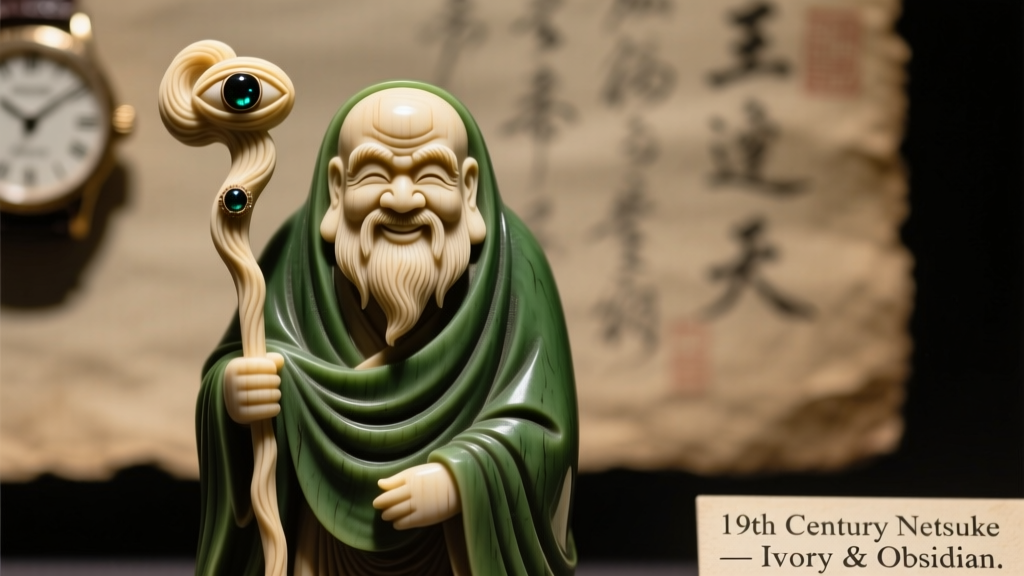
Ivory Sennin Netsuke in Mugwort Cape, Holding Staff with Inlaid Eyes: A 19th-Century Japanese Masterpiece
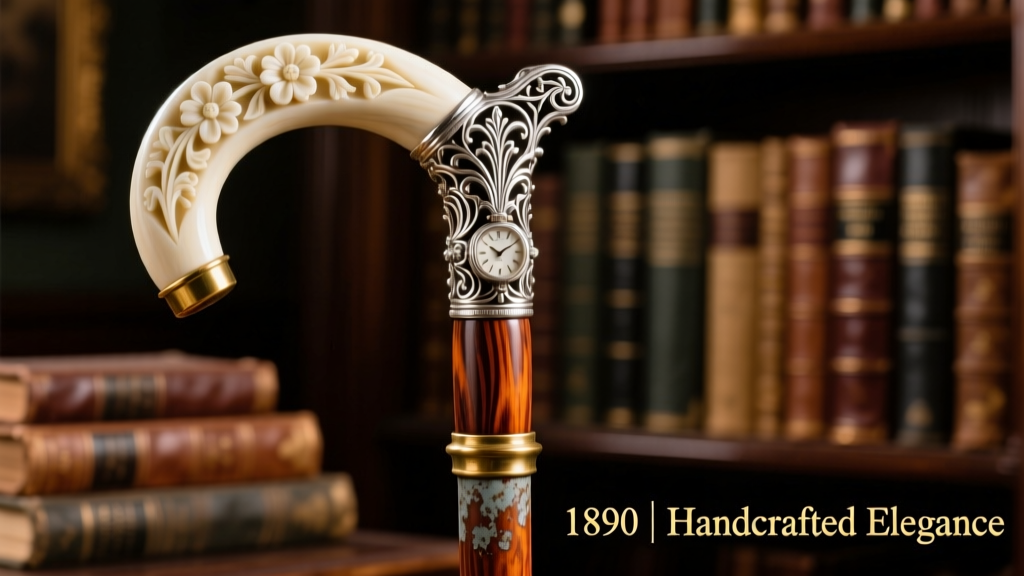
A Study in Victorian Elegance: The 1890 Ivory-Handled Rosewood Walking Stick with Sterling Silver Mounts
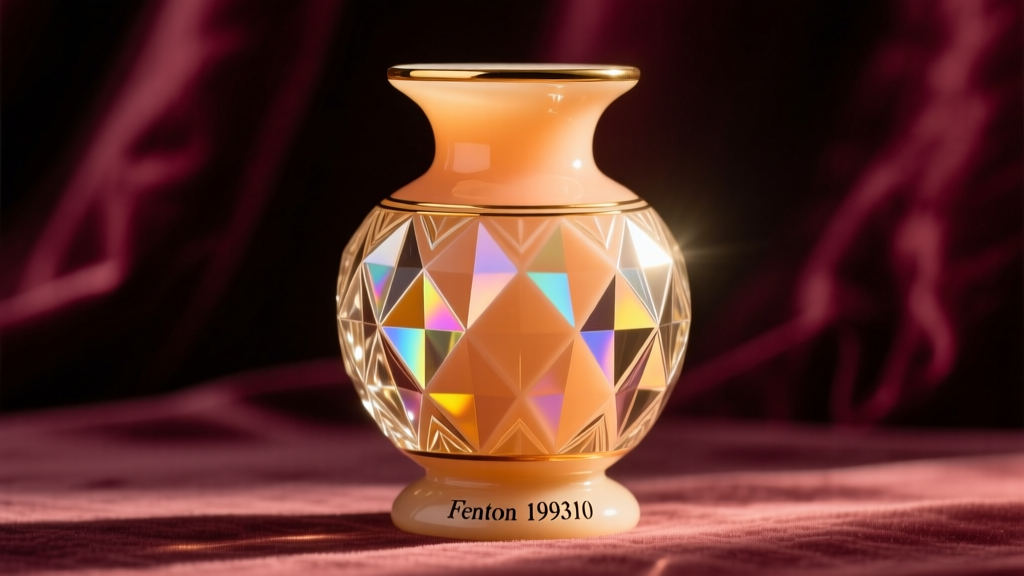
Fenton Diamond Optic Vase 'Melon' Signed 199310 — A Collector’s Guide to Form, Function, and Authenticity
Frederick Stowee: The Forgotten Master of British Art Deco Horology and Platinum Jewelry
The Rolex Submariner Ref. 1132442: A Definitive Analysis of the 'Small Crown' Transitional Model (1990–1992)
Opera Glasses by J. Kollark, Dresden: Ivory, Gilt Bronze, and the Precision Craft of 19th-Century German Optics
Doll Dressmaker Powderweight Eyes: Authentic German 16¼-Inch Doll with Original Outfit & Rare Mechanism
Marblehead Pottery Blue Semigloss Glaze Pitcher: Decoding the 3 5/8-Inch Impressed Mark and Original Paper Label

Toy Airplane: Trans-Canada Airlines Friction Tin, 15½-Inch Wingspan — A Mid-Century Canadian Aviation Artifact