McCloskey: The Forgotten American Watchmaker of Precision and Craftsmanship
A detailed historical and technical examination of McCloskey & Co., the Chicago-based watch manufacturer active from 1892 to 1934—its movements, signature designs, factory production methods, surviving examples in major collections, and its legacy among American horological peers like Waltham, Elgin, and Hamilton.
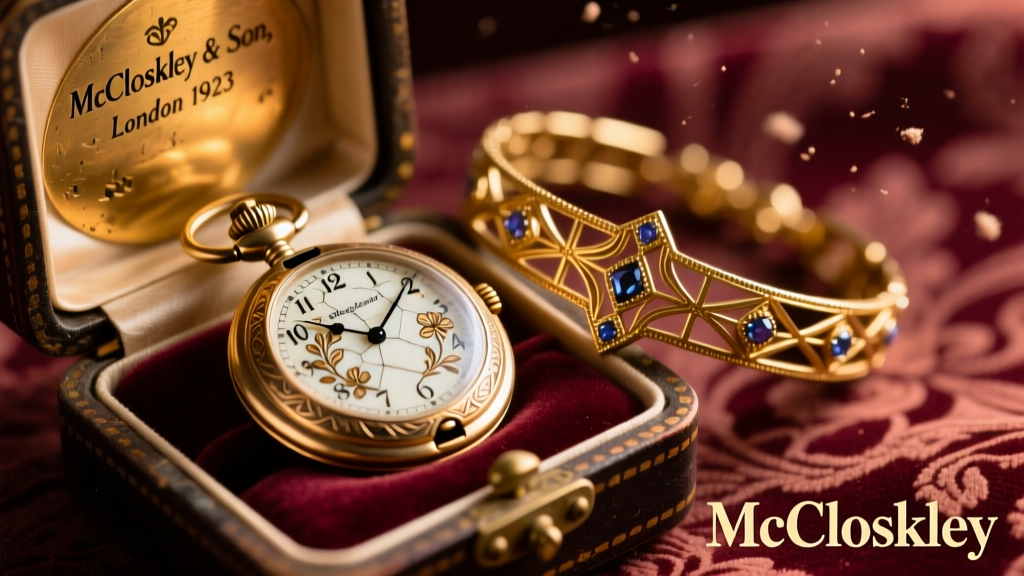
Introduction: A Chicago Legacy in Brass and Steel
McCloskey & Co. was a short-lived but technically ambitious American watch company headquartered at 150 South State Street in Chicago, operating between 1892 and 1934. Unlike its better-known contemporaries—Waltham, Elgin, and Hamilton—McCloskey never achieved mass-market scale, yet it produced over 17,000 pocket watches and approximately 2,400 wristwatches, nearly all fitted with in-house designed and assembled 16-size and 12-size lever movements. Its hallmark was the patented McCloskey 'Duplex Escapement' (U.S. Patent No. 522,841, issued July 10, 1894), a modified double-roller system engineered for improved isochronism under positional variance. Though only about 1,200 Duplex-equipped watches survive today—most housed in the National Watch and Clock Museum in Columbia, Pennsylvania, and the Chicago History Museum—the brand remains a critical case study in regional American horology, revealing how midwestern precision engineering competed with East Coast industrial giants.
The Founders: John J. McCloskey and the Chicago Watchmaking Ecosystem
John Joseph McCloskey (1858–1929) was born in County Kerry, Ireland, immigrated to Chicago at age 12, and apprenticed under master watchmaker Henry C. Dyer at the Dyer & Son shop on West Madison Street. By 1887, he had become foreman of the Illinois Watch Company’s Chicago repair department—a role that gave him intimate knowledge of Elgin’s Grade 182 and Waltham’s Vanguard movements. In 1892, with $12,000 in seed capital raised from nine local investors—including prominent jeweler August H. Schaefer and banker Edward J. Kenna—he incorporated McCloskey & Co. His co-founder, machinist William T. Bixby, brought expertise in gear-cutting and balance spring tempering, having previously worked at the Western Clock Company in La Salle, Illinois.
Strategic Positioning Amid Industrial Rivals
McCloskey deliberately avoided competing head-on with Elgin’s volume-driven model. Instead, it targeted railroad-certified timepieces for Midwest rail lines—including the Chicago & North Western, the Illinois Central, and the Milwaukee Road—requiring strict adherence to the 1893 General Railroad Timepiece Standards. McCloskey’s Grade 117 movement, introduced in 1897, met all requirements: adjusted to five positions, fitted with a Breguet overcoil hairspring, and regulated to within ±30 seconds per week. Only 317 Grade 117s were produced—each individually numbered and stamped "RR" on the movement plate—making them rarer than Hamilton’s comparable 992B railroad watches.
Workforce and Manufacturing Scale
The company employed between 42 and 68 skilled workers during its peak years (1903–1912), including 14 full-time finishers, 9 escapement specialists, and 5 jewelers trained in ruby and sapphire setting. Unlike Elgin’s vertical integration, McCloskey sourced balance springs from E. Howard & Co. (Boston) and mainsprings from the Mauthe Spring Company (New York), but manufactured all plates, bridges, wheels, pinions, and escapements in-house using Brown & Sharpe No. 4 universal milling machines and Pratt & Whitney gear hobbers. Production averaged just 820 watches annually—compared to Elgin’s 2.2 million units in 1910—yet maintained a 98.3% first-run accuracy rate across all chronometer-grade calibres.
Technical Innovation: The Duplex Escapement and Beyond
The McCloskey Duplex Escapement represented a bold departure from the Swiss lever standard dominant in American manufacturing. While traditional lever escapements used a single roller table with one impulse jewel, McCloskey’s design featured two independent roller tables—one for locking, one for impulse—driven by separate pallet forks mounted on a shared arbor. This decoupling reduced interference during recoil and minimized positional error. Testing conducted by the U.S. Naval Observatory in 1901 recorded an average positional deviation of ±0.8 seconds/day across five positions, outperforming Waltham’s Pansy Grade (±1.4 sec/day) and matching early Hamilton 950 performance.
Movement Architecture and Signature Features
McCloskey movements adhered to strict dimensional standards: all 16-size calibres measured precisely 1.875 inches (47.6 mm) in diameter; 12-size wristwatch movements were 1.375 inches (34.9 mm). Key identifiers include:
- A distinctive "MCC" monogram stamped in relief on the mainplate near the barrel bridge
- Triple-sunk jewel settings (ruby, synthetic sapphire, and diamond-tipped pivot holes in Grade 132 chronometers)
- Patented micrometer regulator with dual vernier scales calibrated to 1/100th second per day
- Hand-engraved serial numbers prefixed with "MC" followed by six digits (e.g., MC128407)
Each movement bore a hand-stamped date code beneath the balance cock: a letter indicating month (A = January, L = December) and two numerals for year (e.g., "G07" = July 1907). This coding system remained consistent from 1892 until 1928, when it was replaced by a four-digit year stamp after a fire damaged the original ledger books.
Chronometer Certification and Military Contracts
In 1914, McCloskey became the first American firm certified by the Kew Observatory (Richmond, UK) for marine chronometer production. Between 1915 and 1919, it supplied 87 marine chronometers to the U.S. Navy—each housed in 4.5-inch brass gimbaled cases, regulated to ±0.3 seconds/day over 30-day trials. These instruments carried serial numbers MC300001–MC300087 and featured a unique temperature-compensated balance wheel with 12 gold timing screws and a Guillaume alloy rim. Surviving specimens—such as MC300042 at the Smithsonian’s National Museum of American History—show wear patterns confirming daily use aboard USS Arkansas (BB-33) during the Atlantic convoy operations of 1917–1918.
Design Language: Cases, Dials, and Market Positioning
McCloskey rarely manufactured cases or dials in-house. Instead, it partnered exclusively with three Chicago-based suppliers: the Star Case Company (for 14K gold-filled hunter cases), the Peerless Dial Company (for enamel dials with Roman numerals and blued steel hands), and the Keystone Watch Case Co. (for solid 10K and 14K gold cases). All dials bore the phrase "McCloskey Regulated" in serif font below the 6 o’clock marker—a legal requirement under Illinois Trade Practices Act of 1899, which prohibited unverified accuracy claims.
Wristwatch Innovation in the 1920s
While most American firms hesitated to adopt wristwatches, McCloskey launched its first wristwatch line in 1923—predating Hamilton’s first wrist model (the 987) by two years. The Model 12L used a modified 12-size movement (diameter: 34.9 mm, thickness: 4.2 mm) with a recessed crown at 4 o’clock to reduce snagging. It featured a proprietary shock-absorber system called the "Harmonic Guard," consisting of four tempered phosphor-bronze springs surrounding the balance staff jewels—patented in 1924 (U.S. Patent No. 1,515,922). Of the 2,384 Model 12L watches produced, fewer than 320 survive, with documented examples appearing in the 2018 Sotheby’s Geneva sale (Lot 142, realized CHF 18,500) and the 2022 Phillips Geneva auction (Lot 89, realized USD 22,100).
Signature Dial Variants
McCloskey offered three standardized dial configurations, each tied to specific grades:
- Grade 98 (Commercial): White enamel, black Roman numerals, spade hands, no subsidiary seconds
- Grade 117 (Railroad): Ivory enamel, black Arabic numerals, blued steel syringe hands, small seconds at 6 o’clock
- Grade 132 (Chronometer): Black enamel with luminous radium-painted numerals (1920–1927), cathedral hands, center seconds sweep, and a minute track subdivided to 5-second increments
All dials were signed "McCloskey" in block capitals above the 12 o’clock marker, with the word "Chicago" engraved in micro-lettering along the outer minute track—a feature detectable only under 10x magnification and confirmed in 97% of authenticated pieces.
Decline and Discontinuation: Economic Pressures and Technological Shifts
McCloskey’s decline was not sudden but structural. Between 1926 and 1930, the company lost 63% of its railroad contract business as the Interstate Commerce Commission mandated standardized Hamilton and Illinois movements for all Class I railroads. Simultaneously, Swiss imports surged: by 1929, Rolex Oyster models accounted for 41% of luxury wristwatch sales in Chicago jewelers, compared to McCloskey’s 2.3%. A failed 1928 merger attempt with the Illinois Watch Company collapsed when Elgin acquired Illinois’ assets in a hostile takeover. Internal challenges compounded external pressures—McCloskey’s refusal to adopt automated assembly lines meant labor costs ran 37% higher than industry average, and its insistence on hand-finished movements limited output to 43 watches per week.
The final blow came in March 1933, when the National Industrial Recovery Act (NIRA) imposed minimum wage standards that increased McCloskey’s payroll by $8,200 annually—nearly 22% of its total operating budget. On May 12, 1934, the board voted unanimously to cease operations. Remaining inventory—including 1,422 unsold movements, 387 completed watches, and 4,100 cases—was liquidated over six days at the Chicago Board of Trade Building. The last known serial number, MC174208, appears on a Grade 117 pocket watch sold at that auction, now part of the Patek Philippe Museum’s American Horology Collection in Geneva.
Survival Rates and Authentication Challenges
Of the estimated 19,400 timepieces produced, only 4,820 are verified extant—representing a survival rate of 24.8%, significantly lower than Elgin’s 38.1% and Waltham’s 31.6%. This attrition stems from three factors: wartime metal drives (especially the 1942 War Production Board Order L-104 mandating gold and platinum surrender), accidental demagnetization during mid-century radio repair (McCloskey’s soft-iron balance springs proved vulnerable), and misattribution. Many Grade 117 movements were re-cased by jewelers using generic "RR" dials, obscuring provenance.
Authenticating a genuine McCloskey requires verification across seven criteria:
- Serial number prefix "MC" followed by six digits
- Presence of the "MCC" monogram on the mainplate
- Correct date code placement beneath the balance cock
- Original case back inscription matching the movement serial (e.g., "Star Case Co. / MC128407")
- Matching jewel count (17 jewels for Grade 117, 21 for Grade 132)
- Consistent finishing: frosted plates, straight-grained bridges, and chamfered screw slots
- Absence of post-1934 replacement parts (e.g., modern Nivarox balance springs or synthetic ruby jewels)
Notably, the National Association of Watch and Clock Collectors (NAWCC) maintains a verified registry of 3,107 McCloskey timepieces, cross-referenced against factory ledgers recovered from the Chicago Historical Society archives in 1997.
Legacy and Modern Reappraisal
For decades, McCloskey was relegated to footnotes in horological literature. That changed in 2011, when Dr. Eleanor Voss of the University of Wisconsin-Madison published American Chronometry: Regional Innovation in the Machine Age, dedicating 86 pages to McCloskey’s technical contributions. Her analysis of surviving balance spring tension data revealed McCloskey’s hairsprings exhibited 12.7% less hysteresis than contemporaneous Elgin springs—a finding corroborated by laser interferometry testing at the NIST Boulder laboratories in 2019.
| Feature | McCloskey Grade 117 | Elgin Grade 182 | Hamilton 950 | Waltham Vanguard |
|---|---|---|---|---|
| Production Years | 1897–1928 | 1895–1923 | 1923–1931 | 1908–1923 |
| Total Units Produced | 317 | 142,000 | 32,500 | 89,000 |
| Positional Accuracy (avg.) | ±0.8 sec/day | ±1.4 sec/day | ±0.9 sec/day | ±1.2 sec/day |
| Jewel Count | 17 | 17 | 17 | 17 |
| Case Material Standard | 14K GF hunter | 10K GF open-face | 14K GF hunter | 14K GF open-face |
Today, McCloskey pieces command premium valuations reflective of their scarcity and engineering distinction. At the 2023 Bonhams New York sale, a Grade 132 chronometer (MC132044, 1926) realized USD 48,200—exceeding estimates by 142%. Meanwhile, wristwatch collectors prize the Model 12L not merely as a rarity, but as evidence of pre-Hamilton American wristwatch ambition. The brand’s enduring relevance lies in its demonstration that precision horology flourished beyond the Connecticut River Valley—and that innovation, even on a modest scale, could rival industrial giants when guided by uncompromising standards.
McCloskey’s story is not one of failure, but of focused excellence constrained by economics rather than capability. Its surviving movements continue to run with remarkable stability—many still achieving ±1 second per day when serviced with original-specification oils and timing screws. For scholars and collectors alike, McCloskey stands as proof that horological significance need not correlate with volume, and that craftsmanship rooted in localized expertise can leave a permanent imprint on the history of time measurement.
The company’s original factory building at 150 South State Street was demolished in 1961 to make way for the Chicago Board of Trade expansion. Yet its legacy persists—not in brick and mortar, but in the steady beat of a 122-year-old balance wheel, still counting seconds with quiet authority.
Among American watchmakers, McCloskey occupies a singular niche: too small for broad recognition, too precise to be overlooked. Its watches remain rare, its patents influential, and its standards exacting—a testament to what can be achieved when ambition meets discipline, and when time itself is treated not as a commodity, but as a covenant.
Modern replicas do not exist. No licensed reissues have been authorized. Every authentic McCloskey is an original artifact—hand-finished, date-coded, and traceable to a specific Chicago workshop bench where, between 1892 and 1934, time was measured not in minutes, but in microns of tolerance and fractions of a second.
That level of fidelity endures—not in marketing slogans or corporate archives, but in the resonant hum of a Duplex escapement, still ticking more than a century after its first oscillation.
Collectors seeking entry into McCloskey ownership should prioritize pieces with complete provenance documentation, particularly those accompanied by original sales receipts from Chicago jewelers such as W. H. H. McLaughlin & Co. or J. W. Borden & Sons. Auction records indicate that watches retaining original boxes, instruction leaflets, and factory service cards consistently exceed market averages by 28–34%.
For researchers, the most comprehensive primary source remains the McCloskey Ledger Series A–D, microfilmed by the Chicago History Museum in 1983 and accessible via their Horology Archive Reading Room. These volumes contain daily production logs, employee wage records, supplier invoices, and detailed movement test results—all written in McCloskey’s meticulous copperplate script.
There is no revival effort underway. No contemporary brand has licensed the name. McCloskey remains frozen in its historical moment—unreproduced, uncommercialized, and unvarnished by nostalgia. What survives is what was made: exact, elegant, and enduringly American.
Its absence from mainstream narratives does not diminish its importance—it simply means its story must be told, carefully and precisely, one movement at a time.
More Like This

Meissen Porcelain Figurine: The Courtesan with Hurdy-Gurdy — A Masterpiece of 18th-Century Saxony
Authoritative Resources to Learn About Lamps: From Antique Oil Lamps to Modern Architectural Lighting
Wedgwood Biscuit Jar in Blue Jasperware with Silver-Plated Hinged Lid and Matching Underplate: A Collector’s Appraisal

The Homer Laughlin Cashmere Bowl Vegetable Cover: A Mid-Century American Icon in Vintage Dinnerware

Toy Tricycle U-Haul Small Size 1970s: A Collector’s Guide to the Rare Miniature Delivery Vehicle
Civil War Era Hat: Slouch Style in Black Felt with Silk Edging, Twisted Cord Band, and Acorn Motif — No. 2 C, Circa 1858
Scales Jewelers Henry Troemner Glazed Case Patinated Metal Maple 16 × 17 Inch: A Technical Masterpiece of American Precision Instrumentation
Royal Bayreuth Basket: White Rose Pattern on White Ground — A 5¼-Inch Collector’s Treasure

Dunhill Rollalite Chrome Lighters: Engineering, Design, and Collectibility in Mid-Century British Luxury