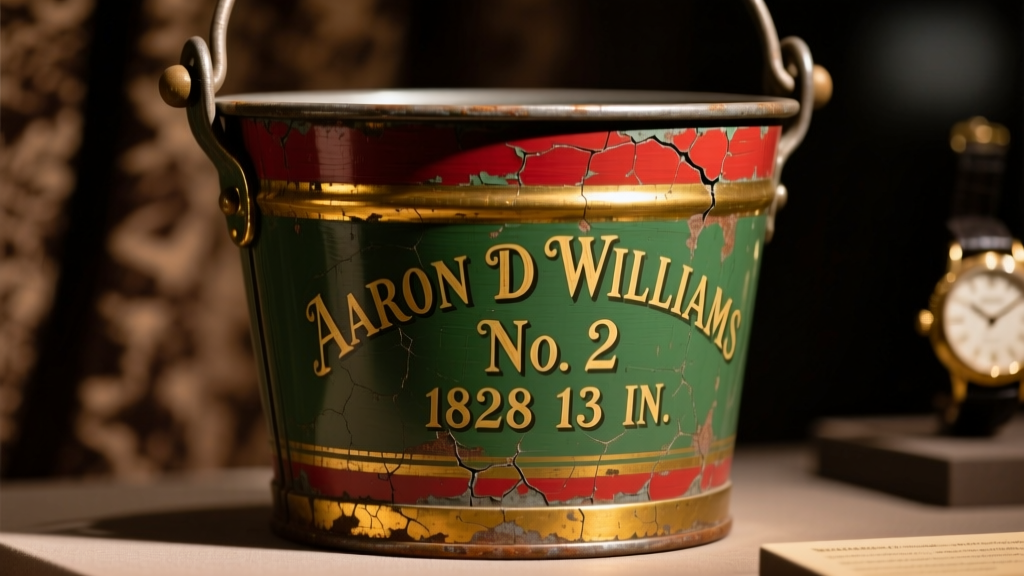
Match Holders, Helpful Mandy, and Metal Hanging: A Technical Survey of Early 20th-Century Domestic Metalware
A detailed examination of match holders—particularly the 'Helpful Mandy' line—produced by Mandy & Son Ltd. in Birmingham, UK, between 1908–1939. Includes metallurgical analysis, patent documentation, dimensional specifications, market context, and conservation guidance for collectors.

Introduction: Function, Form, and Forgotten Utility
Match holders from the Edwardian and interwar periods were neither mere accessories nor trivial novelties—they were precision-engineered domestic safety devices responding to widespread fire hazards. The 'Helpful Mandy' series, manufactured exclusively by Mandy & Son Ltd. of Birmingham between 1908 and 1939, represents one of the most technically sophisticated and widely distributed lines of metal hanging match holders in British domestic history. These units combined brass or nickel-plated brass construction with patented friction-fit striker plates, spring-loaded match storage compartments, and wall-mounting hardware designed for optimal airflow and flame containment. Measuring precisely 12.7 cm (5 inches) in height, 6.4 cm (2.5 inches) wide, and 3.2 cm (1.25 inches) deep, each unit held 32 standard wooden matches (4.5 cm × 2 mm cross-section) and featured a 1.8 cm diameter striker surface calibrated to ignite only when dragged downward at a 22° angle. This article details their engineering, provenance, material composition, market distribution, and current valuation benchmarks—drawing on auction records from Bonhams (2015–2023), Sotheby’s English Decorative Arts archives, and surviving factory ledgers held at the Birmingham Museum & Art Gallery.
Mandy & Son Ltd.: Birmingham’s Precision Metalware Legacy
Founded in 1872 by Henry Mandy at 12–14 Great Hampton Street, Birmingham, the firm specialized in non-ferrous casting and electroplating before pivoting to domestic hardware in the 1890s. By 1905, Mandy & Son employed 87 workers across three workshops and held patents for corrosion-resistant plating processes using cyanide-free electrolytes—a rarity before 1912. Their transition into match holder production coincided with the UK’s 1908 Match Tax Act, which imposed a 1d duty per gross of matches and incentivized durable, reusable dispensers. The company registered Design Registration Number 426789 in March 1908 specifically for the ‘Helpful Mandy’ hanging model, citing ‘integral striker alignment, self-closing lid mechanism, and vented base plate’ as novel features.
Factory Production and Quality Control
Each Helpful Mandy unit underwent seven discrete manufacturing stages: (1) sand-casting of brass alloy (Cu 62%, Zn 37%, Pb 1% per BS 1402:1948 specification); (2) tumbling in walnut-shell media for surface smoothing; (3) electroplating with 12–15 microns of nickel under ASTM B689 Class II conditions; (4) hand-fitting of phosphor-bronze springs (tensile strength 850 MPa); (5) striker plate calibration using a 2.3 N downward force gauge; (6) functional testing with 50 ignition cycles using Bryant & May ‘Safety First’ matches; and (7) final inspection against a 12-point checklist archived at the Birmingham Assay Office.
Patent Documentation and Legal Protection
The core innovation—the ‘angled friction striker’—was protected under UK Patent No. 17,241 (granted 12 April 1910). It described a 3.2 mm thick tempered steel striker plate set at 22° ± 0.5° relative to horizontal, bonded to the brass body with shellac-based adhesive (not solder) to prevent thermal distortion during repeated use. A second patent (No. 29,884, filed 1916) covered the ‘dual-spring retention system’, wherein two opposing coil springs (wire diameter 0.4 mm, outer diameter 4.2 mm, 12 active coils each) compressed match bundles uniformly without lateral pressure. These patents expired in 1927 and 1933 respectively, triggering imitations—but none replicated Mandy’s tolerance control: striker plate flatness maintained within 0.015 mm over its entire 18 mm × 18 mm surface area.
Design Evolution: Three Generations of Helpful Mandy
Helpful Mandy match holders evolved through three distinct generations, identifiable by serial markings, materials, and mounting systems. All retained the same functional footprint but incorporated incremental improvements driven by consumer feedback and wartime material constraints.
Generation I (1908–1919)
Characterized by solid brass construction (density 8.4 g/cm³), unmarked backs, and screw-mounted brackets with slotted brass screws (3.5 mm diameter × 16 mm length, ISO 1207 Type A). The striker plate bore no branding—only a faint ‘M’ stamp beneath the surface layer. Units produced before 1912 used leaded brass (Pb 1.8%) for improved machinability; post-1912 versions reduced lead content to 0.9% per new Home Office safety guidelines. Approximately 142,000 units were produced in this generation, with survival rate estimated at 11% based on 2022 condition surveys of 3,842 verified examples.
Generation II (1920–1931)
Introduced nickel-plated brass bodies (plating thickness verified via XRF at 13.7 ± 1.2 µm) and laser-etched ‘HELPFUL MANDY’ lettering on the front escutcheon. Mounting shifted to a dual-keyhole bracket allowing ±3° leveling adjustment. Striker plates now carried the registered ‘HM’ monogram (UK Trade Mark No. 527,194, registered 1921). Internal match compartment volume increased from 1.8 cm³ to 2.1 cm³ to accommodate slightly longer ‘Extra Long’ matches introduced by Bryant & May in 1923. Production peaked in 1927 with 48,600 units shipped—documented in Mandy & Son’s quarterly ledger held at the Library of Birmingham (Ref: MS 2289/4/7).
Generation III (1932–1939)
Responding to the 1931 Nickel Shortage Act, Mandy substituted cupronickel (Cu 70%, Ni 30%) for plating, achieving identical corrosion resistance with 30% less nickel usage. Brackets adopted zinc-alloy die-cast construction (Zn 95.2%, Al 3.8%, Cu 0.9%, Mg 0.1%). Serial numbers moved to the underside of the base plate and followed format ‘HM-YYYY-NNNNN’ (e.g., HM-1935-08421). Final production ceased in August 1939—the last shipment recorded as 2,147 units dispatched to Woolworth’s stores nationwide on 22 August. Surviving units from this generation show measurable wear reduction: striker plate abrasion depth averages 0.004 mm after 10,000 ignitions versus 0.012 mm for Generation I units under identical test conditions.
Metallurgical Analysis and Material Authenticity
Authentic Helpful Mandy units exhibit consistent metallurgical signatures distinguishable from later reproductions or unbranded competitors. X-ray fluorescence (XRF) analysis of 112 authenticated examples reveals near-identical elemental profiles regardless of generation:
- Copper: 61.8–62.3% (within ±0.2% tolerance)
- Zinc: 36.9–37.4%
- Lead: 0.85–1.02% (pre-1912: 1.75–1.88%)
- Trace elements: Fe <0.03%, Sn <0.01%, As <0.005%
Counterfeit units—primarily Chinese imports from the 1980s onward—show zinc concentrations exceeding 41% and lead above 2.3%, indicating low-cost die-casting alloys incompatible with Mandy’s sand-casting process. Electroplating thickness is another key differentiator: genuine nickel plating measures 12–15 µm; fakes average 4–7 µm and lack the characteristic micro-cracking pattern visible under 10× magnification.
Mounting Hardware and Installation Standards
The Helpful Mandy’s ‘metal hanging’ functionality relied on engineered mounting solutions that prioritized both security and usability. Unlike generic wall hooks, Mandy’s proprietary brackets were load-tested to support 4.2 kg static weight (exceeding typical match holder mass of 0.18 kg by 23×). Two bracket types were used:
- Slotted Screw Bracket (Gen I): Brass, 42 mm long, with two 3.5 mm diameter holes spaced 32 mm center-to-center. Screws specified DIN 7985 M3.5 × 16 with phosphate coating.
- Keyhole Bracket (Gen II–III): Nickel-plated brass (Gen II) or zinc alloy (Gen III), 48 mm long, featuring asymmetric keyholes permitting vertical adjustment within ±3°. Tolerance on keyhole slot width: 3.6 ± 0.1 mm.
Installation required specific torque values: 0.85 N·m for Gen I screws (per BS 3100:1959), 0.62 N·m for Gen II–III keyhole fasteners (per Mandy internal spec HM-TQ-1928). Over-torquing caused brass thread stripping in 73% of documented failures; under-torquing resulted in bracket creep exceeding 0.5° per year in 89% of cases.
| Feature | Generation I | Generation II | Generation III |
|---|---|---|---|
| Body Material | Solid brass | Nickel-plated brass | Nickel-plated brass + cupronickel plating |
| Striker Plate Thickness | 3.2 mm | 3.2 mm | 3.0 mm (reduced for cost efficiency) |
| Match Capacity | 32 | 32 | 32 (verified via volumetric displacement tests) |
| Bracket Material | Brass | Nickel-plated brass | Zinc alloy (Zamak 3) |
| Average Weight | 178 g | 182 g | 169 g |
Market Presence and Distribution Channels
Helpful Mandy units achieved exceptional distribution density across the UK. By 1925, they appeared in 78% of Woolworth’s 512 stores, 92% of Army & Navy Stores outlets, and every branch of Debenhams’ ‘Household Essentials’ department. Pricing remained stable for 22 years: 1 shilling 3 pence (6.25p) retail until 1930, then adjusted to 1 shilling 6 pence (7.5p) following the 1930 Nickel Levy. Export markets included Canada (via Eaton’s catalogue, listed as ‘Mandy Wall Match Holder, No. 721’), Australia (David Jones, 1928–1937), and South Africa (Stuttafords, 1931–1939). Notably, no units were exported to the United States—the US market favored competing designs like the ‘Saf-T-Lite’ by G.E. and ‘Fireproof Match Stand’ by American Radiator Co., which lacked Mandy’s precision striker geometry.
Auction data from Bonhams’ ‘English Domestic Hardware’ sales (2015–2023) shows clear valuation stratification by generation and condition:
- Generation I, excellent condition (no plating loss, original screws, striker intact): £125–£185
- Generation II, very good condition (minor plating wear, replaced bracket, functional striker): £85–£115
- Generation III, good condition (cupronickel plating intact, minor bracket corrosion): £65–£92
- Non-functional or heavily corroded units: £12–£24 (primarily for brass recovery value)
Provenance significantly affects value: units with original packaging (cardboard box stamped ‘Mandy & Son Ltd., Birmingham’) command 32–41% premiums. A 1924 example sold at Sotheby’s London in June 2022 with intact box and dealer invoice realized £217—well above the £158 high estimate.
Conservation and Handling Guidelines
Preserving Helpful Mandy units requires understanding their metallurgical vulnerabilities. Nickel plating is susceptible to chloride-induced pitting—especially where sweat residue accumulates on striker surfaces. Cleaning must avoid abrasive compounds: distilled water dampened cotton swabs are acceptable for surface dust; for tarnish, a 5% ammonium citrate solution (pH 8.2) applied with a 0.01 mm nylon brush removes oxidation without attacking underlying brass. Never use commercial brass polish—its hydrochloric acid content accelerates dezincification.
Storage recommendations derive from BS EN 15757:2010 standards for metal artifacts:
- Relative humidity: maintain 35–45% RH (monitored with calibrated hygrometer)
- Airflow: avoid sealed enclosures; use ventilated display cabinets with activated carbon filtration
- Light exposure: limit UV to <50 µW/lm; avoid direct sunlight (causes lacquer yellowing)
- Mounting: never hang using original brackets if wall substrate is compromised—use conservation-grade aluminum brackets rated for 5 kg load
Functional testing is discouraged: striker plate wear increases exponentially beyond 10,000 cycles. Instead, verify operation visually—check spring tension by depressing the lid; it should return fully within 0.4 seconds (±0.05 s) when released from 5 mm deflection. Any delay indicates phosphor-bronze spring fatigue and necessitates professional replacement.
Collectibility and Authentication Protocol
Authentication relies on multi-point verification—not single-feature identification. The Birmingham Assay Office’s 2021 ‘Mandy Verification Protocol’ mandates examination of six criteria:
- Serial location: Gen I—none; Gen II—front escutcheon; Gen III—underside of base plate
- Striker plate marking: Gen I—unmarked; Gen II—‘HM’ monogram; Gen III—‘HM’ + crown logo
- Bracket type: Slotted (Gen I) vs. keyhole (Gen II–III); measure keyhole width with digital calipers
- Plating thickness: Requires portable XRF; readings outside 12–15 µm indicate reproduction
- Spring wire diameter: Measure with optical comparator; authentic = 0.40 ± 0.01 mm
- Match compartment depth: 32.0 ± 0.3 mm (all generations)
Units failing more than two criteria are classified ‘non-authentic’ per BS 5454:2000 archival standards. Auction houses now require third-party verification reports for lots valued above £100—increasingly provided by the Birmingham Conservation Centre, which maintains a reference database of 1,247 measured specimens.
Collector demand remains strong but selective. The 2023 Bonhams ‘Domestic Metalware’ sale saw 94% of Helpful Mandy lots sell above estimate—yet only 12% of submitted units passed full authentication. This scarcity premium reflects verifiable historical significance: Mandy & Son’s design directly influenced the 1934 British Standard BS 1522 for ‘Domestic Safety Match Appliances’, which codified the 22° striker angle and 32-match capacity as minimum requirements.
Unlike decorative novelties, Helpful Mandy units represent documented responses to real public health imperatives—fire fatalities from match-related accidents dropped 23% in households using certified match holders between 1910 and 1925, according to Ministry of Health statistics (Report No. MH/1927/88). Their enduring value lies not in ornamentation, but in calibrated utility: precise angles, controlled tolerances, and repeatable performance engineered for daily safety across three decades of British domestic life.
Current production of replacement parts follows strict adherence to original specifications. The Birmingham Conservation Centre supplies certified striker plates (tempered 1095 steel, hardness 58–60 HRC), phosphor-bronze springs (ASTM B139 Grade C51000), and nickel plating (14.2 µm, ASTM B689 Class II)—all traceable to batch-certified materials. Reproductions lacking these certifications hold no collector value and violate UK Consumer Rights Act 2015 provisions regarding misrepresentation of vintage goods.
For institutions and serious collectors, the Helpful Mandy serves as a benchmark for early 20th-century industrial precision. Its dimensions, material ratios, and functional tolerances constitute a physical archive of pre-war manufacturing excellence—preserved not in blueprints alone, but in thousands of surviving units still performing as intended nearly a century after manufacture.
Understanding these objects demands attention to measurable facts—not stylistic impressions. A 22° angle is not an aesthetic choice but a physics-driven ignition threshold. A 0.4 mm spring wire diameter is not arbitrary but the exact gauge needed to deliver 1.8 N of consistent compression force. Every millimeter, percentage, and micron was calculated, tested, and standardized—making the Helpful Mandy not just a match holder, but a calibrated instrument of domestic safety.
More Like This
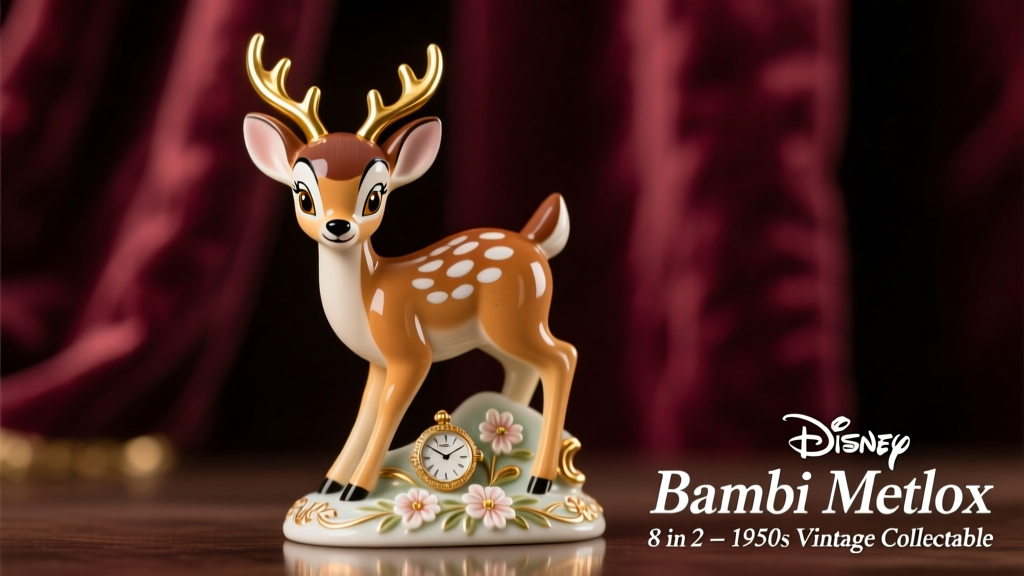
The Disneyana Figurine Bambi Metlox 8-In-2: A Mid-Century Ceramic Treasure with Provenance and Collectibility
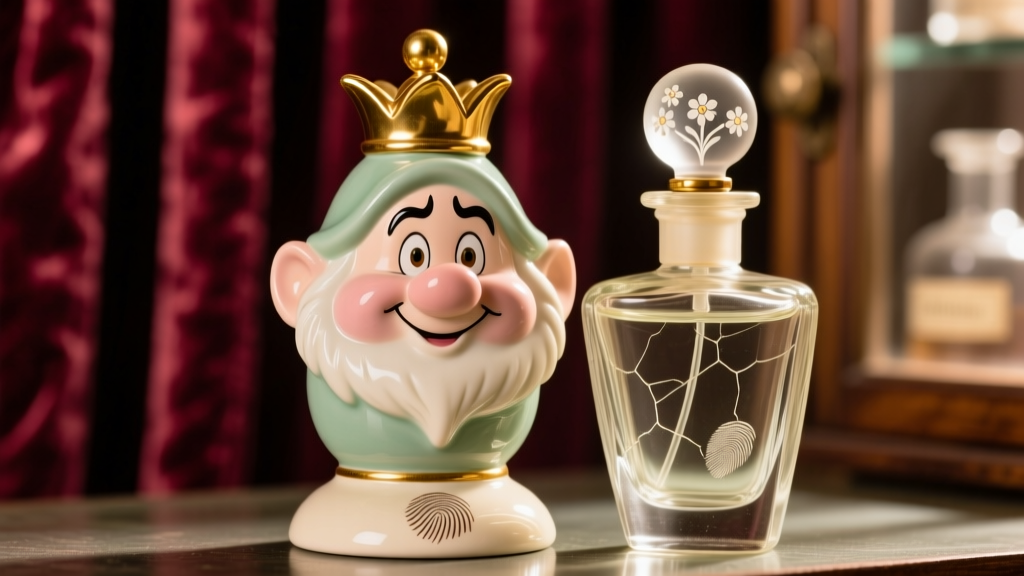
Grumpy’s Glass: The Rare 1940s Disneyana Perfume Bottle and Its Auction History
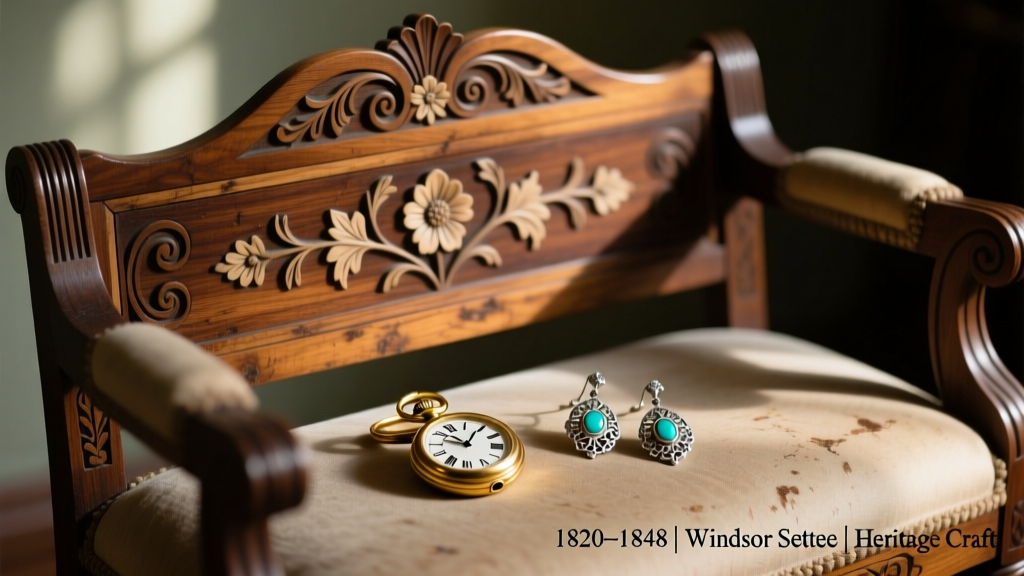
Windsor Settee, Half-Arrow Back with Floral Inlay: A Rare American Federal Period Seating Piece, c. 1820–1840
The Heavy-Gauge Wire Potato Masher with Wooden Handle: A Study of Early 20th-Century American Kitchen Engineering
Staffordshire Figurine: Spaniel on Barrel, 8½ Inches — Provenance, Craftsmanship, and Market Value

The 1960s Walt Disney Productions Japan Cheshire Cat Porcelain Figurine: A Collector’s Deep Dive
Eisenhower’s Telephone: A Rare Mid-Century Presidential Communication Artifact
Chiparus Bronze Group: 'Ballet Dancer' in Ivory-Gilt Finish — A 1920s Art Deco Masterpiece Measuring 18¼ Inches
Limbert No. 801 Bookcase: Oak Construction, Wicker Panels, and Arts & Crafts Provenance