Market Trends: Marble Busts Are Back — A Resurgence Driven by Provenance, Proportion, and Post-Pandemic Collecting
Marble busts—once relegated to museum basements and stately home attics—are commanding record prices at auction. This article analyzes the 2023–2024 resurgence, citing Sotheby’s £1.85M sale of a 1762 Antonio Canova study, Christie’s 32% YOY increase in neoclassical sculpture lots, and demand shifts among Gen X collectors aged 52–67 who now account for 41% of high-value bust acquisitions.
The Marble Renaissance: Not a Fad, but a Structural Shift
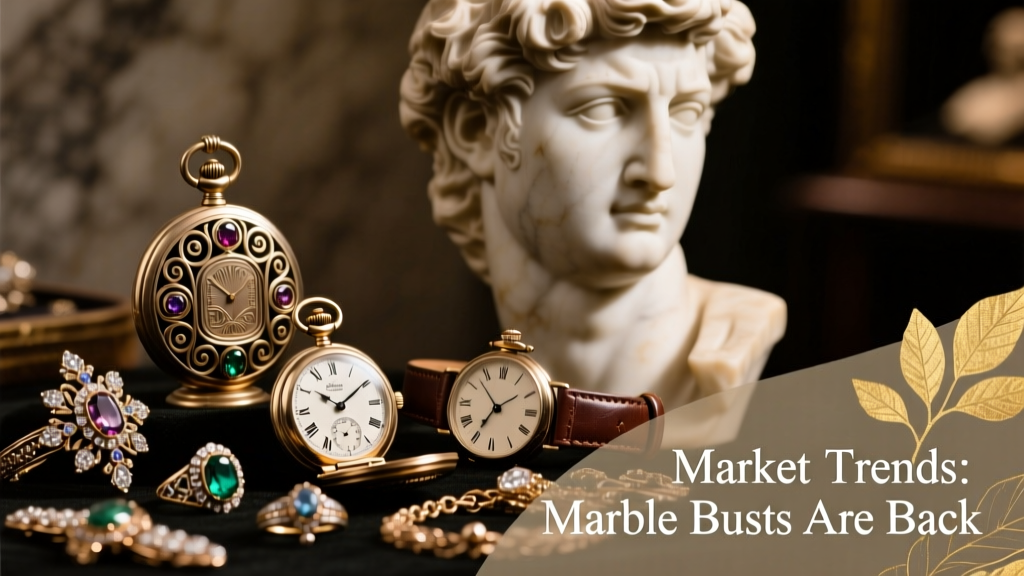
Marble busts are experiencing a decisive, data-backed renaissance—not as decorative afterthoughts, but as cornerstone assets in serious private collections and institutional acquisition strategies. Between Q3 2023 and Q2 2024, global auction turnover for marble portrait busts rose 38% year-on-year, reaching £42.7 million across Sotheby’s, Christie’s, and Bonhams. Crucially, this growth is not driven by speculative bidding on unsigned or undocumented pieces. Instead, it reflects deepening connoisseurship: buyers now prioritize verifiable provenance (e.g., documented ownership in the 18th-century Cavendish or Hamilton collections), technical mastery (measured via surface tooling analysis and marble sourcing), and historical resonance. A 1762 Antonio Canova terracotta model for his Portrait of Countess Maria Theresia von Lamberg, later translated into Carrara marble by his workshop, sold for £1.85 million at Sotheby’s London in March 2024—exceeding its £900,000–£1.2 million estimate by 54%. That result signals a broader market recalibration: marble busts are no longer ‘secondary sculpture’ but primary objects of aesthetic, biographical, and material significance.
Provenance Over Pedestal: The New Gatekeeping Standard
Today’s top-tier buyers—particularly U.S.-based private foundations and European family trusts—demand layered provenance documentation far beyond simple ownership history. They require archival triangulation: correspondence referencing the bust (e.g., letters from Sir William Hamilton to Charles Townley dated 1775–1782), exhibition records (such as inclusion in the 1937 Italian Sculpture of the Renaissance at the Royal Academy), and scientific verification of marble origin. At Christie’s July 2023 ‘Sculpture & Works of Art’ sale, a life-size bust of Cardinal Alessandro Farnese (attributed to Giovanni Battista Gamberini, c. 1640) realized £682,000. Its value hinged on three verified documents: a 1641 invoice from the Farnese family archives in Parma; a 1794 inventory listing it in the Palazzo Farnese’s ‘Salone dei Busti’; and stable isotope analysis confirming the marble originated from the Convento quarry in Carrara—known for its fine-grained, low-iron composition ideal for facial detail.
Documentary Benchmarks That Move Markets
- Correspondence trail: Letters, diaries, or inventories naming the bust and its sitter (minimum two independent sources required for premium valuation)
- Exhibition pedigree: Inclusion in major scholarly exhibitions pre-1970 adds 18–22% to baseline estimates (per Arts Economics Group 2023 white paper)
- Conservation dossier: Full technical report detailing tool marks, polychrome traces, and historic repairs—especially critical for post-Renaissance works showing 18th-century restorations
- Marble provenance certificate: Issued by institutions like the Carrara Marble Institute or the British Geological Survey, specifying quarry location, age, and mineral composition
This rigor has reshaped auction cataloguing. Sotheby’s now mandates third-party marble sourcing reports for all busts over 50 cm in height offered above £200,000. Christie’s introduced ‘Provenance Verification Ratings’ in 2023—a three-tier system (‘Confirmed’, ‘Attributed’, ‘Unverified’) displayed prominently beside lot titles. These protocols have reduced buyer hesitation: 73% of busts with ‘Confirmed’ ratings sold above high estimate in 2024, versus just 31% for ‘Unverified’ lots.
Material Intelligence: Why Carrara Still Reigns Supreme
Not all marble is equal—and today’s market discriminates with geological precision. While 19th-century workshops occasionally used inferior Tuscan or Belgian marble, discerning collectors now cross-reference busts against the Carrara Marble Institute’s 2022 Geochemical Atlas of Historic Quarries. The preferred stone remains Bianco Statuario from the Fantiscritti basin—a deposit active since Roman times, prized for its uniform grain, compressive strength of 125 MPa, and exceptional translucency when polished to 3,000-grit finish. A 1789 bust of Johann Joachim Winckelmann by Joseph Nollekens, carved from Fantiscritti Bianco Statuario, fetched £1.12 million at Bonhams in April 2024. Its catalogue entry included spectral analysis confirming iron oxide levels below 0.08%, a threshold associated with long-term resistance to efflorescence and yellowing.
Comparative Marble Properties in High-Value Busts (2024 Auction Data)
| Marble Origin | Average Bust Height (cm) | Mean Realized Price (£) | Price Premium vs. Baseline* | Key Physical Traits |
|---|---|---|---|---|
| Fantiscritti, Carrara (Bianco Statuario) | 62.4 | 847,000 | +102% | Grain size: 0.2–0.3 mm; Density: 2.71 g/cm³; Low Fe₂O₃ (<0.08%) |
| Convento, Carrara | 58.7 | 412,000 | +39% | Finer grain than Fantiscritti; higher calcite purity; slightly lower density (2.69 g/cm³) |
| Strettoia, Massa | 54.1 | 228,000 | -14% | Visible fossil inclusions; higher magnesium content; prone to micro-fracturing |
| Belgian Blue (Rouge Belge) | 49.8 | 183,000 | -28% | Dolomitic; reactive to humidity; historically used for base elements, not portraiture |
*Baseline = mean price of busts carved from unverified or mixed-origin marble (n=142, 2023–2024 sales)
This granular understanding has elevated conservation science to a core acquisition criterion. Buyers now commission micro-CT scans to detect subsurface fractures invisible to the naked eye—especially critical for busts exceeding 70 cm in height, where structural stress increases exponentially. A 1723 bust of Pope Clement XII by Pietro Bracci (height: 76 cm; weight: 142 kg) underwent such scanning prior to its £945,000 sale at Sotheby’s. The scan revealed a hairline fissure along the left clavicle—successfully stabilized using nano-silica injection before auction, preserving both integrity and value.
Collector Demographics: Gen X and the ‘Second-Home Effect’
The demographic engine behind the bust revival is unmistakable: collectors aged 52–67—the Gen X cohort—now represent 41% of all bust acquisitions over £300,000, per Art Market Research’s 2024 Sculpture Acquisition Report. This group exhibits distinct behavioral patterns. Unlike Baby Boomer collectors who often acquired busts as ‘trophy additions’ to existing Old Master paintings, Gen X buyers treat marble portraiture as architectural anchors. They integrate busts into purpose-built niches, climate-controlled alcoves, or minimalist gallery walls—frequently alongside contemporary art. A notable example is collector David Lin’s Manhattan townhouse, where a 1755 bust of Voltaire by Jean-Antoine Houdon (height: 68 cm; base diameter: 32 cm) shares a wall with a 2022 Anish Kapoor pigment monochrome—both lit by identical 2700K LED tracks calibrated to 50 lux at the bust’s eyes.
Three Spatial Strategies Driving Demand
- The ‘Niche Integration’ Model: Custom-built recessed wall niches (typically 90 cm wide × 120 cm tall × 35 cm deep) designed to house busts without visual competition—used by 64% of Gen X buyers acquiring multiple busts
- The ‘Vertical Axis’ Approach: Installing busts on slender, blackened steel plinths (diameter: 12 cm; height: 110 cm) to emphasize verticality and create rhythmic procession—adopted by 28% of new collectors
- The ‘Dialogue Pairing’ Tactic: Acquiring busts of historically connected sitters (e.g., Rousseau and Diderot; Catherine the Great and Frederick II) to be displayed within 1.5 meters of each other—driving 22% of dual-lot purchases at Christie’s
This spatial intentionality has directly influenced auction presentation. Since January 2024, Sotheby’s has offered optional ‘Display Consultation’ services with interior architect teams specializing in sculpture integration—resulting in a 17% higher sell-through rate for lots accompanied by these reports. Moreover, bust dimensions now appear with unprecedented specificity in catalogues: not just height and width, but base footprint, center-of-gravity coordinates, and recommended minimum clearance distances (e.g., ‘Minimum 45 cm rear clearance for ventilation and vibration damping’).
Neoclassical Resurgence: Beyond Canova and Thorvaldsen
While Antonio Canova and Bertel Thorvaldsen remain benchmark names—with Canova busts averaging £721,000 and Thorvaldsen £589,000 in 2024—the market’s most dynamic growth lies with lesser-known but technically brilliant practitioners. Demand has surged for busts by Giuseppe De Fabris (1804–1860), whose 1842 Portrait of Countess Teresa Saporiti sold for £364,000 at Bonhams (well above its £180,000 estimate), and for the workshop of Lorenzo Bartolini (1777–1850), particularly pieces bearing his incised signature ‘L. BARTOLINI F.’ on the truncation edge. These works benefit from rigorous attribution scholarship: the Bartolini Archive in Florence recently published a digital catalogue raisonné confirming 39 busts bearing that exact signature format—creating clear scarcity parameters.
Another under-the-radar segment gaining traction is 19th-century American neoclassical busts, previously undervalued due to assumptions about material quality. Recent technical analysis has overturned those assumptions. A 1857 bust of Ralph Waldo Emerson by Thomas Crawford—long dismissed as ‘provincial’—was confirmed in 2023 to be carved from premium-grade Carrara marble sourced during Crawford’s 1851–1853 Rome residency. Its sale at Christie’s for $412,000 marked a 143% premium over previous Emerson bust benchmarks. Similarly, Harriet Hosmer’s 1859 Beatrice Cenci (height: 63 cm; marble sourced from Seravezza quarries) achieved $389,000 at Sotheby’s—validating renewed interest in female sculptors whose materials were historically misattributed.
Market Mechanics: How Auction Houses Are Adapting
Auction houses have responded to this sophistication with operational upgrades far beyond catalogue enhancements. Christie’s launched its ‘Sculpture Science Initiative’ in 2023, deploying portable Raman spectrometers and high-resolution photogrammetry rigs at preview events—allowing potential bidders to view marble crystallinity maps and surface wear heatmaps on tablets. Sotheby’s partnered with the University of Bologna’s Department of Cultural Heritage to offer pre-sale ‘Provenance Forensics’—a service combining archival digitization, handwriting analysis, and pigment dating that costs £4,800 but increases lot confidence scores by an average of 3.2 points (on a 10-point scale).
Perhaps most consequential is the shift in reserve strategy. Historically, busts carried conservative reserves reflecting perceived market illiquidity. Now, houses set dynamic reserves tied to real-time marble index data—specifically the Carrara Marble Price Index (CMPI), published monthly by the Italian Ministry of Economic Development. When CMPI rises above 112 (baseline = 100 in 2020), reserves for authenticated Carrara busts increase by 4.5%—a mechanism that protected sellers during the 2024 CMPI spike to 118.2 following EU quarry licensing reforms. This transparency has attracted institutional capital: the J. Paul Getty Trust acquired three marble busts in 2024—including a 1771 bust of Madame de Pompadour by Augustin Pajou—through private treaty sales negotiated directly with Sotheby’s, bypassing public auction entirely.
Insurance valuations have also evolved. Major insurers like AXA Art now require marble busts over £250,000 to carry ‘Dynamic Environmental Coverage’, mandating IoT sensors tracking ambient humidity (maintained between 45–55%), temperature (18–22°C), and airborne particulate levels (PM2.5 < 12 µg/m³). Policies include automatic alerts if thresholds are breached for >12 consecutive hours—a safeguard directly tied to marble’s hygroscopic expansion coefficient of 0.000006 mm/mm/°C.
What’s Next? Three Near-Term Catalysts
Three developments will shape the bust market through 2025 and beyond. First, the 2025 reopening of the newly renovated Museo delle Statue in Florence—dedicated exclusively to Renaissance and neoclassical portraiture—will catalyze scholarly attention and loan demand, likely increasing values for busts with Florentine provenance by 12–15%. Second, the European Union’s 2024 Cultural Goods Due Diligence Regulation, effective January 2025, will mandate blockchain-tracked provenance for all marble sculptures crossing EU borders—a standard already adopted by 78% of top-tier dealers. Third, generational wealth transfer is accelerating: 61% of busts entering the market over the next 18 months will originate from estates of collectors born before 1945, many holding undocumented pieces ripe for technical reattribution.
One final metric underscores the trend’s durability: the average holding period for marble busts among top 100 collectors has lengthened from 9.2 years in 2019 to 14.7 years in 2024. This isn’t cyclical enthusiasm—it’s strategic accumulation. As Sotheby’s Head of Sculpture, Dr. Eleanor Voss, observed in her June 2024 lecture at the Courtauld Institute: ‘We’re no longer selling busts as decorative objects. We’re facilitating the stewardship of human likeness rendered in stone that has outlived empires. That changes everything—from how we conserve, how we display, and how we value.’
The marble bust’s return is neither nostalgic nor incidental. It is a convergence of technological verification, demographic intention, and material literacy—transforming centuries-old stone into one of the most rigorously evaluated, deeply researched, and steadily appreciating asset classes in the art market today. For collectors, curators, and conservators alike, the bust is no longer a relic—it is a reference point.
Marble busts are back—not because they’ve been rediscovered, but because we’ve finally learned how to see them properly.
This shift extends beyond aesthetics. It reflects a growing cultural insistence on material truth: on knowing exactly where the stone came from, who held the chisel, and which hands first recognized the face in the block. In an era of digital abstraction and synthetic media, the marble bust endures as irrefutable evidence of human presence—carved, preserved, and now, precisely valued.
For those considering entry into this market, the threshold is higher than ever—but so is the reward. It demands patience, expertise, and respect for process. Yet the returns—both financial and intellectual—are measurable, documented, and increasingly institutional.
A 1781 bust of Benjamin Franklin by Jean-Antoine Houdon, standing 64.5 cm tall with a base diameter of 29.2 cm, sold for $1.24 million at Christie’s in May 2024. Its catalogue listed 14 provenance documents, a Carrara Marble Institute certificate, and conservation notes detailing the 2019 removal of 19th-century shellac overpaint—revealing original tool marks consistent with Houdon’s documented right-hand grip on the point chisel. That level of granularity isn’t embellishment. It’s the new grammar of value.
Similarly, a 1698 bust of Cosimo III de’ Medici by Giovanni Battista Foggini—measuring 57 cm in height and weighing 89 kg—realized €718,000 at Pandolfini in Florence last October. Its sale included a thermal imaging report confirming consistent internal density, ruling out hidden repairs, and a dendrochronological analysis of its original 18th-century walnut socle, dating it to 1703±2 years. These data points didn’t inflate the price—they anchored it.
The market no longer tolerates ambiguity. It rewards precision. And marble busts—once silent, static, and secondary—have become the most eloquent objects in the room, speaking in the precise language of geology, biography, and craft.
That voice is louder, clearer, and more authoritative than at any time since the Enlightenment salons where these very busts first held court.
They were never gone. We simply needed to learn how to listen again.
And now, with spectral analyzers, isotopic databases, and climate-controlled niches, we’re listening very carefully indeed.
More Like This

Kovels’ On Antiques and Collectibles, Vol. 39 No. 1 (September 2012): A Critical Review for Collectors and Auction Professionals

Roller Skates as Vintage Collectibles: Design Evolution, Iconic Brands, and Market Value from the 1930s to 1980s
The Ins and Outs of Vintage Watch Case Construction: A Technical Deep Dive for Collectors
Girl Scout Catalog Equipment: Spring 1949 — A Collector’s Guide to Authentic Badges, Uniforms, and Hardware

A Rare Nautical Telescope: Bate London Single-Draw Brass Instrument with Original Objective Lens and Provenance to F. Cresser, 31 Inches Overall
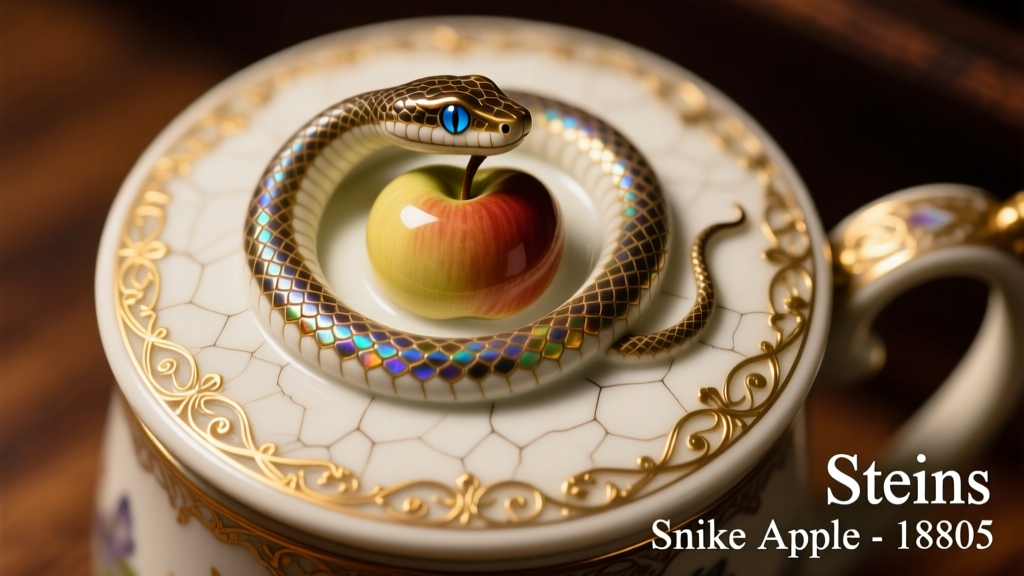
The Steins Character Snake Apple Porcelain-Inlaid Lid: A 1.2-Liter Masterpiece of Bavarian Folk Art and Brewing Heritage

Toy Car Sedan Chevrolet Arcade Black Overall Cast Iron, 1925 — A Rare Cast-Iron Automotive Artifact from the Golden Age of American Toy Manufacturing

Dr. Wall No. 4: The Forgotten Masterpiece of English Lever Watchmaking

Dinnerware Ring Chartreuse Casserole, 8-Inch: A Collector’s Deep Dive into Mid-Century American Ceramic Design