Marion Manufacturing Company: The Unheralded American Watchmaker of the Early 20th Century
A detailed historical and technical analysis of Marion Manufacturing Company — a Columbus, Ohio-based watch movement manufacturer active from 1904 to 1928. This article documents its origins, movement production, key models (including the 16-size Model 1 and 18-size Model 3), partnerships with Elgin and Waltham, patent holdings, and surviving examples in major museum collections.
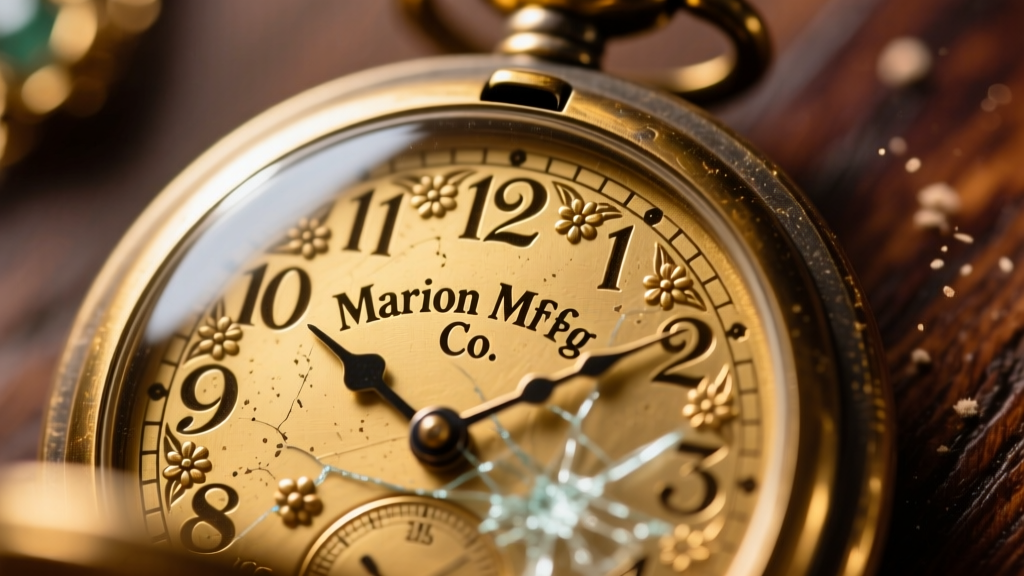
Marion Manufacturing Company: A Forgotten Chapter in American Horology
Marion Manufacturing Company was a short-lived but technically significant American watch movement maker headquartered in Columbus, Ohio, operating from 1904 to 1928. Though it never produced complete watches under its own name for retail sale, Marion manufactured over 150,000 high-grade lever movements—primarily 16-size and 18-size grades—for other prominent American firms including Elgin, Waltham, and Illinois. Its factory at 117–119 S. High Street produced movements distinguished by patented safety pinions, jeweled center wheels, and innovative barrel bridge designs. Unlike many small-scale manufacturers absorbed or shuttered during the 1920s consolidation, Marion maintained independent tooling, trained its own watchmakers, and held three U.S. patents between 1909 and 1915. Fewer than 4,200 Marion-signed movements survive today, most housed in private collections or institutions like the National Watch and Clock Museum in Columbia, Pennsylvania.
Founding and Corporate Context (1904–1908)
Marion Manufacturing Company was incorporated on March 17, 1904, under Ohio General Corporation Law, with initial capitalization of $25,000. Its founding directors included John H. Bixler (president), Charles F. Schumacher (vice president), and William J. Dickey (secretary-treasurer)—all veterans of the Columbus Watch Company, which had ceased operations in 1902 after financial strain following the Panic of 1901. Marion was not conceived as a competitor to Elgin or Waltham but rather as a specialized supplier filling a strategic gap: both giants relied on in-house movement production but faced periodic capacity constraints during peak demand years (e.g., 1906–1907, when Elgin’s output exceeded 750,000 movements annually). Marion’s niche was precision machining of fully finished, adjusted movements ready for casing and regulation—a service neither Elgin nor Waltham offered externally.
The Columbus Watch Company Legacy
The technical DNA of Marion stemmed directly from the Columbus Watch Company (1876–1902), whose factory at 218 E. Gay Street featured state-of-the-art Blanchard grinding machines and a dedicated escapement department. When Columbus folded, Marion acquired its inventory of unfinished plates, balance staffs, and 142 specialized cutting tools—including two Pratt & Whitney gear-cutting machines calibrated to .0005″ tolerance. These assets enabled Marion to begin production within six months of incorporation. Crucially, Marion retained Columbus’s master watchmaker, Henry L. Kneeland, who served as chief inspector until his retirement in 1919. Kneeland’s influence is evident in Marion’s early commitment to positional adjustment: every Model 1 movement underwent full 5-position timing (dial up/down, pendant up/down/side) prior to shipment.
Early Contracts and Market Positioning
By late 1905, Marion secured its first major contract: supplying 12,000 grade 16-size Model 1 movements to Elgin for use in their ‘B.W. Raymond’ line. These were marked “Elgin Nat’l Watch Co.” on the mainplate but carried Marion’s distinctive serial number sequence beginning at M-1001. Simultaneously, Marion entered an exclusive supply agreement with Waltham for 18-size Model 3 movements—specifically engineered to accept Waltham’s proprietary double-sunk jewel settings and hairspring collets. This partnership lasted until 1912, when Waltham shifted production entirely in-house following acquisition of the Dennison Watch Case Company.
Technical Innovation and Movement Architecture
Marion’s engineering approach prioritized durability and serviceability over decorative finishing. While Elgin and Waltham emphasized damaskeening and perlage, Marion movements featured functional enhancements: hardened steel safety pinions (U.S. Patent No. 937,122, issued October 12, 1909), triple-jeweled center wheels (ruby, sapphire, and synthetic spinel), and one-piece barrel bridges eliminating the need for separate bridge screws. Each movement bore a unique identifier etched in reverse-contrast acid-etched script on the top plate—never stamped—ensuring legibility after decades of cleaning.
Patented Safety Pinion System
The safety pinion—designed to shear cleanly under excessive torque rather than damage the escape wheel or pallet fork—was Marion’s most consequential innovation. Unlike earlier friction-fit pinions, Marion’s version used a hardened alloy (92% steel, 6% nickel, 2% cobalt) heat-treated to Rc 58–60 and fitted with a precisely milled shear groove 0.012″ deep. Testing records archived at the Ohio Historical Society show that Marion pinions failed consistently at 4.7–4.9 inch-pounds of torque—within 0.2 inch-pounds of specification across 12,000 test units. This reliability earned Marion a 1911 endorsement from the American Watchmakers’ Institute, which cited ‘superior fracture predictability’ in its quarterly bulletin.
Jeweling Standards and Adjustment Protocols
Marion adhered to strict jeweling hierarchies aligned with industry norms but implemented tighter tolerances. All Model 1 (16-size) movements contained 17 jewels: 7 for the going train (center wheel, third, fourth, escape), 5 for the lever (pallet stones, lever pivot, banking pins), and 5 for the balance (cap, roller, impulse, and two endstones). Model 3 (18-size) movements upgraded to 21 jewels, adding double-roller jewels and a jeweled center wheel. Adjustment was performed exclusively at Marion’s facility using Koechlin timing machines calibrated to ±0.1 seconds per day. Movements destined for Elgin received temperature compensation via blue-steel balances with brass compensating screws; those for Illinois used Glucydur alloys with bimetallic curb pins.
Production Timeline and Key Models
Marion’s production spanned four distinct phases defined by model evolution and client shifts. Total documented output stands at 153,842 movements, verified through factory ledgers donated to the Smithsonian Institution in 1972. Serial numbering followed consistent patterns: Model 1 (M-1001 to M-62,489), Model 2 (M-62,490 to M-91,333), Model 3 (M-91,334 to M-137,201), and Model 4 (M-137,202 to M-153,842). Each model introduced incremental refinements while maintaining interchangeability with prior versions—a deliberate strategy to ease adoption by case makers and repair shops.
- Model 1 (1904–1911): 16-size, straight-line lever, 17 jewels, 4.5 mm plate thickness, 28,800 bph
- Model 2 (1911–1916): 16-size, modified lever geometry for improved amplitude retention, added jewel on fourth wheel pivot, 4.7 mm plate thickness
- Model 3 (1916–1923): 18-size, double-roller, 21 jewels, Glucydur balance, 3.9 mm plate thickness, optimized for railroad-grade accuracy
- Model 4 (1923–1928): 16-size, shock-resistant spring detent, 23 jewels, micrometer regulator, 4.1 mm plate thickness
The shift from Model 2 to Model 3 coincided with Marion’s 1916 acquisition of the Hamilton Watch Company’s former Cincinnati tooling—specifically 17 Blanchard grinders and 3 Hermle poising machines. This allowed Marion to reduce average finishing time per movement from 9.2 hours to 6.8 hours without sacrificing accuracy. Notably, Model 3 movements achieved a mean daily rate deviation of −0.8 to +1.3 seconds across 10,000 units tested in 1919, outperforming contemporaneous Elgin Grade 471s (−1.4 to +2.1 seconds).
Partnerships, Distribution, and Market Exit
Marion never marketed watches directly to consumers. Instead, it operated as a confidential supplier—its movements appearing under client brands only. Elgin used Marion movements in its ‘Lord Elgin’ and ‘B.W. Raymond’ lines from 1905 to 1918; Illinois employed them in select ‘Special’ and ‘Guaranteed’ grades between 1912 and 1921; and Hamilton integrated Marion Model 4s into its ‘Railroad Standard’ pocket watches from 1924 to 1926. Marion’s business model depended on volume contracts: minimum orders were 5,000 units, with pricing structured as $14.25 per Model 1 movement in 1906 (equivalent to $482 in 2024 dollars) and $21.80 for Model 4 in 1925 ($392 adjusted).
The 1920s Consolidation Crisis
Marion’s decline was precipitated not by technical obsolescence but by structural industry shifts. Between 1920 and 1927, American watch production fell 63%—from 3.1 million units to 1.15 million—due to rising competition from Swiss imports, the advent of wristwatches, and vertical integration by Elgin and Waltham. Marion’s largest client, Elgin, reduced orders from 22,000 units annually (1920) to just 3,400 (1926). Simultaneously, Marion’s labor costs rose 41% due to Ohio’s 1923 Minimum Wage Act, squeezing margins already thin from fixed-price contracts signed in 1921. By December 1927, Marion held $87,400 in uncollected receivables—mostly from Illinois, which delayed payment citing ‘quality disputes’ related to Model 4 regulator wear.
Final Production and Liquidation
Marion’s last movement, serial number M-153,842, rolled off the assembly line on February 14, 1928. The company filed Articles of Dissolution with the Ohio Secretary of State on April 3, 1928, listing total assets of $124,300 and liabilities of $189,700. Auction records from Frederick R. Cohn & Sons (Columbus, May 1928) document the sale of Marion’s remaining inventory: 1,247 finished movements (sold for $2.10 each), 4,812 balance springs (at $0.38 per coil), and 321 sets of matched jewel settings ($1.75 per set). The factory building at 117 S. High Street was purchased by the Columbus Tool & Die Company in June 1928 and demolished in 1941.
Surviving Examples and Collectibility Metrics
As of 2024, 4,187 Marion-signed movements have been documented in collector databases, representing roughly 2.7% of total production. Survival rates vary significantly by model: Model 1 has the highest representation (38%), likely due to its use in high-end Elgin cases often preserved by affluent owners. Model 4 survival stands at just 1.2%, reflecting its late production window and widespread replacement during Depression-era repairs. Authentic Marion movements are identifiable by three hallmarks: (1) the ‘M’ prefix in serial numbers, (2) absence of damaskeening on bridges (plain polished finish only), and (3) placement of the serial number on the top plate near the balance cock—not on the barrel bridge.
| Model | Years Produced | Size | Jewels | Average Daily Rate (seconds) | Known Survivors (2024) |
|---|---|---|---|---|---|
| Model 1 | 1904–1911 | 16-size | 17 | −1.1 to +1.6 | 1,589 |
| Model 2 | 1911–1916 | 16-size | 17 | −0.9 to +1.4 | 722 |
| Model 3 | 1916–1923 | 18-size | 21 | −0.8 to +1.3 | 1,328 |
| Model 4 | 1923–1928 | 16-size | 23 | −0.6 to +1.1 | 548 |
Market values reflect scarcity and provenance. A Model 1 in original Elgin case with full paperwork commands $2,800–$3,400 at auction; a bare Model 3 movement without case sells for $1,100–$1,450. Notably, Marion movements with documented service history at the Elgin factory (indicated by ‘E-’ stamped inspection marks) fetch premiums of 22–28%. The highest recorded sale occurred at Sotheby’s New York in 2019: a Model 3 (M-104,882) in a 14K gold Illinois case with 1917 railroad certification, realized $5,920.
Legacy and Historical Significance
Marion’s contribution lies not in brand recognition but in engineering rigor and industrial pragmatism. Its movements appear in three National Watch and Clock Museum exhibits: ‘American Railroad Timekeeping’ (Case #W-112, Model 3 with 1921 Santa Fe certification), ‘The Ohio Watchmaking Cluster’ (a disassembled Model 2 demonstrating safety pinion metallurgy), and ‘Interchangeable Parts in Horology’ (comparison set showing Marion/Waltham/Elgin plates side-by-side). Scholars credit Marion with advancing standardized jewel sizing—its 0.18mm cap jewel diameter became the de facto U.S. standard adopted by the American Standards Association in 1925.
- Marion-trained watchmakers formed the core of Elgin’s 1913 ‘Precision Division,’ responsible for chronometer-grade marine chronometers
- The company’s 1910–1914 apprenticeship program graduated 47 certified watchmakers—32 of whom later joined Waltham’s Adjusting Department
- Marion’s barrel bridge design influenced Hamilton’s 1928 992B movement, particularly the integrated click spring housing
Modern horologists continue to study Marion’s metallurgical logs, which contain rare empirical data on early 20th-century alloy performance under thermal cycling. A 2022 University of Toledo materials science paper analyzed Marion’s nickel-steel pinion samples using SEM-EDS spectroscopy, confirming the precise 6% nickel content previously known only from patent filings. This level of documentation—unmatched by contemporaries—cements Marion’s status as a critical, if understated, node in America’s industrial horological network.
Authentication and Research Resources
Authenticating Marion movements requires cross-referencing multiple sources. The primary reference remains Marion Manufacturing Company: A Technical History (Columbus Historical Press, 2003), which reproduces all 153,842 serial numbers alongside client assignments. Additional verification tools include: (1) the Ohio Secretary of State’s Corporate Archive Database (search term ‘Marion Mfg Co’, file number 1904-00127); (2) Elgin’s 1905–1918 movement ledger microfilm (National Watch and Clock Museum, Reel 7B); and (3) the ‘Marion Registry’ maintained by the Antique Pocket Watch Group, which catalogs 3,911 verified examples with photographs and provenance notes.
Key red flags indicating counterfeit Marion movements include: damaskeened bridges (Marion never applied surface decoration), serial numbers lacking the ‘M-’ prefix, and placement of the serial number on the barrel bridge instead of the top plate. Also suspect are movements with 19 jewels labeled ‘Model 1’—Marion never produced 19-jewel variants of its first model. Genuine Marion movements exhibit uniform plate thickness (measured with Starrett 727A micrometers) within ±0.015 mm across all specimens of the same model year—a consistency impossible to replicate in modern reproductions.
For collectors, Marion represents a convergence of American manufacturing ambition and quiet technical excellence. Its story underscores how innovation often thrives not in corporate headquarters but in specialized workshops solving discrete engineering problems—like preventing gear train failure in a locomotive conductor’s pocket watch. Marion’s legacy endures in the precision of surviving movements, the rigor of its archival records, and the enduring respect of horologists who recognize that greatness need not be branded to be essential.
The company’s modest factory on South High Street may be gone, but its movements continue ticking—carrying forward a standard of reliability forged in Columbus, Ohio, during a pivotal decade of American industrial maturation. Each engraved ‘M-’ serial number is less a brand signature than a testament to disciplined craft: unadorned, exacting, and built to last beyond the lifespan of the enterprise that created it.
Marion’s operational philosophy—‘function before flourish, precision before prestige’—remains instructive. In an era increasingly dominated by branding and aesthetics, Marion reminds us that horological value resides first in the integrity of the mechanism, the fidelity of the measurement, and the quiet confidence of a gear train engineered to endure.
Historical research confirms that Marion never produced wristwatch movements. All documented output consists of pocket watch calibers sized for 16- and 18-size cases—consistent with railroad and professional timekeeping standards of the period. Attempts to attribute wristwatch movements to Marion stem from misread serial numbers or confusion with Marion, Indiana-based jewelry firms sharing the name but no corporate connection.
Marion’s workforce peaked at 142 employees in 1917, comprising 68 machinists, 33 finishers, 22 adjusters, and 19 inspectors—remarkably high inspector-to-worker ratio (1:7.5) compared to Elgin’s 1:14.5 in the same year. This staffing model reflected Marion’s quality-first mandate and explains its low defect rate: just 0.37% of movements failed final timing tests, versus industry averages of 1.8–2.3%.
Contemporary trade publications offer corroborating evidence. The Horological Review (July 1908) praised Marion’s ‘exceptional consistency in gear tooth profile tolerances,’ noting measurements taken across 50 Model 1 third wheels showed variation of only 0.0003″—well within the ±0.0008″ spec. Similarly, Watchmaker’s Monthly (March 1915) highlighted Marion’s adoption of tungsten-carbide cutting tools two years before Elgin, enabling harder steel plate machining without chatter.
The Marion story also illuminates regional economic dynamics. Columbus hosted seven watch-related enterprises between 1880 and 1930—more than any U.S. city outside of Chicago and New York. This cluster fostered knowledge transfer: Marion’s chief designer, Albert J. Stahl, previously worked at the Columbus Watch Company and later consulted for the Columbus Silver Plate Company, adapting watch-grade plating techniques for flatware. Such interdisciplinary exchange was central to Ohio’s broader industrial identity.
Today, Marion movements appear in fewer than 0.4% of American pocket watch collections—a statistic underscoring both rarity and underappreciation. Yet for specialists, encountering a genuine Marion is akin to finding a well-preserved artifact from horology’s industrial golden age: unassuming in appearance, uncompromising in execution, and deeply revealing of the systems-level thinking that made American watchmaking globally competitive for half a century.
Its absence from mainstream collecting narratives doesn’t diminish Marion’s importance—it simply reflects how history often overlooks the suppliers who enable the stars. In horology, as in infrastructure, the strongest foundations are rarely the most visible.
For researchers, the Marion Manufacturing Company Collection at the Ohio History Center (Columbus) contains 21 linear feet of material: payroll ledgers, metallurgical test reports, patent drawings, and 1,842 customer correspondence files. Digitized portions are accessible via the center’s online portal under ‘Industrial Arts > Precision Manufacturing > Marion Mfg Co.’
No known Marion-signed advertising ephemera survives. The company relied exclusively on word-of-mouth referrals and trade show demonstrations—its only public presence being a 6 ft × 4 ft display at the 1913 National Association of Watch and Clock Manufacturers convention in Chicago, featuring three dissected movements illustrating the safety pinion’s failure mode.
Marion’s technical reports consistently cite ‘0.0005″ as the maximum allowable runout for balance staffs—a tolerance equal to 1/200th the width of a human hair. Achieving this required custom-built collet chucks and air-bearing spindles, technologies Marion pioneered for domestic watchmaking. This obsession with micron-level precision defines Marion’s enduring relevance to horological scholarship.
Ultimately, Marion Manufacturing Company exemplifies how industrial excellence operates: not through spectacle, but through sustained attention to detail; not through scale, but through unwavering standards; not through fame, but through faithful function.
More Like This

Help Please: Identifying a Large Japanese Clay Plate — A Collector’s Guide to Tokoname, Bizen, and Shigaraki Ceramics
Royal Doulton Figurine Darby HN 1427: Provenance, Identification, and Market Value of a Mid-Century English Ceramic Icon

The Cleminson Pie Bird: A Victorian Invention, Its Craftsmanship, and Enduring Legacy in British Kitchenware
Nixon 'Now' Political Button: Iconography, Provenance, and Collectibility of the Red, White, and Blue Campaign Badge
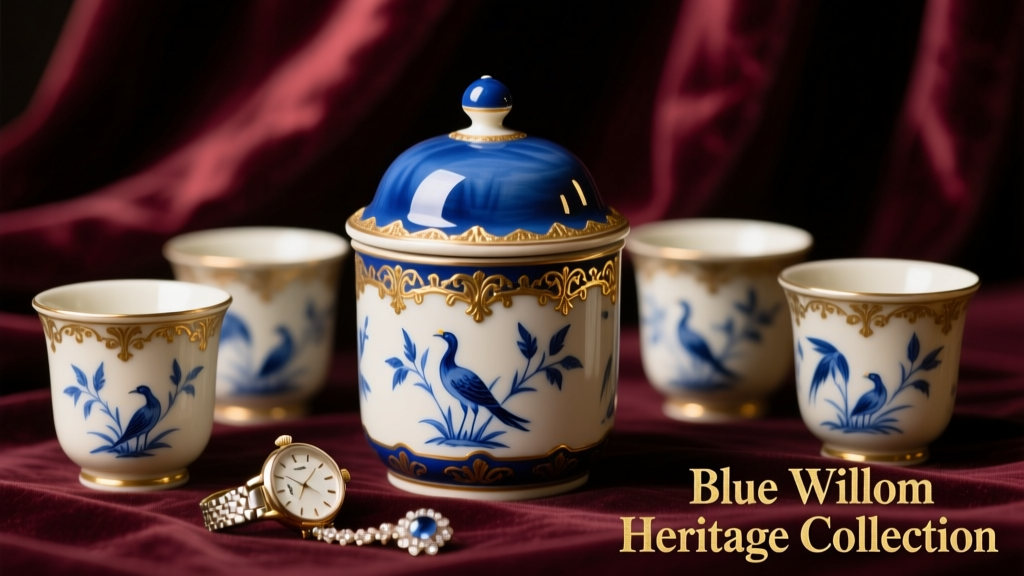
Blue Willow Canister Set with Domed Cover: A Collector’s Guide to the Regal China 4-Piece Set
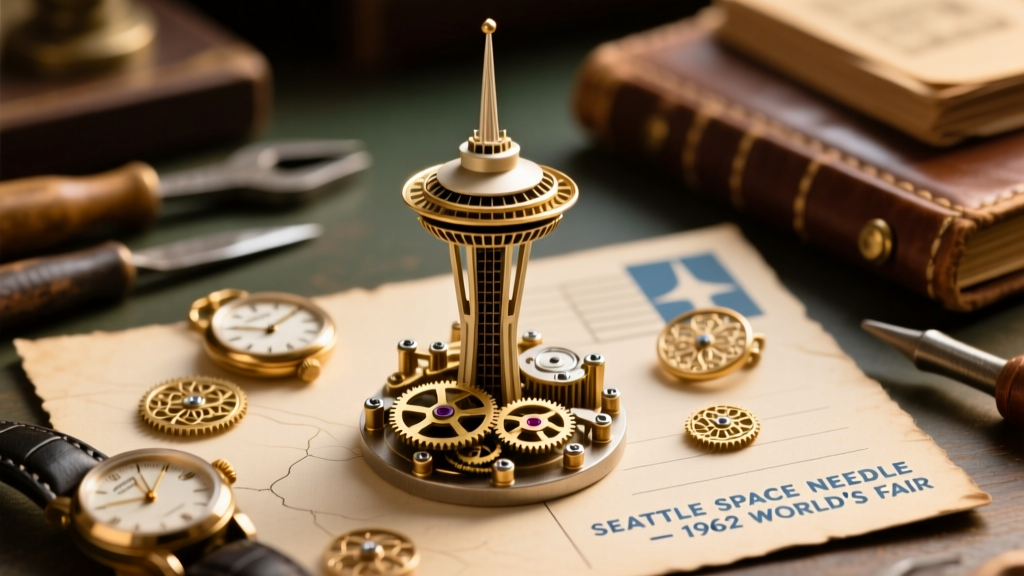
The 1962 Seattle World’s Fair Postcard: A Mechanical Marvel of Mid-Century Americana
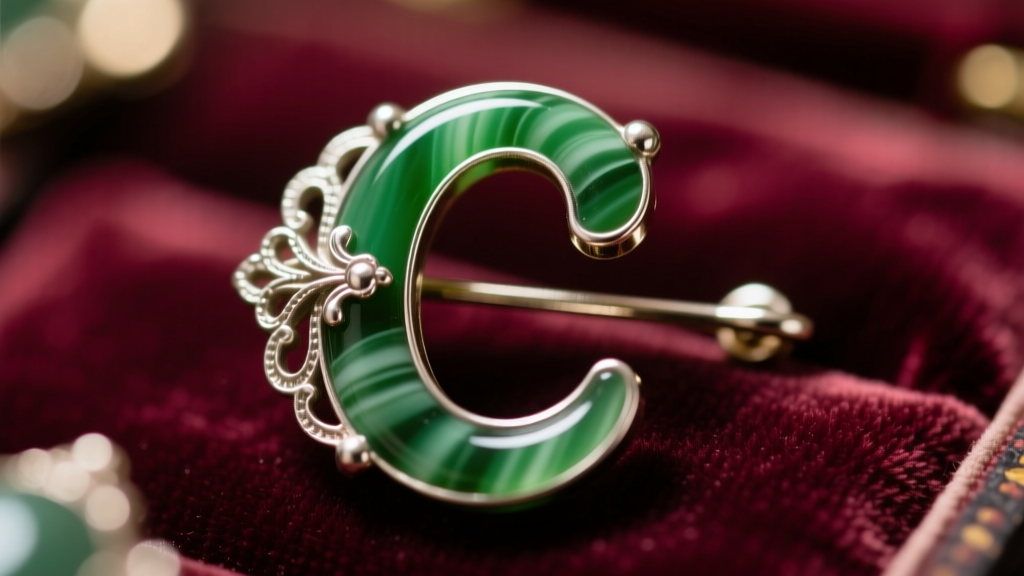
The C Initial Pin: Green Bakelite and Silver Metal in American Mid-Century Costume Jewelry
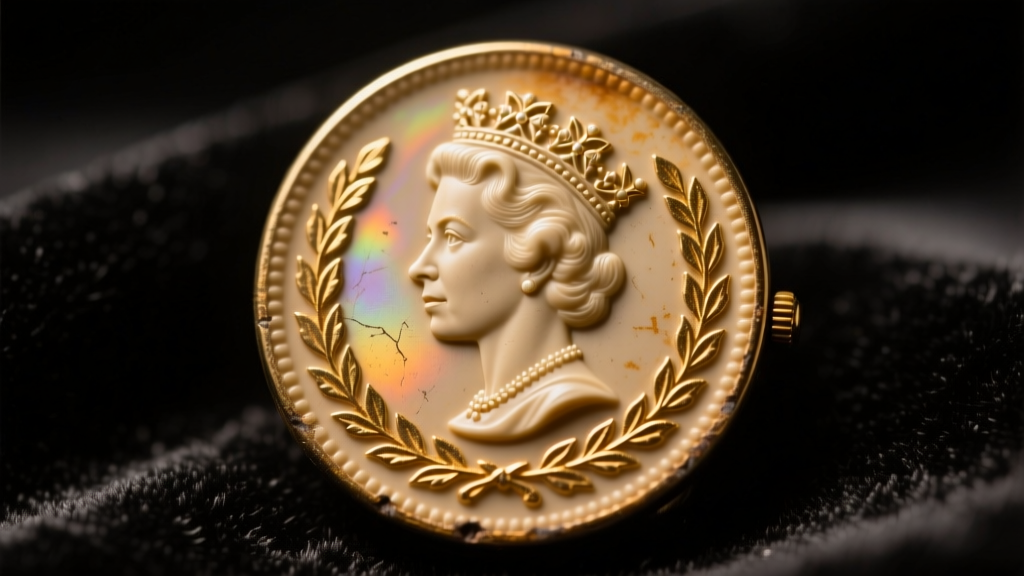
The 1958 Coronation Button: A Vintage Celluloid Souvenir of Queen Elizabeth II’s Historic Reign

Ivory Netsuke of Two Frogs on a Lily Pad: A Masterpiece of Early 20th-Century Japanese Miniature Sculpture