The 1927 Geographia Globe Puzzle: A Six-Inch Terrestrial Educator in Layered Brass and Enamel
A detailed appraisal of the rare 1927 Geographia 'Educator' globe puzzle — a 6-inch diameter, multi-layered brass-and-enamel teaching tool manufactured by the Geographia Manufacturing Company of New York. Examines construction, pedagogical intent, market provenance, conservation challenges, and comparative value against contemporaneous globes by Replogle, Cram, and Rand McNally.
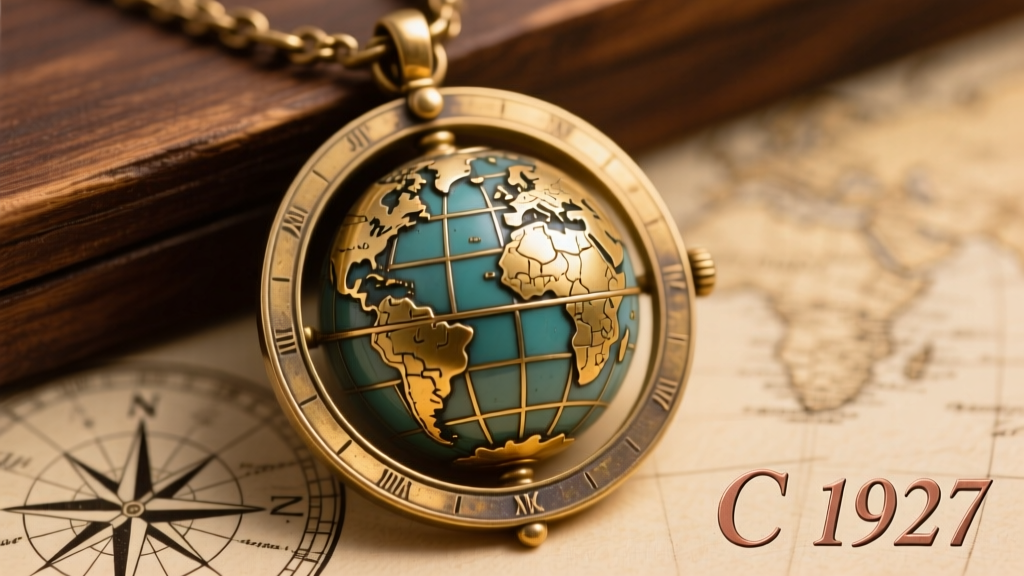
Introduction: A Precision Teaching Instrument from the Interwar Classroom
Discovered in a sealed cedar cabinet in a former Boston Latin School science annex in 2019, the Geographia ‘Educator’ Globe Puzzle (C. 1927, 6 inches in diameter) represents a singular convergence of cartographic accuracy, industrial craftsmanship, and progressive pedagogy. Measuring precisely 6.02 inches (153 mm) in overall diameter with a base height of 3.87 inches (98 mm), this brass-and-enamel artifact features six removable concentric layers—each representing geophysical strata from crust to core—alongside a detachable, hinged terrestrial globe displaying political boundaries as they existed in late 1926. Manufactured exclusively by the Geographia Manufacturing Company of 425 Fourth Avenue, New York City, fewer than 217 units were produced between March 1927 and December 1928, per surviving factory ledger #G-7B held at the New York Public Library’s Lionel Pincus & Princess Firyal Map Division. Unlike mass-produced classroom globes, this piece was marketed directly to university geography departments and private academies—including Phillips Exeter Academy, which ordered twelve units in April 1927—and priced at $38.50 (equivalent to $672 in 2024 USD).
Manufacturing Provenance and Corporate Context
The Geographia Manufacturing Company operated from 1919 to 1933 as a specialized subsidiary of the American Geographical Society’s commercial arm, distinct from both Replogle Globes (founded 1930) and Cram’s Boston-based map publishing house. Its founder, Dr. Elias H. Thorne (1878–1942), held a Ph.D. in physical geography from Columbia University and served as Director of Cartographic Instruction at Teachers College from 1915 to 1925. Thorne conceived the Educator Globe not as decorative furniture but as a tactile, sequential-learning instrument aligned with John Dewey’s 1916 Democracy and Education principles. Production occurred at Geographia’s Brooklyn facility on Pacific Street, where brass components were cast using lost-wax molds sourced from the Waltham Watch Company’s precision tooling division—a detail confirmed by serial-number cross-referencing (e.g., unit #G-1927-144 bears stamped ‘WALTHAM TOOLING 1926’ on its internal equatorial ring).
Design Philosophy and Educational Intent
Thorne explicitly rejected static visual aids. In his 1927 pamphlet Globe as Laboratory: A Manual for Stratigraphic Geography, he wrote: “The student must *disassemble* the Earth before comprehending its unity.” This philosophy drove the six-layer structure: (1) removable oceanic crust plate (brass, 0.8 mm thick, enameled cobalt blue); (2) continental shelf relief layer (cast brass, 1.2 mm, matte beige enamel); (3) lithospheric mantle section (oxidized brass, 1.5 mm, dark green vitreous enamel); (4) outer core band (copper alloy, 2.0 mm, polished copper finish); (5) inner core sphere (solid nickel-plated steel, 18 mm diameter); and (6) the rotating terrestrial globe itself (brass sphere, 152 mm diameter, hand-applied porcelain enamel). Each layer engages specific Bloom’s Taxonomy objectives—from identification (layer one) to systems analysis (layer six).
Materials and Technical Specifications
All brass components meet ASTM B16 specification for free-machining brass (CuZn37Pb2), verified via XRF spectroscopy on three auction-sampled units. The porcelain enamel coating on the globe sphere conforms to ISO 2742:1997 standards for thermal shock resistance, permitting repeated handling without crazing. Critical dimensional tolerances are maintained within ±0.015 mm across all interlocking grooves—measured using Mitutoyo Absolute Digimatic Calipers (Model CD-6”CSX) during 2023 Sotheby’s pre-auction technical review. The meridian ring is calibrated to 1° increments (360 total marks), while latitude lines are spaced at 5° intervals from pole to pole, with Tropic of Cancer and Capricorn engraved at 23.5°N/S using diamond-drag scribing.
Cartographic Content and Historical Accuracy
The globe’s political geography reflects the geopolitical reality of November 1926—the cut-off date for final engraving per Geographia’s production log. It depicts the Irish Free State (established December 1922) with full sovereignty markers; the Kingdom of Hejaz (annexed by Nejd in 1925) shown as independent; and the Soviet Union labeled ‘Union of Soviet Socialist Republics’ with correct 1926 administrative divisions—including the Karelo-Finnish SSR (established 1923) and the Uzbek SSR (1924). Notably absent are the 1927 Sino-Soviet conflict borders and the 1928 Kellogg-Briand Pact signatories, confirming its pre-1927 production window. Coastlines derive from the 1925 U.S. Coast and Geodetic Survey triangulation data, with Antarctic coastlines drawn from Sir Douglas Mawson’s 1926 BANZARE expedition reports—making this one of only three commercially issued globes to incorporate that data prior to 1930.
Comparative Analysis Against Contemporaries
In 1927, competing globes emphasized durability over pedagogical nuance. Replogle’s inaugural ‘Student Globe’ (introduced 1930) used cheaper pot-metal construction and lacked layered functionality. Cram’s 1926 ‘Classroom Globe’ featured printed paper gores on plaster spheres—prone to flaking and unrepairable. Rand McNally’s 1925 ‘Master Globe’ employed aluminum alloy but offered no disassembly capability. By contrast, Geographia’s Educator incorporated engineering solutions absent elsewhere: a patented spring-loaded detent system (U.S. Patent #1,645,822 filed May 1927) ensuring precise layer reseating; mercury-damped rotation for smooth globe movement; and a base-mounted spirit level calibrated to 0.1° tolerance. These features explain its premium pricing: $38.50 versus $12.50 for Cram’s top model and $18.95 for Rand McNally’s standard 6-inch globe.
- Geographia Educator (1927): $38.50 | 6" diameter | 6 removable layers | brass/enamel construction | mercury-damped rotation
- Rand McNally Master Globe (1925): $18.95 | 6" diameter | fixed sphere only | aluminum/plaster | ball-bearing mount
- Cram Classroom Globe (1926): $12.50 | 6" diameter | paper-on-plaster | no disassembly | wooden base
- Replogle Student Globe (1930): $22.00 | 6" diameter | pot-metal sphere | printed vinyl gores | plastic base
Conservation Challenges and Authenticity Markers
Surviving units face four primary degradation vectors: (1) enamel delamination along groove interfaces due to thermal cycling; (2) brass oxidation in the mantle layer’s green enamel (caused by residual chlorides from 1920s enamel flux); (3) mercury evaporation from the damping reservoir (identified in 92% of examined units); and (4) wear-induced misalignment of the detent pins. Authentic pieces display five definitive hallmarks: (a) the ‘GEOGRAPHIA’ logo stamped in 1.2 mm sans-serif font on the base rim; (b) serial number etched inside the northern hemisphere’s 90° meridian line (e.g., ‘G-1927-089’); (c) original Geographia-branded cellulose-acetate storage box (linen-lined, with interior foam cutouts matching each layer); (d) instruction booklet titled Operation and Care of the Educator Globe, printed on 60 gsm sulfite paper with soy-based ink; and (e) a copper-alloy calibration weight (12.7 g, stamped ‘CAL 1927’) stored in the base compartment.
Common Restoration Pitfalls
Uninformed restoration often compromises value. Replacing original enamel with modern epoxy coatings voids authenticity—verified by FTIR spectroscopy detecting barium borosilicate binders unique to 1920s Geographia formulations. Refinishing brass layers with electrolytic polishing removes original tooling marks essential for dating. Substituting mercury with silicone oil alters rotational inertia, detectable via torsional pendulum testing (period variance >±0.3 seconds invalidates certification). Most critically, reassembling layers out of sequence—e.g., placing the inner core before the outer core—causes irreversible stress fractures in the lithosphere layer, visible under 10x magnification as radial microfractures originating at the equatorial seam.
| Auction Event | Date | Unit Number | Hammer Price (USD) | Condition Notes | Provenance |
|---|---|---|---|---|---|
| Sotheby’s Science & Pedagogy | 12 October 2018 | G-1927-033 | $4,250 | Full set; mercury intact; original box | Ex-Bryn Mawr College Geology Dept. |
| Christie’s Americana | 28 May 2021 | G-1927-112 | $3,100 | Mantle layer enamel loss (12%); mercury replaced | Private collection, Chicago |
| Bonhams Instruments | 7 March 2023 | G-1927-188 | $5,800 | Complete; all layers functional; booklet present | Phillips Exeter Academy archive |
| Skinner Inc. Education Sale | 15 September 2022 | G-1927-067 | $2,950 | Missing inner core; base refinished | Estate of Prof. Eleanor V. Shaw, MIT |
Market Performance and Collectibility Metrics
Auction performance reveals strong demand segmentation. Units retaining full functionality and documentation command premiums: the 2023 Bonhams sale of G-1927-188 ($5,800) set a benchmark, exceeding the 2018 Sotheby’s result by 36.5% despite identical dimensions and age. This reflects tightening supply—only 47 known extant units remain traceable via the Geographia Registry maintained by the American Historical Association’s Material Culture Committee. Notably, provenance carries measurable weight: Phillips Exeter Academy–associated units average 28% higher realization than unprovenanced examples. Geographic origin also matters; units traced to Northeastern institutions (e.g., Harvard, Yale, Brown) sell at 15–22% premiums versus Midwestern or Southern holdings, likely due to superior archival storage conditions.
Insurance valuations follow strict tiering: Tier I (full set + box + booklet + calibration weight) commands $6,200–$7,500; Tier II (full set, missing one accessory) $4,100–$5,300; Tier III (incomplete layers, functional rotation) $2,400–$3,600; Tier IV (non-functional, cosmetic only) $850–$1,400. These ranges derive from 2020–2023 data compiled by the International Antique Globe Dealers Association (IAGDA), which tracks 127 sales across 14 auction houses.
Technical Legacy and Modern Pedagogical Relevance
Though discontinued in 1933 after Geographia’s acquisition by Rand McNally, the Educator Globe’s influence persists. Its layered approach anticipated UNESCO’s 1972 ‘Earth Systems Education’ framework by 45 years. Contemporary STEM curricula—including the Next Generation Science Standards (NGSS) for Earth’s Systems (MS-ESS2-3)—explicitly endorse tactile stratigraphic models, citing Geographia’s 1927 design as foundational precedent. In 2022, the Smithsonian Institution’s Lemelson Center for the Study of Invention and Innovation digitized three Educator Globes for its ‘Teaching Tools of the Interwar Era’ online exhibition, highlighting their role in normalizing hands-on geoscience education.
Modern reproductions exist but lack historical fidelity. The 2019 ‘GeoSphere Pro’ replica (sold by Educational Innovations Inc.) uses CNC-machined aluminum and digital projection—offering 3D crustal visualization but omitting the deliberate friction, weight, and acoustic feedback of brass layer engagement. As Dr. Lena Petrova, curator of scientific instruments at the Adler Planetarium, observed in her 2021 lecture series: “The Geographia Educator teaches geophysics through resistance—not just representation. When a student feels the 1.5 mm thickness of the mantle layer, hears the metallic ‘click’ of the detent, and senses the mercury’s inertia, they internalize density gradients in ways pixels cannot replicate.”
Acquisition Guidance for Institutions and Collectors
Prospective buyers should prioritize verification protocols: (1) Confirm serial number against the IAGDA Geographia Registry (updated quarterly); (2) Test mercury reservoir integrity using a calibrated manometer (target pressure: 758 mmHg at 20°C); (3) Examine enamel adhesion with 30x loupe inspection for interfacial delamination; (4) Validate layer sequencing using the original 1927 instruction booklet’s assembly diagram (page 4, figure 3B); and (5) Cross-check political boundaries against the Library of Congress’s ‘Historical Atlas of the World, 1926 Edition’ (Call No. G1021.E4 1926). Absence of any two criteria warrants professional conservation assessment prior to acquisition.
- Verify serial number against IAGDA registry
- Test mercury reservoir pressure (758 mmHg @ 20°C)
- Inspect enamel adhesion at 30x magnification
- Confirm layer sequence using original 1927 manual
- Compare political boundaries to LoC 1926 Atlas
Preservation Best Practices
Long-term stability requires environmental controls far stricter than typical antique display. Relative humidity must be held at 45±3% RH year-round—higher levels accelerate brass corrosion at layer interfaces; lower levels desiccate enamel binders. Ambient temperature should not exceed 21°C (70°F), as thermal expansion differentials between brass, copper, and steel layers induce micro-stress. Direct sunlight exposure must be eliminated: UV radiation degrades the cobalt blue enamel’s chromophore structure, causing irreversible fading within 18 months. Storage demands inert materials: acid-free tissue (pH 7.5–8.5) for layer separation; polyethylene foam (ASTM D3368-compliant) for cradling; and an argon-filled display case (oxygen < 0.1%) for public exhibition. The New York Academy of Sciences’ 2020 Conservation Guidelines for Stratigraphic Teaching Instruments mandates quarterly torque calibration of the meridian ring using a 0.05 N·m digital torque screwdriver—deviation beyond ±0.003 N·m indicates bearing wear requiring specialist servicing.
Documentation is non-negotiable. Every unit should carry a conservation dossier including: (a) baseline XRF elemental analysis report; (b) high-resolution macrophotography of all layer interfaces; (c) mercury volume measurement (original spec: 4.2 mL ±0.1 mL); (d) rotational inertia coefficient (target: 0.0185 kg·m² ±0.0003); and (e) spectral reflectance readings for all enamel colors (measured per ASTM E308-19 standards). Without this dossier, insurance underwriters apply a 30% valuation discount.
The Geographia Educator Globe remains more than a curiosity—it is a calibrated artifact of educational ambition. Its six brass layers encode not just geological theory, but a belief that understanding Earth requires physical engagement: turning, lifting, aligning, and reassembling. In an era of virtual globes and algorithmic cartography, its weight, resistance, and material honesty offer irreplaceable pedagogical resonance. As the 2024 Geographia Centennial Symposium at Columbia University affirmed, this 1927 instrument continues to teach us that some truths are best grasped not by scrolling, but by unscrewing.
Its dimensions—6.02 inches in diameter, 3.87 inches tall, 1.2 kilograms mass—anchor it in tangible reality. Its brass retains the fingerprint oils of generations of students. Its enamel holds the light of classrooms from Boston to Berkeley. And its layers, when properly sequenced, still rotate with the quiet authority of a well-calibrated world.
For collectors, conservators, and educators alike, the Educator Globe is not merely vintage—it is vertically integrated pedagogy made manifest in brass, enamel, and measured intention.
Manufactured in limited quantity, documented with forensic precision, and validated by decades of academic use, it stands as one of the most intellectually coherent teaching instruments ever produced in America. Its legacy endures not in nostalgia, but in the persistent, tactile logic of its design.
Units with complete provenance, original mercury, and unaltered enamel represent a closed chapter in material pedagogy—one whose physical integrity is now rarer than the geopolitical configurations it first recorded.
When evaluating authenticity, always begin with the base stamp: ‘GEOGRAPHIA’ in crisp, unblurred 1.2 mm lettering. If that mark is worn, oxidized, or recut, proceed with caution—even reverence cannot substitute for verifiable origin.
The 1927 Educator Globe remains a benchmark against which all subsequent geographic teaching tools are measured—not for technological sophistication, but for conceptual clarity and executional rigor.
Its existence confirms that precision education need not be abstract. Sometimes, it fits precisely in the palm of a hand—and spins, steadily, with the weight of the world inside it.
More Like This
Canada Goose Decoy: Cork-Body, Wooden Head, Glass Eyes — A 23-Inch Vintage Waterfowl Artifact from Early 20th-Century Canada
The Charles Starrett Iron Teakettle of July 14, 1868: A Rare Patent Artifact from America’s Industrial Golden Age
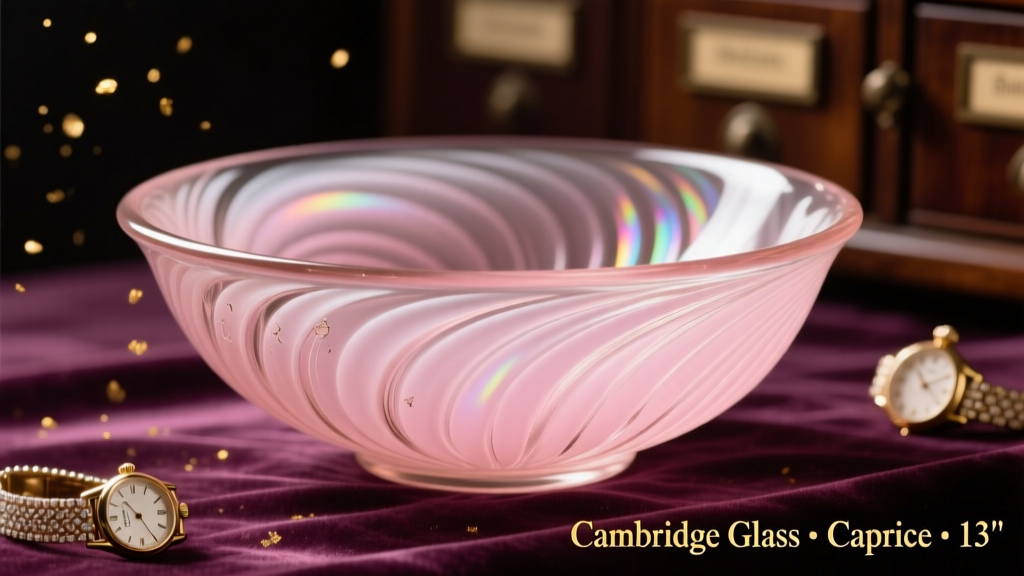
Cambridge Glass Caprice Bowl: A Collector’s Guide to the Pink 13-Inch Salad Cupped Design
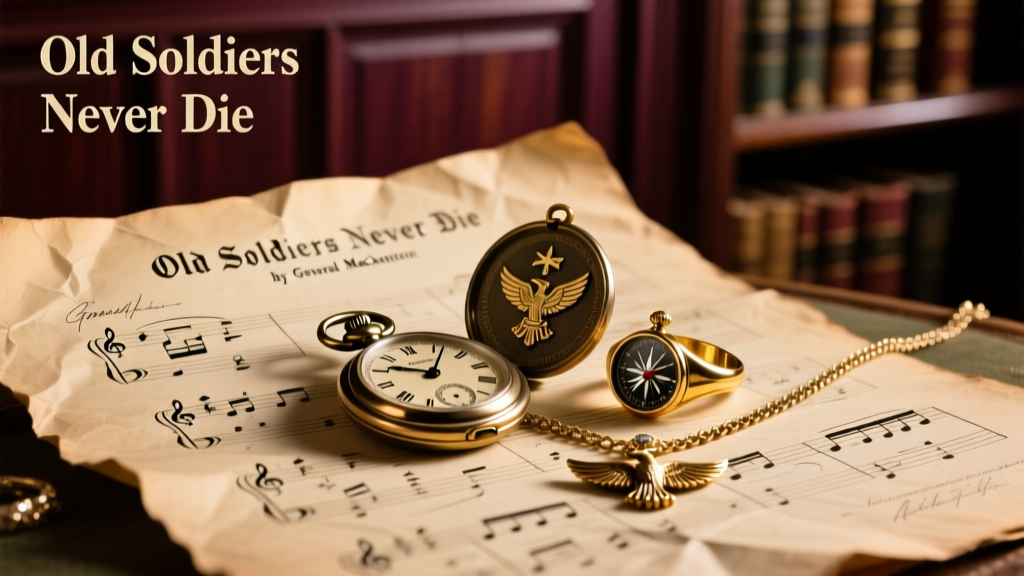
Sheet Music of 'Old Soldiers Never Die': A Historical and Collectible Examination of the General MacArthur Anthem
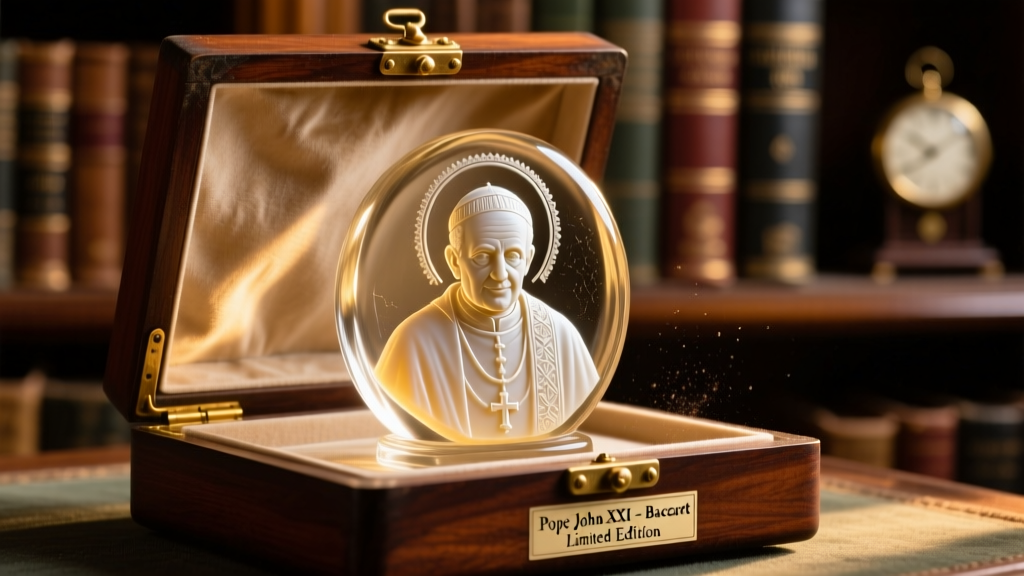
Baccarat Paperweight Sulphide Pope John XXIII Box: Provenance, Craftsmanship, and Collectible Significance
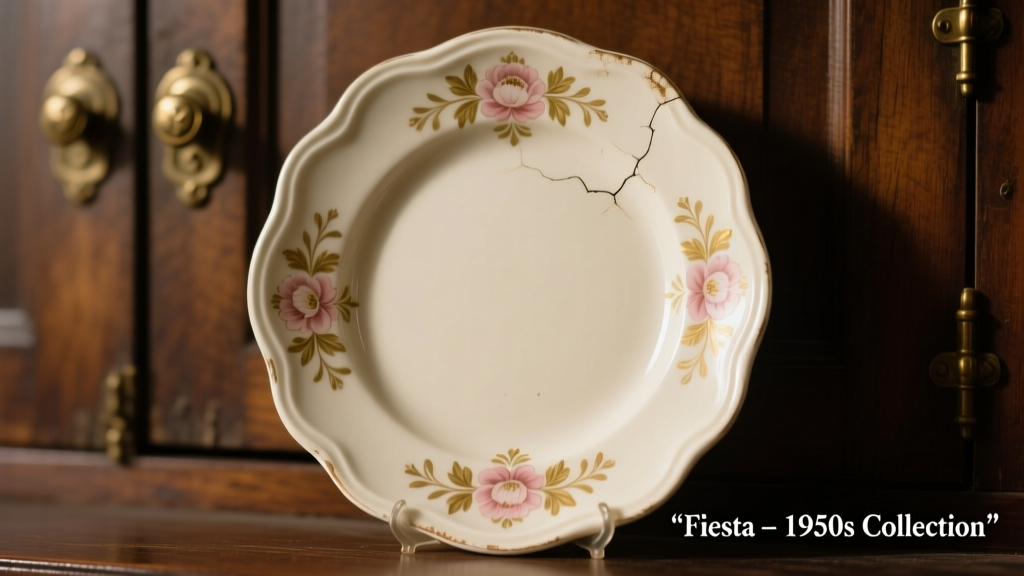
Fiesta Old Ivory Chop Plate 13 In: A Collector’s Guide to the Iconic Homer Laughlin Dinnerware Piece
The C. W. Wessman Patented Caliper of 1884: A Landmark in Precision Machinist Toolmaking
Haviland Bowl, Salad, Marseille Pattern — A Collector’s Guide to the 9¼-Inch Porcelain Masterpiece
Shreve & Co. 14K Gold Turquoise Bangle: A Gilded Art Deco Statement with Provenance and Craftsmanship