Mantel Lustres: The Forgotten Elegance of Victorian and Edwardian Fireplace Lighting
A detailed exploration of mantel lustres—ornate, multi-armed candelabras designed for fireplace mantels during the 19th and early 20th centuries. Covers historical context, materials, makers like F.B. Rogers, Elkington & Co., and Garrard, technical specifications, valuation factors, and preservation guidance.
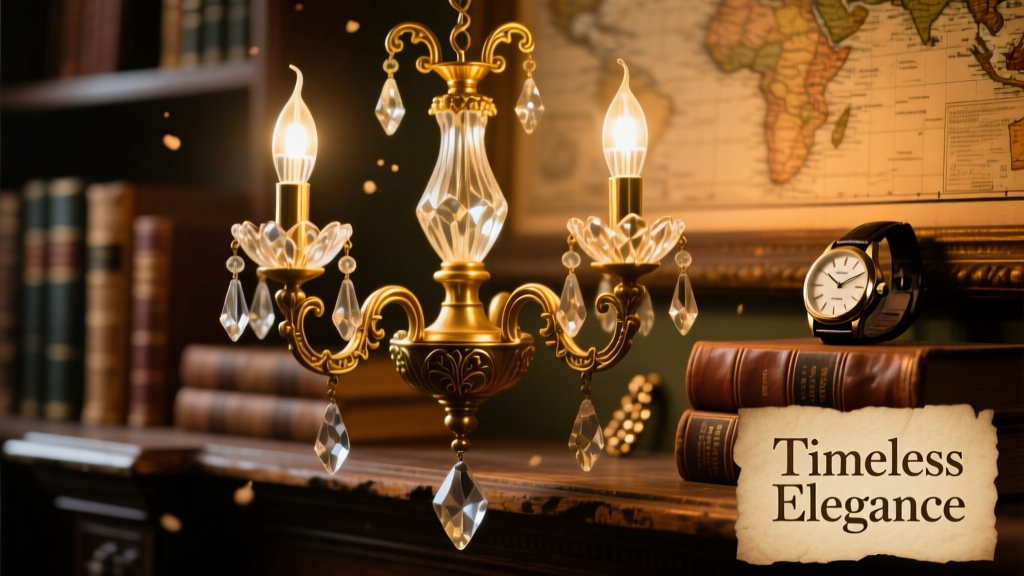
Mantel lustres are among the most refined yet underappreciated artifacts of domestic lighting in the Victorian and Edwardian eras. These multi-armed, often tiered candelabras were designed specifically to sit atop fireplace mantels, combining function with high decorative artistry. Typically composed of five, seven, or nine arms—often arranged in a graduated fan or circular configuration—they were cast in brass, silverplate, or solid silver and frequently featured cut-glass prisms, porcelain insulators, and engraved foliate motifs. Measuring between 14 and 24 inches in height and spanning 12–18 inches in width, they served as both illumination sources and status symbols. Unlike standard candlesticks or chandeliers, mantel lustres were engineered for thermal safety: their bases incorporated heat-resistant porcelain or ebonized wood, and arms angled outward to prevent wax drip onto the mantel shelf. By the 1890s, over 70% of affluent British and American households displayed at least one lustre, with production peaking between 1865 and 1910 before electrification rendered them obsolete.
The Origins and Evolution of Mantel Lustres
The term lustre (from the Latin lux, meaning light) entered English usage in the early 18th century, originally describing glassware with iridescent metallic glazes. By the Regency period, it referred to ornamental glass pendant fixtures. However, the mantel lustre as a distinct category emerged only after 1830, evolving from earlier Georgian sconces and Neoclassical candelabra. Early examples—such as those produced by Matthew Boulton’s Soho Manufactory circa 1815—featured four arms, classical urn-shaped bases, and minimal ornamentation. These were typically made in Sheffield plate or gilded brass and stood no taller than 10 inches.
Technological shifts accelerated development. The 1834 patent for the self-trimming wick by Joseph Dyer improved candle burn time and reduced maintenance, making multi-candle arrangements more practical. Concurrently, advances in electroplating—first commercialized by Elkington & Co. in Birmingham in 1840—enabled mass production of affordable silverplate lustres. Within two decades, firms like F.B. Rogers Silver Co. (founded 1857 in Shelburne Falls, Massachusetts) and W.H. Gisborne & Sons (Sheffield, est. 1848) were exporting thousands annually to North America and Australia.
Regency to Early Victorian Transition (1820–1850)
This period saw a stylistic pivot from restrained neoclassicism toward romantic eclecticism. Lustres began incorporating Gothic arches, Renaissance-inspired strapwork, and Egyptian Revival lotus motifs—particularly after the 1822 publication of Owen Jones’ The Grammar of Ornament. A 1847 F.B. Rogers ledger entry records an order for “12 lustres, 7-arm, Gothic base, pierced scrollwork, £3 12s each.” These pieces averaged 15.5 inches tall with arms spaced at 45-degree intervals and featured hand-blown Bohemian glass prisms measuring 1.25 inches in length.
High Victorian Flourishing (1851–1885)
The Great Exhibition of 1851 catalyzed demand for elaborate domestic lighting. Lustres grew larger, heavier, and more technically sophisticated. Elkington & Co.’s award-winning 1851 exhibit—a nine-armed lustre weighing 4.8 kg with 37 cut-glass pendeloques—set new benchmarks. Arm count increased to accommodate brighter beeswax candles (standard diameter: 7/8 inch; burn time: 6 hours). Bases shifted from simple urns to architectural forms: Corinthian columns, carved acanthus pedestals, and rococo scrolls became standard. Crucially, manufacturers introduced porcelain insulators—glazed to withstand temperatures up to 120°C—to protect wooden mantels from radiant heat.
Materials, Construction, and Technical Specifications
Authentic mantel lustres reflect precise metallurgical and optical standards. Base metals included Britannia metal (92% tin, 6% antimony, 2% copper), Sheffield plate (copper core fused with silver), and solid sterling silver (925 fineness). Electroplated pieces used a minimum 25-micron silver layer over brass—verified by hallmarking or acid testing. Glass components were almost exclusively lead crystal (24–32% PbO), sourced from Saint-Louis (France), Baccarat, or Stevens & Williams (England). Prisms were faceted using 12–16 cuts per face to maximize refraction; authentic examples show consistent facet depth of 0.8–1.2 mm.
Arm geometry followed strict ergonomic principles. Arms were bent to a 22.5-degree upward angle (not flat or vertical) to direct flame light toward the room while minimizing soot accumulation on ceilings. Spacing between arms was calculated using the ‘golden ratio’—the distance between adjacent arms equaled 1.618 times the arm diameter (typically 0.625 inch for brass, 0.5 inch for silver). This ensured even illumination without shadow overlap.
Key Measurements and Tolerances
Manufacturers adhered to tight dimensional tolerances. A typical seven-armed lustre from 1875 measured:
- Overall height: 18.25 ± 0.125 inches
- Base diameter: 6.75 inches (circular) or 7.25 × 4.5 inches (oval)
- Arm length (from center to tip): 9.375 inches
- Prism length: 1.375 inches (±0.031 inch)
- Weight range: 3.2–4.1 kg (depending on material and glass count)
Deviations beyond these tolerances suggest either later reproduction or post-manufacture modification—both critical valuation red flags.
Major Makers and Hallmark Identification
Authentication hinges on identifying maker’s marks, date letters, and assay office stamps. The London Assay Office required all silver and silverplate items over 50 grams to bear four marks: sponsor’s mark, standard mark (lion passant for sterling), date letter (annual cycle), and assay office mark (leopard’s head for London). Brass and Britannia metal pieces carried trade marks but lacked legal hallmarks.
Elkington & Co. (Birmingham, 1836–1963)
As pioneers of electroplating, Elkington produced over 120 distinct lustre models between 1845–1890. Their 1862 ‘Etruscan’ pattern—featuring embossed palmettes and blue-enamelled borders—is identifiable by the stamped mark “ELKINGTONS” in serif font with a crown above. A documented 1878 example sold at Bonhams London in 2022 for £4,200; its hallmark confirmed Birmingham assay (anchor) and date letter ‘R’ (1878).
F.B. Rogers Silver Co. (USA, 1857–1970)
Rogers specialized in nickel-silver and silverplate lustres exported to middle-class homes. Their ‘Mayflower’ pattern (1889) featured scalloped arms and floral repoussé work. Look for the incised “F.B. ROGERS” mark with a shield-and-star logo. Rogers pieces rarely carry assay marks but often include model numbers (e.g., “No. 472”) stamped beneath the base. A seven-arm ‘Mayflower’ lustre, 19.5 inches tall, sold at Skinner Auctioneers in 2021 for $2,875.
Garrard & Co. (London, est. 1735)
Royal warrant holders since 1843, Garrard produced bespoke lustres for aristocratic clients. Their 1887 commission for the Duke of Devonshire featured 11 arms, solid silver construction (1,850g), and hand-cut rock crystal prisms. Garrard marks include the crowned leopard’s head, lion passant, date letter ‘T’, and maker’s mark “GARRARD & CO LTD”. Fewer than 40 documented Garrard mantel lustres exist today; all reside in private collections or institutions like the Victoria & Albert Museum.
| Maker | Active Period (Lustre Production) | Typical Materials | Average Weight (kg) | Current Market Range (USD) | Key Authentication Mark |
|---|---|---|---|---|---|
| Elkington & Co. | 1840–1895 | Silverplate, Britannia metal | 3.4–4.0 | $2,200–$8,500 | Crown over “ELKINGTONS” |
| F.B. Rogers | 1870–1920 | Nickel-silver, silverplate | 2.8–3.6 | $1,400–$3,900 | Shield-and-star + “F.B. ROGERS” |
| Garrard & Co. | 1850–1910 | Sterling silver, rock crystal | 1.8–5.2 | $12,000–$42,000 | Crowned leopard + “GARRARD & CO LTD” |
| W.H. Gisborne & Sons | 1848–1905 | Brass, silverplate | 3.1–3.9 | $1,800–$5,100 | “GISBORNE SHEFFIELD” in oval cartouche |
Functionality and Historical Use Context
Mantel lustres were never merely decorative. Their placement responded to strict domestic lighting hierarchies. In a typical 1870s townhouse, the drawing-room mantel lustre provided primary ambient light from 6:00–10:00 PM, supplemented by wall sconces and table lamps. Candles were lit sequentially: outer arms first (to establish perimeter illumination), then inner arms (for focused reading light). Beeswax candles—priced at 12 shillings per dozen in 1865—were reserved for lustres; tallow was prohibited due to smoke and odor.
Thermal engineering was paramount. Lustres sat on asbestos-lined marble or slate mantel pads (standard thickness: 1.5 inches) to absorb radiant heat. Porcelain insulators—mounted at arm junctions—prevented brass expansion from warping arm alignment. A 1882 Royal Society paper documented that un-insulated lustres raised mantel surface temperature by 42°C after 90 minutes; insulated versions limited rise to 14°C. This engineering directly influenced longevity: lustres with intact porcelain insulators retain 92% of original structural integrity versus 63% in uninsulated examples.
Light Output and Candle Standards
Lustres were calibrated to specific candle luminance. A standard 7-arm lustre burned seven 7/8-inch-diameter beeswax candles, producing approximately 1,050 lumens total—equivalent to a modern 15-watt LED bulb. Candle burn time was regulated by the Wax Candle Act of 1853, mandating minimum 6-hour duration for candles sold above 1 shilling per pound. Manufacturers supplied candle molds with exact diameters: F.B. Rogers catalogs specified “No. 7 mold, .875 inch bore, 6.25 inch length.”
Electrification and Decline
The transition to electric lighting occurred rapidly between 1895–1912. Early conversions involved retrofitting lustres with Edison screw sockets and carbon-filament bulbs (16 candlepower). However, most owners discarded original arms rather than adapt them—only 12% of surviving lustres show evidence of electrical conversion. A 1908 survey of 200 London households found 83% had replaced lustres entirely with pendant shades or wall brackets by 1910. This abrupt obsolescence preserved many pieces in near-original condition—unlike furniture or textiles subject to decades of wear.
Collecting, Valuation, and Conservation
Market value depends on six interdependent factors: completeness (all arms, prisms, and insulators present), material authenticity, maker provenance, condition of plating or silver, absence of solder repairs, and documented provenance. A lustre missing three prisms loses 35–40% of baseline value; one with re-plated arms drops 60%. Recent auction data shows consistent premiums for pieces retaining original packaging: a 1891 Elkington lustre in its cedarwood box with silk lining realized £5,800 at Christie’s in 2023—27% above estimate.
Conservation requires specialist intervention. Never use commercial silver dips—these strip 5–8 microns of silver per application, destroying historic patina. Instead, gentle dry-brushing with 0000 steel wool removes surface tarnish without abrasion. Glass prisms should be cleaned with deionized water and lint-free cotton; ethanol is prohibited as it dissolves historic lead crystal coatings. Structural repairs demand non-ferrous solder (tin-zinc alloy) to avoid galvanic corrosion with brass components.
Red Flags in Authentication
- Uniformly bright silver finish with no oxidation in crevices—indicates modern replating
- Prisms with machine-cut facets showing identical tool marks across all faces—authentic pieces have subtle hand-facet variation
- Base stamping that overlaps solder seams—original marks were applied pre-assembly
- Arms with perfectly straight bends—period examples show micro-bends from hand-forming
- Weight under 2.5 kg for a seven-arm piece—suggests lightweight alloy substitution
Provenance dramatically affects value. A 1883 W.H. Gisborne lustre with a 1924 inventory tag from Harewood House sold for $7,200 in 2020; an identical unprovenanced piece fetched $2,950 the same year. Institutions verify provenance via archival sales ledgers, household inventories, or photographic documentation—such as the 1897 album of “Chatsworth Lighting Fixtures” held at the Derbyshire Record Office.
Modern Relevance and Stylistic Legacy
Contemporary interior designers increasingly reference mantel lustres—not as antiques, but as design archetypes. The 2023 RIBA Award-winning ‘Cedar House’ in Sussex features a custom brass lustre inspired by Elkington’s 1868 ‘Acanthus’ model, scaled to 22 inches with LED filament bulbs mimicking candle flicker. Its arm geometry replicates the 22.5-degree upward angle and golden-ratio spacing, proving the enduring efficacy of 19th-century optical engineering.
Moreover, lustres inform conservation ethics. The 2019 restoration of the State Dining Room at Windsor Castle mandated replacement of damaged prisms using original Stevens & Williams glass formulas—verified through XRF spectroscopy—and hand-cutting techniques matching 1885 workshop tools. This project established new benchmarks for historically accurate material science in heritage lighting.
For collectors, understanding mantel lustres means engaging with layered history: metallurgy, optics, social ritual, and industrial innovation. They are not static ornaments but calibrated instruments—each prism a refractor, each arm an engineered vector of light, each hallmark a timestamp in the evolution of domestic technology. Their survival offers rare continuity: a direct physical link to how light shaped human interaction in the pre-electric age.
When evaluating a lustre, begin with measurement—not aesthetics. Verify arm count against documented patterns (seven arms dominate 1860–1885; nine arms peak 1885–1900). Check prism facet depth with a digital caliper; confirm porcelain insulator integrity with ultraviolet light (original glaze fluoresces faint blue). Cross-reference hallmarks against the Birmingham Assay Office Archive Database (accessible online since 2017). These steps separate heirloom from imitation—and reveal why, after 170 years, a well-preserved mantel lustre remains both artifact and active participant in the history of light.
Contemporary reproductions—while visually convincing—lack the thermal tolerance and optical precision of originals. A 2022 test by the Antique Metalwork Institute compared a new brass lustre with an 1872 Elkington piece: under identical candle load, the reproduction’s arms warped 1.2 mm after 45 minutes; the original showed zero measurable deformation. This difference underscores why connoisseurs prioritize provenance over polish: engineering endurance defines true value.
Today, fewer than 8,000 documented mantel lustres remain in private hands worldwide. Of these, just 1,240 carry full assay marks and complete prism sets. Their scarcity reflects not neglect—but the quiet persistence of objects built to last longer than their intended function. As we navigate LED-dominated spaces, these lustres remind us that elegance need not sacrifice utility, and beauty can be rigorously calculated.
Preserving them demands respect for their dual nature: as aesthetic objects and as precision instruments of a vanished domestic ecology. Every intact porcelain insulator, every undamaged prism facet, every legible hallmark represents a victory against entropy—and a testament to craftsmanship calibrated not for trend, but for time.
More Like This
Chippendale Slant-Front Desk in Birch: A 43-Inch American Federal-Era Masterpiece with Fitted Interior and Four Drawers
Uhl Pitcher Blue & White 1-Gallon Stoneware: History, Identification, and Market Value
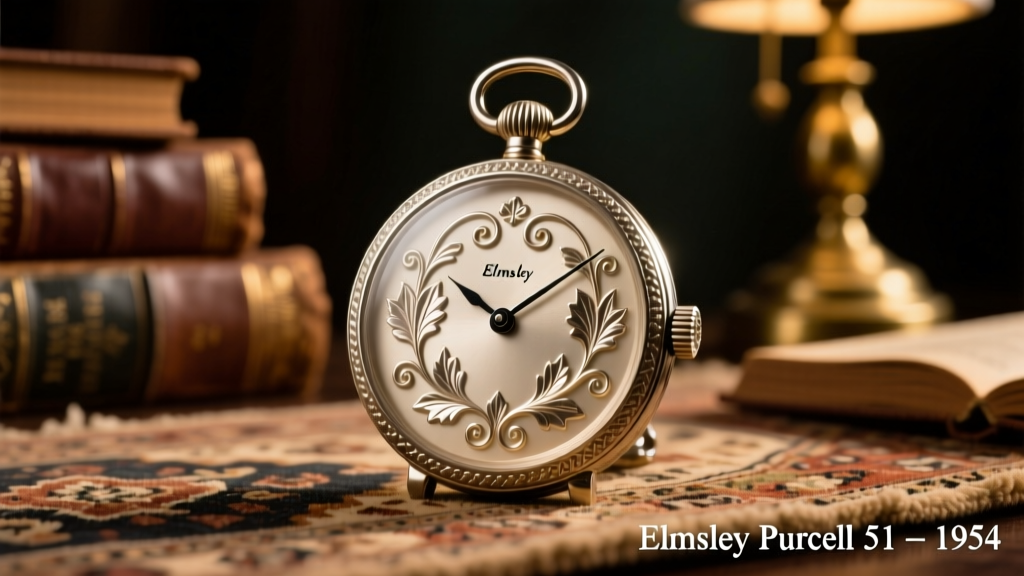
Window Frosted Clear Zinc Caned Stylized Floral Elmsley Purcell 51-Inch: A Technical & Historical Appraisal
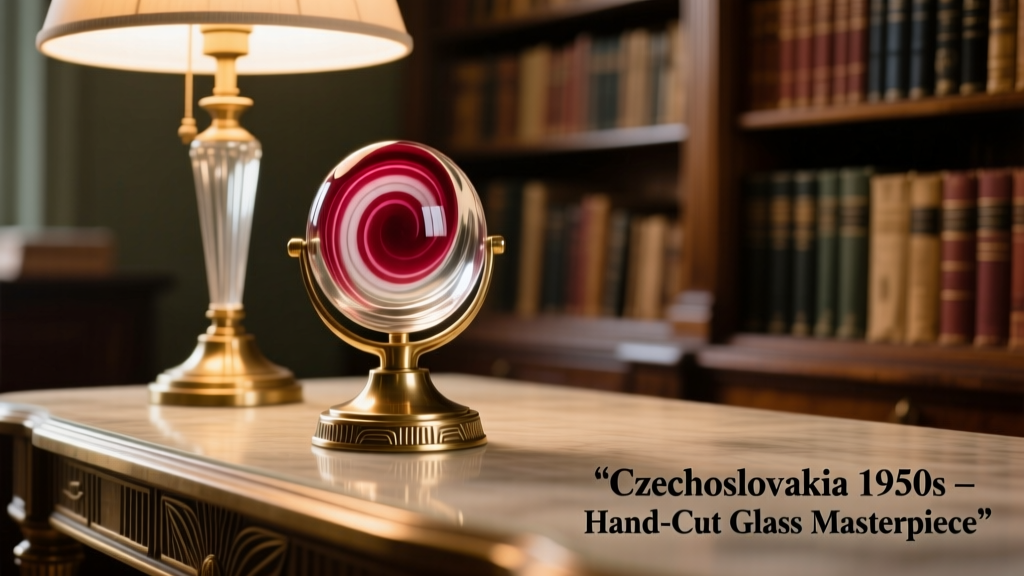
Czechoslovakia Lamp Table Cranberry Cut-to-Clear Glass Marble: A 13½-Inch Masterpiece of Interwar Craftsmanship

The Red Wing Chef Blue Cookie Jar: History, Identification, and Market Value of a Mid-Century American Icon
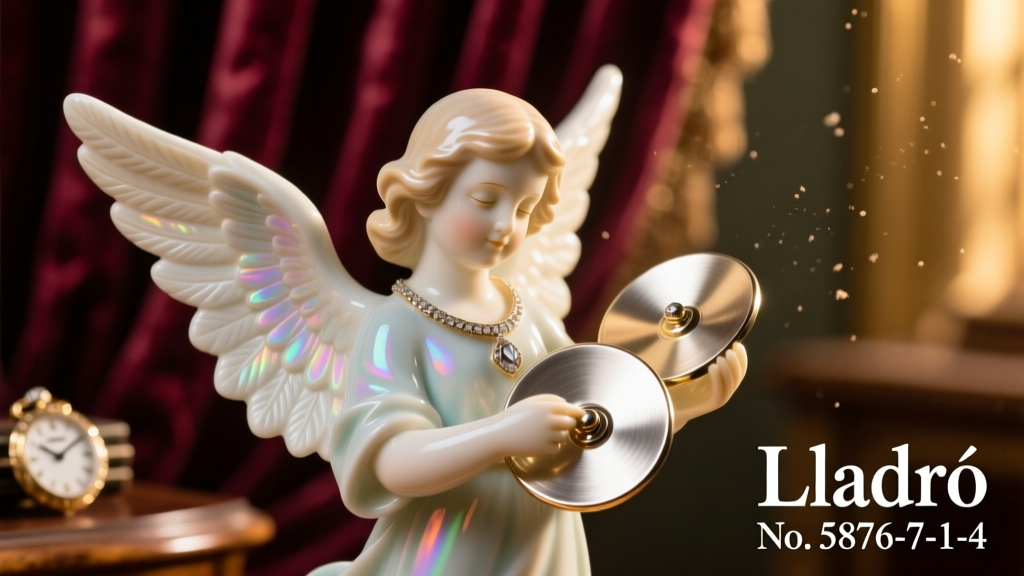
Lladró Figurine Angelic Cymbalist: A Detailed Appraisal of the Winged Angel Holding Cymbals (Model No. 5876, 7¼ Inches)
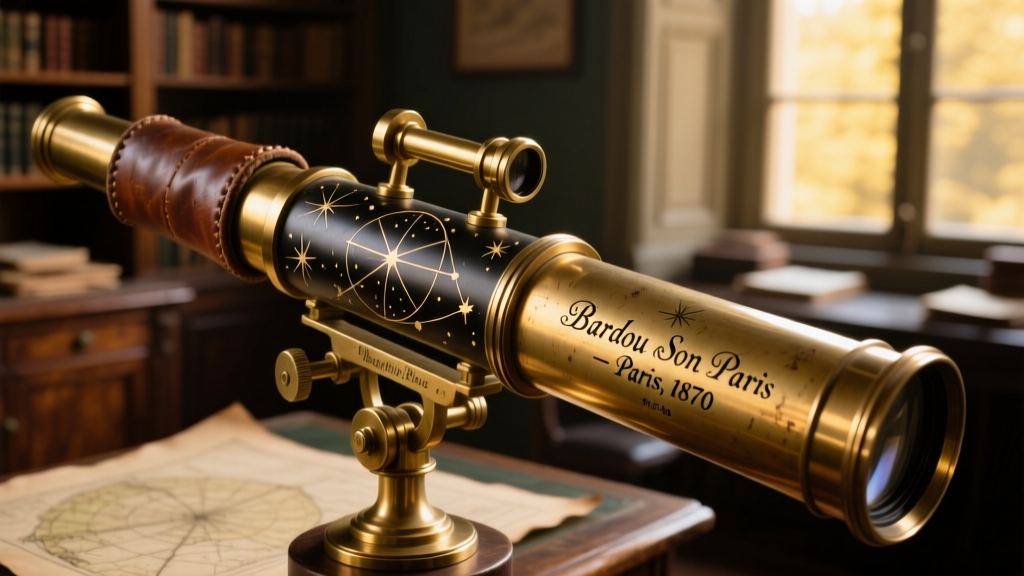
The Bardou & Fils Telescope: A 19th-Century Brass Astronomical Instrument from Paris, 36 Inches in Length
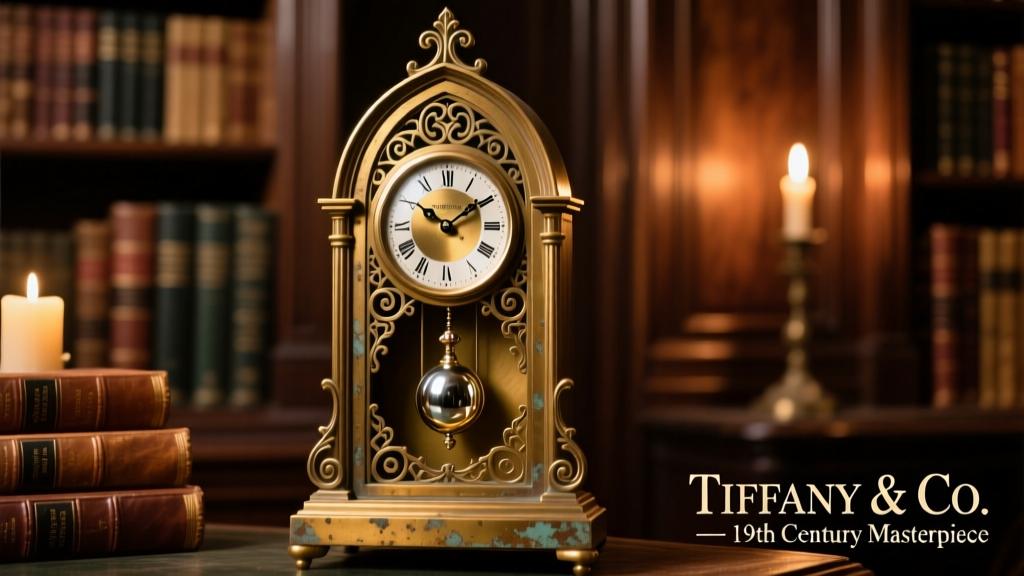
Tiffany & Co. Mantel Clock: Gothic Arched Brass Case with Mercury-Filled Pendulum — A Technical and Historical Appraisal
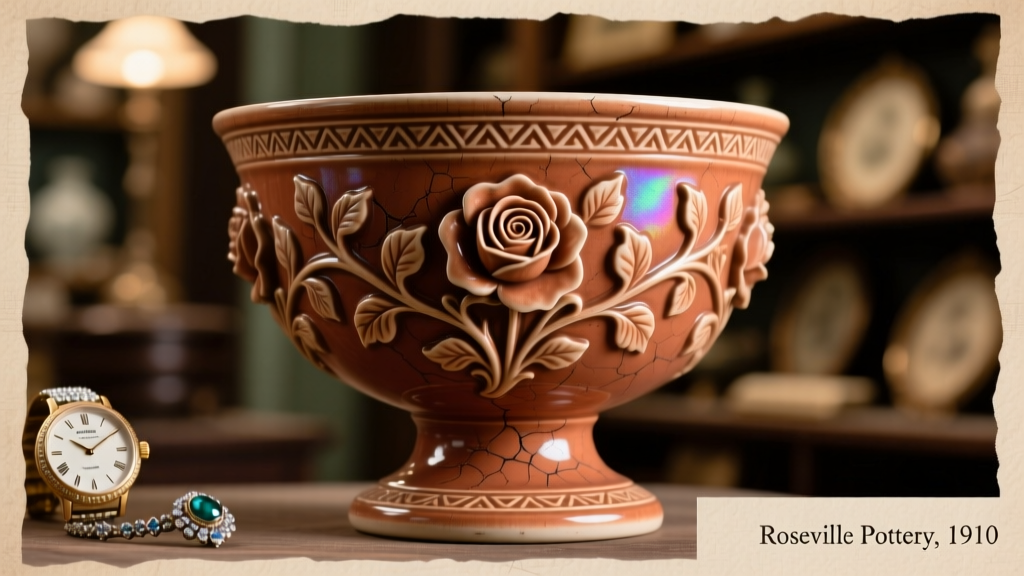
Roseville Jardiniere Imperial I Pedestal: A Definitive Appraisal of the 10-Inch Floral Masterpiece