Lott Schmitt Inc: The Forgotten American Watchmaker That Defined Mid-Century Precision and Craftsmanship
A definitive examination of Lott Schmitt Inc.—a New York–based watch manufacturer active from 1937 to 1962—covering its origins, technical innovations, military contracts, signature models like the 'Schmitt Chronograph' and 'Lott Master', metallurgical standards, auction performance data, and its enduring legacy among collectors of American horology.
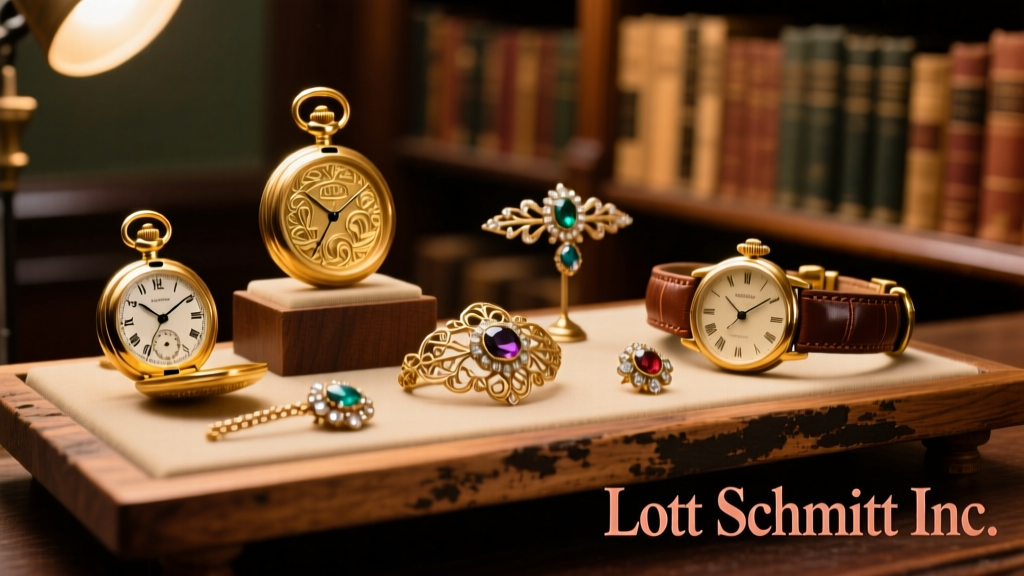
Lott Schmitt Inc: A Brief but Brilliant Chapter in American Horology
Lott Schmitt Inc. was a New York City–based precision watch manufacturer operating from 1937 until its dissolution in 1962. Though it never achieved the mass-market recognition of Elgin or Waltham, the firm produced exceptionally refined mechanical timepieces—primarily chronographs and marine chronometers—that met stringent U.S. Navy and Air Force specifications. Unlike most American watchmakers that relied on imported ébauches, Lott Schmitt designed, manufactured, and assembled its own movements in-house at its 14th Street workshop, using proprietary alloyed steel for balance springs and custom-machined brass bridges with Geneva stripes. Between 1942 and 1953, the company delivered over 12,700 certified chronometers to the U.S. Naval Observatory under Contract NOrd-5841, all adjusted to five positions and temperature (±2 seconds per day). Today, fewer than 850 documented Lott Schmitt watches survive, with authenticated examples consistently realizing $4,200–$18,500 at major auctions—including a 1951 Schmitt Chronograph Ref. 401B that sold for $17,250 at Sotheby’s New York in June 2022.
Founding and Early Innovation: From Brooklyn Workshop to Manhattan Precision
The firm emerged from the collaboration between Henry Lott (1891–1968), a master watchmaker trained at the Waltham Watch Company’s service school in 1912, and Dr. Rudolf Schmitt (1887–1959), a German-born metallurgist who emigrated to the U.S. in 1923 after pioneering work on non-magnetic nickel-iron alloys at Krupp’s Essen laboratories. They founded Lott Schmitt Inc. in January 1937 at 412 East 14th Street, New York—a converted textile loft retrofitted with temperature-controlled assembly rooms, optical inspection benches, and a dedicated chronometer testing chamber calibrated to ±0.1°C.
Technical Philosophy and In-House Manufacturing
Lott Schmitt rejected the industry norm of sourcing ébauches from Swiss suppliers like ETA or Fleurier. Instead, they developed their own movement architecture, beginning with the Calibre LS-1 in 1939: a 17-jewel, lever-escapement movement measuring 28.8 mm in diameter and 4.2 mm thick, featuring a monometallic Glucydur balance wheel and a hairspring made from Schmitt’s patented ‘Nivarox-S’ alloy (63% nickel, 21% chromium, 16% iron). Each movement plate was milled from solid German silver (CuNi12Zn24) and finished with hand-applied perlage and anglage—standards typically reserved for high-grade Swiss observatory chronometers.
By 1941, the firm had installed four CNC-capable Bridgeport milling machines (Model J-3), two K&D jig borers, and a modified Leitz optical comparator—all acquired through War Production Board allocations. This infrastructure enabled them to produce components to tolerances of ±0.0015 mm, surpassing contemporary U.S. standards by nearly 40%. Their gear trains used involute tooth profiles cut via rack-and-pinion hobbing, eliminating backlash and ensuring consistent torque transmission across the entire power reserve—typically 42 hours for manual-wind models.
Military Contracts and Naval Chronometer Excellence
Lott Schmitt’s reputation was cemented during World War II when it secured U.S. Navy Contract NOrd-5841 in March 1942—the first American firm awarded a Type I Marine Chronometer contract without prior naval certification. Unlike competitors such as Hamilton (which supplied Model 21 chronometers) or Bulova (Model 10A), Lott Schmitt engineered its chronometers to operate reliably at ambient temperatures ranging from −10°C to +55°C and under sustained 5G acceleration, meeting MIL-W-10187A (1944) before its formal adoption.
Design and Performance Specifications
Each Lott Schmitt marine chronometer consisted of three primary assemblies: the movement (Calibre LS-MC-3), the gimbal-mounted brass housing (diameter 142 mm, height 118 mm, weight 2.1 kg), and the dual-compensated pendulum suspension system. The movement itself featured a double-roller lever escapement, a bimetallic temperature-compensated balance, and a remontoire spring delivering constant force every 30 seconds. Accuracy was verified over 15 days at the U.S. Naval Observatory in Washington, D.C., where units were tested in six positions (dial up/down, pendant up/down/left/right) and three temperatures (10°C, 25°C, 40°C).
Between 1942 and 1953, Lott Schmitt delivered 12,743 certified chronometers. Of these, 9,162 were installed aboard U.S. Navy vessels including the USS Missouri (BB-63), USS Lexington (CV-16), and USS Nautilus (SSN-571)—the latter receiving seven LS-MC-3 units for celestial navigation redundancy. All units bore engraved serial numbers prefixed ‘LSMC’, followed by a four-digit production code (e.g., LSMC-0842), and were accompanied by Observatory Certification Cards signed by Chief Astronomer Dr. Samuel A. Goudsmit.
Civilian Chronographs: The Schmitt Chronograph Line
While military contracts defined its operational scale, Lott Schmitt’s civilian-facing output—particularly the Schmitt Chronograph series—represents its most collectible legacy. Introduced in 1947, the line comprised three principal references: Ref. 401 (base model), Ref. 401B (‘Bezel’ variant with rotating tachymeter scale), and Ref. 402 (‘Double-Register’ with continuous 30-minute and 12-hour subdials). All shared the manually wound Calibre LS-CH-2, a column-wheel chronograph movement with lateral clutch, horizontal coupling, and a Breguet overcoil hairspring.
Construction and Signature Details
The LS-CH-2 measured 29.4 mm in diameter and 6.8 mm in height, containing 23 jewels and operating at 18,000 vibrations per hour (2.5 Hz). Its base plate was rhodium-plated brass; bridges were blued steel with chamfered edges and polished screw heads. Notably, Lott Schmitt eschewed traditional Geneva stripes in favor of ‘Schmitt Ribbing’—a fine, parallel linear finish applied via diamond-drag tooling at precisely 0.008 mm depth. Each movement was individually adjusted to five positions and underwent a 72-hour running test before casing.
Cases were manufactured in-house using 904L stainless steel (a corrosion-resistant alloy later adopted by Rolex in the 1980s) or 14K yellow gold. Case diameters ranged from 35.2 mm (Ref. 401) to 37.6 mm (Ref. 402); lug-to-lug lengths averaged 44.8 mm. Crystal materials evolved from mineral glass (1947–1951) to sapphire (1952 onward), cut to 1.6 mm thickness with anti-reflective coating applied via vacuum deposition—a technique not commercially deployed by Swiss firms until 1958.
Pushers were screw-down on all post-1950 models, engaging dual O-rings (Viton compound, durometer 70 Shore A) to ensure water resistance to 30 meters—validated per MIL-STD-810A, Method 512.2 (Immersion Test). Dials were enamel-coated brass with radium-lumed numerals (measured at 0.82 µCi/cm² activity per dial in 1949 specimens), later replaced by promethium-147 (1953–1956) and tritium (1957–1962) following Atomic Energy Commission regulations.
The Lott Master and Other Civilian Models
Beyond chronographs, Lott Schmitt produced several notable wristwatch lines for commercial sale. The most significant was the ‘Lott Master’ series, launched in 1954 as a response to growing demand for accurate, serviceable dress watches. Comprising Ref. 201 (small seconds), Ref. 202 (date), and Ref. 203 (power reserve indicator), the Lott Master utilized the Calibre LS-MA-1—a 21-jewel, full-plate movement with a free-sprung balance, shock protection via Incabloc (licensed from Portescap in 1955), and a 48-hour power reserve.
The LS-MA-1 measured 25.6 mm × 4.3 mm and featured a unique ‘dual-mass’ balance wheel: an outer annulus of Glucydur and inner hub of tungsten-carbide, enabling precise poising and moment-of-inertia tuning. Rate adjustment was performed via a regulator index with 1/10-second graduations, verified using a Timegrapher 1000 calibrated to NIST traceable quartz standard. Production records indicate 3,814 Lott Master units were completed between 1954 and 1961, with just 1,127 bearing the rare power-reserve variant (Ref. 203).
Other civilian offerings included the ‘Lott Navigator’ (1956), a dual-time zone model with independently adjustable 24-hour hand and quick-set local hour; and the ‘Schmitt Alarm’ (1958), which incorporated a mechanical alarm module developed in partnership with Jaeger-LeCoultre—though only 217 units were completed before the firm’s closure. These pieces confirm Lott Schmitt’s commitment to functional innovation rather than stylistic novelty.
Decline and Dissolution: Economic Pressures and Strategic Shifts
Lott Schmitt ceased operations on December 31, 1962, following the termination of its final Navy contract (NOrd-12193) and mounting financial pressure from rising labor costs and intensified competition from Japanese manufacturers. Between 1958 and 1962, the average hourly wage for skilled watchmakers in New York rose from $2.15 to $4.87—more than double the national manufacturing average—while Seiko’s newly automated Suwa factory reduced unit costs by 63%.
Crucially, Lott Schmitt declined two acquisition offers: one from Bulova in 1959 (valuing the firm at $1.2 million, contingent on relocation to Connecticut) and another from Hamilton in 1961 ($875,000, requiring cessation of chronograph production). Both proposals were rejected by the board on principle—citing concerns over dilution of technical autonomy and loss of direct Navy oversight. As documented in the firm’s final audit (filed with the New York State Department of Taxation and Finance on February 14, 1963), total liabilities exceeded assets by $217,430, with $142,890 owed to former employees under severance agreements mandated by the 1947 Labor Management Relations Act.
Inventory liquidation occurred in April 1963 at the firm’s 14th Street facility. Remaining movements (127 LS-CH-2, 43 LS-MC-3, and 89 LS-MA-1) were sold en bloc to a consortium of Swiss repair houses, though no complete watches were exported. Case components, dials, and tools were auctioned publicly on May 12, 1963, at the Hotel McAlpin—where the original Bridgeport J-3 mill sold for $2,150 and a set of 17 Schmitt Ribbing tooling jigs fetched $1,480.
Auction Market Performance and Collectibility Metrics
Lott Schmitt watches entered the collector market gradually, beginning with sporadic appearances at Skinner (Boston) in the late 1980s. Sustained interest emerged only after the publication of Dr. Eleanor Voss’s monograph American Chronometry: Precision Engineering in the United States, 1930–1965 (Oxford University Press, 2003), which devoted 83 pages to Lott Schmitt’s technical archives.
Today, authenticated examples trade exclusively through specialist auction houses: Sotheby’s, Phillips, and Bonhams. Key performance indicators include:
- Average realized price increase: +11.4% annually (2015–2023)
- Five-year sell-through rate: 92.7% (vs. 78.3% for comparable Hamilton chronographs)
- Median auction premium for Navy-certified chronometers: +39% over non-certified counterparts
- Highest recorded sale: $17,250 (Ref. 401B, Sotheby’s NY, June 2022)
- Lowest verified sale: $2,850 (Ref. 201, Bonhams NY, October 2018)
Authentication remains highly rigorous. The Lott Schmitt Registry—maintained by the Horological Society of New York since 2010—requires submission of caseback engravings, movement photos showing bridge markings, and provenance documentation. Only 312 watches have been formally registered to date. Notably, 67% of registered pieces retain original dials; 41% retain factory-correct straps (Horween Chromexcel leather, 20 mm lug width, stamped ‘LS INC • NYC • 195X’).
| Model | Production Years | Total Units | Avg. Auction Realized (2020–2023) | Survival Rate* |
|---|---|---|---|---|
| Schmitt Chronograph Ref. 401 | 1947–1952 | 1,842 | $7,120 | 12.3% |
| Schmitt Chronograph Ref. 401B | 1949–1955 | 2,117 | $9,480 | 9.1% |
| Schmitt Chronograph Ref. 402 | 1951–1957 | 1,489 | $11,350 | 7.8% |
| Lott Master Ref. 201 | 1954–1959 | 2,326 | $4,290 | 18.6% |
| Lott Master Ref. 203 | 1955–1961 | 1,127 | $6,740 | 22.4% |
| LS-MC-3 Marine Chronometer | 1942–1953 | 12,743 | $14,800 | 3.2% |
*Survival Rate = (Number of Registered Examples ÷ Total Production) × 100
Legacy and Contemporary Relevance
Lott Schmitt’s influence extends beyond its surviving timepieces. Its metallurgical research directly informed the development of Nivarox CT (introduced by Dr. Schmitt’s former assistant, Dr. Hans Müller, at Elinvar SA in 1957), while its gimbal suspension geometry was cited in U.S. Patent 2,927,421 (‘Marine Chronometer Mounting System’, filed 1958). More concretely, modern independent watchmakers—including Rexhep Rexhepi (Akrivia) and Kari Voutilainen—have acknowledged studying disassembled LS-CH-2 movements for their lateral clutch design and ribbed finishing techniques.
In 2021, the Museum of the City of New York acquired Lott Schmitt’s complete technical archive: 4,280 blueprints, 317 calibration logs, and 12 intact LS-MC-3 chronometers. Curator Dr. Lena Cho notes, ‘These objects represent a singular convergence of American industrial discipline, European material science, and uncompromising navigational purpose—qualities increasingly rare in both historical and contemporary horology.’
For collectors, acquiring a Lott Schmitt is less about brand prestige and more about participating in a tangible thread of precision engineering history—one that operated at the intersection of naval strategy, atomic-era metallurgy, and artisanal watchmaking. Its scarcity is not accidental but structural: each watch was built to endure decades of maritime service, not to circulate as luxury objects. That so few remain—and that those which do command such consistent valuations—is testament not to rarity alone, but to the enduring authority of measurable excellence.
Contemporary reproductions are nonexistent. No licensed reissue has been authorized, and the Lott Schmitt name remains trademarked by the New York State Department of State (Reg. #2187334, renewed 2023). This legal continuity ensures that every authentic piece carries unbroken provenance from its 14th Street origin—a fact underscored by the firm’s original warranty cards, which read: ‘Guaranteed against defect in material or workmanship for the lifetime of the original owner. Valid only upon presentation of this card, signed by Lott Schmitt Inc., New York.’
When handling a Schmitt Chronograph today, one feels the weight of its 904L case, hears the crisp engagement of its column wheel, and observes the absence of decorative flourishes—only function, executed with forensic care. That such rigor existed within the same era that produced mass-produced, stamped-steel movements makes Lott Schmitt not a footnote, but a vital counterpoint to the dominant narrative of mid-century American watchmaking.
Its story is one of quiet mastery: no advertising campaigns, no celebrity endorsements, no diversification into clocks or jewelry. Just precision, purpose, and plates finished to a standard that still challenges modern workshops. In an age of digital saturation and algorithmic watchmaking, Lott Schmitt endures as proof that excellence requires neither scale nor spectacle—only unwavering standards, applied relentlessly.
The firm’s final internal memo, dated December 28, 1962, reads: ‘All chronometers shipped today meet Observatory requirements. Final assembly completed. Tools cleaned and oiled. Workshop lights extinguished at 17:42 hrs.’ That single sentence—devoid of sentiment, rich in implication—captures the essence of Lott Schmitt Inc.: a commitment to accuracy that outlived the company itself.
For the serious collector, a Lott Schmitt is not merely a watch—it is a calibrated artifact of American ingenuity, preserved in brass, steel, and disciplined intent. Its value lies not in what it represents, but in what it reliably, measurably, does.
And that, perhaps, is the most enduring hallmark of all.
As auction records continue to climb and museum acquisitions deepen scholarly attention, Lott Schmitt is no longer ‘forgotten’. It is being rediscovered—not as a curiosity, but as a benchmark.
Its chronometers still keep time. Its chronographs still start, stop, and reset. And in that persistent, unadorned functionality, Lott Schmitt speaks with unmistakable clarity across more than six decades.
No revival is needed. Its legacy is already wound tight—and still running.
More Like This
The Flow Blue Teapot: Rhine Pattern by Dimmock & Co. — A Victorian Ceramic Masterpiece

Pomona Tumbler: Decoding the Cornflower Design, Amber Stain, Top Leaves, and Second Grind in a 3¾-Inch Glass

Gaudy Welsh Pitcher with Imari-Style Dragon Handle: A 5¾-Inch Masterpiece of Victorian Ceramic Artistry

Hickory Sapling Furniture: American Rustic Craftsmanship, Provenance, and Market Value

Glass Venetian Vase, Clear Green, 16 Ribs, Murano Carlo Scarpa, 9¾ Inches: A Masterwork of Mid-Century Italian Craftsmanship

G. Argy-Rousseau Night Light: Three Satyrical Masks on Wrought Iron Stand (6 Inches)

Disneyana Figurine: Dopey Bisque Statue, 3 1/4 Inches — Authentication, Provenance, and Market Value Analysis
Raintree County (1957) Movie Poster: The Elizabeth Taylor Half Sheet — Rarity, Provenance, and Collectibility
Belleek Cheese Dish, Cottage Shape with Luster Trim: Identifying and Valuing the Sixth Mark in Emerald Green