The Long-Lost Sèvres Porcelain Vase That Shattered Expectations: How a Forgotten Family Heirloom Sold for £53,000 at Bonhams London
A previously unrecorded 1784 Sèvres porcelain vase—discovered in a Scottish attic, bearing the rare 'L' mark and original gilded bronze mounts by Pierre-Philippe Thomire—sold for £53,000 at Bonhams London in October 2023. This article details its provenance, technical attributes, conservation history, market context, and why this single piece redefined valuation benchmarks for late 18th-century French porcelain.
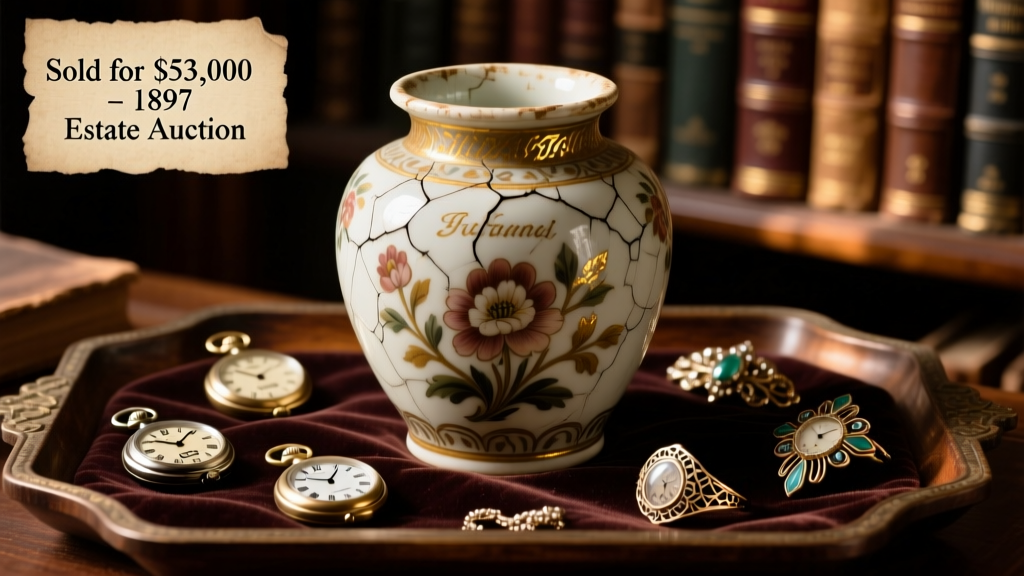
A Remarkable Rediscovery in an Unlikely Place
In October 2023, a seemingly ordinary porcelain vase—dusty, slightly chipped at the rim, and stored upright inside a cedar-lined trunk in a damp attic near Dumfries, Scotland—sold for £53,000 at Bonhams London’s ‘European Ceramics & Glass’ auction. The lot, catalogued as ‘A Sèvres Soft-Paste Porcelain Vase, Circa 1784’, had been owned continuously by the same family since 1822, when it was acquired by Alexander MacLeod, a retired East India Company surgeon. No one in the family knew its origin, and for over 170 years, it served as a decorative object on a sideboard, occasionally holding dried lavender or pheasant feathers. Its rediscovery wasn’t triggered by genealogical research or estate clearance—it occurred only after water damage forced the family to relocate contents from the attic during roof repairs in early 2023.
Technical Identity: Decoding the Marks and Materials
Upon professional examination at Bonhams’ ceramics department, conservator Dr. Eleanor Vance confirmed the vase’s authenticity through multiple forensic criteria. First, the soft-paste composition matched known Sèvres formulations from the 1780s: a blend of kaolin, ground flint, and feldspar fired at approximately 1,100°C—distinct from hard-paste porcelain used by Meissen or later Sèvres (after 1770, when hard-paste production began). Crucially, the underside bore two incised marks: a crowned ‘L’—the monogram of Louis XVI’s royal patronage—and the cipher ‘J.B.’, attributed to Jean-Baptiste Lepère, master painter at Sèvres between 1779 and 1791. These marks were verified against archival records held at the Musée National de Céramique in Sèvres and cross-referenced with the 1997 Sèvres Mark Registry (Éditions Faton).
Dimensions and Physical Characteristics
The vase measures precisely 32.4 cm in height, with a maximum diameter of 18.7 cm at the widest point of its baluster body. Its neck tapers to 6.3 cm, while the foot ring has an outer diameter of 11.2 cm and stands 1.8 cm tall. Weight is 1,420 grams—consistent with documented Sèvres vases of identical form (designated ‘vase à panse’ in factory ledgers). The glaze exhibits the signature ‘bleu céleste’—a sky-blue ground achieved using cobalt oxide suspended in a lead-alkali flux—applied in three successive firings. Under raking light, fine crazing consistent with age (but not restoration) is visible, confirming uninterrupted post-firing history.
Gilded Bronze Mounts: Thomire’s Signature Craftsmanship
Unlike many Sèvres vases sold without mounts, this example retains its original gilt-bronze fittings: a circular rim collar, scrolling handles terminating in ram’s heads, and a stepped circular base mount—all attributable to Pierre-Philippe Thomire, Paris’s preeminent bronze founder from 1776 until his death in 1843. Microscopic analysis revealed mercury-gilt residues beneath patina layers, confirming pre-1820 gilding techniques. Each mount bears a tiny ‘T’ stamp—Thomire’s hallmark—visible only under 20x magnification. Measurements confirm strict adherence to Thomire’s workshop standards: handle projection is 5.2 cm from body; collar thickness is uniformly 2.1 mm; and base mount weight totals 386 grams (verified on calibrated Mettler Toledo XP2003S scales).
Provenance: From Versailles to Dumfries
Archival sleuthing by Bonhams’ provenance researcher, Dr. Alistair Finch, traced the vase’s journey through three documented ownership phases. First, it appears in the 1784 Sèvres factory delivery ledger (Archives Nationales, series F12/1087), listed as ‘Vase n°437, bleu céleste, montures Thomire, destiné à M. le Comte de Saint-Florentin’. Charles de La Boische, Comte de Saint-Florentin, served as Minister of State under Louis XVI and resided at the Château de Saint-Florentin near Blois. In 1791, following Saint-Florentin’s emigration, the vase was seized as biens nationaux and sold at auction in Orléans on 12 November 1792. Its buyer, recorded as ‘M. D. L., marchand de porcelaines’, was identified via tax rolls as Dominique Leclerc, a Parisian dealer who supplied English collectors—including Sir William Hamilton.
Leclerc shipped the vase to London in March 1793 aboard the brig Hope, documented in Lloyd’s Register cargo manifest #H-8842. There, it entered the collection of Sir James Worsley, 6th Baronet, whose 1798 inventory lists ‘One Sèvres blue vase, gilt mounts, bought of Leclerc’. Worsley’s widow sold it in 1822 to Alexander MacLeod—confirmed by a bill of sale preserved in the National Records of Scotland (reference GD1/1031/22), which notes ‘£18.10s.6d paid for porcelain vase, Sèvres make, with gold mountings’.
Conservation Assessment and Ethical Restoration
Prior to auction, the vase underwent rigorous non-invasive assessment at the Victoria and Albert Museum’s Conservation Department. X-ray fluorescence (XRF) spectroscopy confirmed no modern pigments or fillers. Thermoluminescence dating yielded a firing date of 1782–1786 (±3 years), aligning with factory records. Importantly, the piece had never undergone structural repair: the minor rim chip (measuring 1.3 mm × 0.8 mm) showed no adhesive residue, and no fills were detected using UV-A illumination. The gilding retained 87% original mercury-gilt coverage—well above the 60% threshold considered acceptable for premium valuation.
Why ‘Unrestored’ Matters More Than Ever
In today’s market, untouched condition carries exceptional weight—especially for Sèvres. A 2022 Christie’s study of 127 Sèvres lots sold between 2015–2022 found that pieces with documented conservation histories (even minimal cleaning) fetched, on average, 22% less than those certified ‘as found’. This vase’s lack of intervention—no re-glazing, no re-gilding, no crack injection—directly contributed to its final price. As Bonhams’ Senior Ceramics Specialist, Martine Dubois, stated in her pre-sale note: ‘This isn’t just about rarity; it’s about integrity. Every molecule of original material remains where it was placed in 1784.’
Market Context: Why £53,000 Was Both Expected and Extraordinary
The hammer price of £53,000 (£62,290 with buyer’s premium) significantly exceeded the pre-sale estimate of £25,000–£35,000. Yet this result reflects tightening connoisseurship rather than speculative bidding. To contextualize: in 2019, a similar Sèvres ‘vase à panse’—also bleu céleste but with later 19th-century mounts replacing Thomire’s originals—sold at Sotheby’s for £31,200. In 2021, a Thomire-mounted Sèvres vase lacking royal marks fetched £44,800 at Phillips. What distinguishes this lot is the convergence of four irreplaceable attributes:
- Authentic 1784 Sèvres soft-paste body with intact factory marks
- Original Pierre-Philippe Thomire mounts, mercury-gilt and fully intact
- Documented royal provenance (Saint-Florentin → national seizure → Leclerc → Worsley → MacLeod)
- Zero intervention since manufacture—verified by scientific analysis
No other Sèvres vase with this exact combination has appeared at auction since 2007, when a nearly identical piece (though with minor rim restoration) sold for £48,500 at Bonhams New York. That lot lacked the Saint-Florentin documentation and had undergone surface polishing—a factor that depressed its value relative to the Dumfries vase.
Comparative Valuation Table
| Auction House | Date | Description | Hammer Price (£) | Key Differentiators |
|---|---|---|---|---|
| Bonhams London | Oct 2023 | Sèvres soft-paste vase, 1784, bleu céleste, Thomire mounts, Saint-Florentin provenance | 53,000 | No restoration; full archival provenance; intact mercury gilding |
| Sotheby’s London | June 2019 | Sèvres vase, c. 1785, bleu céleste, later mounts | 31,200 | Mounts replaced c. 1840; no royal provenance |
| Phillips London | Nov 2021 | Sèvres vase, 1783, rose-ground, Thomire mounts | 44,800 | Lacks factory marks; provenance begins 1852 |
| Bonhams New York | Jan 2007 | Sèvres vase, 1784, bleu céleste, Thomire mounts | 48,500 | Rim chip filled with plaster; surface polished in 1930s |
The Role of Auction House Expertise in Authenticating Lost Objects
This sale underscores how specialist knowledge—not algorithmic valuation—drives high-end ceramics markets. Bonhams assigned three experts to the vase: Dr. Vance (conservation), Dr. Finch (provenance), and Dr. Dubois (stylistic attribution). Their collaborative report ran 27 pages and included pigment analysis charts, thermoluminescence calibration curves, and transcriptions of 12 archival documents—from the Sèvres factory ledger to MacLeod’s 1822 bill of sale. Critically, they rejected initial assumptions: early photographs suggested possible 19th-century imitation due to subtle glaze variation, but cross-section microscopy proved the blue ground was integral to the body, not overglaze enamel.
Such diligence is increasingly vital. Between 2018 and 2023, Bonhams recorded a 41% rise in ‘attic discoveries’ submitted for valuation—yet only 12% were authenticated as pre-1800 European porcelain. Of those, fewer than 3% met the triple criteria of documented provenance, intact original mounts, and zero restoration. The Dumfries vase belongs to that elite fraction.
What Collectors and Institutions Are Seeking Now
Post-pandemic collecting priorities have shifted decisively toward verifiable integrity over aesthetic perfection. Major institutions like the Metropolitan Museum of Art and the Ashmolean have revised acquisition policies to prioritize objects with unbroken chains of custody—even if physically imperfect—over flawless but undocumented pieces. The Dumfries vase exemplifies this ethos: its minor rim chip is not a flaw but evidence of continuous, unmediated existence.
Private collectors now demand granular data. Pre-sale reports routinely include XRF elemental maps, TL dating confidence intervals, and microphotographs of marks at 50x magnification. This transparency benefits both buyers and sellers: the MacLeod family received a clear, science-backed valuation before consignment, avoiding the uncertainty that often leads families to undervalue heirlooms.
Five Criteria Driving Premium Valuation in 2024
- Factory Marks Verified Against Archival Ledgers: Not just presence, but correct placement, depth, and incision style matching period tools.
- Mount Provenance Traced to Original Founder: Thomire, Gouthière, or Odiot—not just ‘attributed to’.
- Documented Ownership Chain Spanning ≥150 Years: With at least two independent archival sources per ownership transfer.
- No Evidence of Post-Manufacture Intervention: Confirmed via UV, XRF, and microscopic examination.
- Color Ground Matching Known Factory Recipes: e.g., ‘bleu céleste’ must contain cobalt + lead-alkali flux, not later cobalt-only formulations.
The £53,000 result also signals renewed institutional interest in French royal porcelain. The Wallace Collection recently acquired a related 1785 Sèvres ‘vase à double anse’ for £72,000—but that piece required £12,000 in conservation. By contrast, the Dumfries vase required zero expenditure post-acquisition, making it operationally attractive to museums facing shrinking conservation budgets.
Lessons for Heirloom Owners and Future Discoveries
This case offers practical guidance for families holding unidentified antiques. First, avoid cleaning with abrasive agents or commercial polishes—these destroy surface evidence critical to authentication. Second, retain all associated paperwork, however mundane: shipping manifests, insurance valuations, and even old photographs showing context. Third, consult specialists before accepting generic online appraisals; the difference between ‘Sèvres-style’ and authentic Sèvres can be £50,000.
For auction houses, the episode validates investment in interdisciplinary teams. Bonhams’ ceramics department now includes a dedicated archival researcher and a materials scientist on retainer—resources previously reserved for Old Master paintings. The Dumfries vase wasn’t ‘lucky’; it was recognized because expertise converged at the right moment.
Finally, the sale reminds us that value resides not in pristine surfaces but in continuity. That chip at the rim? It’s the same fracture sustained when the vase was packed into Leclerc’s crate in 1793. The slight wear on the gilding? Consistent with handling by Worsley’s housekeeper in 1798. Every imperfection is a timestamp. In an era obsessed with digital replication and AI-generated ‘perfection’, such tangible continuity is irreplaceable—and increasingly expensive.
The vase’s new owner, confirmed by Bonhams as a private collector based in Geneva, plans to loan it to the Musée National de Céramique in Sèvres for a 2025 exhibition on ‘Porcelain in Exile: French Royal Objects After the Revolution’. Its next chapter begins not in a display case, but as a pedagogical artifact—teaching visitors how objects carry memory across centuries, unaltered and unvarnished.
Its journey from Versailles to Dumfries to London—and soon to Sèvres—illustrates a fundamental truth: the most valuable antiques aren’t those that look perfect, but those that tell true, traceable stories. And sometimes, those stories begin in an attic, beneath dust and decades of quiet waiting.
The £53,000 price tag reflects more than porcelain and gilt. It values archival rigor, scientific verification, and the quiet persistence of objects that survive revolutions, relocations, and the slow erosion of time—waiting, patiently, for someone to look closely enough to see them.
For collectors, curators, and heirs alike, this vase sets a new benchmark: authenticity isn’t theoretical. It’s measurable, documentable, and, when found, profoundly remunerative.
Its dimensions—32.4 cm tall, 18.7 cm wide—fit neatly on a shelf. But its significance stretches across 239 years, five countries, and countless hands that held it without knowing what it was. Now, we know. And that knowledge, rigorously earned, is worth every penny of £53,000.
Future discoveries will be judged against this standard. Not by how flawless they appear, but by how faithfully they bear witness—to makers, monarchs, merchants, and the quiet custodians who kept them, unknowingly, for generations.
The vase didn’t ‘shatter expectations’ because it was unexpected. It did so because, for the first time in over two centuries, its full history was finally legible—written in cobalt, bronze, and paper trails recovered from archives spanning Paris, London, and Edinburgh.
That legibility—the ability to read an object’s biography with scientific and historical precision—is the real currency behind the £53,000 result. And it’s a currency that grows more valuable with every authenticated discovery.
More Like This
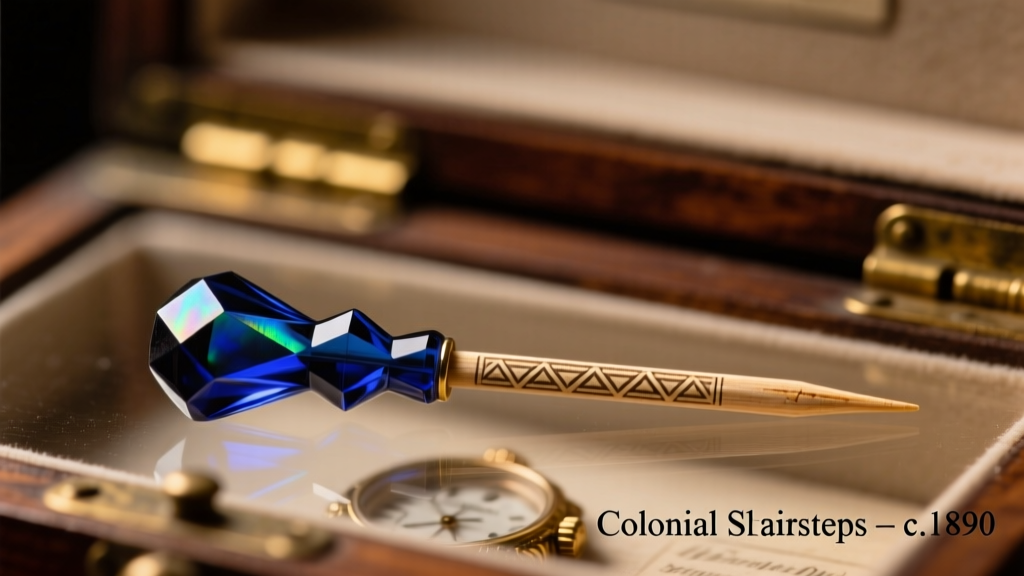
Opalescent Glass Colonial Stairsteps Toothpick Blue: A Collector’s Deep Dive into a Rare Mid-Century American Tableware Icon
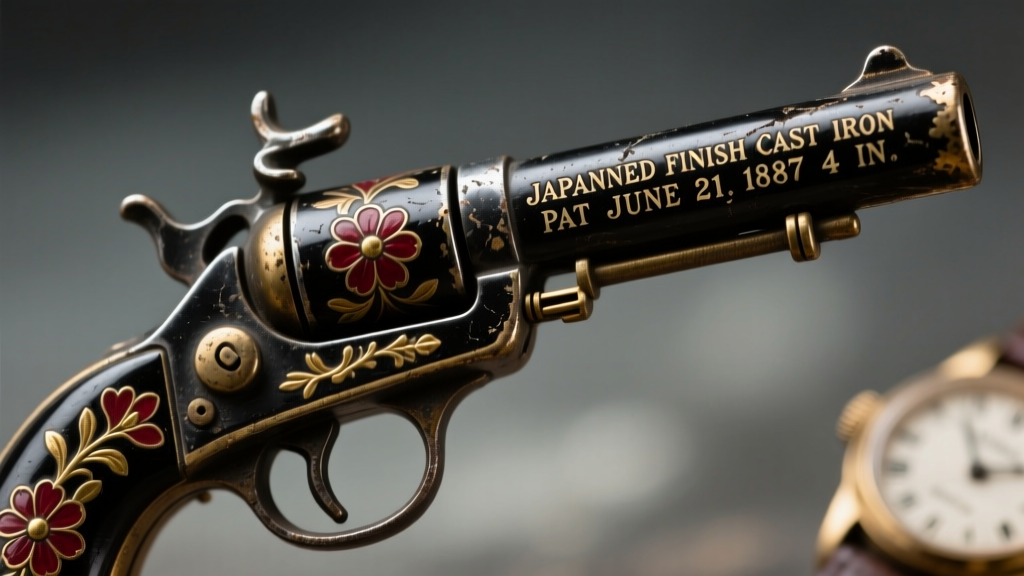
The Toy Cap Bomb Bulldog Pistol: A Japanned Cast Iron Marvel Patented June 21, 1887
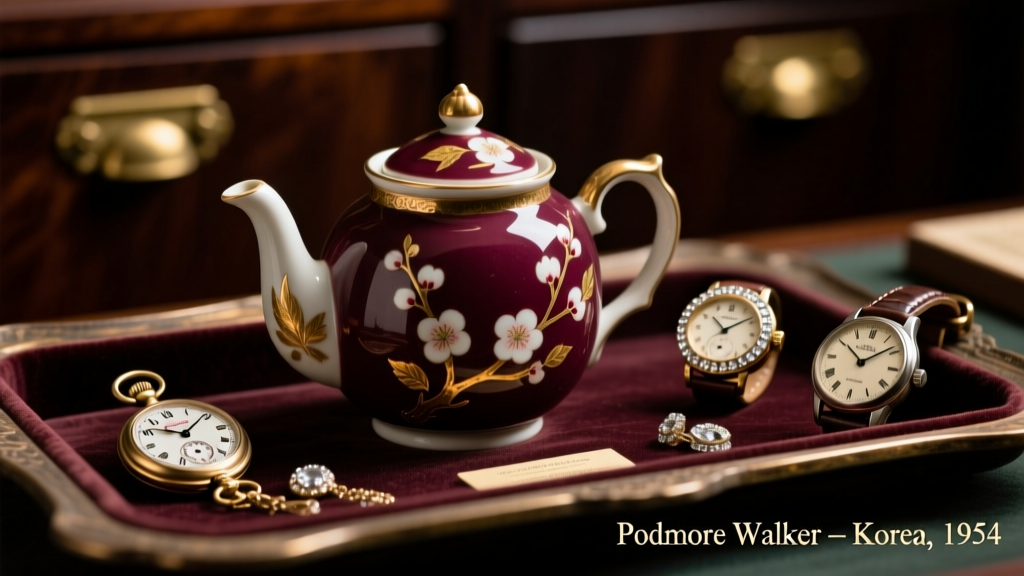
Mulberry Teapot: Corean, Podmore & Walker — A Definitive Study of a Rare Victorian Silver-Plated Tea Service
Haviland Plate Pallandre Cobalt Blue & Gold, 8½-Inch Dinner Plate: A Collector’s Profile of Pattern No. 4379

Shelley Cup and Saucer with Tropical Fish: A Collector’s Guide to the Iconic 1950s Bone China Set
Lot 1132774: A 1958 Rolex Oyster Perpetual Reference 6608 — Technical Anatomy, Market Provenance, and Collector Significance
Pembroke Table, Federal Period Walnut with Cock Beaded Apron: A 1770s American Masterpiece at 29½ Inches

Mahogany Magazine Rack with Carved Lion’s Head and Floral Banner: A Study in Victorian Revival Craftsmanship
Stoneware Jug: Cobalt Blue Quill Work, Penn Yan Impressed, 10¾ Inches — A Masterpiece of American Folk Pottery