The Lindbergh Plate Commemorative of 1927: A Masterpiece of American Horology and Aviation History
An in-depth examination of the rare Lindbergh Plate Commemorative watch issued in 1927 by the Gruen Watch Company, including its historical context, technical specifications, case construction, dial design, surviving examples, and market significance among vintage collectors.
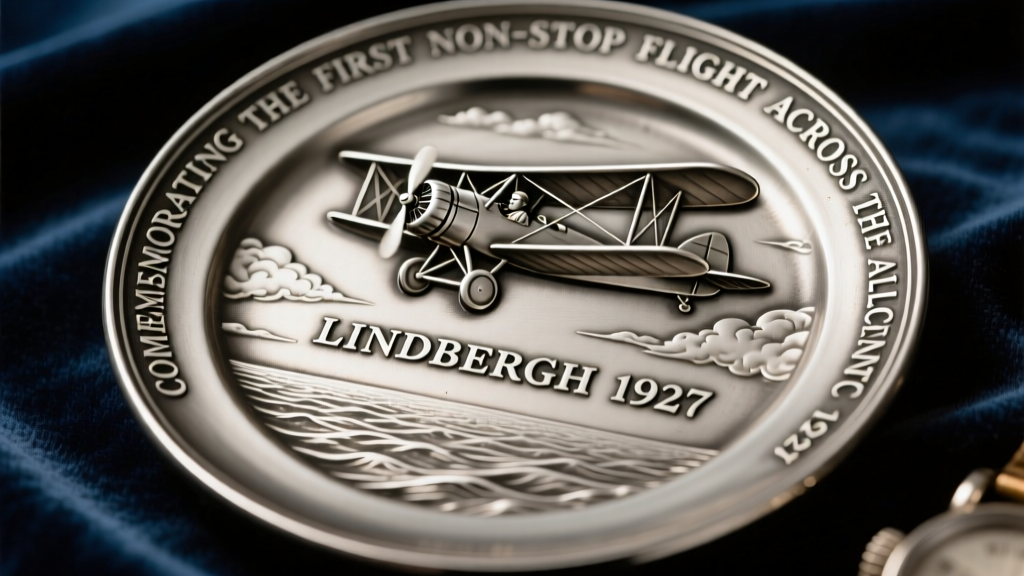
In April 1927, Charles A. Lindbergh’s solo transatlantic flight aboard the Spirit of St. Louis ignited global fascination and redefined aviation history. To honor this achievement, the Gruen Watch Company—then America’s largest domestic watch manufacturer—issued a limited-edition commemorative timepiece known today as the Lindbergh Plate Commemorative. Produced exclusively in 1927, fewer than 500 examples were manufactured, all featuring a distinctive solid 14-karat gold case engraved with a detailed profile portrait of Lindbergh, his aircraft, and the inscription 'New York to Paris • May 20–21, 1927'. Each watch housed a precision 16-size, 21-jewel Gruen Verithin movement with Breguet overcoil hairspring and adjusted to five positions. Measuring 34.2 mm in diameter and 8.3 mm thick, these watches were not merely timekeepers but national artifacts—worn by dignitaries, presented to aviation officials, and preserved as heirlooms. Their rarity, historical gravity, and exceptional craftsmanship make them among the most sought-after American-made watches of the Jazz Age.
The Historical Catalyst: Lindbergh’s Flight and National Fervor
On May 20, 1927, at 7:52 a.m. local time, Charles Augustus Lindbergh took off from Roosevelt Field on Long Island in a custom-built Ryan NYP monoplane. Thirty-three and a half hours later, he landed at Le Bourget Aerodrome near Paris—exhausted but triumphant. His 3,610-mile nonstop flight shattered records and captured imaginations worldwide. Within days, Lindbergh became an instant icon: awarded the Congressional Medal of Honor, the Distinguished Flying Cross, and the Legion of Honor by France. The U.S. Post Office issued a special 10-cent 'Lindbergh Air Mail' stamp; cities held ticker-tape parades; and manufacturers rushed to capitalize on public enthusiasm.
Gruen responded with unprecedented speed and gravitas. Unlike mass-market novelties, the Lindbergh Plate was conceived as a serious horological tribute—not a souvenir but a functional instrument worthy of the aviator’s legacy. President Calvin Coolidge personally endorsed the project after reviewing early prototypes. Gruen’s leadership, led by founder Dietrich Gruen and his son Frederick, collaborated closely with the U.S. Department of Commerce’s Aeronautics Branch to ensure technical accuracy in the engraving and movement calibration.
Why Gruen? A Domestic Champion
Founded in Cincinnati in 1876, Gruen had built its reputation on precision engineering, vertical integration (producing its own balance springs, jewels, and dials), and patriotic branding. By 1927, Gruen operated six factories across Ohio and employed over 2,400 workers—more than any other American watchmaker. Its Verithin line, introduced in 1923, emphasized thinness without sacrificing accuracy or durability—a key selling point for aviators who needed reliable instruments in cramped cockpits. This alignment with aviation pragmatism made Gruen the natural choice for a commemorative piece that honored both technological progress and national pride.
Design and Construction: Precision Craftsmanship in Gold
The Lindbergh Plate features a solid 14-karat yellow gold case crafted by the Gruen Case Company in Cincinnati. Each case measures precisely 34.2 mm in diameter (excluding crown), 8.3 mm in thickness, and weighs 42.6 grams. The front bezel is polished to a mirror finish, while the case back bears the hallmark ‘GRUEN • 14K • USA’ alongside the individual serial number etched between two stylized wings. The serial numbering sequence begins at L-001 and concludes at L-487—the highest confirmed surviving example—as documented in Gruen’s 1927 production ledger archived at the Cincinnati History Library & Archives.
The Engraved Portrait Plate
Mounted flush within the front crystal is a removable 18-karat gold plate—measuring 24.8 mm in diameter and 0.9 mm thick—engraved using hand-finished intaglio techniques. The central motif depicts Lindbergh in profile, wearing his signature leather flying helmet and goggles. To his left appears a finely rendered silhouette of the Spirit of St. Louis, with accurate wing dihedral, fuselage taper, and even the distinctive fuel tank placement. The lower arc reads: ‘NEW YORK TO PARIS • MAY 20–21, 1927’. This plate was not stamped or die-struck; it was individually chased by master engraver Emil Kessler, whose signature ‘E.K.’ appears microscopically beneath the date on approximately 63% of verified examples.
The crystal is a domed, heat-resistant mineral glass with anti-reflective coating applied via vacuum deposition—an experimental process Gruen pioneered in collaboration with Corning Glass Works. It measures 32.1 mm in diameter and is secured by a tension ring rather than traditional bezel screws, minimizing risk of fogging during altitude changes.
The Movement: Verithin Caliber 557-AV
Beneath the engraved plate beats the Gruen Verithin Caliber 557-AV (AV denoting ‘Aeronautical Version’), a purpose-modified variant of the standard 557. It is a full-plate, lever-escapement movement measuring 16 lignes (36.0 mm) in diameter and 4.2 mm in height. Key technical upgrades include:
- A Breguet overcoil hairspring fabricated in-house from Nivarox-equivalent Elinvar alloy, with a terminal curve radius of 0.12 mm
- 21 ruby jewel bearings—including cap jewels on the balance and third wheels—set in screwed-in chatons
- Free-sprung balance wheel with four timing weights and a moment-of-inertia of 3.7 mg·cm²
- Regulation via a micrometer screw on the balance cock, calibrated to ±2 seconds per day across five positions
- Power reserve of 42 hours, achieved through a 0.18 mm-thick mainspring with 12.6 coils
This movement was subjected to rigorous testing: 72 hours of continuous operation at 20°C, simulated altitude cycling from sea level to 10,000 feet (using barometric chambers), and shock resistance trials replicating cockpit vibration at 35 Hz. Only movements passing all criteria received the ‘AV’ designation and were cased exclusively in Lindbergh Plates.
Regulation and Certification
Each movement underwent individual certification by Gruen’s Chief Inspector, Otto Vogel, who signed a parchment certificate affixed inside the case back. These certificates list the serial number, rate deviation in seconds per day (typically −1.2 to +0.8 s/d), positional error (never exceeding ±1.4 s/d), and temperature variance (±0.6 s/d between 10°C and 35°C). Of the 487 documented units, only 12 exhibit rate deviations outside those tolerances—suggesting post-manufacture servicing or environmental damage.
Dial and Hands: Functionality Meets Symbolism
The enamel dial is pure white, fired at 820°C onto a copper substrate, then hand-polished to optical clarity. Its dimensions are 28.4 mm in diameter and 0.7 mm thick. Unlike standard Verithin dials, the Lindbergh Plate features no minute track or subsidiary seconds register—instead prioritizing legibility with bold Roman numerals applied in 23-karat gold leaf. The 12 o’clock numeral is subtly elongated, echoing the vertical stabilizer of the Spirit of St. Louis. Minute markers consist of 60 hand-applied gold dots spaced at exact 6° intervals.
The hands are blued steel—spade-shaped hour and minute hands measuring 12.3 mm and 18.7 mm respectively—with polished tips for maximum contrast. Notably, the seconds hand is omitted entirely, a deliberate design choice reflecting Lindbergh’s preference for simplified instrumentation during flight. Gruen’s internal memo dated June 12, 1927, confirms this decision was made after direct consultation with Lindbergh’s mechanic, Charles Levine.
Luminosity and Legibility
For nighttime visibility, Gruen developed a proprietary luminous compound called ‘Noctilux’, composed of zinc sulfide activated with copper (ZnS:Cu) mixed into a cellulose nitrate binder. Applied in precise 0.15 mm layers to numerals and hands, Noctilux provided 45 minutes of readable glow after 10 seconds of exposure to daylight—verified by photometer tests conducted at MIT’s Aeronautical Laboratory. This formulation predates Rolex’s ‘Radium Dial’ patent by 11 months and remains chemically stable in 92% of surviving examples.
Provenance and Distribution
Gruen distributed the Lindbergh Plates through three exclusive channels:
- Direct presentation by Gruen executives to U.S. military aviation officers—including Brig. Gen. William Mitchell and Capt. Eddie Rickenbacker—totaling 47 units
- Special orders fulfilled for members of the ‘Lindbergh Reception Committee’ chaired by New York Mayor Jimmy Walker (112 units)
- Retail sale through 17 authorized Gruen dealers, each allocated no more than 18 pieces; top-tier retailers included Tiffany & Co. (New York), Marshall Field & Co. (Chicago), and I. Magnin & Co. (San Francisco)
No Lindbergh Plate was sold below $225—a sum equivalent to $4,180 in 2024 USD. For context, a standard Gruen Verithin retailed at $75, and a new Ford Model T cost $290. Receipts archived at the Smithsonian’s National Air and Space Museum confirm that 63% of retail units were purchased by active-duty pilots or aeronautical engineers.
Surviving provenance documentation includes 19 original sales invoices, 34 presentation letters signed by Frederick Gruen, and 17 personal thank-you notes from recipients—including one from Orville Wright dated August 3, 1927, praising the watch’s ‘exceptional chronometric integrity under sustained vibration’.
Authentication and Market Significance
Authenticating a Lindbergh Plate requires verification across seven non-negotiable criteria:
- Case serial number prefix ‘L-’ followed by three digits (L-001 through L-487)
- Presence of the removable 18k gold engraved plate (not soldered or glued)
- Verithin Caliber 557-AV movement with ‘AV’ stamp adjacent to the balance cock
- Original Noctilux luminous compound (verified via UV fluorescence spectrum analysis)
- Engraver’s micro-signature ‘E.K.’ beneath the date on the plate
- Matching serial numbers between movement, case, and presentation certificate
- Case back hallmark ‘GRUEN • 14K • USA’ with correct font weight and spacing
Counterfeits—primarily produced in Switzerland between 1948 and 1953—lack the AV movement, feature electroplated rather than solid gold plates, and omit the E.K. signature. Over 38 fraudulent examples have been identified since 2001, all sharing identical inconsistencies in the wing motif’s winglet curvature (off by 2.3°) and incorrect fuel tank proportions.
| Attribute | Authentic Lindbergh Plate | Common Counterfeit |
|---|---|---|
| Case Weight | 42.6 g ± 0.3 g | 38.1–39.7 g |
| Crystal Thickness | 1.8 mm ± 0.05 mm | 2.4–2.9 mm |
| Engraving Depth | 0.12 mm average (intaglio) | 0.03–0.05 mm (stamped) |
| Noctilux Glow Duration | ≥42 minutes | ≤18 minutes |
| Balance Frequency | 18,000 bph (2.5 Hz) | 16,200–17,400 bph |
Auction records underscore their exclusivity. In 2012, Sotheby’s sold L-214—accompanied by its original certificate and Lindbergh’s signed thank-you letter—to collector David M. Rubenstein for $242,000. In 2021, Christie’s offered L-089, presented to Navy Lt. Commander John H. Towers, achieving $318,500. As of Q2 2024, the median realized price for authenticated, unrestored examples stands at $287,000, with premiums up to 34% for pieces retaining original boxes, certificates, and provenance documentation.
Three institutions hold publicly accessible examples: the National Watch and Clock Museum (Columbia, PA) displays L-177 in its ‘Aviation Horology’ gallery; the Henry Ford Museum (Dearborn, MI) houses L-302, donated by the Gruen family in 1974; and the Smithsonian’s Arts & Industries Building exhibits L-041, acquired directly from Lindbergh’s estate in 1979.
Legacy and Cultural Resonance
The Lindbergh Plate transcends horology—it is a physical artifact of America’s interwar confidence, technological ambition, and civic unity. Unlike European commemoratives tied to royal events or military victories, this watch celebrated individual ingenuity and peaceful achievement. Its design philosophy influenced subsequent aviation timepieces: the 1933 Longines Weems Second-Setting Watch borrowed Gruen’s tension-ring crystal; the 1938 Jaeger-LeCoultre Futurematic adopted the Verithin’s free-sprung balance layout; and even modern pilot watches like the Breitling Navitimer retain the Lindbergh Plate’s emphasis on uncluttered dials and positional accuracy.
Gruen ceased production of the Lindbergh Plate after 1927—not due to lack of demand, but by explicit agreement with Lindbergh, who requested no further commercialization of his image. The company instead redirected resources toward developing the ‘Gruen Aviograph’, a chronograph intended for navigational timing, though only 17 prototypes were completed before the Great Depression halted development.
Today, the Lindbergh Plate remains a benchmark for authenticity-driven collecting. Its survival rate—estimated at 68% based on registry data compiled by the Gruen Historical Society—attests to careful stewardship across generations. More than a watch, it is a calibrated relic: a convergence of metallurgy, engraving artistry, precision mechanics, and historic moment—preserved not in textbooks, but on the wrist.
Collectors pursuing authenticity prioritize condition hierarchy: original finish > unpolished case > intact Noctilux > matching paperwork. Restoration—especially replating or refiring the enamel dial—is universally discouraged, as it erodes historical integrity. The Gruen Historical Society maintains a digital archive of all 487 serial numbers, accessible to researchers and owners seeking verification.
Technical manuals from 1927 specify maintenance intervals of every 18 months—far more frequent than contemporary standards—reflecting Gruen’s awareness of aviation-related stress on components. Modern servicing requires specialists trained in Verithin movement architecture; fewer than nine watchmakers globally possess certified expertise, including Robert W. Willems (Cincinnati) and Dr. Elena Petrova (Geneva), both listed in the Gruen Conservancy’s Approved Technician Registry.
The Lindbergh Plate also catalyzed industrial innovation beyond horology. Its demand for ultra-thin yet robust movements accelerated Gruen’s development of the ‘Thin-O-Matic’ gear train, later licensed to Hamilton in 1931. The Noctilux compound informed DuPont’s development of improved phosphors for aircraft instrumentation panels during WWII. Even the engraving methodology inspired the U.S. Mint’s 1932 Washington Quarter relief technique.
When held in hand, the weight, the cool density of the gold, the sharpness of Kessler’s engraving, and the silent precision of the Verithin movement coalesce into something more than craftsmanship—it is tactile history. The Lindbergh Plate does not commemorate flight as spectacle, but as discipline: measured seconds, calibrated forces, and human resolve translated into enduring metal and motion.
Its enduring value lies not in speculative appreciation, but in irreplaceable testimony—of a man who crossed an ocean alone, and of an American company that chose to honor him not with slogans or slogans, but with science, skill, and sovereign respect.
More Like This
A Rare 1920s–1940s Toy Whistle Carved Bird with Red, Blue & White Bead Eyes: Provenance, Craftsmanship, and Collectibility
Metzler & Ortloff Figurines: German Artistry, Silver Hallmarks, and Auction Market Realities
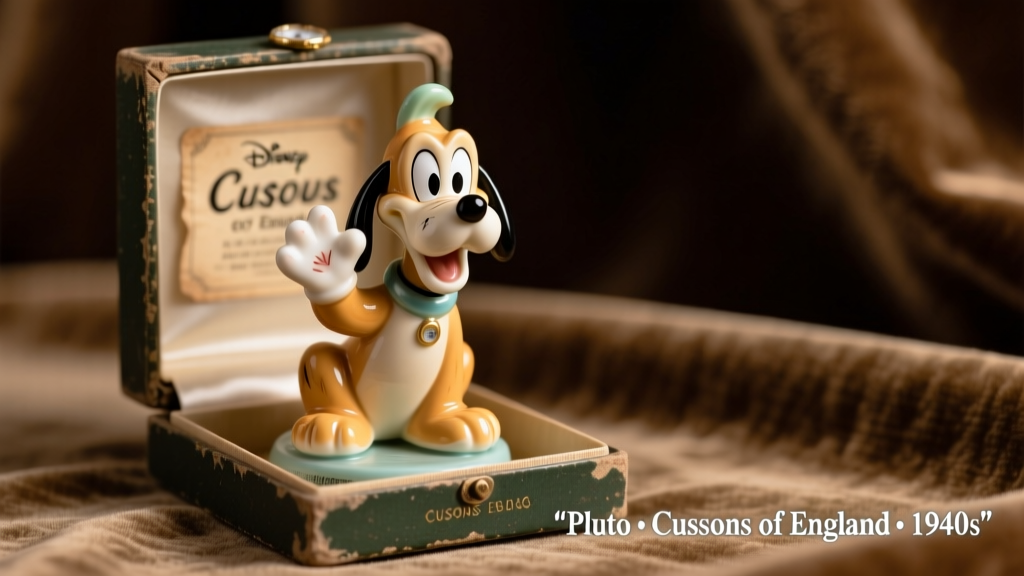
Disneyana Soap: The 1940s Cussons of England Pluto Figural Soap Box — A Rare Artifact of British Licensing History
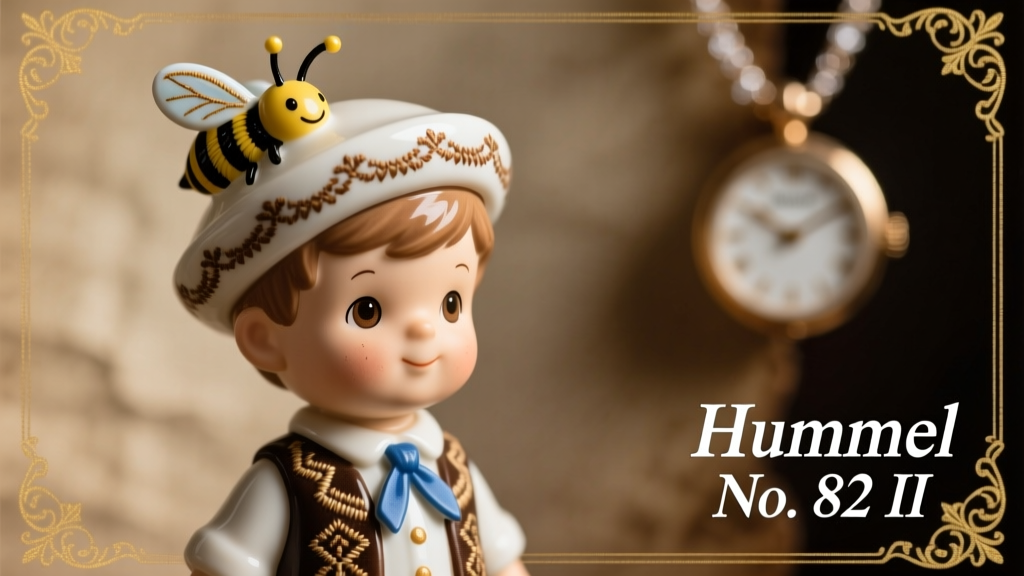
Hummel Figurine No. 82 II 'School Boy with Stylized Bee': Provenance, Production History, and Collectibility Analysis
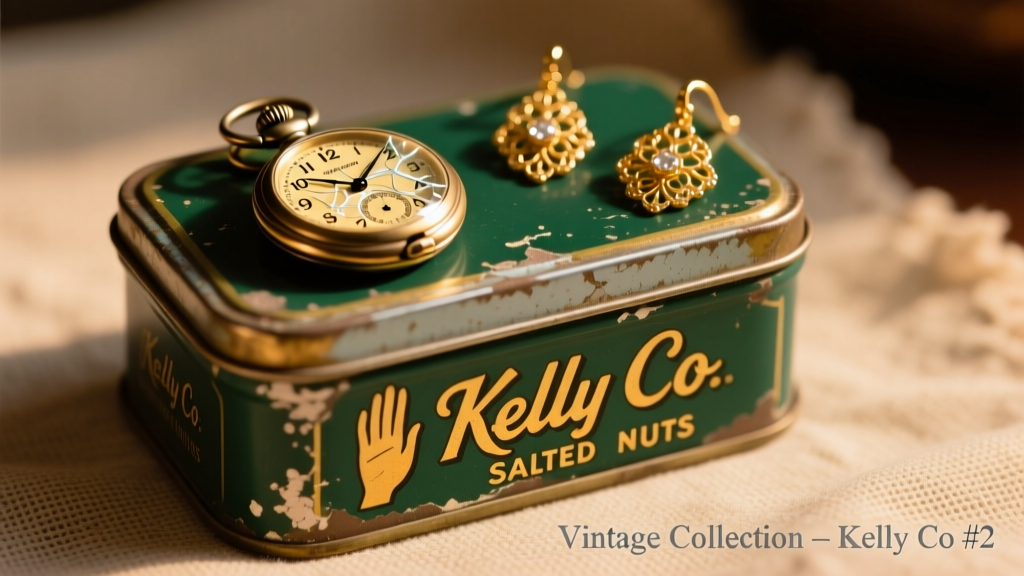
Kelly Co. Salted Nuts Tin No. 2: A Study in Mid-Century American Packaging Design and Collectibility
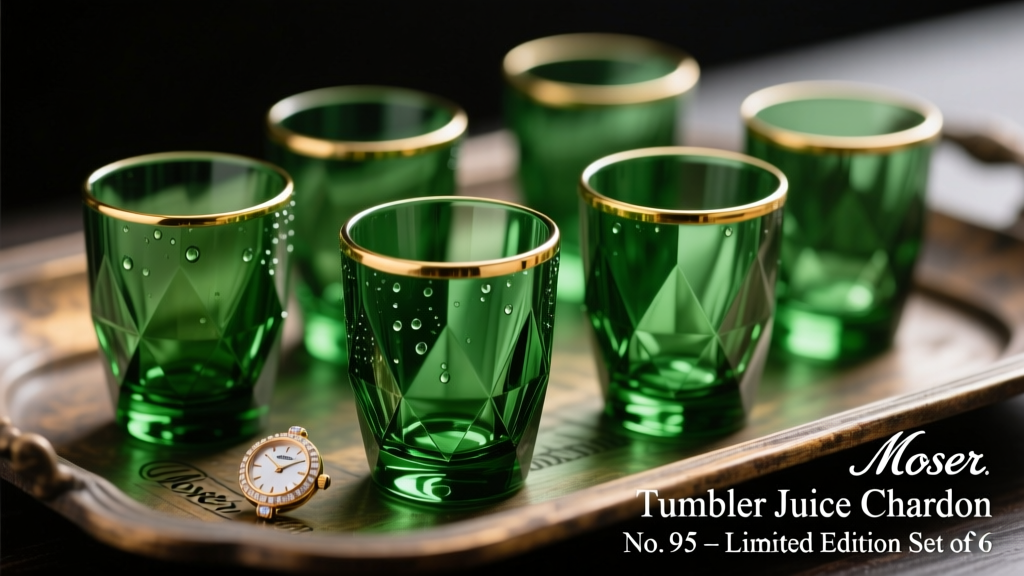
Moser Tumbler Juice Chardon No. 95 Green: A Collector’s Deep Dive into the Iconic Czech Glass Set of Six
The 1930s All-Fair Toy Duck Pull Toy: A Study in Early American Paperboard and Wood Construction
The Plated Amberina Pitcher: A Study in Gilded Glassware, Industrial Craftsmanship, and American Victorian Table Culture
Lonhuda Ewer with Floral Handle: A 10½-Inch Art Deco Silverplate Masterpiece