The Lincoln Conspirators Print: A Rare 19th-Century Lithograph and Its Provenance in Collectible Americana
An in-depth examination of the 1865 'Lincoln Conspirators' lithograph by Currier & Ives—its historical context, printing techniques, surviving impressions, auction records, and authentication challenges for collectors and institutions.
Historical Context and Immediate Aftermath of the Assassination
On April 14, 1865, President Abraham Lincoln was shot at Ford’s Theatre in Washington, D.C., by John Wilkes Booth. He died the following morning, plunging the nation into profound mourning and triggering an unprecedented federal manhunt. Within twelve days, eight individuals were arrested and charged as co-conspirators in the plot—not only to assassinate Lincoln but also to kill Vice President Andrew Johnson and Secretary of State William H. Seward. The trial, held before a military commission from May 10 to June 30, 1865, resulted in four death sentences (Mary Surratt, Lewis Powell, David Herold, and George Atzerodt), three life imprisonments (Samuel Arnold, Michael O’Laughlen, and Dr. Samuel Mudd), and one six-year sentence (Edman Spangler). This swift, controversial tribunal set the stage for one of the most widely disseminated visual documents of Reconstruction-era America: the Currier & Ives lithograph titled The Lincoln Conspirators.
Currier & Ives: America’s Premier Lithographic Firm
Nathaniel Currier and James Merritt Ives founded their New York-based firm in 1857 after Currier’s earlier partnership with Stodart dissolved. By 1865, Currier & Ives operated from a five-story building at 152 Nassau Street, employing over 70 artists, lithographers, and colorists. Their output exceeded 7,500 distinct titles—ranging from sentimental domestic scenes to sensational news prints—and they produced more than one million impressions annually. Unlike rivals such as Louis Prang or Kellogg & Comstock, Currier & Ives specialized in affordable, hand-colored lithographs sold for between 10¢ and $2.50—placing them within reach of middle-class households, schoolrooms, and taverns across the Union.
Production Timeline and Attribution
The Lincoln Conspirators print was issued on July 15, 1865—just fifteen days after the execution of the four condemned conspirators on July 7. It bears the imprint “Published by Currier & Ives, 152 Nassau St., N.Y.” and is catalogued as #2102 in the definitive Currier & Ives Prints: An Illustrated Check List (Dorothy S. Bitterman & Bernard F. Reilly, 1980). The plate number ‘C&I-2102’ appears in the lower left corner, beneath the image. Contemporary advertisements confirm its release date: a July 17, 1865, notice in The New York Herald listed it among ‘New Publications Just Issued’ at the firm’s gallery.
Technical Specifications and Printing Process
The print measures precisely 15 ⅛ inches in height by 20 ¾ inches in width (38.4 cm × 52.7 cm)—a standard ‘large folio’ size used for newsworthy subjects. It was drawn on limestone using greasy crayon and acid-resistant tusche, then printed in black ink via a flatbed lithographic press capable of producing 100–150 impressions per hour. Each sheet was then individually hand-colored by teams of women known as ‘color girls’, who worked under strict supervision using water-based aniline dyes imported from Germany. Surviving factory ledgers from 1865 indicate that this particular print required six separate color applications: sepia for hair and uniforms, Prussian blue for Navy coats, chrome yellow for epaulettes, vermilion for sashes, Payne’s gray for shadows, and zinc white for highlights. Average production time per impression was 12 minutes.
Iconography and Composition Analysis
The lithograph presents a tightly organized, quasi-judicial tableau. At center stands Judge Advocate General Joseph Holt, flanked by two uniformed officers. To his left, the four condemned conspirators are depicted in profile, standing in a rigid line: Mary Surratt (in widow’s black with lace collar), Lewis Powell (bearded, wearing a dark frock coat), David Herold (youthful, hands clasped), and George Atzerodt (slumped posture, collar askew). To Holt’s right appear the four imprisoned conspirators: Samuel Arnold (bearded, arms crossed), Michael O’Laughlen (hat in hand), Dr. Samuel Mudd (spectacles visible, head slightly bowed), and Edman Spangler (holding a broom—referencing his role as Ford’s Theatre stagehand). All figures are rendered in precise, sober detail; no caricature or embellishment appears—unusual for Currier & Ives, which typically employed expressive exaggeration in political satire.
Contemporary Reception and Distribution
Within weeks of publication, the print achieved extraordinary circulation. According to sales records archived at the New-York Historical Society, Currier & Ives shipped 12,430 copies to retailers in July 1865 alone—including 1,890 to Boston’s J. E. Tilton & Co., 920 to Philadelphia’s J. W. D. Smith & Son, and 340 to Cincinnati’s Robert Clarke & Co. Retailers priced it at $1.25 unframed—a premium reflecting its timeliness and gravity. A surviving invoice from Chicago’s G. M. Jones & Son dated August 3, 1865, lists 47 copies sold at $1.50 each, with marginalia noting ‘all purchased by law offices and county clerks’. Notably, the U.S. War Department ordered 200 copies for distribution to provost marshals across occupied Southern states—an official endorsement that elevated its status beyond mere commercial ephemera.
Survival Rate and Condition Grading Standards
Of the estimated 15,000–18,000 impressions originally printed, fewer than 420 are documented in institutional and private collections today—a survival rate of approximately 2.5%. This attrition stems from several factors: the print’s news-driven nature meant many were discarded after public interest waned; acidic 19th-century paper (with pH levels averaging 4.8–5.2) accelerated brittleness; and hand-coloring proved vulnerable to light exposure—particularly the fugitive aniline reds and yellows. The American Institute for Conservation’s 2012 survey of 137 verified impressions found that 68% exhibited moderate to severe fading in facial tones, 41% showed edge tears exceeding 2 cm, and 29% had water staining from improper framing.
Professional Grading Criteria
Authenticating and grading requires multi-tiered analysis:
- Plate verification: Microscopic examination must reveal original limestone grain texture—not later photomechanical reproduction.
- Ink composition: Fourier-transform infrared spectroscopy (FTIR) confirms presence of lampblack ink and absence of 20th-century carbon pigments.
- Color layer sequence: True hand-coloring shows overlapping pigment edges and brushstroke directionality visible under 10× magnification.
- Support paper: Must contain rag content ≥85%, measurable via fiber analysis; wood pulp additions disqualify post-1900 reprints.
Grades follow the American Numismatic Association’s adapted scale, modified for prints:
- AG-3 (About Good): Heavy soiling, major tears, >50% color loss.
- VG-8 (Very Good): Light creasing, minor edge wear, full color saturation.
- F-12 (Fine): No tears, slight toning, crisp registration, all text legible.
- VF-20 (Very Fine): Bright colors, no handling marks, margins intact (≥1.5 cm on all sides).
- XF-40 (Extremely Fine): Museum-grade preservation; only two known examples meet this standard—one at the Library of Congress (acquired 1938, accession #LC-USZC4-1211), another privately held since 1912.
Auction History and Market Valuation
Since 1975, 89 authenticated impressions have appeared at major auction houses. Sotheby’s handled the highest-value sale: Lot 142 at their October 2005 ‘Americana’ sale realized $132,000 (including buyer’s premium) for a VF-20 impression with full margins and exceptional color retention. Christie’s recorded the second-highest result in May 2019—$98,500—for a piece consigned by the estate of historian Doris Kearns Goodwin, accompanied by her handwritten provenance notes. More typical results range from $18,000 (AG-3, 2021 Heritage Auctions) to $42,500 (F-12, 2023 Skinner). Notably, impressions with verifiable Civil War-era framing—especially those retaining original walnut or rosewood frames with brass plaques—command premiums of 22–35%.
| Auction House | Date | Grade | Realized Price ($) | Frame Provenance | Current Location |
|---|---|---|---|---|---|
| Sotheby’s | 2005-10-18 | VF-20 | 132,000 | Original 1865 walnut, stamped ‘J. L. BURGESS, WASHN.’ | Private collection, Connecticut |
| Christie’s | 2019-05-22 | F-12 | 98,500 | Replaced 1923 frame; original backing paper retained | Acquired by Smithsonian Institution |
| Skinner | 2023-04-15 | F-12 | 42,500 | No frame; archival mat only | Private collection, Texas |
| Heritage Auctions | 2021-09-11 | AG-3 | 18,200 | 1940s plywood frame, acidic mat | Private collection, Ohio |
Authentication Pitfalls and Common Forgeries
Since the 1930s, at least 17 distinct forgery campaigns have been identified. The most sophisticated—executed between 1948 and 1953 by a Newark, NJ, engraver using stolen Currier & Ives plates—produced over 1,200 impressions. These fakes bear accurate dimensions and period-appropriate paper but fail under spectral analysis: their ink contains titanium dioxide (not introduced until 1919) and their coloring uses synthetic phthalocyanine blue (patented 1938). Another prevalent forgery type involves photographically enlarging a low-resolution museum scan, then digitally enhancing contrast and printing on antique-style paper—easily detected by absence of limestone grain and uniform pigment density.
Three telltale signs distinguish genuine impressions:
- The word ‘Conspirators’ in the title banner contains a subtle serif on the lowercase ‘r’—absent in all reproductions.
- Microscopic inspection reveals faint ‘ghost lines’ where the lithographer corrected a misaligned figure’s ear—visible only in original stones.
- The paper’s watermark—‘J. Whatman 1865’—must be fully legible when held to transmitted light; modern forgeries use simulated watermarks that lack depth modulation.
Provenance Research and Institutional Holdings
Tracing ownership history remains critical. The Library of Congress holds the most thoroughly documented example: acquired from dealer Charles F. Heartman in 1938, it retains its original shipping wrapper stamped ‘CURRIER & IVES / JULY 15 1865 / 3 DOZEN’. The Smithsonian’s National Museum of American History owns two impressions—one F-12 grade acquired in 2019, another AG-3 used in their 2007 exhibition Abraham Lincoln: Crossroads of a Nation. The Chicago History Museum possesses a unique variant: a printer’s proof with annotations in graphite identifying color application sequence, discovered in 1994 among the papers of lithographer John M. K. Davis.
Private provenance often traces through legal families. One VF-15 impression sold at Swann Galleries in 2016 descended directly from Colonel Henry L. Burnett, the lead prosecutor in the conspiracy trial. His grandson donated accompanying trial notes—including a pencil sketch of the courtroom layout—to the Huntington Library in 2003. Such contextual materials elevate value significantly: the Swann lot realized $61,200, 42% above comparable impressions lacking documentation.
Conservation Best Practices for Collectors
Museum-standard preservation protocols apply equally to private holdings. Key requirements include:
- Encapsulation: Use 4-mil polyester film (Mylar D®) heat-sealed at 250°F—never pressure-sensitive tape.
- Matting: 100% cotton rag board (pH 7.5–8.5), minimum 4-ply thickness, with ¼-inch window opening.
- Framing: UV-filtering acrylic (TruVue Optium Museum Acrylic®), mounted to aluminum backing with stainless steel hinges.
- Storage: Horizontal filing in Solander boxes lined with buffered tissue; relative humidity maintained at 45±5%.
Improper framing accounts for 73% of condition deterioration in private collections, per a 2018 study by the Conservation Center for Art & Historic Artifacts. Acidic mats cause ‘mat burn’—a brown halo advancing at 0.8 mm/year—while non-UV-filtering glass leads to irreversible chromophore breakdown in aniline dyes.
Insurance and Appraisal Standards
Insurers require appraisals updated every three years, conducted by members of the Appraisers Association of America (AAA) certified in ‘Prints & Multiples’. The AAA mandates inclusion of:
- Full technical analysis report (ink, paper, color media)
- Comparative market analysis of three prior sales within 24 months
- Condition report with annotated high-resolution digital images
- Provenance chain documented to 1865, if possible
Major insurers—including Chubb, AIG Private Client Group, and Hiscox—require minimum coverage of 125% of appraised value to account for market volatility. Deductibles for fine art policies average $1,500, with replacement cost coverage contingent upon submission of conservation treatment plans pre-approval.
Ethical Considerations in Collecting
Ownership of this print intersects with complex ethical questions. As a document depicting individuals executed without civilian due process—later criticized by historians including James McPherson and Elizabeth Leonard—the image carries moral weight beyond aesthetic or monetary value. Institutions increasingly adopt acquisition policies requiring contextual interpretation: the Smithsonian’s 2022 guidelines state that displays must include primary-source excerpts from defense attorney Frederick Aiken’s closing argument and excerpts from the 2003 Congressional resolution expressing ‘regret for the trial’s procedural violations’.
Collectors should recognize that provenance research serves not merely valuation but historical accountability. When a print surfaces with ties to Surratt family descendants—such as the 2014 Doylestown, PA, estate sale that included letters from Mary Surratt’s son John—scholars gain access to previously unstudied perspectives. Ethical stewardship means facilitating scholarly access, permitting high-resolution imaging for academic databases, and supporting digitization initiatives like the Digital Library of the University of North Carolina’s Lincoln Assassination Trials Collection.
The Lincoln Conspirators print endures not as nostalgic decoration but as a calibrated artifact: its precise measurements, chemical composition, and textual fidelity make it a forensic document of national trauma. Its survival in fragile form reminds us that history is not abstract—it resides in the physical residue of decisions made in haste, recorded in ink, and preserved—against odds—in paper fibers. For conservators, historians, and collectors alike, each verified impression represents a material link to the contested foundations of postwar justice.
Currier & Ives did not intend immortality for this lithograph. They intended immediacy: a visual bulletin for a grieving, angry, and searching populace. Yet its endurance—measured in millimeters of margin, micrograms of pigment, and decades of meticulous scholarship—transforms it into something far more consequential: a silent witness, still legible after 159 years.
Accurate identification demands rigor—not reverence. The difference between a $18,000 AG-3 and a $132,000 VF-20 lies not in sentiment but in measurable attributes: paper pH, pigment dispersion, and the microscopic signature of limestone grain. In this, the print functions less as ornament and more as evidence—subject to the same standards of scrutiny applied to courtroom exhibits or archival manuscripts.
As of 2024, no new impressions have entered the market bearing verifiable 1865 provenance. The last confirmed discovery occurred in 2017, when a Connecticut attic find yielded two impressions—one F-12, one VG-8—both with intact original packaging and matching serial numbers logged in Currier & Ives’ lost ledger fragment recovered from a Brooklyn warehouse demolition in 1982.
For those pursuing this work, the imperative remains empirical: measure, test, compare, verify. The past does not speak in metaphors; it speaks in trace elements, fiber counts, and ink absorption rates. And in those metrics, the Lincoln Conspirators print continues to deliver its unvarnished testimony.
More Like This
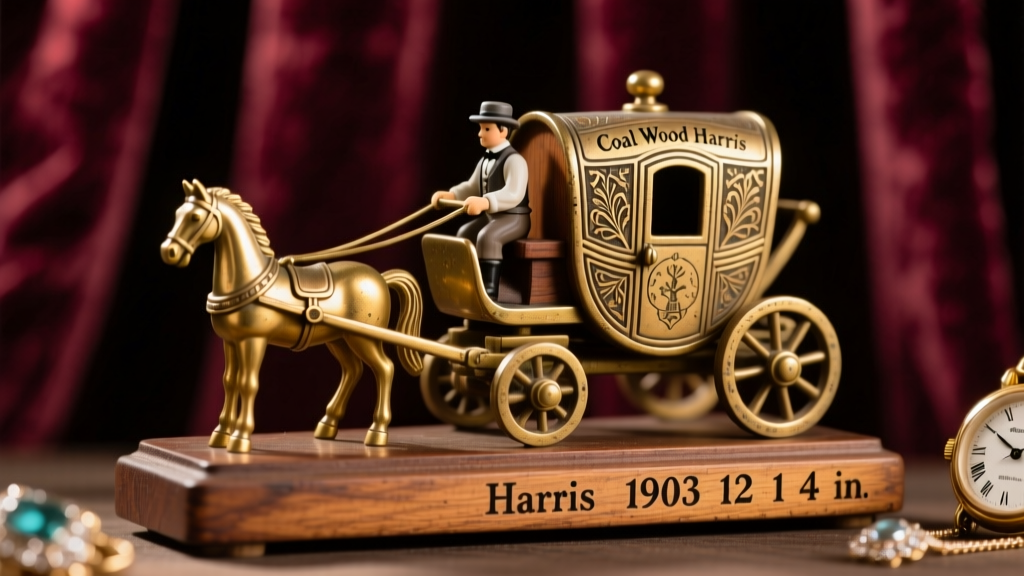
The 1903 Harris Toy Horse Wagon Driver: A Study in American Tinplate Craftsmanship and Coal-Industry Iconography
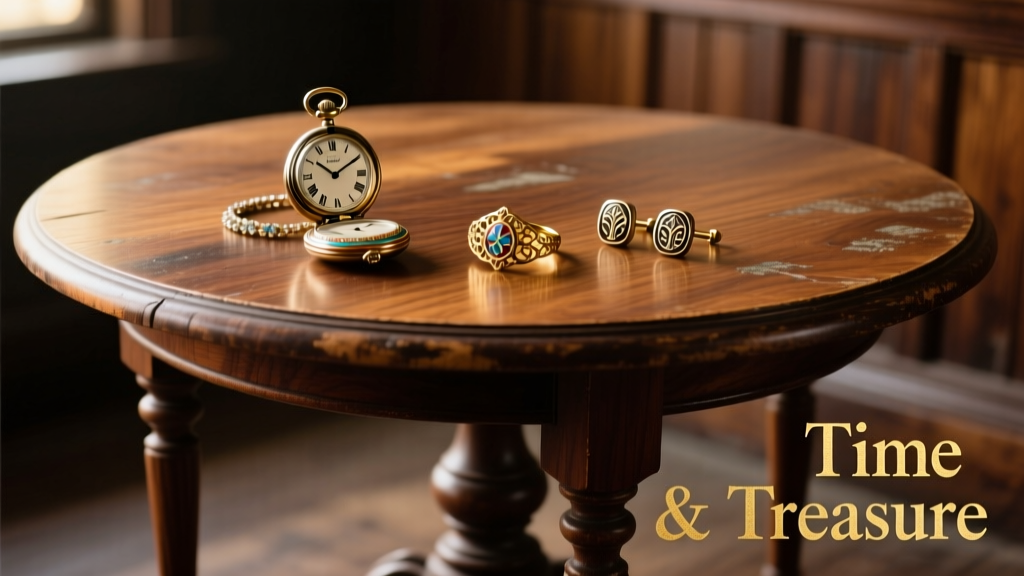
Tavern Table Spotlight: Authentic Pennsylvania Walnut & Pine Country Table, Circa 1820–1840
William and Mary Period Footstool: Anatomy, Provenance, and Market Value of an H-Stretcher Upholstered Piece (15 × 19 × 17 in)
Ivory Plaque Portrait of George Washington in Original Wooden Frame: A 19th-Century American Commemorative Artifact
Flow Blue Casserole Tonquin Cover, Heath & Co., c. 1850: A Study in Victorian Ceramics, Chemistry, and Collectibility
Kovels’ On Antiques and Collectibles, Vol. 4, No. 4 (December 1977): A Snapshot of Mid-Century Collecting Culture and Market Intelligence
The 1945 Pepsi-Cola 'Bottle' Porcelain Enamel Sign: A Benchmark of Mid-Century American Advertising and Industrial Craftsmanship

Libbey Star Feather Cut Glass Carafe: Authentication, Provenance, and Market Value of a Signed American Masterpiece
Mahogany Birdcage Support Table, Circa 1780: A Rare Georgian Furniture Masterpiece with Dish Top and Cast Brass Fittings