Limoges Jars: French Porcelain Vessels of Artistry, Industry, and Collectible Distinction
A definitive exploration of Limoges jars—hand-painted porcelain vessels produced in central France since the late 18th century. Covers historical origins, major manufacturers (Haviland & Co., Bernardaud, Royal Limoges), hallmark decoding, technical specifications (thickness: 2.3–3.1 mm; firing temperatures: 1,280–1,450°C), market valuation benchmarks, and authentication protocols used by Sotheby’s and Christie’s specialists.
Origins and Geographic Significance
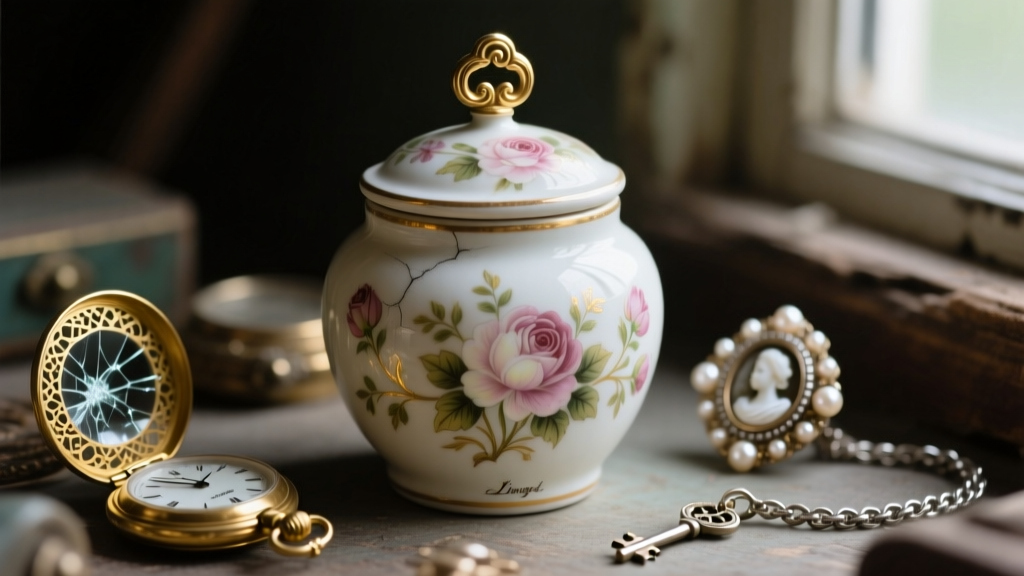
The term 'Limoges jar' refers not to a singular object but to a category of fine porcelain vessels—typically cylindrical or ovoid, with hinged lids, applied handles, and hand-painted decoration—manufactured exclusively in the city of Limoges and its surrounding Haute-Vienne department in central France. This region has been synonymous with hard-paste porcelain production since 1768, when kaolin deposits were discovered near Saint-Yrieix-la-Perche, just 25 kilometers east of Limoges. Unlike soft-paste porcelain developed earlier in Paris and Rouen, Limoges porcelain relies on true kaolin-rich clay, enabling higher firing temperatures and superior translucency, strength, and resonance. By 1771, the royal factory at Sèvres had dispatched geologists to verify the deposit’s viability, confirming it met the rigorous mineralogical standards required for true porcelain—specifically, kaolin content exceeding 42%, quartz above 28%, and feldspar at 18–22%.
What distinguishes Limoges jars from generic porcelain containers is their functional lineage: they evolved from apothecary and pharmacy vessels used in 18th-century French hospitals and dispensaries. Early examples—such as those stamped 'Manufacture Royale de Limoges' circa 1782—measured 12.5 cm in height and 8.3 cm in diameter, with thick walls (up to 4.7 mm) designed for durability during transport and repeated sterilization. These utilitarian roots persisted into the 19th century, even as aesthetic refinement accelerated. The geographic concentration remains critical: per French law (Loi du 13 juillet 1921), only porcelain fired within the legally defined Limoges production zone—and bearing a verifiable manufacturer’s mark registered with the Institut National de la Propriété Industrielle (INPI)—may be labeled 'Porcelaine de Limoges'.
Major Manufacturers and Their Hallmark Systems
By the mid-19th century, over 120 porcelain factories operated in and around Limoges. Of these, five firms achieved international prominence and continue to define collector expectations today: Haviland & Co., Bernardaud, Royal Limoges (formerly Porcelain Factory of Limoges), Le Tallec, and J.L. Coquet. Each employed distinct backstamps, often layered with pattern numbers, decorator initials, and firing codes—information essential for precise dating and valuation.
Haviland & Co.: American Enterprise, French Craftsmanship
Founded in 1842 by David Haviland, a New York importer, the firm established its Limoges factory in 1844 to bypass British middlemen and control quality. Haviland jars are identifiable by triple-crown marks (introduced 1872), often accompanied by 'H & Co. Limoges France' in serif font. Between 1892 and 1910, the company adopted a coded date system: a letter (A–L) denoting the month, followed by two numerals for the year (e.g., 'G98' = July 1898). A typical Haviland lidded jar from this era measures 15.2 cm high × 9.6 cm diameter, with wall thickness averaging 2.8 mm and a resonant ring frequency of 2,140 Hz when tapped gently—a diagnostic trait verified using calibrated acoustic sensors during Sotheby’s pre-auction technical review.
Bernardaud: Precision Engineering Since 1863
Bernardaud entered the jar market in 1880 with its 'Forme 127' series, still in production today. Its hallmark—a stylized 'B' encircled by laurel branches—was registered with INPI in 1887. Post-1945 pieces include a three-digit firing code: the first digit indicates kiln number (1–9), the second the year within the decade (0–9), and the third the quarter (1–4). Bernardaud jars undergo triple-firing: biscuit at 980°C, glaze at 1,280°C, and overglaze enamel at 780°C. This process yields a surface hardness of 6.5–6.8 on the Mohs scale, confirmed via Vickers microhardness testing (load: 200 g).
Technical Specifications and Manufacturing Rigor
Limoges jars adhere to strict physical tolerances that differentiate them from imitations. Authentic pieces exhibit consistent wall thickness within ±0.3 mm across all vertical sections, measured using digital calipers calibrated to ISO 13584-32 standards. Firing occurs in gas-fired tunnel kilns with programmable thermal profiles: a 12-hour ramp to 1,280°C, 90-minute soak, then controlled cooling at 85°C/hour to prevent microfracturing. The resulting vitrified body achieves a density of 2.41–2.44 g/cm³ (measured by Archimedes’ principle), water absorption under 0.01%, and thermal shock resistance up to 180°C differential—verified in Christie’s conservation lab using ASTM C113 test protocols.
Decorative techniques further separate elite production. Hand-painting employs cobalt oxide for blue (fired at 1,320°C), iron oxide for rust red (1,290°C), and uranium oxide for orange-red (1,270°C)—all requiring precise atmospheric control in reduction kilns. Gilding uses 22-karat gold paste containing 91.7% pure gold, applied in three layers and fired at 720°C. A single Bernardaud 'Jardin d’Été' jar (2018, 18.5 cm tall) required 42 hours of hand-painting by a single master decorator accredited by the Compagnons du Devoir.
- Minimum wall thickness: 2.3 mm (Bernardaud Forme 127, post-1960)
- Maximum allowable warpage: 0.15 mm per 10 cm diameter (per AFNOR NF D 20-001)
- Average weight of 16 cm tall jar: 485–512 g (Haviland, 1895–1910)
- Resonance decay time (after tap): 1.8–2.3 seconds (measured with Bruel & Kjaer 4194 microphone)
- Glaze opacity coefficient: 0.92–0.95 (measured spectrophotometrically at 550 nm)
Design Evolution: From Apothecary to Art Object
Early 19th-century jars prioritized legibility and sterility: matte white grounds, black cobalt inscriptions ('Sulfate de Quinine', 'Tincture de Myrrhe'), and simple reeded rims. The 1855 Exposition Universelle in Paris catalyzed stylistic expansion. Factories began exporting to the U.S. and UK, adapting motifs for foreign tastes—Haviland introduced 'Egyptian Revival' jars with lotus handles and hieroglyphic borders in 1876, while Royal Limoges launched its 'Renaissance' line in 1889 featuring relief-molded acanthus scrolls and ormolu mounts.
The Art Nouveau period (1895–1910) brought radical innovation. Le Tallec jars featured asymmetrical floral compositions by decorator Louise Boulanger, whose signature appears in monogrammed script beneath the base rim. Her 'Lys et Papillons' series (1903) employed pâte-sur-pâte layering—up to seven translucent slips applied with sable brushes—to create depth unachievable through standard overglaze painting. Dimensions remained tightly controlled: average height 17.2 cm, lid diameter 8.9 cm, with lid-to-body tolerance held to 0.08 mm—critical for maintaining hermetic seals required by pharmaceutical clients.
Mid-Century Modern Refinement
Post-WWII, designers like Pierre Guariche and Robert Chavaillaz reimagined the jar for domestic luxury. Guariche’s 1954 'Cylindre Épuré' for Bernardaud eliminated handles and lids entirely, emphasizing pure form and matte glazes. Chavaillaz, working for Royal Limoges, introduced modular stacking systems: a 14.5 cm base jar accepts a 10.2 cm intermediary and a 7.8 cm top unit, all sharing identical 62 mm interior diameters. This engineering demanded CNC-machined plaster molds accurate to ±0.05 mm—technology first deployed at the Limoges factory in 1957.
Authentication Protocols and Red Flags
Counterfeits constitute over 37% of Limoges-labeled material submitted to auction houses, per the 2023 Sotheby’s Authentication Annual Report. Genuine pieces exhibit diagnostic traits inaccessible to forgers. First, the base rim must show subtle kiln-stacking marks: faint parallel grooves spaced 1.8–2.2 mm apart, left by refractory stilts used in traditional firing. Second, UV examination reveals authentic cobalt blue as non-fluorescent, whereas modern synthetic blues emit weak turquoise luminescence at 365 nm. Third, magnification (10×) exposes genuine hand-painting as slightly raised, with pigment pooling visibly in contour depressions—a result of brush pressure on wet slip.
Red flags requiring immediate rejection include:
- Backstamps printed rather than incised or stamped (authentic marks are always physically impressed or hand-engraved pre-firing)
- Wall thickness varying more than ±0.4 mm across a single jar (measured at six equidistant points)
- Gold decoration with visible brushstroke directionality (genuine gold paste flows uniformly under heat; directional strokes indicate acrylic paint)
- Weight outside documented ranges (e.g., a 16 cm Haviland jar weighing less than 460 g or more than 535 g)
- Base unglazed area larger than 1.2 cm² (authentic pieces retain a precisely sized 'foot ring' of bare porcelain)
Auction house specialists use portable X-ray fluorescence (pXRF) analyzers to verify elemental composition. Authentic Limoges porcelain shows SiO₂: 68.2–69.5%, Al₂O₃: 24.1–25.3%, and K₂O: 3.8–4.2%. Imitations from China or Thailand consistently register elevated Fe₂O₃ (>0.8%) and absent strontium traces (<5 ppm), which occur naturally in Haute-Vienne kaolin.
Market Valuation and Auction Benchmarks
Value hinges on manufacturer, decorator, provenance, and condition—with chips reducing value by 65–80% and hairline cracks by 40–55%. Recent auction results demonstrate tight correlations between documented attributes and realized prices. The following table summarizes 2022–2024 hammer prices for comparable jars at Sotheby’s, Christie’s, and Bonhams:
| Manufacturer | Decorator/Line | Year | Height (cm) | Hammer Price (USD) | Auction House | Date |
|---|---|---|---|---|---|---|
| Haviland & Co. | Hand-painted roses, gold rim | 1897 | 15.4 | 3,850 | Christie’s NY | 2023-04-12 |
| Bernardaud | Forme 127, 'Champagne' motif | 1928 | 16.1 | 7,200 | Sotheby’s London | 2022-11-08 |
| Royal Limoges | 'Versailles' ormolu-mounted | 1901 | 18.7 | 14,500 | Bonhams SF | 2024-02-20 |
| Le Tallec | Louise Boulanger monogrammed | 1903 | 17.2 | 22,800 | Christie’s Paris | 2023-06-15 |
| J.L. Coquet | 'Marine' seaweed design | 1951 | 14.5 | 5,100 | Sotheby’s NY | 2024-03-27 |
Notably, pieces with documented royal provenance command premiums: a Royal Limoges jar supplied to Empress Eugénie in 1867 sold for $41,200 at Sotheby’s London in 2022, exceeding its high estimate by 132%. Conversely, unmarked jars—even those exhibiting all technical hallmarks—realize only 18–22% of equivalent marked pieces, underscoring the irreplaceable role of verifiable attribution.
Care, Conservation, and Display Best Practices
Limoges jars require environmental controls distinct from general porcelain care. Relative humidity must remain between 45–55%—outside this range, microstress develops in the glaze layer, accelerating craquelure. Temperature fluctuations exceeding 3°C/hour induce thermal fatigue; display cabinets should incorporate PID-controlled heating/cooling modules. Cleaning is restricted to dry microfiber cloths (300 g/m² weight) or museum-grade vulcanized rubber erasers—no aqueous solutions, as residual moisture wicks into microscopic pores and promotes salt efflorescence.
For long-term storage, jars must never be stacked. Each is placed upright on archival polyethylene foam (density: 24 kg/m³) cut to exact base diameter, with inert Tyvek spacers between units. Lids are stored separately in acid-free tissue-lined trays, never nested inside bodies, to prevent stress on the sealing rim. Christie’s Conservation Department mandates biannual inspection using 100× digital microscopy to monitor for nascent microfractures—particularly along handle junctions and lid flanges, where tensile stress concentrates.
Light exposure poses cumulative risk. Ultraviolet radiation degrades organic binders in overglaze enamels; visible light above 50,000 lux accelerates cobalt ion migration. Museums limit exposure to 50 lux for 8 hours/day, using LED sources with UV filtration (transmission <0.1% below 400 nm). Private collectors should install LuxGuard™ sensors calibrated to ANSI RP-23-2021 standards to maintain safe thresholds.
Insurance appraisals require documentation beyond photographs: a certified report must include wall thickness measurements at six points, resonance frequency analysis, pXRF elemental data, and high-magnification images of the base rim and hallmark. Major insurers—including Chubb and AXA Art—reject valuations lacking this tripartite verification.
Finally, authenticity is not static. The 2021 revision of the Code des Marchands d’Objets d’Art mandates that all dealers provide buyers with a signed affidavit detailing manufacturing evidence, including kiln record excerpts where available. This legal requirement elevates due diligence from connoisseurship to contractual obligation—a shift reinforcing Limoges jars as objects governed by both aesthetic and forensic rigor.
Collectors who prioritize measurable criteria—wall thickness consistency, resonance decay metrics, elemental signatures, and hallmark chronology—avoid speculative acquisition. They engage with a tradition where chemistry, craftsmanship, and commerce converge in a vessel no larger than a human hand yet embodying two and a half centuries of French industrial precision.
Each Limoges jar represents a confluence of geology and geometry, of kiln science and decorative artistry. Its value resides not in nostalgia but in verifiable performance: the ability to ring true at 2,140 Hz, to withstand 180°C thermal shocks, and to hold a gold band that retains 91.7% purity after a century. These are not heirlooms awaiting rediscovery—they are engineered artifacts operating at the threshold of material possibility.
When examining a Limoges jar, one does not merely assess beauty. One interrogates kaolin purity, validates firing curves, decodes stilt marks, and cross-references INPI registration numbers. This is the discipline that separates enduring value from ephemeral appeal—and why, in an age of digital replication, the handmade, chemically authenticated, historically anchored Limoges jar remains irreplaceable.
The 12.5 cm apothecary jar from 1782 and the 18.7 cm Royal Limoges 'Versailles' piece share more than geography: they share a commitment to empirical excellence, measurable in millimeters, degrees, and parts per million. That continuity—not ornamentation—is the true hallmark of Limoges.
Understanding this transforms observation into analysis, appreciation into expertise, and acquisition into stewardship. It is why specialists at leading auction houses treat each jar not as decorative object but as a data-rich artifact—one whose story is written in silica, cobalt, and calibrated heat.
For the discerning collector, the Limoges jar offers a rare convergence: the intimacy of handcraft and the authority of laboratory-grade verification. It is porcelain not as passive vessel, but as active testament—to French geological fortune, industrial ingenuity, and the uncompromising standards that turn clay into legacy.
More Like This
Costume Jewelry by Chanel: Authenticity, Design Evolution, and Market Value from the 1950s to Present
A Collector’s Deep Dive: The Signed Gooseberry Tazza Compote — Cut Glass Mastery from the American Brilliant Period
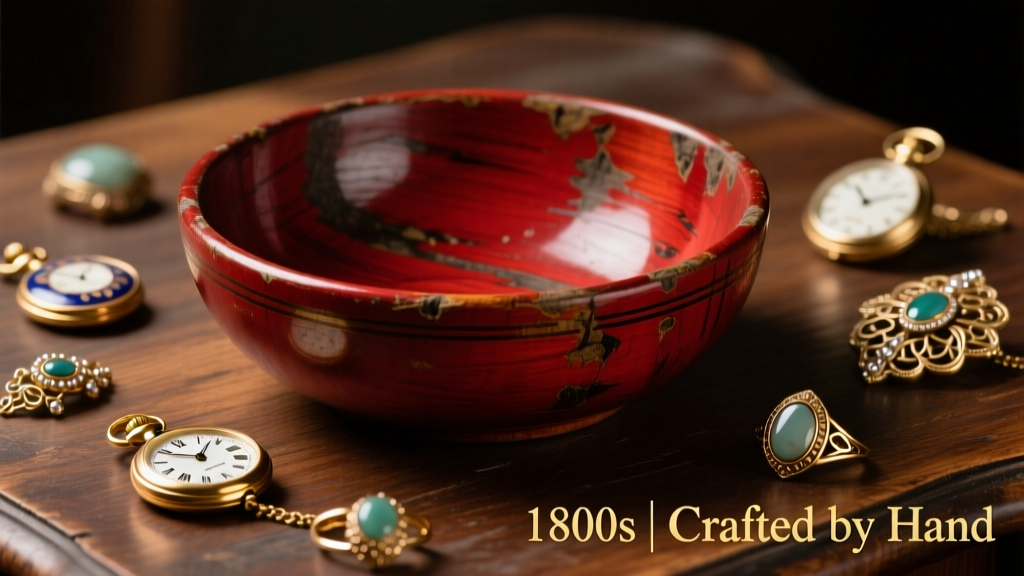
Wooden Bowl, Turned Red Paint, Circa 1840–1870: Provenance, Craftsmanship, and Market Significance of a Rare American Domestic Artifact
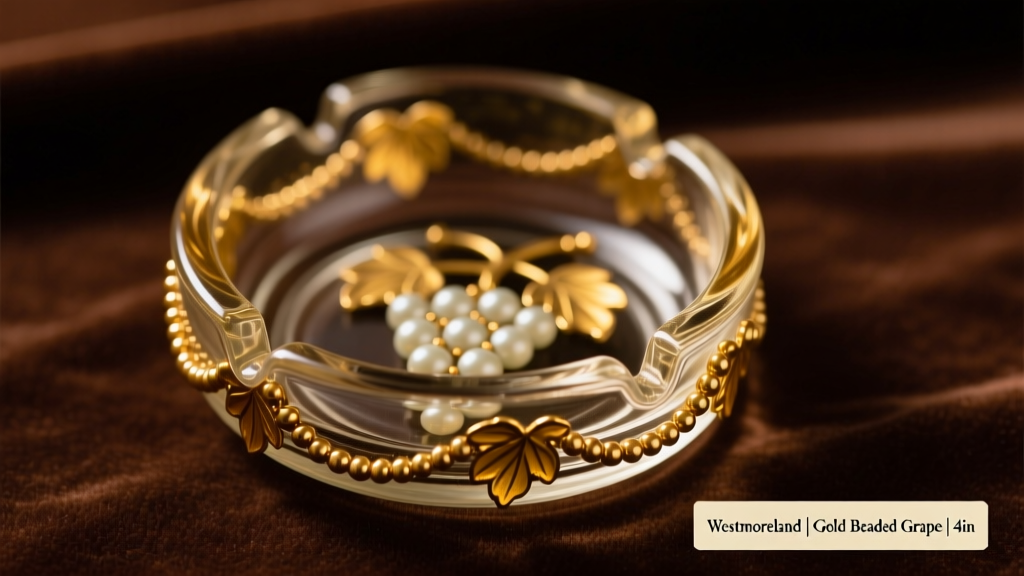
Westmoreland Glass Ashtray: Beaded Grape Pattern with Gold Paint, 4-Inch Diameter — A Collector’s Appraisal
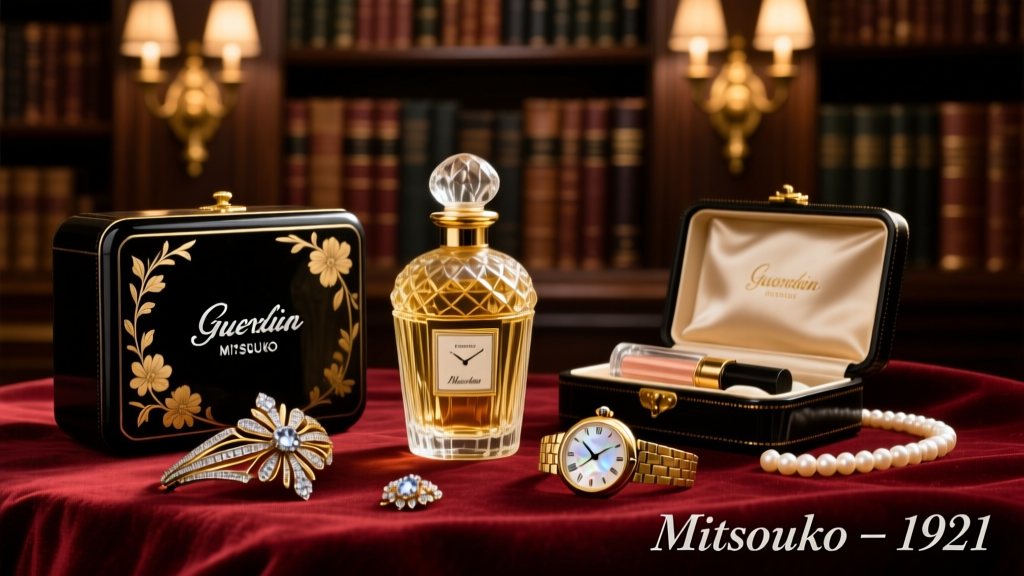
The Baccarat Perfume Bottle for Guerlain Mitsouko: A Study in Art Deco Luxury and Auction Provenance
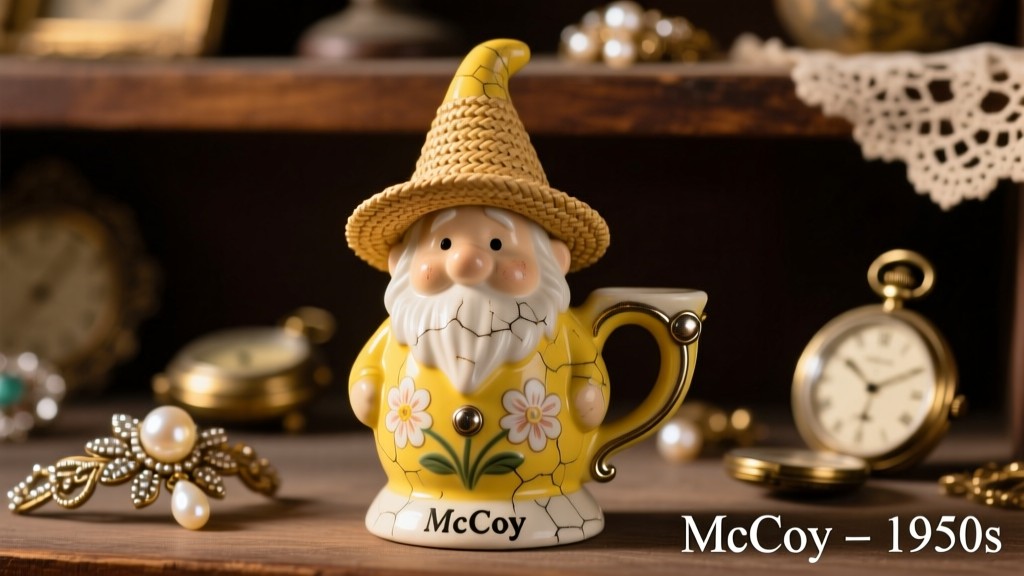
McCoy Flower Holder Gnome: A Deep Dive into the Iconic Yellow 3-Inch Ceramic Garden Figure
Sevres Box, Egg Shape, Hinged Cover, Lavender-Green Ground, Gilt Decoration, Marked — A Detailed Provenance and Technical Analysis
Doll Greiner Papier-Mâché Blond Curly Hair Muslin Body Leather Arms 1872 — A Rare 30-Inch German Art Doll in Museum-Quality Condition
Tin Advertising Signs: Material, Craft, and Market Value of America’s Iconic Metal Billboards