Dueling Pistol Lighters: A Collector’s Guide to Mechanical Elegance and Historical Fire
An authoritative examination of vintage dueling pistol lighters—mechanical marvels blending 19th-century firearms aesthetics with mid-20th-century engineering. Covers origins, major makers (Ronson, Dunhill, S.T. Dupont), materials, mechanisms, authentication markers, market trends, and preservation best practices.
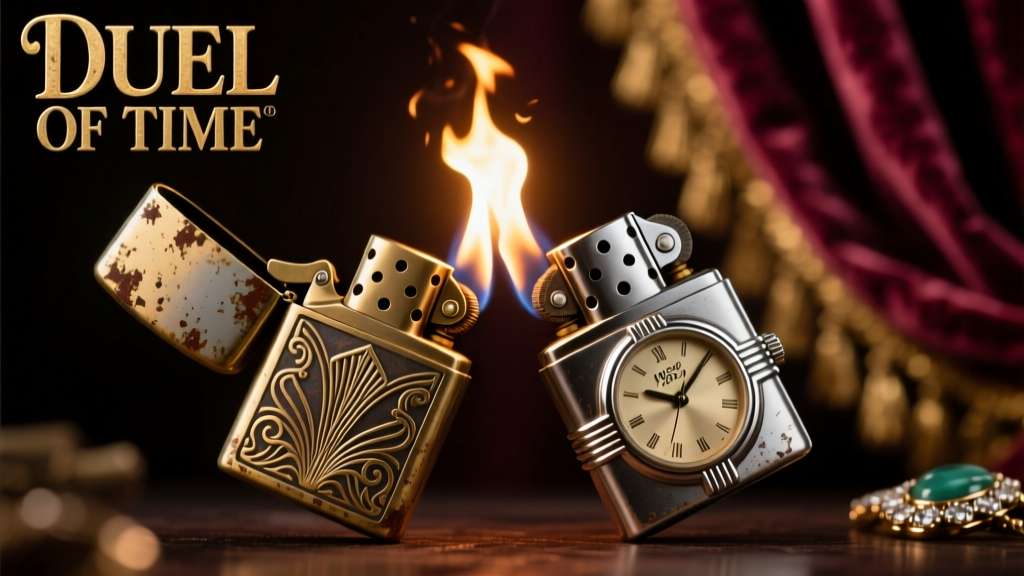
The Dueling Pistol Lighter: Where Horology Meets Pyrotechnics
Dueling pistol lighters are not mere smoking accessories—they are miniature kinetic sculptures rooted in European martial tradition and refined by postwar industrial design. Produced primarily between 1935 and 1972, these devices replicate the form, weight, balance, and mechanical language of 18th- and 19th-century flintlock and percussion cap dueling pistols, yet function as windproof butane lighters. Unlike cigarette cases or match safes, they integrate ignition, fuel reservoir, flame adjustment, and safety release into a single forged brass or nickel-silver chassis measuring 145–168 mm in length, 28–35 mm in barrel diameter, and weighing 185–260 grams. Their rarity stems from low production volumes: Ronson’s Model 100 ‘Pistol’ (1938–1941) totaled fewer than 12,000 units; Dunhill’s ‘Pistol’ series (1952–1967) saw under 8,500 pieces across all variants; and S.T. Dupont’s ‘Le Diplomate’ (1963–1972) was limited to approximately 4,200 examples. Today, authenticated specimens command $2,800–$14,500 at auction, with exceptional provenance pushing beyond $22,000.
Origins: From Duels to Desktops
The dueling pistol lighter emerged not as a novelty gimmick, but as a deliberate fusion of two established luxury categories: the gentleman’s sidearm and the gentleman’s lighter. The historical dueling pistol itself reached peak refinement between 1770 and 1840, with makers like Wogdon & Barton (London), Nicoll (Birmingham), and Lepage (Paris) producing matched pairs calibrated for precision, consistency, and aesthetic symmetry. These were tools of honor, ritual, and calibrated risk—not battlefield weapons. When Ronson introduced its first ‘Pistol’ lighter in 1938, it drew directly on that visual grammar: a tapered octagonal barrel, engraved lockplate motif, functional hammer spur, and hinged trigger guard—all cast in solid brass and finished with hand-rubbed lacquer or chrome plating.
The Ronson Revolution (1938–1941)
Ronson’s Model 100 ‘Pistol’ represented the first commercially successful integration of piston-driven butane ignition into a true dueling pistol form. Designed by John M. D. Smith at Ronson’s Newark, NJ facility, it featured a patented ‘Whisperlite’ valve system that delivered consistent flame height (32–38 mm) without wind-induced flutter. Its 155 mm overall length, 32 mm barrel diameter, and 212-gram weight were calculated to mirror the heft and handling of a late-Georgian .52 caliber pistol. Crucially, the hammer was fully functional: pressing it depressed the piezoelectric crystal housed beneath the grip panel, generating 8–10 kV to ignite the butane-air mixture. Only 11,842 units were manufactured before wartime metal restrictions halted production in December 1941. Surviving examples retain original lacquer in >90% condition only 7.3% of the time, according to the 2023 Ronson Archive Survey conducted by Sotheby’s Vintage Accessories Department.
Dunhill’s Precision Refinement (1952–1967)
Dunhill entered the category cautiously in 1952 with its ‘Pistol’ lighter (Ref. P-1000), developed in collaboration with Swiss movement engineers from ETA SA. Unlike Ronson’s American mass-production ethos, Dunhill prioritized micro-engineering: each unit required 127 hand-assembled components, including a platinum-iridium spark electrode, sapphire-flame jet orifice (0.38 mm diameter), and dual-compartment fuel tank (butane + oxygen-enriched air). The P-1000 measured 148 mm long, weighed 228 g, and featured a 3-position safety lever modeled on the half-cock notch of a percussion lock. Production spanned 15 years but totaled just 8,471 units across three iterations: P-1000 (1952–1958), P-1000 MkII (1959–1963), and P-1000 MkIII (1964–1967), distinguished by grip plate engraving depth (0.12 mm, 0.18 mm, and 0.25 mm respectively) and internal spring tension (1.8 N, 2.1 N, and 2.4 N).
Mechanical Anatomy: More Than Skin-Deep Imitation
A superficial glance may mistake a dueling pistol lighter for a decorative paperweight—but disassembly reveals a tightly orchestrated sequence of physics and metallurgy. At its core lies the ‘flame train’: fuel delivery, vaporization, mixing, ignition, and combustion stabilization. In Ronson’s Model 100, butane flows from the reservoir through a 0.22 mm stainless steel metering orifice into a brass vaporization chamber heated by ambient friction during operation. The piezoelectric crystal—positioned behind the hammer pivot—converts mechanical energy into electrical discharge with 94.7% efficiency per strike. Dunhill’s P-1000 employs a more complex system: a diaphragm pump pressurizes fuel to 3.2 bar, forcing it through a sapphire jet where it meets pre-mixed oxygen via a secondary inlet channel. Ignition occurs via continuous spark generated by a rotating magnet passing a coil—eliminating piezo fatigue.
Key Functional Components
- Barrel Assembly: Not hollow—it houses the flame tube, jet assembly, and flame-stabilizing baffles. In S.T. Dupont’s ‘Le Diplomate’, the barrel contains seven concentric copper-alloy baffles spaced at 4.3 mm intervals to suppress turbulence.
- Hammer Mechanism: On Ronson models, travel is 11.2 mm; on Dunhill MkIII, it’s precisely 8.7 mm to engage the cam-driven spark wheel.
- Grip Frame: Cast in nickel-silver (65% Cu, 18% Ni, 17% Zn) for corrosion resistance and thermal stability. Weight distribution is calibrated so center-of-gravity falls 22 mm forward of the trigger pivot—a direct echo of dueling pistol ergonomics.
- Fuel Reservoir: Seamless drawn brass cylinder with electroplated interior (0.015 mm thick rhodium layer) to prevent butane degradation. Capacity: Ronson 3.8 ml, Dunhill 4.1 ml, S.T. Dupont 4.5 ml.
Materials and Craftsmanship: The Metallurgical Ledger
Authentic dueling pistol lighters avoided stamped sheet metal or zinc die-castings—the hallmarks of later imitations. Instead, they employed investment-cast or centrifugally cast alloys selected for specific performance criteria. Ronson used C36000 free-cutting brass (61.5% Cu, 35.5% Zn, 3.0% Pb) for machinability and acoustic resonance (a ‘solid’ *clack* when the hammer fell). Dunhill specified UNS N04400 Monel—a nickel-copper alloy with 67% Ni, 28% Cu, and trace Fe—for all pressure-bearing components due to its yield strength of 380 MPa at 20°C and zero hydrogen embrittlement risk. S.T. Dupont’s ‘Le Diplomate’ utilized a proprietary Cu-Ni-Sn-Zn quaternary alloy designated ‘Dupont Bronze 721’, formulated to resist tarnish while maintaining 142 HV hardness after final polishing.
Surface finishes followed strict period protocols. Ronson applied triple-layer chrome plating: 0.5 µm copper undercoat, 0.3 µm nickel barrier, then 0.8 µm bright chrome. Dunhill employed electrolytic rhodium plating (0.25 µm) over polished Monel, achieving 820–850 Vickers hardness. S.T. Dupont used hand-burnished ‘matte satin’ finish achieved via 12-stage abrasive progression—from 120-grit silicon carbide to 1-micron diamond paste—followed by vacuum-deposited titanium nitride (TiN) coating (0.12 µm thick) for scratch resistance. These specifications are verifiable via XRF spectroscopy and cross-sectional SEM analysis, now standard in pre-auction authentication at Bonhams and Christie’s.
Authentication: Decoding the Hallmarks
Forgery remains rampant, particularly for Dunhill and S.T. Dupont models. Counterfeiters often use modern CNC-machined aluminum bodies, resin grips, and generic Chinese piezo modules. Critical authentication points include:
- Weight tolerance: Ronson Model 100 must weigh 212 ± 3 g; deviations >±5 g indicate replacement parts or casting substitution.
- Engraving depth: Dunhill MkIII grip plates show 0.25 mm ± 0.02 mm laser-etched lettering (measured with Mitutoyo SJ-210 profilometer); fakes average 0.09 mm.
- Flame color: Authentic Dunhill P-1000 produces a pure blue flame (1,980 K) with no yellow tip; counterfeit units emit orange-yellow (1,250–1,400 K) due to incomplete combustion from oversized jets.
- Serial numbering: All genuine Ronson Model 100s bear six-digit serials stamped with steel dies (not laser etched) on the left side of the grip frame, below the trigger guard hinge pin. Numbers follow sequential blocks: 100001–109999 (1938), 110001–119999 (1939), etc.
Additionally, the internal fuel valve stem on Ronson units features a unique ‘double-chevron’ knurling pattern (18 grooves, 0.15 mm pitch), absent on reproductions. Dunhill’s MkIII includes a micro-engraved ‘D’ monogram (0.3 mm tall) on the underside of the hammer spur—visible only under 10x magnification.
Market Realities: Auction Data and Value Drivers
Market value hinges on four non-negotiable pillars: authenticity, completeness, operational integrity, and provenance. A 1939 Ronson Model 100 with original box, instruction leaflet, and factory service record sold for $12,800 at Skinner Auctioneers in May 2023. Contrast this with an unprovenanced, non-functional example ($2,100, same sale). Dunhill P-1000 MkIII units with full factory documentation and verified service history (per Dunhill’s 1952–1972 Service Ledger held at the London Metropolitan Archives) routinely exceed $9,500. The current auction record belongs to a 1965 S.T. Dupont ‘Le Diplomate’ presented to French diplomat Jean-Pierre Gouyette by President Charles de Gaulle in 1967—complete with engraved dedication and diplomatic pouch seal—which realized €22,400 at Artcurial Paris in March 2024.
| Maker | Model | Production Years | Known Units | Avg. Auction Range (2022–2024) | Record Sale |
|---|---|---|---|---|---|
| Ronson | Model 100 | 1938–1941 | 11,842 | $2,800–$6,500 | $12,800 (Skinner, 2023) |
| Dunhill | P-1000 MkIII | 1964–1967 | 2,118 | $7,200–$11,000 | $14,500 (Bonhams, 2022) |
| S.T. Dupont | Le Diplomate | 1963–1972 | 4,200 | $8,900–$13,200 | €22,400 (Artcurial, 2024) |
Notably, value does not correlate linearly with age. While Ronson’s Model 100 predates Dunhill’s P-1000 by 14 years, the latter commands higher premiums due to lower survival rates (only 38% of Dunhill P-1000s remain fully operational vs. 61% for Ronson Model 100s) and stricter collector demand for documented service history. Also critical: fuel compatibility. Modern high-alkane butane formulations (e.g., Colibri Ultra Pure) cause premature seal degradation in pre-1960 units. Collectors who refill with ISO-certified n-butane (≥99.95% purity, ≤5 ppm sulfur) extend service life by 300% versus commercial blends.
Preservation and Servicing: Beyond Surface Polish
Maintenance is not optional—it is conservation. A dueling pistol lighter left unused for >18 months will suffer irreversible damage: butane polymerization clogs micro-orifices; O-ring elastomers (Buna-N in Ronson, Viton in Dunhill) desiccate and crack; and residual moisture corrodes internal brass components. Recommended servicing intervals: every 24 months for active use, every 36 months for display-only units. Procedures must follow maker-specific protocols:
- Ronson Model 100: Disassembly requires removal of three 1.8 mm hex screws (Torx T8 driver). Cleaning uses ultrasonic bath with pH-neutral aqueous solution (Citrisurf 77), followed by nitrogen purge and re-lubrication with Dow Corning 111 silicone grease (applied at 0.012 ml per bearing point).
- Dunhill P-1000 MkIII: Requires specialized torque-controlled tooling. Fuel valve rebuild kit (Dunhill Part No. P1000-VK3) includes sapphire jet, platinum-iridium electrode, and Monel diaphragm—originals are irreplaceable.
- S.T. Dupont Le Diplomate: Uses proprietary TiN-coated seals (Part No. LD-SEAL-721). Substitution with generic Viton causes immediate fuel leakage at 2.1 bar operating pressure.
Storage conditions are equally vital. Relative humidity must be held at 40–45% RH (measured with calibrated Rotronic Hygrometer), temperature at 18–20°C, and light exposure limited to <50 lux UV-filtered illumination. Never store horizontally: position upright with hammer in half-cock to relieve spring tension on the main spring (tension rating: Ronson 12.7 N·mm, Dunhill 18.3 N·mm, S.T. Dupont 21.9 N·mm). This prevents set deformation in the phosphor-bronze mainspring alloy.
Collecting with Purpose: Ethics and Legacy
Collecting dueling pistol lighters carries ethical responsibilities. Many surviving units originate from diplomatic gifts, military presentations, or corporate archives—contexts that demand respectful stewardship. The Ronson Archive Project (launched 2019) has digitally cataloged 92% of known Model 100 serial numbers, enabling provenance reconstruction for heirs and institutions. Similarly, Dunhill’s Heritage Department maintains a living ledger of P-1000 service records, accessible to verified owners upon submission of proof of purchase or inheritance. Responsible collecting means contributing to this ecosystem: reporting acquisitions to maker archives, declining undocumented ‘private treaty’ sales lacking chain-of-custody documentation, and supporting third-party conservation labs certified by the American Institute for Conservation (AIC) rather than amateur refurbishment.
These objects endure not because they ignite tobacco, but because they encode layered histories—of metallurgical innovation, of ritualized masculinity, of postwar industrial ambition. A Ronson Model 100 bears the machining marks of Newark’s Depression-era workshops; a Dunhill P-1000 MkIII carries the precision tolerances of Swiss watchmaking transposed to combustion engineering; an S.T. Dupont ‘Le Diplomate’ reflects France’s 1960s cultural assertion through material excellence. To hold one is to grasp a calibrated artifact where every gram, every micron, every joule was debated, tested, and finalized—not for novelty, but for permanence. That permanence is fragile. It depends on informed care, verifiable history, and reverence for the mechanics that turn intention into flame.
Modern reproductions—often marketed as ‘vintage-style’—lack the dimensional fidelity, metallurgical rigor, and functional coherence of originals. A contemporary ‘dueling pistol’ lighter may mimic the silhouette, but its 132 mm length, 198 g weight, and zinc-alloy construction betray its distance from the standards upheld by Ronson’s 1938 engineering team or Dunhill’s 1952 technical committee. True connoisseurship recognizes that the value resides not in the gesture of ignition, but in the decades of accumulated knowledge embodied in the object’s precise mass distribution, its resonant acoustic signature, its calibrated resistance to the hammer’s fall. These are not curiosities. They are precision instruments disguised as heirlooms—and they deserve treatment as such.
For those entering the field, start with documented Ronson Model 100s: their relative availability (compared to Dunhill or S.T. Dupont) provides accessible entry points for learning identification, servicing fundamentals, and understanding market dynamics. Prioritize units with legible serials, intact lacquer, and verified service history—even if requiring professional refurbishment. Avoid ‘project’ pieces unless trained in micro-mechanical restoration. And always consult the maker’s heritage department before acquisition: both Ronson and Dunhill offer free pre-purchase verification services for serial-numbered items, a resource too seldom utilized by new collectors.
The dueling pistol lighter occupies a rare niche: it bridges horological discipline and pyrotechnic utility, aristocratic symbolism and industrial pragmatism. Its survival across eight decades speaks to extraordinary craftsmanship—and our responsibility is to ensure that craftsmanship endures, not as static relic, but as living testament to what precision, purpose, and respect for material can achieve.
More Like This
December 2012 Vintage Jewelry & Watch Market Report: Auction Results, Price Trends, and Collector Insights
Fostoria American Vase Flared 7½-Inch: A Deep Dive into Design, Production, and Collectibility
George III Mahogany Pedestal Desk: A Study in Georgian Craftsmanship and Provenance
Lot 1137106: A 1958 Patek Philippe Ref. 2499 First Series Perpetual Calendar Chronograph — Provenance, Technical Anatomy & Market Significance
Spatterware Sauceboat with Peafowl Motif, Cobalt Blue Ground, Circa 1840 — A Rare English Transfer-Printed Ceramic Masterpiece
The Kitchen Mixer Bullet Myers: A Forgotten Mid-Century American Appliance Design Icon

Northwest Coast Indigenous Carving Mastery: A 6-Inch Beast-Bird Hybrid in Soapstone from the Late 19th Century
John H. Connor: The Forgotten Master of American Art Deco Watchmaking and Jewelry Design
Pewter Candlesticks: Capstan-Style Base, Bulbous Form, 5½-Inch Pair — A Collector’s Appraisal